21Shares today launched its Bitcoin and gold exchange-traded product, the 21Shares Bitcoin Gold ETP (BOLD), on the London Stock Exchange, expanding the range of crypto-linked investment products available to UK retail investors.
BOLD is the fifth cryptocurrency product from 21Shares to receive prospectus approval from the UK Financial Conduct Authority. It follows the firm’s existing Bitcoin and Ethereum offerings and comes as demand grows for regulated exposure to digital assets through traditional market infrastructure.
The product trades on the LSE in pounds sterling under the ticker BOLD and carries a 0.65% annual management fee, the company said.
It is fully physically backed by its underlying assets, with Bitcoin and gold held in institutional-grade custody and stored offline, a structure intended to reduce counterparty and custody risk compared to many retail investment options.
Bitcoin and gold as a means of risk management
Developed in partnership with ByteTree Asset Management, BOLD combines Bitcoin and gold into a single vehicle designed around risk management rather than fixed allocations.
The ETP rebalances monthly using inverse historical volatility, allocating more weight to the less volatile asset at each rebalance. The aim is to achieve roughly equal risk contribution from both Bitcoin and gold, rather than a simple 50/50 capital split.
This structure is happening as gold surges to new highs. Gold’s long-standing role as a store of value is intended to offset Bitcoin’s sharper price swings, particularly during risk-off environments, the company said.
As of January 12, 2026, BOLD had $40.1 million in assets under management and reported a three-year Sharpe ratio of 1.79, according to 21Shares. The product adjusts its holdings each month to stay aligned with its volatility-based framework, trimming the stronger asset and adding to the weaker one.
Russell Barlow, CEO of 21Shares, said the London listing reflects the firm’s push to broaden access to regulated crypto products in the UK.
“BOLD aims to give investors exposure to Bitcoin’s growth potential while retaining the relative stability of gold,” Barlow said, adding that the product is positioned as a potential hedge against inflation.
Charles Morris, founder and chief investment officer of ByteTree Asset Management, described Bitcoin and gold as increasingly complementary assets. He said BOLD applies a rules-based process to combine them in a transparent structure designed for investors navigating persistent inflation and monetary uncertainty.
Back in October 2025, the U.K.’s Financial Conduct Authority lifted its four-year ban on retail access to bitcoin and crypto exchange-traded notes, allowing firms to offer cETNs on FCA-approved exchanges such as the London Stock Exchange and Cboe UK.
The move followed months of consultation and signaled a more open—though still cautious—approach to crypto regulation.
FCA digital finance executive David Geale said the decision reflected a more mature and better-understood market, while maintaining investor protections.
Unlike ETFs, ETNs are debt instruments that track the price of assets like bitcoin without requiring investors to hold the underlying crypto.
https://bitcoindevelopers.org/wp-content/uploads/2026/01/21Shares-Launches-Bitcoin-and-Gold-ETP-on-London-Stock-Exchange-4YM6x7.jpg10801920Bitcoin Developerhttps://bitcoindevelopers.org/wp-content/uploads/2024/08/loho_hor_1-300x108.pngBitcoin Developer2026-01-13 14:23:322026-01-13 14:23:3221Shares Launches Bitcoin and Gold ETP on London Stock Exchange
Crypto custody firm BitGo has launched its initial public offering, seeking to raise up to $201 million, according to a filing with the U.S. Securities and Exchange Commission.
The Palo Alto, California-based company is offering roughly 11.8 million shares of Class A common stock at an expected price range of $15 to $17 per share.
The offering includes 11 million shares sold by BitGo and about 821,600 shares offered by existing stockholders, with the company not receiving proceeds from those secondary sales. Underwriters will also have a 30-day option to purchase up to an additional 1.77 million shares.
Founded in 2013, BitGo is one of the largest crypto custody providers in the U.S., offering secure storage and infrastructure services for digital assets as institutional participation in crypto continues to expand.
The company plans to list on the New York Stock Exchange under the ticker symbol BTGO. Goldman Sachs is serving as lead book-running manager, with Citigroup and several other banks participating in the offering.
Bitgo receives nod from OCC
In December, Bitgo was one of five digital asset firms to receive conditional approval from the U.S. Office of the Comptroller of the Currency (OCC) to become a federally chartered national trust bank, alongside Ripple, Circle, Fidelity Digital Assets, and Paxos.
The decision marked a significant step in bringing major crypto companies further into the U.S. federal banking system.
The conditional approvals allow the firms to convert from state-level trust charters to national trust bank status, pending the fulfillment of OCC requirements. Once finalized, the companies will join roughly 60 existing national trust banks overseen by the OCC, enabling them to offer fiduciary and custody services nationwide.
Unlike full-service national banks, trust banks cannot take deposits or issue loans, but they can safeguard and manage customer assets, including digital assets.
BitGo’s IPO adds to the growing wave of crypto companies testing the public markets, but it stands apart from the usual exchange-led listings. Instead of relying on trading activity, BitGo makes its money by providing custody, compliance, and infrastructure services tied to safeguarding digital assets.
That difference could resonate with regulators and investors who have grown more cautious about trading-driven crypto businesses.
As attention shifts toward firms focused on compliance, settlement, and asset protection, BitGo’s debut fits a broader narrative gaining momentum in U.S. markets.
https://bitcoindevelopers.org/wp-content/uploads/2026/01/Crypto-Firm-BitGo-Eyes-Near-2-Billion-Valuation-in-US-IPO-p3DdGP.jpg10801920Bitcoin Developerhttps://bitcoindevelopers.org/wp-content/uploads/2024/08/loho_hor_1-300x108.pngBitcoin Developer2026-01-12 15:12:502026-01-12 15:12:50Crypto Firm BitGo Eyes Near $2 Billion Valuation in US IPO
Strategy added to its bitcoin treasury for a third straight week, acquiring 13,627 BTC for roughly $1.25 billion at an average price of $91,519 per coin, according to an SEC filing dated January 12.
The purchases were made between January 5 and January 11 and funded through the company’s at-the-market offering program, which included sales of Class A common stock (MSTR) and its 10.00% Series A perpetual preferred stock, Stretch (STRC).
The sales generated about $1.2 billion in net proceeds, with $1.1 billion coming from common stock and $119 million from preferred equity.
The latest buy brings Strategy’s total bitcoin holdings to 687,410 BTC, acquired for an aggregate cost of $51.8 billion at an average purchase price of $75,353 per bitcoin.
At current prices, the stash is worth roughly $62 billion.
Last week, Strategy disclosed another sizable bitcoin purchase, acquiring 1,286 BTC for about $116 million in a filing with the U.S. Securities and Exchange Commission.
The buys, made between late December and early January, lifted the company’s total holdings to 673,783 BTC at the time, funded through Class A share sales under its at-the-market program.
Strategy also increased its U.S. dollar reserves last week to $2.25 billion to support preferred dividends and debt obligations, while reporting an average bitcoin cost basis of roughly $75,000 per coin.
Despite bitcoin rebounding above $90,000 to start 2026, the firm recorded a $17.44 billion unrealized loss in the fourth quarter of 2025 after prices fell sharply from October highs.
Strategy’s recent MSCI drama
Over the past several months, Strategy has been at the center of attention tied to its inclusion in MSCI’s global equity indexes due to its massive Bitcoin treasury strategy.
MSCI — one of the world’s most influential index providers — launched a review in late 2025 to consider whether companies with more than ~50 % of assets in digital assets (so-called Digital Asset Treasury Companies, or DATCOs) should remain in major benchmarks like the MSCI World and MSCI USA indexes.
If excluded, passive funds tracking these indexes could be forced to sell billions of dollars of MSTR shares, with estimates suggesting up to ~$2.8 billion in outflows from MSCI-linked funds alone and even more if other providers followed suit. Analysts from JPMorgan and TD Cowen estimated that exclusion from these indices could threaten billions in additional market value on top of that.
Strategy’s stock endured some declines and heightened risk-off sentiment as markets priced in the threat of index exclusion, with its share price dropping sharply in late 2025 amid these concerns.
Company leadership, including Michael Saylor, publicly defended its positioning as a legitimate operating company rather than a passive fund, engaging with MSCI during the consultation and stressing its enterprise operations alongside Bitcoin holdings.
In a statement on X, Saylor said that the company is “not a fund, not a trust, and not a holding company.” He described the firm as a publicly traded operating company with a $500 million software business and a unique treasury strategy that uses Bitcoin as productive capital.
In early January 2026, MSCI announced it would not implement proposed exclusions of DATCOs from its indexes at this time, effectively postponing any removal for the upcoming February 2026 review. This decision was widely interpreted as short-term relief for Strategy — lifting some selling pressure and leading to a 4 %–6 % rise in MSTR stock as investors welcomed the reprieve.
However, MSCI also signaled a broader consultation on how to classify non-operating companies, indicating that similar debates could resurface later in 2026.
Despite all this buying, the price of bitcoin has been little-changed over the last couple of months. Bitcoin has bounced around the $90,000 range and is currently trading at $90,555.
The number of Bitcoin addresses (bitcoin whales) holding at least 100 BTC has climbed to a new all-time high, according to on-chain data from Bitcoin Magazine Pro, pointing to continued accumulation among large holders despite some recent bitcoin price dips and broader crypto market volatility.
The metric tracks the total number of unique Bitcoin addresses with balances of 100 BTC or more — a cohort commonly associated with so-called “bitcoin whales,” including high-net-worth individuals, funds, corporations, and long-term strategic holders.
The latest data shows the count has surpassed all previous peaks, extending a multi-year uptrend that has persisted across several market cycles, according to Bitcoin Magazine Pro.
Unlike price charts, bitcoin whale and address balance data shows how bitcoin is actually being held across the network. When the number of wallets with large BTC balances grows, it suggests capital is concentrating in bigger holders, often read by analysts as a sign of long-term confidence rather than short-term speculation.
The milestone comes as bitcoin continues to trade down 30% from historic highs, following a year marked by increased institutional participation, growing acceptance of bitcoin as a treasury asset, and expanding access through regulated investment products.
Analysts note that accumulation by large holders has remained resilient even during periods of consolidation and pullbacks, indicating limited distribution from this cohort.
While a single entity can control multiple addresses — meaning address counts do not directly equate to individual holders — changes in the metric are still widely used to assess structural trends in the market.
Historically, sustained increases in bitcoin whale addresses have coincided with periods of long-term accumulation and reduced sell-side pressure.
JUST IN: The number of addresses holding more than 100 #Bitcoin hit a NEW ALL TIME HIGH
Bitcoin hovered near the $90,000 level on Friday as markets steadied following a delay in a closely watched U.S. Supreme Court ruling related to President Donald Trump’s tariff policy. The postponement eased near-term macroeconomic uncertainty, helping limit volatility across risk assets, including digital currencies.
At the time of writing, bitcoin was trading at roughly $90,443, down about 1% over the past 24 hours. Daily trading volume stood near $45 billion, while total market capitalization slipped to around $1.80 trillion.
Despite the modest pullback, bitcoin remains tightly rangebound near recent highs, sitting about 2% below its seven-day peak and slightly above its weekly low.
Bitcoin’s circulating supply has climbed to nearly 20 million coins, reinforcing long-term scarcity narratives.
In the near term, however, traders see the asset consolidating after an early-year rally, with the $90,000–$91,000 range emerging as a key technical support zone as markets await a clearer catalyst, according to Bitcoin Magazine Pro analysis.
https://bitcoindevelopers.org/wp-content/uploads/2026/01/Bitcoin-Whales-Keep-Buying-as-100-BTC-Addresses-Set-New-Record-XtF1mS.jpg10801920Bitcoin Developerhttps://bitcoindevelopers.org/wp-content/uploads/2024/08/loho_hor_1-300x108.pngBitcoin Developer2026-01-09 21:46:312026-01-09 21:46:31Bitcoin Whales Keep Buying as 100+ BTC Addresses Set New Record
The bitcoin price was trading near the $90,000 mark on Friday as crypto markets steadied following a delay from the U.S. Supreme Court on a closely watched ruling tied to President Donald Trump’s tariff policy, temporarily easing near-term macro uncertainty.
The price of bitcoin stood at $90,443 at the time of writing, down about 1% over the past 24 hours, according to market data. Daily trading volume totaled roughly $45 billion, while bitcoin’s total market capitalization slipped to approximately $1.80 trillion, also down 1% on the day.
Despite the modest pullback, the bitcoin price remains tightly rangebound near recent highs. The asset is currently about 2% below its seven-day high of $91,839 and roughly 1% above its seven-day low of $89,671, per Bitcoin Magazine Pro data.
Bitcoin’s circulating supply now stands at 19,973,659 BTC, inching closer to its fixed cap of 21 million coins — a structural feature that continues to underpin long-term bullish narratives.
Tariff uncertainty weighs, then lifts the bitcoin price
Crypto prices initially wavered this week as traders positioned ahead of a potential Supreme Court decision on the legality of Trump-era global tariffs, widely viewed as a major macro catalyst.
However, markets moved higher on Friday after the court delayed its ruling until next week, reducing immediate downside risk across equities, bonds, and digital assets.
The bitcoin price hovered around $90,000 near the U.S. equity market open as investors reassessed risk exposure.
Analysts said the delay eased concerns about abrupt fiscal disruptions, including the possibility that the U.S. Treasury could be forced to refund more than $130 billion to importers if the tariffs were struck down.
Bitcoin has increasingly traded as a macro-sensitive asset, reacting to shifts in policy expectations, liquidity conditions, and geopolitical uncertainty.
As a result, major legal or political developments continue to influence short-term price action, even as long-term adoption trends remain intact.
Bitcoin price in consolidation following early-year rally
The current price reflects a cooling period after the bitcoin price surged in the opening days of the year, briefly pushing toward new short-term highs.
That early-January rally reignited bullish sentiment but also triggered profit-taking as momentum faded near resistance.
Technically, traders are watching the $90,000–$91,000 zone as a key support area. A sustained break lower could expose downside toward the high-$80,000 range, while a move back above $92,000 would likely reopen the path toward higher resistance levels.
For now, bitcoin remains locked in consolidation, with volatility compressed and traders awaiting a clearer catalyst.
Will the United States buy Bitcoin?
Cathie Wood of ARK Invest said in a podcast recently that politics could drive the U.S. to actively buy bitcoin in 2026. Wood argues that crypto has become a durable political issue for President Trump, potentially shaping policy ahead of the midterm elections.
While the U.S. currently holds a bitcoin reserve made up of seized assets, Trump has pledged not to sell any of the bitcoin, and the original goal was to acquire one million BTC.
Wood suggested in her conversation that the administration may move from holding only confiscated bitcoin to purchasing BTC outright for a national strategic reserve.
Crypto has also emerged as a more organized political constituency, supporting Trump and engaging with the White House through events and donations. On the policy side, executive orders have established the reserve and stockpile, with recommendations for Treasury-led expansion.
Wood sees government purchases as a potential market inflection point, reinforcing bitcoin’s scarcity as nearly 20 million of its 21 million cap have already been mined. If the United States would start buying bitcoin, its safe to assume that the bitcoin price would react positively.
At the time of writing, the bitcoin price is $90,814.
Cathie Wood is betting that politics, not just markets, could be the catalyst that pushes the United States into actively buying bitcoin.
The ARK Invest founder said this week that cryptocurrency has become a durable political issue for President Donald Trump, one that could shape policy decisions as the White House looks ahead to the 2026 midterm elections.
In Wood’s view, that dynamic increases the odds that the federal government eventually moves beyond holding seized BTC and begins purchasing BTC outright for a national strategic reserve.
Crypto was “part of the reason he won the presidency,” Wood said on a recent episode of ARK’s Bitcoin Brainstorm podcast. With midterms looming, she argued, Trump has incentives to keep the industry onside and to deliver visible progress.
“The most important one is that he doesn’t want to be a lame duck. He wants to have another one or two productive years, and I think he sees crypto as a path to the future,” Wood said.
The U.S. BTC reserve was created by executive order less than a week into Trump’s second term, alongside a broader digital asset stockpile and a new interagency working group chaired by Special Advisor for AI and Crypto David Sacks.
So far, however, the reserve has been capitalized only with bitcoin seized through criminal forfeitures — assets Trump has pledged not to sell.
“It seems as though there has been reticence about actually buying bitcoin for the strategic reserve,” Wood said. “So far, it’s confiscated [bitcoin].” That posture, she suggested, may not last. “The original intent was to own one million bitcoins, so I actually think they will start buying.”
Crypto has emerged as a more organized political constituency over the past election cycle. Industry-backed political action committees poured money into congressional races, while prominent executives publicly endorsed Trump and, in some cases, donated personally. Wood herself was among those supporters.
The administration has also made a point of signaling engagement with the sector. The White House has hosted crypto-related events, and firms including Coinbase, Tether and Ripple are among those contributing to the construction of a new White House ballroom.
Bitcoin as a ‘scarce value’
On the policy front, Trump has signed executive orders establishing the bitcoin reserve and crypto stockpile, and backed legislative efforts such as the GENIUS Act, which would formalize stablecoin rules.
A July report from Sacks’ working group laid out additional recommendations, including granting the Commodity Futures Trading Commission authority over spot markets in non-security digital assets. It reaffirmed that the bitcoin reserve and crypto stockpile would be administered by the Treasury Department and, at least initially, funded with forfeited assets. The order also directed the Treasury and Commerce Departments to explore “budget-neutral” ways to acquire additional bitcoin.
Wood sees that constraint as the key hurdle, but not an insurmountable one. She framed potential government buying as a market inflection point, especially as bitcoin’s supply tightens. Nearly 20 million of bitcoin’s 21 million cap have already been mined.
“If we get the U.S. not just adding confiscated bitcoin to a strategic reserve but actually out there buying,” Wood said, “that would set off what we’re all waiting for — the scarcity value to reassert itself.”
https://bitcoindevelopers.org/wp-content/uploads/2026/01/This-Investor-Thinks-the-United-States-is-Going-to-Start-Buying-Bitcoin-waoPHA.jpg10801920Bitcoin Developerhttps://bitcoindevelopers.org/wp-content/uploads/2024/08/loho_hor_1-300x108.pngBitcoin Developer2026-01-09 14:54:592026-01-09 14:54:59This Investor Thinks the United States Could Start Buying Bitcoin in 2026
South Korea is reportedly preparing to open its financial markets to spot bitcoin exchange-traded funds (ETFs) this year, marking a shift in the country’s long-standing approach to digital assets as regulators accelerate work on a comprehensive new crypto law.
The plan was outlined in the government’s newly released 2026 Economic Growth Strategy, with the Financial Services Commission (FSC) taking the lead on implementation.
If approved, spot bitcoin ETFs would become available to domestic investors for the first time, placing South Korea alongside markets such as the United States and Hong Kong, where similar products have already attracted billions of dollars in inflows.
Until now, Korea’s capital markets rules have not recognized cryptocurrencies like bitcoin or bitcoin ETFs as eligible underlying assets for ETFs, effectively blocking their launch. That stance is now changing as policymakers look to bring more crypto activity into regulated channels and reduce the flow of capital to offshore platforms.
The bitcoin ETF push is moving in parallel with a broader overhaul of digital asset regulation. The FSC is fast-tracking what it calls “Phase Two” digital asset legislation, a bill expected to focus heavily on stablecoins.
According to government plans, the law will introduce a licensing system for stablecoin issuers, minimum capital requirements, and strict reserve rules requiring at least 100% backing of issued tokens. Issuers would also be required to guarantee user redemption rights.
Regulators say the framework is designed to prevent failures like the 2022 Terra-Luna collapse, which wiped out roughly $40 billion and had deep ties to South Korea.
Alongside domestic rules, authorities are drafting standards for cross-border stablecoin transfers and transactions, reflecting growing use of digital tokens in trade and remittances. The effort is being coordinated between the FSC and the Ministry of Economy and Finance.
Global bitcoin ETF implementation
Officials point to global precedents as a key influence. Spot bitcoin ETFs in the U.S. and Hong Kong have seen strong demand, with major asset managers now treating the products as mainstream investment tools.
Korea’s Financial Intelligence Unit estimates that more than 10 million people are eligible to trade digital assets domestically, underscoring the scale of potential demand.
Beyond private markets, blockchain is also moving into public finance. The government plans to digitize parts of the national treasury using so-called “deposit tokens,” a form of government-linked digital currency distinct from stablecoins, according to reports.
By 2030, up to 25% of treasury operations could be conducted via blockchain-based payments.
Pilot programs are already underway, and lawmakers are reviewing amendments to the Bank of Korea Act and the National Treasury Act to establish a legal foundation for these systems.
Officials say the goal is faster settlement, lower administrative costs, and improved transparency.
In an era where centralized exchanges dominate cryptocurrency trading, Vexl stands out as a peer-to-peer (P2P) application designed to connect Bitcoin users within their personal networks for direct, non-custodial trades. The app facilitates buying and selling Bitcoin without intermediaries, emphasizing in-person meetings for cash exchanges while also supporting fiat transfers arranged privately between users.
As Viliam Klamarcik, CEO of Vexl, explained in an interview with Bitcoin Magazine, “we are an application that helps people to buy and sell Bitcoin directly with each other, without any intermediaries, without KYC. Vexl works without custody, so peer-to-peer, but what’s most important is that it is always within your own community, meaning we are not a global marketplace. We are basically a peer-to-peer notice board where you can connect with your first and second level degree of connections.”
At its core, Vexl prioritizes privacy, functioning as a high-trust notice board within your personal social network, rather than an exchange. It does not escrow Bitcoin or fiat, it does not hold user funds, nor store balances, messages, or personal data. All communications occur via end-to-end encrypted chats, and trades happen off-app, placing responsibility on users to verify counterparts. This design aligns with Vexl’s mission to support non-KYC Bitcoin acquisition and local economies, as confirmed on the app’s official website, which states, “We do not store any personal information or any of your messages, period.”
User connections in Vexl are built on a web-of-trust model, drawing from imported phone contacts to create a personalized order book. Offers are visible only to first- and second-degree connections—your contacts and their contacts—enhancing liquidity while maintaining high trust through shared social links. This limits exposure to strangers, reducing scam risks, and usernames remain anonymous until users mutually reveal identities. Klamarcik noted, “The biggest difference between Vexel and the other applications is, first of all, its web of trust, which means you don’t trade with users; you trade with people with whom you are connected through real social links.” The app’s privacy measures include hashing contact data and separating components like profiles, chats, offers, and contacts into microservices that converge only on the user’s device, ensuring no centralized database exists.
To enable this system, Vexl requires a phone number for registration, serving as proof of humanity to deter bots and facilitating contact imports. Privacy concerns are addressed through encryption and hashing; as the website affirms, “Your contacts always remain encrypted, which means no one can see them. Not even us.” Klamarcik acknowledged imperfections but emphasized its necessity: “The phone numbers are a big topic, and we are aware of that. And it’s not perfect, but also it’s probably the best solution that we have out there to build trust upon that.” This mirrors mechanisms in apps like Signal and major social networks, primarily as a spam-prevention and authentication tool.
For users hesitant to import full contacts—particularly in privacy-focused regions like Germany—Vexl offers “clubs,” curated groups managed by local moderators, often meetup organizers. These act as public rooms where members can view offers without broad network sharing, though trust shifts to the moderator. Entry requires a one-time code or QR scan, regenerable for security, providing an onboarding boost for newcomers until they build direct connections.
Vexl is available on both Android and iOS, but iOS users face restrictions. The app is not officially listed on the App Store, limited to TestFlight beta slots or sideloading in the EU, due to Apple’s claims of “reckless behavior” for encouraging in-person trades (Tinder, however, remains in iOS without restrictions). Android offers seamless access via Google Play or APK downloads, making it the optimal platform for unrestricted use.
As a non-profit under the Vexl Foundation, the app avoids for-profit models that could attract regulatory scrutiny, focusing instead on donations and grants to preserve its peer-to-peer ethos. This structure reflects a broader trend in Bitcoin privacy tools, where governments have effectively criminalized for-profit operations. Samourai Wallet’s founders were sentenced in 2025 to prison terms for money laundering conspiracy and unlicensed transmission after facilitating over $2 billion in transactions via a non-custodial Bitcoin wallet. Tornado Cash faced U.S. sanctions in 2022 for billions in volume, accused of money laundering for a service that profited from giving Ethereum users basic financial privacy. These cases highlight how privacy-focused entities are opting for non-profit status to sustain operations without attracting the ire of regulators. Vexl is fully open source and is a project by Satoshi Labs, the creators of the Trezor hardware wallet.
Looking ahead, Klamarcik signaled expansion: “This year is hopefully going to be the year when we actually go overseas and also focus on markets outside of Europe when it makes sense.”
Florida lawmakers have revived a push to put bitcoin on the state’s balance sheet, filing new legislation for the 2026 session that would create a state-run cryptocurrency reserve after a similar effort stalled last year.
House Bill 1039, filed Jan. 7 by Republican Rep. John Snyder, would establish a Strategic Cryptocurrency Reserve Fund that sits outside Florida’s main treasury.
The proposal authorizes the state’s chief financial officer to invest public funds in digital assets under a set of guardrails that include audits, reporting requirements, and advisory oversight.
The bill marks a reset rather than a clean break. Florida lawmakers floated broader crypto investment proposals in 2025, but those measures were withdrawn after facing resistance over scope and risk.
The new framework narrows the focus and reflects a growing preference among Republican lawmakers for treating bitcoin as a reserve-style asset rather than a speculative trade.
Under HB 1039, the CFO would have discretion over whether and when to invest. The bill does not mandate a minimum allocation.
Earlier versions of Florida legislation proposed allowing up to 10% of certain state-managed funds to be invested in bitcoin. While the new bill revives that concept, it leaves deployment decisions to the CFO and places the reserve outside pension and retirement accounts.
The legislation includes requirements for independent audits and the creation of an advisory committee to guide investment strategy and risk management. Supporters say those provisions are meant to address concerns about volatility while still giving the state flexibility to act.
The renewed effort is closely tied to parallel legislation in the Senate. Republican Sen. Joe Gruters, a longtime bitcoin supporter and ally of President Donald Trump, has filed companion bills that lay out the trust structure and funding mechanics for the reserve.
Together, the House and Senate measures would govern how Florida acquires, holds, and manages any digital assets.
Bitcoin as a financial hedge for Florida
While the bills do not explicitly name bitcoin, they effectively limit eligibility to it. Only digital assets that maintained an average market capitalization of at least $500 billion over the past 24 months would qualify.
At present, bitcoin is the sole asset that meets that threshold, with a market cap above $1 trillion. Ethereum and other crypto fall well short.
Backers frame the proposal as a hedge rather than a bet. Florida Chief Financial Officer Jimmy Patronis has publicly described bitcoin as “digital gold” and said limited exposure could help diversify state-managed funds over long time horizons. The bill states that the reserve is intended to help protect public assets against inflation and currency debasement.
Florida’s approach mirrors moves in other states that have narrowed their focus to bitcoin after initial attempts to authorize broader crypto exposure.
New Hampshire became the first state to explicitly allow public funds to be invested in crypto, granting its treasurer authority to allocate up to 5% of certain portfolios.
Texas approved a small bitcoin ETF purchase in late 2025 as part of its own reserve strategy.
Wyoming, meanwhile, has passed a slate of laws clarifying the legal status of digital assets without committing public funds.
The proposal also fits within Florida’s broader stance on digital money. In 2023, Gov. Ron DeSantis signed legislation blocking central bank digital currencies from recognition under the state’s commercial code.
The move positioned Florida as skeptical of federally issued digital money while remaining open to decentralized alternatives like bitcoin.
If passed, Florida would become one of the largest U.S. states to formally experiment with crypto as a reserve-class asset. Supporters argue that a tightly governed reserve could allow the state to gain exposure without putting core public funds at risk. Critics, however, point to bitcoin’s history of sharp price swings and question whether public money should be exposed at all.
HB 1039 and its Senate companions must clear committee hearings and floor votes during the 2026 legislative session.
The bills include a conditional effective date of July 1, 2026, meaning implementation would only begin if the full legislative package is approved and signed into law.
https://bitcoindevelopers.org/wp-content/uploads/2026/01/Florida-Revives-Bitcoin-Reserve-Push-With-New-2026-Bill-vGxyHG.jpg10801920Bitcoin Developerhttps://bitcoindevelopers.org/wp-content/uploads/2024/08/loho_hor_1-300x108.pngBitcoin Developer2026-01-08 14:22:512026-01-08 14:22:51Florida Revives Bitcoin Reserve Push With New 2026 Bill
Crypto crime surged to unprecedented levels in 2025, fueled by a combination of nation-state activity, large-scale thefts, and increasingly professionalized criminal infrastructure, according to newly compiled data from Chainalysis shared with Bitcoin Magazine.
Illicit crypto addresses, an account involved in criminal activities like scams, ransomware, darknet markets, etc, received at least $154 billion over the year — a 162% increase from 2024 — with sanctioned entities accounting for a dramatic 694% of that growth.
Even excluding sanctioned actors, 2025 still set a record for illicit crypto activity, highlighting the broadening scope of the threat landscape, according to the report.
While these numbers represent a lower-bound estimate based on known illicit addresses, they signal an ecosystem that is maturing, diversifying, and, increasingly, intersecting with global geopolitical tensions.
The report cautioned that although illicit activity remains under 1% of total crypto volume, the implications for national security, consumer protection, and regulatory oversight are growing.
Nation-states are driving new crypto crime records
Perhaps the most striking trend of 2025 was the rise of nation-state activity on-chain.
Russia’s ruble-backed A7A5 token alone transacted over $93.3 billion within its first year, marking one of the clearest real-world examples of state-backed crypto-enabled sanctions evasion.
Iran, meanwhile, continued to leverage proxy networks for money laundering, illicit oil sales, and arms procurement, funneling more than $2 billion through wallets confirmed in sanctions designations.
North Korea also intensified its operations: DPRK-linked hackers stole $2 billion last year, including the largest crypto heist on record, the February Bybit exploit, which netted nearly $1.5 billion, per the report.
These developments underscore a massive shift: nation-states are now participating in the same professionalized crypto service ecosystem originally designed to facilitate cybercrime and organized crime.
By leveraging “full-stack” illicit infrastructure providers, states can conduct large-scale operations while minimizing exposure to enforcement.
Stablecoins are dominating illicit crypto activity
Stablecoins emerged as the preferred asset for illicit actors, accounting for 84% of all illicit transaction volume in 2025, according to the report. Stablecoin liquidity, price stability, and ease of cross-border transfer as primary drivers.
As the broader crypto ecosystem relies on stablecoins for transactions and settlements, their dominance in illicit activity highlights a potential blind spot for regulators and compliance teams.
Chinese money laundering networks expanded
The year also saw the consolidation of Chinese money laundering networks (CMLNs) as major players in the illicit ecosystem. These operations provide a wide range of services, including laundering-as-a-service and technical infrastructure, supporting everything from North Korean hack proceeds to sanctions evasion and terrorist financing.
By offering end-to-end criminal infrastructure, these networks have professionalized illicit finance in ways that mirror legitimate corporate operations, making enforcement increasingly complex.
The human cost of on-chain crime
While headlines often focus on hacks and sanctions evasion, the report emphasized that crypto crime is increasingly tied to physical-world violence. Human trafficking operations, coercion attacks, and other crimes now intersect with on-chain activity, sometimes timed to exploit cryptocurrency price volatility.
This convergence of digital and physical crime underscores the importance of coordination among law enforcement, regulatory bodies, and crypto platforms, the report claimed.
As the on-chain ecosystem continues to grow, so too does the sophistication of those seeking to exploit it. Nation-states, transnational criminal networks, and professionalized infrastructure providers are converging, creating threats that span finance, security, and public safety.
While illicit activity remains a small fraction of total crypto volume, 2025 demonstrates that even a small share can translate into tens of billions of dollars in illicit volume.
Chainalysis is a blockchain analytics company that provides software and data to governments, law enforcement, exchanges, and financial institutions to track, analyze, and investigate cryptocurrency transactions for compliance and criminal investigations.
https://bitcoindevelopers.org/wp-content/uploads/2026/01/Crypto-Crime-Soared-to-154-Billion-in-2025-as-Russia-North-Korea-and-Iran-Exploit-Blockchain-Tech-w7rfEM.jpg10801920Bitcoin Developerhttps://bitcoindevelopers.org/wp-content/uploads/2024/08/loho_hor_1-300x108.pngBitcoin Developer2026-01-08 13:00:002026-01-08 13:00:00Crypto Crime Soared to $154 Billion in 2025 as Russia, North Korea, and Iran Exploit Blockchain Tech
Bitcoin hovered just below the $91,000 level today, paring recent gains after an explosive start to the new year that briefly pushed prices toward fresh seven-day highs.
The bitcoin price was trading around $90,815, down roughly 1% over the past 24 hours, according to market data. Daily trading volume stood near $52 billion, while bitcoin’s total market capitalization slipped to about $1.82 trillion, also down around 1% on the day.
The pullback leaves the bitcoin price roughly 3% below its recent seven-day high near $94,700, after prices surged more than 8% in the first days of 2026. That rally carried the bitcoin price above $94,000 earlier this week, fueled by renewed ETF inflows, bullish options positioning and a resurgence of the geopolitical hedge narrative.
Bitcoin’s circulating supply now stands at 19.97 million BTC, inching closer to its fixed cap of 21 million coins.
The latest move marks a pause after bitcoin broke out of a multi-week consolidation range that capped prices through much of December. The $91,000 level, which previously acted as resistance, has now become a key short-term support zone as traders reassess momentum.
Market participants say the retreat reflects profit-taking rather than a decisive shift in trend, particularly after last week’s rapid upside move.
From a technical perspective, a sustained break below $91,000 could expose deeper support near $87,000, while a move back above $94,000 would reopen the path toward resistance in the $98,000–$100,000 range.
Bitcoin price volatility looms ahead of January 9
Beyond near-term technicals, traders are increasingly focused on macro catalysts — particularly a U.S. Supreme Court ruling scheduled for January 9 on the legality of President Donald Trump’s global tariffs.
Prediction markets suggest a high probability the court will strike down the tariffs, a decision that could force the U.S. Treasury to refund as much as $133–$140 billion to importers. Such an outcome could inject volatility across equities, bonds and crypto markets simultaneously.
Bitcoin, which has shown heightened sensitivity to macro and policy shocks, could see sharp price swings depending on how markets reprice fiscal risk and liquidity conditions.
Despite near-term uncertainty, broader bullish signals remain in place. Bitcoin ETFs recently recorded their strongest daily inflows since October, while options markets continue to show heavy positioning for higher prices later in the year.
At the time of writing, the bitcoin price is at $90,860.10.
Rumble on Wednesday announced the launch of a new digital wallet built in partnership with stablecoin giant Tether, allowing users and creators to send, receive and store cryptocurrency directly on the video-sharing platform without relying on banks or third-party payment processors.
The product, dubbed Rumble Wallet, will enable direct peer-to-peer payments using Bitcoin, Tether’s USDT stablecoin and Tether Gold (XAUt).
The company said the wallet is designed to let creators get paid directly by their audiences, reducing fees and limiting the risk of payment restrictions, account freezes or deplatforming by traditional financial intermediaries.
Founder, chairman and CEO Chris Pavlovski said the wallet aligns closely with the company’s free-speech mission and its long-running push to build alternatives to Big Tech infrastructure.
“Rumble represents free speech and liberty the same way that cryptocurrency and a decentralized internet represent freedom, and Rumble Wallet is the natural combination of those things,” Pavlovski said in a statement. “We are putting more power into the hands of users and creators so they can engage with and financially support the content they like.”
Later, Pavlovski posted on X, “If its not clear, I’ll make it really clear. Rumble Wallet will compete directly against Coinbase and Venmo — but we’re NOT custodial and we CANNOT shutdown your account. Its true financial freedom to buy, hold and tip crypto.”
BREAKING: Video streaming giant Rumble launches a crypto wallet to enable its audience to tip in #Bitcoin and crypto.
The announcement comes as the company continues to position itself as a “freedom-first” technology platform, appealing to creators and audiences frustrated with censorship, demonetization and opaque moderation policies on mainstream platforms.
The wallet is non-custodial, meaning users maintain confirmation of their own digital assets rather than handing control to a centralized provider.
The wallet is built using Tether’s Wallet Development Kit, which is designed to help platforms integrate crypto payments directly into their products.
CEO Paolo Ardoino said the collaboration reflects the company’s broader focus on decentralization and user autonomy.
“At Tether, we champion technologies that break boundaries and promote freedom, decentralization and the fundamental right to free expression,” Ardoino said. “Rumble Wallet brings those ideals together into one product that will give tens of millions of users more control than any platform has offered before, even in the United States.”
The two companies already have deep financial ties. Tether holds nearly 104 million shares of Rumble, representing roughly 48% of the company, according to disclosures.
MoonPay will power Rumble Wallet’s crypto on- and off-ramps, allowing users to seamlessly convert between digital assets and traditional payment methods such as credit cards, Apple Pay, PayPal and Venmo.
“Peer-to-peer payments powered by crypto are the future of the internet economy,” said MoonPay CEO Ivan Soto-Wright. “Rumble is one of the first major platforms to adopt this model, giving creators the ability to get paid instantly in stablecoins or Bitcoin and easily move in and out of fiat.”
Shares of Rumble rose 3% following the announcement, reflecting investor optimism around the platform’s expanding crypto strategy and creator monetization tools.
https://bitcoindevelopers.org/wp-content/uploads/2026/01/Rumble-Launches-Crypto-Wallet-With-Tether-Allowing-Direct-Creator-Payments-in-Bitcoin-and-Crypto-rhBFss.jpg10801920Bitcoin Developerhttps://bitcoindevelopers.org/wp-content/uploads/2024/08/loho_hor_1-300x108.pngBitcoin Developer2026-01-07 14:59:322026-01-07 14:59:32Rumble Launches Crypto Wallet With Tether Allowing Direct Creator Payments in Bitcoin and Crypto
BTC Inc, the parent company of Bitcoin Magazine and the organizer of major global Bitcoin conferences, has spent the past several years restructuring its internal operations around Bitcoin-native infrastructure, relying heavily on the open-source BTCPay Server to manage its payments, payroll, and treasury functions.
The effort reflects a broader push by the company to operate on what it describes as a “Bitcoin standard,” using bitcoin not only as a reserve asset but as a primary medium for internal and external transactions.
Executives and engineers involved in the project say the goal was to eliminate dependence on custodial payment processors, reduce cross-border settlement friction, and create a unified system capable of handling live commerce at speed and scale.
BTCPay Server, a self-hosted and non-custodial Bitcoin payments platform, emerged as the core infrastructure after BTC Inc evaluated multiple third-party payment solutions.
According to the company, custodial processors introduced counterparty risk and regulatory constraints, while off-the-shelf systems lacked the flexibility needed for global events and payroll coordination.
Conference payments as the first test case
BTC Inc first deployed BTCPay Server at its flagship conferences, where the need for high-throughput, real-time payments was most acute. Events regularly host tens of thousands of attendees and dozens of vendors, often in environments with constrained connectivity and strict operational timelines.
Using BTCPay’s web-based point-of-sale system, vendors were able to accept on-chain and Lightning payments directly to their own wallets. BTC Inc also used BTCPay’s “mark as paid” functionality to record cash and card transactions alongside bitcoin payments, allowing vendors to reconcile all sales through a single interface.
The system was rolled out across four major events between 2024 and 2025, beginning with Bitcoin Asia in Hong Kong and expanding through conferences in Nashville, Abu Dhabi, and Las Vegas.
Each event served as an iteration point, with the operations team refining vendor onboarding, payment flows, and reporting tools.
Record-setting deployment in Las Vegas
The largest deployment took place at The Bitcoin Conference 2025 in Las Vegas, where BTC Inc integrated BTCPay Server with Lightning-enabled NFC Bolt Cards and optimized point-of-sale infrastructure across the venue.
On May 28, 2025, the event set a Guinness World Record for the most cryptocurrency point-of-sale transactions completed in eight hours, recording 4,187 transactions.
BTCPay-powered terminals operated alongside traditional Square point-of-sale systems, which had recently added Bitcoin payment support. BTC Inc said the side-by-side deployment demonstrated that Bitcoin-native payment systems could function at the same scale and speed as established fiat infrastructure in high-traffic commercial environments.
Across all conferences, BTC Inc reports more than 5,600 in-person Bitcoin transactions, totaling approximately 2.09 BTC in volume.
Expanding into BTC Inc payroll and vendor payments
Following the conference deployments, BTC Inc extended BTCPay Server into internal finance operations. The company adopted BTCPay’s VendorPay plugin to manage outbound payments to contractors, partners, and employees, many of whom are distributed across multiple jurisdictions.
VendorPay allows payments to be batched, scheduled, and tracked, reducing transaction fees and eliminating delays associated with international bank transfers.
BTC Inc says it has processed more than $1 million in Bitcoin payouts using the system, without relying on intermediaries or custodial services.
As payment volume increased, the company implemented BTCPay’s native multisignature wallet support to add shared approval controls to treasury management. Transactions now require multiple signatures, with hardware wallets integrated through BTCPay Vault, allowing the company to maintain self-custody while distributing authorization across team members.
Automating Bitcoin accumulation
BTC Inc developed a BTCPay Server plugin known internally as “Bitcoin Stacker” to automatically convert a portion of fiat revenue into bitcoin. The system routes a percentage of Stripe credit card receipts into bitcoin purchases, creating a rules-based dollar-cost averaging process.
Since launching the program in January 2025, BTC Inc says it has accumulated more than 6.5 BTC through automated conversions. The company describes the approach as a conservative treasury policy rather than a speculative strategy, designed to build bitcoin-denominated working capital that can be reused for vendor payments and payroll through BTCPay.
BTC Inc says BTCPay Server has become a core operational tool across events, finance, and treasury functions, citing reduced payment friction, faster settlement, and consistent self-custodial workflows.
The company also contributed operational feedback that informed improvements to VendorPay and multisignature support.
While aligned with BTC Inc’s long-term view on Bitcoin adoption, the company says the shift has been driven primarily by operational efficiency.
https://bitcoindevelopers.org/wp-content/uploads/2026/01/BTC-Inc-Standardizes-Bitcoin-Operations-Using-BTCPay-Server-Across-Events-Payroll-and-Treasury-7027KW.jpg10801920Bitcoin Developerhttps://bitcoindevelopers.org/wp-content/uploads/2024/08/loho_hor_1-300x108.pngBitcoin Developer2026-01-07 14:10:422026-01-07 14:10:42BTC Inc Standardizes Bitcoin Operations Using BTCPay Server Across Events, Payroll, and Treasury
Senate Republicans are reportedly escalating efforts to advance the long-stalled crypto market structure legislation, delivering what they described as a “closing offer” to Democratic negotiators as Banking Committee Chair Tim Scott (R-S.C.) moves toward a committee markup as soon as next week.
Senate Banking Committee Republicans sent a document Monday night outlining a series of proposed changes to the bill ahead of a bipartisan member meeting Tuesday.
The document, described as a “closing offer and state of play,” includes more than 30 revisions to Title I, which governs the legal classification of digital assets, as well as two new titles focused on investor protections and combating illicit finance, according to POLITICO.
The proposal was sent to Democratic negotiators by Scott and fellow GOP senators Cynthia Lummis (R-Wyo.), Bill Hagerty (R-Tenn.), and Bernie Moreno (R-Ohio).
Lawmakers met in Scott’s office Tuesday morning to review the offer and discuss unresolved issues that were not addressed in the document.
The renewed push comes as Scott prepares to hold a markup on the crypto bill on the legislation next week, per Punchbowl News.
Senator John Kennedy (R-La.) told Punchbowl that the Senate Banking Committee is targeting Jan. 15 for the markup, though the committee would likely need to release an updated bill draft beforehand.
Those include demands for ethics provisions aimed at preventing elected officials — including members of the Trump family — from profiting from crypto businesses, as well as guarantees that Democrats are appointed to leadership roles at the Securities and Exchange Commission and Commodity Futures Trading Commission.
Lawmakers are also debating whether crypto firms should be allowed to offer yield-bearing products that could compete with traditional banks.
Despite those unresolved issues, momentum appears to be building. Sen. Catherine Cortez Masto (D-Nev.), a moderate Democrat on the Banking Committee involved in negotiations, said she “definitely” expects a markup next week, describing talks as “very productive” and open on both sides, per POLITICO.
Still, it remains unclear whether a bipartisan deal can be finalized on Scott’s timeline. Lawmakers are facing a compressed legislative calendar, with a Jan. 30 federal spending deadline looming to avert a government shutdown, as well as mounting political pressure ahead of midterm elections.
If Scott proceeds with a markup without Democratic buy-in, it could force negotiators to take public positions on a bill that has yet to bridge deep philosophical divides over regulation, enforcement authority, and decentralized finance.
https://bitcoindevelopers.org/wp-content/uploads/2026/01/Senate-Republicans-Makes-E28098Closing-Offer-on-Crypto-Market-Structure-Bill-as-Tim-Scott-Pushes-Markup-XXJBUR.jpg10801920Bitcoin Developerhttps://bitcoindevelopers.org/wp-content/uploads/2024/08/loho_hor_1-300x108.pngBitcoin Developer2026-01-06 22:13:532026-01-06 22:13:53Senate Republicans Makes ‘Closing Offer’ on Crypto Market Structure Bill as Tim Scott Pushes Markup
Bitcoin began 2026 with some renewed strength, climbing roughly 8% since the start of the year as institutional inflows, derivatives positioning and geopolitical developments have come together to lift sentiment across crypto markets.
The bitcoin price is trading near $94,100 today, reaching levels last seen in early December. The price briefly touched an intraday high of $94,352 after opening the year near $87,400 on Jan. 1, per Bitcoin Magazine Pro data.
As of this morning, bitcoin was changing hands around $94,000, according to market data, putting it within 1% of its recent seven-day high.
The rally pushed bitcoin’s market capitalization to roughly $1.87 trillion, with daily trading volume hovering near $51 billion. Bitcoin’s circulating supply stands just under 20 million coins, out of a fixed cap of 21 million.
The move higher followed a period of sideways trading through late December, when the bitcoin price struggled to break above resistance near $91,000. That level has since turned into short-term support, opening the door to a renewed test of the $94,000 – $98,000 range that capped prices for much of the past two months.
Geopolitics and the hedge narrative
Bitcoin’s rebound coincided with weekend reports that the United States had captured Venezuelan President Nicolás Maduro, a development that rippled across commodity and crypto markets.
Oil stocks jumped on expectations that Venezuela’s energy sector could reopen under new leadership, while crypto-linked equities such as Coinbase and Strategy each rose more than 4%.
Analysts cautioned that the event itself was not a direct catalyst for bitcoin. Instead, it reinforced bitcoin’s role as a hedge against geopolitical pressures and sanctions risk.
“Escalating pressure without direct military conflict is supportive of bitcoin,” said Dean Chen, an analyst at crypto derivatives exchange Bitunix. He pointed to historical patterns in which tighter sanctions, capital controls or restrictions on the global banking system have coincided with increased real-world bitcoin usage.
Bitcoin price options market targets six figures and ETF inflows return
Derivatives markets suggest traders are positioning for further upside. On Deribit, the world’s largest crypto options exchange, open interest has surged in January call options with a $100,000 strike price.
The $100,000 January call has become the most popular contract on the platform, with total notional open interest reaching about $1.45 billion.
Spot bitcoin exchange-traded funds have also reemerged as a key driver. U.S.-listed bitcoin ETFs recorded nearly $700 million in net inflows on Monday, the strongest single-day total since October, according to industry data.
That demand represents more than 7,000 BTC, far exceeding daily new issuance from miners. Sustained ETF buying can tighten available supply and support higher prices, particularly when paired with declining balances on exchanges.
On-chain data shows roughly $1.2 billion worth of bitcoin was withdrawn from exchanges over the past 24 hours, a sign that investors are moving coins into self-custody rather than preparing to sell.
Bitcoin price technical levels
From a technical perspective, bitcoin price’s breakout from a multi-week consolidation has shifted attention to resistance near $98,000. A move above that level could bring the psychological $100,000 mark back into play, a threshold bitcoin failed to hold during late-2025 rallies.
Support for bitcoin price now sits near $91,400, with stronger backing around $87,000 if prices pull back. A failure below $84,000 would weaken the bitcoin price near-term structure, though longer-term bulls argue that rising yearly lows continue to define bitcoin’s broader uptrend.
For now, traders enter the new year with momentum on their side. Whether bitcoin price can turn the early-January surge into a sustained breakout will depend on continued ETF demand, options market dynamics and how global macro risks evolve in the weeks ahead.
https://bitcoindevelopers.org/wp-content/uploads/2026/01/Bitcoin-Price-Jumps-8-Into-New-Year-as-Bullish-Momentum-Builds-bFSWCK.jpg10801920Bitcoin Developerhttps://bitcoindevelopers.org/wp-content/uploads/2024/08/loho_hor_1-300x108.pngBitcoin Developer2026-01-06 15:49:102026-01-06 15:49:10Bitcoin Price Jumps 8% Into New Year as Bullish Momentum Builds
Morgan Stanley has filed with U.S. regulators to launch a spot bitcoin exchange-traded fund, marking the first time a major U.S. bank has sought approval to issue an ETF tied directly to the price of bitcoin.
The filing, submitted to the Securities and Exchange Commission, proposes the Morgan Stanley Bitcoin Trust, an exchange-traded fund designed to track the price of bitcoin, net of fees and expenses.
If approved, the fund would hold bitcoin directly rather than relying on futures, derivatives, or leverage, according to the registration statement.
The move places Morgan Stanley alongside asset managers that have dominated the bitcoin ETF market since regulators approved the first U.S. spot products in early 2024.
Those funds now manage more than $120 billion in assets, representing a meaningful share of bitcoin’s total market value. Much of that growth has flowed into bitcoin-only products from firms such as BlackRock and Fidelity.
Morgan Stanley’s entry signals a shift by large banks from distributing third-party crypto products toward issuing their own.
Until recently, U.S. banks largely limited their role to custody and brokerage services, citing regulatory uncertainty and risk controls. That stance has begun to change as federal agencies clarified how banks can engage with digital assets.
In December, the Office of the Comptroller of the Currency said banks may act as intermediaries for crypto transactions, narrowing the divide between traditional finance and digital markets. The SEC has also adjusted listing standards for spot crypto ETFs, smoothing the approval path for new issuers.
Morgan Stanley steps deeper into bitcoin
The proposed bitcoin trust would be sponsored by Morgan Stanley Investment Management. Shares would be created and redeemed in large blocks by authorized participants, either in cash or in kind.
The fund’s net asset value would be calculated daily using a pricing benchmark based on activity across major spot bitcoin exchanges. Retail investors would trade shares on a secondary market through standard brokerage accounts.
For Morgan Stanley, the filing builds on steps taken last year to expand crypto access across its wealth management business. In October, the bank widened eligibility for crypto investments to include all clients and account types.
By offering a proprietary bitcoin ETF, the firm can integrate the product directly into client portfolios and retain management fees that might otherwise go to rival issuers.
The move also reflects the economics of the bitcoin ETF market. Spot bitcoin funds have become some of the fastest-growing products in the U.S. ETF industry, with steady inflows even during periods of price volatility. BlackRock’s bitcoin ETF emerged as one of the firm’s top revenue contributors within its first year.
Morgan Stanley also filed paperwork for a similar fund tied to Solana, but bitcoin remains the core focus of institutional demand. Most assets in U.S. crypto ETFs are concentrated in bitcoin products, while funds linked to other tokens have drawn limited capital.
It seems that the U.S. Marshall Service (USMS) has sold the $6.3 million worth of bitcoin that Samourai Wallet developers Keonne Rodriguez and William Lonergan Hill paid the U.S. Department of Justice (DOJ) as a fee that was part of their guilty plea.
In doing so, it has potentially violated Executive Order (EO) 14233, which mandates that bitcoin acquired via criminal or civil asset forfeiture proceedings should be held as part of the United States’ Strategy Bitcoin Reserve (SBR).
If the Southern District of New York (SDNY), the federal judicial district in which the Samourai case was to be tried, did, in fact, violate EO 14233, it would not be the first time employees of the SDNY have acted in defiance of direction from the federal government.
What Happened to the Bitcoin?
According to a document titled “Asset Liquidation Agreement”, which has been obtained exclusively by Bitcoin Magazine and has not until now been made public, the bitcoin that Rodriguez and Hill forfeited is to be sold — or already has been.
As per the document, the defendants agreed to transfer $6,367,139.69 worth of bitcoin — 57.55353033 bitcoin at the time the final party signed the agreement, which was Assistant United States Attorney Cecilia Vogelon November 3, 2025 — to the USMS.
The bitcoin, which was sent from address bc1q4pntkz06z7xxvdcers09cyjqz5gf8ut4pua22r on November 3, 2025, seems to have bypassed any direct custody by the USMS. Instead, it seems to have been sent directly to Coinbase Prime address 3Lz5ULL7nG7vv6nwc8kNnbjDmSnawKS3n8 (Arkham Intel attributes this address to the brokerage), presumably to be sold.
This Coinbase Prime address currently has a zero balance, indicating that the bitcoin may have already been sold.
Violating Executive Order 14233
If the USMS has sold the forfeited bitcoin, it likely contravened EO 14233, which orders that bitcoin acquired by the U.S. government via criminal forfeiture, termed “Government BTC” in the EO, “shall not be sold” and should be contributed into the U.S. SBR.
If the USMS sold the bitcoin, they did so at their own discretion and not as a legal mandate, which indicates that certain members of the DOJ may still view bitcoin as a taboo asset to be offloaded as opposed to a strategic asset that President Trump has directed government agencies to retain.
Given that the Samourai prosecution originated under the previous administration, which was notoriously hostile toward noncustodial crypto tools and their developers, the decision to ignore EO 14233 and sell the bitcoin despite a mandate from the executive branch fits a pattern of treating bitcoin as something that should be removed from government balance sheets as soon as possible.
Legal Details Regarding the Forfeiture and Liquidation
According to a legal source close to this matter, the Samourai developers’ forfeited their bitcoin under 18 U.S. Code § 982(a)(1), which stipulates that any offense that violates 18 U.S. Code § 1960, the statute that prohibits the operation of unlicensed money transmitting businesses, orders that person to forfeit to the United States any property involved in the offense.
Judging by § 982 and its incorporation of 21 U.S.C. § 853(c), a criminal forfeiture statute that stipulates that “property that is subsequently transferred to a person other than the defendant may be the subject of a special verdict of forfeiture and thereafter shall be ordered forfeited to the United States,” the bitcoin that Rodriguez and Hill forfeited fits the EO’s definition of “Government BTC”.
Neither § 982 nor the incorporated § 853 requires that property that is forfeited as part of a criminal offense be liquidated. Furthermore, the fund forfeiture statutes cited in section three of the EO — 31 U.S.C. § 9705 and 28 U.S.C. § 524(c) — regulate where forfeiture proceeds are deposited and how they may be used; they do not require that forfeited bitcoin be converted to cash rather than held in kind.
The EO also stipulates that “Government BTC” falls under the umbrella of “Government Digital Assets” and states that “the head of each agency shall not sell or otherwise dispose of any Government Digital Assets” except in certain scenarios, none of which apply in the Rodriguez or Hill cases and, in all of which, the U.S. attorney general would play a role in determining what should be done with the forfeited digital assets.
The Sovereign District of New York
When taking EO 14233 and the statutes cited in this article into account, the SDNY seems to have acted in a manner that defies the EO 14233’s mandate to transfer bitcoin obtained via criminal forfeiture to the U.S. SBR.
This would not mark the first time that the SDNY has acted in such a manner.
The judicial jurisdiction, sometimes colloquially referred to as “Sovereign District of New York,” has earned a reputation for operating independently and unilaterally, despite being part of a federal system.
On April 7, 2025, Deputy Attorney General Todd Blanche issued a memo entitled “Ending Regulation By Prosecution” in which he stated “the Department [of Justice] will no longer target virtual currency exchanges, mixing and tumbling services, and offline wallets for the acts of their end users…”
The SDNY seemed to disregard the language in this memo, though, as it proceeded with the Samourai Wallet or Tornado Cash cases.
And when the defense team for Hill and Rodrguez learned as per a Brady request that two high-ranking members of the U.S. Department of the Treasury’s Financial Crimes Enforcement Network (FinCEN) “strongly suggested” that Samourai Wallet wasn’t serving as a money transmitter due to the noncustodial nature of the service, the prosecution proceeded anyway.
Rodriguez was aware of these statistics, as well as the fact that Judge Denise Cote, the judge who presided over his and Hill’s cases, has a reputation for harsh sentencing.
He told me as much the morning before he pleaded guilty to the conspiracy to operate an unlicensed money transmitter business charge.
Is the War on Crypto Really Over?
Many Bitcoin and crypto proponents who voted for President Trump in 2024 as well as the crypto industry, which supported the president in his reelection, are now beginning to question whether or not President Trump really does want to see an end to the war on crypto.
For this to happen, the DOJ under President Trump must honor what is mandated in EO 14233 and follow Deputy Attorney General Blanche’s guidance to stop prosecuting developers of noncustodial crypto technology.
His pardoning Rodriguez as well having the DOJ look into why it sold the bitcoin that the Samourai developers forfeited would send a signal that the president is quite serious about his pro-Bitcoin and pro-crypto stance.
Fedi will release its full software stack as open source on Jan. 3, completing a pledge made at launch in 2024.
The company said all Fedi software has now transitioned to the Affero General Public License (AGPL), following an interim period under a business source license.
The change makes Fedi’s codebase publicly available under a copyleft license that requires derivative works to remain open, according to a spokesperson from Fedi.
The date carries weight in Bitcoin history. Jan. 3 marks the anniversary of the Bitcoin genesis block, mined in 2009. Fedi said the timing reflects its focus on community ownership and grassroots financial infrastructure.
When Fedi launched, it said it aimed to become a “freedom technology” by giving control back to users and communities. The move to open source fulfills that commitment, the company said, and removes the risk of vendor lock-in for groups that rely on the software.
Fedi is used by communities to build local financial and social systems. Its app combines encrypted messaging, bitcoin payments, and additional services through Mini App extensions. Wallet infrastructure is powered by the Fedimint protocol, which allows groups to operate shared bitcoin custody using federated trust models.
The AGPL license is designed to ensure that improvements remain public, even when the software is used in hosted or networked services. Supporters say this aligns development incentives with user interests.
Fedi executives have highlighted the licensing shift in recent public appearances, including a BitcoinMENA pre-show segment featuring CEO Obi Nwosu.
With the transition complete, Fedi joins a growing group of Bitcoin-native projects returning to fully open development as adoption spreads beyond early adopters and into community-scale use cases.
Fedi: From Chaumian e-cash to federated bitcoin mints
Fedimint is built on ideas first proposed by cryptographer David Chaum in the early 1980s. Chaumian e-cash allows users to transact without revealing identity or transaction history to the issuer. Earlier versions of digital cash failed to gain adoption due to centralization, since a single mint controlled issuance and redemption. That structure created trust and censorship risks.
Bitcoin solved the double-spend problem by decentralizing transaction validation across a global network of nodes. It removed the need for a trusted mint but introduced tradeoffs. Transactions are public, and throughput remains limited.
Fedimint attempts to bridge those models. It uses Bitcoin as the reserve asset while distributing custody across a federation of independent operators, known as guardians. No single party controls funds or transaction data. This structure reduces censorship risk while preserving user privacy.
Fedi’s goal is to let communities deploy shared financial infrastructure without reliance on banks or centralized platforms.
https://bitcoindevelopers.org/wp-content/uploads/2026/01/Fedi-to-Go-Open-Source-on-Bitcoin-Genesis-Anniversary-9T4VSz.jpg10801920Bitcoin Developerhttps://bitcoindevelopers.org/wp-content/uploads/2024/08/loho_hor_1-300x108.pngBitcoin Developer2026-01-02 21:17:122026-01-02 21:17:12Fedi to Go Open Source on Bitcoin Genesis Anniversary
In a move that could shape corporate Bitcoin adoption, index provider MSCI is set to decide whether to exclude companies holding significant Bitcoin reserves from its global benchmarks. The outcome, due January 15, may influence billions in forced selling and set precedents for how Wall Street views Bitcoin as a treasury asset.
MSCI Inc., a New York-based publicly traded company listed on the NYSE with a market capitalization of $43.76 billion and a stock price of $565.68 as of January 2, is a key player in the investment world. It curates over 246,000 equity indexes daily, with more than $18.3 trillion in assets under management benchmarked to them. These indices serve as blueprints for funds and portfolios, helping investors gain exposure to specific market segments.
Unlike the NASDAQ, which operates as both a stock exchange where companies list and trade and a composite index tracking those listings, MSCI focuses solely on index creation. The S&P 500, managed by S&P Dow Jones Indices, is similarly an index but targets the 500 largest U.S. companies by market cap. MSCI’s offerings, such as the MSCI World Index covering developed markets, provide broader global and thematic coverage, influencing trillions in investment decisions.
The issue began on October 10, 2025, when MSCI issued a consultation proposal to exclude companies with 50% or more of their assets in digital assets like Bitcoin or other cryptocurrencies from its Global Investable Market Indexes. The rationale: such firms operate more like funds than traditional businesses. The proposal named 39 companies, including Bitcoin holders like Strategy and Metaplanet. The announcement triggered an immediate market reaction, with Bitcoin experiencing a sharp intraday plunge of roughly $12,000 on the same day, marking the start of a broader price correction.
Broader awareness grew in late November 2025, when JPMorgan analysts highlighted the risks in a report, estimating $2.8 billion in outflows from Strategy alone and up to $8.8 billion if other index providers followed suit. This may have amplified selling pressure on affected stocks and contributed to Bitcoin’s ongoing pullback amid a broader market downturn. Estimates of total forced selling, if implemented, range from $10 billion to $15 billion over a year, per Bitcoin for Corporations (BFC) analysis.
The consultation period, open for stakeholder feedback, closed on December 31, 2025. BFC, a coalition accelerating corporate Bitcoin adoption, mobilized quickly. They launched a website detailing the proposal’s flaws, including a technical appendix outlining potential market impacts. BFC drafted a letter opposing the change, gathering over 1,500 signatures in two weeks and delivering it to MSCI on December 30. Eight of the 39 affected companies are BFC members.
After initial outreach, BFC held a call with MSCI’s head of research and leadership. “We had a very constructive conversation,” said George Mekhail, BFC’s executive director. “I think they were very much still in a listening and learning posture. I think a lot of this just really has to do with a lack of education and understanding of Bitcoin itself, as well as these Bitcoin treasury companies and the significance of their operating businesses.”
Mekhail noted the proposal appeared driven by genuine analytical concerns rather than malice, triggered by Metaplanet’s recent preferred share issuance, not Strategy’s larger holdings. A key gap: MSCI made no distinction between Bitcoin and other cryptocurrencies, treating all digital assets alike. This has fostered temporary alignment between Bitcoin advocates and the broader crypto sector in opposition, highlighting an ongoing education gap between the Bitcoin industry and Wall Street institutions.
Next, MSCI announces its decision on January 15, 2026. If approved, exclusions take effect February 1. Mekhail outlined three scenarios: implementation (worst case, forcing sales), a delay for further review (most likely, per his assessment), or full withdrawal (best case). Polymarket bettors currently give a 77% chance of Strategy’s delisting from MSCI by March 31.
Most financial fallout would hit Strategy, which holds the vast majority of affected Bitcoin treasuries. Founder Michael Saylor’s firm has engaged MSCI directly, issuing its own letter and working behind the scenes. Other opposition includes letters from Strive Asset Management and investor Bill Miller.
Industry pushback has been robust and visible, with no major groups publicly supporting the proposal. This asymmetry underscores Bitcoin’s organized, motivated constituency versus dispersed critics, echoing dynamics in recent political shifts like the 2024 U.S. election.
A withdrawal would boost corporate Bitcoin strategies; implementation could deter treasuries. As Mekhail put it, “The most bullish outcome is that they take it to heart and they withdraw the proposal.” The decision tests Wall Street’s adaptation to Bitcoin’s role in balance sheets.
Bitcoin Magazine is wholly owned by BTC Inc., which operates Bitcoin For Corporations, a platform focused on corporate adoption of Bitcoin. BFChas a variety of relationships with Bitcoin businesses, including some of those mentioned in this article.
Bitcoin’s price action in 2025 pointed to a market shaped less by speculative and impulsive excess and more by macro forces.
The bitcoin price traded through a wide range last year. According to Bitcoin Magazine Pro data, bitcoin rallied above $126,000 during mid-to-late-year advances fueled by ETF inflows and optimism around U.S. regulatory clarity. Those highs did not hold.
By the fourth quarter, tighter financial conditions and elevated real yields weighed on risk assets. The bitcoin price slid sharply from its peak and ended the year near $87,000. It is on track for its first full-year decline since 2022.
While the drop from the highs was steep and can feel negative, longer-term charts tell a different, more bullish, story.
Bitcoin’s yearly lows continued to trend higher. Data shows the yearly low rose from $366 in 2016 to $76,329 in 2025. Each major cycle has set a higher floor despite deep drawdowns along the way.
The pattern held after major downturns in 2018 and 2022. In both cases, bitcoin later established higher yearly lows. The 2025 low stands well above prior cycle troughs, even after a volatile year.
The gap between yearly highs and lows widened in 2025. That spread reflects persistent volatility and rapid shifts in sentiment. It also highlights a market still adjusting to its growing size and popularity.
Analysts say the rising floor suggests deeper capital support than in past cycles. Long-term holders have shown greater willingness to accumulate during declines. Forced selling has remained concentrated during brief liquidation events rather than extended crashes.
Macro conditions played a central role throughout the year. Inflation remained sticky. Central banks kept policy restrictive longer than expected. That backdrop favored yield-bearing assets and pressured speculative positioning.
The bitcoin price’s correlation with broader risk markets increased. Price movements tracked equities more closely, especially during U.S. trading hours. Late in the year, crypto assets often sold off while American stocks were open.
That pattern showed signs of shifting as 2026 began. The bitcoin price climbed above $90,000 during early U.S. trading sessions.
October 10: Bitcoin price’s humbling ‘down to earth’ moment
Still, the defining moment of 2025 came earlier.
On Oct. 10, the bitcoin price suffered a massive and sharp intraday plunge of roughly $12,000. The move triggered billions of dollars in liquidations across derivatives markets. Total crypto market capitalization fell sharply in a single session.
The selloff set the stage for a prolonged pullback that is still being felt in the broader crypto market. Within weeks, bitcoin was trading more than 30% below its peak near $126,000. The decline erased much of the optimism that had dominated forecasts at the start of the year.
Entering 2025, price targets were aggressive. Many analysts and executives expected a sustained breakout well beyond prior highs. ETF inflows and institutional adoption formed the core of most bullish theses.
Those expectations failed to materialize. ETF demand absorbed supply but did not spark reflexive rallies. Liquidity conditions remained tight. Leverage repeatedly capped upside moves.
By year-end, the gap between forecasts and realized prices was clear. Bitcoin closed far below even the more conservative projections made earlier in the year.
Despite that, the yearly lows chart should attract attention and comforting thoughts.
The steady yearly lows reflect a maturing market. Bitcoin is larger, more regulated, and more integrated into global markets than during prior cycles. That structure may limit explosive rallies but also reduce the risk of total collapse.
The data suggests one clear trend. Even in a year marked by sharp corrections and unmet expectations, bitcoin price’s long-term floor will rise.
The bitcoin price is trading at $90,321, up 3% in the past 24 hours, with a market cap of $1.81 trillion and a 24-hour volume of $46 billion. Its price is near its 7-day high of $90,789 and 3% above its 7-day low of $87,967, with 19.97 million BTC in circulation out of a 21 million max supply.
https://bitcoindevelopers.org/wp-content/uploads/2026/01/Bitcoin-Price-Struggled-in-2025-but-Long-Term-Lows-Show-a-Strong-and-Rising-Floor-q4BIkv.jpg10801920Bitcoin Developerhttps://bitcoindevelopers.org/wp-content/uploads/2024/08/loho_hor_1-300x108.pngBitcoin Developer2026-01-02 17:36:332026-01-02 17:36:33Bitcoin Price Struggled in 2025, but Long-Term Lows Show a Strong and Rising Floor
Turkmenistan just legalized crypto mining and exchanges this year, marking a sharp policy shift for one of the world’s most closed economies and fulfilling legislation that was accepted in November, 2025.
President Serdar Berdimuhamedov signed the Law on Virtual Assets, bringing digital assets under civil law for the first time. The legislation creates a licensing regime for miners, exchanges, and custodial services overseen by the Central Bank of Turkmenistan.
Cryptocurrencies will not yet be recognized as legal tender, currency, or securities. They cannot be used to pay for goods or services. The law defines virtual assets strictly as “property or investment instruments.”
The move stands out in a country known for tight state control. Turkmenistan maintains strict internet censorship and limited access to foreign platforms. Entry rules for foreigners have long been among the world’s toughest.
The government says the law is meant to support economic development and attract foreign capital. Turkmenistan’s economy depends heavily on natural gas exports. China is its main buyer.
Authorities are also advancing a pipeline project linking Turkmenistan to Afghanistan, Pakistan, and India.
Turkmenistan’s new crypto rules
Under the new framework, both individuals and companies may mine cryptocurrencies. All miners must register with the central bank and meet technical standards. Covert mining practices, including cryptojacking, are banned.
Crypto exchanges and custodians are also permitted to operate with a license. Domestic and foreign entities may own these services, except firms linked to offshore jurisdictions.
Exchanges must enforce know-your-customer and anti–money laundering rules. Anonymous wallets and transactions are prohibited.
The law divides virtual assets into secured and unsecured categories. Secured assets are backed by underlying property. Unsecured assets include bitcoin and similar tokens. None carry payment status under Turkmen law.
Supervision will extend beyond the central bank. The Cabinet of Ministers and the Ministry of Finance and Economy will monitor compliance. Regulators retain the power to suspend or revoke licenses for violations.
The legislation passed parliament in November and came into force on January 1, 2026. It follows earlier steps toward limited digital opening. Turkmenistan introduced an electronic visa system last year to ease entry for foreigners.
Central Asia has emerged as a testing ground for crypto policy. Kazakhstan became a major bitcoin mining hub after China’s 2021 crackdown. Kazakhstan said they are preparing to establish a national cryptocurrency reserve fund worth between $500 million and $1 billion
Pakistan launched a national virtual assets authority in 2025.
Turkmenistan remains one of the least visited countries in the world. Its media environment is tightly managed. Internet access is limited.
https://bitcoindevelopers.org/wp-content/uploads/2026/01/Turkmenistan-Legalizes-Crypto-Mining-and-Exchanges-Under-Tight-State-Control-9lZvng.jpg10801920Bitcoin Developerhttps://bitcoindevelopers.org/wp-content/uploads/2024/08/loho_hor_1-300x108.pngBitcoin Developer2026-01-02 14:43:372026-01-02 14:43:37Turkmenistan Legalizes Crypto Mining and Exchanges Under Tight State Control
At the time of writing, bitcoin was trading just below $88,000, roughly flat over the past week and modestly lower than where it began the year. The price has spent much of December oscillating between the low $80,000s and the high $80,000s, with repeated attempts to reclaim $90,000 failing to attract sustained follow-through.
The muted year-end action stands in contrast to the optimism that defined the start of 2025. Bitcoin entered January trading in the mid-$90,000 range, buoyed by strong inflows into spot bitcoin exchange-traded funds, expanding institutional participation, and expectations that easier monetary policy would push risk assets higher.
For a time, those narratives appeared intact.
Bitcoin went on to post a strong rally through the first half of the year, supported by steady ETF demand and continued accumulation by corporate treasuries and long-term holders. That advance culminated in October, when bitcoin briefly surged to a new all-time high above $125,000. The move was fueled by improving macro sentiment, positioning ahead of expected rate cuts, and renewed speculative interest across derivatives markets.
The rally, however, proved unsustainable. As the fourth quarter unfolded, tighter financial conditions, rising bond yields, and a stronger dollar began to weigh on risk appetite. Bitcoin rolled over alongside equities and other growth assets, giving back a significant portion of its gains.
By early December, the price had fallen more than 30% from its peak, re-entering a range that had defined much of the year’s trading.
Bitcoin macro pressures persist
Macro forces played a central role in shaping bitcoin’s performance in 2025. Inflation proved more persistent than many investors anticipated, prompting central banks to maintain a restrictive stance longer than expected.
That environment favored cash and yield-bearing assets over speculative exposure, limiting upside across crypto markets. Bitcoin, often framed as a hedge against monetary debasement, struggled to attract marginal buyers while real yields remained elevated.
Liquidity conditions also deteriorated into year-end. Trading volumes declined sharply in December as market participants stepped away for the holidays.
With fewer buyers and sellers active, price movements became choppy and conviction waned. The lack of strong inflows into spot ETFs during the final weeks of the year reinforced the sense of caution.
On-chain data reflected a similar dynamic. Long-term holders largely remained inactive, while short-term traders dominated flows, contributing to range-bound price action. Large holders reduced aggressive accumulation after the October peak, while retail participation ticked higher during pullbacks, a pattern consistent with consolidation rather than trend formation.
Still, 2025 was not without structural progress for bitcoin. The market continued to mature, with deeper derivatives liquidity, improved custody solutions, and broader integration into traditional financial infrastructure.
Spot bitcoin ETFs ended the year with tens of billions of dollars in assets under management, anchoring a new class of long-term demand even as short-term flows fluctuated.
Bitcoin also maintained its position as the dominant digital asset by a wide margin, outperforming most alternative cryptocurrencies on a relative basis.
While it lagged gold’s strong performance during periods of macro stress, bitcoin remained one of the most liquid and widely traded assets globally, reinforcing its role as the benchmark for the broader crypto market.
As bitcoin heads into 2026, the focus is shifting to whether the prolonged consolidation can resolve to the upside. Traders are watching the $90,000 level as a key psychological and technical threshold, while support in the low $80,000s has so far held.
A meaningful change in macro conditions, renewed ETF inflows, or a resurgence in institutional accumulation could provide the catalyst needed to break the stalemate.
For now, bitcoin enters the new year subdued, trading around $87,000 and searching for direction.
https://bitcoindevelopers.org/wp-content/uploads/2025/12/Bitcoin-Limps-Into-New-Year-at-87000-Down-30-From-All-Time-Highs-XGS0pc.jpg10801920Bitcoin Developerhttps://bitcoindevelopers.org/wp-content/uploads/2024/08/loho_hor_1-300x108.pngBitcoin Developer2025-12-31 20:17:432025-12-31 20:17:43Bitcoin Limps Into New Year at $87,000, Down 30% From All-Time Highs
Russia is preparing to escalate its crackdown on unregistered cryptocurrency mining, proposing criminal penalties that include forced labor and prison sentences, little more than a year after formally legalizing the industry.
The Ministry of Justice on Monday published draft amendments to the Criminal Code that would reclassify many forms of illegal crypto mining from an administrative offense into a criminal one.
The proposal comes amid widespread noncompliance with the regulatory framework that took effect in 2024, following President Vladimir Putin’s signing of mining legislation last summer.
Although mining was legalized to bring the fast-growing sector out of the shadows, authorities say most operators continue to avoid registration and taxation. Deputy Finance Minister Ivan Chebeskov said in June that only about 30% of miners had registered with the Federal Tax Service, leaving the majority operating in what officials describe as a “gray zone.”
Harsh penalties for illegal mining in Russia
Under the draft law, individuals who mine cryptocurrency without proper registration could face fines ranging from 500,000 to 1.5 million rubles, or up to two years of forced labor. Courts would also be allowed to impose up to 480 hours of compulsory labor in less severe cases.
Harsher penalties are reserved for large-scale or organized operations. Mining that generates “significant” or “especially large” income, or that involves coordinated groups, could result in fines of up to 2.5 million rubles, forced labor for up to five years, or prison sentences of similar length.
Equipment confiscation and additional financial penalties would remain possible.
Russia’s current framework distinguishes between small-scale and commercial miners. Individuals consuming less than 6,000 kilowatt-hours of electricity per month are classified as private persons and may mine without entering the special register, though they must pay personal income tax on mined cryptocurrency.
Larger commercial miners and infrastructure operators are required to register in Russia, submit monthly production reports, and comply with regional restrictions.
Authorities say enforcement has proven difficult. Illegal mining operations, often linked to electricity theft or activity in restricted regions, have continued to strain local power grids.
Regions in Russia have reported outages tied to unregistered mining, prompting temporary bans during periods of peak winter demand. Officials estimate that illegal operations consume billions of kilowatt-hours annually.
Previous measures, including fines of up to 2 million rubles and equipment seizures, have failed to curb the activity. Law enforcement actions have included arrests of utility employees accused of facilitating illegal mining and the shutdown of large-scale farms.
The draft amendments were published on Dec. 30 and are open for public consultation.
https://bitcoindevelopers.org/wp-content/uploads/2025/12/Unregistered-Bitcoin-Mining-in-Russia-May-Soon-Come-With-Up-to-Two-Years-of-Forced-Labor-MnPGPx.jpg10801920Bitcoin Developerhttps://bitcoindevelopers.org/wp-content/uploads/2024/08/loho_hor_1-300x108.pngBitcoin Developer2025-12-31 16:55:492025-12-31 16:55:49Unregistered Bitcoin Mining in Russia May Soon Come With Up to Two Years of Forced Labor
Riot Platforms opened a new $500 million at-the-market equity offering this week as the bitcoin miner reported lower November production and continued to sell a large portion of its monthly output to fund operations and expansion.
In a filing with the U.S. Securities and Exchange Commission yesterday, Riot said it entered into a definitive sales agreement allowing it to issue and sell up to $500 million of common stock at prevailing market prices through the Nasdaq Capital Market.
The facility replaces a prior at-the-market program established in August 2024, which Riot terminated effective Tuesday.
Under the new agreement, Riot retains discretion over the timing and volume of any share sales. The company said proceeds will be used to fund capital expenditures, potential strategic acquisitions, investments in existing and future data centers and bitcoin mining projects, as well as general corporate purposes.
The company also noted that stock buybacks could be funded with the proceeds, alongside working capital needs.
Riot’s bitcoin production
Riot sold roughly $600.5 million worth of stock under the 2024 agreement before terminating it, leaving about $149.5 million of unused capacity. The new program resets the company’s fundraising flexibility as it continues to scale infrastructure in Texas. Shares were down nearly 1% in trading Wednesday.
The capital raise comes alongside a mixed monthly operating update. The company said it produced 428 bitcoins in November, a 14% decline from the same month a year earlier.
The company attributed the year-on-year drop to higher network difficulty and planned curtailments tied to power strategy. Total bitcoin holdings stood at 19,368 at the end of November, up 70% from a year earlier, but only four bitcoins higher than in October.
Riot sold 383 bitcoins during the month, generating $37 million in net proceeds. That compares with October, when the company sold 400 bitcoins for $46 million. The average realized sale price fell sharply to $96,560 in November from $114,970 a month earlier, reflecting the pullback in bitcoin prices during late autumn trading.
At the time of writing, bitcoin was trading around $88,000, up just over 1% on the day, with retail sentiment also leaning bearish.
Riot stock remains up 24% year-to-date and 21% over the past 12 months, despite recent volatility.
Institutional analysts continue to see longer-term upside tied to Riot’s infrastructure footprint. J.P. Morgan recently forecast 45% upside for the shares through 2026, citing expectations that the company could secure a 600-megawatt colocation deal at its Corsicana site by the end of next year.
The company currently owns roughly 1.7 gigawatts of power capacity across two large-scale Texas facilities, which analysts describe as rare tier-one assets in the bitcoin mining sector.
The bitcoin price hovered below $90,000 near $80,000 today as traders made another late push to recover year-end losses during thin holiday trading, but the market again lacked the conviction needed for a sustained breakout.
The bitcoin price stood at $88,063 at the time of writing, up about 1% over the past 24 hours, according to market data. Trading volume totaled roughly $40 billion, reflecting muted participation as December draws to a close.
Bitcoin is now about 1% below its seven-day high of $89,201 and roughly 1% above its seven-day low of $86,855.
The world’s largest cryptocurrency has a circulating supply of 19,969,296 BTC, with a hard cap of 21 million coins. Bitcoin’s total market capitalization is approximately $1.76 trillion, up 1% from a day earlier.
Bitcoin pushed toward the $90,000 level yesterday for a second straight session before the rally stalled once again. Price action remains confined to a broad range between roughly $85,000 and $95,000, a structure that has defined the market since a sharp October sell-off.
That drawdown followed Bitcoin’s all-time high in early October, when prices were up nearly 30% on the year.
Since then, sentiment has shifted. The bitcoin price is now down about 5% from last December, putting it on track for its first annual loss in three years.
“I’d continue to expect exaggerated moves on light flow through New Year’s,” Jasper De Maere, desk strategist at Wintermute, said in a note to Bloomberg.. He cautioned traders against relying too heavily on short-term signals until liquidity returns to normal levels.
The recent price stagnation contrasts with the broader recovery in traditional risk assets. Bitcoin began the year with a strong rally fueled by optimism around crypto-friendly policies under the second Trump administration.
That enthusiasm faded as uncertainty surrounding President Donald Trump’s tariff agenda rattled global markets.
Bitcoin price battling with leveraged traders
While U.S. equities have largely rebounded from those shocks, Bitcoin has struggled to regain momentum. The October downturn was compounded by a wave of liquidations after leveraged positions reached record levels. On Oct. 10, a sharp sell-off flushed out long exposure and reset market positioning.
Demand for spot Bitcoin exchange-traded funds has also weakened. According to data by Bloomberg, ETF outflows have reached roughly $6 billion in the fourth quarter, adding steady pressure as Bitcoin failed to reclaim the $90,000 threshold.
Holiday trading conditions have further distorted price action. Earlier this week, the bitcoin price swung sharply around $90,000 during low-liquidity sessions, posting fast gains and losses that lacked follow-through.
Prices briefly rose about 2.6% during thin trading and held above $86,000 over the week, but again failed to sustain levels above $90,000 during Asian hours.
QCP Capital said recent moves reflect a market short on participation. In a note, the firm pointed to a steep decline in derivatives activity following last Friday’s record options expiry. Open interest dropped by nearly 50%, signaling that many traders moved to the sidelines.
That options expiry also altered short-term market dynamics. According to QCP, dealers who were long gamma ahead of the event are now short gamma on the upside. In such conditions, rising prices can force hedging activity that amplifies short-term moves, particularly when liquidity is thin.
A similar setup emerged earlier this month when the bitcoin price briefly approached $90,000. Funding rates climbed quickly as traders crowded into bullish positions, creating short-lived upward pressure.
Deribit’s perpetual funding rate surged above 30% following the latest expiry, up from near-flat levels beforehand. Elevated funding rates often indicate overheated positioning and raise the cost of maintaining long exposure.
From a technical perspective, Bitcoin Magazine analysts said the market continues to reject lower levels within a broadening wedge pattern, suggesting downside momentum is weakening. Key resistance sits at $91,400 and $94,000. A weekly close above $94,000 could open a path toward $101,000 and $108,000, though resistance remains heavy.
On the downside, $84,000 remains critical support. A break below that level could send the bitcoin price toward the $72,000 to $68,000 range.
Async Payjoin is the best hope for strong privacy in Bitcoin. Modeled after HTTPS, which enabled secure payments for the web, the Payjoin foundation has been quietly building up this privacy toolkit, which must be adopted by a large number of Bitcoin wallets, to deliver privacy at scale.
Modeled after the Bitcoin and Lightning dev kits — which have become quite popular among wallet developers — and built with the same cryptographic primitives already in Bitcoin core, such that it can be easily integrated into the main Bitcoin implementation, Async Payjoin is designed from the bottom up for mass adoption.
Following in the footsteps of Let’s Encrypt, which in the 2010s led the mass adoption of HTTPS on the web via open source, free software tooling, Async Payjoin looks to solve Bitcoin’s biggest privacy pain points through an open privacy standard. Unlike specific privacy-focused wallets like Samourai Wallet and Wasabi, Async Payjoin is a software library that any bitcoin payments app can integrate, joining an open standard of privacy, similar to HTTPS on the web.
Async Payjoin is also referred to as Payjoin V2 by the Foundation, as it differs from V1, an older implementation that requires both users to be online while they transact for the Payjoin to work. A growing list of Bitcoin wallets support the Payjoin Foundation’s V1 and V2 standards today, including:
Async Payjoin is backwards compatible, such that users with wallets that do not support the standard yet can still send to Payjoin addresses and QR codes without friction to the users. Fans of Bitcoin privacy should ask their favorite wallet providers to integrate this open source standard, which developers can find a technical reference for at Bip 77, alongside their plug-and-play dev kit on GitHub.
The PayJoin Foundation Team
The nonprofit PayJoin Foundation, launched in August 2025 to sustain open-source privacy development, receives funding from OpenSats and Cake Wallet, while Spiral, Human Rights Foundation, Maelstrom, and Brink have supported many of the open-source developers who contributed to the project. Their GitHub shows 37 contributors just on the Rust implementation of Async Payjoin.
Development of the Async Payjoin protocol, also known as Payjoin V2 via Bip 77, is spearheaded by Dan Gould, executive director of the Payjoin Foundation and lead maintainer of the Payjoin DevKit. Dan has pioneered Bitcoin privacy tools since the TumbleBit era, forked Wasabi Wallet for mobile use, and co-authored BIP 77 with Yuval Kogman, advisory board member and Spiral Bitcoin Wizard with over two decades of programming experience. Kogman has done extensive work in the Bitcoin privacy field, such as developing WabiSabi DoS protections and whistleblowing vulnerabilities in various CoinJoin implementations.
Armin Sabouri has also joined the team as R&D lead with prior roles as CTO at Botanix and engineer at Casa, co-winner of the 2021 MIT Bitcoin Hackathon by getting Bip 78 CoinJoin working on Mac OS via Tor, and is a co-author of BIP 347 (OP_CAT).
Gould told Bitcoin Magazine that they are always fundraising and that “none of this work is possible without the funders.” He also went into detail about why they decided to start a Payjoin foundation rather than a for-profit entity, saying that “Bitcoin privacy — for-profits have basically been killed.”
According to Gould, a nonprofit is more sustainable to solve the problem because it aligns the incentives; “I think the for-profits have an incentive to sell something that doesn’t necessarily guarantee privacy because if they make a sale, they earn profit. And we’ve seen on the internet that it was attempted. Phil Zimmerman started a company that developed PGP. But HTTPS was a decentralized nonprofit effort, as was Tor”. Gould says the Payjoin Foundation has applied for 501 (c) (3) status, which is pending approval. Donors can contact him at [email protected].
How does Payjoin work?
Payjoin provides privacy to Bitcoin by breaking a common pattern of normal transactions, where the sender has one input that gets split up into two to make a payment. Of the resulting outputs, one is likely to be the payment and the other the change back to the sender.
Users often have multiple UTXOs (unspent transaction outputs), which are like pockets of coins. If a transaction tries to send more than is in one UTXO, it will pull from another, linking two of these pockets of coins, which up until that point might have had no connection to each other on the chain. This reduces the privacy of users in the eyes of blockchain analysts, who can assume the two UTXO packets belong to the same entity.
Payjoin dissolves the standard input heuristic by facilitating coordination between the sender and the receiver, resulting in transactions that appear to have two inputs and two outputs, where one of the inputs is from the receiver. The receiver gets the same amount he is expecting; both parties simply coordinate on the amounts and co-create the transaction. As a result, what would have been a single-input, two-output transaction now has two inputs and two outputs, confusing on-chain analysts. The more transactions of this type exist, the less reliable the single-input heuristic becomes, resulting in more privacy for all users, as the core assumption of on-chain analysis breaks down.
This process is entirely non custodial, with full control over amounts signed and sent by both parties, it is atomic, if both parties don’t agree, the transaction is not valid.
Gould cautioned about how much information is leaked with normal bitcoin transactions today, referring to organizations like Chain Analysis, which can, in some circumstances, get access to exchange user data to try and identify owners of a given UTXO, “if you snoop on that, you can see who you’ve transferred money to in the past. You can see who someone transfers money to in the future. You can see how much money someone has. You can see how much money someone makes.”
Enhancements to Bitcoin privacy of this sort are crucial to the success of Bitcoin as they enforce the fungibility of the asset, an important quality of sound money. Fungibility means that all coins are considered equal and interchangeable; one is not different from the other based on its history.
Cryptocurrencies that focus on maximizing on-chain privacy, like Zcash or Monero, offer higher default degrees of on-chain privacy by encrypting the amounts transferred among parties. This, however, comes at a high cost; validation of the total supply of coins in these alternative cryptocurrencies is much more complicated. As a result, bugs in the related cryptography could lead to inflation bugs that are undetectable, a risk which undermines scarcity, another critical quality of sound money.
Payjoin in turn provides Bitcoin a higher degree of on-chain privacy without encrypting the amounts transferred between parties, respecting the scarcity of Bitcoin while enhancing fungibility. The main trade-off is that it can not be a protocol-level change; it needs wallet adoption and thus user engagement.
It’s also important to note that fiat-level privacy already protects users from third-party analysis by being a closed private system, or tries to anyway. Government agencies and executives working at banks have much greater visibility into user balances, but organized crime does not. There are also many laws in countries throughout the world defending user financial privacy, which Async Payjoin is looking to elevate Bitcoin to.
Network privacy and the client-server V2 model, the Async part of the protocol.
One of the challenges historically with traditional Payjoin is that it required both parties to be online to coordinate the creation of the transaction. To solve this, Payjoin V2 introduces a blinded directory server to provide asynchronous Payjoin coordination among parties, using the well-known Internet standard, Oblivious HTTP.
Gould told Bitcoin Magazine that “the cool thing is the protocol has the directory server blinded. The directory server is only reachable by oblivious HTTP, which is basically a forced proxy. So the IP addresses (of users) are never leaked to the directory server.” Adding that, “the payload (pre-signed transaction) is actually end-to-end encrypted between the sender and the receiver anyway. So the directory just gets an 8-kilobyte uniform encrypted blob. They don’t see anything.”
In fact, Gould compared the use of OHTTP to Tor, explaining that “The reason we used it is because it’s a web standard. So it’s gone through the rigorous review process. OHTTP is literally supported in the iOS operating system. It’s used in browsers.” adding that “OHTTP it’s kind of like the minimal viable product of Tor where Tor layers encryption and does multiple hops and this is just the most minimal version where you just have one hop. You just have one layer of encryption.” Similar multi-hop network encryption is used in the Lightning network to protect user privacy.
The Payjoin V2 servers provide no financial reward to those who run them, similar to Tor exit nodes, which have sustained these privacy networks on a volunteer basis for decades.
What about compliance?
Regulators and, as a result, exchange operators often have concerns about Bitcoin privacy technologies, as they are perceived to be in conflict with topics of compliance. Gould considers this a misconception, saying that “the reality is that a compliance regime is totally independent from the nature of the chain. If an exchange wants to collect your baby’s name, know the place you live, your phone number, and what source of funds, having privacy by default doesn’t stop them from doing that. Doesn’t stop them from asking for it in order to do business with the user.” Adding that “It just doesn’t give them complete insight into your whole wallet, past, present, and future. So it puts the power to consent to reveal the information about your money in your own hands.”
Prenetics Global Limited said it has ended its bitcoin purchasing program and will redirect its capital and strategic focus entirely toward IM8, its fast-growing consumer health and longevity brand co-founded with David Beckham.
The Nasdaq-listed health sciences company said it ceased daily bitcoin purchases on Dec. 4, following approval from its board of directors, and will not pursue future acquisitions of the cryptocurrency.
The move marks a clear shift away from a strategy the company adopted earlier this year, when several public firms began accumulating bitcoin as a treasury asset during a rising market. That trend has slowed in recent months as cryptocurrency prices weakened and investor focus returned to core operating businesses.
Prenetics said the decision reflects the rapid growth of IM8, which it described as the fastest-growing supplement brand in the industry’s history.
The company said IM8 surpassed $100 million in annualized recurring revenue within 11 months of launch and is projected to generate between $180 million and $200 million in revenue in fiscal year 2026.
“The phenomenal success of IM8 has exceeded all expectations and scaled much faster than our original expectations,” said Danny Yeung, Prenetics’ chief executive officer and co-founder. He said management and the board agreed that concentrating resources on IM8 offered the clearest path to long-term shareholder value.
Prenetics said it remains in a strong financial position, with more than $70 million in cash and cash equivalents, zero debt, and its existing bitcoin holdings intact. The company said that balance sheet strength gives it flexibility to fund IM8’s next phase of growth without relying on external financing.
Under the revised capital allocation strategy, Prenetics said funds will be directed exclusively toward IM8’s operations and expansion.
That includes product development, brand marketing, talent acquisition, working capital, and international growth initiatives. The company framed the shift as an effort to sharpen strategic clarity and reinforce disciplined governance.
IM8 markets an all-in-one nutritional supplement aimed at simplifying daily health routines. The brand has been promoted by Beckham and tennis world number one Aryna Sabalenka, and Prenetics has leaned heavily into celebrity-backed branding as it scales the business globally.
Bitcoin has struggled to regain momentum after a sharp downturn earlier in the year, and several companies that adopted crypto-heavy treasury strategies have seen their share prices come under pressure.
Against that backdrop, Prenetics’ move stands out as a reversion toward a more traditional operating focus.
When the company announced its bitcoin accumulation strategy in June, Yeung spoke about the potential overlap between healthcare innovation and blockchain technology.
Six months later, the company’s tone has shifted, with management emphasizing execution, revenue growth, and consumer demand.
Prenetics said it believes the updated strategy aligns the company more closely with shareholder priorities as IM8 continues to scale. While bitcoin will remain on the balance sheet, the company made clear it will no longer play a central role in its capital deployment plans.
Shares of Prenetics were little changed following the announcement. At time of writing, shares were at $16.42 a share.
Bitcoin is currently trading at $88,626, up 1% over the past 24 hours on $39 billion in volume, with a market cap of about $1.77 trillion.
The price sits near the top of its weekly range, roughly 1% below the seven-day high and 2% above the seven-day low, with nearly 19.97 million BTC currently in circulation.
Metaplanet added 4,279 bitcoin during the fourth quarter of this year, spending about $451 million and lifting its total holdings to 35,102 BTC, the company said Tuesday.
The purchase reinforces the Tokyo-listed firm’s position as one of the largest corporate bitcoin holders in Asia and the fourth largest among publicly traded companies globally.
The bitcoin was acquired at an average price of $105,412 per coin, according to the company. Metaplanet has now spent roughly $3.78 billion accumulating bitcoin at an average cost of about $107,600.
The firm has set an ambitious target of owning 210,000 BTC by the end of 2027, a goal that implies continued reliance on capital markets and credit facilities to fund future purchases.
Metaplanet’s shares ended the year up about 8% at 405 yen, though they remain far below the peak reached in June, when the stock traded near all-time highs.
The gap reflects both the volatility of bitcoin prices and investor unease around balance sheets that are tightly linked to a single asset. For shareholders, the strategy offers leverage to bitcoin’s upside while exposing the company to drawdowns that can move faster than operating income.
Metaplanet’s bitcoin accumulation via consistent revenue
Unlike some bitcoin treasury firms, Metaplanet has paired accumulation with a separate income generation business built around derivatives. The unit aims to produce recurring revenue while supporting long-term bitcoin holdings.
The company expects this business to generate around $55 million in revenue in the coming fiscal year, a figure that helps frame its strategy as more than passive holding.
BREAKING: Japan’s metaplanet just bought 4,279 #bitcoin worth $451 million
During the quarter, Metaplanet reported a BTC Yield of 11.9%, a metric it uses to measure bitcoin accretion on a per-share basis.
Year to date, the company reported BTC Yield of more than 500%, helped by rising bitcoin prices and the pace of purchases.
The fourth-quarter buying spree followed a pause that began in late September, the longest break in Metaplanet’s acquisition program since it adopted a bitcoin treasury strategy.
Funding for recent purchases has included bitcoin-backed credit facilities totaling about $280 million and the issuance of Class B preferred shares convertible into common stock.
The company said proceeds from the preferred share sale will be used largely to buy more bitcoin, with a portion set aside for yield strategies and bond redemptions.
Bitcoin currently trades at $88,590, up 1% on the day, with $36 billion in volume and a $1.76 trillion market cap as it hovers near recent weekly highs.
https://bitcoindevelopers.org/wp-content/uploads/2025/12/Metaplanet-Draws-100-Million-Bitcoin-Backed-Loan-to-Buy-More-Bitcoin-7VD8HL.jpg10801920Bitcoin Developerhttps://bitcoindevelopers.org/wp-content/uploads/2024/08/loho_hor_1-300x108.pngBitcoin Developer2025-12-30 14:57:352025-12-30 14:57:35Metaplanet Spends $451 Million on 4,279 Bitcoin in Q4
The bitcoin price continued to swing around the $90,000 level during thin holiday trading, rising and falling in sharp moves that lacked any volume needed for a sustained breakout.
The world’s largest cryptocurrency rose about 2.6% during low-liquidity sessions and held above $86,000 over the week, but was unable to sustain its $90,000 level in Monday’s Asian trading hours, according to market data.
At time of writing, the bitcoin price was trading at $87,465 on Tuesday, with a 24-hour volume of about $52 billion and little change over the past day.
The cryptocurrency sits roughly 3% below its recent day high of $90,230, with a market capitalization of about $1.75 trillion based on a circulating supply of nearly 20 million BTC, according to Bitcoin Magazine Pro data.
QCP Capital said the move lacks the participation required to push prices decisively higher. In a note, the firm pointed to a sharp drop in open interest following last Friday’s record options expiry. Open interest fell by nearly 50%, signaling that many traders stepped to the sidelines.
Options are affecting market positioning
The record options expiry marked a turning point in market structure. Dealers who were long gamma ahead of the event are now short gamma to the upside, QCP said. In this setup, rising prices force dealers to hedge by buying spot bitcoin or short-dated call options.
That dynamic can amplify price moves and create a feedback loop during bitcoin price rallies.
QCP said a similar pattern emerged earlier this month when the bitcoin price briefly traded near $90,000. Funding rates rose quickly as dealers adjusted positions, contributing to short-term upward pressure.
Deribit’s perpetual funding rate climbed to more than 30% following the expiry, up from near flat levels earlier. Elevated funding rates increase the cost of maintaining long positions and often reflect crowded bullish trades.
Heavy activity was seen in the BTC-2JAN26-94K call option during the latest rally attempt. QCP said a move above $94,000 could extend the gamma-driven buying, but stressed that a breakout would require sustained spot demand.
The firm said that without any real volume, upside moves risk fading.
The macro backdrop is adding market volatility
Bitcoin’s recent push toward $90,000 earlier coincided with rising oil prices after renewed attacks on energy infrastructure in Russia and Ukraine dampened hopes for a near-term peace deal. Higher energy prices added to inflation concerns across global markets.
The bitcoin price traded higher in Asian hours as geopolitical uncertainty grew but gave back all gains in early U.S. hours.
Longer term, supporters continue to frame bitcoin as a hedge against fiscal imbalances. U.S. national debt has climbed to about $37.65 trillion, according to official data.
Bitcoin price has critical support at $84,000
According to Bitcoin Magazine analysts, the broader bitcoin market continues to reject lower levels within a broadening wedge pattern, suggesting downside momentum is weakening. Bulls now need to build on this defense by breaking resistance at $91,400 and, more importantly, $94,000 to regain control.
A weekly close above $94,000 could open the door to a move toward $101,000 and potentially $108,000, though heavy resistance is expected along the way.
On the downside, $84,000 remains critical support. A breakdown there would likely send the bitcoin price toward the $72,000–$68,000 range, with deeper losses possible below $68,000.
Short-term liquidity may remain thin during the current holiday period, but large options expiries near $100,000 could influence price action.
Overall sentiment remains cautious, per the analysts, with bulls showing resilience but still needing confirmation.
At the time of writing, the bitcoin price is near $87,000. Over the Christmas holiday sessions, bitcoin bounced between $86,000 and $90,000.
A South Korean crypto exchange employee was sentenced to four years in prison for attempting to recruit a military officer to sell classified secrets to North Korea in exchange for Bitcoin, the Supreme Court ruled on December 28.
The ruling also imposes a four-year ban on the employee from financial sector activities.
Court documents revealed that North Korean hackers paid the exchange staffer $487,000 in Bitcoin to recruit a 30-year-old army captain, who received $33,500 in Bitcoin in return, according to the South Korean media outlet Dailian.
The staffer approached the officer through a Telegram chat, offering cryptocurrency for access to sensitive military data.
The staffer sent a watch-shaped hidden camera and a USB “hacking device” to the captain under hacker instructions. These devices were intended to capture and transmit information from the Korean Joint Command and Control System, a platform used to share intelligence between the U.S. and South Korea.
Military police intercepted the devices before any breach occurred.
“The defendant must have been aware that he was attempting to uncover military secrets for a country hostile to South Korea,” the judge said. “This crime could have endangered the entire country and was committed for personal financial gain.”
The captain, surnamed Kim, was sentenced to 10 years in prison and fined $35,000 for violating the Military Secrets Protection Act.
The U.S. Treasury Department on November 4, sanctioned eight individuals and two entities linked to North Korea’s cybercrime operations, targeting the flow of cryptocurrency stolen by DPRK hackers.
Over the past three years, North Korea-affiliated cybercriminals have stolen more than $3 billion, primarily in digital assets, using malware, ransomware, and social engineering to attack banks, exchanges, and other platforms.
The Treasury said the funds help finance Pyongyang’s nuclear weapons and missile programs.
Among those sanctioned were bankers Jang Kuk Chol and Ho Jong Son, who managed over $5.3 million in cryptocurrency tied to ransomware attacks and DPRK IT workers abroad. Korea Mangyongdae Computer Technology Corp., which runs overseas IT delegations, and its president U Yong Su, were also targeted, alongside Ryujong Credit Bank in Pyongyang and five DPRK banking representatives in China and Russia for laundering millions in global currencies.
In September 2024, the FBI issued a warning that North Korean hackers were targeting U.S. cryptocurrency exchange-traded funds (ETFs) in an attempt to steal digital assets.
According to the agency, the attackers are employing sophisticated social engineering techniques to infiltrate companies linked to these financial products.
https://bitcoindevelopers.org/wp-content/uploads/2025/12/Former-Exchange-Employee-Sentenced-to-4-Years-for-Selling-Military-Secrets-to-North-Korea-for-Bitcoin-lBvI69.jpg10801920Bitcoin Developerhttps://bitcoindevelopers.org/wp-content/uploads/2024/08/loho_hor_1-300x108.pngBitcoin Developer2025-12-29 19:51:002025-12-29 19:51:00Former Exchange Employee Sentenced to 4 Years for Selling Military Secrets to North Korea for Bitcoin
Strategy, the largest publicly traded holder of bitcoin, has resumed accumulating bitcoin, purchasing 1,229 coins for approximately $108.8 million during the week ended December 28.
The acquisition was made at an average price of $88,568 per bitcoin and lifts the company’s total holdings to 672,497 BTC, according to a regulatory filing released today. Strategy has now spent roughly $50.44 billion acquiring bitcoin at an average cost basis of $74,997 per coin.
The latest purchase was funded through the sale of 663,450 shares of Class A common stock under the company’s at-the-market (ATM) equity program, generating $108.8 million in net proceeds.
Strategy said it did not sell any preferred securities during the period and retains substantial capacity for future issuances.
Strategy had paused bitcoin purchases the prior week after bolstering its U.S. dollar reserves to roughly $2.2 billion, signaling continued flexibility in timing its market entries.
At press time, bitcoin was trading near $87,200, slightly below Strategy’s most recent purchase price, following a volatile session that saw BTC briefly push above $90,000 before reversing lower. Despite the pullback, Strategy’s bitcoin holdings are valued at nearly $59 billion, leaving the firm with more than $8 billion in unrealized gains.
Shares of Strategy (MSTR) slipped about 1% in premarket trading to around $156.51, mirroring bitcoin’s drop. The stock is now down roughly 45% year-to-date, reflecting both bitcoin’s volatility and investor sensitivity to Strategy’s leveraged exposure to BTC.
According to disclosed data, Strategy recorded a year-to-date bitcoin yield of 23.2% in 2025, reinforcing its long-term accumulation strategy. The company has not reported any bitcoin sales since adopting BTC as its primary treasury reserve asset.
In the first two weeks of December, Strategy sharply ramped up its bitcoin accumulation, executing back-to-back purchases totaling nearly $2 billion as BTC prices pulled back toward the $90,000 level, at the time.
Between Dec. 1 and Dec. 14, the company acquired 21,269 bitcoin across two consecutive weeks, first buying 10,624 BTC for about $963 million at an average price of $90,615, followed by 10,645 BTC for roughly $980 million at an average price of $92,098.
These marked Strategy’s largest weekly purchases since mid-2025.
At the time of writing, the bitcoin price is trading at $87,300 after being up over $90,000 in the last 24 hours.
https://bitcoindevelopers.org/wp-content/uploads/2025/12/Strategy-Reloads-on-Bitcoin-Buys-1229-BTC-for-109-Million-8B5oIa.jpg10801920Bitcoin Developerhttps://bitcoindevelopers.org/wp-content/uploads/2024/08/loho_hor_1-300x108.pngBitcoin Developer2025-12-29 14:33:312025-12-29 14:33:31Strategy Reloads on Bitcoin, Buys 1,229 BTC for $109 Million
It’s been a turbulent and volatile fourth quarter for Bitcoin in 2025. BTC has endured a turbulent December, with prices dropping nearly 9% and volatility spiking to levels not seen since April 2025.
In its latest mid-December “ChainCheck” report, VanEck’s digital asset analysts painted a nuanced picture: while on-chain activity remains weak, liquidity conditions are improving, and speculative leverage appears to be resetting, offering cautious optimism for long-term holders.
The firm highlighted the contrasting behaviors between different investor groups. Digital Asset Treasuries (DATs) have been actively buying the dip, accumulating 42,000 BTC — their largest addition since July — bringing aggregate holdings above one million BTC.
This contrasts with Bitcoin exchange-traded product (ETP) investors, who have reduced exposure, underscoring a shift toward corporate accumulation over retail-led speculation.
Analysts at VanEck noted that some DATs are exploring alternative financing methods, including issuing preferred shares rather than common stock, to fund purchases and operations, reflecting a more strategic, long-term approach.
Onchain data also revealed a divergence between medium- and long-term holders. Tokens held for one to five years have seen significant movement, suggesting profit-taking or portfolio rotation, while coins held for more than five years remain largely untouched.
VanEck interprets this as a signal that cyclical or shorter-term participants are offloading assets, whereas the oldest cohorts maintain conviction in Bitcoin’s future.
Bitcoin miners are facing a falling hashrate
Miners, meanwhile, have faced a particularly challenging environment. Network hash rates fell 4% in December, says VanEck — the sharpest decline since April 2024 — as high-capacity operations in regions such as Xinjiang reduced output amid regulatory pressures. Breakeven electricity costs for major mining rigs have also dropped, reflecting tighter profit margins.
Historically, however, VanEck notes that falling hash rates can serve as a bullish contrarian indicator: periods of declining network power have often preceded positive 90- to 180-day forward returns.
The VanEck team frames its analysis within the GEO (Global Liquidity, Ecosystem Leverage, Onchain Activity) framework, designed to assess Bitcoin’s structural health beyond daily price fluctuations.
Under this lens, improving liquidity and the accumulation by DATs provide a counterweight to softer on-chain metrics, including stagnating new addresses and declining transaction fees.
Broader macro trends add complexity to Bitcoin’s outlook. The U.S. dollar has weakened to near three-month lows, rallying precious metals, but Bitcoin and other crypto assets have remained under pressure.
In parallel, the evolving financial ecosystem may offer new support. Market observers point to the rise of “everything exchanges,” platforms aiming to integrate stocks, crypto, and prediction markets, leveraging AI-driven trading and settlement systems.
Just last week, Coinbase made an ‘everything exchange’ like move and launched an expansion of its platform, introducing stock trading, prediction markets, futures, and other features. Companies entering this space — ranging from traditional brokerages to crypto-native firms — are vying for market share, potentially increasing Bitcoin’s liquidity and utility over time, VanEck says.
Bitcoin price volatility
Despite this, volatility remains a defining feature. While Bitcoin has doubled in value over the past two years and nearly tripled over three, the absence of extreme blow-off tops or drawdowns has tempered expectations. Future bitcoin moves may be more measured, with midterm investors likely to see smaller cyclical peaks and troughs rather than the dramatic swings of prior cycles.
VanEck said the broader market is in correction. Short- to medium-term speculative activity is retreating, long-term holders are holding steady, and institutional accumulation is rising. Coupled with signs of miner capitulation, subdued volatility, and macroeconomic dynamics, the firm frames the current environment as one of structural recalibration.
As 2025 draws to a close, Bitcoin may be in a period of consolidation that reflects broader market maturation, VanEck said. This may result in some strong positive price moves in the first quarter of next year.
https://bitcoindevelopers.org/wp-content/uploads/2025/12/Despite-a-Volatile-December-For-Bitcoin-Bullish-Signals-Are-Emerging-VanEck-H7bBRe.jpg10801920Bitcoin Developerhttps://bitcoindevelopers.org/wp-content/uploads/2024/08/loho_hor_1-300x108.pngBitcoin Developer2025-12-23 17:33:092025-12-23 17:33:09Despite a Volatile December For Bitcoin, Bullish Signals Are Emerging: VanEck
Technologies tend to have a natural ceiling built into their utility and popularity. Once they’ve solved all the problems they can solve, their growth is effectively capped. As soon as all potato fans own a potato peeler, the peeler market’s growth potential is largely tapped out. Indeed, the big question around AI at the moment is how many problems it will be able to solve. The market could already be overblown, or it could be practically limitless.
What about stablecoins? They’ve grown from practically nothing at the turn of the decade to a market cap in the mid-12 digits and monthly transaction volumes in excess of $1 trillion. Citigroup expects the aggregate stablecoin market cap to hit around $2 trillion by the end of the decade.
If we’re talking trillions, it sounds much more like AI than potato peelers.
But do stablecoins have a natural limit? Is their utility restricted to a certain range of problems? If so, where is it? How far can stablecoins grow, and what might stop them?
In order to find answers to these questions, let’s recall why stablecoins have come so far already, what will limit their future growth, and what that means for their overall utility, i.e. the range of problems they can solve.
Why Stablecoins Gained Market Traction
Three reasons for stablecoins’ current popularity stand out.
Stable Prices, Low Volatility
The first reason is price stability. Many cryptocurrencies are volatile, which makes them valuable for speculation but awkward to use as everyday currencies. The value of stablecoins is, well, stable. By definition. Price stability is their fundamental value proposition.
Price stability is also arguably an advantage relative to other cryptocurrencies whose value is perpetually expected to rise. If your coins’ value will double in five years, you might be reluctant to spend them now. But if your coins will be worth the same or even a little less in five years, you better spend them before they burn a hole in your pocket.
Greater Portability
The second is portability. Exchanging fiat for crypto can be arduous, but exchanging one crypto for another is usually much easier. So many users find it more efficient to convert fiat into stablecoins in bulk, then easily shift value between various cryptocurrencies as needed. USDT is the most traded coin overall because it works so well on the other side of any crypto trade.
In many markets, these first two factors reinforce each other. Many countries’ national currencies depreciate more rapidly than stablecoins’ pegged currencies, so stablecoins give people in those countries a way to protect their wealth from depreciation. And those same countries often use currency controls to prevent capital flight, but their citizens can often access stablecoins to circumvent those artificial barriers.
Tax Optimization
The third reason is simply taxes. Many jurisdictions — including the United States, Canada, the United Kingdom, Japan, and Australia — classify cryptocurrencies as commodities rather than currencies. As a result, capital gains taxes apply to cryptocurrency price appreciation, so each transaction can be a taxable event. But many users and businesses might want to use crypto for its portability, like payment rails, so stablecoins’ price stability helps them avoid taxable events during routine payments.
You Can’t Copy State Money without State Rules
Fiat currency is the modern state’s crown jewel. Beyond a national currency’s symbolic value, controlling the source of everyone’s money is a very advantageous position. For an impression of what a big deal this can be, rewatch Ridley Scott’s Black Rain (it’s a great rewatch for any reason, not least of which is Michael Douglas rockin’ a killer mullet).
If stablecoins are minting hundreds of billions of fiat equivalents and moving trillions in value each month, the state is going to take a very close interest in what they’re doing and how. You can’t open your own private mint moving that kind of liquidity and hope to stay under the regulatory radar.
Besides, history shows that states will regulate whatever they can. They have to. Any activity they cannot regulate implicitly threatens their claim to authority, and they don’t actually produce anything (besides perhaps regulation), so they need to acquire resources. In order to take their cut from an activity, states have to first quantify and control (i.e. regulate) that activity. This is the kind of argument that led Charles Tilly, one of the last century’s most respected historical sociologists, to call states “protection rackets” and “organized crime.”
Centralized activity is also why states preferred tariffs over taxes until pretty recently. Back when bureaucracies were small and populations were spread out, states found it very hard to tax income. They didn’t have the data to quantify it nor the technology to control it. So they preferred tariffs because there are far fewer ports and bridges than there are households and shops.
In other words, the more centralized an activity is, the easier it is to quantify and control (and skim of course). More concisely: centralization attracts regulation. And the more central an activity is to state power, the more incentive the state has to regulate it, and printing money is about as central as it gets.
Stablecoins are no exception. They are centralized both in terms of the source of their value and in their actual operations, which is why regulators have been busy churning out rules lately. While that regulation might even be necessary and wise, it does and will limit stablecoins’ utility.
Rules, Their Effects, and Extrapolating the Future
The supply of regulation has increased a lot recently, but maybe it’s just meeting demand. In fact, Tether and Circle, the two biggest stablecoin issuers, are getting involved in the regulatory process with different strategies. They’re aware of their position as private USD mints and companies that take large amounts of private deposits and reinvest them (i.e. banks). Mature stablecoin issuers seem to want regulation.
The regulators themselves argue that stablecoin regulation is a good thing because it protects users and gives issuers “more predictable regulatory environments.” Not surprisingly, this is the view of the SEC.
And this reasoning is not without merit. Companies managing hundreds of billions in liabilities should be able to meet those liabilities, and maybe someone should check. But the existing regulations have added some massive obstacles to where and how people can use stablecoins.
Let’s start with Europe, because regulatory legalese is the EU’s official language. The Markets in Crypto-Assets Regulation (MiCA) is the key stablecoin regulatory measure in Europe. It became law in 2023, but the consequences only really struck in Q1 2025. Since MiCA requires stablecoin issuers to obtain an e-money license in at least one European state, major exchanges like Binance and Coinbase delisted nine leading stablecoins, including USDT, the biggest stablecoin of all. (Of course, a consortium of nine too-big-to-fail European banks is trying to launch their own euro-pegged stablecoin.)
MiCA was a regulatory nuke, practically banning leading stablecoins and seeking to replace them with astroturfed European alternatives.
Somewhat more friendly to experimentation and innovation, the USA has implemented the Guiding and Establishing National Innovation for U.S. Stablecoins (GENIUS) Act. GENIUS is a little more permissive in that the Treasury Department can determine that foreign stablecoin issuers are subject to sufficient regulation at home, sparing them the need for a local US presence. It also prescribes a few particulars like reserve requirements and public disclosure.
While the GENIUS Act formally restricts issuers and protects users, it also makes issuers subject to the Bank Secrecy Act to prevent money laundering. As anyone knows who’s ever bought crypto on an exchange, AML and KYC are significant friction, and they effectively restrict how holders can use stablecoins. Eliminating exactly that friction was one of the features that made stablecoins attractive in the first place. Greater consumer protection might increase stablecoins’ utility in the long-term aggregate, but a user who wants to buy and trade USDT right now might disagree.
And while the EU and the USA are arguably the most important markets for stablecoins, many other markets either have regulations in place (e.g. Japan, Canada, Chile) or in the pipeline (e.g. the UK, China, Australia, Brazil, Turkey).
Imagine a giant Venn diagram of all these regulatory regimes, and stablecoins’ utility is in the space where they all overlap and the activity remains economical. How big is that space? And given that stablecoins are pegged to national currencies, which national administrations guard jealously, are these already diverse regulatory regimes likely to converge or diverge in the future?
The denser the jungle of regulations, the smaller and more isolated the clearings where stablecoins can flourish. They will still have a niche, but some niches are more niche than others. It’s unlikely that any stablecoin, based on a national or even regional fiat currency, will satisfy all the regulators in all the markets necessary to become a global currency. That’s probably why real-world stablecoin usage ends up being far more geographically constrained than the “global digital dollars” many hoped for. Even USDT, the most widely used stablecoin, operates at scale in only a few permissive jurisdictions. With roughly 40% of USDT’s market cap and an effectively identical product, USDC faces the same structural limits.
Good as Far as They Go, but Bitcoin Can Go Farther
So stablecoins are centralized fiat tokens. Being centralized and tethered to state fiat means that regulators are grasping them tightly, resulting in cost and friction for everyone involved. This process is already well underway and will continue. Does this mean that stablecoins are doomed?
Probably not. As tokenized fiat, stablecoins are likely to thrive wherever fiat is good enough. In practice, that means conventional payments. I recently defined payments as instructions to clear a debt. Wherever an intermediated quid pro quo describes the interaction, stablecoins will probably work as the quid. Indeed, the potential to capture some of the payment business from other fintech solutions (or to defend their own) is probably why established fintech players like Klarna, PayPal, and Stripe have launched their own stablecoins or stablecoin accounts. Stablecoins are turning into normal payment fintech, but maybe just normal payment fintech.
Normal means subject to state regulations and the functional and geographic limits they impose. It means juicy fees going to intermediaries. It means friction for users.
But there is a whole universe of value that eludes the payment model either because it requires direct, disintermediated transfers, it disregards political geography, there is no debt involved, or all of the above. The potential for value transfer is sometimes hard to see because the balkanized, intermediated payment paradigm is so dominant. We’ve simply lacked the technology to do much else until recently.
Still, whenever you toss some coins to a busker or tip a content creator, you’re pushing value, not clearing debt. Whenever cash moves from hand to hand, the transfer is disintermediated. Now imagine the busker is on the other side of the globe, and you discovered them through an app. The key to perceiving the rest of that value-transfer universe is to bring that directness and borderlessness into our digital world.
Value transfer needs less friction than fiat in both a technical and regulatory sense. But to achieve that, you’d need a currency that is detached from national currencies and decentralized. That’s where bitcoin comes in. Bitcoin is an open, decentralized, neutral monetary network that works for anyone, anywhere, anytime. If stablecoins have to get by in the clearings of the regulatory jungle, bitcoin floats breezily and limitlessly in the sky above.
Bitcoin was built on and for the internet, so it is natively programmable in ways that stablecoins can only vaguely approximate. And far from needing third-party custodians, bitcoin transfers are direct and disintermediated between the millions of users everywhere. The future stablecoins promise without much credibility is already the present for bitcoin.
It’s Easier to Win the Race without Hurdles
Utility is one of the central concepts in economics because it’s the mystic substance of decision making. People choose what they find most useful, and you know what’s most useful because it’s what people have chosen.
People are using stablecoins, which proves their utility. That usefulness isn’t going to go away, but regulation limits it. Stablecoins’ growth will stop where their utility is roughly matched by the friction that regulation induces. And the current state and probable future of regulation suggest that we’re getting pretty close to this equilibrium.
But since Bitcoin is not centralized and does not feed off state-based fiat currency, it is inherently harder to regulate and consequently attracts much less regulation. It’s also digitally native, which makes it a natural fit for a world of global commerce and value that flows frictionlessly across borders from one app anywhere to another. If regulation is what limits stablecoins’ utility and bitcoin is subject to much less regulation, it’s pretty clear who’s going to win the utility race.
This is a guest post by Roy Sheinfeld from Breez. Opinions expressed are entirely their own and do not necessarily reflect those of BTC Inc or Bitcoin Magazine.
https://bitcoindevelopers.org/wp-content/uploads/2025/12/in-search-of-stability-an-overview-of-the-budding-stablecoin-ecosystem-DzzC2K.jpg444800Bitcoin Developerhttps://bitcoindevelopers.org/wp-content/uploads/2024/08/loho_hor_1-300x108.pngBitcoin Developer2025-12-23 16:11:012025-12-23 16:11:01Stablecoins: Evolution, not a Revolution
Arizona state Sen. Wendy Rogers has introduced a package of legislation aimed at reshaping how digital assets are treated under state and local tax law, renewing a broader push by some lawmakers to position Arizona as a jurisdiction with clearer and more favorable rules for cryptocurrencies and blockchain infrastructure.
In bills prefiled with the Arizona Senate, Rogers proposed amending state statutes to exempt virtual currency from taxation (SB 1044), prohibiting counties, cities and towns from taxing or fining entities that operate blockchain nodes (SB 1045), and advancing a constitutional amendment to clarify how digital assets fit into Arizona’s property tax framework (SCR 1003).
The measures take different procedural paths. SB 1045, which focuses on protections for blockchain node operators, could move through the legislature and become law if approved by lawmakers and signed by the governor.
By contrast, SB 1044 and SCR 1003 are tied together and would ultimately require voter approval during the next general election in November 2026.
SCR 1003 proposes amending Arizona’s constitution to explicitly exclude virtual currency from property taxation. SB 1044 would mirror that change in state statutes, adding language that clarifies digital assets are not subject to property tax. Under Arizona law, changes to constitutional tax definitions must be approved by voters, making the ballot measure a central hurdle for the broader tax exemption effort.
SB 1045 addresses a narrower, but increasingly debated issue: the treatment of blockchain nodes at the local level. The bill would bar cities, towns and counties from imposing “a tax or fee on a person that runs a node on blockchain technology,” effectively preventing local governments from singling out node operators through taxes or penalties.
Arizona is one of many states embracing bitcoin and crypto
Arizona’s legislative activity around digital assets builds on earlier efforts that have already placed the state among a small group with crypto-specific laws on the books. Arizona is one of the few U.S. states that allows the government to take custody of digital assets deemed abandoned after three years.
That framework emerged from past attempts by crypto advocates to establish a state-level digital asset reserve and has since become part of a wider debate over how much authority states should have to hold or invest in cryptocurrencies such as bitcoin.
Rogers was previously a co-sponsor of a bitcoin reserve bill that was vetoed by Arizona Governor Katie Hobbs in May. Following the veto, Rogers criticized the decision and said she planned to refile similar legislation in a future session.
Arizona’s proposals arrive as states across the country experiment with different approaches to digital asset policy. New Hampshire and Texas have also enacted laws related to digital asset reserves, while other states have focused on narrower tax questions.
Ohio lawmakers advanced a bill that would exempt cryptocurrency transactions under $200 from capital gains taxes, though it has stalled since June.
In New York, a proposal to impose a 0.2% excise tax on digital asset transactions was referred to committee earlier this year and has not moved forward.
At the federal level, Sen. Cynthia Lummis of Wyoming introduced draft legislation proposing a de minimis exemption for digital asset transactions and capital gains of $300 or less.
Lummis announced on Friday that she plans to retire from the U.S. Senate in January 2027.
Bitcoin is trading at $87,341, down 3% over the past 24 hours. Its 24-hour trading volume is $46 B. The price is 3% below its 7-day high of $90,031 and 1% above its 7-day low of $86,806.
With a circulating supply of 19,966,021 BTC (out of a maximum 21 million), Bitcoin’s market cap stands at approximately $1.74 T, reflecting a 3% drop in the last 24 hours.
https://bitcoindevelopers.org/wp-content/uploads/2025/12/Arizona-Introduces-Bill-To-Exempt-Bitcoin-and-Crypto-From-Property-Taxes-9QIYzY.jpg10801920Bitcoin Developerhttps://bitcoindevelopers.org/wp-content/uploads/2024/08/loho_hor_1-300x108.pngBitcoin Developer2025-12-23 16:03:032025-12-23 16:03:03Arizona Introduces Bill To Exempt Bitcoin and Crypto From Property Taxes
The Bank of Russia has set out a new framework to regulate cryptocurrencies, proposing tiered access that would allow everyday investors to buy digital assets alongside professional market participants, while maintaining tight controls on risk and usage.
In a concept paper released Tuesday and submitted to the government for review, the central bank said both qualified and non-qualified investors would be permitted to acquire crypto assets, but under different rules, limits and testing requirements.
The move marks another step in Russia’s gradual shift toward accommodating digital assets as sanctions reshape financial flows and market infrastructure.
Earlier this year, the Bank of Russia moved to allow domestic banks to conduct limited crypto operations under strict oversight. First Deputy Chairman Vladimir Chistyukhin said the central bank, while maintaining a conservative stance on assets like bitcoin, no longer sees a justification for fully excluding banks from such activity.
It was also reported that Russia was using bitcoin to settle some oil trades with China and India, routing payments through intermediaries to bypass Western sanctions.
So with that said, the current proposal maintains the central bank’s long-standing caution toward cryptocurrencies, which it continues to classify as high-risk instruments.
The Bank of Russia warned that crypto assets are not issued or guaranteed by any jurisdiction, are subject to sharp price swings, and carry elevated sanctions and operational risks. Investors, it said, must fully accept the possibility of losing their funds.
JUST IN: Bank of Russia prepares a concept for regulating Bitcoin and crypto.
Under the framework, non-qualified, or retail, investors would be allowed to purchase only the most liquid cryptocurrencies, based on criteria to be defined in legislation.
Access would be conditional on passing a knowledge test, and purchases would be capped at 300,000 rubles (around $3,800) per year through a single intermediary.
Qualified investors would face fewer constraints. They would be permitted to buy any cryptocurrency without transaction limits, provided they pass a test confirming their understanding of the risks. However, anonymous cryptocurrencies—defined as tokens whose smart contracts conceal information about transaction recipients—would remain off-limits.
Digital currencies and stablecoins would be formally recognized as monetary assets under the proposal, meaning they could be bought and sold.
Their use as a means of domestic payment within Russia would remain forbidden, reinforcing the central bank’s position that crypto should not function as an alternative to the ruble in everyday transactions.
Cryptocurrency trading would take place through existing licensed infrastructure. Exchanges, brokers and trustees would be able to offer crypto services under their current authorizations, while additional requirements would apply to specialized crypto depositories and exchangers.
The framework also allows Russian residents to buy cryptocurrencies abroad using foreign accounts and to transfer previously acquired crypto overseas through Russian intermediaries. Such transactions would require notification to the tax authorities.
Beyond cryptocurrencies, the proposal extends to digital financial assets (DFAs) and other Russian digital rights, including utilitarian and hybrid instruments. Their circulation on open networks would be permitted, a move intended to help issuers attract foreign investment and give investors access to DFAs on terms comparable to crypto assets.
The Bank of Russia aims to complete the legislative framework by July 1, 2026. From July 1, 2027, it plans to introduce liability for illegal activity by crypto intermediaries, aligned with penalties for illegal banking operations.
At the time of writing, Bitcoin is trading at $87,555, with a 24-hour trading volume of $47 billion, down 3% over the past day.
The price stood about 3% below its seven-day high of $90,069 and roughly 1% above its seven-day low of $87,096. Bitcoin’s circulating supply was 19,965,971 coins out of a maximum supply of 21 million, giving the network a global market capitalization of about $1.75 trillion, down 3% from 24 hours earlier.
https://bitcoindevelopers.org/wp-content/uploads/2025/12/Russia-Opens-the-Door-to-Bitcoin-and-Crypto-for-Retail-Investors-s78w1a.jpg10801920Bitcoin Developerhttps://bitcoindevelopers.org/wp-content/uploads/2024/08/loho_hor_1-300x108.pngBitcoin Developer2025-12-23 14:02:592025-12-23 14:02:59Russia Opens the Door to Bitcoin and Crypto for Retail Investors
The bitcoin price briefly crossed the $90,000 mark earlier Monday, rallying from $88,000 during Asian trading hours to just above $90,000 in European and US afternoon trading.
The surge didn’t last long as the bitcoin price dropped down near $88,000 by the end of afternoon.
BTC has displayed a pattern in recent weeks of gaining momentum during Asian and European trading hours, only to see those advances fade once U.S. investors re-enter the market.
Data from CoinGlass show that bitcoin futures open interest climbed earlier in the day toward $60 billion across major trading venues including Binance, CME, and Bybit. The increase suggests fresh leveraged positions are entering the market, rather than mere short-covering.
Rising open interest alongside higher prices does not necessarily signal immediate trouble. But it does heighten the stakes. If momentum stalls, crowded long positions could unwind rapidly, prompting steep pullbacks.
Conversely, if the rally holds, leverage could amplify upside potential.
A sustained move and hold above $90,000 could signal a shift away from the pattern of sharp early-day sell-offs that has characterized much of December. A sustained hold above this level would suggest bullish momentum, while failing to do so may indicate the continuation of the market’s tendency toward lower highs and rapid pullbacks.
Bitcoin price technical levels
Support for the bitcoin price remains near $84,000, a level that has proven resilient in recent weeks. Immediate resistance lies at $91,400, with the next key level at $94,000. Beyond $94,000, analysts point to $98,000 and a zone between $101,000 and $108,000 as strong resistance.
Closing above $108,000 could challenge assumptions that bitcoin price’s 2025 peak marks a long-term top, according to Bitcoin Magazine analysis.
Despite the rally, the U.S. macroeconomic environment remains a key influence on bitcoin’s price trajectory. The Federal Reserve’s policy path is uncertain, in part due to delays in key inflation data caused by the recent government shutdown.
Gabriel Selby, head of research at CF Benchmark, toldDLNews that until the Fed receives several months of uninterrupted inflation readings, market participants are unlikely to commit fully to risk assets like bitcoin.
Investors are also monitoring upcoming U.S. economic indicators. GDP figures for the third quarter are due tomorrow, with forecasts pointing to roughly 3.5% annualized growth, slightly below the second quarter’s 3.8% pace. Consumer confidence data and weekly jobless claims will provide additional insights into the labor market, potentially influencing risk appetite.
Potential ‘Santa Rally’
Historical seasonality offers some reason for optimism. The S&P 500 has often rallied during the final five trading days of December and the first two days of January, a pattern known as the “Santa Claus rally.” BTC’s correlation with equities via ETFs means a festive push in stocks could spill over into the crypto market.
Bitcoin’s Santa period performance has been mixed historically. Strong returns of 33% and 46% were recorded in 2011 and 2016, respectively, while other years saw declines. Overall, BTC has averaged a roughly 7.9% gain during the period since 2011.
Gold has been a more consistent performer, delivering a 95% cumulative return over the same window, and its recent record highs above $4,400 an ounce should strong sentiment.
Bitcoin price outlook
For now, sellers remain in control near $89,000, roughly 30% below bitcoin’s October all-time high. Investors pulled nearly $500 million from spot bitcoin ETFs last week, signaling caution amid macro uncertainty.
However, per Bitcoin Magazine data, if bulls maintain support above $84,000 and manage to hold gains above $90,000 during U.S. hours, they may create a foundation for a year-end rally.
The interplay between spot demand, futures leverage, and macroeconomic signals will likely dictate whether the bitcoin price can sustain its push toward the key $94,000 and $101,000 levels in the final weeks of 2025.
BTC was trading at $88,368 at press time, with a 24-hour trading volume of $40 billion. The cryptocurrency’s market capitalization stood at roughly $1.76 trillion, with 19.97 million coins in circulation and a maximum supply capped at 21 million.
Last week, bulls needed to hold closes above $85,000 to stave off the bears, and they managed to do just that. Bitcoin price dropped to support once again last week, and the bulls defended it well, pushing the price back up to close the week out at $88,656. The price on the weekly chart has been rejecting from the lower trend line of the broadening wedge pattern for several weeks now, but the trend line is so low now that the price should push above it this week. If it fails to do so this week, look for the price to take the next leg down into the low $70,000 range.
Key Support and Resistance Levels Now
Bulls will want to continue the push this week, level by level if need be. Initial resistance sits at $91,400, with the next level at $94,000. Above here, we should see very strong resistance at $98,000. Then we should see a fairly strong resistance zone from $101,000 all the way up to $108,000. Closing above $108,000 would start to place severe doubts on the long-term top being in place here.
The $84,000 support level below is proving to be resilient, holding up again this past week. If it is lost, the expected support levels below have not changed. The $72,000 to $68,000 zone should be expected to support the price on a first test at the least. Closing below $68,000 likely leads to a slow grind down to the 0.618 Fibonacci retracement support at $57,000.
Outlook For This Week
The bears may be getting a little flustered with their recent failure to break support. This week, look for the bulls to push back a bit harder as they gain some confidence after holding support once again. Market liquidity should be low for Christmas week, so price movement may be lacking. There are some very large long-dated bitcoin options expiring on December 26th, however, with a max pain price of $100,000, so look for the price to try to push closer to the $100,000 level this week.
Market mood: Bearish – Bulls are pushing back a little here, but they still need to prove it to the bears with some positive price action.
The next few weeks Bulls held back the bears from breaking down major support last week. If the bulls can finally manage to take out resistance at $94,000 over the next couple of weeks, they may be able to sustain some upward momentum into the new year as well. So if we see a weekly close above $94,000, look for the price to move towards $101,000. This momentum could continue to $108,000 with a close above $100,000. Resistance becomes extremely thick near this level, though, so a strong rejection near this level should be expected if we can make it there over the coming weeks.
Terminology Guide:
Bulls/Bullish: Buyers or investors expecting the price to go higher.
Bears/Bearish: Sellers or investors expecting the price to go lower.
Support or support level: A level at which the price should hold for the asset, at least initially. The more touches on support, the weaker it gets and the more likely it is to fail to hold the price.
Resistance or resistance level: Opposite of support. The level that is likely to reject the price, at least initially. The more touches at resistance, the weaker it gets and the more likely it is to fail to hold back the price.
Broadening Wedge: A chart pattern consisting of an upper trend line acting as resistance and a lower trend line acting as support. These trend lines must diverge away from each other in order to validate the pattern. This pattern is a result of expanding price volatility, typically resulting in higher highs and lower lows.
Fibonacci Retracements and Extensions: Ratios based on what is known as the golden ratio, a universal ratio pertaining to growth and decay cycles in nature. The golden ratio is based on the constants Phi (1.618) and phi (0.618).
https://bitcoindevelopers.org/wp-content/uploads/2025/12/Federal-Reserve-Cuts-Interest-Rates-by-25-Basis-Points-aFdnQ6.jpg10801920Bitcoin Developerhttps://bitcoindevelopers.org/wp-content/uploads/2024/08/loho_hor_1-300x108.pngBitcoin Developer2025-12-22 19:17:292025-12-22 19:17:29Bitcoin Price Outlook: Bulls Target $94,000 Break for Momentum Into New Year
Hyundai Group evacuated employees from two major offices in Seoul today after receiving a bomb threat email demanding payment in bitcoin, police said.
Authorities later confirmed the threat was a hoax, but the incident added to growing concern over a recent wave of extortion, crypto and non-crypto related, threats targeting South Korea’s largest companies.
According to local reports, a 112 emergency call was received at about 11:42 a.m. The caller relayed the contents of an email sent to Hyundai. The message said an explosive device would be detonated at Hyundai Group’s building in Yeonji-dong, Jongno-gu, at 11:30 a.m.
It added that a second bomb would be taken to Yangjae-dong, Seocho-gu, where Hyundai Motor Group maintains a major office.
The email demanded payment of 13 bitcoins. At current bitcoin prices, the amount is valued at about $1.1 million, or roughly 16.4 billion won.
According to reports, the caller said, “If you don’t give me 13 Bitcoins, I will blow up the Hyundai Group building at 11:30 a.m. and then take a bomb to Yangjae-dong and detonate it.”
Hyundai moved to evacuate staff from both locations. Police dispatched special forces units and bomb squads to conduct searches of the buildings. Officers sealed off parts of the surrounding areas while inspections were carried out. No explosive devices were found at either site.
After several hours, authorities concluded the scam threat lacked credibility. Operations at the buildings gradually returned to normal. Police said no payment was made and no injuries or property damage were reported.
South Korean corporate threats and bitcoin crime
The Hyundai incident comes amid a series of similar threats aimed at major South Korean corporations over the past several days.
On Thursday, posts appeared on Kakao’s customer service bulletin board claiming explosives had been planted at Samsung Electronics’ headquarters in Yeongtong-gu, Suwon, as well as at Kakao’s Pangyo offices and Naver facilities. Those messages also included demands for large cash payments, per reports.
On December 17, another bomb threat was posted through KT’s online subscription application system. The message claimed an explosive device had been installed at KT’s office in Bundang, Seongnam.
Police responded by clearing the building and conducting a search. No explosives were discovered in that case either.
Authorities believe the incidents are part of a pattern of digital extortion attempts that rely on fear rather than using real devices or bombs. Investigations are ongoing to identify the individuals behind the threats and trace the origins of the messages, per the local police.
https://bitcoindevelopers.org/wp-content/uploads/2025/12/E28098Pay-13-Bitcoin-or-We-Blow-It-Up-Hyundai-Crypto-Bomb-Threat-Shakes-South-Korean-Offices-pXgNeJ.jpg10801920Bitcoin Developerhttps://bitcoindevelopers.org/wp-content/uploads/2024/08/loho_hor_1-300x108.pngBitcoin Developer2025-12-19 19:05:082025-12-19 19:05:08‘Pay 13 Bitcoin or We Blow It Up’: Hyundai Bomb Threat Shakes South Korean Offices
The bitcoin price could climb to $143,000 next year as continued adoption through exchange-traded funds and a more accommodating U.S. regulatory backdrop draw new capital into the market, according to a new forecast from Citi.
Analysts at the Wall Street bank set $143,000 as their base-case target for the bitcoin price over the next 12 months. They outlined a bullish scenario that places the price above $189,000, while their bearish case sees the bitcoin price falling to around $78,500 if macroeconomic conditions deteriorate, according to MarketWatch reporting.
The bitcoin price was trading near $88,000 on Friday, down roughly 30% from its late-October peak. The pullback followed a sharp wave of selling after the rally earlier this year, though Citi noted that outflows from spot bitcoin exchange-traded funds have moderated in recent weeks.
“Our forecasts, in particular for bitcoin, rest on an assumption that investor adoption continues with flows into ETFs of $15 billion boosting token prices,” the analysts wrote. The note was led by Alex Saunders, Citi’s head of global quantitative macro strategy.
JUST IN: $2.6 trillion Citi says Bitcoin could hit $189,000 in the next 12 months pic.twitter.com/CgGEZ1XKB1
Citi also pointed to potential regulatory clarity in the United States as a key driver of future demand. The U.S. Senate is negotiating its own version of the House-passed Clarity Act, legislation that would place bitcoin under the oversight of the Commodity Futures Trading Commission. The analysts said clearer rules could encourage broader institutional participation.
The bank’s bearish scenario assumes recessionary pressures and weaker appetite for risk assets. The bitcoin price fell to multi-month lows in November as concerns over high technology valuations and broader macro risks weighed on markets.
The cryptocurrency shed more than $18,000 that month, marking its largest dollar decline since May 2021 amid heavy investor withdrawals.
Banks are embracing bicoin
Two weeks ago, the Bank of America told its wealth management clients to allocate 1% to 4% of their portfolios to digital assets, signaling a major shift in its approach to Bitcoin exposure.
The move allowed over 15,000 advisers across Merrill, Bank of America Private Bank, and Merrill Edge to proactively recommend crypto to clients.
Last week, PNC Bank launched direct spot bitcoin trading for eligible Private Bank clients, allowing them to buy, hold, and sell bitcoin natively through its own digital banking platform without using an external exchange. The move was powered by Coinbase’s Crypto-as-a-Service infrastructure.
Bitcoin price analysis
Bitcoin’s latest sell-off underscores a market stuck in consolidation, where positive macro catalysts fail to translate into sustained upside.
After briefly testing $89,000 on cooler-than-expected U.S. inflation data, bitcoin slid back toward the $84,000 range, extending a correction now entering its second month. The pattern has become familiar: sharp, data-driven rallies followed by quick retracements as sellers defend resistance below $90,000.
Macro signals offer mixed support. November CPI eased to 2.7% year over year, with core inflation at 2.6%, strengthening the case for eventual Federal Reserve rate cuts in 2026. That backdrop helped spark the intraday rally. Yet rising U.S. unemployment and uneven job growth complicate the outlook, reinforcing expectations that the Fed will move cautiously. Markets appear reluctant to price in aggressive easing.
A key drag remains U.S.-listed spot Bitcoin ETFs, which have shifted from consistent inflows to net redemptions. The outflows remove a stabilizing bid that previously absorbed sell pressure, making breakouts harder to sustain even on positive news.
Technically, the bitcoin price is range-bound. Resistance sits just below $90,000, while support near $84,000 is weakening. A decisive break lower could open a move toward the $72,000–$68,000 zone, where analysts expect stronger demand.
Extreme fear readings suggest potential undervaluation, but near-term momentum still favors sellers.
At the time of writing, the bitcoin price is dancing around the $88,000 level.
https://bitcoindevelopers.org/wp-content/uploads/2025/12/Bitcoin-Price-Will-Jump-to-143000-Next-Year-Says-Citi-Bank-neKB5g.jpg10801920Bitcoin Developerhttps://bitcoindevelopers.org/wp-content/uploads/2024/08/loho_hor_1-300x108.pngBitcoin Developer2025-12-19 14:35:552025-12-19 14:35:55Bitcoin Price Will Jump to $143,000 Next Year, Says Citi Bank
The U.S. Securities and Exchange Commission has charged Danh C. Vo, founder and CEO of bitcoin mining company VBit Technologies Corp., with defrauding investors out of $48.5 million.
According to the SEC, Vo misused the funds for gambling, cryptocurrency purchases, and gifts to family members, while misleading investors about the operations of his business.
The complaint, filed in the U.S. District Court for the District of Delaware, alleges Vo raised over $95.6 million from approximately 6,400 investors between December 2018 and February 2022.
He sold “hosting agreements,” which promised investors a share of profits from bitcoin mining rigs operated by VBit. Most customers chose this passive investment option rather than purchasing rigs themselves.
Vo misrepresented how many mining rigs were actually operational, effectively selling more hosting agreements than the company could support.
“While some investors received returns, others suffered substantial losses,” the complaint stated. Vo either knew or was reckless in not knowing that the company could not meet the obligations tied to the hosting agreements.
Vo, 37, exercised complete authority over VBit, including its promotional materials, website content, and investor account information.
The SEC said the hosting agreements qualify as securities because investors relied on Vo and VBit’s efforts to generate profits.
SEC: Family members received misappropriated funds
In addition to the misappropriation, Vo allegedly transferred $5 million to family members, including his ex-wife, mother, brother, and sister, the commission said. He reportedly left the U.S. with the remaining misappropriated funds following his divorce in November 2021.
Several family members are named as relief defendants in the lawsuit and have consented to disgorge the funds they received, pending court approval, per the SEC.
VBit was acquired by Advanced Mining Group in 2022 and is now defunct. The action seeks disgorgement of ill-gotten gains, civil penalties, and a ban on Vo from participating in future securities offerings.
The lawsuit also comes as Congress debates federal measures to address cryptocurrency scams. A bipartisan proposal would create a dedicated task force to identify and address fraud in the digital asset sector.
The SEC said they want Vo’s alleged conduct to be a reminder that investors should carefully evaluate claims of passive income from crypto and confirm that operations are transparent and verifiable.
https://bitcoindevelopers.org/wp-content/uploads/2025/12/SEC-Charges-Bitcoin-Miner-for-Duping-Investors-Out-of-48.5-Million-E28HnJ.jpg10801920Bitcoin Developerhttps://bitcoindevelopers.org/wp-content/uploads/2024/08/loho_hor_1-300x108.pngBitcoin Developer2025-12-18 20:53:042025-12-18 20:53:04SEC Charges Bitcoin Miner for Duping Investors Out of $48.5 Million
The bitcoin price dropped sharply today after a brief pump near $90,000, sliding to $84,544 as the price sell-off continued into its second month.
Bitcoin lost 2% over the past 24 hours. It remains 5% below its seven-day high of $89,220 and hovers near the week’s low of $84,596. Trading volume reached $56 billion. Bitcoin’s market capitalization stands at $1.69 trillion. The circulating supply is roughly 19.96 million BTC out of a total 21 million, according to Bitcoin Magazine Pro data.
The drop follows a brief rally that earlier saw the Bitcoin price test $89,000. The surge came after the U.S. released new Consumer Price Index data. Inflation rose 2.7% year over year in November, lower than expected. Core CPI, which excludes food and energy, fell to 2.6%, the lowest since early 2021.
Bitcoin jumped from intraday lows near $86,000 to challenge $89,000. Traders viewed the cooler inflation report as a potential signal for looser Federal Reserve policy in 2026. CME FedWatch data suggested slightly higher odds of a rate cut by March, though January moves remain unlikely.
The rally did not last. The bitcoin price failed to break $90,000 and slid to $84,4000. This pattern is familiar: sharp spikes followed by quick retracements.
What’s dragging down the bitcoin price?
A persistent challenge is U.S.-listed spot Bitcoin ETFs. These funds, once a major source of demand, have seen net redemptions. The outflows remove institutional support that previously helped stabilize the price. Without consistent ETF inflows, breakouts above $89,000 are harder to sustain.
Other economic indicators add uncertainty. Recent labor market data showed U.S. unemployment rising to 4.6%, its highest since 2021. Job growth remains uneven. The mixed signals complicate Federal Reserve policy, suggesting a cautious approach despite easing inflation.
Political factors add to market complexity. President Donald Trump has publicly urged lower interest rates and suggested nominating a Fed chair favoring aggressive easing. Markets have largely treated the comments as noise, but the statements add a variable to the macro picture.
Technically, the bitcoin price is consolidating rather than trending. Resistance forms just below $90,000. Supply above this level remains strong, held by investors who bought during prior rallies.
Analysts at Bitwise recently suggested Bitcoin could break its historical four-year cycle. The firm noted BTC might reach new all-time highs in 2026 with lower volatility and reduced correlation to equities.
The Bitcoin Fear and Greed Index currently sits at 17/100, signaling extreme fear. Historically, readings in this range have coincided with undervaluation. Contrarian investors see potential buying opportunities, though sentiment remains cautious.
Is $70,000 next?
Technical analysts from Bitcoin Magazine wrote earlier this week that the $84,000 support level is under pressure. If the bitcoin price falls below this point, it could test the $72,000 to $68,000 zone. Initial bounces are expected, but a break below $84,000 could trigger faster declines toward $70,000.
Bitcoin’s price may drop to the $72,000–$68,000 support zone after breaking the $84,000 level, with bears currently in control. A strong bounce is likely from that lower zone, potentially retesting $84,000, though the 4-Year Cycle suggests further downside could occur later in 2026.
Resistance extends from $94,000 to $118,000. Bulls will need substantial buying volume to break above these levels, per Bitcoin Magazine analysts.
Short-term momentum favors sellers. Last week, the Bitcoin price closed the weekly candle in red, failing to sustain gains near $94,000. Bears are well-positioned to push prices lower this week.
At the time of writing, the bitcoin price is $84,812. Trading volume reached $56 billion. Bitcoin’s market capitalization stands at $1.69 trillion. The circulating supply is roughly 19.96 million BTC out of a total 21 million, according to Bitcoin Magazine Pro data.
Ledn, one of the world’s largest bitcoin lenders, announced its Open Book Report, a reserves transparency benchmark designed to expose the kind of risk that caused the 2022 FTX-driven crypto crash.
According to a press release shared with Bitcoin Magazine, “Traditional lenders (including Citi, JPMorgan, Wells Fargo, BNY Mellon, Schwab, and Bank of America) are reportedly entering the space amid a regulatory vacuum in terms of rehypothecation practices and proof of reserves.” With the passing of the GENIUS Act, which greenlit treasury-backed stablecoins, Wall Street now has a road to service the crypto market and even upgrade its own rails and infrastructure.
But there are still those who call for clearer regulatory structure for crypto counter parties, Ledn points out that “Global rules on crypto capital requirements & proof of reserves remain in flux, with the US and UK refusing to implement Basel’s proposed framework,” adding that “IOSCO is pushing regulators to hold crypto custody and lending to the standards of traditional finance, yet almost no institution has disclosed how bitcoin collateral is managed, whether it’s rehypothecated, or what happens in a liquidation scenario.”
John Glover, Chief Investment Officer at Ledn and former Managing Director at Barclays, explained that “If lenders do not have to disclose how they use client collateral, the clients become the leverage. We saw what happened when BlockFi, Celsius, and Voyager operated in the dark. The difference now is that the balance sheets are bigger.” He warned that “This is how we get a 2022-style lending crisis at institutional scale.”
Ledn’s Open Book Report, launched today, showcases “the industry’s longest-running Proof of Reserves,” according to the press release. The report exposes Ledn’s BTC loan book, collateral levels, and aggregate loan-to-value ratios. According to the report, the Network Firm LLP, a U.S.-based certified public accounting firm, independently audited & confirmed that 100% of collateral is held in custody.
The report also reveals “$868 million in outstanding BTC-backed loans, with 18,488 BTC in collateral posted, held 100% BTC in custody; all BTC collateral is held in on-chain addresses and/or custodial accounts.” Ledn’s average loan-to-value ratio stands at 55%, an aggregate LTV well below industry liquidation thresholds. Since 2018, the company has funded “$10.2 billion in lifetime loans across 47,000 originations.”
This framework looks to move the industry past one-off snapshots—starting with monthly disclosures and laying the groundwork for more continuous, real-time transparency over time. Unlike self-reported wallet addresses, Ledn’s approach combines monthly reporting on loan book metrics—including outstanding loans, collateral posted, and average LTV—with reporting from The Network Firm LLP. Ledn also maintains Proof of Reserves attestations on a semiannual basis (every two quarters), confirming that assets exceed client liabilities, with “Merkle tree methodology” enabling clients to confirm their balances were included.
While some companies have announced “proof of reserves” by publishing wallet addresses, Glover argues this falls short. “True transparency requires independent reporting, regular updates, and methodologies anyone can check,” said Glover. “Clients shouldn’t have to take anyone’s word for it.”
Ledn recently received a strategic investment from Tether and has an impeccable track record of protecting client assets across its loan originations, surviving the 2022 crypto lender crisis, and at least one other bear market before that.
The press release warns that “as traditional financial institutions accelerate their entry into bitcoin-backed lending, Ledn’s Open Book Report establishes the baseline against which these new entrants should be held, before regulators mandate it.”
https://bitcoindevelopers.org/wp-content/uploads/2025/12/Ledn-Launches-Private-Wealth-Program-for-Bitcoin-Backed-Lending-zcDCDG.jpg6291200Bitcoin Developerhttps://bitcoindevelopers.org/wp-content/uploads/2024/08/loho_hor_1-300x108.pngBitcoin Developer2025-12-18 15:00:002025-12-18 15:00:00Ledn Publishes Industry-First Monthly Loan Book and Proof of Reserves Data
BitGo, a digital asset infrastructure company, announced it now offers Bitcoin Lightning Network access directly from its qualified custody platform. The move makes it one of the first companies to provide Lightning payments for institutional custody.
The service aims to give clients faster and cheaper Bitcoin transactions while keeping institutional security standards intact. It builds on BitGo’s earlier self-custody Lightning solution.
The new offering is powered through a partnership with Voltage, a Lightning Network infrastructure provider. Clients can now use Lightning without running their own nodes or managing keys. BitGo and Voltage handle infrastructure, channels, liquidity, and key management.
Through simple APIs, clients can create wallets, send payments, generate invoices, and track transactions. The platform integrates fully with BitGo’s existing wallet infrastructure, policies, and permissions.
Enterprises adopting Lightning usually face challenges like maintaining nodes, channels, liquidity, and keys. BitGo removes these hurdles. Institutions can now access Lightning with minimal setup and zero operational overhead.
BitGo, along with Ripple, Circle, Fidelity Digital Assets, and Paxos, received conditional approval from the OCC to become federally chartered national trust banks.
This shift from state to federal oversight allows them to offer nationwide fiduciary and digital asset custody services, enhancing regulatory clarity, institutional confidence, and the mainstream adoption of cryptocurrencies.
Lightning Network hits an all-time high
This move comes as Bitcoin’s Lightning Network hits a new all-time high of 5,637 BTC in capacity, driven largely by institutional inflows even as broader user adoption and node growth lag.
Data from AMBOSS shows the surge, concentrated in November and December, surpasses the previous peak from March 2023, signaling renewed confidence among major exchanges like Binance and OKX, which have added significant BTC to Lightning channels.
Despite rising capacity, the network’s number of nodes and channels remains below historical highs, highlighting a gap between capitalization and widespread use.
The increase coincides with ecosystem developments, including Tether’s $8 million investment in Lightning-focused startup Speed and Lightning Labs’ release of Taproot Assets v0.7, enabling reusable addresses, auditable asset supplies, and larger, more reliable transactions.
These upgrades position the Lightning Network as more than a micropayment system, offering potential for higher-value transfers that leverage Bitcoin’s security, speed, and low fees while expanding real-world financial applications on the network.
“By offering institutional access to Lightning directly from custody, we are allowing our clients to focus on innovation instead of infrastructure,” said Mike Belshe, BitGo CEO and co-founder. “We are combining the speed and lower transaction costs of Lightning with the trusted security of BitGo to make bitcoin practical for everyday payments.”
The bitcoin price (BTC) briefly surged above $90,000 early Wednesday in U.S. trading, only to tumble back below $87,000 within minutes, reflecting a fragile and volatile crypto market.
The largest cryptocurrency rallied from roughly $87,000 to above $90,000 around 10:00 a.m EST before rapidly retracing to the $86,500–$87,500 range.
At the time of writing, Bitcoin price was near $86,000, down over 0.5% over the past 24 hours despite having been higher by more than 3% minutes earlier.
The swift swings triggered more than $190 million in liquidations across crypto derivatives markets, hitting both long positions — bets on rising prices — worth $72 million, and short positions — bets on declines — totaling $121 million, according to CoinGlass data.
Bitcoin price support during an ‘exhausted market’
Market observers point to the sharp losses in AI-focused technology stocks as a primary factor behind Bitcoin’s erratic moves. Shares of Nvidia, Broadcom, and Oracle dropped between 3% and 6%, dragging the Nasdaq down more than 1% in early trading.
Contributing to the deflation in AI sentiment, Blue Owl Capital reportedly withdrew from funding a $10 billion Oracle data center project in Michigan, unsettling traders who had leaned on tech optimism to fuel risk appetite.
“I think we’re now seeing an exhausted market,” Hunter Rogers, co-founder of bitcoin yield protocol TeraHash wrote to Coindesk. “In that environment, even mild selling activity pushes the market lower.”
Shrinking liquidity, particularly over weekend trading periods, amplifies these moves, leaving the bitcoin price vulnerable to sharp whipsaws with limited buy-side support.
Bitcoin price downsides
Technical analysts are closely watching the $80,000–$85,000 range as critical support. Holding this zone could prevent deeper retracement, while a sustained break below it may open the door to further declines.
Short-term caution, however, remains prevalent. Georgii Verbitskii, founder of crypto investment platform TYMIO, warned to DLnews that a prolonged period of consolidation or correction is a likely scenario, with potential downside moves toward $60,000 or $70,000 possible if current levels fail to hold.
Mike McGlone, senior commodity strategist at Bloomberg Intelligence, has even suggested Bitcoin could drop as low as $10,000 in 2026, highlighting the divergence of expert opinions on the coming year.
Despite the near-term uncertainty, longer-term narratives remain largely intact. Institutional participation in Bitcoin continues to grow, supported by spot bitcoin ETFs and a more defined regulatory landscape.
Analysts at Bitwise recently released a report suggesting Bitcoin could break away from its historical four-year market cycle, potentially achieving new all-time highs in 2026 while exhibiting lower volatility and reduced correlation with equities.
The Bitwise report argues that Bitcoin’s historical four-year cycle, tied to halvings and marked by gains followed by pullbacks, may no longer hold. Analyst Matt Hougan noted that the traditional drivers — halving effects, interest rate swings, and leverage-driven booms — are weaker now.
He cited diminishing halving impact, expected lower interest rates in 2026, and reduced systemic leverage after October 2025’s record liquidations. Greater regulatory clarity is also seen as reducing the risk of major market crashes, potentially altering the cycle.
The firm also challenged the long-standing criticism that BTC is too volatile for mainstream investors.
According to Bitwise, BTC was less volatile than Nvidia stock throughout 2025, a comparison Hougan says underscores the asset’s ongoing maturation.
Data cited in the report shows bitcoin’s volatility has steadily declined over the past decade as its investor base has diversified and traditional investment vehicles like ETFs have expanded access.
Market in ‘extreme fear’
At the time of writing, the Bitcoin Fear and Greed Index sits at 16/100, signaling extreme fear among market participants. This reflects heightened investor anxiety, with many traders potentially overreacting to recent price movements.
Historically, readings in this range have often coincided with undervalued market conditions, suggesting a contrarian buying opportunity for those willing to navigate the emotional volatility.
Yesterday, the market sat near 11/100 despite a higher bitcoin price point. At the time of writing, the bitcoin price is trading below $86,000.
Bhutan has committed up to 10,000 bitcoin to support the long-term development of Gelephu Mindfulness City (GMC), marking one of the most ambitious sovereign uses of bitcoin for national infrastructure and economic development to date.
The Himalayan kingdom unveiled the Bitcoin Development Pledge this week, allocating a portion of its sovereign bitcoin holdings — valued at roughly $860 million to $1 billion at current prices — to back the new special administrative region in southern Bhutan.
Officials emphasized that the allocation is intended to preserve capital over the long term rather than fund near-term spending through asset sales.
Instead, Bhutan is exploring mechanisms such as collateralized lending, treasury and yield strategies, and intentional long-term holding to finance infrastructure and development while maintaining exposure to bitcoin’s potential appreciation.
Final decisions on how the assets will be deployed are expected in the coming months, according to the government.
Gelephu Mindfulness City is central to Bhutan’s broader effort to diversify its economy beyond hydropower and tourism, while remaining aligned with the country’s development philosophy centered on sustainability and social well-being.
The project, launched in 2024, is designed as a future economic hub focused on finance, technology, green energy, healthcare, agriculture, and high-value tourism.
The city spans roughly 1,544 square miles — about 10% of Bhutan’s territory — near the Indian border.
Bitcoin as a commitment to Bhutan’s youth
King Jigme Khesar Namgyel Wangchuck announced the bitcoin commitment during his National Day Address, framing it as a generational investment aimed at creating quality jobs and opportunities for Bhutan’s youth.
“As your King, I must ensure that every Bhutanese is a custodian, stakeholder, and beneficiary of GMC,” he said. “This commitment is for our people, our youth, and our nation.”
A new land policy associated with the project will treat landowners as shareholders in the city’s development, ensuring citizens across all regions share in the economic upside. Since much of the land involved is state-owned, the government says the benefits will be broadly distributed nationwide.
Bhutan’s bitcoin holdings stem from years of state-backed mining operations powered by surplus hydroelectric energy. Beginning around 2019–2020, the country quietly converted excess renewable power into digital assets, positioning itself as one of the earliest sovereign bitcoin miners. Officials say the strategy allows Bhutan to monetize unused energy capacity without increasing environmental impact.
Estimates of Bhutan’s total bitcoin reserves vary by analytics provider, ranging from roughly 6,000 to more than 11,000 BTC, placing the kingdom among the world’s largest sovereign bitcoin holders.
The bitcoin pledge builds on a broader national blockchain strategy already underway. Bhutan has rolled out crypto-enabled payments across its tourism sector through partnerships with DK Bank and Binance Pay, allowing visitors to pay with more than 100 digital assets at hotels, airlines, and local merchants. More than 100 tourism-related businesses now accept crypto payments.
The country has also introduced TER, a sovereign-backed digital token reportedly supported by physical gold reserves, and recently anchored its national digital identity system on Ethereum, enabling nearly 800,000 citizens to access public services through blockchain-based verification.
GMC itself has designated bitcoin and two other crypto as strategic reserve assets, making it one of the earliest jurisdictions to formally hold multiple cryptocurrencies at the municipal or regional level.
Green Digital Ltd., the infrastructure firm leading GMC’s development, is focused on green energy-powered data centers and blockchain infrastructure as part of the city’s long-term vision.
Earlier this month, Bhutan also entered a multi-year partnership with Cumberland DRW to support bitcoin reserve management, sustainable mining expansion, and broader digital asset infrastructure, including potential stablecoin initiatives.
At current bitcoin prices, 10,000 BTC would be worth $877,500,000.
CoinDesk reporting helped with the background of this article.
https://bitcoindevelopers.org/wp-content/uploads/2025/12/Bhutan-Pledges-Up-to-10000-Bitcoin-to-Build-Mindfulness-Mega-City-JEJjZY.jpg10801920Bitcoin Developerhttps://bitcoindevelopers.org/wp-content/uploads/2024/08/loho_hor_1-300x108.pngBitcoin Developer2025-12-17 14:47:312025-12-17 14:47:31Bhutan Pledges Up to 10,000 Bitcoin to Build New Mega-City
Hut 8 Corp. announced a sweeping AI infrastructure partnership on Wednesday with AI model developer Anthropic and compute provider Fluidstack, marking a pretty clear signal that the bitcoin miner is pivoting to a large-scale energy and data center developer.
Under the agreement, Hut 8 will develop between 245 megawatts (MW) and up to 2,295 MW of AI-focused data center capacity in the United States, beginning with a flagship project at its River Bend campus in Louisiana.
The partnership is structured across multiple tranches, creating a pathway to scale from an initial deployment to gigawatt-level infrastructure over time.
The first phase centers on a 245 MW IT deployment at River Bend, supported by roughly 330 MW of utility power. Hut 8 will develop the site, while Fluidstack will operate high-performance compute clusters for Anthropic. Construction of the initial data halls is expected to be completed by early 2027.
Beyond the initial phase, Fluidstack has secured a right of first offer for up to an additional 1,000 MW of IT capacity at River Bend, contingent on further power expansion.
A third tranche gives Hut 8 and Anthropic the option to jointly diligence and develop up to 1,050 MW of additional capacity across Hut 8’s broader development pipeline.
Financially, the River Bend project is anchored by a 15-year triple-net lease with Fluidstack valued at approximately $7 billion over the base term, with total contract value rising to roughly $17.7 billion if all renewal options are exercised.
Alphabet-owned Google is providing a financial backstop covering lease payments and certain operating obligations over the base term, underscoring the strategic importance of securing long-term AI compute capacity, per Reuters reporting.
JUST IN: #Bitcoin mining company Hut 8 just announced it partnered with Google for financial backing on a 15-year lease.
Hut 8 shares surged more than 20% in premarket trading following the announcement, extending a rally that has seen the stock rise roughly 80% year-to-date.
Investors appear to be rewarding the company’s pivot toward AI infrastructure at a time when access to power, cooling, and suitable real estate has become a bottleneck for leading model developers.
“Scaling frontier AI infrastructure is, at its core, a power challenge,” Hut 8 CEO Asher Genoot said in a statement, emphasizing the company’s “power-first” development strategy.
He added that the partnership aligns power sourcing, data center design, and compute deployment into a single integrated platform capable of operating at gigawatt scale.
For Anthropic, the deal expands an existing relationship with Fluidstack and provides a new channel for bringing capacity online as demand for advanced models continues to grow.
“Hut 8’s ability to source and deliver infrastructure at scale provides the runway necessary to continue advancing the capabilities of our models,” said James Bradbury, Anthropic’s head of compute.
The agreement also reflects a broader industry shift. Former crypto miners such as Hut 8, CoreWeave, or Bitfarms are increasingly repurposing their energy-heavy infrastructure for AI workloads as demand for Nvidia-powered compute accelerates.
While execution risk remains — particularly around power delivery timelines and construction— Hut 8’s latest deal positions it among a small but growing group of firms bridging the worlds of energy, AI, and large-scale digital infrastructure.
Hut 8 recently reduced some of its bitcoin holdings by 389 BTC during the last month, standing out among a small group of miners and corporates trimming exposure.
While some firms added modest amounts and ETF flows turned positive, the data points to a split market in which Hut 8 and a few others acted as sellers amid pressure, contrasting with disciplined treasury buyers and programmatic accumulation elsewhere.
At the time of writing, Hut 8 shares are up 17%. Earlier in pre-market trading, shares were up over 25% at times. The price per share is currently $43.75.
https://bitcoindevelopers.org/wp-content/uploads/2025/12/Bitcoin-Miner-Hut-8-Secures-Google-Backed-Deal-to-Build-Up-to-2.3-GW-of-AI-Capacity-QozhDz.jpg10801920Bitcoin Developerhttps://bitcoindevelopers.org/wp-content/uploads/2024/08/loho_hor_1-300x108.pngBitcoin Developer2025-12-17 14:22:122025-12-17 14:22:12Bitcoin Miner Hut 8 Secures Google-Backed Deal to Build Up to 2.3 GW of AI Capacity
Hood River County, Oregon – December 16th, 2025 – This month last year, Abundant Mines quietly began to launch a feature that would go on to change how the bitcoin mining industry defines performance. Today, the company is celebrating the one-year anniversary of Hashrate Redirect, a pioneering system that ensures clients continue earning bitcoin even when their machines are offline.
For too long, mining providers have misled customers with uptime metrics that measure whether a facility has power, not whether a machine is actually hashing. A rig could be powered off, broken, or awaiting repairs and still count toward a provider’s claimed “98% uptime.” The result is lost bitcoin, lost revenue, and lost trust.
Abundant Mines set out to correct this.
“When we introduced Hashrate Redirect a year ago, we didn’t make a big announcement. We simply built the solution we wished had existed when we were clients,” said Beau Turner, Co-Founder and CEO of Abundant Mines. “Twelve months later, the results speak for themselves: our clients continue earning even when their machines are offline, and the industry standard for uptime is shifting toward truth and transparency.”
A Year of Real Results: Uptime That Actually Means Performance
Instead of measuring uptime by whether a building has power or not, Abundant Mines measures rig uptime – the percentage of time an individual machine is hashing and producing bitcoin. When a rig goes offline for repairs, RMA, or maintenance, Hashrate Redirect replaces the lost hashrate with hash from Abundant Mines’ operational fleet.
The loss of hash is tracked immediately, and the redirection happens within days, not at the end of the month or year. The result is a continuous bitcoin revenue stream for clients, even during downtime.
Over the past year, Hashrate Redirect has:
Protected clients from hours of lost earnings
Redirected hashrate for machines without interruption
Preserved significant bitcoin rewards that would otherwise have been missed.
“Hashrate Redirect is simple but powerful,” said Turner. “We give you hash, not cash. Because you’re not mining for credits or refunds, you’re here to earn bitcoin and help secure the network.”
Why Timing Matters: Capturing Bitcoin’s Full Value
Bitcoin’s value is time-sensitive. Block rewards are issued every 10 minutes, and once they’re gone, they’re gone forever. If a rig is offline during a price surge or halving cycle, the lost opportunity can compound into significant missed revenue.
By replacing hashrate continuously, not with delayed end- of -year credit, or even end-of-month credit, Abundant Mines ensures that clients capture the full earning potential of every block, especially during high-value market windows.
“With bitcoin’s price climbing and the network becoming more competitive, uptime precision isn’t just a technical detail. It is the difference between winning and falling behind,” said Turner. “Hashrate Redirect makes sure our clients stay ahead.”
Why Weekly Hashrate Matters More Than One-Time Credits
Most mining providers only offer compensation for downtime once or twice a year, often in the form of a one-time hashrate allocation or bill credit. On paper, this may seem like a fair solution. In reality, it is too little and far too late.
Bitcoin rewards are not static. They are distributed every 10 minutes, and their value changes constantly based on market price and network difficulty. If your machine is offline for weeks or months, those missed rewards cannot be recreated later – even if a provider offers you a lump sum or short burst of extra hashrate at the end of the year.
Abundant Mines takes a different approach. With Hashrate Redirect, we replace any downtime with hashrate from our personal fleet. This means you continue earning bitcoin on a rolling basis, staying aligned with market conditions and capturing opportunities in real time.
This approach matters because:
Missed blocks are missed forever. Once they’re mined, they cannot be recreated later.
Network difficulty volatility impacts rewards. Weekly redirection ensures you maximize bitcoin earnings, so that you are not punished for hashing later when difficulty has risen significantly.Compounding matters. Bitcoin earned earlier can be held, deployed, or compounded, creating significantly greater long-term value.
“Timing is everything in bitcoin mining,” said Turner. “By replacing hashrate weekly instead of issuing delayed payouts, we ensure our clients never miss the most valuable moments to earn.”
Setting a Higher Standard
One year after launch, Hashrate Redirect has become more than a feature. It is a new benchmark for performance and a reflection of Abundant Mines’ commitment to transparency, accuracy, and client protection.
“Mining should mean performance, not just power,” Turner said. “Hashrate Redirect has proven that principle for a full year, and we are only getting started.”
About Abundant Mines
Abundant Mines is a premium bitcoin mining and energy infrastructure company based in Oregon. Committed to transparency, reliability, and impact, Abundant Mines designs, builds, and operates advanced mining facilities that align energy abundance with digital value creation. Its mission is to make bitcoin mining more accessible, more dependable, and more profitable for individuals and institutions worldwide.
https://bitcoindevelopers.org/wp-content/uploads/2025/12/Abundant-Mines-Featured-Image-NZhQRw.jpg10801920Bitcoin Developerhttps://bitcoindevelopers.org/wp-content/uploads/2024/08/loho_hor_1-300x108.pngBitcoin Developer2025-12-17 02:45:102025-12-17 02:45:10Celebrating One Year of Hashrate Redirect™: How Abundant Mines Redefined Uptime and Protected Millions in Client Bitcoin Rewards
American Bitcoin Corp. (Nasdaq: ABTC) has entered the top 20 publicly traded bitcoin treasury companies by holdings after growing its strategic reserve to approximately 5,098 BTC as of December 14, according to company disclosures.
The Miami-based firm said its bitcoin was accumulated through a combination of in-house mining and strategic market purchases. The total includes bitcoin held in custody as well as BTC pledged as collateral for miner purchases under a supply agreement with hardware manufacturer Bitmain, per the company release.
Based on rankings from BitcoinTreasuries.net, the milestone places American Bitcoin among the largest public bitcoin holders globally, just over three months after its Nasdaq listing.
As part of its treasury reporting, the company also highlighted growth in its proprietary Satoshis Per Share (SPS) metric, which measures the amount of bitcoin attributable to each outstanding common share. As of December 8, SPS stood at 507 satoshis per share, representing a more than 17% increase in just over one month.
American Bitcoin is also introducing a new disclosure metric, Bitcoin Yield, which tracks the percentage change in SPS over a defined period. The company said the combined metrics are intended to give investors clearer insight into both per-share bitcoin exposure and how that exposure evolves over time.
“I am incredibly proud of our tremendous growth,” said Eric Trump, co-founder and chief strategy officer of American Bitcoin. “In just over three months since our Nasdaq listing, we have surged past dozens of companies — propelling us into the top 20 publicly traded bitcoin treasury companies.”
Earlier this month, American Bitcoin reported adding roughly 416 BTC in a single week, lifting holdings from approximately 4,783 BTC as of December 8.
The company said its accumulation strategy prioritizes long-term bitcoin exposure over short-term price movements, supported by an operating model designed to maximize BTC retention.
JUST IN: Trump family backed American #Bitcoin increases its BTC holdings to 5,098 BTC.
In early December, the American Bitcoin stock (ABTC) plunged more than 50% shortly after markets opened, triggering multiple trading halts and erasing months of speculative gains.
The stock fell to an intraday low of $1.75 before recovering slightly, though it remained down over 35% at the time of writing.
The sell-off followed a broader downturn in crypto markets, with bitcoin sliding into the mid-$85,000 range. Nearly $1 billion in leveraged crypto positions were liquidated the day before, worsening already fragile market conditions.
Now, with Bitcoin trading above $87,000, $ABTC shares trade down at $1.61 per share.
Bitcoin treasury companies have been hit hard by Bitcoin’s disappointing price action throughout 2025. Publicly traded firms holding significant BTC reserves are suffering the most, with leaders like (Micro)Strategy pushing aggressive accumulation amid headwinds—yet most now trade below net asset value, creating a rare opportunity for risk-tolerant strategic investors.
Figure 1: Tracking BTC holdings of the top public Bitcoin Treasury Companies. View live chart.
The Bitcoin Treasury Companies Landscape
Not all Bitcoin treasury companies are created equally. Strategy stands apart as the industry standard-bearer, the “Bitcoin among treasury companies,” as it were. The company has maintained its accumulation discipline even as its stock has suffered, recently announcing a $1.44 billion USD reserve specifically designed to pay dividends and debt obligations without forcing Bitcoin sales.
This capital buffer theoretically eliminates the need for excessive dilutive share issuance or forced BTC liquidation, a critical distinction from weaker competitors. Many will likely face shareholder pressure and potential forced selling as their stock prices decline, creating a cascade of supply pressure that could paradoxically benefit the strongest players like MSTR.
Valuation Dynamics of Bitcoin Treasury Companies
The most compelling aspect of current treasury company valuations is that they now trade below net asset value on a per-share basis. In practical terms, you can currently purchase one dollar’s worth of Bitcoin for less than one dollar through treasury company stock. This represents an arbitrage opportunity for investors, though one accompanied by elevated volatility and company-specific risks.
Figure 2: Bitcoin Magazine Pro’s top 20 public Bitcoin Treasury Company HODLboard. View live table.
Strategy currently sits at a net asset value premium of less than 1, meaning the company’s market capitalization is below the value of its Bitcoin holdings alone. The upside scenario is striking. If Bitcoin reclaims its previous all-time high around $126,000, Strategy continues accumulating toward 700,000 BTC, and the market assigns even a modest 1.5x to 1.75x net asset value premium, Strategy could approach the $500 region per share.
From Weak to Strong: The Future of Bitcoin Treasury Companies
Examining Strategy’s performance during the previous Bitcoin bear market and overlaying it onto the current cycle reveals eerie alignment. The bar patterns suggest current price levels represent reasonable support, with only a catastrophic final flush justified by Bitcoin weakness providing reason to expect substantially lower levels.
As weaker treasury companies face forced selling, a consolidation thesis emerges, that Strategy and similar strong-positioned players will potentially accumulate cheap Bitcoin from distressed sellers, further concentrating holdings in the most disciplined accumulators. This dynamic mirrors Bitcoin’s own consolidation process, weaker hands sell, stronger hands accumulate, and the asset becomes more concentrated among conviction holders.
Conclusion: Opportunity in Bitcoin Treasury Companies
Bitcoin treasury companies have for the most part delivered disappointing returns in 2025, but this performance has created a window of exceptional opportunity for disciplined investors. At current valuations, Strategy is essentially selling one dollar of Bitcoin for approximately 90 cents, a discount that becomes even more attractive if Bitcoin experiences one final capitulation flush. The probability of this scenario combined with Strategy’s positioned upside creates asymmetric risk-reward worthy of small, carefully-sized positions within aggressive portfolios.
Disclaimer: This article is for informational purposes only and should not be considered financial advice. Always do your own research before making any investment decisions.
President Donald Trump said he’ll review the case of Keonne Rodriguez, co-founder of Samourai Wallet, as questions mount over the federal conviction of the Bitcoin privacy software developer.
When asked about Rodriguez’s upcoming prison sentence, Trump said, “I’ve heard about it. I’ll look at it.”
“I don’t know anything about it,” President Trump said. “But we’ll take a look.”
Rodriguez publicly acknowledged Trump’s sentiment, tweeting “Your continued noise is working. Thank you to everyone pushing @realDonaldTrump to pardon Bill and me. Let’s get this over the line. #pardonsamourai”
Rodriguez, along with co-founder William “Bill” Hill, was convicted of conspiracy to operate an unlicensed money transmitting business, a charge stemming from Samourai Wallet, a Bitcoin privacy tool that allowed users to mix coins and maintain financial anonymity without giving up custody of their funds.
JUST IN: President Trump says he will consider a pardon for the CEO of privacy-focused Bitcoin wallet Samourai.
The case, which began under the Biden administration and continued through the Trump Justice Department, culminated in Rodriguez receiving a five-year sentence and Hill four years, though Hill’s age and recent autism diagnosis led to a reduced sentence.
Critics of the prosecution argue the case represents a dangerous precedent for the cryptocurrency industry. The U.S. Department of Justice claimed that Samourai Wallet facilitated over $2 billion in unlawful transactions and laundered more than $100 million from criminal sources. However, only the “unlicensed money transmission” charge survived a high-profile trial, raising questions about the strength of the case.
Samourai Wallet’s mixing services, Whirlpool and Ricochet, were designed to obscure the origin of criminal proceeds from activities including drug trafficking, darknet marketplaces, fraud, cybercrime, and murder-for-hire operations.
Court documents reveal the developers actively encouraged criminal use, describing the service as “money laundering for bitcoin” and promoting its tools on darknet forums.
The Department of Justice framed the case as part of a broader crackdown on crypto mixing services. Rodriguez had requested a light sentence, but the court imposed the statutory five-year maximum.
Trump’s comments come amid his campaign promises to defend the right to self-custody and financial privacy. During the 2024 Bitcoin Conference in Nashville, he pledged to end what he described as the “anti-crypto crusade” of the prior administration.
With Rodriguez set to report to prison on December 18 and Hill already sentenced, the Trump administration faces a high-profile decision that could shape the future of financial privacy, software development, and cryptocurrency regulation in the United States.
https://bitcoindevelopers.org/wp-content/uploads/2025/12/Trump-Says-He-Will-Consider-A-Pardon-for-Samourai-Bitcoin-Wallet-Co-Founder-xF1RPF.jpg10801920Bitcoin Developerhttps://bitcoindevelopers.org/wp-content/uploads/2024/08/loho_hor_1-300x108.pngBitcoin Developer2025-12-15 22:20:112025-12-15 22:20:11Trump Says He Will Consider A Pardon for Samourai Bitcoin Wallet Co-Founder
Bitcoin price endured another grim weekend, bleeding from the low-$92,000 range on Thursday to weekend lows near $87,000 as thin liquidity and sell pressure weighed on risk appetite.
The move below $90,000 came during typically illiquid Sunday trading, amplifying downside volatility as traders positioned cautiously ahead of a dense slate of U.S. economic data and central bank events this week.
At the lows, the bitcoin price was down roughly 7% on the month, continuing a choppy consolidation that has defined price action since October’s all-time high, per Bitcoin Magazine Pro data.
Broader crypto markets showed little sign of strength.
Major altcoins including Solana, XRP, Dogecoin and Cardano continued to slide, extending double-digit monthly losses and reinforcing bitcoin’s dominance near 57% of total crypto market capitalization. Volumes remained muted, reflecting a lack of conviction rather than outright capitulation.
Macro overhangs remain front and center. In the U.S., traders are bracing for employment data, inflation prints, PMI readings and Fed commentary that could reshape rate expectations.
Globally, attention is turning to Japan, where the Bank of Japan is widely expected to raise rates later this week — an event that could pressure yen-funded carry trades that have helped support risk assets, including bitcoin, over the past year.
Technically, analysts are watching the mid-$80,000s closely. A sustained break below that zone could invite a deeper correction, while holding it would reinforce the idea that the bitcoin price remains range-bound rather than entering a new bear phase.
How low will the Bitcoin price go?
Despite the uneasy backdrop, some of the loudest bearish calls are running far ahead of the data. Bloomberg Intelligence strategist Mike McGlone warned this week that the bitcoin price could collapse as much as 90% from its peak, potentially revisiting $10,000 in a future deflationary downturn.
The forecast echoes prior bearish calls and comes as leveraged long positions continue to unwind, with roughly $230 million in bitcoin longs liquidated over the past 24 hours.
On-chain data, however, tells a far more nuanced story.
Bitcoin Magazine Pro’s Price Forecast Tools — built on network fundamentals rather than sentiment — suggest the market is trading below fair value, not on the brink of structural collapse.
Aggregated indicators such as CVDD, Balanced Price and the Bitcoin Cycle Master currently point to a fair market value near $106,000, with long-term downside risk clustering closer to the $80,000 range rather than anywhere near five figures.
Historically, these metrics have aligned closely with cycle tops and bottoms, offering a framework that cuts through short-term noise.
While macro conditions will continue to dictate volatility, on-chain signals suggest the current drawdown looks more like late-cycle consolidation than the start of a generational unwind.
At the time of writing, the bitcoin price is $89,317.
Strategy, the world’s largest publicly traded bitcoin holder, added nearly another $1 billion worth of BTC last week, marking its second consecutive mega-purchase as bitcoin prices pulled back toward the $90,000 level.
The company acquired 10,645 bitcoin for approximately $980.3 million, paying an average price of $92,098 per BTC, according to a filing released Monday.
Strategy now holds 671,268 bitcoin, purchased for a total of $50.33 billion, giving it an average acquisition cost of $74,972 per coin.
As with recent purchases, the acquisition was funded primarily through equity issuance. The company raised $888.2 million through sales of common stock, with the remainder coming from sales of its STRD preferred shares.
Despite ongoing concerns around shareholder dilution, the company has aggressively leaned on equity markets to increase its bitcoin exposure.
The latest buy comes amid a broader pullback in bitcoin, which dipped below $90,000 over the weekend before stabilizing near $89,600. MSTR shares were flat in premarket trading Monday.
The purchase stands out not only for its size, but for its timing. While Strategy has been a steady buyer throughout 2025, most of its weekly acquisitions in recent months were relatively modest due to fundraising constraints.
Over the past two weeks, however, Executive Chairman Michael Saylor has ramped up purchases, signaling renewed conviction despite volatility in both bitcoin and Strategy’s stock.
Strategy ($MSTR) stays on the Nasdaq 100
Separately, MSTR confirmed it will remain a constituent of the Nasdaq 100, maintaining its position in the index under the technology category.
The company has also pushed back against proposals from index provider MSCI, which is reviewing whether to exclude bitcoin treasury companies from its benchmarks.
In the letter, Strategy argued that their proposed digital asset threshold is “misguided” and would have “profoundly harmful consequences.”
MSCI is expected to make a final decision in January.
The company, formerly known as MicroStrategy, pivoted from enterprise software to a bitcoin-focused treasury strategy in 2020. The model has since been replicated by dozens of firms, though critics argue these companies increasingly resemble bitcoin investment vehicles rather than operating businesses.
Still, Saylor has remains unapologetic and bold in his purchasing decisions. As of December 14, 2025, Strategy reports a year-to-date BTC yield of 24.9%, showing its commitment to accumulating bitcoin regardless of short-term market or equity price pressures.
At the time of writing, bitcoin is trading near $89,650.
Coinbase is reportedly preparing to launch its own prediction markets, powered by U.S.-based operator Kalshi, in a move that could expand the types of assets available on the exchange amid cooling investor interest in cryptocurrencies, according to reporting from Bloomberg and CNBC.
The announcement is expected to come next week, coinciding with Coinbase’s “Coinbase System Update” showcase on Dec. 17. While the exchange declined to confirm specifics, it encouraged users to tune into the livestream for updates.
Rumors of the new prediction markets have been circulating for nearly a month. In mid-November, tech researcher Jane Manchun Wong shared a screenshot of what appeared to be Coinbase’s prediction markets dashboard.
The Information first reported the planned launch on Nov. 19, and Bloomberg later cited a source saying the event would also feature the rollout of tokenized stocks.
Coinbase as an ‘everything’ exchange
Coinbase’s moves align with CEO Brian Armstrong’s long-stated vision of building an “everything exchange” — a single platform offering access to crypto tokens, tokenized equities, and event-based contracts.
Armstrong told investors in May that Coinbase aims to become a leading financial services app within the next decade.
The exchange is accelerating these initiatives amid rising competition from firms such as Robinhood, Gemini, and Kraken
Over the past year, these platforms have expanded tokenized stock offerings outside the U.S. and explored prediction markets, reflecting growing demand for alternative trading instruments.
The timing also comes as investor sentiment toward digital assets has cooled. A wave of liquidations in highly leveraged positions in mid-October triggered a crypto market pullback, prompting some investors to shift capital into safer assets.
For Kalshi, the partnership marks another step in its strategy to integrate event contracts into mainstream trading platforms.
Earlier this year, the company embedded its prediction markets into Robinhood, and it is reportedly in discussions with other brokers, including those in crypto, to expand its reach.
Prediction markets let users speculate on outcomes ranging from elections to sports games, and they have grown increasingly popular over the past year. Traditional exchanges and crypto platforms alike are now exploring them as a new way to engage traders.
Gemini recently received approval to roll out its own prediction markets, while Crypto.com has partnered with the Trump Media & Technology Group on similar initiatives.
Coinbase’s planned in-house tokenized stock offerings would put it on par with competitors like Robinhood and Kraken, which currently offer similar products outside the U.S.
https://bitcoindevelopers.org/wp-content/uploads/2025/12/Coinbase-is-About-to-Launch-Prediction-Markets-and-Tokenized-Stocks-Report-QBgsjf.jpg10801920Bitcoin Developerhttps://bitcoindevelopers.org/wp-content/uploads/2024/08/loho_hor_1-300x108.pngBitcoin Developer2025-12-12 20:00:562025-12-12 20:00:56Coinbase is About to Launch Prediction Markets and Tokenized Stocks: Report
The bitcoin price was trading in the $92,000 range earlier today but has now dropped back toward $90,000, reflecting continued volatility despite the U.S. Federal Reserve’s 25-basis-point rate cut.
After briefly spiking above $93,000 yesterday, the crypto fell below $90,000 and stabilized around $90,600 at the time of writing.
The pullback comes amid mixed signals from the Fed. While the rate cut to 3.50%–3.75% was widely anticipated, Fed Chair Jerome Powell’s cautious remarks and a 9–3 split among FOMC members — one favoring a deeper 50-basis-point cut and two opposing any reduction — tempered enthusiasm for risk assets, including BTC.
Analysts described the decline as a “sell the fact” reaction, since markets had already priced in the move.
On top of this, Vanguard Group has begun allowing clients to trade spot Bitcoin exchange-traded funds (ETFs), marking a notable expansion in access to crypto products for the $12 trillion asset manager’s investors.
Yet, Vanguard’s senior leadership emphasized that its fundamental view of BTC and other cryptocurrencies remains skeptical.
John Ameriks, Vanguard’s global head of quantitative equity, said Thursday at Bloomberg’s ETFs in Depth conference that Bitcoin is better seen as a speculative collectible than a productive asset.
Comparing it to a viral plush toy, Ameriks highlighted that BTC lacks income, compounding potential, and cash-flow generation — the core attributes Vanguard looks for in long-term investments.
“Absent clear evidence that the underlying technology delivers durable economic value, it’s difficult for me to think about Bitcoin as anything more than a digital Labubu,” he said, according to Bloomberg.
Despite this caution, Vanguard’s decision to allow trading of BTC ETFs on its platform was influenced by the growing track record of such products since the first BTC ETF launched in January 2024.
Ameriks said the firm wanted to ensure these ETFs accurately reflect their advertised holdings and perform as expected.
Banks engaging with bitcoin
Earlier this week, PNC Bank became the first major U.S. bank to offer direct spot bitcoin trading to eligible Private Bank clients through its digital platform, using Coinbase’s Crypto-as-a-Service infrastructure.
The launch follows a strategic partnership announced in July and reflects a growing trend among U.S. banks to integrate bitcoin into wealth management services.
Also last week, the Bank of America urged its wealth management clients to allocate 1% to 4% of their portfolios to digital assets, signaling a major shift in its approach to Bitcoin exposure.
As of today, Bitcoin is trading at approximately $90,115.85, with a circulating supply of nearly 19.96 million BTC and a market cap of $1.81 trillion.
Prices have fluctuated modestly over the past week, reflecting the broader market’s volatility.
https://bitcoindevelopers.org/wp-content/uploads/2025/12/Bitcoin-Falls-Below-90000-As-Vanguard-Exec-Struggles-With-Bitcoin-Value-v9CjTT.jpg10801920Bitcoin Developerhttps://bitcoindevelopers.org/wp-content/uploads/2024/08/loho_hor_1-300x108.pngBitcoin Developer2025-12-12 19:29:022025-12-12 19:29:02Bitcoin Falls Below $90,000 As Vanguard Exec Struggles With Bitcoin Value
The U.S. Office of the Comptroller of the Currency (OCC) has granted conditional approvals for five digital asset firms — Ripple, Circle, Fidelity Digital Assets, BitGo, and Paxos — to become federally chartered national trust banks, marking a major milestone in the integration of cryptocurrency into traditional finance.
Once finalized, these institutions will join roughly 60 other national trust banks regulated by the OCC, gaining the ability to offer fiduciary and custody services nationwide.
Unlike larger national banks, trust banks cannot accept cash deposits or make loans, but they can hold and manage customers’ digital assets.
‘Huge news’ for crypto
Circle, issuer of the $78 billion USDC stablecoin, said the charter would enhance the safety and regulatory oversight of its reserves while enabling fiduciary digital asset custody for institutional clients.
CEO Jeremy Allaire emphasized that the federal charter would provide “greater clarity and confidence” to institutions building on Circle’s platform as stablecoins gain mainstream adoption.
Paxos, known for PYUSD and the consortium-backed Global Dollar (USDG), said federal oversight would allow businesses to issue, custody, trade, and settle digital assets with clarity and confidence.
The firm, which has operated under a New York Department of Financial Services (NYDFS) charter since 2015, first applied for a federal charter in 2020.
BitGo, a South Dakota–based crypto custodian, said the federal charter would allow it to expand services nationwide, including trading, staking, stablecoin, and treasury offerings for institutions. BitGo has also filed to go public, reporting $4.19 billion in revenue for the first half of 2025, up from $1.12 billion during the same period in 2024.
The approvals reflect a broader trend toward federal oversight of digital assets, coming after Anchorage Digital became the first federally chartered crypto bank in the U.S. Other firms, including Coinbase, Bridge (owned by Stripe), and Crypto.com, have also applied for federal charters.
OCC Comptroller Jonathan V. Gould emphasized that new entrants into the federal banking sector benefit consumers, foster competition, and promote innovation.
“The OCC will continue to provide a path for both traditional and innovative approaches to financial services to ensure the federal banking system keeps pace with the evolution of finance and supports a modern economy,” Gould said.
https://bitcoindevelopers.org/wp-content/uploads/2025/12/Five-Crypto-Firms-Win-Conditional-Approvals-as-National-Trust-Banks-Including-Fidelity-and-BitGo-2C7LKc.jpg10801920Bitcoin Developerhttps://bitcoindevelopers.org/wp-content/uploads/2024/08/loho_hor_1-300x108.pngBitcoin Developer2025-12-12 18:28:182025-12-12 18:28:18Five Crypto Firms Win Conditional Approvals as National Trust Banks, Including Fidelity and BitGo
The Bitcoin Magazine Pro Price Forecast Tools chart provides a comprehensive framework for identifying potential price floors during bear cycles and forecasting upside targets based on on-chain fundamentals and network-derived data points. By aggregating multiple metrics, this methodology has historically called Bitcoin market cycle peaks and bottoms with remarkable accuracy. Can these tools continue to provide a basis for reliable BTC price forecasting over the next 12 months and beyond?
The Cumulative Value Days Destroyed (CVDD) metric has historically called Bitcoin price cycle lows almost to perfection across every cycle since Bitcoin’s inception. This metric begins with Coin Days Destroyed, a measure that weights Bitcoin transfers by the duration they were held before movement. For example, holding 1 Bitcoin for 100 days produces 100 coin days destroyed when transferred, while holding 0.1 Bitcoin for the same result requires 1,000 days of holding. Large spikes indicate that the network’s most experienced long-term holders are transferring significant amounts of Bitcoin.
Figure 1: The convergence of the CVDD and Balanced Price with BTC price has historically aligned with bear market lows.View Live Chart
The CVDD takes this one step further by measuring the USD valuation at the time of transfer rather than just the coin days destroyed quantity alone. This value is then multiplied by 6 million to produce the final metric. When examined across Bitcoin’s entire history, the CVDD has indicated bear market lows with accuracy extending across every cycle. Currently, the CVDD sits at approximately $45,000, though this level trends upward over time as the metric naturally evolves with new transfers and Bitcoin’s price appreciation.
The Balanced Price metric complements this downside projection by subtracting the Transferred Price (its calculation methodology is explained later) from the Realized Price, the cost basis or average accumulation price for all bitcoin holders, providing another historically accurate bear cycle low signal.
The Top Cap metric begins with the all-time average cap, the cumulative sum of Bitcoin’s market capitalisation divided by the number of days Bitcoin has existed. This all-time weighted moving average is then multiplied by 35 to produce the Top Cap. Historically, this metric has been remarkably accurate for calling bull market peaks, though in recent cycles it has exceeded actual price action, currently projecting to a seemingly unattainable ~$620,000.
The Delta Top refines this approach by using the realized cap. The realized cap currently stands at approximately $1.1 trillion. Delta Top is calculated by subtracting the average cap from the realized cap and multiplying by 7. This metric has been accurate historically, though it was slightly off during the 2021 cycle, and it is looking more likely that it will not be reached in the current cycle, currently sitting at approximately $270,000.
Figure 2: Delta Top and Terminal Price metrics have frequently aligned with market tops.View Live Chart
The Terminal Price metric provides another layer of sophistication. It calculates the Transferred Price, the sum of Coin Days Destroyed divided by the Circulating Bitcoin Supply, and multiplies this by 21 (the maximum Bitcoin supply). This produces a price level based on the fundamental assumption of total network value distributed across all 21 million Bitcoins. Historically, the Terminal Price has been one of the most accurate top-calling tools, marking previous cycle peaks nearly to perfection. This metric currently sits at approximately $290,000, not too far above Delta Top’s current value.
Bitcoin Cycle Master: Aggregated Bitcoin Price Fair Value Framework
Integrating all these individual metrics into a unified framework produces the Bitcoin Cycle Master chart, which combines these on-chain forecast tools for confluence. This has helped to identify where Bitcoin may be in a cycle, either close to bull or bear market highs, or oscillating around its ‘Fair Market Value’.
Figure 3: The Bitcoin Cycle Master currently indicates a Fair Market Value of approximately $106,000.View Live Chart
Examining the past two cycles demonstrates the utility of this framework. When Bitcoin trades above the Fair Market Value band, bull markets have historically entered exponential growth phases. When beneath this band, Bitcoin typically signals bear market conditions where defensive positioning and aggressive accumulation become appropriate strategies.
By extracting raw data from the price forecast tools and projecting the slope of both the CVDD and Terminal Price forward to the end of 2026, two scenarios emerge. The CVDD, which has moved at a predictable rate of change over the past 90 days, projects to approximately $80,000 by December 31, 2026. This level could represent a potential bear cycle floor, though Bitcoin has already traded beneath this level during recent downward moves, suggesting current prices may already offer compelling value.
Figure 4: Extrapolating the CVDD and Terminal Price metrics across 2026 provides a considerable range for potential BTC price action.
The Terminal Price, extrapolating its current upward trend, could reach over $500,000 by the end of 2026, though this projection could only be a realistic outcome with a bullish macro environment with significant liquidity injections and broad realization of Bitcoin’s fundamental value proposition.
Conclusion: What Bitcoin Price Forecast Tools Are Signaling for 2025–2026
These Bitcoin price forecast tools, formulated using on-chain fundamental and network-derived data points rather than psychological levels or traditional technical analysis applicable to equities and commodities, have historically provided exceptional accuracy in calling market cycle peaks and bottoms. Forecasting based on their current values suggests a potential bear cycle floor in the $80,000 range by the end of 2026, with upside targets potentially reaching over $500,000, depending on macro conditions and capital flows.
While these projections represent extrapolations of current trends rather than certainties, the historical accuracy and on-chain foundation of these metrics warrant serious consideration. Investors and traders should continue monitoring both the raw price forecast tools and the aggregated Bitcoin Cycle Master framework to identify fair valuation levels, extreme overvaluation warnings, and attractive accumulation zones within the current cycle. However, all projections change daily as new data emerges, making reactive analysis superior to long-term prediction.
Disclaimer: This article is for informational purposes only and should not be considered financial advice. Always do your own research before making any investment decisions.
A major rule change is being considered by MSCI, one of the most influential index providers in global markets. If adopted, it would materially alter how public companies that hold digital assets—particularly Bitcoin—are classified and included in major equity indexes.
For companies, investors, asset managers, and anyone who depends on index-based benchmarks, this proposal raises fundamental questions about how markets define operating businesses and what role balance sheets should play in index eligibility.
Join the call for MSCI to withdraw its digital asset exclusion rule.
Here’s what’s at stake—and why it matters.
1. MSCI Is Proposing a New 50% Balance-Sheet Threshold
At the center of the proposal is a simple rule:
If digital assets make up 50% or more of a company’s total assets, that company would be excluded from MSCI’s Global Investable Market Indexes.
MSCI’s rationale is that crossing this threshold allegedly changes the company’s “primary business,” making it more fund-like rather than operational.
This single ratio would override all other indicators of what the company actually does.
2. The Proposal Misclassifies Operating Companies as Investment Funds
The core objection is straightforward: holding Bitcoin on a balance sheet does not transform an operating company into an investment fund.
Operating companies generate revenue from products and services
They employ people, invest in R&D, and serve customers
Treasury assets exist to support long-term capital strategy
By contrast, investment funds exist solely to manage portfolios for return.
Treating these two structures as equivalent—based on a balance-sheet ratio alone—collapses a distinction that has long been foundational to corporate and securities law.
If your organization relies on clear, fundamentals-based definitions of operating companies, this misclassification matters. Bitcoin For Corporations is asking MSCI to withdraw the proposal and engage on a more principled framework. You can add your name to the open letter here.
3. Treasury Strategy Does Not Redefine Core Business Activity
A company can change how it stores excess capital without changing what it does.
A manufacturer that holds cash remains a manufacturer
A software firm holding foreign currency remains a software firm
A company holding Bitcoin as treasury reserve remains an operating company
Treasury allocation is a capital management decision, not a change in business model.
4. This Would Be a Radical Departure From Decades of Index Practice
Historically, index classification has been driven by operational reality, not asset composition alone.
Primary business determination has relied on:
Revenue sources
Earnings contribution
Ongoing commercial activity
This proposal replaces that holistic approach with a single market-price-driven metric on the asset side of the balance sheet—something never applied consistently across asset classes before.
5. Digital Assets Are Being Singled Out—Uniquely
Under the proposal:
A company with 51% of assets in Bitcoin → excluded
A company with 51% in real estate → included
A company with 51% in equities or commodities → included
No equivalent rule exists for other treasury assets.
This lack of neutrality directly conflicts with the principles that global indexes are supposed to uphold.
6. The Proposal Conflicts With Core Index Principles
MSCI’s benchmarks are built on three foundational ideas:
Neutrality – no asset-class favoritism
Representativeness – reflecting real economic activity
Stability – avoiding unnecessary churn
A rule that reclassifies companies based on volatile market prices undermines all three.
7. The Rule Would Introduce Structural Instability Into Indexes
Consider a company with:
45% of assets in digital form → eligible
No operational change
Normal market appreciation pushes it to 51%
Under the proposal, that company would suddenly be excluded—despite:
No change in revenue
No change in operations
No change in business strategy
This creates a scenario where companies could flip in and out of indexes purely due to price movement, forcing unnecessary rebalancing, costs, and tracking error for index-linked funds.
This kind of mechanical instability would impose real costs on index-tracking funds, issuers, and long-term investors—without improving market clarity. That’s why companies and market participants are urging MSCI to withdraw the proposal and revisit it with industry input. Join the call for MSCI to withdraw this rule proposal, and add your signature to the open letter here.
8. A More Robust Alternative Already Exists
The issue is not classification—it’s how classification is done.
A principles-based, multi-factor framework would evaluate:
Revenue and earnings mix
Legal and regulatory status
Core corporate activities (employees, R&D, capex)
Public disclosures and stated strategy
This approach reflects the entire business, not a single fluctuating ratio.
9. The Coalition’s Ask Is Clear and Constructive
Market participants are calling for a two-step solution:
Withdraw the current proposal due to its structural flaws
Engage with the market to develop a neutral, principles-based framework that preserves index integrity
The goal is not special treatment—but consistent treatment aligned with long-standing market norms.
Why This Matters
Indexes are not academic exercises. They:
Guide trillions of dollars in capital allocation
Shape passive investment flows
Influence cost of capital for public companies
If index rules become arbitrary, unstable, or asset-specific, they stop reflecting the real economy—and start distorting it.
Final Thought
If your organization depends on fundamentals-based equity benchmarks, this proposal affects you—whether or not you hold digital assets today.
Indexes only work when they remain neutral, stable, and grounded in operating reality. Market participants are asking MSCI to withdraw the proposed digital asset rule and work toward a principles-based alternative.If you or your organization depend on fair and consistent equity benchmarks, adding your signature to the open letter helps ensure those standards are preserved.
Index integrity relies on clear principles, not price-driven thresholds.
Engagement now helps ensure global benchmarks remain neutral, stable, and representative for everyone who relies on them.
Disclaimer: This content was prepared on behalf of Bitcoin For Corporations for informational purposes only. It reflects the author’s own analysis and opinion and should not be relied upon as investment advice. Nothing in this article constitutes an offer, invitation, or solicitation to purchase, sell, or subscribe for any security or financial product.
https://bitcoindevelopers.org/wp-content/uploads/2025/12/9-Ways-MSCIs-Proposed-Digital-Asset-Rule-Could-Undermine-Index-Neutrality-X4WC3U.webp6301200Bitcoin Developerhttps://bitcoindevelopers.org/wp-content/uploads/2024/08/loho_hor_1-300x108.pngBitcoin Developer2025-12-12 12:53:362025-12-12 12:53:369 Ways MSCI’s Proposed Digital Asset Rule Could Undermine Index Neutrality
Bitcoin is no longer just a grassroots monetary revolution. It’s in the process of moving from the periphery of finance into its centre. The rise of Bitcoin treasury companies is a major force behind this shift. These are firms that accumulate bitcoin not as a side bet, but as a core balance sheet holding. In doing so, they provide access to capital markets, offer yield-bearing instruments, and reshape how companies think about monetary preservation.
This article explores what Bitcoin treasury companies are, how they operate, and why their emergence matters, for both corporate finance and Bitcoin’s long-term trajectory.
Key Takeaways
Bitcoin treasury companies hold bitcoin as a long-term treasury reserve, often replacing fiat cash or short-term bonds.
These companies expand bitcoin’s investable capital base by enabling access through public equity or corporate debt.
Public treasury firms may trade at a premium to their bitcoin holdings due to market access, regulatory arbitrage, and capital efficiency.
Some companies issue bitcoin-backed financial products such as yield notes or strategic reserves.
What is a Treasury Company?
A Bitcoin treasury company business model, whereby a business integrates bitcoin into its treasury management framework. This approach prioritizes monetary certainty over fiat liquidity. The company treats bitcoin as a base-layer reserve asset superior to sovereign currency, rather than a hedge or speculative position.
Treasury companies may be public or private. Public companies often use their regulatory status to issue stock or debt, which is then converted into bitcoin. Private firms generally rely on retained earnings. Regardless of structure, the key factor is that bitcoin becomes the foundation of the corporate treasury, not a side asset.
These companies use bitcoin to manage long-term purchasing power, defend against monetary debasement, and unlock investor access in regions or structures where direct exposure is restricted. The treasury strategy shapes their business identity and capital allocation, often attracting shareholders who value monetary independence.
For a deeper look at the three operating models—pure play, hybrid operator, and strategic holder—see this breakdown from Michael Saylor.
What Purpose Does It Serve?
Bitcoin treasury companies restructure their balance sheets to reflect a predictable monetary strategy championing absolute scarcity over fiat stability. Holding bitcoin allows them to escape the inflationary decay of sovereign currency while signaling long-term capital discipline.
The strategy serves two core purposes:
it defends shareholder value by shifting reserves into a scarce, non-counterparty asset.
it creates financial access for investors who cannot hold bitcoin directly. Through their equity or debt instruments, treasury companies channel restricted capital into the Bitcoin ecosystem.
These firms also develop financial products around their holdings. Bitcoin-backed notes, interest-bearing instruments, and convertible structures create yield opportunities. In these cases, the treasury company acts as a financial services platform as well as a capital allocator.
Expanding Bitcoin’s Capital Base
Bitcoin treasury companies serve as access points to the asset for capital that would otherwise remain on the sidelines. As Steven Lubka put it, they are “fundamentally expanding the amount of capital that can flow into bitcoin… They are not competing for the same pool of dollars; they are making the pool larger.”
Most institutional allocators are still trapped inside structures that prohibit direct bitcoin exposure. Their mandates require them to hold equities, bonds, or fund shares—not bearer assets. Treasury companies bypass that restriction. By holding bitcoin and offering tradable equity or fixed income products, they act as financial bridges that translate bitcoin exposure into forms institutions can legally hold.
This approach allows adoption to scale without waiting for regulatory charters or compliance approval. This is infrastructure that routes around the choke points.
Mechanics: How It Works
While each company operates within its own legal, regulatory, and financial constraints, most follow a similar operational structure. The details may vary, but the following components form the backbone of how they operate.
Acquisition – The company acquires bitcoin using excess cash or proceeds from capital raises. This is typically done through over-the-counter (OTC) trading desks or institutional-grade exchanges. Some firms that operate in the mining space may allocate mined bitcoin directly to treasury, removing market exposure altogether.
Custody – Firms must decide between self-custody and third-party custodians. Institutional custodians like Fidelity Digital Assets, Anchorage, or Coinbase Custody offer compliance and insurance options, while self-custody provides sovereignty at the cost of internal security complexity. Custody decisions affect not just risk, but also regulatory posture.
Accounting – Under current US GAAP rules, bitcoin is classified as an intangible asset. Impairments are recognized if market value drops below the acquisition cost, but gains are not recorded unless realized through a sale. This creates an asymmetric treatment that can distort quarterly earnings and force conservative reporting, even if treasury value increases.
Reporting – Public treasury companies are required to disclose bitcoin holdings and changes in treasury structure through filings, earnings reports, and shareholder updates. Some choose to go further, publishing regular updates or dedicating resources to explaining their bitcoin strategy in detail.
Security – Private key management is without question, a critical part of the operation. Companies typically use multisignature wallets, geographic key separation, cold storage, and internal controls to secure holdings. Firms with large positions may employ Shamir’s Secret Sharing or multiple independent signers to ensure redundancy and resilience.
Governance – Policies must define how bitcoin is acquired, secured, and reported. This includes buy thresholds, custody control frameworks, access rights, key management protocols, and recovery plans. Strong governance ensures the strategy survives beyond the initial executive vision and becomes embedded in company operations.
Bitcoin treasury companies operate within a regulatory environment where public firms enjoy broader access to capital markets than individuals or funds. This creates a structural advantage. A public company can issue equity or debt, raise fiat capital efficiently, and convert it to bitcoin. In contrast, many institutional investors face custodial, legal, or charter-based constraints that prevent them from holding bitcoin directly.
This dynamic creates a form of regulatory arbitrage. The company acts as a wrapper for bitcoin exposure, allowing capital to enter the market through familiar financial instruments like stocks and bonds. Investors gain indirect access to bitcoin, often through vehicles they are already authorized to hold.
This mechanism is similar to financial innovations of the past. In the 1980s, Salomon Brothers restructured the bond market by slicing and repackaging fixed-income assets to match investor demand. Other sectors used wrappers to route capital around institutional constraints. Bitcoin treasury companies apply the same principle: they turn capital markets into a funnel and aim it at a harder monetary asset.
Regulatory Arbitrage: Why These Companies Even Exist
Bitcoin treasury companies operate in a unique zone of regulatory asymmetry. As Lubka notes on p39, of issue 39 of Bitcoin Magazine, “What bitcoin treasury companies are doing is engaging in regulatory arbitrage.”
Public companies can access large pools of capital through stock and debt issuance. They can then deploy that capital into bitcoin. Retail investors, pension funds, and even many hedge funds cannot hold bitcoin directly—but they can buy shares in public companies.
This is not a technicality. It’s a structural end-run around the gatekeepers of capital. While a retirement fund can’t buy spot bitcoin, it can buy shares in a firm like MicroStrategy. That dynamic turns treasury companies into Trojan horses—pulling bitcoin exposure into portfolios that would otherwise be prohibited from touching it.
Background and Origins
The treasury model gained serious traction in August 2020, when MicroStrategy ($MSTR) allocated $250 million of its reserves to bitcoin. CEO Michael Saylor framed the move as a rational response to fiat debasement and falling real yields. The firm continued raising capital through debt and equity issuance to expand its position, ultimately acquiring over 650,000 BTC.
Other public companies followed. Tahini’s began stacking bitcoin a mere days after MicroStrategy. Tesla ($TSLA) added $1.5 billion in bitcoin to its treasury in early 2021. Square ($SQ), now Block, also made an allocation, citing long-term purchasing power as the key motivation. These high-profile moves signaled that bitcoin was gaining legitimacy as a treasury reserve among large-cap firms.
To support institutional adoption, MicroStrategy, in partnership with BTC Inc launched Bitcoin for Corporations, an annual event aimed at guiding CFOs, legal teams, and boards through the process of integrating bitcoin into treasury strategy. The event helped normalize bitcoin discussions inside traditional corporate structures.
A major barrier to adoption—accounting treatment—began to shift in 2023. The FASB approved new rules allowing companies to report bitcoin holdings at fair market value. This replaced the outdated impairment model and removed one of the most cited objections among public company CFOs. The change went into effect in 2025.
MicroStrategy ($MSTR) is the most established treasury company in the market. It has redefined its corporate identity around bitcoin accumulation and capital efficiency. The company has raised billions through convertible notes and direct equity issuance, with proceeds allocated to bitcoin. Shareholders now view the firm as a long-term access vehicle to bitcoin’s monetary appreciation.
MetaPlanet ($3350.T) is a Japanese firm that executes a similar game plan to Strategy. Operating within Japan’s distinct regulatory environment, it adapts the treasury playbook to fit regional constraints. MetaPlanet illustrates how treasury adoption can be localized without losing strategic focus.
Smarter Web Company ($MCP), based in the UAE, blends infrastructure development with bitcoin accumulation. Its jurisdiction allows more flexibility in treasury construction, enabling a hybrid model that integrates operational revenue with bitcoin reserves.
Nakamoto Holdings ($NAKA), a subsidiary of KindlyMD, has built a vertically integrated treasury strategy that includes internal capital management and structured products. The firm was profiled by Steven Lubka as an example of how smaller organizations can implement bitcoin treasury models with institutional rigor.
Evaluating a Treasury Company and Measuring Success
The success of a bitcoin treasury company depends on more than just the size of its holdings. Investors should evaluate how efficiently the company acquires bitcoin, whether it increases bitcoin per share over time, and how effectively it monetizes its position.
A key metric is mNAV, or multiple of net asset value. This measures the company’s market capitalization relative to its bitcoin holdings. A high mNAV suggests that the market values not just the bitcoin, but also the company’s capital efficiency, access, and ability to grow its holdings faster than the open market.
Companies that compound bitcoin holdings through accretive financing deserve to trade at a premium. This premium reflects future expectations of value creation. However, poorly managed firms can destroy per-share bitcoin by issuing too much equity or overpaying for marginal gains.
Evaluating treasury companies requires examining their capital structure, acquisition timing, product issuance, and accounting treatment.
Bitcoin treasury companies operate within a set of structural risks that are distinct from simple asset volatility. These risks are operational, regulatory, reputational and political. There’s also a fifth opposing risk, which is the risk of not holding or having exposure to bitcoin at all.
Operational Risk
Managing a bitcoin treasury introduces technical and procedural risks. Custody is not a service you can outsource without trust tradeoffs, and self-custody requires enterprise-grade key management practices. Multisignature configurations, geographic key separation, internal access controls, and incident recovery protocols must be implemented with precision. Any compromise in key security, whether from internal error or external attack, can result in unrecoverable losses. For companies holding hundreds of millions or billions in bitcoin, this becomes a single point of existential failure.
Regulatory Risk
Bitcoin exists outside the traditional financial system, and many jurisdictions still lack a clear legal framework for its treatment. Treasury companies must navigate unclear tax rules, evolving securities classifications, cross-border restrictions, and ambiguous corporate governance expectations. Regulatory risk is amplified for public companies, which face additional scrutiny from auditors, exchanges, and shareholders. In many regions, bitcoin remains classified as a speculative asset, limiting how it can be reported or deployed within treasury operations.
Reputational Risk
Corporate media, ESG pressure groups, and risk-averse investors typically view bitcoin adoption as speculative or irresponsible, especially during periods of price drawdown. Even competent treasury execution can be framed as reckless if narrative conditions turn. Leadership teams must be prepared to defend the strategy publicly and educate stakeholders who may not yet grasp the long-term monetary thesis.
Political Risk
One of the most insidious risks facing treasury companies is the growing institutional pushback from legacy finance. In 2025, MSCI, BlackRock, and Goldman Sachs’ Datonomy index excluded MicroStrategy and Coinbase from digital asset classifications, despite bitcoin representing a majority of their balance sheet exposure.
These companies were strategically removed because their alignment with bitcoin poses a structural threat to the existing banking order. Their inclusion in major indexes would legitimize bitcoin as a competing monetary system and weaken the financial establishment’s control over capital allocation.
This index engineering reduces investor access and protects legacy institutions. It is designed to suppress entities that store capital in an asset that cannot be debased, seized, or rehypothecated.
Monetary Risk of Not Holding Bitcoin
A more widespread risk facing corporate treasuries is the cost of continuing to rely on fiat-based strategies. Inflation erodes capital over time by reducing purchasing power. Treasury strategies that depend on short-term government bonds or bank deposits are exposed to monetary policy decisions that guarantee devaluation over time. Choosing to avoid bitcoin leads to long-term capital deterioration and the progressive weakening of the balance sheet. For companies that operate in inflation-prone environments or that sit on large fiat reserves, this becomes structural loss.
Holding cash yields nothing. The U.S. M2 money supply has grown by more than 7 percent annually since 1971, with recent years far exceeding that rate. A company holding idle dollars is losing 7 percent of purchasing power each year.
U.S. Treasuries yield between 1 and 3 percent in most cycles. Compared to 7 percent monetary expansion, this results in a real loss of 4 to 6 percent per year. These figures may widen as governments and central banks continue expanding credit to support growing debt obligations.
Stock buybacks are often framed as shareholder-friendly but rely on equity valuations inflated by the same monetary expansion that devalues cash. Once the capital is spent, it cannot be reallocated or used to defend the balance sheet. Buybacks might boost earnings per share but do nothing to preserve long-term monetary value.
Bitcoin provides a structurally different outcome. It has no issuer, no credit risk, and a fixed supply of 21 million. It is the only asset that has consistently outpaced M2 expansion over time. Michael Saylor projects a 29 percent annual return over the next 20 years. If that projection proves accurate, a modest allocation to a bitcoin treasury could fully offset fiat debasement.
As little as 2 percent in bitcoin may be enough to break even in real terms. With regular rebalancing, an allocation between 5 and 30 percent could preserve or grow purchasing power while still maintaining fiat liquidity. This is a strategic hedge against fiat decay and should be evaluated as a treasury defense mechanism, not a speculative bet.
Bitcoin ETF – A regulated investment product that tracks the price of bitcoin. ETFs offer simplicity but no direct control over bitcoin custody or strategic usage.
Bitcoin Strategic Reserve – A deliberate long-term allocation of bitcoin used to defend against fiat dilution and preserve capital over time. Treasury companies typically build this into their core strategy.
Further Reading
For readers looking to explore this topic in greater depth, two standout resources offer high-signal material:
BitcoinForCorporations.com – A curated collection of articles, videos, and resources tailored for executive teams, CFOs, and corporate strategists evaluating bitcoin treasury models.
Bitcoin treasury companies do more than store reserves in a the worlds best money. They restructure balance sheets around monetary certainty, offer regulated access to bitcoin, and create financial instruments anchored to absolute scarcity.
As inflation accelerates and fiat-based finance becomes more unstable, treasury companies may become lifeboats for capital seeking long-term preservation.
https://bitcoindevelopers.org/wp-content/uploads/2025/12/image-13-HofFaw.png8401500Bitcoin Developerhttps://bitcoindevelopers.org/wp-content/uploads/2024/08/loho_hor_1-300x108.pngBitcoin Developer2025-12-12 09:35:592025-12-12 09:35:59What is a Bitcoin Treasury Company?
Just weeks after announcing a stablecoin, Swedish fintech giant Klarna is taking another step into crypto. The company has teamed up with Privy, a wallet infrastructure platform owned by Stripe, to explore digital asset solutions for its users.
The partnership will focus on research and development of crypto wallet features, the company said. The two aim to make it easier for everyday users to store, use, and send digital assets. The move builds on the company’s recent launch of KlarnaUSD, a U.S. dollar-backed stablecoin issued on the Tempo blockchain.
“Millions already trust Klarna to manage everyday spending, saving, and shopping,” said Sebastian Siemiatkowski, CEO and co-founder. “That puts us in a unique position to bring crypto into the financial lives of normal people, not just early adopters. With Privy, we plan to build products that feel as intuitive as any other Klarna feature.”
KlarnaUSD was launched with Tempo and Bridge, a Stripe-backed stablecoin infrastructure provider.
The token is live on Tempo’s testnet and expected to launch on mainnet in 2026. The fintech giant said the stablecoin could reduce global cross-border payment costs, currently estimated at $120 billion annually.
JUST IN: Fintech giant Klarna to develop #Bitcoin and crypto wallet features within its financial products.
Privy powers over 100 million accounts for more than 1,500 developers. The platform supports crypto-native applications like OpenSea and Hyperliquid.
Henri Stern, CEO and co-founder of Privy, said the partnership will allow users to hold a wide variety of digital assets, trade safely, and transact with friends anywhere in the world.
“We’re proud to partner with world-class fintechs like Klarna, providing the secure, enterprise-ready infrastructure they need,” Stern said. “Privy aims to be the backbone for any business that wants to harness the exciting capabilities crypto and stablecoins offer.”
The initiative reflects a growing trend. Traditional fintechs are now testing ways to integrate crypto tools into everyday consumer finance. The company said any future wallet or crypto product would require the necessary regulatory approvals before launch.
Venture capital firm a16z estimates that 716 million people globally hold cryptocurrencies. Between 40 million and 70 million transact with crypto each month. That figure grows by roughly 10 million users a year.
Klarna’s push into crypto marks a sharp turn for the company. CEO Siemiatkowski was once a vocal skeptic of digital currencies.
He said the market’s maturity and Klarna’s global reach now justify this entry. Klarna serves 114 million customers and processes $112 billion in annual gross merchandise volume.
The company plans to explore further crypto initiatives. A blog post on Thursday hinted at a new announcement “in a week or so,” suggesting more developments are coming soon.
https://bitcoindevelopers.org/wp-content/uploads/2025/12/Klarna-Partners-With-Privy-to-Explore-Use-of-Crypto-Wallets-cDIH7L.jpg10801920Bitcoin Developerhttps://bitcoindevelopers.org/wp-content/uploads/2024/08/loho_hor_1-300x108.pngBitcoin Developer2025-12-11 14:58:562025-12-11 14:58:56Klarna Partners With Privy to Explore Use of Crypto Wallets
Satsuma Technology (LSE: SATS) sold nearly half its bitcoin treasury and announced major board changes as it prepares for a planned uplisting to the London Stock Exchange’s main market.
The U.K.-based company sold 579 BTC out of its 1,199 BTC holdings, raising about £40 million ($53 million) in net proceeds, according to a Thursday announcement. The move leaves Satsuma with 620 BTC and roughly £90 million in cash.
The sale is designed to ensure the company has enough liquidity to repay £78 million in convertible loan notes due on Dec. 31, 2025.
Some noteholders have not yet committed to converting their debt into equity once Satsuma publishes its prospectus for the uplisting. The company said it wants to hold sufficient cash in case those conversions do not occur.
Alongside the treasury move, Satsuma proposed appointing Ranald McGregor-Smith as Chair and Clive Carver as Senior Independent Director. Both would join upon completion of the uplisting.
McGregor-Smith spent his career advising FTSE100 and FTSE250 firms and co-founded corporate broker Whitman Howard. He also sits on the board of Sabien Technology Group. Carver, a chartered accountant, has chaired and served as a non-executive director at several listed companies over the past decade and will also chair Satsuma’s Audit Committee.
Current Chair Matt Lodge will step down after the uplisting but remain on the board. Non-executive director Darcy Taylor resigned immediately as part of the restructuring.
CEO Henry K. Elder said the board changes bring stronger PLC governance at a key transition point. He also said the bitcoin sale positions the company for “stability and growth” as it advances its broader strategy.
Satsuma shares edged up to 1.05 pence following the announcement. The stock remains down nearly 30% over the past month.After the sale, Satsuma ranks as the 61st largest publicly traded bitcoin holder.
The report, covering 100+ companies, shows large treasuries like Strategy and Strive dominated net purchases, while early signs of selling emerged, led by Sequans.
Quarterly accumulation slowed but remains steady, with Q4 2025 on track for ~40,000 BTC added. Mining companies now hold 12% of corporate BTC.
Public and private treasuries bought over 12,644 BTC in November, bringing total holdings past 4 million BTC. Global diversification and disciplined buying continue despite volatility.








 STRATEGY BUYS ANOTHER 13,627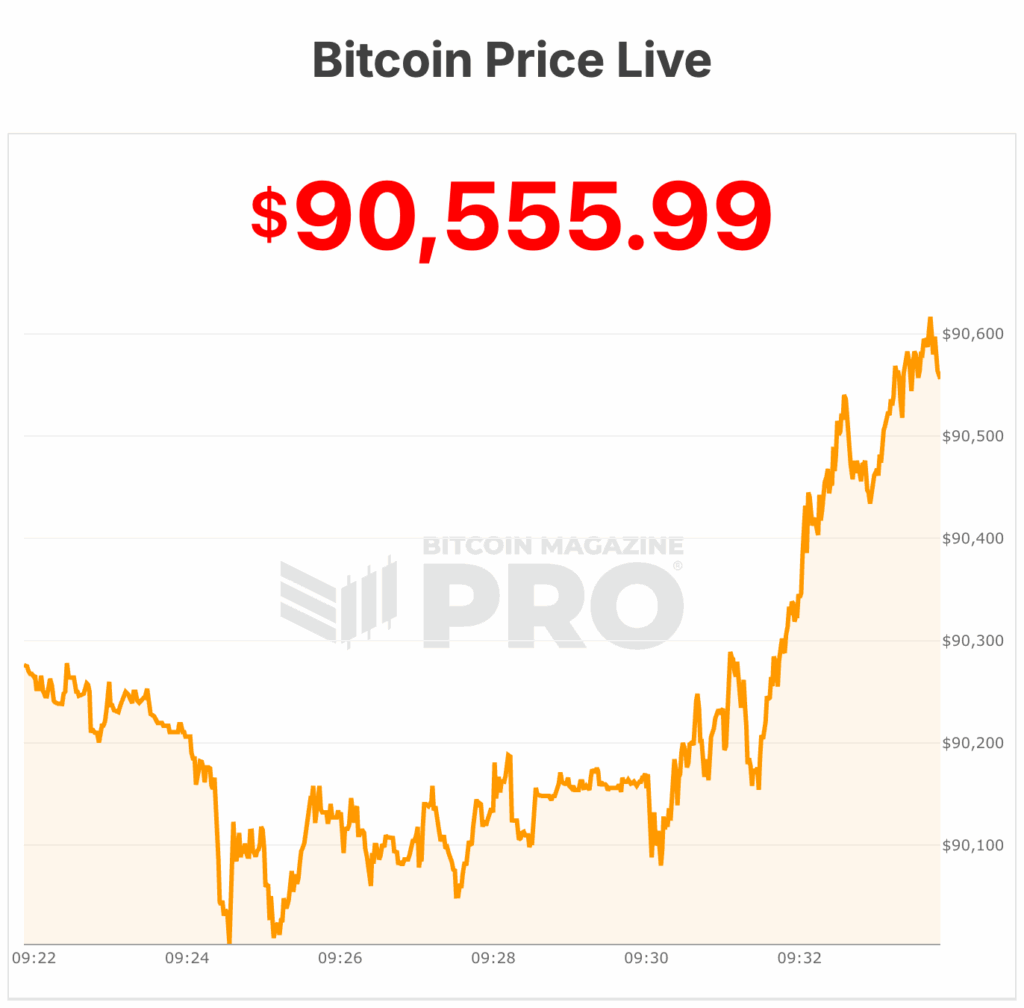






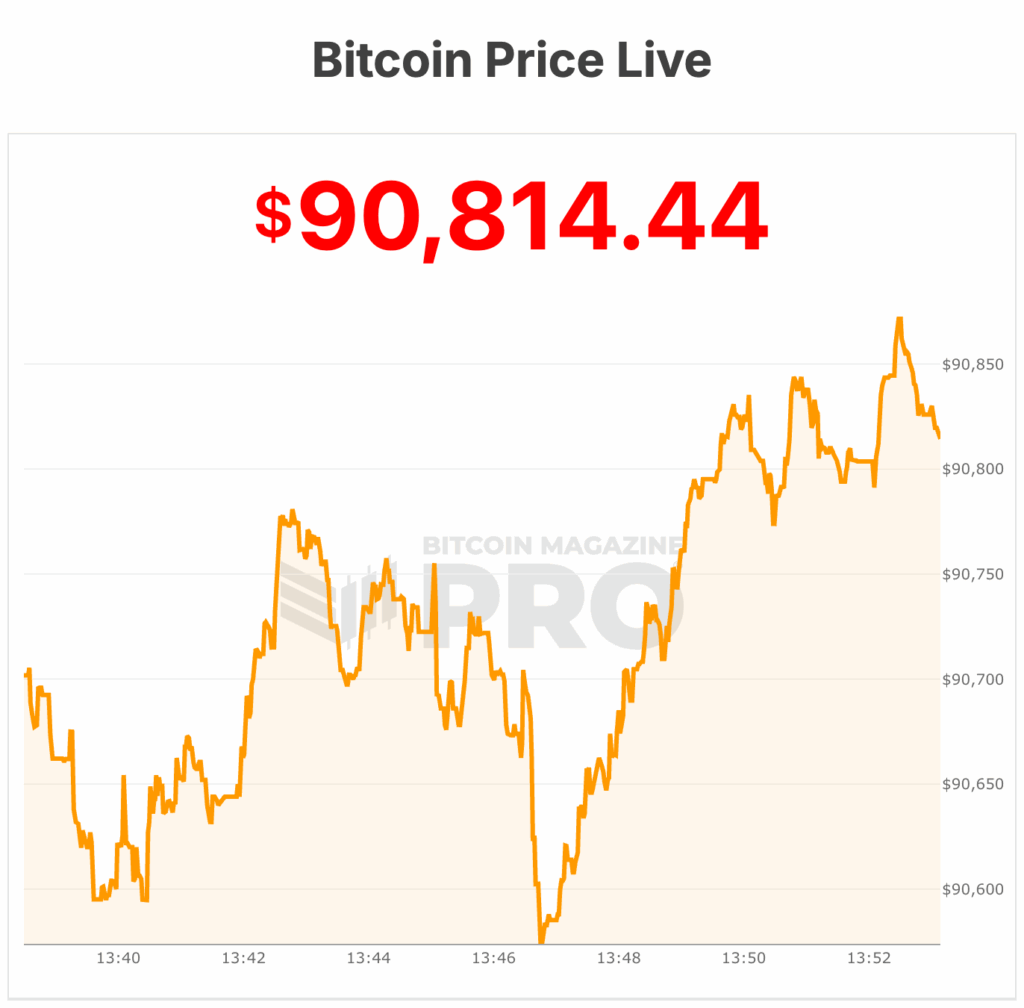

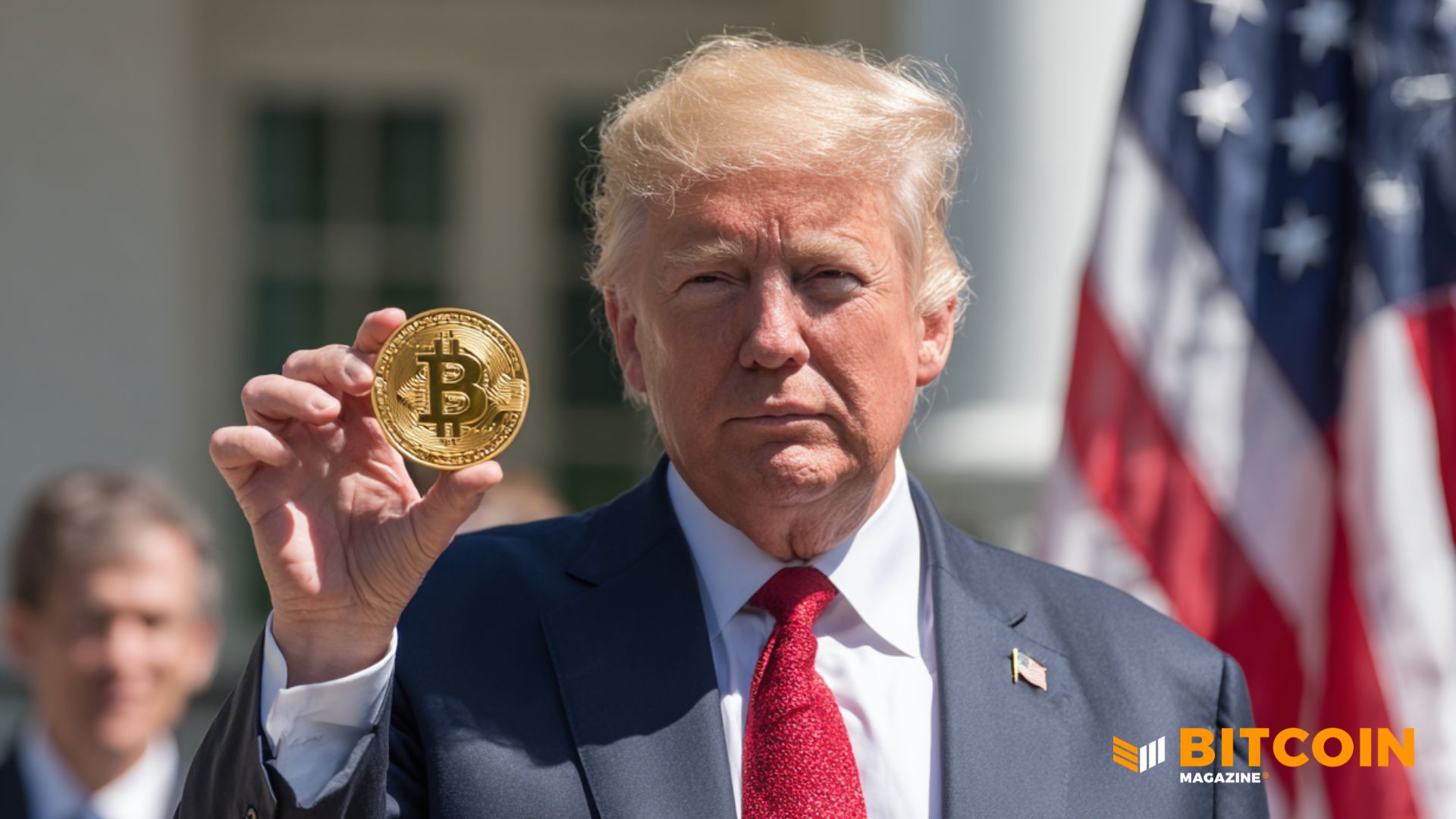











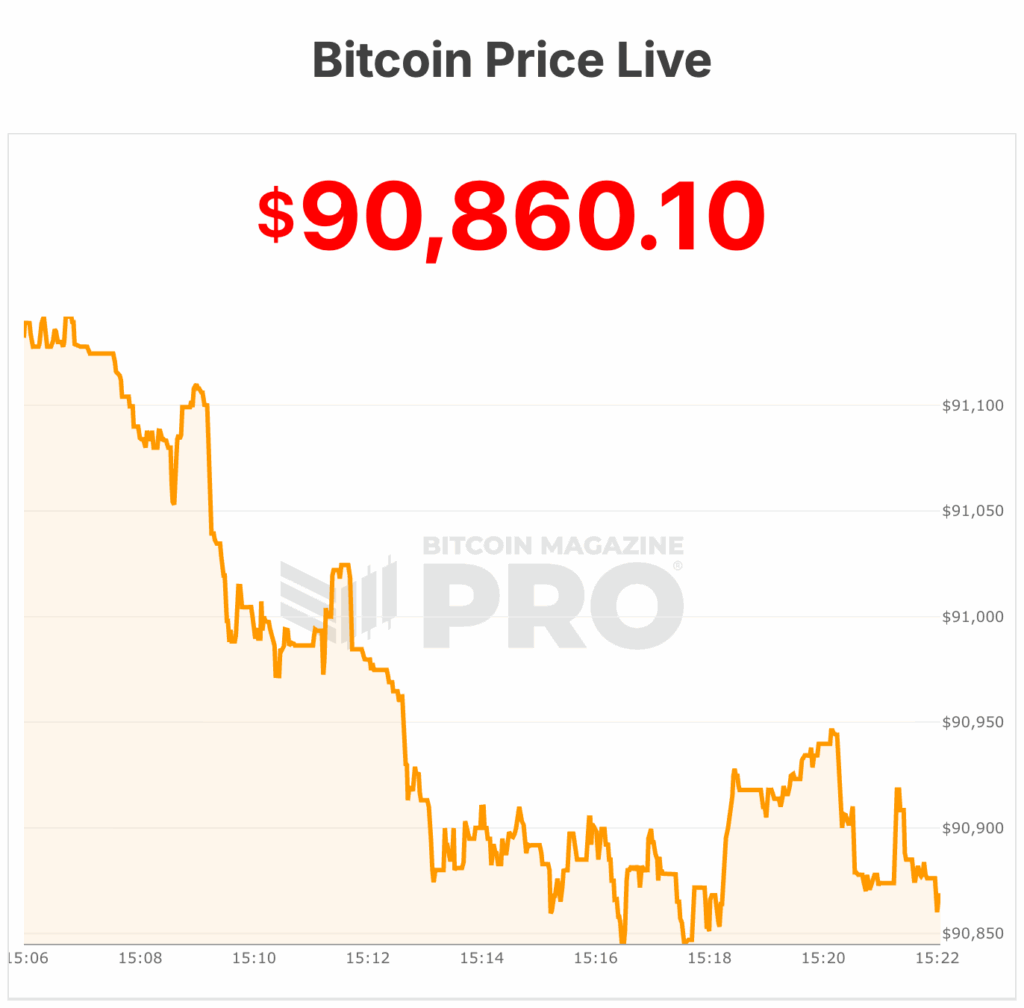








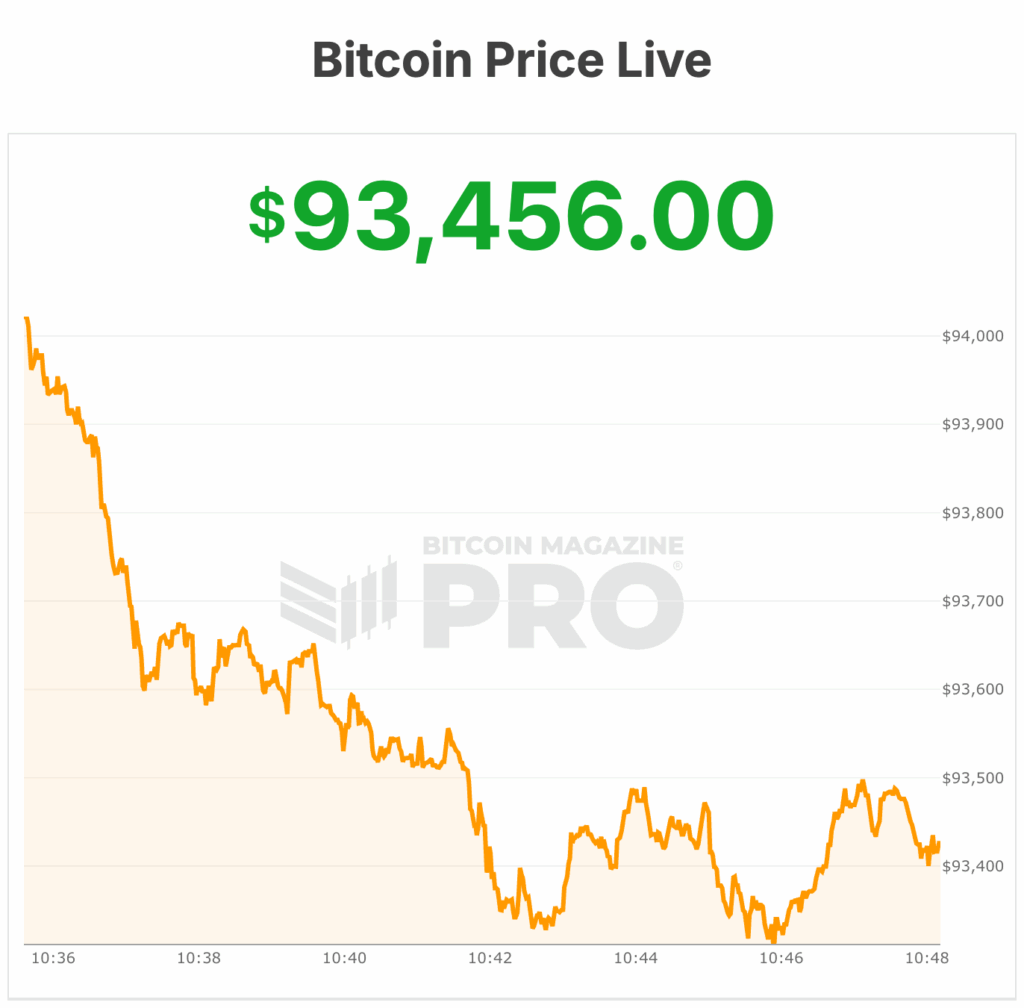


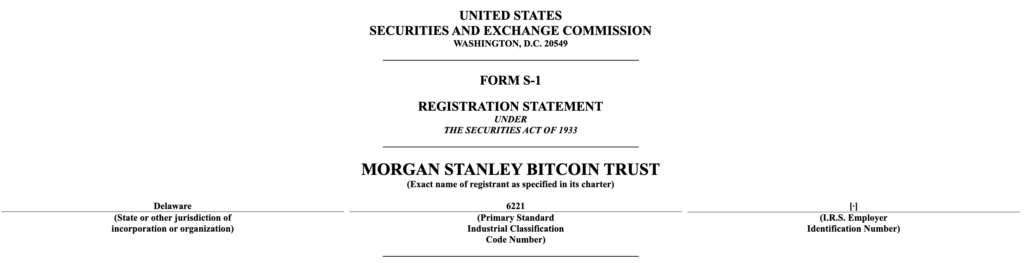


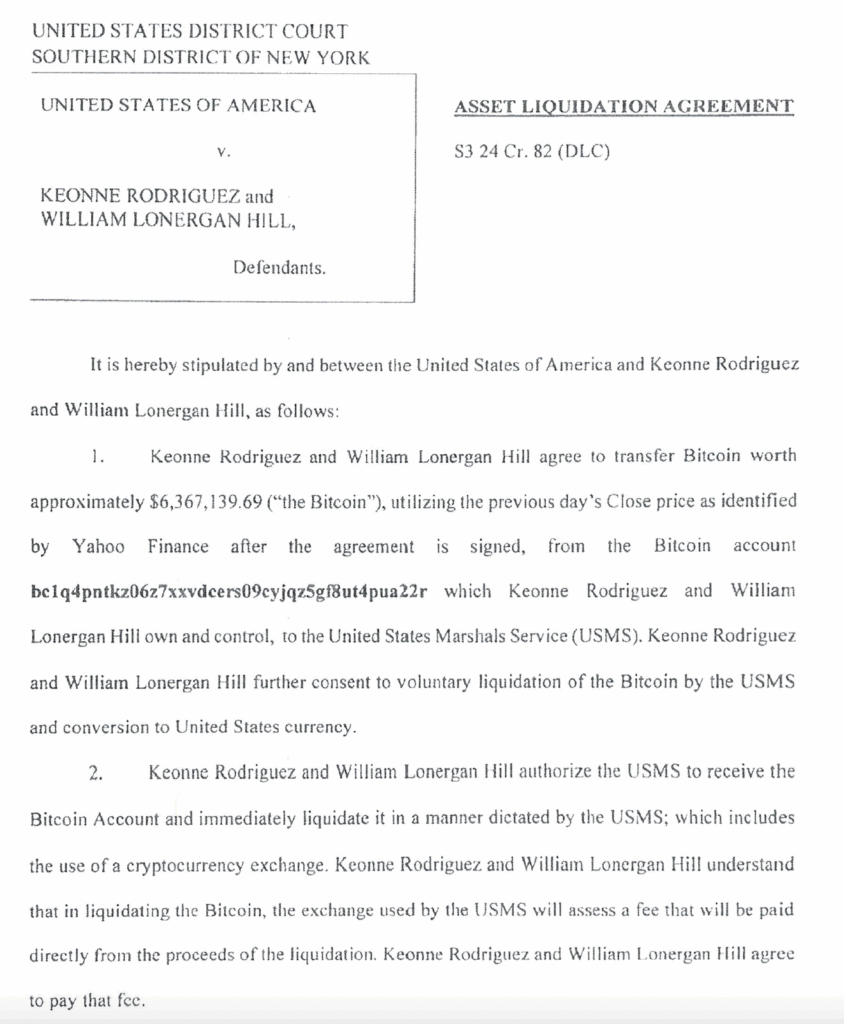
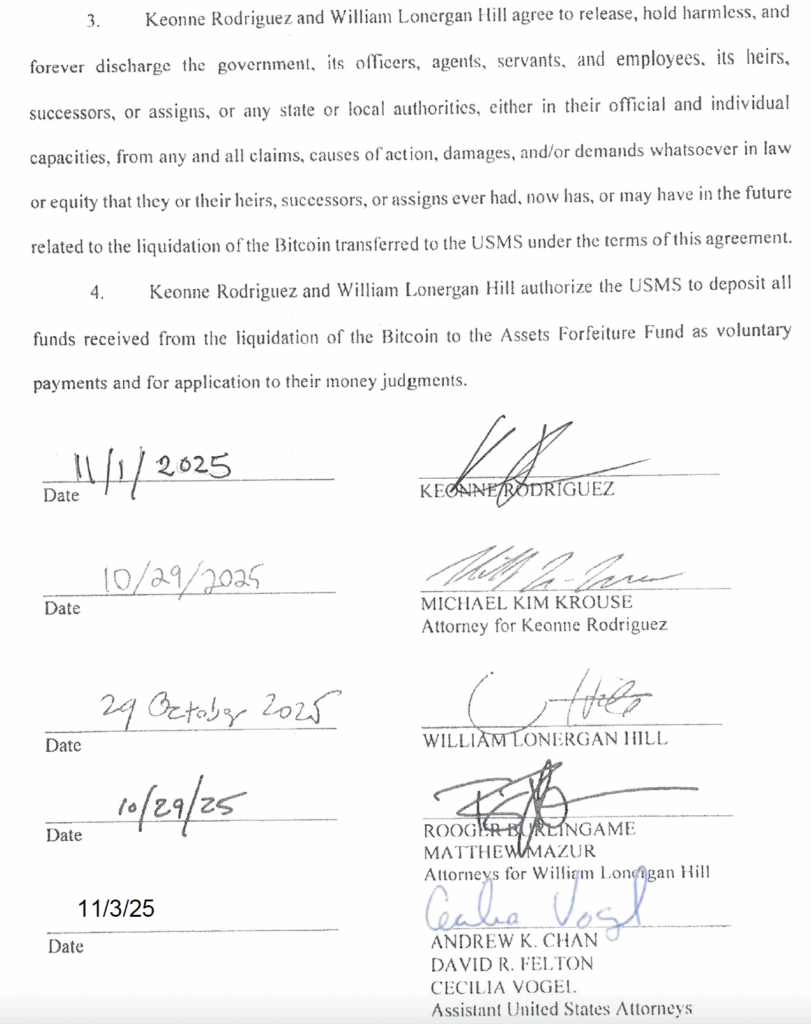






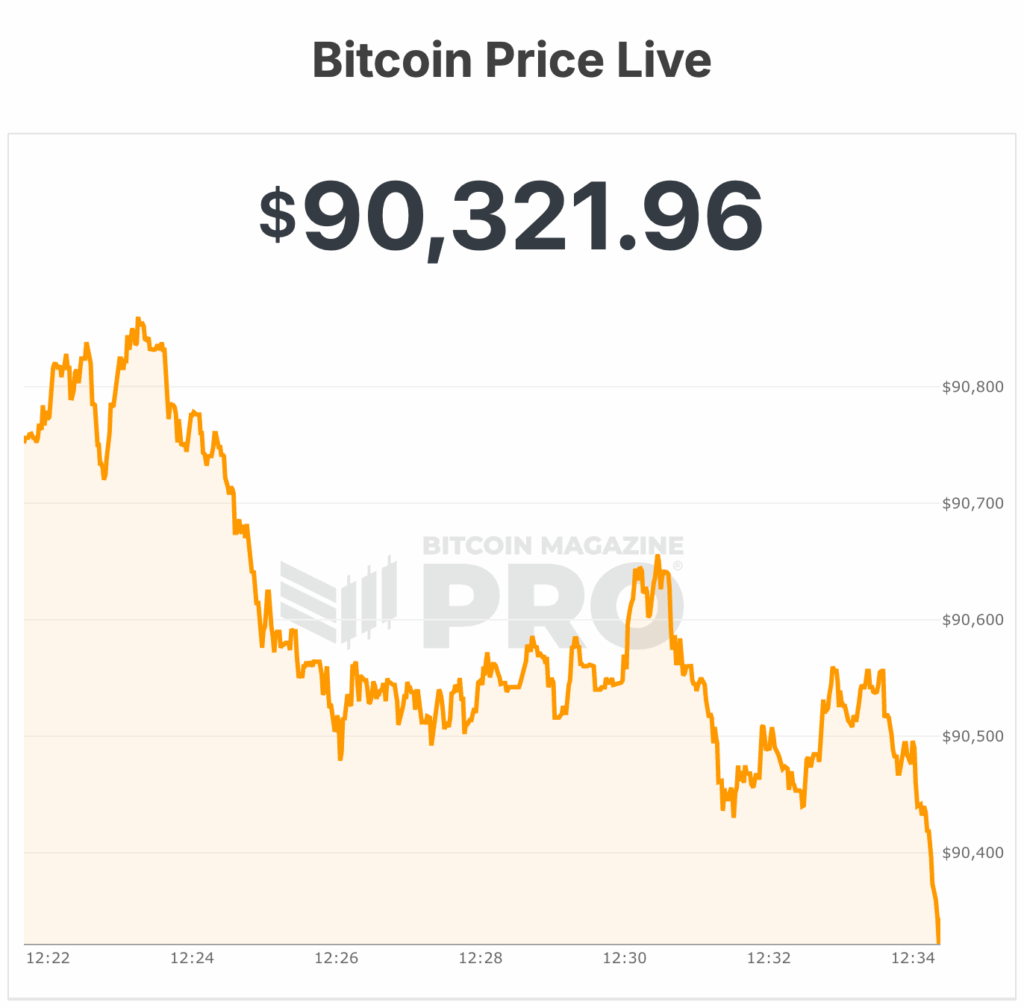




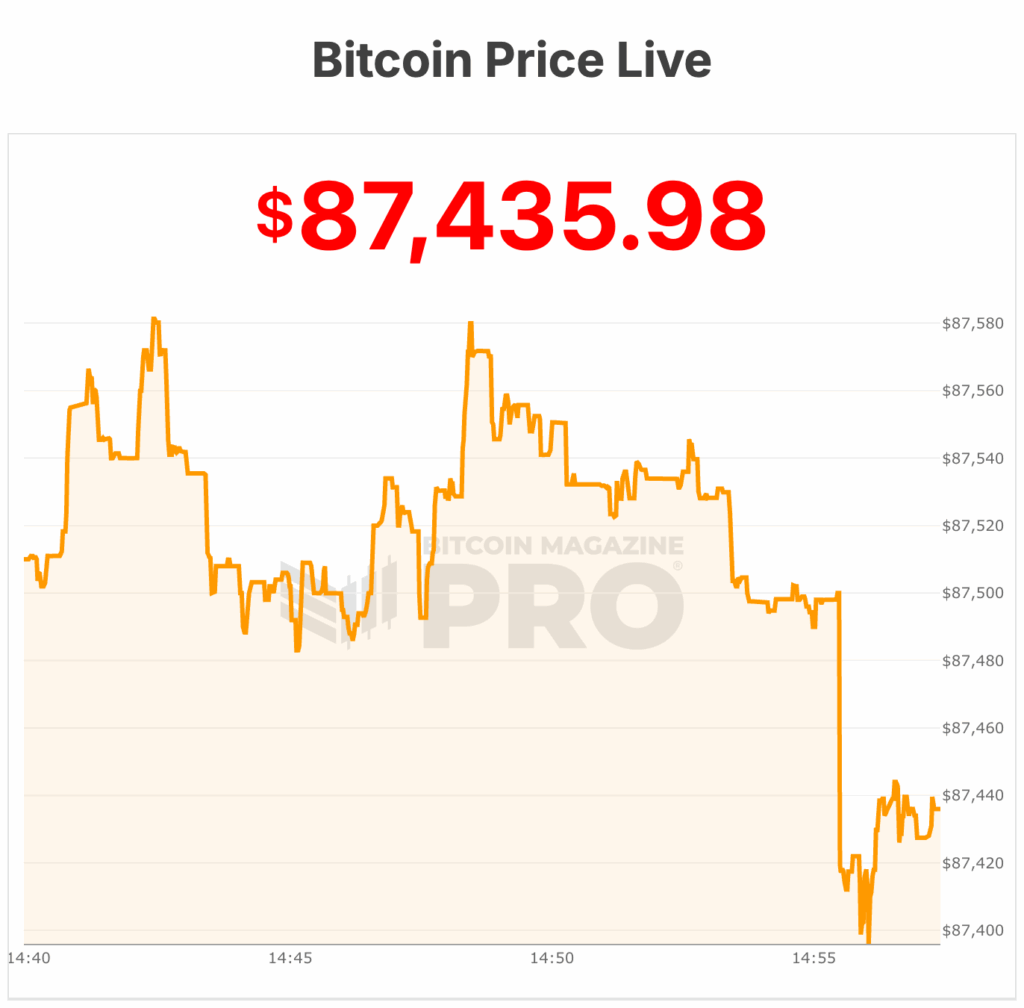




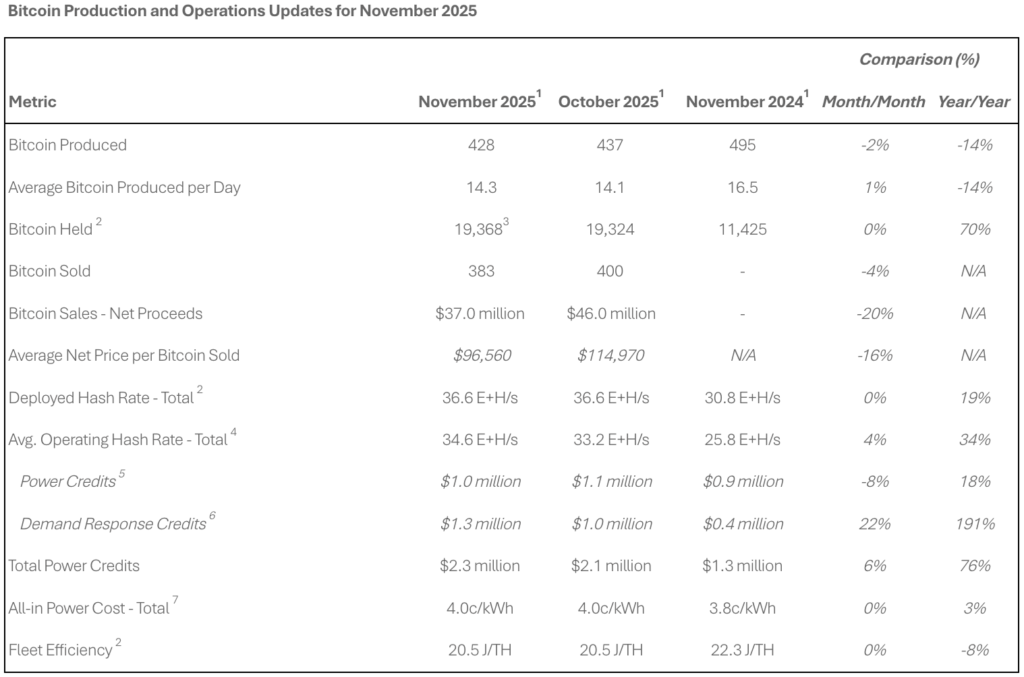





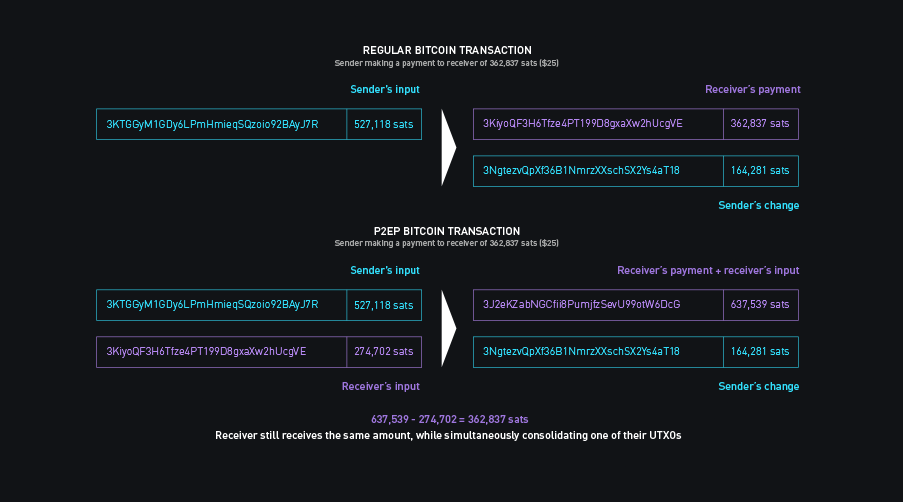


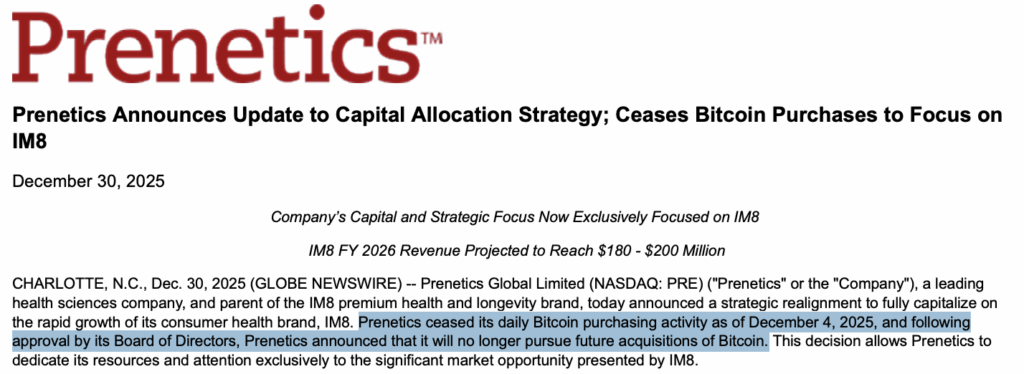



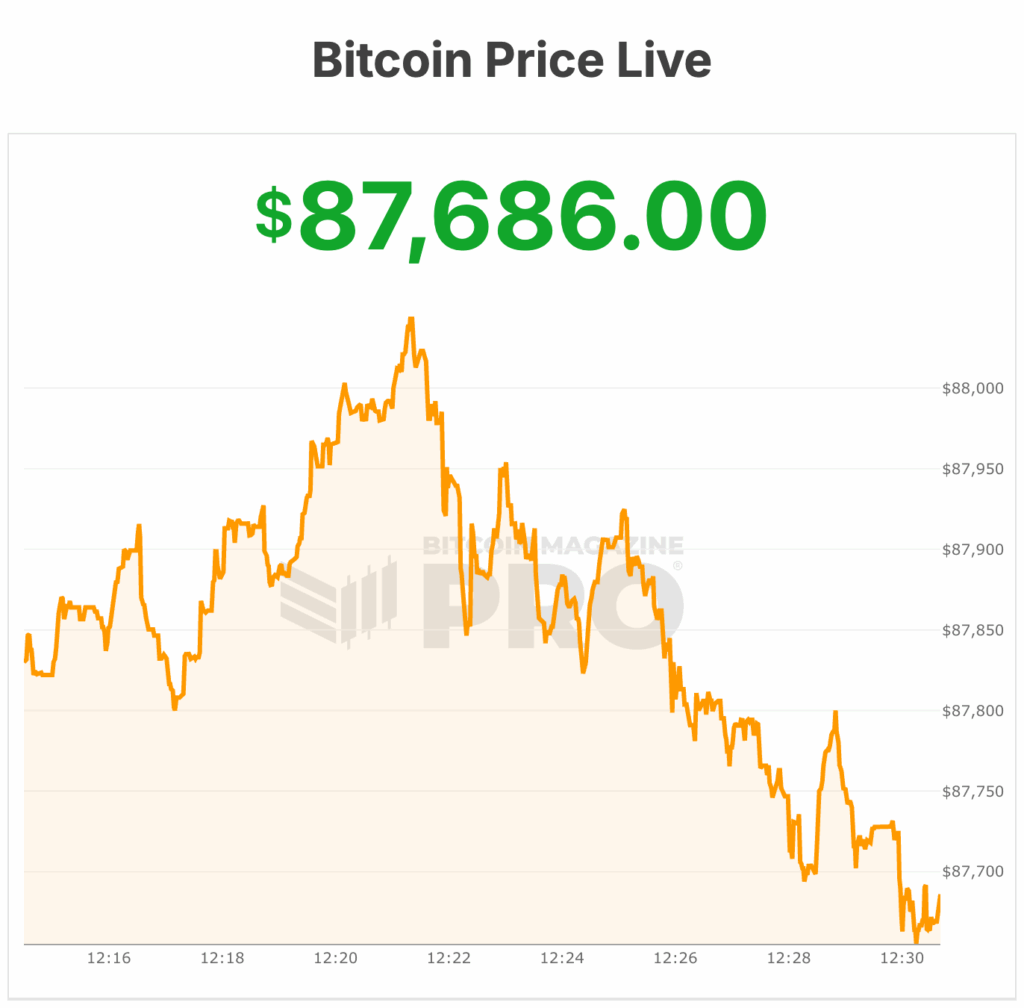










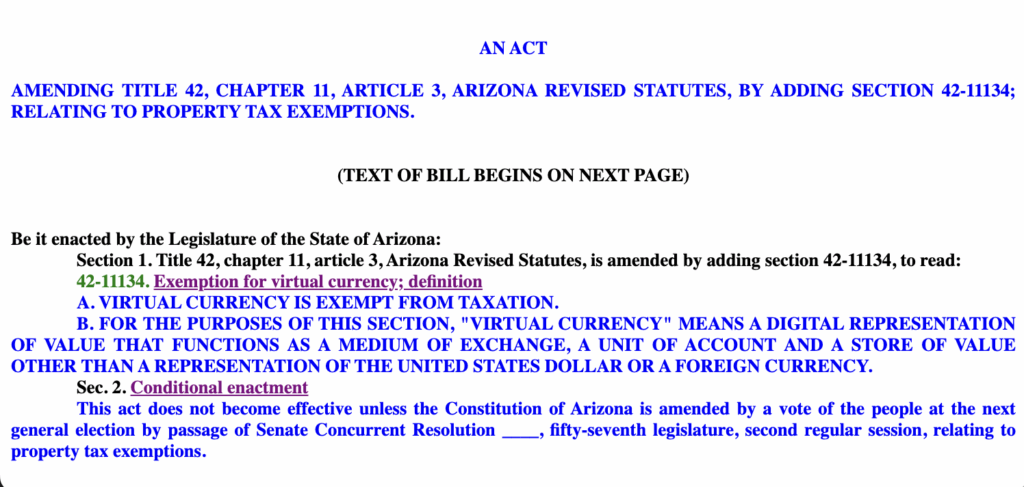


 Bank of Russia prepares a concept for regulating Bitcoin and crypto.





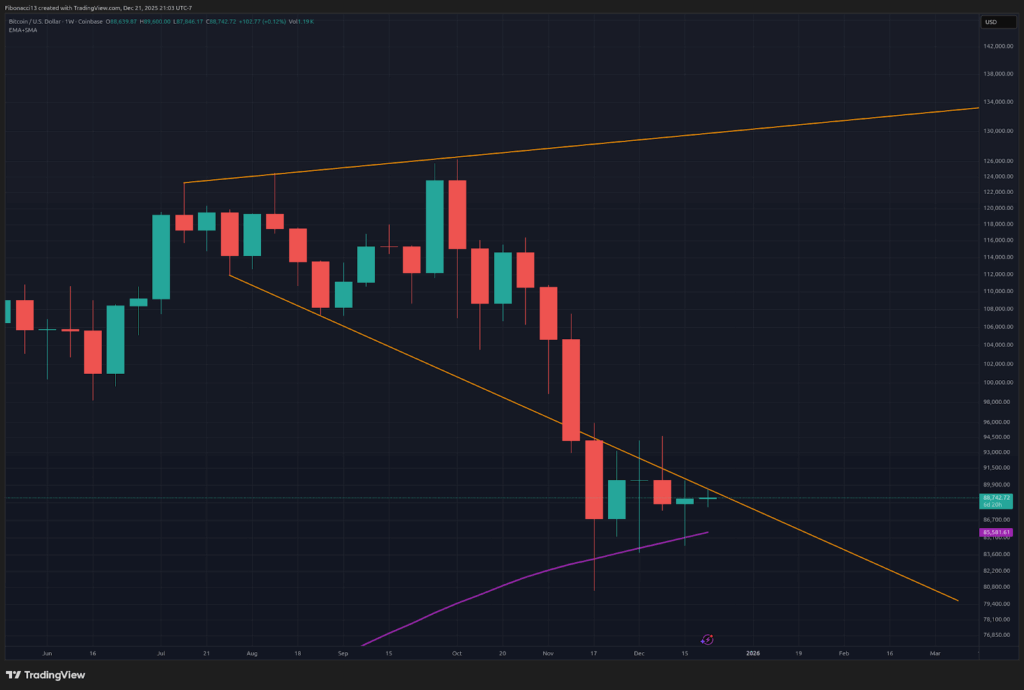
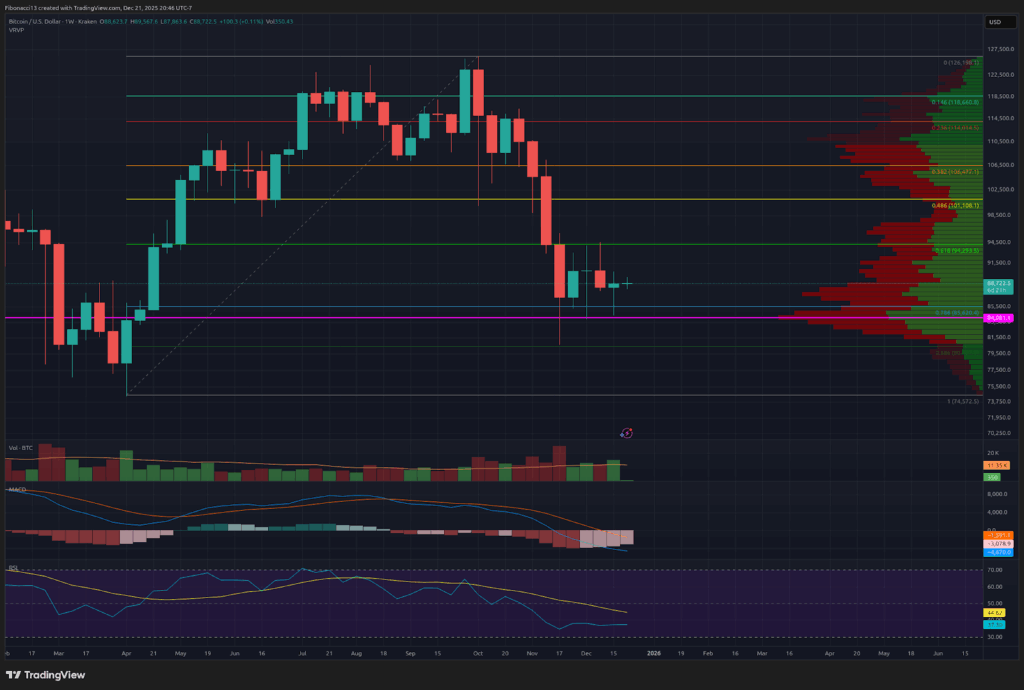
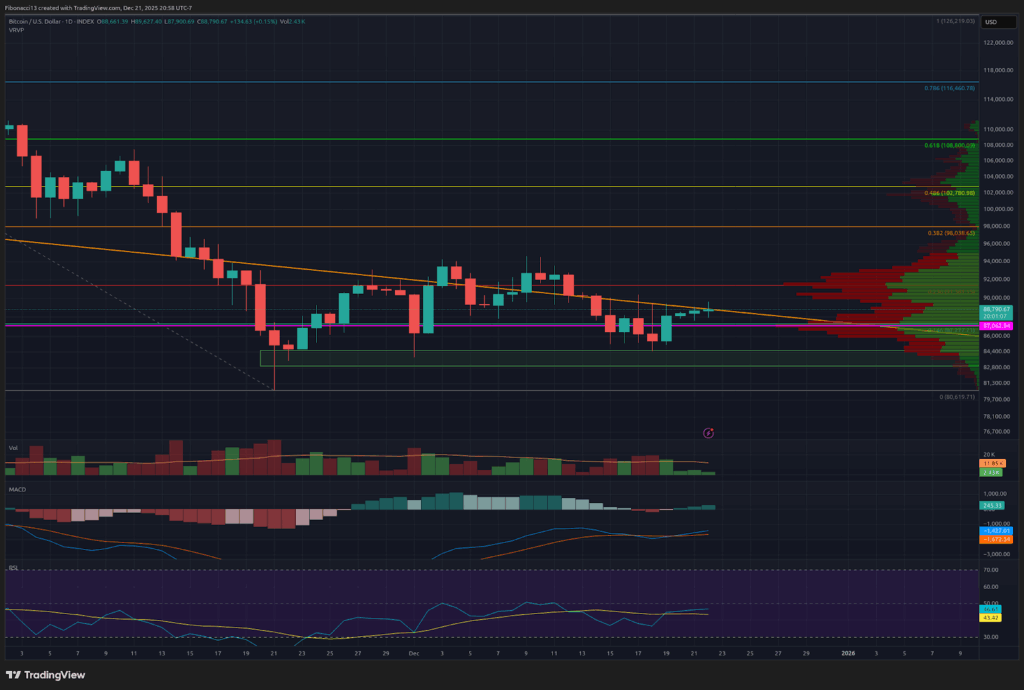




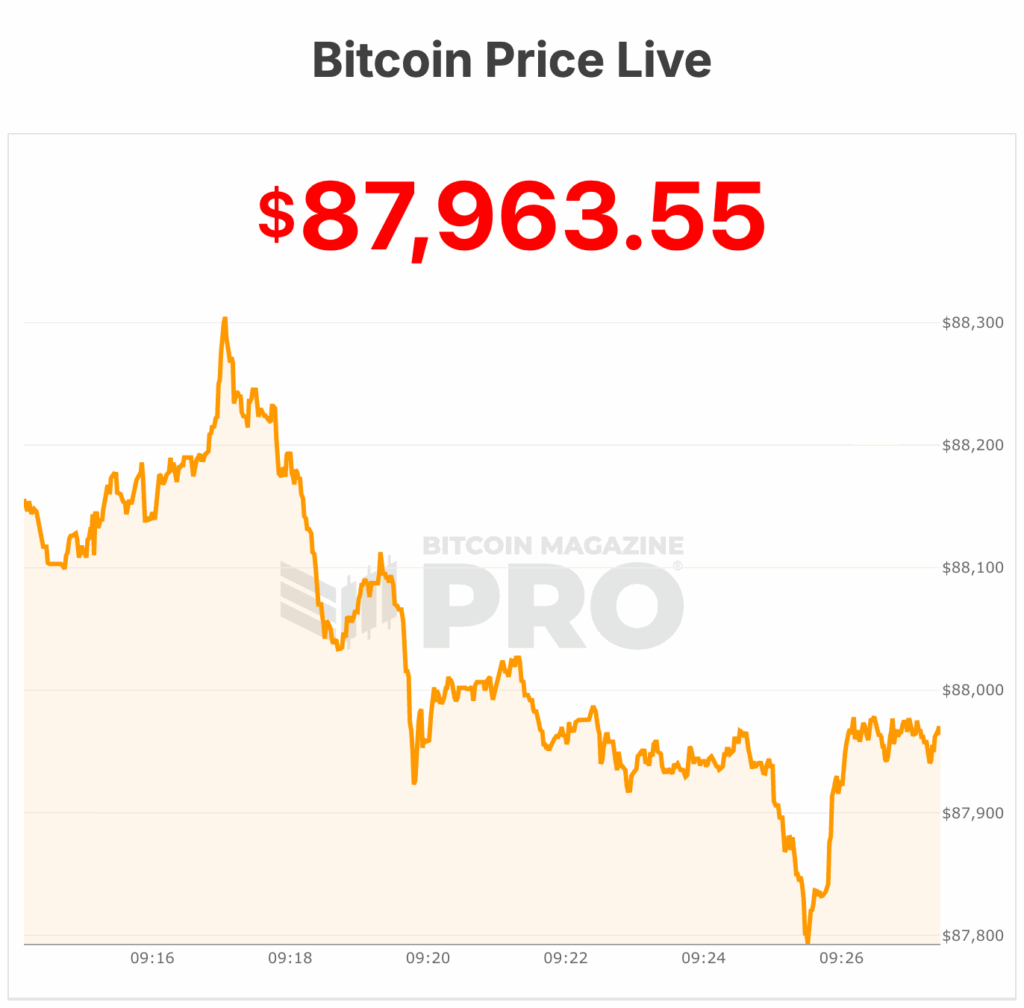




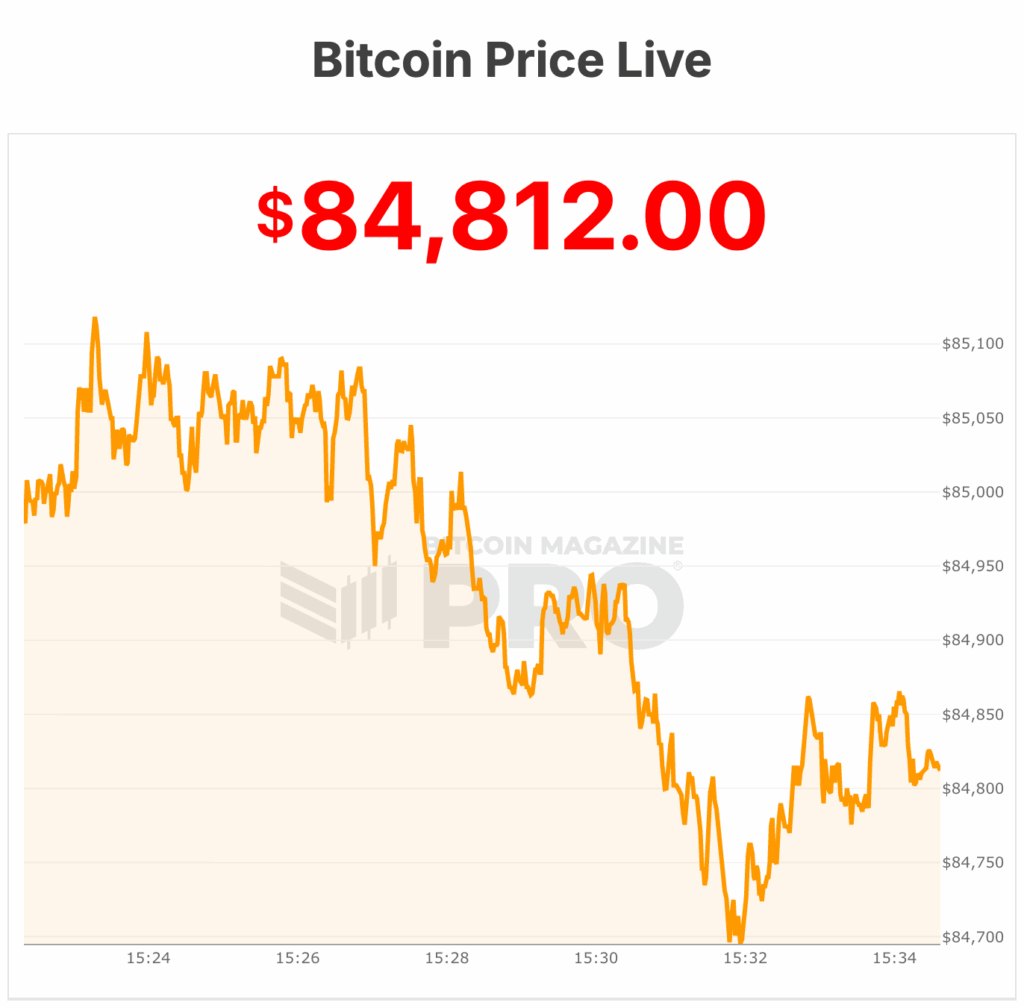





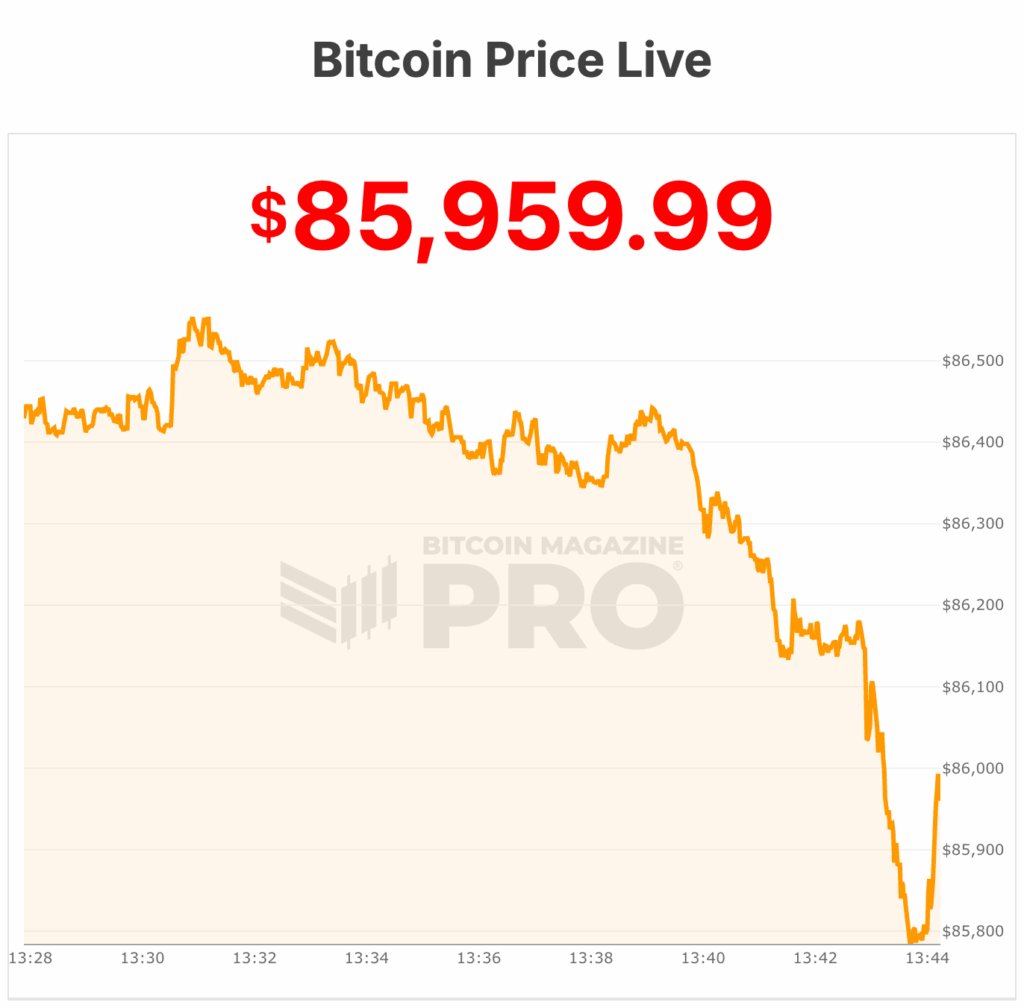






 , a pioneering system that ensures clients continue earning bitcoin even when their machines are offline.



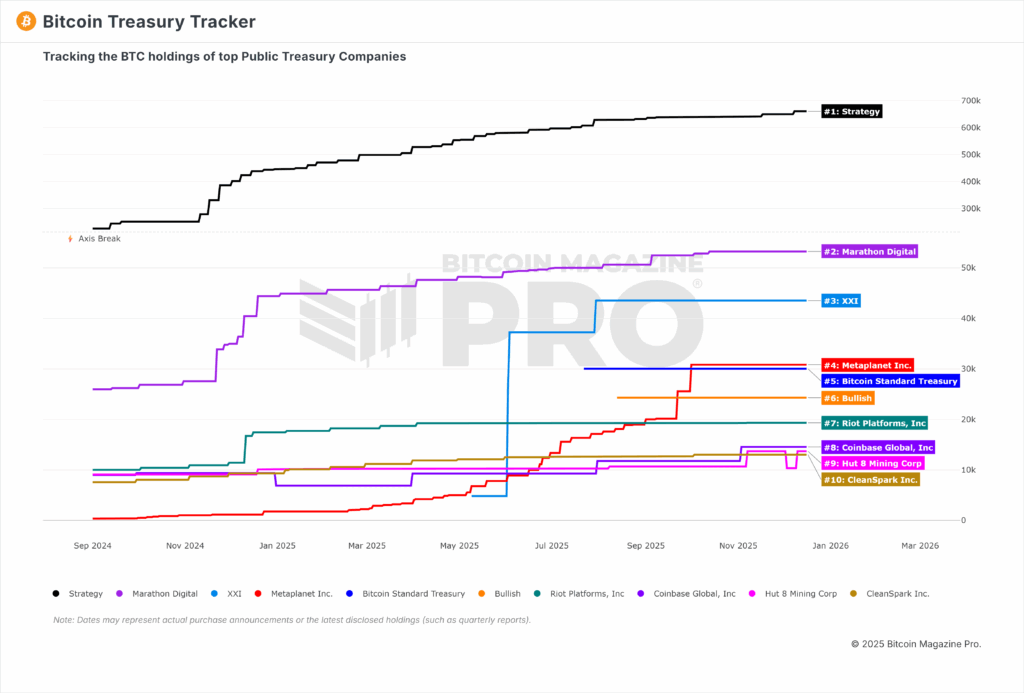
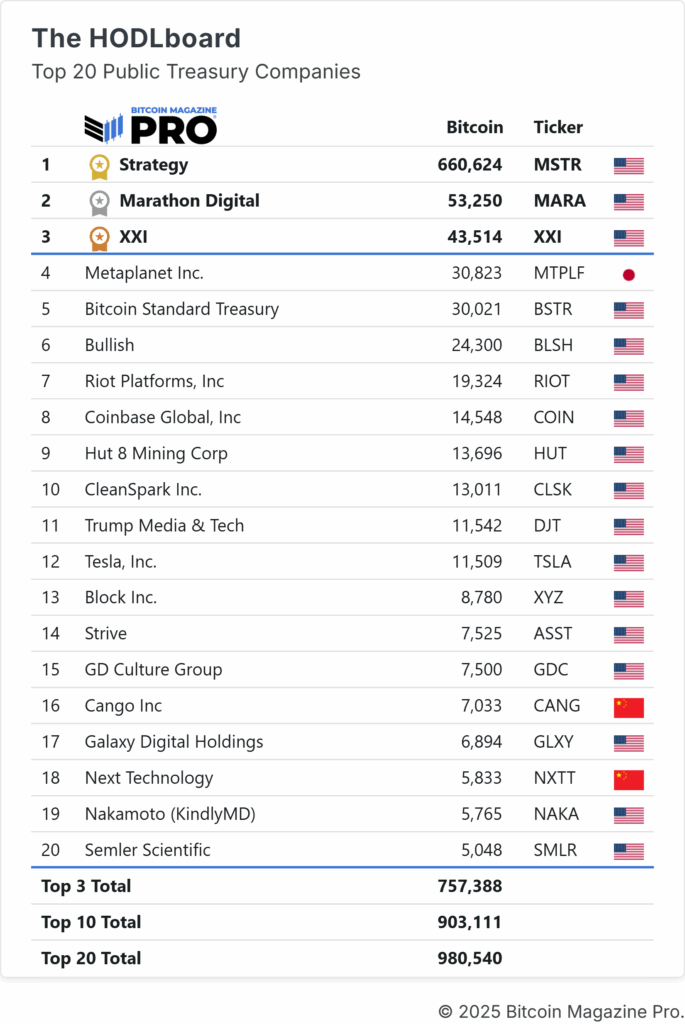




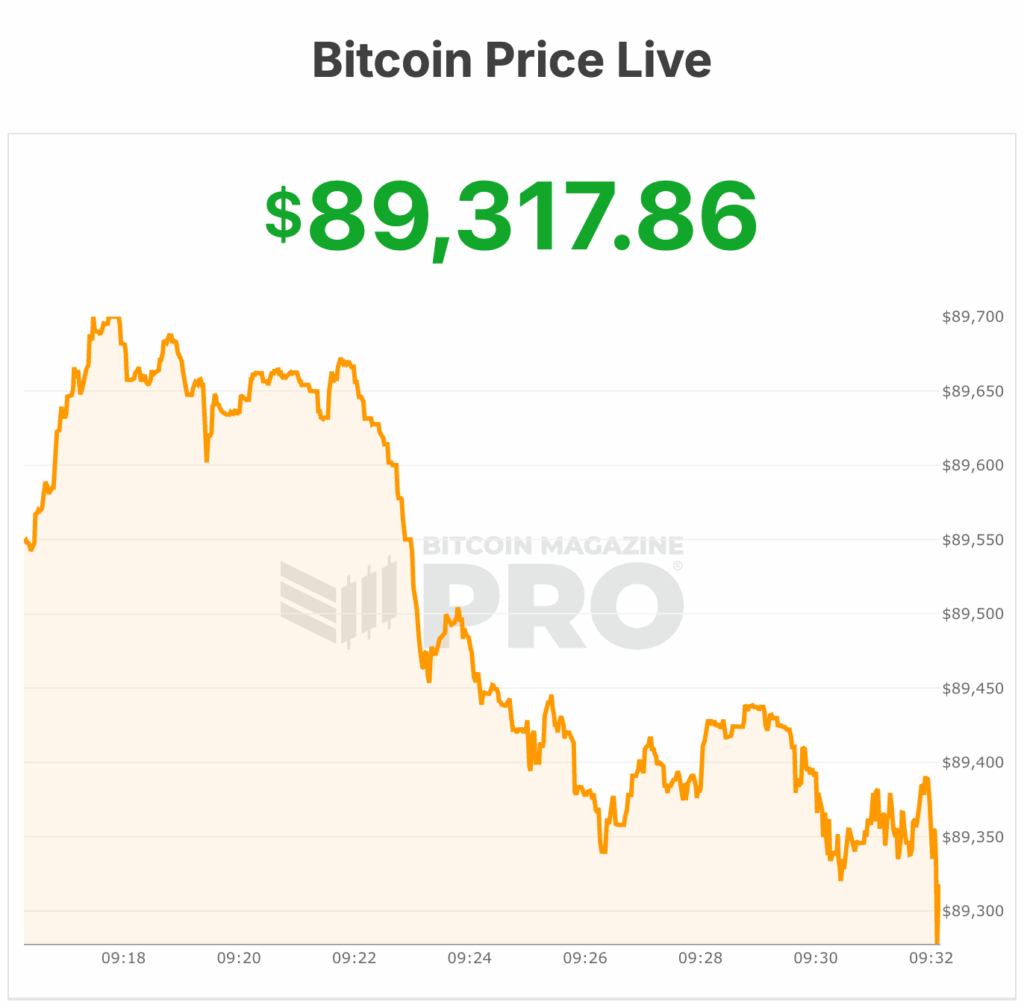







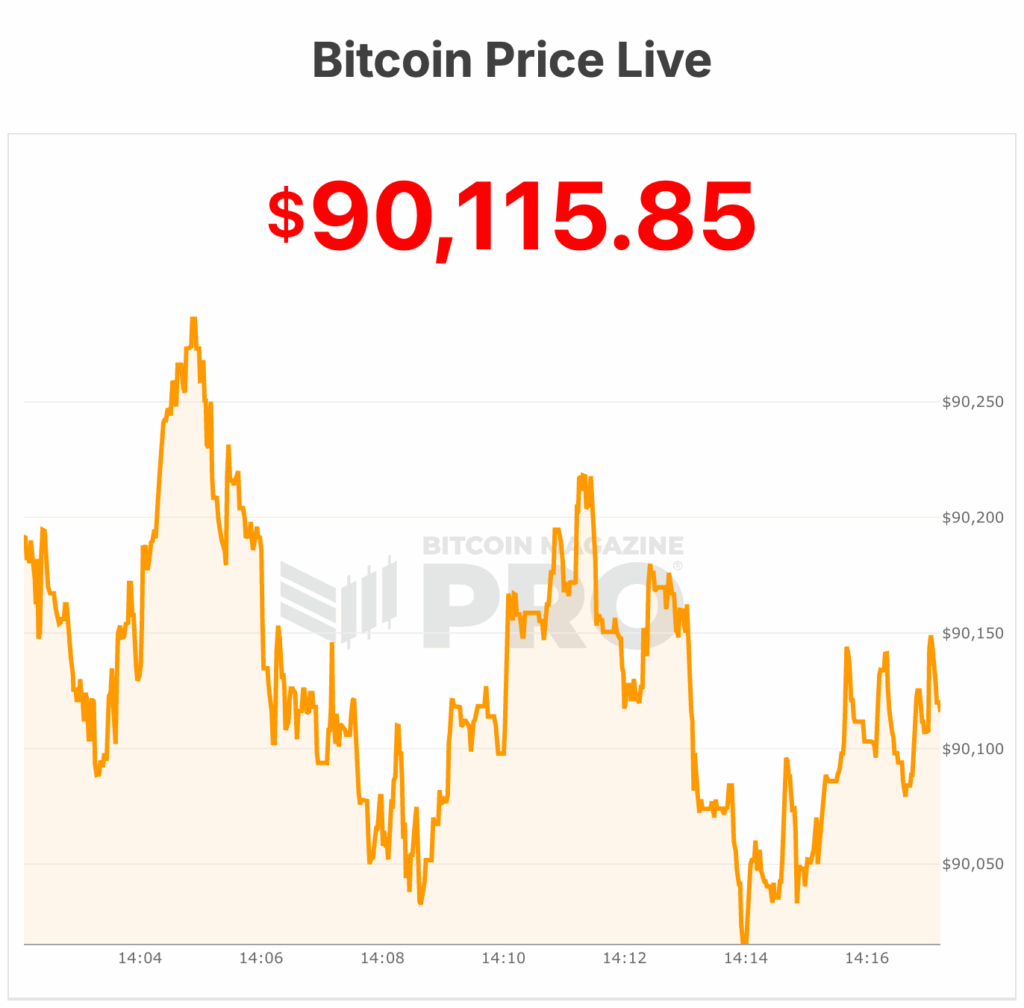




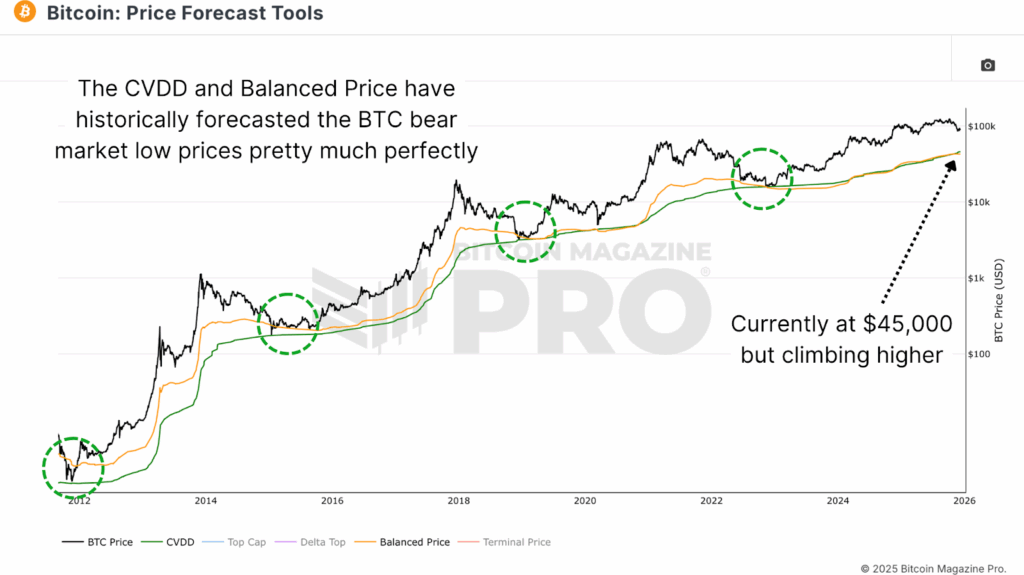
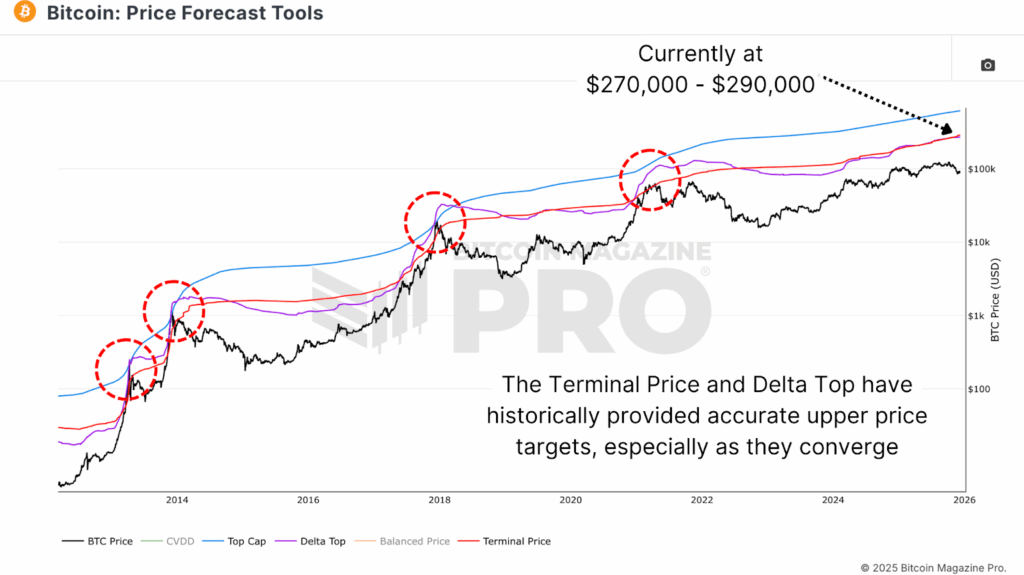
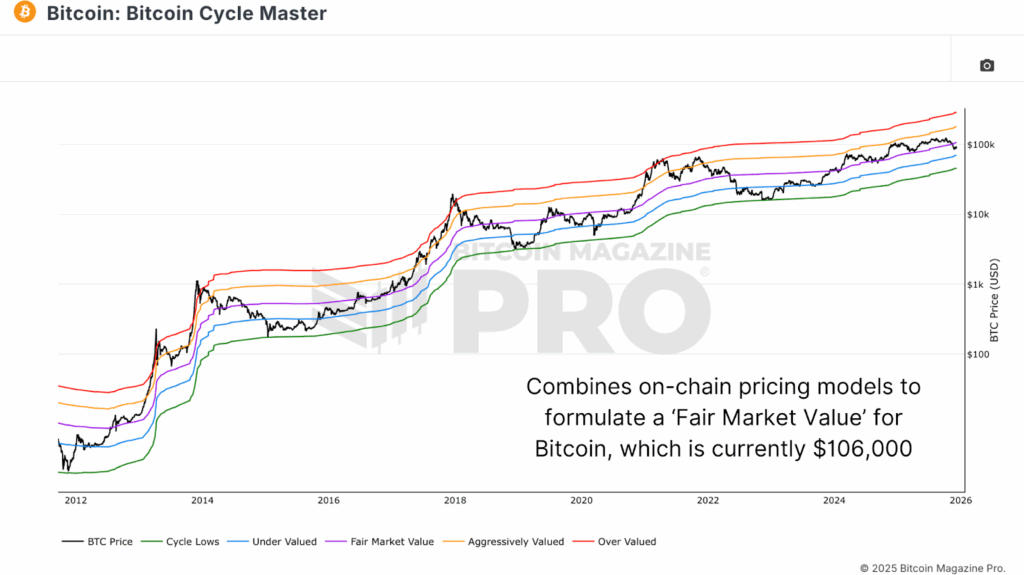



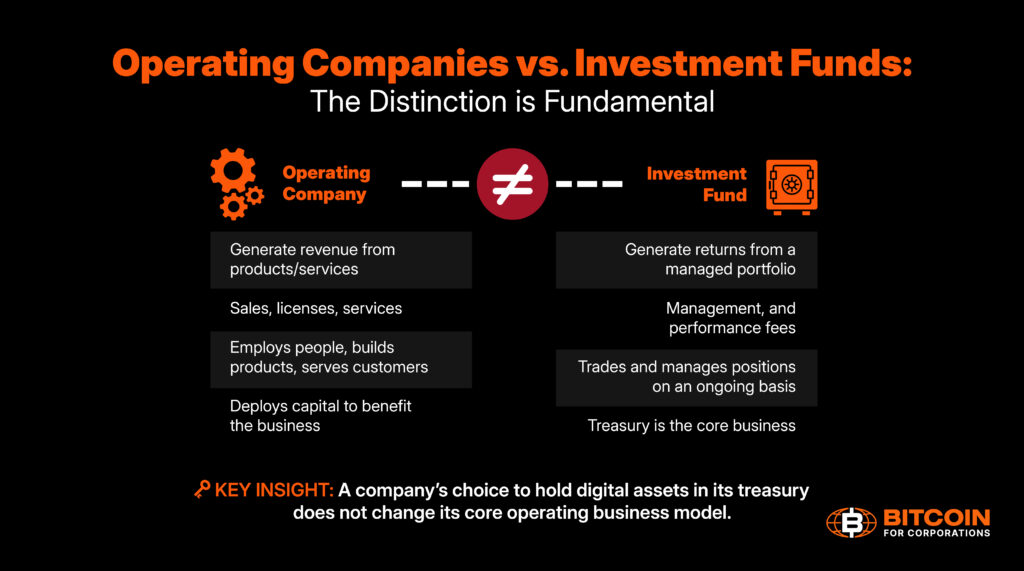
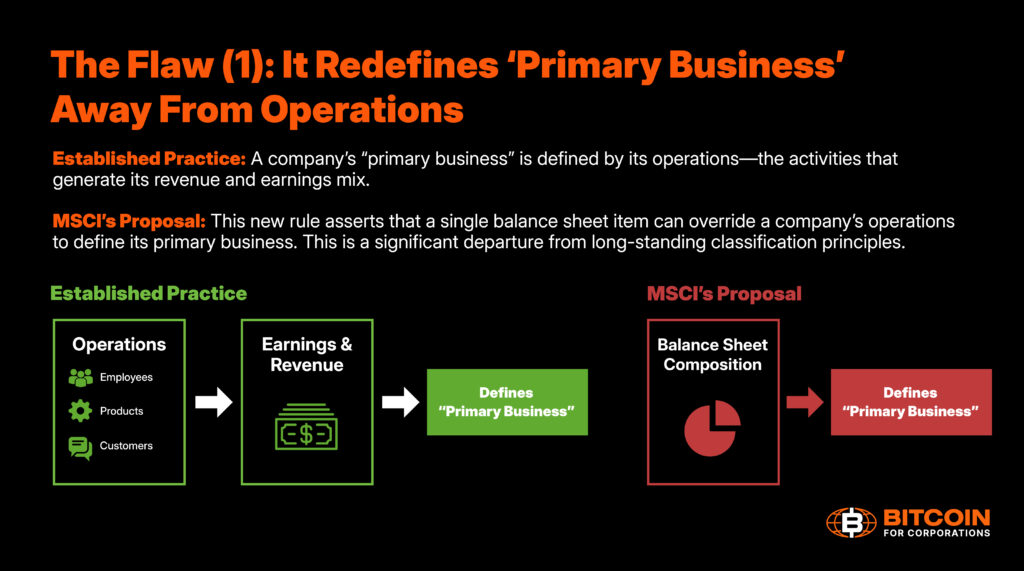
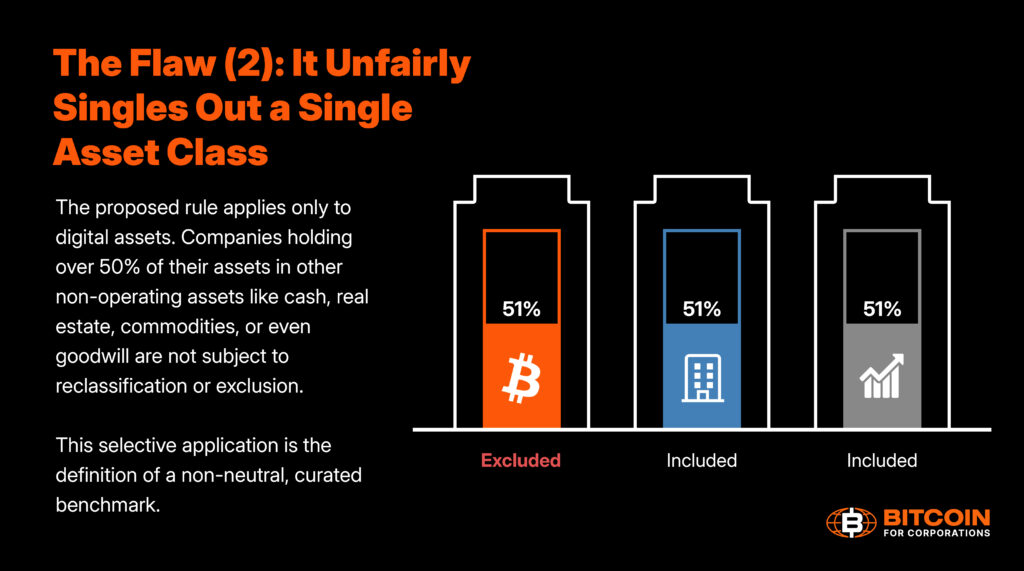

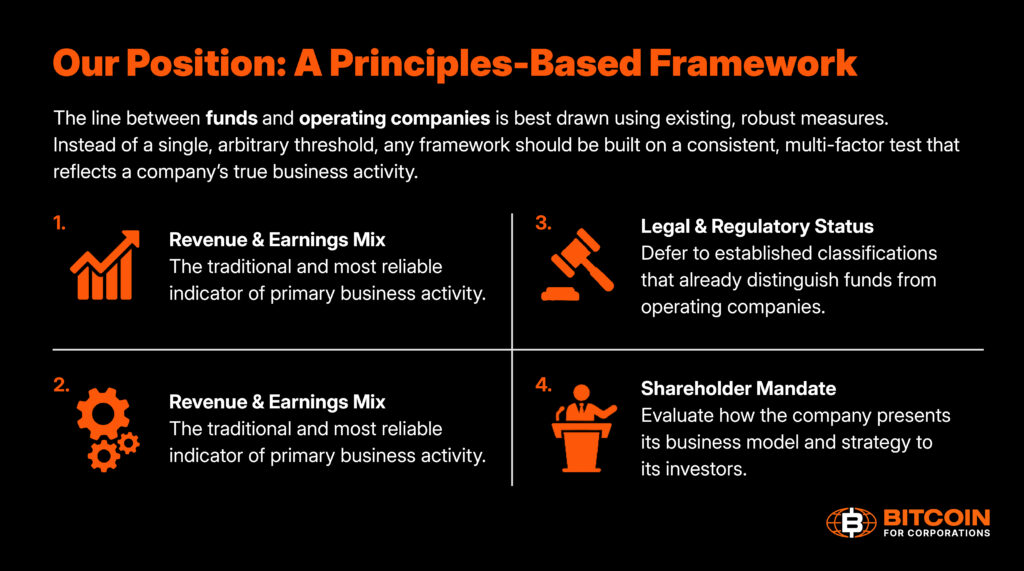








Social Media