Corporate Bitcoin treasuries faced mark-to-market losses in November, according to an exclusive Corporate Adoption Report from Bitcoin Treasuries.
The report, covering more than 100 companies, offers a systematic look at how last month’s price drop affected public company holdings.
Bitcoin briefly fell below $90,000 in late November. The decline pushed many 2025 buyers into the red. Of the 100 companies for which cost basis is measurable, about two-thirds now sit on unrealized losses at current prices, per the report.
Despite the volatility, large balance sheets continued to dominate net Bitcoin buying. Strategy, Strive, and a small cohort of high-conviction buyers accounted for most net additions.
Public Bitcoin treasury equities remain weak versus BTC and broad indices. Still, a minority of companies delivered at least 10% gains over the past 6–12 months.
Early signs of corporate Bitcoin selling also emerged. At least five companies reduced BTC exposure in November. Sequans led the group, selling roughly one-third of its holdings. While small in aggregate, these moves suggest some management teams are willing to crystallize losses or de-risk when volatility spikes.
Quarterly Bitcoin accumulation is slowing, but not collapsing. Q4 2025 is on track for roughly 40,000 BTC in net additions to public company balance sheets. This is below the last four quarters but broadly in line with Q3 2024, as companies normalize to a slower, more selective accumulation pace.
In November, public and private treasuries purchased, added, or disclosed over 12,644 BTC in November and the total BTC held across all tracked entities surpassed 4 million by month’s end.
Bitcoin purchases
Big treasuries know for their bitcoin buying continue to dominate purchases. Strategy added 9,062 BTC across three transactions in November, per the report.
Its largest buy, 8,178 BTC, came on Nov. 17. Strategy ended the month with 649,870 BTC, worth about $59 billion. Currently, the company has 660,624 after some December purchases.
Strive added 1,567 BTC at an average price of $103,315 per BTC in November. The purchase brought its month-end holdings to 7,525 BTC, or $684 million. The company funds its Bitcoin strategy primarily through perpetual preferred equity.
Mining companies remain significant players. Cango and Riot added 508 BTC and 37 BTC, respectively, from mining operations. American Bitcoin added 139 BTC through combined purchase and mining strategies.
Per the report, mining companies now account for 12% of public company BTC holdings.
Bitcoin selling and rebalancing
Sales were limited but notable. As mentioned earlier, Sequans sold nearly one-third of its holdings, to reduce convertible debt. Hut 8 reduced holdings by 389 BTC. KindlyMD and Genius Group also trimmed exposure.
Some companies added small amounts even amid the downturn. DDC Enterprise Limited picked up 100 BTC during the pullback.
Metaplanet continued “additional purchase” filings on the Tokyo exchange. ETF flows returned to net inflows after a month of redemptions.
The data suggests a barbell pattern: small distressed sellers versus programmatic buyers and disciplined treasuries. Investors see BTC increasingly used as collateral or for cash flow, rather than just as a speculative asset.
Global trends and future outlook
Corporate Bitcoin holdings are increasingly global. U.S. companies dominate the top 20, but Japan, China, Europe, and other regions are growing.
Non-U.S. public company holdings rose 3,180 BTC from two months prior, now representing about 9% of all public company BTC. Analysts say this geographic diversification reduces regulatory risk.
Despite November’s volatility, corporate adoption of Bitcoin continues. Large treasuries are still buying aggressively. The quarterly pace of accumulation is slower than earlier in 2025, the report noted, but steady growth persists.
Those interested in reading the full report can do so below:
American Bitcoin Corp. (Nasdaq: ABTC) continued to expand its BTC treasury, adding roughly 416 BTC over the past week and lifting total holdings to about 4,783 BTC as of Dec. 8, according to a company update released Wednesday.
The latest additions bring American Bitcoin’s reserve to one of the largest among U.S.-listed companies focused on BTC accumulation. The holdings were built through a mix of in-house mining and strategic market purchases, the company said.
The total also includes BTC held in custody or pledged as collateral for miner purchases under a supply agreement with hardware manufacturer Bitmain.
American Bitcoin, which listed on Nasdaq earlier this year, also reported an increase in its proprietary “Satoshis Per Share” metric, or SPS.
As of Dec. 8, SPS stood at 507, up more than 17% in just over a month. The measure reflects the amount of BTC attributable to each outstanding common share and is intended to give equity investors clearer visibility into their indirect exposure to BTC through the company’s stock.
Eric Trump, American Bitcoin’s co-founder and chief strategy officer, said the pace of accumulation reflects the company’s operating model and cost structure.
In comments included with the update, Trump said the firm has built “one of the largest and fastest growing bitcoin accumulators” within three months of listing, supported by margins designed to favor long-term value creation rather than short-term price moves.
JUST IN: Eric Trump and Donald Trump Jr. backed American Bitcoin, acquires an additional 416 BTC.
Shares of ABTC were modestly higher in early Wednesday trading, though the stock remains well below recent highs following a sharp selloff earlier this month.
On Dec. 2, ABTC shares fell roughly 50% in a session after pre-merger private placement shares became freely tradable, increasing supply and pressure on the stock.
Anthony Pompliano’s ProCap Financial buys more Bitcoin
American Bitcoin’s expansion comes as other newly listed firms also grow their BTC reserves. ProCap Financial (Nasdaq: BRR), led by Anthony Pompliano, said this week it increased its holdings to 5,000 bitcoin, adding 49 BTC following the completion of its SPAC merger.
ProCap said the purchase was structured to realize a tax loss that could offset future gains, a strategy the firm framed as shareholder-friendly capital allocation.
Pompliano described the move as part of a broader plan to maximize long-term BTC accumulation while maintaining balance-sheet flexibility. ProCap reported holding more than $175 million in cash, which it said provides capacity for additional purchases and operations.
Despite recent buying activity, shares of both companies remain under pressure. BRR stock has fallen more than 60% over the past several days.
According to data from bitcointreasuries.net, ProCap and American Bitcoin now rank among the top publicly traded companies holding BTC, placing 21st and 22nd, respectively.
The Samourai Wallet matter raises a fundamental question about how the United States treats non-custodial software and the developers who create it. Keonne Rodriguez and William Lonergan Hill did not operate a financial service or handle customer assets. They wrote and maintained software that allowed users to construct collaborative Bitcoin transactions in a privacy-preserving way. Throughout the tool’s entire lifecycle, users controlled their own keys, initiated their own transactions, and never relied on Samourai or its developers to transmit or safeguard value. The distinction between a custodial service and a non-custodial tool is not a technicality; it is the core boundary that the Bank Secrecy Act, FinCEN guidance, and decades of regulatory practice use to distinguish software authors from regulated financial intermediaries.
This point was reinforced by FinCEN itself. In an internal analysis, the agency concluded that Samourai’s architecture did not constitute money transmission because no third party took possession or control of user funds. That conclusion was never disclosed to the defense while the prosecution advanced a theory that required the opposite: that building software which users employ for privacy is functionally equivalent to operating a financial institution. When that analysis finally surfaced, it confirmed what has long been understood across the industry and within the regulatory community—that non-custodial tools fall outside the BSA’s money-transmitter framework because there is no transfer of value by a third party. The case ultimately treated the developers as if they were responsible for the independent actions of users, even though they had no role in executing, intermediating, or approving any transaction. Some individuals did misuse the tool, as happens with any privacy or security technology, but the law has never equated misuse with liability for the creators. We do not treat the authors of encryption libraries, VPN protocols, or email clients as participants in unlawful activity simply because bad actors rely on those tools. Collapsing the distinction between developing a tool and operating a service would introduce an untenable level of risk for anyone building privacy-enhancing or security-critical software.
There is also an important speech component. Courts have consistently recognized that code is expressive, and publishing open-source software is an act of communication. When publication is treated as evidence of “operation,” the legal boundary between authorship and conduct becomes blurred in a way that threatens a wide range of legitimate technologies. Any precedent suggesting that developers are responsible for unforeseeable downstream use would have immediate consequences for cryptography, cybersecurity research, and open-source work more broadly.
Rodriguez and Hill ultimately accepted plea agreements in the face of substantial sentencing exposure, even though government records undermined the central regulatory theory of the case. Their convictions now rest on a framework that is at odds with established guidance and with the direction in which federal policy has since moved. A pardon would bring the legal outcome back into alignment with the underlying facts: this was software development, not money transmission, and the individuals involved should not bear criminal liability for writing code that users executed independently.
This case has already had a measurable chilling effect on developers working on privacy and security tools in the United States. Leaving the convictions in place would discourage responsible innovation and push critical work to jurisdictions that do not share our commitment to open research and transparent development. A pardon would correct a clear misapplication of federal law, protect the integrity of long-standing distinctions in financial regulation, and reaffirm that publishing non-custodial software is not—and should not become—a criminal act.
Disclaimer – This is a guest contribution by Zack Shapiro, originally published by the Bitcoin Policy Institute (BPI). The views and opinions expressed are solely those of the author and do not necessarily reflect the views of BTC Inc or Bitcoin Magazine.
Strive, a publicly traded bitcoin treasury and asset-management firm, said it has arranged a $500 million at-the-market offering to help fund more bitcoin purchases.
The company plans to sell Variable Rate Series A Perpetual Preferred Stock, known as SATA. The offering allows Strive to issue shares into the market at prevailing prices rather than through a single sale. The structure gives the firm flexibility to raise capital as demand allows.
SATA carries a 12% dividend and an effective yield near 13%. The preferred stock is modeled on Strategy’s STRC perpetual preferred equity, which has been used as a funding tool for bitcoin accumulation.
SATA currently trades around $91, below its $100 par value.
Strive said proceeds may be used for a range of purposes. These include buying bitcoin, purchasing income-generating assets, supporting working capital, repurchasing common shares, or pursuing acquisitions.
JUST IN: Vivek Ramaswamy’s Strive to raise $500 million to buy more #Bitcoin
The company did not specify how much of the raise would be allocated to bitcoin purchases.
The 14th-largest corporate bitcoin holder
Strive currently holds about 7,525 bitcoin, valued at roughly $695 million at recent market prices. That positions the firm as the 14th-largest publicly traded corporate holder of bitcoin.
The company has leaned into a bitcoin-focused treasury strategy following a public reverse merger earlier this year.
The company was co-founded in 2022 by entrepreneur and political figure Vivek Ramaswamy. Since launching its first exchange-traded fund in August 2022, Strive Asset Management has grown to oversee more than $2 billion in assets, according to company disclosures.
The firm markets itself as an alternative asset manager with a focus on aligning capital with long-term investment themes.
In September, Strive agreed to acquire Semler Scientific, a transaction that increased the combined entity’s bitcoin exposure. The move placed the company among a growing group of public companies that use equity markets to build large bitcoin positions, a strategy popularized by Michael Saylor’s Strategy.
Shares of its common stock, ASST, trade near $1 today.
Strive calls out MSCI on bitcoin beliefs
The company has also taken an active role in market structure debates tied to bitcoin treasury firms. Earlier this month, Strive called on index provider MSCI to avoid excluding companies with large digital asset holdings from major equity benchmarks.
MSCI is reportedly consulting investors on whether firms with balance sheets dominated by crypto assets should remain eligible for inclusion.
The company argued that such exclusions would limit investor choice and reshape capital flows across passive funds. The review could have broad implications for companies that hold bitcoin as a core treasury asset.
https://bitcoindevelopers.org/wp-content/uploads/2025/12/Strive-Plans-500-Million-Stock-Sale-to-Fund-More-Bitcoin-Buys-NCmA6X.jpg10801920Bitcoin Developerhttps://bitcoindevelopers.org/wp-content/uploads/2024/08/loho_hor_1-300x108.pngBitcoin Developer2025-12-10 13:45:212025-12-10 13:45:21Strive Lines Up $500 Million Stock Offering to Buy More Bitcoin
At the Bitcoin MENA conference, Bilal Bin Saqib, CEO of the government-backed Pakistan Crypto Council and chief advisor to Pakistan’s finance minister, delivered a message that framed bitcoin not as a speculative asset, but as a practical solution to structural economic problems facing millions of people in Pakistan.
One of Bin Saqib’s most striking takeaways was how grounded his argument in lived reality. In Pakistan, bitcoin is less about ideology and more about necessity.
Bitcoin as a financial relief
As Bin Saqib put it, for many Pakistanis “bitcoin is not theory, it’s a relief,” a response to problems traditional financial systems have failed to solve for decades.
He pointed first to savings. Pakistan’s currency has lost more than half its value over the past five years, eroding purchasing power for ordinary citizens. In that environment, Bin Saqib argued, people are not looking for explanations of monetary theory. They are looking for protection.
Bitcoin, he said, provides a way to store value outside inflation driven by political decisions, money printing and currency mismanagement. “You don’t need a lecture,” he noted. “You need a hedge.”
Access was the second pillar of his case. Despite Pakistan being home to roughly 240 million people, more than 100 million remain unbanked.
JUST IN: Minister of State Bilal Bin Saqib says, “#Bitcoin gives people a way to store value outside politics, printing and inflation.”
For this population, traditional finance has simply never arrived. Bitcoin, according to Bin Saqib, offers a financial identity without the need for permission, paperwork or intermediaries that may never open the door.
That permissionless access, he argued, is especially powerful for young people encountering true financial ownership for the first time.
The third pillar was cross-border earnings. Pakistan has one of the largest freelance workforces in the world, yet freelancers often struggle to receive international payments quickly, cheaply and transparently.
Bitcoin and blockchain-based payment rails enable Pakistani workers to get paid globally without friction, delays or excessive fees. For many, this has meant a direct connection to the global economy for the first time.
Bin Saqib tied these grassroots use cases to a broader national strategy. Pakistan, he said, is not trying to “chase the future” but to build a new one. With roughly 70% of the population under the age of 30, the country cannot rely on outdated economic models.
Digital assets, and bitcoin in particular, are being viewed as infrastructure rather than speculation—new financial rails for the Global South.
He outlined his mandate since being appointed seven months ago: to transform one of the world’s largest unregulated crypto markets into a compliant, investment-friendly ecosystem.
Pakistan has already moved to establish a virtual asset regulatory framework, issue provisional licenses for exchanges, and develop regulatory sandboxes for mining, tokenization and fintech.
The goal, Bin Saqib said, is to bring activity onshore rather than push it underground, protecting users without suffocating builders.
Bin Saqib’s discussion of energy
Energy played a central role in the discussion. Pakistan paradoxically suffers from both power shortages and massive excess capacity, paying for electricity that goes unused.
Bin Saqib described bitcoin mining and artificial intelligence as tools to convert that “wasted economic oxygen” into productive output.
Every unused megawatt, he argued, could be turned into bitcoin mining or AI compute, effectively transforming stranded energy into digital exports.
In that framework, bitcoin mining becomes less about consumption and more about industrial renewal.
Rather than exporting only commodities or labor, Pakistan could export compute—what Bin Saqib called one of the most valuable resources of the 21st century. He framed this not as a narrow energy policy, but as part of a broader industrial rebirth.
Looking ahead, Bin Saqib predicted that the next wave of bitcoin adoption will not be led by Wall Street, but by emerging markets where economic pain is real and the upside is massive.
https://bitcoindevelopers.org/wp-content/uploads/2025/12/Bitcoin-Is-a-Relief-Not-a-Theory-Pakistans-Case-for-Crypto-Adoption-wKmVK2.jpg10801920Bitcoin Developerhttps://bitcoindevelopers.org/wp-content/uploads/2024/08/loho_hor_1-300x108.pngBitcoin Developer2025-12-09 15:01:082025-12-09 15:01:08Bitcoin Is a Relief, Not a Theory: Pakistan’s Case for Crypto Adoption
Bitcoin miner hash rate has experienced a significant decline since mid-October, falling sharply despite years of near-uninterrupted growth. This pullback reflects genuine bitcoin miner capitulation driven by deteriorating profitability in the face of Bitcoin’s recent price weakness. However, could this bitcoin miner shift actually provide a golden opportunity?
Bitcoin Miner Profitability
The Bitcoin network’s total computational hash rate has entered a notable downtrend since October 18th, reversing what has otherwise been a consistent multi-year climb. The hash ribbons indicator, which compares the 30-day moving average of hash rate against the 60-day moving average, has turned red, indicating miner capitulation. When the longer-term moving average crosses above the shorter-term one, it signals that miners are withdrawing computational power from the network, typically because profit margins have become too thin to justify continued operations at previous levels.
The Puell Multiple, which measures daily USD earnings for miners relative to their 365 day moving average, recently collapsed to approximately 0.67. This means miners are earning only two-thirds of their yearly average revenue. The metric reveals a concerning trend, as Bitcoin has matured and the network has grown, mining economics have become increasingly compressed.
Bitcoin Miner Revenue Under Pressure
A deeper issue lies in the composition of miner revenue. Bitcoin miners derive income from two sources: block subsidies and transaction fees. The current block subsidy stands at 3.125 BTC per block, representing the lion’s share of miner revenue. However, transaction fees, which could theoretically offset declining subsidies over time, have entered a long-term downtrend throughout this cycle. When measured in USD terms, miner fee revenue is now practically negligible compared to the block subsidy.
This creates an uncomfortable math problem. The block subsidy decreases by 50% every four years at the halving. For miner revenue to remain constant, Bitcoin’s price must reliably double every four years. This requirement becomes increasingly unrealistic as Bitcoin matures and approaches tens or hundreds of trillions in market capitalization. Within 20-30 years, the halvings would require Bitcoin prices of tens of millions of dollars per unit merely to maintain current revenue levels for miners.
Structural Hurdles for Bitcoin Miners
When block subsidies eventually decline toward zero over the coming decades, transaction fees must theoretically fill that gap. Yet the current cycle demonstrates that fee revenue is moving in the opposite direction and declining as users migrate to more efficient layer-two solutions like the Lightning Network and as on-chain transaction volume stagnates.
Layer-two scaling solutions are good for Bitcoin’s utility and lower users’ costs. Similarly, fewer on-chain transactions reducing congestion and fees is positive for accessibility. But these developments and improvements that make Bitcoin more practical as a payments layer simultaneously reduce the revenue available to secure the base layer long-term.
Conclusion: Bitcoin Miner Capitulation as Opportunity
Bitcoin miners are undoubtedly capitulating, driven by declining price action and deteriorating profit margins. For tactical traders and accumulation-minded investors, this represents a favorable window to scale into positions, particularly once the hash ribbons reversal signal emerges. History suggests such periods rarely persist without eventually producing sharp Bitcoin rallies.
Disclaimer: This article is for informational purposes only and should not be considered financial advice. Always do your own research before making any investment decisions.
The Commodity Futures Trading Commission announced the launch of a U.S. digital assets pilot program that will allow bitcoin, ethereum and the stablecoin USDC to be used as collateral in regulated derivatives markets, marking another major policy shift in how U.S. regulators approach tokenized assets.
The move includes new guidance for tokenized collateral, a limited no-action framework for futures commission merchants (FCMs), and the withdrawal of legacy restrictions that the agency said are no longer relevant following passage of the GENIUS Act.
Acting CFTC Chair Caroline Pham said the program is designed to expand the use of digital assets in regulated markets while maintaining oversight and customer protections.
“Americans deserve safe U.S. markets as an alternative to offshore platforms,” Pham said in a statement. “Today, I am launching a U.S. digital assets pilot program for tokenized collateral that establishes clear guardrails to protect customer assets and provides enhanced CFTC monitoring and reporting.”
Bitcoin and other crypto as a pilot
Under the pilot, FCMs will be temporarily allowed to accept a narrow set of digital assets like Bitcoin as customer margin, according to a CFTC announcement.
During the first three months of participation, firms will be required to submit weekly reports to the CFTC detailing the total amount of digital assets held in customer accounts, broken out by asset and account class.
Companies must also notify regulators of any material incident involving the use of digital collateral.
The agency said the reporting requirement is intended to give staff real-time insight into operational risks while allowing firms controlled access to tokenized collateral.
Last week, the CFTC allowed federally regulated spot crypto trading in the U.S. for the first time, with Bitnomial set to launch its exchange next week under CFTC oversight.
Pham said CFTC-registered venues will list spot crypto products, enabling retail and institutional traders to access spot, futures, options, and perpetuals on a single regulated platform.
Alongside the pilot program, the CFTC’s Market Participants Division, Division of Market Oversight and Division of Clearing and Risk issued formal guidance on how tokenized assets should be evaluated within existing regulatory frameworks.
The guidance emphasizes that CFTC rules are “technology neutral” and that tokenized assets should be assessed individually under existing policies rather than treated as a separate asset class.
The framework applies to tokenized real-world assets such as U.S. Treasuries and money market funds. It outlines standards for legal enforceability and things like custody and control.
The agency also issued a no-action position for FCMs that accept non-securities digital assets as margin, including payment stablecoins.
The relief allows firms to incorporate qualifying digital assets into customer accounts while clarifying how capital and segregation rules apply under the new regime.
Crypto industry applause
The CFTC formally withdrew Staff Advisory No. 20-34, which previously restricted how virtual currencies could be held in customer accounts. The advisory had been in place since 2020 and had limited the operational use of digital assets as collateral.
The agency said developments in digital markets and the enactment of the GENIUS Act made the advisory obsolete.
Crypto and fintech firms quickly welcomed the decision, saying the changes offer long-awaited regulatory certainty.
Coinbase Chief Legal Officer Paul Grewal said the move confirms the industry’s belief that stablecoins and digital assets can reduce risk and improve efficiency in financial markets, according to a CFTC announcement.
Circle President Heath Tarbert also chimed in and said the changes would reduce settlement risk and friction in derivatives trading by enabling near real-time margin settlement.
Crypto.com CEO Kris Marszalek said the announcement would allow tokenized collateral to be used in U.S. markets for the first time at scale, adding that it would support 24/7 trading in regulated derivatives products.
https://bitcoindevelopers.org/wp-content/uploads/2025/12/CFTC-Launches-Pilot-Program-Allowing-Bitcoin-To-Be-Used-as-Collateral-In-Derivatives-Markets-yAslvb.jpg10801920Bitcoin Developerhttps://bitcoindevelopers.org/wp-content/uploads/2024/08/loho_hor_1-300x108.pngBitcoin Developer2025-12-08 22:12:492025-12-08 22:12:49CFTC Launches Pilot Program Allowing Bitcoin To Be Used as Collateral In Derivatives Markets
The bitcoin price climbed above $92,000 over the weekend, off of lows near $88,000. The bitcoin price reached $92,203 at its seven-day high.
Bernstein analysts argue that recent price movements signal a structural shift in Bitcoin’s market cycle. In a note to clients, the firm said the traditional four-year cycle—historically peaking every four years—has broken.
Bernstein sees Bitcoin entering an elongated bull cycle, fueled by persistent institutional buying that offsets retail selling.
Despite a roughly 30% correction, ETF outflows have remained minimal, under 5%.
The bank raised its 2026 price target to $150,000, projecting the cycle could peak in 2027 around $200,000. Bernstein maintains a long-term 2033 target of roughly $1 million per BTC.
JUST IN: $779 billion Bernstein says, “#Bitcoin cycle has broken the 4-year pattern and is now in an elongated bull-cycle” pic.twitter.com/PUHyyvTqnA
Meanwhile, Wall Street bank JPMorgan remains bullish over the next year. Its analysts maintain a gold-linked, volatility-adjusted BTC target of $170,000 over the next six to twelve months, factoring in price fluctuations and mining costs.
Strategy and the Bitcoin price
Strategy (MSTR), the largest corporate Bitcoin holder, remains central to institutional market dynamics. The company owns roughly 660,624 BTC, with an enterprise-value-to-Bitcoin holdings ratio (mNAV) of 1.13.
JPMorgan notes this ratio above 1.0 is “encouraging,” suggesting Strategy is unlikely to face forced sales of its holdings.
Strategy has also built a $1.44 billion U.S. dollar reserve to cover dividend payments and interest obligations for at least 12 months, with plans to extend coverage to 24 months. Bernstein maintained its Outperform rating on MicroStrategy but lowered its price target from $600 to $450, reflecting the recent market correction.
Just today, Strategy said they bought 10,624 BTC last week for about $963 million, paying an average of $90,615 per coin. This brings its total holdings to 660,624 BTC, acquired at an average cost of $74,696 per bitcoin, with a current market value near $60.5 billion and unrealized gains of roughly $11 billion.
The purchase marks Strategy’s largest recent buying spree as market volatility eased. Its shares rose about 3% in early trading Monday, rebounding from a Dec. 1 low near $155, though they remain over 50% below their six-month peak.
As of right now, the bitcoin price trades at $90,886, up 3% in the past 24 hours, with a 24-hour trading volume of $46 billion.
The cryptocurrency’s market capitalization now stands at $1.82 trillion, with a circulating supply of 19.96 million BTC and a maximum supply capped at 21 million.
Strategy, the largest publicly traded holder of bitcoin, said it acquired 10,624 BTC last week for about $962.7 million, returning to a scale of purchases not seen since mid-year as market volatility steadied.
The company paid an average price of $90,615 per bitcoin during the Dec. 1–7 period, according to a regulatory filing and a statement from Executive Chairman Michael Saylor. The purchase lifts Strategy’s total bitcoin holdings to 660,624 coins, accumulated for roughly $49.35 billion at an average cost of $74,696 per bitcoin.
At current prices near $94,000, Strategy’s bitcoin stash is valued at about $60.5 billion, leaving the firm with an estimated $11 billion in unrealized gains.
Shares of Strategy (MSTR) were modestly higher in premarket trading Monday, rising about 2% alongside a small advance in bitcoin. The stock rebounded from a low near $155 on Dec. 1, reached during a sharp selloff across crypto-linked equities, but remains down more than 50% over the past six months.
Strategy’s largest purchase in 6 months
The acquisition marks Strategy’s largest weekly bitcoin purchase since July. In recent months, the company continued to add bitcoin almost every week, though in smaller amounts, as falling equity prices limited its ability to raise capital.
Last week’s transaction suggests improved access to funding, even as investor sentiment toward crypto-related stocks remains mixed.
Strategy said the purchase was funded primarily through its at-the-market equity sales program. The company raised $928.1 million from the sale of 5.13 million shares of MSTR common stock and an additional $34.9 million from selling 442,536 shares of its STRD preferred stock. Net proceeds totaled about $963 million.
The firm retains significant remaining issuance capacity across multiple securities. Strategy reported unused at-the-market capacity of about $13.45 billion in common stock and more than $26 billion across several preferred and structured offerings, including STRK, STRF, STRC, and STRD.
Saylor also highlighted the company’s “BTC Yield” metric, which he said reached 24.7% year-to-date in 2025. The measure is intended to reflect the growth in bitcoin held per diluted share, rather than changes in dollar value, and has become a core part of Strategy’s investor messaging as it positions itself as a bitcoin-focused treasury and structured finance business.
The latest purchase comes as Saylor attends the BTC Conference in Abu Dhabi. In public comments, he said he has spent the past week meeting with sovereign wealth funds, banks, family offices, and hedge funds across the Middle East to discuss bitcoin and capital markets. Strategy did not disclose whether those meetings resulted in any financing commitments.
You can listen to Mr. Saylor’s interview and other BTC Conference content on Bitcoin Magazine’s social media and YouTube.
JUST IN: Michael Saylor says he is meeting with all the sovereign wealth funds in the Middle East to talk about #Bitcoinpic.twitter.com/PkiO5SIKx2
Bitcoin rose about 3% over the past 24 hours and roughly 1.5% on Monday morning, recovering from recent weakness that pushed prices into the low $80,000s. Some analysts attribute the bounce to expectations that the Federal Reserve may cut interest rates this week, which could support risk assets after the recent pullback.
The backdrop remains unsettled for Strategy. Investors continue to debate whether the company’s aggressive use of equity issuance to buy bitcoin amplifies both upside and downside for shareholders. The firm raised nearly $2 billion two weeks ago, largely to build a cash buffer to cover preferred dividend obligations, before tapping markets again last week to fund bitcoin purchases.
Strategy’s MSCI concerns
At the same time, Strategy faces uncertainty around index inclusion. MSCI is reviewing whether companies with large digital-asset holdings should remain in traditional equity benchmarks. JPMorgan analysts have warned that exclusion could trigger billions of dollars in passive outflows from Strategy if index funds are forced to sell.
Saylor has pushed back on those concerns, arguing that Strategy is an operating company with a sizable software business and a growing Bitcoin-backed credit operation, not a fund or trust. He has said index classification debates do not alter the firm’s long-term approach.
For now, the company is pressing ahead with that strategy. With more than 660,000 bitcoin on its balance sheet and continued access to capital markets, Strategy remains the most visible corporate proxy for bitcoin exposure in public equities, even as volatility in both crypto prices and its own shares shows little sign of fading.
Strive Asset Management is pushing back against MSCI’s latest proposal. The index provider suggested removing companies with bitcoin holdings over 50% of total assets from major equity benchmarks.
In a letter to MSCI CEO Henry Fernandez, Strive warned the plan could create uneven results worldwide. Companies report bitcoin differently under U.S. GAAP and IFRS accounting standards. Strive said this could lead to inconsistent outcomes for firms with similar exposure.
The Nasdaq-listed firm urged MSCI to rely on optional “ex-digital-asset treasury” index variants instead of redefining eligibility for broad benchmarks. These custom indexes already exist for sectors like energy and tobacco.
Strive is the 14th-largest public corporate bitcoin holder, with more than 7,500 BTC on its balance sheet. Its executives argued that the proposal would “depart from index neutrality” and asked MSCI to “let the market decide” how bitcoin-heavy firms are treated.
Co-founded by Vivek Ramaswamy and Anson Frericks in 2022, Strive has a mission to “depoliticize corporate America.”
MSCI’s ruling affect on companies like Strive and Strategy
The rule change could affect major players like Strategy, which holds 650,000 BTC. JPMorgan estimates MSCI’s exclusion could trigger $2.8 billion in passive outflows from Strategy alone. If other index providers follow suit, the total could rise to $8.8 billion.
Strive’s letter criticized the 50% threshold as “unjustified, overbroad and unworkable.” Many bitcoin treasury companies operate real businesses.
These include AI data centers, structured finance, and cloud infrastructure. Miners such as MARA, Riot, Hut 8, and CleanSpark are pivoting into renting excess power and compute capacity.
The firm drew comparisons to other industries. Indexes do not exclude energy companies with large oil reserves or gold miners whose value depends on metals. Applying a bitcoin-specific rule, Strive argued, imposes an investment judgment on benchmarks meant to remain neutral.
Executives also highlighted market volatility and accounting differences. Bitcoin’s price swings could push companies in and out of eligibility from quarter to quarter. Derivatives or structured products further complicate exposure calculations.
Strive warned that strict rules could push innovation abroad. U.S. markets may face penalties, while international companies benefit from IFRS treatment. The firm believes the proposal may stifle new bitcoin-backed financial products.
MSCI plans to announce its decision on January 15, 2026, before the February index review. Strive is among several firms lobbying against the proposal. Its argument centers on fairness, neutrality, and market choice rather than restricting investor access.
Last week, Strategy’s Michael Saylor disputed MSCI index disputes and clarified that Strategy is a publicly traded operating company with a $500 million software business and a treasury strategy using Bitcoin, not a fund, trust, or holding company.
Bitcoin price plunged to $88,000s on Friday, down over 4% in the past 24 hours. The cryptocurrency is trading near its seven-day low of $88,091, and about 4% below its seven-day high of $92,805.
The global market capitalization for Bitcoin now stands at $1.77 trillion, with a 24-hour trading volume of $48 billion.
Despite the recent drop, Wall Street bank JPMorgan remains bullish on the Bitcoin price over the long term. The bank continues to maintain its gold-linked volatility-adjusted BTC target of $170,000 over the next six to twelve months.
Analysts say the model accounts for fluctuations in price and mining costs.
One key factor in the market is Strategy (MSTR), the largest corporate Bitcoin holder. The company owns 650,000 BTC. Its enterprise-value-to-Bitcoin-holdings ratio, known as mNAV, currently stands at 1.13.
JPMorgan analysts describe this as “encouraging.” A ratio above 1.0 indicates Strategy is unlikely to face forced sales of its Bitcoin.
JUST IN: JPMorgan says it is sticking to its Bitcoin vs gold model target, which would see BTC hit $170,000 over the next year pic.twitter.com/PNt9ojpBRv
Strategy has also built a $1.44 billion U.S. dollar reserve. The reserve is designed to cover dividend payments and interest obligations for at least 12 months. The company aims to extend coverage to 24 months.
Bitcoin mining pressure
Mining pressures continue to weigh on Bitcoin. The network’s hashrate and mining difficulty have fallen. High-cost miners outside China are retreating due to rising electricity costs and declining prices. Some miners have sold Bitcoin to remain solvent.
JPMorgan now estimates Bitcoin’s production cost at $90,000, down from $94,000 last month. Falling hashrates can push production costs lower, but the short-term effect is sustained selling pressure from miners.
Institutional investors also show caution. BlackRock’s iShares Bitcoin Trust, or IBIT, has recorded six consecutive weeks of net outflows. Investors pulled more than $2.8 billion from the ETF over this period, according to Bloomberg.
The withdrawals highlight subdued appetite among traditional investors, even as Bitcoin prices stabilize. Analysts note that the trend marks a reversal from the persistent inflows seen earlier in the year.
The broader market is still recovering from the October 10 liquidation event. That crash wiped out over $1 trillion in crypto market value and pushed Bitcoin into a bear market.
Although the Bitcoin price has recovered some ground this week, momentum remains fragile.
JPMorgan analysts now say Bitcoin’s next major move depends less on miner behavior. Instead, it depends on Strategy’s ability to hold its Bitcoin without selling. The mNAV ratio and reserve fund provide confidence that the company can weather market volatility.
Other potential catalysts remain. The MSCI index decision on January 15 could impact Strategy’s stock and, indirectly, Bitcoin. Analysts say a positive outcome could trigger a strong rally.
Last week, Strategy’s Michael Saylor disputed MSCI index disputes and clarified that Strategy is a publicly traded operating company with a $500 million software business and a treasury strategy using Bitcoin, not a fund, trust, or holding company.
He emphasized the firm’s recent activity, including five digital credit security offerings totaling over $7.7 billion in notional value.
Bitcoin price analysis
Bitcoin Magazine analysts believe that the bitcoin price correlation with Gold has recently strengthened mainly during market downturns, offering a clearer view of its purchasing power when analyzed against Gold instead of USD.
While USD charts show a 2025 peak, Bitcoin measured in Gold peaked in December 2024 and has fallen over 50%, suggesting a longer bear phase.
Historical Gold-based bear cycles indicate potential support zones approaching, with current declines at 51% over 350 days reflecting institutional adoption and constrained supply rather than cycle shifts.
Indiana lawmakers are taking a bold step toward embracing bitcoin. A new proposal would let the state invest in digital assets like Bitcoin through regulated funds while blocking local governments from restricting crypto companies.
The measure, House Bill 1042, reflects growing political and financial interest in crypto. Digital assets once seen as fringe now have backing from top U.S. leaders, including President Donald Trump, and major financial institutions.
Congress also passed its first major crypto bill earlier this year.
Indiana wants in. Lawmakers gave HB 1042 an early hearing as they juggle redistricting, signaling the issue is a top priority for Republicans.
“Digital assets are quickly becoming part of everyday finances, and Indiana should be ready to engage in a smart, responsible way,” said bill author Rep. Kyle Pierce, R-Anderson. “This bill gives Hoosiers more investment choices while establishing guardrails and helping us explore how blockchain and digital asset technology can benefit communities across our state.”
A cautious bitcoin and crypto approach
The Indiana bill would let public investment funds gain exposure to digital assets, but only indirectly. It does not allow direct crypto purchases.
Instead, it authorizes cryptocurrency exchange-traded funds, or ETFs. These funds track crypto prices and operate under federal oversight.
ETFs offer more stability than holding tokens directly, but risks remain. The SEC has warned that crypto markets still lack strong safeguards and are vulnerable to fraud and manipulation.
That concern surfaced in testimony from Tony Green, deputy executive director of the Indiana Public Retirement System. He said INPRS was neutral on the bill but would want clear disclaimers about volatility. He also noted members have shown little interest in crypto options.
Under the bill, several major programs in Indiana must offer at least one crypto ETF. That list includes the 529 education savings plan, the Hoosier START plan, and retirement systems for teachers, public employees, and lawmakers.
Other state funds would also gain authority to invest in crypto ETFs. The state treasurer could place assets in stablecoin ETFs as well.
Guardrails and a task force
The bill goes beyond investments. It would restrict how Indiana state agencies and local governments regulate digital assets. Pierce said the aim is fairness. The measure bars local rules that target crypto use, mining operations, or self-custody.
It also protects private keys as privileged information.
The proposal creates a Blockchain and Digital Assets Task Force. The group would study potential government and consumer uses of the technology. It would also recommend pilot projects across the state.
Bitcoin is a national trend
States are increasingly exploring crypto in pension funds and public accounts. The push comes as Bitcoin gains traction as a potential store of value for governments. Some federal proposals have even floated using Bitcoin reserves to offset national debt.
Last week, Texas became the first U.S. state to purchase Bitcoin through a spot ETF, buying $5 million worth via BlackRock’s iShares Bitcoin Trust, according to Texas Blockchain Council President Lee Bratcher.
The acquisition is the state’s first move under its new Strategic Bitcoin Reserve, created by legislation signed in June.
Texas plans to eventually self-custody its BTC but used IBIT for the initial allocation while the procurement process continues. The purchase highlights rising state and institutional interest in Bitcoin as a reserve asset.
Harvard University recently tripled its IBIT holdings to $442.8 million, while Emory University and Abu Dhabi’s Al Warda Investments have also boosted exposure.
Texas had previously explored a Bitcoin reserve proposal that called for cold storage, resident donations, and annual audits.
Meanwhile, New Hampshire approved a $100 million Bitcoin-backed municipal bond, the first of its kind globally, requiring borrowers to over-collateralize with BTC.
At the time of writing, the bitcoin price is flirting with $90,000.
https://bitcoindevelopers.org/wp-content/uploads/2025/12/Indiana-Lawmakers-Push-Bill-to-Make-State-a-Bitcoin-Leader-8PauvX.jpg10801920Bitcoin Developerhttps://bitcoindevelopers.org/wp-content/uploads/2024/08/loho_hor_1-300x108.pngBitcoin Developer2025-12-05 16:08:352025-12-05 16:08:35Indiana Lawmakers Push Bill to Make State a Bitcoin Leader
Bitcoin has struggled to maintain a sustained correlation with Gold, recently only moving in unison during market downturns. However, examining Bitcoin’s price action through the lens of Gold rather than USD reveals a more complete picture of the current market cycle. By measuring Bitcoin’s true purchasing power against comparable assets, we can identify potential support levels and gauge where the bear market cycle may be approaching its conclusion.
Bitcoin Bear Market Officially Begins Below Key Support
Breaking beneath the 350-day moving average at about $100,000 and the significant psychological 6-figure barrier marked the functional entry into bear market territory, with Bitcoin declining approximately 20% immediately thereafter. From a technical perspective, trading beneath The Golden Ratio Multiplier moving average has historically indicated Bitcoin entering a bear cycle, though the narrative becomes more interesting when measured against Gold rather than USD.
Figure 1: BTC breaking beneath the 350DMA has historically coincided with the start of bear markets.View Live Chart
The Bitcoin versus Gold chart tells a notably different story than the USD chart. Bitcoin topped out in December 2024 and has since declined over 50% from that level, whereas the USD valuation peaked in October 2025, significantly beneath the highs set the prior year. This divergence suggests that Bitcoin may have been in a bear market for considerably longer than most observers realize. Looking at historical Bitcoin bear cycles when measured in Gold, we can see patterns that suggest the current pullback may already be approaching critical support zones.
Figure 2: When priced in Gold, BTC dropped beneath its 350DMA back in August.
The 2015 bear cycle bottomed at an 86% retracement lasting 406 days. The 2017 cycle saw 364 days and an 84% decline. The previous bear cycle produced a 76% drawdown over 399 days. Currently, at the time of this analysis, Bitcoin is down 51% in 350 days when measured against Gold. While percentage drawdowns have been diminishing as Bitcoin’s market cap grows and more capital flows into the market, this trend reflects the rising tide of institutional adoption and lost Bitcoin supply rather than a fundamental change in cycle dynamics.
Figure 3: Plotting BTC’s value in Gold reveals a cycle pattern that suggests we could already be 90% of the way through this bear market.
Rather than relying solely on percentage drawdowns and time elapsed, Fibonacci retracement levels mapped across multiple cycles provide greater precision. Using a Fibonacci retracement tool from bottom to top across historical cycles reveals striking levels of confluence.
Figure 4: In previous cycles, bear market bottoms have aligned with key Fibonacci retracement levels.
In the 2015-2018 cycle, the bear market bottom occurred at the 0.618 Fibonacci level, which corresponded to approximately 2.56 ounces of Gold per Bitcoin. The resulting price action marked the bottom with remarkable clarity, far cleaner than the equivalent USD chart. Moving forward to the 2018-2022 cycle, the bear market bottom aligned almost perfectly with the 0.5 level at approximately 9.74 ounces of Gold per Bitcoin. This level later acted as meaningful resistance-turned-support once Bitcoin reclaimed it during the subsequent bull market.
Translating Bitcoin Bear Market Gold Ratios Back to USD Price Targets
From the previous bear market low through the current bull cycle high, the 0.618 Fibonacci level sits at approximately 22.81 ounces of Gold per Bitcoin, while the 0.5 level rests at 19.07 ounces. Current price action is trading near the midpoint of these two levels, presenting what may be an attractive accumulation zone from a purchasing power perspective.
Figure 5: Applying Fibonacci levels to predict market lows for BTC versus Gold and subsequently pricing these back into USD, illustrates where Bitcoin’s price may bottom.
Multiple Fibonacci levels from different cycles create additional confluence. The 0.786 level from the current cycle translates to approximately 21.05 ounces of Gold, corresponding to a Bitcoin price around $89,160. The 0.618 level from the previous cycle aligns near $80,000 again. These convergence zones suggest that if Bitcoin were to decline further, the next meaningful technical target would be around $67,000, derived from the 0.382 Fibonacci retracement level at approximately 15.95 ounces of Gold per Bitcoin.
Conclusion: The Bitcoin Bear Market May Be 90% Complete Already
Bitcoin has likely been in a bear market for substantially longer than USD-only analysis suggests, with purchasing power already declining significantly since December 2024, when measured against Gold and other comparable assets. Historical Fibonacci retracement levels, when properly calibrated across multiple cycles and converted back into USD terms, point toward potential support confluence in the $67,000 to $80,000 range. While this analysis is inherently theoretical and unlikely to play out with perfect precision, the convergence of multiple data points across time horizons and valuation frameworks suggests the bear market may be approaching its conclusion sooner than many anticipate.
Disclaimer: This article is for informational purposes only and should not be considered financial advice. Always do your own research before making any investment decisions.
https://bitcoindevelopers.org/wp-content/uploads/2025/12/Bitcoin-Bear-Market-R5U4J4.jpg7201280Bitcoin Developerhttps://bitcoindevelopers.org/wp-content/uploads/2024/08/loho_hor_1-300x108.pngBitcoin Developer2025-12-05 14:16:242025-12-05 14:16:24Why The Bitcoin Bear Market Is Almost Finished
Bitcoin treasury firm Twenty One Capital will start trading on the New York Stock Exchange on December 9. The company will use the ticker symbol XXI.
Twenty One Capital is the result of a merger with Cantor Equity Partners (CEP). CEP shareholders approved the deal, clearing the way for the transaction to close around December 8. The merged entity will operate under the Twenty One Capital name.
The company will launch with about 43,514 BTC. At current prices, that is roughly $4 billion. This will make Twenty One Capital the largest BTC treasury company listed on the NYSE. Globally, it will be the second-largest corporate BTC holder after Strategy.
The firm was first announced in April as a joint venture between Tether, Bitfinex, SoftBank, and Cantor Fitzgerald. The name refers to Bitcoin’s total supply of 21 million coins, of which about 19.95 million have been mined.
Jack Mallers, CEO and co-founder of Twenty One Capital, posted on X, “Game on. See you at the NYSE on Tuesday.”
In July, the company added 5,800 BTC from Tether to its treasury. Combined with initial holdings, Twenty One Capital will hold more than 43,000 BTC at launch. The firm plans to continue growing its BTC holdings as part of its core strategy.
Pre-merger, Cantor Equity Partners raised $585 million through Private Investment in Public Equity (PIPE) financing. Twenty One Capital also sold $100 million in convertible notes. Part of these funds were used to increase the Bitcoin treasury.
Direct bitcoin exposure on Wall Street
Twenty One Capital’s model focuses on giving investors direct exposure to BTC through its corporate balance sheet. The company will introduce a metric called Bitcoin Per Share.
It shows the amount of BTC held per share. The measure relies on on-chain proof-of-reserves. This gives investors a verifiable reference to track Bitcoin holdings in real time.
The company aims to differentiate itself from other digital asset treasury firms. While competitors like Strategy and Metaplanet operate multiple businesses, Twenty One Capital is designed to focus solely on Bitcoin accumulation and related services.
Tether and Bitfinex remain majority shareholders and support the firm’s public listing. Cantor Fitzgerald provides expertise in investment banking and capital markets.
CEP offered the SPAC vehicle to complete the merger and bring the company to the NYSE.
Upon its debut, Twenty One Capital will become a key player in publicly listed BTC treasuries. Its treasury, trading structure, and Bitcoin Per Share metric aim to provide a new model for investors seeking exposure to BTC.
The company plans to expand services connected to Bitcoin, including payments and infrastructure. CEO Jack Mallers has said his main goal is to increase Bitcoin per share, reinforcing shareholder value.
Shares of Twenty One Capital are expected to start trading on December 9 under the ticker XXI, one day after the merger closes.
https://bitcoindevelopers.org/wp-content/uploads/2025/12/Bitcoin-Treasury-Twenty-One-Capital-to-Start-Trading-on-NYSE-Next-Week-With-4-Billion-BTC-Treasury-iw0JEd.jpg10801920Bitcoin Developerhttps://bitcoindevelopers.org/wp-content/uploads/2024/08/loho_hor_1-300x108.pngBitcoin Developer2025-12-04 20:54:142025-12-04 20:54:14Bitcoin Treasury Twenty One Capital to Start Trading on NYSE Next Week With $4 Billion BTC Treasury
Italy’s Economy Ministry has ordered a detailed review of current protections against crypto risks, officials said on Thursday.
The review will focus on safeguards for both direct and indirect investments in crypto-assets by retail investors, regulators added.
The decision came during a meeting of the Committee for Macroprudential Policies. The committee includes the heads of the Bank of Italy, market watchdog Consob, insurance and pension regulators, and the Treasury’s director general, according to Reuters reporting.
Committee members warned that risks from crypto-assets could rise. Growing connections between crypto and the wider financial system, along with inconsistent international regulations, could heighten vulnerabilities, they said.
The committee said Italy’s economic and financial conditions remain generally stable. At the same time, global uncertainty continues to pose challenges for financial stability.
The review will examine how existing rules protect investors and the financial system. Officials said they aim to identify gaps and recommend measures to strengthen safeguards, per Reuters.
Italy has increasingly monitored digital assets in recent years. Authorities have raised concerns over investor protection, market integrity, and potential spillovers into the broader financial system. The new review signals a more cautious approach to crypto adoption in the country.
Italy’s cold-shoulder to crypto
Last year, Italy proposed a steep tax hike on crypto trades, aiming to raise the rate on digital asset gains from 26% to 42% as part of its October budget plan.
The measure was designed to boost public finances but quickly drew criticism from the crypto industry, which warned that such an aggressive increase would damage the country’s competitiveness — especially with the EU preparing to roll out its Markets in Crypto-Assets (MiCA) framework later this year.
The government backed down from its proposal after sharp criticism from Italy’s crypto industry. Under the revised budget plan, the capital-gains tax on digital asset trades is now expected to rise to 33% starting in the 2026 financial year, per reports.
Last week, Bitizenship launchedBTC Italia and The Bitcoin Dolce Visa, a Bitcoin-aligned pathway for obtaining Italy’s Investor Visa through a €250,000 startup investment.
The Milan-based venture operates as an “Innovative Startup” focused on Bitcoin Layer-2 yield generation and treasury management, giving applicants exposure to a Bitcoin-native business while staying within Italy’s regulatory framework.
The initiative comes as Italy posts strong economic performance, including record exports, a €46 billion trade surplus, stabilizing public debt, and a stock market that has doubled since 2020. With capital-market reforms on the horizon and competitive tax incentives, the country has become an increasingly attractive destination for foreign investors.
Under the program, applicants receive visa approval before committing funds. BTC Italia maintains its treasury in Bitcoin, uses non-custodial Layer-2 staking for operations, and offers redemption windows every 24 months.
https://bitcoindevelopers.org/wp-content/uploads/2025/12/Italy-Launches-Review-of-Crypto-Safeguards-Due-to-Rising-Risks-T1MTl2.jpg10801920Bitcoin Developerhttps://bitcoindevelopers.org/wp-content/uploads/2024/08/loho_hor_1-300x108.pngBitcoin Developer2025-12-04 20:11:142025-12-04 20:11:14Italy Launches Review of Crypto Safeguards Due to Rising Risks
The bitcoin price is trading near $93,000, with roughly $81 billion changing hands in the past 24 hours. The price is up 3% on the day, holding just 1% below today’s high of $93,929 and about 3% above the weekly low near $90,837.
Nearly 19.96 million BTC are in circulation, inching toward the fixed 21 million cap. The move pushed Bitcoin’s global market value to $1.86 trillion, also up 3% over the same period.
According to analysts, the Bitcoin price briefly dipped under its Metcalfe-based fair value for the first time since 2023, signaling what analysts say is a classic late-cycle reset. The move came during a sharp 36% drawdown that dragged the Bitcoin price towards $80,000 last week, erased excess leverage and flushed out speculative positions.
According to network economist Timothy Peterson, periods when bitcoin trades below its fundamental network value have historically produced strong forward returns. Twelve-month gains have averaged 132%, with positive performance occurring 96% of the time, according to CoinDesk reporting.
The network’s internal dynamics have also shifted. Long-term holders accumulated roughly 50,000 BTC over the past ten days, reversing months of steady distribution.
Coins are maturing from short-term traders into long-term storage, reducing sell pressure at a moment when bitcoin is attempting to reclaim higher levels. Bitcoin recovered back above $90,000 this week and traded at highs of $93,978 on Wednesday.
Bitcoin price and macro conditions
Macro conditions are now converging with on-chain signals. The Federal Reserve just ended Quantitative Tightening, with markets pricing a December rate cut as nearly certain.
Historically, each QT reversal has coincided with major bitcoin rallies. The pattern dates back to 2010 and includes the explosive 2013 cycle and the post-2019 surge that eventually carried the bitcoin price to $67,000.
Business-cycle indicators may also be turning. The copper-to-gold ratio, a leading gauge for U.S. manufacturing sentiment and future PMI strength, appears to be bottoming.
Bitcoin’s recent stagnation despite expanding global liquidity suggests investors have been reacting more to weakening economic confidence than to crypto-specific factors. A recovery in risk appetite would likely benefit bitcoin after months of consolidation.
The short-term picture remains fragile. A bearish November close confirmed a monthly MACD cross, a signal that often precedes multi-month periods of slower momentum.
Key levels near $85,000 and $84,000 continue to act as support, while analysts warn that a breakdown could open the door to a deeper test of $75,000.
Bitcoin price remains down sharply from its $126,000 record set in October, though volatility has eased as liquidations subside.
Institutional participation continues to grow despite turbulence. BlackRock increased internal exposure to its IBIT ETF, JPMorgan introduced a structured note tied to the product, and Strategy Inc. expanded its bitcoin holdings while setting aside a $1.4 billion reserve to reassure investors it will not be forced to sell.
Earlier today, Charles Schwab said it also wants to offer Bitcoin trading in early 2026.
Also earlier today, BlackRock CEO Larry Fink said he was “wrong” about Bitcoin, marking a sharp reversal from his past skepticism.
Speaking at the NYT DealBook Summit, Fink called Bitcoin “an asset of fear,” bought during times of geopolitical stress, financial insecurity, or currency debasement. He warned it remains volatile and by leverage but said it can act as meaningful portfolio insurance.
““If you’re buying it as a hedge against all your hope, then it has a meaningful impact on a portfolio… the other big problem of Bitcoin is it is still heavily influenced by leveraged players,” Fink said.
JUST IN: BlackRock CEO Larry Fink says he was wrong to be a Bitcoin critic and changed his views
BlackRock CEO Larry Fink has shifted his perspective on Bitcoin — and he openly acknowledged the change.
Speaking at the NYT DealBook Summit on Wednesday, Fink stated that he now sees potential in Bitcoin. Fink was once a vocal critic who famously labeled Bitcoin “an index for money laundering,”
Today, Fink described Bitcoin as “an asset of fear,” elaborating that investors frequently purchase it in response to concerns about financial security, geopolitical instability, or the ongoing debasement of traditional assets caused by growing deficits.
“If you bought it for a trade, it’s a very volatile asset, you’re going to have to be really good at market timing, which most people aren’t,” Fink said. “If you’re buying it as a hedge against all your hope, then it has a meaningful impact on a portfolio… the other big problem of Bitcoin is it is still heavily influenced by leveraged players.”
Fink, speaking alongside Coinbase CEO Brian Armstrong, noted that market movements — like a recent 20–25% drawdown in Bitcoin — often reflect broader events, such as trade agreements with China or potential settlements in Ukraine.
Despite all this, Fink still suggested it can serve as meaningful portfolio insurance for those holding it as a hedge rather than for short-term trading.
Fink emphasized that his perspective has evolved through years of client interactions and discussions with policymakers, calling his change of heart a “very glaring public example” of the need to reassess strong opinions.
Meanwhile, BlackRock, the $13.5 trillion asset manager Fink helped build, now offers several crypto products, including a major Bitcoin ETF, marking a stark contrast to his earlier skepticism.
“There is no chance” that Bitcoin goes to zero, said Mr. Armstrong, who sat beside Fink. Fink also shared an optimistic view for the asset: “I see a big, large use case for Bitcoin,” he said.
JUST IN: BlackRock CEO Larry Fink says he was wrong to be a Bitcoin critic and changed his views
Back in October, BlackRock said they were developing technology to tokenize a wide range of assets, including real estate, equities, and bonds.
Fink said at the time that global digital wallets held over $4.5 trillion across crypto, stablecoins, and tokenized assets. He noted much of this capital was outside the U.S., presenting opportunities to reach new investors.
Fink said tokenization could allow crypto entrants to access traditional long-term products, like retirement funds. He described Bitcoin and crypto as serving a similar purpose to gold.
https://bitcoindevelopers.org/wp-content/uploads/2025/12/BlackRock-CEO-Larry-Fink-Says-He-Was-Wrong-About-Bitcoin-Reveals-a-E28098Big-Shift-in-His-View-Xe4B82.jpg10801920Bitcoin Developerhttps://bitcoindevelopers.org/wp-content/uploads/2024/08/loho_hor_1-300x108.pngBitcoin Developer2025-12-03 18:30:082025-12-03 18:30:08BlackRock CEO Larry Fink Says He Was Wrong About Bitcoin, Reveals a ‘Big Shift’ in His View
Dubai, UAE – December 1, 2025 — Mining pool Neopool reported a record 169 BTC (approximately $15 million USD) in payouts to its global miner network for November 2025.
This volume reflects Neopool’s expanding market presence and operational performance since its inception earlier this year. Independent data from miningpoolstats.stream continues to rank Neopool as the most efficient mining pool worldwide.
“Reaching $15 million in monthly payouts is a direct result of the trust our mining partners place in us,” stated Andrei Kapeikin, CEO of Neopool. “We built Neopool to offer more than just scale; we deliver the efficiency, transparent FPPS payouts, and dependable daily settlements that directly enhance miner profitability.”
The pool’s growth has been rapid, breaking into the global top-15 within months. This performance is driven by proprietary optimization technology, a low-latency global routing infrastructure, and a foundational commitment to transparency.
The November record was set during a period of increased Bitcoin network difficulty, demonstrating how Neopool’s technical focus provides a competitive edge.
“Other pools often prioritize hash rate volume,” Kapeikin noted. “We’ve shown that technical excellence and transparency are what ultimately drive value. Our miners’ daily results — and this monthly record — are the proof.”
Neopool remains focused on advancing its infrastructure and optimization algorithms, strengthening its position as an independent, high-performance alternative for the global mining community.
For details on performance metrics and mining solutions, visit neopool.com.
About Neopool
Neopool is a next-generation Bitcoin mining pool, rapidly achieving a top-15 global ranking and the #1 spot for daily PPS efficiency. Founded by a team with over a century of combined experience in mining and IT, we combine proprietary algorithms, robust infrastructure, and transparent FPPS payouts. We serve miners worldwide with automated daily settlements, a low 0.001 BTC payout threshold, and 24/7 support.
Disclaimer: This is a sponsored press release. Readers are encouraged to perform their own due diligence before acting on any information presented in this article.
https://bitcoindevelopers.org/wp-content/uploads/2025/12/CHI-2276-2-JyVSBr.jpg17032560Bitcoin Developerhttps://bitcoindevelopers.org/wp-content/uploads/2024/08/loho_hor_1-300x108.pngBitcoin Developer2025-12-03 17:47:552025-12-03 17:47:55Neopool Reports Record $15+ Million in Bitcoin Payouts to Miners in November 2025
The United Kingdom has officially written crypto into its legal framework as a distinct form of property.
On Tuesday, the Property (Digital Assets etc.) Act 2025 received Royal Assent from King Charles III, completing its passage through Parliament and creating a third, legally recognized category of property specifically for digital assets. The act passed both houses without amendment.
The new classification places assets such as bitcoin, stablecoins and NFTs into a bucket separate from traditional “things in possession,” like physical objects, or “things in action,” like contractual rights. Policymakers say the reform was needed to modernize property law for the digital era.
“A third category of property now exists, and it finally gives legal protection to the sats you hold,” said Susie Ward, CEO of Bitcoin Policy UK. Her group’s Chief Policy Officer, Freddie New, called the act potentially “the biggest change in English property law since the Middle Ages.”
The reform stems from a 2023 recommendation by the Law Commission, which argued that digital assets did not fit neatly into existing legal categories. The bill was introduced in the House of Lords in September 2024 before moving swiftly through Parliament.
While U.K. courts had already been treating crypto as property in rulings over the past several years, the approach relied on case-by-case judgments.
Trade association CryptoUK said codifying the principle in statute offers much clearer legal pathways in matters involving theft, fraud, insolvency and estate planning.
“This gives digital assets a much clearer legal footing — especially for things like proving ownership, recovering stolen assets, and handling them in insolvency or estate cases,” CryptoUK said in a statement on X.
Lawmakers also framed the legislation as a boost to consumer and investor protection.
“By recognizing digital assets in law, the U.K. is giving consumers clear ownership rights, stronger protections, and the ability to recover assets lost through theft or fraud,” Gurinder Singh Josan, co-chair of the Crypto and Digital Assets All Party Parliamentary Group, told CoinDesk.
The Royal Assent was formally announced in the House of Lords around 2:30 p.m. Tuesday, marking the moment the bill became law.
UK’s bitcoin ETN ban lift
Earlier this year, the U.K. lifted its four-year ban on retail access to bitcoin and crypto ETNs, allowing firms to offer the products on FCA-approved exchanges.
After the ban, BlackRock then launched its fully backed iShares Bitcoin ETP (IB1T) on the London Stock Exchange.
Meanwhile, the UK government is reportedly weighing a ban on crypto donations to political parties as it drafts its upcoming Elections Bill, according to people familiar with internal discussions and POLITICO reporting.
The move would directly affect Nigel Farage’s Reform UK, which became the first British party to accept digital asset donations and has already received several.
https://bitcoindevelopers.org/wp-content/uploads/2025/12/UK-Passes-Bill-Formally-Recognizing-Crypto-as-a-New-Category-of-Property-PMeb3t.jpg10801920Bitcoin Developerhttps://bitcoindevelopers.org/wp-content/uploads/2024/08/loho_hor_1-300x108.pngBitcoin Developer2025-12-03 14:25:042025-12-03 14:25:04UK Passes Bill Formally Recognizing Crypto as a New Category of Property
Colombian Bitcoin and crypto mining company Horeb Energy reveals 2.5 cents per kWh of green biogas energy in the North Santander region of the Latin American country. The company has achieved energy prices 50% lower than the North American average of 3.5 to 6 cents per kwh for Bitcoin mining operations, through a strategic alliance with multinational energy company Veolia.
Authorized in 1853 by Napoleon III to help build out public water works infrastructure in France, Veolia is a global leader in environmental services focused on water, waste, and energy solutions. Today in Norte de Santander, Colombia, the company operates critical facilities dedicated to biogas valorization and solid waste management — a common problem in Colombia and Latin America in general, known for massive landfills. Veloia also operates the “Centro Inteligente de Gestión Ecológica” – CIGE Guayabal landfill, a pioneer in biogas systems development in the region.
Horeb Energy — the Bitcoin mining arm of the operation — specializes in technological solutions for biogas treatment and renewable energy production from waste. “It’s collaboration with Veolia in this pilot project sets a milestone for new sustainable business models in the global cryptocurrency mining sector,” the company said in a press release, adding that “The project aims to reduce the region’s carbon footprint significantly and demonstrates Veolia’s strong commitment to accelerating the ecological transformation of local territories.”
Through this pilot project, biogas generated at the CIGE Guayabal landfill by Veolia is transformed into electricity to supply a secure, standalone data center dedicated to cryptocurrency mining. Horeb Energy oversees advanced biogas filtration and energy conversion processes, and the Bitcoin mining dimension, which unlocks new economic models for energy infrastructure development in the region.
One year after its launch, the program boasts tangible results with the production of “nearly 1,000 kWh of 100% renewable energy”, powering an entirely off-grid Bitcoin container and mining system. This unique approach in the Colombian market provides an alternative use for methane gas — a byproduct of waste decomposition that poses environmental challenges for landfills.
Humberto Posada Cifuentes, General Manager of Veolia in Norte de Santander, said in a press release that this pilot “demonstrates that with innovation and strong local leadership, we can turn waste into value and contribute meaningfully to the clean energy transition.”
Arley Lozano, Operations Manager of Horeb Energy, told Bitcoin Magazine that they had achieved 2.5 cents a kWh in green energy, adding that “we are proud that this project has been developed by local talent in partnership with Veolia. Our goal is to replicate this model in other municipalities across Colombia and throughout Latin America.”
https://bitcoindevelopers.org/wp-content/uploads/2025/12/photo_2025-12-01_12-10-13-K4KZXq.jpg9931280Bitcoin Developerhttps://bitcoindevelopers.org/wp-content/uploads/2024/08/loho_hor_1-300x108.pngBitcoin Developer2025-12-03 14:00:002025-12-03 14:00:00Horeb Energy and Veolia Are Mining Bitcoin At 2.5¢/kWh With Colombian Landfil Biogas
Bitcoin-linked stocks surged on Tuesday as the broader crypto market staged a sharp recovery and Bitcoin reclaimed the $91,000 level.
Strategy was the standout mover, rising faster than both Bitcoin itself and most major tech names at times. MSTR shares climbed 8.66% at times to $186.26, lifted by heavy trading volume that exceeded 4.4 million shares.
MSTR is currently trading at $182.74.
The move slightly outpaced Bitcoin’s rebound to $91,000 and signaled renewed appetite for high-beta exposure to the digital asset through equities.
Other crypto-adjacent stocks also advanced, including the iShares Bitcoin Trust ETF, which gained more than 7%, and smaller firms such as Smarter Web Company and Metaplanet Inc., which posted mid–single-digit gains.
Capital B saw the largest percentage move of the group, trading more than 10% higher at times today.
The surge in Bitcoin equities came as institutional demand accelerated across the market. Trading desks reported strong flows into Bitcoin ETFs, a trend that has intensified as major Wall Street firms open the door to regulated crypto products.
Le reiterated that Strategy has no plans to sell Bitcoin except as a last resort and said the company remains firmly committed to paying dividends on its preferred shares.
He argued that maintaining the dividend helps prevent uncertainty from spreading through the company’s capital structure, adding that the goal is to pay it “in perpetuity,” even though the board retains the ability to pause payments.
Le addressed concerns about leverage, pushing back on the idea that the company is overextended. He said Strategy’s leverage ratio stands at roughly 12%, or 27% when preferred shares are included — far below levels seen in typical U.S. corporations.
The company recently raised $1.44 billion in equity in just over a week, enough to cover nearly two years of dividend obligations.
Le said Strategy also now holds multiple years of dividend capacity in its Bitcoin reserves, reducing the risk that it would need to liquidate holdings during market stress.
The company is building a cash reserve designed to cover two to three years of dividend payments, a buffer Le expects to maintain for at least the next five to ten years.
He again rejected the view that Strategy should be treated like a closed-end fund or ETF, arguing that the firm is a fully operational Bitcoin-focused company with employees, products and revenue, not a passive investment vehicle.
He said the company has begun educating MSCI and other index providers on the distinction as they review whether digital-asset treasury companies should remain in major indices.
Strategy might start lending Bitcoin
Le also said MicroStrategy is evaluating opportunities to participate in Bitcoin lending once large U.S. banks fully enter the space.
Discussions are already taking place with institutions preparing to offer custody and lending services. He emphasized that traditional banks bring the kind of scale and balance-sheet strength MicroStrategy wants in potential partners.
Bitcoin’s own rebound was decisive. The asset traded near $91,100 late Tuesday, rising 8% in 24 hours as volume approached $78 billion, one of the strongest sessions in weeks.
The move lifted Bitcoin above its seven-day high and kept it comfortably above last week’s low near $84,000.
The bounce came just as several major financial institutions made their most aggressive moves yet into Bitcoin investment products.
Bank of America announced that its 15,000 wealth advisers will be permitted to recommend crypto exposure for the first time. Beginning January 5, the bank will support allocations of 1% to 4% through a select group of Bitcoin ETFs, ending years of internal restrictions.
In a separate reversal, Vanguard opened its platform to Bitcoin ETFs and crypto-linked mutual funds for the first time.
The decision gives more than 50 million brokerage clients access to regulated Bitcoin exposure, marking a major shift for a firm that previously dismissed Bitcoin as too speculative for long-term investors.
Bank of America is urging its wealth management clients to consider placing a small but deliberate slice of their portfolios into digital assets.
The bank now recommends a 1% to 4% crypto allocation, marking a significant shift in how one of the country’s largest financial institutions approaches Bitcoin exposure.
The guidance applies across Merrill, Bank of America Private Bank, and Merrill Edge, according to a Yahoo Finance report.
It also unlocks crypto recommendations for more than 15,000 advisers who were previously restricted from initiating conversations about digital assets unless a client asked for it directly.
The change takes effect Jan. 5, when the bank’s chief investment office begins formal research coverage of four bitcoin ETFs. Those funds include Bitwise’s BITB, Fidelity’s FBTC, Grayscale’s Bitcoin Mini Trust, and BlackRock’s IBIT.
Chris Hyzy, chief investment officer for Bank of America Private Bank, said the bank is taking a measured approach. A small allocation may suit investors seeking exposure to thematic innovation, he said, but only through regulated products. He also emphasized the need for clear expectations about volatility.
JUST IN: Bank of America says its wealth management clients should start getting some crypto exposure in their portfolios.
The bank said the lower end of the 1% to 4% range may better fit conservative clients, while the higher end may appeal to those with stronger risk tolerance.
Bitcoin is getting more and more appealing to wealthy investors
The policy change reflects rising interest in Bitcoin from wealthy clients. Nancy Fahmy, head of the bank’s investment solutions group, said demand has grown noticeably over the past year. Many clients previously turned to platforms outside the bank to gain exposure to Bitcoin ETFs.
The shift puts Bank of America in line with peers that have already integrated Bitcoin exposure into their wealth strategies. Morgan Stanley recommended a 2% to 4% allocation for suitable clients in October, describing Bitcoin as “digital gold” and crypto as a speculative but maturing asset class.
The firm also encouraged ETF-based exposure with disciplined rebalancing.
BlackRock, the world’s largest asset manager, has argued that a 1% to 2% allocation can improve long-term portfolio efficiency. Fidelity has long maintained a broader 2% to 5% range, with higher suggested allocations for younger investors.
Meanwhile, distribution channels continue to open. Bloomberg reported Monday that Vanguard — long resistant to offering any Bitcoin-linked products — will allow select crypto ETFs and mutual funds on its platform starting today. That move follows earlier approvals from Morgan Stanley, Charles Schwab, Fidelity, and JPMorgan Chase.
The institutional shift comes during a volatile period for Bitcoin. The asset has fallen roughly 10% over the past year after retracing from record highs above $126,000 reached in October. Still, major banks maintain bullish long-term views.
JPMorgan recently set a $170,000 price target, while Standard Chartered reiterated its call for Bitcoin to approach $200,000.
At the time of writing, bitcoin is trading at $89,046.
https://bitcoindevelopers.org/wp-content/uploads/2025/12/Bank-of-America-Backs-4-Crypto-Allocation-for-Wealth-Clients-as-Wall-Street-Embraces-Bitcoin-3n6LTA.jpg10801920Bitcoin Developerhttps://bitcoindevelopers.org/wp-content/uploads/2024/08/loho_hor_1-300x108.pngBitcoin Developer2025-12-02 15:02:262025-12-02 15:02:26Bank of America Backs 4% Crypto Allocation for Wealth Clients as Wall Street Embraces Bitcoin
As the Federal Reserve prepares to end Quantitative Tightening (QT), the bitcoin price stands at a critical macroeconomic inflection point. With odds for a December rate cut now pricing it in as almost a certainty, the stage is set for a potential shift in monetary policy that could fundamentally alter the trajectory of Bitcoin and broader risk assets. History suggests that when the Fed’s balance sheet stops contracting, Bitcoin typically experiences significant bullish catalysts.
Balance Sheet Reversals and the Bitcoin Price
The Fed balance sheet versus Bitcoin chart reveals a compelling pattern. Over Bitcoin’s history, there have been only three previous instances where QT ended and the federal balance sheet began flatlining or expanding. The first occurred on October 27, 2010, followed almost immediately by a massive Bitcoin bull rally. The second instance on September 26, 2012, again resulted in an explosive rally into the 2013 double-peak cycle. The third signal came in 2019, though this one was complicated by the COVID-19 pandemic and initial market crash—yet it eventually drove Bitcoin from around $3,000 to over $67,000.
Business Cycle Impact on Bitcoin Price
Bitcoin’s recent stagnation despite rising Global M2 suggests that monetary liquidity alone isn’t driving prices. Instead, the asset appears increasingly correlated with traditional business cycle indicators, particularly the U.S. Purchasing Managers Index (PMI). This metric measures manufacturing confidence and economic activity, and its correlation with S&P 500 yearly returns is striking: when PMI rises, equities typically deliver outsized returns; when PMI falls, markets enter periods of underperformance or recession.
A leading indicator for PMI trends is the copper-to-gold ratio. This relationship is nearly perfectly correlated, but copper often leads, bottoming ahead of PMI rallies and topping before PMI declines. Currently, the Copper/Gold ratio appears to be bottoming out, aligning with the historical timeline of Fed balance sheet reversals. This suggests the traditional business cycle may be about to turn favorable again after a period of economic softening.
Conclusion: Next Move for Bitcoin Price
The end of QT, combined with a resurgent Copper/Gold ratio and historical precedent spanning Bitcoin’s entire existence, suggests that monetary conditions are about to become materially more favorable. While Bitcoin has recently lagged traditional assets, this underperformance appears tied to deteriorating economic confidence rather than fundamental weakness in Bitcoin itself. As both monetary policy and business cycle indicators potentially turn positive, the confluence of these forces could mark the beginning of a significant trend reversal. Bitcoin stands positioned to benefit from this dual tailwind, making the coming weeks and months critical for monitoring whether these historical signals finally translate into sustained price appreciation.
Disclaimer: This article is for informational purposes only and should not be considered financial advice. Always do your own research before making any investment decisions.
https://bitcoindevelopers.org/wp-content/uploads/2025/12/A-Pivotal-Moment-for-Bitcoin-Price-zpznvX.jpg7201280Bitcoin Developerhttps://bitcoindevelopers.org/wp-content/uploads/2024/08/loho_hor_1-300x108.pngBitcoin Developer2025-12-02 14:52:372025-12-02 14:52:37A Pivotal Moment for Bitcoin Price
Vanguard Group will allow bitcoin and crypto-linked exchange-traded funds and mutual funds to trade on its platform, reversing a policy that for years barred retail clients from accessing digital-asset products through the firm.
Starting Tuesday, Vanguard brokerage customers will be able to trade ETFs and mutual funds that primarily hold select cryptocurrencies, including Bitcoin and other crypto, according to Bloomberg reporting.
The move marks a shift for the world’s second-largest asset manager, which has long argued that digital assets were too volatile and speculative for long-term portfolios.
The decision follows growing demand from both retail and institutional investors and comes after the approval of spot Bitcoin ETFs in January 2024 ushered billions of dollars into regulated crypto products.
BlackRock’s iShares Bitcoin Trust, the largest of those funds, peaked near $100 billion in assets earlier this fall and still manages about $70 billion despite recent price declines.
A Bitcoin ETF lets investors gain exposure to Bitcoin without actually buying or storing the cryptocurrency themselves.
Instead, the fund holds Bitcoin (or Bitcoin-related contracts) while investors simply buy shares on a stock exchange, with the share price moving alongside Bitcoin’s market value. It’s a convenient and easy way to get invested in Bitcoin.
JUST IN: $11 trillion Vanguard to finally allow clients access to #Bitcoin ETFs starting tomorrow — Bloomberg pic.twitter.com/Zwh9N7EbzH
Vanguard’s change opens access to crypto funds for more than 50 million brokerage customers who collectively oversee more than $11 trillion in assets, as of September 1, 2025.
“Cryptocurrency ETFs and mutual funds have been tested through periods of market volatility, performing as designed while maintaining liquidity,” Andrew Kadjeski, Vanguard’s head of brokerage and investments, told Bloomberg.
He added that back-office processes for servicing crypto funds have matured as investor preferences evolve.
The policy shift comes more than a year after Salim Ramji, formerly a top executive at BlackRock and a longtime blockchain advocate, took over as Vanguard chief executive.
While Vanguard will support most crypto funds that meet regulatory requirements, the firm said it will not launch its own crypto products and will continue to exclude funds linked to meme coins.
“While Vanguard has no plans to launch its own crypto products, we serve millions of investors with diverse needs,” Kadjeski said.
Crypto-linked ETFs remain among the fastest-growing segments in U.S. fund industry history, even after a sharp market pullback, underscoring rising investor appetite for regulated exposure to digital assets.
BlackRock recently increased internal exposure to its IBIT spot Bitcoin ETF, with its Strategic Income Opportunities Portfolio now holding 2.39 million shares worth $155.8 million — up 14% since June.
Bitcoin jumped on the news, trading above $86,500 at the time of writing.
https://bitcoindevelopers.org/wp-content/uploads/2025/12/Vanguard-Opens-Its-Platform-to-Bitcoin-and-Crypto-ETFs-lZQbiB.jpg10801920Bitcoin Developerhttps://bitcoindevelopers.org/wp-content/uploads/2024/08/loho_hor_1-300x108.pngBitcoin Developer2025-12-01 21:56:132025-12-01 21:56:13World’s Second Largest Asset Manager Vanguard Opens Its Platform to Bitcoin and Crypto ETFs: Bloomberg
Bitcoin price fell sharply to the mid-$84,000s early Monday, sliding 8% over the past 24 hours as a wave of macro anxiety, thin liquidity and fresh crypto-native stress hit markets simultaneously.
The world’s largest digital asset traded between a 24-hour high of $91,866 and a low of $84,722, extending a two-month drawdown that has now erased more than 30% from October’s record highs, according to Bitcoin Magazine Pro data.
The downturn marks a swift reversal from last week’s tentative recovery. After plunging below $81,000 on Nov. 21, the Bitcoin price steadily climbed into the end of November and briefly pushed above $92,500 during Black Friday’s morning session.
But momentum reversed again Sunday evening, with BTC slipping back below $85,000 early Monday. At the time of writing, the bitcoin price is $86,469.
Why is Bitcoin price dipping?
Multiple forces might be behind the renewed selloff. The most immediate shock could be from a security incident at Yearn Finance, where a flaw in the protocol’s yETH pool allowed an attacker to mint an abnormally large amount of tokens.
The exploit flooded the pool with invalid supply and triggered a rush for the exits across DeFi — spilling over into majors like BTC and ETH.
But macro pressure has been building in parallel. A sharp spike in Japanese government bond yields — part of a broader global repricing of interest-rate expectations—sparked a risk-off move in Asia trading hours, hitting an already fragile, low-volume crypto market.
Comments from Bank of Japan Governor Kazuo Ueda signaled the possibility of a December rate hike — an event that would be Japan’s first move away from negative interest rate policy in years.
The remarks sent Japan’s 30-, 10-, and 2-year government bond yields to their highest levels since 2008. A stronger yen could force hedge funds that borrow cheaply in Japan to unwind carry trades, adding fresh pressure to bitcoin and other risk assets.
According to 10x Research, last week marked one of the lowest-liquidity stretches since July, leaving order books thin and amplifying the impact of institutional selling.
The result was a deeper drawdown than fundamentals alone might suggest. Bitcoin’s market depth evaporated over the weekend, turning what might have been a modest correction into a full-scale liquidity event.
More than 220,000 traders were liquidated over 24 hours, with total losses exceeding $630 million.
The derivatives picture underscores the imbalance: Bitcoin price futures open interest fell by $1.1 billion leading into the decline, suggesting traders had already started de-risking.
Monetary policy uncertainty remains at the center of investors’ anxiety. Markets now assign an 80%–87% probability that the Federal Reserve will cut rates by 25 basis points at its Dec. 9–10 meeting.
Rate cuts would be supportive for the Bitcoin price, boosting liquidity and risk appetite. But if the Fed opts to hold steady, traders fear a sharper unwind across risk assets.
Corporate developments added another wrinkle. Strategy Inc. (formerly MicroStrategy) said Monday it created a $1.4 billion reserve—funded by common-stock sales—to cover at least 21 months of preferred-stock dividend payments amid Bitcoin’s slide.
The company, which now holds 650,000 BTC, also reported purchasing another 130 BTC last week for $11.7 million.
Last week, fresh disclosures showed BlackRock ramping up its exposure to its own spot Bitcoin ETF while JPMorgan rolled out a high-stakes structured note tied to the fund.
Bitcoin price briefly dipped to $86,129 before rebounding above $90,300 amid ongoing Q4 volatility. BlackRock’s Strategic Income Opportunities Portfolio now holds 2.39 million IBIT shares worth $155.8 million, up 14% from June, signaling deeper internal allocation to BTC-linked assets.
Meanwhile, JPMorgan’s new derivative-style note lets institutions bet on IBIT’s future price, offering a 16% fixed return if targets are met next year, and up to 1.5x upside by 2028 if Bitcoin surges.
At the time of writing, the bitcoin price is rebounding up to $86,469.
https://bitcoindevelopers.org/wp-content/uploads/2025/12/Bitcoin-Price-Plunges-8-to-84000-as-December-Opens-With-More-Market-Jitters-ytSuxZ.jpg10801920Bitcoin Developerhttps://bitcoindevelopers.org/wp-content/uploads/2024/08/loho_hor_1-300x108.pngBitcoin Developer2025-12-01 14:42:052025-12-01 14:42:05Bitcoin Price Plunges 8% to $84,000 as December Opens With More Market Jitters
DMND, a new mining pool built around Stratum V2 which began taking applicants for a soft private launch earlier this year, is now open for all miners to create accounts. Miners can register here to begin onboarding.
DMND’s full public launch comes after a successful SOC 2 Type 2 audit, proving compliance with security policies necessary for large scale miners.
“With our SOC 2 Type 2 compliance and streamlined business verification practices, the DMND pool is built for operators who value security, transparency, and professional-grade standards,” said DMND Co-Founder & CEO, Alejandro De La Torre. “Combined with miner-controlled block construction, we’re enabling miners to reclaim meaningful control over the network.”
Stratum V2 support takes a significant step on the road to further decentralization of different functionality in the mining industry, namely block template construction, the process of selecting transactions to include in the block being mined.
Stratum V2 provides a mechanism to defend Bitcoin’s censorship resistance, allowing individual miners to produce their own block templates while mining with supporting pools (as well as sourcing templates from any third party provider they choose who is operating Stratum V2). Additionally, Stratum V2’s end-to-end encryption protects miners from hashrate hijacking attacks which can silently siphon a miner’s revenue.
DMND’s public launch provides miners with another step forward for Stratum V2 on the network, and for progress towards improving the mining ecosystem’s level of decentralization.
https://bitcoindevelopers.org/wp-content/uploads/2025/11/CleanSpark-Reports-Strong-April-Bitcoin-Mining-Results-QEfYcM.jpg6291200Bitcoin Developerhttps://bitcoindevelopers.org/wp-content/uploads/2024/08/loho_hor_1-300x108.pngBitcoin Developer2025-11-28 17:40:062025-11-28 17:40:06DMND Pool Now Open To All Miners, With SOC 2 Compliance and Stratum V2 Support
Simple Proof, the bitcoin-based document timestamping company, recently announced official partnerships with El Salvador’s Ministry of Foreign Affairs and Ministry of Environment to protect
government records using the Bitcoin blockchain technology. The announcement was made during the Bitcoin Histórico conference at the National Theatre in San Salvador, where CEO Carlos Toriello presented alongside OpenTimestamps creator and Bitcoin Core Contributor Peter Todd.
The collaboration marks El Salvador’s continued leadership in applying Bitcoin technology beyond financial applications. Both ministries have begun registering official documents on the Bitcoin blockchain, with verified records now publicly accessible through dedicated government portals.
“Bitcoin is not just digital money — it’s also a clock that no one controls. This allows us to certify with precision the exact moment a document was created, guaranteeing its authenticity and protecting the country’s history forever… We’re helping ensure that the country’s history is preserved intact and can be verified directly on Bitcoin, without intermediaries,” said Carlos Toriello, CEO of Simple Proof, in a press release shared with Bitcoin Magazine.
The company has had multiple successful pilot programs in the past, including one in Screven County, Georgia, in the United States and another in Guatemala, where it had a direct influence on the 2023 elections.
This deployment builds on Simple Proof’s previous work in El Salvador, where CUBO+ program graduation certificates became the first public documents in the country registered via the Bitcoin blockchain.
The Ministry of Environment’s timestamped documents, including national reports and public files, are available at blockchain.ambiente.gob.sv. The Ministry of Foreign Affairs offers verification of institutional reports and records at rree.gob.sv/logros-y-memorias.
Peter Todd, creator of OpenTimestamps, the platform and protocol used in part to time-stamp critical data on the Bitcoin blockchain, said in the press release that, “With a single transaction, we can protect millions of documents without congesting the network or altering its monetary function,” noting that the system stores only cryptographic hashes rather than actual documents on Bitcoin.
The project positions El Salvador as a global reference for using blockchain technology in government
information management, strengthening the transparency and public trust of democratic institutions and processes, by eliminating the possibility of document tampering.
https://bitcoindevelopers.org/wp-content/uploads/2025/11/A_futuristic_digital_interface_glowing_wit_3-KDKIzU.webp6301200Bitcoin Developerhttps://bitcoindevelopers.org/wp-content/uploads/2024/08/loho_hor_1-300x108.pngBitcoin Developer2025-11-28 14:41:012025-11-28 14:41:01El Salvador Partners with Simple Proof to Timestamp Government Documents on Bitcoin Blockchain
Bitcoin price ripped higher above $90,000 on Wednesday, extending a sharp rally fueled by accelerating institutional demand and a new wave of Wall Street–engineered crypto products.
The surge followed fresh disclosures showing BlackRock increasing its exposure to its own spot Bitcoin ETF, and JPMorgan pitching a complex, high-stakes structured note tied directly to BlackRock’s IBIT fund.
Bitcoin price touched 24-hour lows of $86,129 before rebounding above $90,300, continuing a volatile upswing that has defined the fourth quarter.
BlackRock’s latest regulatory filing shows the Strategic Income Opportunities Portfolio now holds 2,397,423 shares of IBIT, valued at $155.8 million as of September 30. That’s up 14% from June, when the fund reported 2,096,447 shares.
The steady buildup underscores how the world’s largest asset manager is using its internal portfolios to deepen its Bitcoin-linked positions.
The moves arrive as demand for structured crypto-linked investments heats up among major banks. JPMorgan’s newly proposed derivative-style note gives institutional clients a way to bet on the future price of Bitcoin through IBIT, currently the largest Bitcoin ETF with nearly $70 billion in assets.
The product is unusual — and aggressive. The note sets a price for IBIT next month. If, one year from now, IBIT trades at or above that price, the note is automatically called and investors collect a fixed 16% return.
If IBIT trades below the set level in a year, investors stay in the product until 2028. Should IBIT exceed JPMorgan’s next target price by then, investors earn 1.5x their investment with no upside cap. If the Bitcoin price skyrockets, the payouts follow.
There’s downside protection, too. If IBIT finishes 2028 down no more than 30%, investors receive their full principal back. But if the ETF falls more than 30%, losses match IBIT’s decline.
The structure combines a bond-like wrapper with derivatives exposure, a formula FINRA classifies broadly under its “structured note” category. These notes blend a traditional security with options-based payouts tied to a reference asset — in this case BlackRock’s Bitcoin ETF.
The pitch to institutions is simple: predictable returns if Bitcoin price stalls next year, leveraged upside through 2028, and limited long-term downside. The tradeoff is equally clear: no interest payments, no FDIC insurance, and the risk of losing most or all principal.
Reporting from The Block helped with this article.
Bitcoin price volatility
JPMorgan is explicit about the stakes. Its prospectus warns that investors “should be willing to lose a significant portion or all of their principal amount at maturity.” Volatility in Bitcoin, it adds, may be extreme, and the notes remain unsecured obligations of the bank.
The bank’s latest move also highlights an ongoing shift in Wall Street’s tone toward Bitcoin. CEO Jamie Dimon once mocked Bitcoin as “worse than tulip bulbs.” Yet JPMorgan is now engineering products that depend on the digital asset’s long-term trajectory.
Morgan Stanley has been exploring similar territory. Its own IBIT-linked structured note drew $104 million last month. The bank’s two-year “dual directional autocallable” product offers enhanced payouts if IBIT rises or stays flat, and modest gains if it falls up to 25%. But once losses exceed that level, investors take the hit with no cushion.
Analysts say these products reflect a revival in the structured-notes market. Bloomberg reported the sector is recovering from a decade-long slump after the collapse of Lehman Brothers wiped out billions tied to similar instruments.
The bitcoin price has fallen more than 30% from its October all-time high, slipping to around $87,000 as a nearly two-month drawdown keeps markets on edge. Mid-tier whale wallets holding 100+ BTC are ticking higher — a potential sign of bargain hunting — but larger whale cohorts continue to offload, contributing to weakened spot demand.
Analysts warn that the key $80,000–$83,000 support zone is being tested repeatedly, while Citi says the market lacks the inflows needed to stabilize prices.
At the time of writing, the bitcoin price is $90,049.
On November 20, Texas became the first U.S. state to buy Bitcoin for its Strategic Reserve, acquiring $5 million at roughly $87,000 per BTC, according to Lee Bratcher, President of the Texas Blockchain Council.
The purchase was made through BlackRock’s iShares Bitcoin Trust (IBIT) while the state finalizes plans for self-custody.
The move signals growing state-level interest in Bitcoin as a reserve asset. Texas had previously explored strategic Bitcoin legislation last year, wanting to create a Bitcoin reserve without using taxpayer funds.
In June of this year, the Texas governor signed the legislation into law, creating a state Strategic Bitcoin Reserve.
Institutional investors are increasingly following suit. Harvard University’s endowment recently tripled its IBIT holdings to $442.8 million, making it the university’s largest publicly disclosed investment.
Emory University and Abu Dhabi’s Al Warda Investments have also significantly increased Bitcoin ETF exposure.
Bitcoin’s price is currently trading near $87,500, roughly 30% below its all-time high. Lee Bratcher was the first to disclose this news.
“Texas will eventual self-custody bitcoin,” Bratcher said, “but while that RFP process takes place, this initial allocation was made with BlackRock’s IBIT ETF.
Bratcher is the President and Founder of the Texas Blockchain Council, an industry association with over 100 member companies and hundreds of individuals promoting Texas as a hub for Bitcoin and blockchain innovation.
He actively championed the state’s Bitcoin reserve legislation, working on the ground to guide it through the state Senate.
Texas isn’t the only state interested in buying bitcoin
In the legislation explored last year, Texas State Representative Giovanni Capriglione filed a bill to create a Strategic Bitcoin Reserve for the state.
The legislation proposed that the state buy and hold bitcoin as a strategic asset, store it in cold storage for at least five years, allow resident donations, and enable state agencies to accept and convert cryptocurrencies to bitcoin.
It also mandated transparency through yearly audits and reports. Modeled after a federal proposal by President Donald Trump and Senator Lummis, the bill mirrored the growing global interest of bitcoin.
Earlier this month, New Hampshire became the first government worldwide to approve a $100 million Bitcoin-backed municipal bond. The state’s Business Finance Authority (BFA) authorized the conduit bond, allowing private companies to borrow against over-collateralized Bitcoin held in custody, with repayment risk resting solely on the collateral.
Borrowers must post roughly 160% of the bond’s value in Bitcoin, and automated liquidation protects bondholders if values drop. Fees and any BTC appreciation will fund the state’s Bitcoin Economic Development Fund.
This move follows New Hampshire and Arizona’s earlier creation of a Strategic Bitcoin Reserve.
https://bitcoindevelopers.org/wp-content/uploads/2025/11/Texas-Becomes-First-U.S.-State-to-Buy-10M-of-BlackRocks-Spot-Bitcoin-ETF-2WDHFH.jpg10801920Bitcoin Developerhttps://bitcoindevelopers.org/wp-content/uploads/2024/08/loho_hor_1-300x108.pngBitcoin Developer2025-11-25 19:13:572025-11-25 19:13:57Texas Becomes First U.S. State to Buy $5M of BlackRock’s Spot Bitcoin ETF
Polymarket, the world’s largest crypto-based prediction market, announced today that the U.S. Commodity Futures Trading Commission (CFTC) has issued an Amended Order of Designation.
The approval allows Polymarket to operate an intermediated trading platform under the full set of federal rules for U.S. exchanges.
The move enables the market to onboard brokerages and customers directly. Users can now trade through futures commission merchants (FCMs) and access traditional custody, reporting, and market infrastructure.
“People rely on Polymarket because we provide clarity where there is confusion,” said Shayne Coplan, the founder and CEO of Polymarket. “This approval lets us operate with the maturity and transparency the U.S. regulatory framework demands. We’re grateful for the constructive engagement with the CFTC and look forward to leading as a regulated exchange.”
Polymarket has upgraded its systems in line with the new order. It now has enhanced surveillance, market supervision policies, clearing procedures, and Part 16 regulatory reporting.
Additional rules and processes for intermediated trading will be implemented before the official launch. Polymarket remains subject to the Commodity Exchange Act and CFTC regulations, including self-regulatory obligations.
Polymarket was barred in 2022 for running an unregistered derivatives exchange but has returned to the U.S. after acquiring QCX, a regulated contract market and clearinghouse.
Polymarket now accepts bitcoin
Earlier this year, the platform also announced support for direct bitcoin deposits. Users can now fund accounts with BTC alongside stablecoins like USDC, USDT, and other crypto.
In other news, Intercontinental Exchange (ICE), owner of the New York Stock Exchange, is considering a $2 billion investment in Polymarket. The deal could value the platform between $8 billion and $10 billion, according to The Wall Street Journal.
In October, the company was reportedly exploring a funding round at a $12–15 billion valuation.
Shayne Coplan, 27, has become the youngest self-made billionaire following the investment. Just a few years ago, he was an NYU dropout building the company from his bathroom.
The platform has also drawn investors such as 1789 Capital, backed by Donald Trump Jr., and acquired derivatives exchange QCEX for $112 million, gaining a CFTC license in the process.
One of it’s competitors, Kalshi, another major prediction market accepting bitcoin, recently raised $300 million at a $5 billion valuation and plans to expand access to over 140 countries, with annualized trading volume soaring toward $50 billion.
https://bitcoindevelopers.org/wp-content/uploads/2025/11/Polymarket-Receives-Approval-From-CFTC-For-Official-U.S.-Return-88pxbP.jpg10801920Bitcoin Developerhttps://bitcoindevelopers.org/wp-content/uploads/2024/08/loho_hor_1-300x108.pngBitcoin Developer2025-11-25 17:49:412025-11-25 17:49:41Polymarket Receives Approval From CFTC For Official U.S. Return
MSCI is considering a new rule that would remove companies from its Global Investable Market Indexes if 50% or more of their assets are held in digital assets such as Bitcoin. The proposal appears simple, but the implications are far-reaching. It would affect companies like Michael Saylor’s Strategy (formerly MicroStrategy), Eric and Donald Trump Jr’s American Bitcoin Corp (ABTC), and dozens of others across global markets whose business models are fully legitimate, fully regulated, and fully aligned with long-standing corporate treasury practices.
The purpose of this document is to explain what MSCI is proposing, why the concerns raised around Bitcoin treasury companies are overstated, and why excluding these firms would undermine benchmark neutrality, reduce representativeness, and introduce more instability—not less—into the indexing system.
1. What MSCI Is Proposing
MSCI launched a consultation to determine whether companies whose primary activity involves Bitcoin or other digital-asset treasury management should be excluded from its flagship equity indices if their digital-asset holdings exceed 50% of total assets. The proposed implementation date is February 2026.
The proposal would sweep in a broad set of companies:
Strategy (formerly MicroStrategy), a major software and business-intelligence firm that holds Bitcoin as a treasury reserve.
American Bitcoin Corp (ABTC), a new public company created by Eric and Donald Trump with a Bitcoin-focused balance sheet.
Miners, infrastructure firms, and diversified operating companies that use Bitcoin as a long-term inflation hedge or capital reserve.
These companies are all publicly traded operating entities with audited financials, real products, real customers, and established governance. None are “Bitcoin ETFs.” Their only distinction is a treasury strategy that includes a liquid, globally traded asset.
2. The JPMorgan Warning — And the Reality Behind It
JPMorgan analysts recently warned that Strategy could face up to $2.8B in passive outflows if MSCI removes it from its indices, and up to $8.8B if other index providers follow.
Their analysis correctly identifies the mechanical nature of passive flows. But it misses the real context.
Strategy has traded more than $1 trillion in volume this year. The “catastrophic” $2.8B scenario represents:
Less than one average trading day
~12% of a typical week
~3% of a typical month
0.26% of year-to-date trading flow
In liquidity terms, this is immaterial. The narrative of a liquidity crisis does not match market structure reality. The larger issue is not the outflow itself—it is the precedent that index exclusion would set.
If benchmark providers begin removing companies because of the composition of their treasury assets, the definition of what qualifies as an “eligible company” becomes non-neutral.
MSCI $MSTR DE-LISTING FEAR MONGERING: THE $2.8 BILLION LIE
First: Strategy is at ZERO risk of being delisted from other indices. Second: J.P. Morgan says an MSCI delisting would trigger a $2.8 Billion forced sell off. They are banking on you not knowing the math.
MSCI’s policy position also conflicts with the composition of MSCI’s own assets.
MSCI reports roughly $5.3B in total assets. More than 70%—about $3.7B—is goodwill and intangible assets. These are non-liquid, non-marketable accounting entries that cannot be sold or marked to market. They are not verifiable in the same way that digital assets are.
Bitcoin, by contrast:
Trades globally 24/7
Has transparent price discovery
Is fully auditable and mark-to-market
Is more liquid than nearly any corporate treasury asset outside sovereign cash
The proposal would penalize companies for holding an asset that is far more liquid, transparent, and objectively priced than the intangibles that dominate MSCI’s own balance sheet.
MSCI is a New York based, pubco ( $MSCI) with ~$5.3B in assets on its balance sheet.
70% ($3.7B) of MSCI’s assets are classified as “intangible” (goodwill and other intangible assets).
At the same time, MSCI is proposing to exclude companies whose digital asset holdings… pic.twitter.com/dyVwRR2AhH
MSCI is a global standard-setter. Its benchmarks are used by trillions of dollars in capital allocation. These indices are governed by widely accepted principles—neutrality, representativeness, and stability. The proposed digital-asset threshold contradicts all three.
Neutrality
Benchmarks must avoid arbitrary discrimination among lawful business strategies. Companies are not removed for holding:
Large cash positions
Gold reserves
Foreign exchange reserves
Commodities
Real estate
Receivables that exceed 50% of assets
Digital assets are the only treasury asset singled out for exclusion. Bitcoin is legal, regulated, and widely held by institutions worldwide.
Representativeness
Indices are meant to reflect investable markets—not curate them.
Bitcoin treasury strategies are increasingly used by corporations of all sizes as a long-term capital-preservation tool. Removing these companies reduces the accuracy and completeness of MSCI’s indices, giving investors a distorted view of the corporate landscape.
Stability
The 50% threshold creates a binary cliff effect. Bitcoin routinely moves 10–20% in normal trading. A company could fall in and out of index eligibility multiple times a year simply due to price action, forcing:
Unnecessary turnover
Additional tracking error
Higher fund implementation costs
Index providers typically avoid rules that amplify volatility. This rule would introduce it.
5. The Market Impact of Exclusion
Forced Selling
If MSCI proceeds, passive index funds would need to sell holdings in affected companies. Yet the real-world impact is marginal because:
Strategy and ABTC are highly liquid
Flows represent a tiny fraction of normal trading volume
Active managers are free to continue holding or increasing exposure
Access to Capital
Analysts warn that exclusion could “signal” risk. But markets adapt quickly. As long as a company is:
Liquid
Transparent
Able to raise capital
Able to communicate its treasury policy It remains investable. Index exclusion is an inconvenience—not a structural impairment.
Precedent Risk
If MSCI embeds asset-based exclusion rules, it sets a template for removing companies based on their savings decisions rather than their business fundamentals.
That is a path toward politicizing global benchmarks.
6. The Global Competitiveness Problem
Bitcoin treasury strategies are expanding internationally:
Japan (Metaplanet)
Germany (Aifinyo)
Europe (Capital B)
Latin America (multiple mining and infrastructure firms)
North America (Strategy, ABTC, miners, and energy-Bitcoin hybrids)
If MSCI excludes these companies disproportionately, U.S. and Western companies are placed at a competitive disadvantage relative to jurisdictions that embrace digital capital.
Indexes are meant to reflect markets—not pick national winners and losers.
7. MSCI Already Knows That Exclusion Creates Distortion
MSCI’s recent handling of Metaplanet’s public offering shows it understands the risks of “reverse turnover.” To avoid index churn, MSCI chose not to implement the event at the time of offering.
This acknowledgement underscores a broader truth: rigid rules can destabilize indices. A digital-asset threshold creates similar fragility on a much larger scale.
8. Better Alternatives Exist
MSCI can achieve transparency and analytical clarity without excluding lawful operating companies.
A. Enhanced Disclosure
Require standardized reporting of digital-asset holdings in public filings. This gives investors clarity without altering index composition.
B. Classification or Sub-Sector Label
Add a category such as “Digital Asset Treasury–Integrated” to help investors differentiate business models.
C. Liquidity or Governance Screens
If concerns are about liquidity, governance, or volatility, MSCI should use the criteria it already applies uniformly across sectors.
None require exclusion.
9. Why the Proposal Should Be Withdrawn
The proposal does not solve a real problem. It creates several:
Reduces representativeness of global indices
Violates neutrality by discriminating against a specific treasury asset
Creates unnecessary turnover for passive funds
Damages global competitiveness
Sets a precedent for non-neutral index construction
Bitcoin is money. Companies should not be penalized for saving money—or for choosing a long-term treasury asset that is more liquid, more transparent, and more objectively priced than most corporate intangibles.
Indexes must reflect markets as they are—not as gatekeepers prefer them to be.
MSCI should withdraw the proposal and maintain the neutrality that has made its benchmarks trusted across global capital markets.
Disclaimer: This content was prepared on behalf of Bitcoin For Corporations for informational purposes only. It reflects the author’s own analysis and opinion and should not be relied upon as investment advice. Nothing in this article constitutes an offer, invitation, or solicitation to purchase, sell, or subscribe for any security or financial product.
TD Cowen analysts say Strategy’s stock could face continued pressure due to an impending MSCI review.
The firm expects that PBTCs like Strategy will be removed from all MSCI indexes this February. A formal decision is expected around mid-January.
Cowen called the potential removal “capricious” but emphasized that investors should prepare for sustained selling pressure. The analysts note that Strategy is not a fund, trust, or holding company. Instead, it is a public operating company. Its $500 million software business generates all of its revenue.
Meanwhile, its Bitcoin treasury operations are innovative and active, offering unique Bitcoin-backed securities.
“Removing Strategy from broad indexes simply because of its Bitcoin focus feels arbitrary,” the analysts wrote. Cowen questioned whether MSCI’s rationale reflects a bias against crypto rather than any strict classification criteria. MSCI has cited concerns that PBTCs may resemble investment funds, which are ineligible for index inclusion.
Cowen counters that Strategy’s structure is clearly different.
Strategy and MSCI exclusion
The stakes are high. JPMorgan recently warned that excluding Strategy from MSCI could trigger $2.8 billion in passive outflows. If other indexes follow, the total could reach $8.8 billion. Strategy’s market cap currently sits near $59 billion, with roughly $9 billion held in passive index-tracking vehicles.
Any forced selling could exacerbate an already depressed share price, JPMorgan argued.
Strategy’s shares have fallen more than Bitcoin in recent months. The company’s mNAV — the ratio of market value to Bitcoin holdings — has dropped to just above 1.1, its lowest since the pandemic. Investors have seen the stock decline over 60% since last November. Its preferred shares and bond issuances have also sold off sharply.
Despite the volatility, Cowen recently long-maintained a bullish long-term outlook. The bank estimated thatthe company could hold 815,000 BTC by 2027. At that level, intrinsic Bitcoin value per share could support a price target of $585, implying roughly 170% upside from current levels.
Cowen attributes the recent weakness to market volatility and index-related fears, rather than a failure of Strategy’s core accumulation model.
Michael Saylor, Strategy’s chairman, dismissed index concerns. In a recent statement, he emphasized that the company is a fully operating business with active software and Bitcoin-backed credit programs. Saylor has repeatedly highlighted its innovative financial products, including structured Bitcoin credit instruments like $STRK and $STRC, which offer yields above traditional credit markets.
Saylor envisions accumulating $1 trillion in Bitcoin and growing the company 20–30% annually, leveraging long-term appreciation to create a massive store of digital collateral.
From this base, Saylor plans to issue Bitcoin-backed credit at yields significantly higher than traditional fiat systems, potentially 2–4% above corporate or sovereign debt, offering safer, over-collateralized alternatives.
Saylor believes that other large scale traditional finance companies can follow the Strategy model with their income.
Cowen also points to potential tailwinds. A possible inclusion in the S&P 500 could broaden institutional ownership and stabilize flows into the stock. Additional regulatory clarity around Bitcoin could further bolster investor confidence.
Strategy’s rise underscores the growing role of Bitcoin in global finance. Its inclusion in indexes like the Nasdaq 100 and MSCI benchmarks has historically funneled crypto exposure into mainstream portfolios.
If MSCI excludes the company, Cowen argues, the market may see short-term disruption but long-term adoption trends remain intact.
Bitcoin itself has struggled over the past month, dropping from an October high above $126,000 to around $88,000 recently. Even amid this sell-off, Strategy continues to execute large Bitcoin purchases, now holding more than 3% of total supply.
Bitcoin bulls need to keep the price above $84,000 after last week’s close. If it falls, weak support sits near $75,000, with stronger buying likely in the $72,000–$69,000 zone. A deeper drop targets the “$58k gang” area around the 0.618 Fibonacci level at $57,700.
https://bitcoindevelopers.org/wp-content/uploads/2025/11/unnamed-file-eaCREw.jpg10801920Bitcoin Developerhttps://bitcoindevelopers.org/wp-content/uploads/2024/08/loho_hor_1-300x108.pngBitcoin Developer2025-11-24 19:58:452025-11-24 19:58:45TD Cowen Sees Strategy ($MSTR) Under Pressure as MSCI Index Review Looms
A Hong Kong man has been sentenced to seven years in a Canadian prison for participating in a violent home invasion that left a British Columbia family tortured and robbed of $1.6 million in Bitcoin.
Tsz Wing Boaz Chan, 35, flew from Hong Kong to Vancouver in early 2024 to take part in the meticulously planned attack, which authorities say involved extreme violence, sexual assault, and psychological torture over a 13.5-hour ordeal.
On the evening of April 27, 2024, four men, two dressed in Canada Post uniforms, gained entry to the Port Moody home of the targeted family. The attackers restrained the husband, wife, and young daughter, threatening their lives and forcing the daughter to simulate sexual assault while under duress, according to CBC reporting.
The intruders also waterboarded the wife in front of her husband and beat him naked, threatening further violence if he did not provide access to his cryptocurrency accounts.
Court documents describe the attackers’ demands escalating from 200 bitcoin — worth roughly $26 million at the time — to 100 bitcoin, ultimately withdrawing about $1.6 million.
They carried out the crime after weeks of surveillance and planning, including planting cameras outside the family’s home. The attackers communicated through a man using a disguised voice over the phone, coordinating the assault and issuing threats.
The daughter escaped at around 8 a.m. the following morning and alerted authorities, ending the ordeal. Police later linked Chan to the crime through CCTV footage and DNA, although he had returned to Hong Kong prior to identification. He was arrested when he came back to Canada months later.
The Bitcoin theft was ‘elaborately planned’
Judge Robin McQuillan called the crime “elaborately planned” and noted the profound emotional and financial consequences for the family. Victim impact statements highlighted the ongoing trauma: the daughter said she now feels unsafe at home, while the father described losing decades of savings intended to support his family and pay off multiple mortgages.
The family continues to struggle with the aftermath, including the psychological impact of nude videos and threats of social media exposure.
Chan, an out-of-work sailor and former waiter, reportedly received about $50,000 for his role in the heist and has been ordered to repay the amount. During sentencing, the judge observed that Chan was visibly distraught, noting his struggles with prison violence, back pain, and language barriers.
Accounting for time already served, he faces five more years in custody.
The attack is part of a broader trend known as “wrench attacks,” in which bitcoin and crypto holders and their families are targeted globally for ransom due to the irreversibility and high value of digital assets.
https://bitcoindevelopers.org/wp-content/uploads/2025/11/Bitcoin-Crime-Home-Invasion-Sexual-Assault-and-1.6-Million-Theft-Ends-in-7-Year-Sentence-Yh9T69.jpg10801920Bitcoin Developerhttps://bitcoindevelopers.org/wp-content/uploads/2024/08/loho_hor_1-300x108.pngBitcoin Developer2025-11-24 19:10:192025-11-24 19:10:19Bitcoin Crime: Home Invasion, Sexual Assault, and $1.6 Million Theft Results in 7-Year Sentence
Strike CEO Jack Mallers said JPMorgan Chase abruptly closed his personal bank accounts last month without providing a clear explanation, sparking fresh debate over the banking industry’s treatment of crypto executives.
“Last month, J.P. Morgan Chase threw me out of the bank. It was bizarre. My dad has been a private client there for 30+ years,” Mallers wrote on social media platform X. When he pressed the bank for details, he said the only response was, “We aren’t allowed to tell you.”
Mallers shared a letter from JPMorgan Chase, which cited unspecified “concerning activity” on his accounts. The letter, which Mallers jokingly said he had framed, noted the bank’s obligations under the Bank Secrecy Act and warned that Chase “may not be able to open new accounts” for him in the future.
The revelation has reignited industry concerns over “Operation Chokepoint 2.0,” an alleged Biden-era initiative that sought to pressure banks into limiting services to crypto businesses and executives. The program’s existence has long been disputed, but critics say debanking remains a threat to the sector.
In August, President Donald Trump signed an executive order prohibiting financial institutions from closing accounts solely because of crypto-related activity. Trump’s Working Group on Digital Asset Markets said the administration had “ended Operation Choke Point 2.0 once and for all by working to end regulatory efforts that deny banking services to the digital assets industry.”
Despite this, industry figures quickly questioned whether debanking had truly stopped. Bo Hines, a former adviser on digital assets in the Trump administration and current strategic advisor to Tether, mocked Chase on X: “Hey Chase… you guys know Operation Choke Point is over, right? Just checking.”
Tether CEO Paolo Ardoino also commented on Mallers’ post, writing that the account closure might be “for the best.” In a separate post, Ardoino framed the situation as a testament to Bitcoin’s resilience: “Bitcoin will resist the test of time. Those organizations that try to undermine it will fail and become dust. Simply because they can’t stop people’s choice to be free.”
Senator Cynthia Lummis chimed in on the incident, “Operation Chokepoint 2.0 regrettably lives on. Policies like JP Morgan’s undermine confidence in traditional banks and send the digital asset industry overseas,” Lummis said on X. “It’s past time we put Operation Chokepoint 2.0 to rest to make America the digital asset capital of the world.”
JPMorgan and Jeffrey Epstein
Mallers, who has a history of publicly calling out JPMorgan’s CEO Jamie Dimon, used the moment to promote Bitcoin. He posted on X: “Seek truth. Stand with integrity. Fight for freedom. Protect Bitcoin at all costs.” Mallers also leads Twenty One, a public company backed by Tether and Bitfinex, which aims to rival Michael Saylor’s Strategy in acquiring bitcoin.
The incident has drawn further scrutiny amid ongoing controversy over JPMorgan’s past dealings. Mallers referenced a post by Senator Ron Wyden highlighting that JPMorgan executives were allegedly aware of $1 billion in suspicious transactions linked to Jeffrey Epstein.
While the bank has not elaborated on the “concerning activity” cited in Mallers’ case, the closure highlights the broader tension between crypto executives and traditional financial institutions. Industry observers say such actions continue to fuel fears of politically motivated or opaque “debanking,” even as regulators emphasize compliance and risk management obligations.
Senator Ron Wyden criticized JPMorgan Chase for evading accountability over its relationship with Jeffrey Epstein, rejecting the bank’s attempt to blame a single former employee.
Wyden highlighted that multiple executives, including Mary Erdoes and Jes Staley, ignored internal warnings and delayed filing Suspicious Activity Reports (SARs) for six years after terminating Epstein in 2013, potentially violating federal law.
The bank’s response lacked evidence countering reports that top leadership enabled Epstein’s crimes. Wyden issued a letter demanding extensive internal documents, communications, and transaction records to investigate who knew what, why Epstein remained a client, and the delay in regulatory reporting, signaling a call for federal scrutiny.
Last month, JPMorgan research suggested that Bitcoin may be undervalued relative to gold, with potential to reach $165,000 if the “debasement trade” continues gaining momentum. Analysts note that recent gold price gains make Bitcoin more attractive, especially as the Bitcoin-to-gold volatility ratio drops below 2.0.
Based on volatility-adjusted comparisons, JPMorgan estimated Bitcoin’s $2.3 trillion market cap would need a roughly 42% increase to match gold’s $6 trillion in bars, coins, and ETFs.
https://bitcoindevelopers.org/wp-content/uploads/2025/11/Strike-CEO-Jack-Mallers-Debanked-by-JPMorgan-as-Bank-Faces-Epstein-Tensions-YE2fAu.jpg10801920Bitcoin Developerhttps://bitcoindevelopers.org/wp-content/uploads/2024/08/loho_hor_1-300x108.pngBitcoin Developer2025-11-24 16:58:352025-11-24 16:58:35Strike CEO Jack Mallers Debanked by JPMorgan as Bank Faces Epstein Tensions
The bitcoin price is coming off its worst week since February, sliding more than 30% from last month’s highs and reopening an old question for investors: why is this happening now? According to Deutsche Bank, the sell-off isn’t driven by a single catalyst but a combination of market psychology, macro pressure, and shifting investor behavior.
The bank points first to a broader risk-off mood. Bitcoin is behaving less like an independent monetary asset and more like an extended-duration tech stock — moving closely with the Nasdaq-100 as investors de-risk across the board. That correlation has tightened as macro uncertainty rises.
The second driver is the Federal Reserve. Jerome Powell’s recent comments threw cold water on hopes for a guaranteed December rate cut, though New York Fed President John Williams later softened the message. Higher-for-longer rates sap enthusiasm for speculative assets, and the Bitcoin price reaction is no exception.
Regulatory limbo is another weight. Progress on the Digital Asset Market Clarity Act has slowed in the Senate, muting institutional confidence just as new players were beginning to enter the market.
Meanwhile, institutional outflows are accelerating. Several large funds have been trimming positions through November, adding mechanical sell pressure. And long-term holders — some sitting on massive gains after multiple halving cycles — are taking profits into year-end, further amplifying downside momentum.
Bitcoin price traded near $86,000 Monday morning after a modest weekend bounce, recovering from Friday’s close around $84,53. The move raises a bigger debate: is this a healthy correction or the start of something deeper?
Bitcoin price and the Fed: Waller wants to cut ruts
Fed Governor Christopher Waller added nuance to the macro picture. He backed a December rate cut, citing weakening labor markets and stable inflation in the 2.4%–2.5% range. But he warned that January will be “tricky,” emphasizing a strictly data-dependent, meeting-by-meeting approach.
Waller also recently met with Treasury Secretary Scott Bessent amid speculation about a potential Fed Chair nomination, noting that he supports continuing press conferences — though their format may evolve.
Pompliano: Bitcoiners are built for this volatility
Anthony Pompliano offered a wider lens on CNBC this morning, arguing that the Bitcoin price drawdown is historically normal — almost mundane — for seasoned holders. Over the last decade, Bitcoin has seen 21 drawdowns of 30% or more, he said, seven of which exceeded 50%. This level of volatility would resemble “a global financial crisis every year and a half” in traditional markets, but Bitcoin natives view it as routine.
The panic, he argued, is coming from newer Wall Street entrants who aren’t accustomed to such violent swings. Year-end incentives, portfolio rotation, and fear-driven selling are all contributing to the pressure.
But with volatility compressing compared to past cycles, Pompliano believes the current 35% pullback may represent a bottoming process rather than a deep, 70–80% bear-market collapse.
Leverage has also reset, he noted, with open interest sharply lower since the October liquidations. Combined with extreme readings in the Fear and Greed Index, he argues the market is setting the stage for stabilization and a gradual grind higher.
Pompliano says he’s still accumulating, expecting the Bitcoin price to maintain long-term annualized returns in the 20–35% range—lower than the last decade, but still stronger than equities.
Last Friday, the Bitcoin price entered one of its most fragile moments of the cycle, reflecting both price action and on-chain data. It fell to $80,524 on Friday, its lowest since April, dropping over 35% from its all-time high and wiping out all year-to-date gains, dragging overall market risk sentiment down.
Since then, the price rebounded to around $84,000, showing high volatility. Glassnode data revealed realized losses spiking to levels last seen during the November 2022 FTX collapse, with short-term holders—those who bought within 90 days—selling heavily. Realized-loss dominance surged into ranges typically associated with panic.
At the time of writing, the bitcoin price is at $86,003.
https://bitcoindevelopers.org/wp-content/uploads/2025/11/Bitcoin-Price-Rebounds-to-86000-as-Deutsche-Bank-Flags-Five-Forces-Behind-the-Sell-Off-HzFRtF.jpg10801920Bitcoin Developerhttps://bitcoindevelopers.org/wp-content/uploads/2024/08/loho_hor_1-300x108.pngBitcoin Developer2025-11-24 14:30:122025-11-24 14:30:12Bitcoin Price Rebounds to $86,000 as Deutsche Bank Flags Five Forces Behind the Sell-Off
Bitmain Technologies Ltd., the Chinese manufacturer behind most of the world’s Bitcoin mining machines, has been the focus of a federal investigation assessing whether its products pose national security risks, according to Bloomberg reporting.
The inquiry, dubbed “Operation Red Sunset,” led by the Department of Homeland Security, reportedly examined whether the company’s machines could be remotely manipulated for espionage or sabotage of critical US infrastructure.
Bitmain denies these capabilities, but investigators have reportedly tested its equipment at ports and dissected chips and code to assess potential threats.
The company’s hardware has long attracted scrutiny.
A 2017 Bitcoin Magazine report suggested Antminer devices contained code allowing remote shutdown, which Bitmain said was a theft-prevention feature later patched. Similar concerns resurfaced in 2019.
In May 2024, then-President Joe Biden blocked a crypto mining facility near a Wyoming nuclear missile base, citing national security risks linked to foreign-sourced mining equipment. The Committee on Foreign Investment in the United States (CFIUS) said the presence of foreign mining devices near sensitive facilities could facilitate surveillance and espionage.
Bitmain has repeatedly stated it complies with US law and has no ties to the Chinese government. It also denied awareness of “Operation Red Sunset” or any import-related investigations.
The Commerce Department blacklisted Bitmain’s AI affiliate, Sophgo Technologies, in January 2025 over alleged dealings with Huawei, further raising concerns about the company’s ties to Beijing.
Bitmain ties with the Trump family
The investigation intersects with the Trump family’s crypto ventures. Eric and Donald Trump Jr. invested in American Bitcoin, a company that recently acquired 16,000 Bitmain devices for $314 million, paid in Bitcoin, per Bloomberg.
The startup plans to operate 76,000 mining machines across the US and Canada. American Bitcoin insists its operations follow strict security standards and that Bitmain hardware poses no credible risk to the US power grid or national security.
The issue has drawn bipartisan attention. A July 2025 Senate Intelligence Committee report highlighted “disturbing vulnerabilities” in Bitmain devices and warned that facilities using them near power plants or military installations present “an unacceptable risk.”
GOP Representative Zach Nunn also requested CFIUS review specialized chips in foreign mining hardware to assess broader policy implications.
As the US continues to monitor foreign crypto technology, the case underscores the tension between rapidly expanding digital asset industries and national security concerns, especially when high-profile political figures are involved.
https://bitcoindevelopers.org/wp-content/uploads/2025/11/Bitcoin-miner-Bitmain-Faces-Federal-Investigation-Amid-Trump-Family-Bitcoin-Venture-Bloomberg-Zj0LwU.jpg10801920Bitcoin Developerhttps://bitcoindevelopers.org/wp-content/uploads/2024/08/loho_hor_1-300x108.pngBitcoin Developer2025-11-21 19:10:542025-11-21 19:10:54Bitcoin-miner Bitmain Faces Federal Investigation Over National Security Issues: Report
On November 19, William “Bill” Hill, 67, co-founder of Bitcoin mixing service Samourai Wallet, was sentenced to four years in prison for operating an unlicensed money transmitting business that processed over $237 million in criminal proceeds, according to journalist Frank Corva.
Hill pleaded guilty in July in the Southern District of New York, admitting that the platform he co-founded was used to conceal illicit funds from activities including drug trafficking, darknet marketplaces, cyber intrusions, fraud, sanctioned jurisdictions, murder-for-hire schemes, and a child pornography website.
His co-founder, Keonne Rodriguez, received a five-year sentence.
Prosecutors said Hill and Rodriguez actively promoted Samourai Wallet to criminal users on darknet forums and internally recognized that its mixing process functioned as “money laundering for Bitcoin.”
Authorities said the pair ran Samourai Wallet’s Whirlpool and Ricochet services to obscure the origins of criminal proceeds from drug trafficking, darknet marketplaces, fraud schemes, cybercrime, and even murder-for-hire operations.
Whirlpool coordinated Bitcoin exchanges between users, while Ricochet added multiple transaction “hops” to make tracing more difficult. From 2017 to 2019, over 80,000 Bitcoin — worth more than $2 billion at the time — flowed through the services, generating over $6 million in fees, prosecutors said.
Court records indicate Rodriguez and Hill actively encouraged criminal use through Samourai Wallet, with Rodriguez describing the services as “money laundering for bitcoin” and Hill promoting Whirlpool on a darknet forum as making illicit funds “untraceable.”
They also publicly urged hackers to launder stolen funds following a 2020 social media hack, prosecutors contended.
Hill’s sentence was reduced due to his age and recent autism diagnosis, with the judge allowing him to serve three years of supervised release from Lisbon, and imposing a $250,000 fine.
The case reflects a growing crackdown on privacy-focused crypto tools, following similar prosecutions of developers of platforms like Tornado Cash.
Hill expressed remorse at sentencing, stating, “I am deeply remorseful and ashamed of what I did,” highlighting the increasing scrutiny on services designed to obscure digital asset transactions.
Samourai Wallet’s CEO sentencing
As mentioned earlier,Keonne Rodriguez, CEO of Samourai Wallet, was sentenced to five years in prison earlier this month for the same scheme.
Rodriguez’s sentencing, handed down by U.S. District Judge Denise Cote in Manhattan, followed an hour-long hearing.
Rodriguez and Hill were arrested in April 2024 and charged with conspiracy to commit money laundering and operating an unlicensed money transmitting business.
The Department of Justice framed the case as part of a wider crackdown on crypto mixing services, emphasizing the defendants’ active promotion of illicit fund laundering, which undermined trust in digital assets.
https://bitcoindevelopers.org/wp-content/uploads/2025/11/Samourai-Wallet-Co-Founder-Sentenced-to-Four-Years-for-Crypto-Money-Laundering-A8gBwb.jpg10801920Bitcoin Developerhttps://bitcoindevelopers.org/wp-content/uploads/2024/08/loho_hor_1-300x108.pngBitcoin Developer2025-11-21 18:20:292025-11-21 18:20:29Samourai Wallet Co-Founder Sentenced to Four Years for Crypto Money Laundering
Michael Saylor pushed back on recent reports warning that Strategy could face billions in passive outflows if MSCI excludes the company from major equity indices.
In a statement on X, Saylor said that Strategy is “not a fund, not a trust, and not a holding company.” He described the firm as a publicly traded operating company with a $500 million software business and a unique treasury strategy that uses Bitcoin as productive capital.
Saylor highlighted the company’s recent activity, including five public offerings of digital credit securities — $STRK, $STRF, $STRD, $STRC, and $STRE — representing over $7.7 billion in notional value.
He also pointed to Stretch ($STRC), a Bitcoin-backed credit instrument that offers variable monthly USD yields to institutional and retail investors.
“Funds and trusts passively hold assets. Holding companies sit on investments. We create, structure, issue, and operate,” Saylor wrote. “No passive vehicle or holding company could do what we’re doing.”
He described Strategy as a new kind of enterprise: a Bitcoin-backed structured finance company innovating in both capital markets and software.
Saylor added that index classification does not define the company. “Our strategy is long-term, our conviction in Bitcoin is unwavering, and our mission remains unchanged: to build the world’s first digital monetary institution on a foundation of sound money and financial innovation.”
Will Strategy get removed from Nasdaq 100?
The statement comes as JPMorgan analysts warned that MSCI’s potential exclusion of Strategy from major indices could trigger $2.8 billion in outflows, rising to $8.8 billion if other index providers follow.
Strategy’s market cap sits around $59 billion, with nearly $9 billion held in passive index-tracking vehicles. Analysts said any exclusion could increase selling pressure, widen funding spreads, and reduce trading liquidity.
Strategy’s inclusion in indices such as the Nasdaq 100, MSCI USA, and MSCI World has long helped channel the Bitcoin trade into mainstream portfolios. However, MSCI is reportedly evaluating whether companies with large digital-asset holdings should remain in traditional equity benchmarks.
Market participants increasingly see digital-asset-heavy companies as closer to investment funds, which are ineligible for index inclusion.
Despite all the recent bitcoin volatility and concerns about potential outflows, the company continues to pursue its long-term vision of a Bitcoin-backed financial enterprise, aiming to create new financial products and a digitally native monetary institution.
On October 10, bitcoin and the broader crypto market crashed. Some believe it was because Trump threatened tariffs on China, but some contend that the broader crash was triggered when MSCI announced it was reviewing whether companies that hold crypto as a core business, like MSTR, should be classified as “funds” rather than operating companies. Some contend that ‘smart money’ anticipated this risk immediately after MSCI’s announcement, leading to the sharp market drop, with the outcome now hinging on MSCI’s January 15, 2026 decision.
Trillions of dollars in Bitcoin
Earlier this year in an interview with Bitcoin Magazine, Saylor outlined an ambitious vision to build a trillion-dollar Bitcoin balance sheet, using it as a foundation to reshape global finance.
He envisions accumulating $1 trillion in Bitcoin and growing it 20–30% annually, leveraging long-term appreciation to create a massive store of digital collateral.
From this base, Saylor plans to issue Bitcoin-backed credit at yields significantly higher than traditional fiat systems, potentially 2–4% above corporate or sovereign debt, offering safer, over-collateralized alternatives.
He anticipates this could revitalize credit markets, equity indexes, and corporate balance sheets while creating new financial products, including higher-yield savings accounts, money market funds, and insurance services denominated in Bitcoin.
At the time of writing, Bitcoin is experiencing extreme levels of sell pressure and its price is dipping near the $80,000 range. Bitcoin’s all-time high came only six weeks ago when it hit prices above $126,000.
Strategy’s stock, $MSTR, is trading at $167.95 down over 5% on the day and over 15% over the last five trading days.
https://bitcoindevelopers.org/wp-content/uploads/2025/11/Strategys-MSTR-Michael-Saylor-Dismisses-Index-Concerns-Our-Conviction-in-Bitcoin-is-Unwavering-N0DOd1.jpg10801920Bitcoin Developerhttps://bitcoindevelopers.org/wp-content/uploads/2024/08/loho_hor_1-300x108.pngBitcoin Developer2025-11-21 15:59:272025-11-21 15:59:27Strategy’s (MSTR) Michael Saylor Dismisses Index Concerns: ‘Our Conviction in Bitcoin is Unwavering’
Bitcoin price has started to show clear signs of weakness, and the recent move back below six figures has forced a reassessment of the near-term outlook. With several important technical and on-chain levels now lost, I have recalibrated my base case so that the probability of retesting new all-time highs in the coming weeks has fallen below 50%. That can change quickly if major levels are reclaimed, but until then, the conditions resemble a market shifting away from trending strength and toward a deeper corrective phase.
Table of Contents
Bitcoin Price: Is “Buying The Dip” Still the Right Move?
Bitcoin is already in a sizeable pullback, but buying every decline isn’t always the optimal approach outside of a confirmed bull trend. In a bear-market environment, what appear to be attractive dips can still lead to significantly lower prices. Short-term rallies and sharp retracements are typical in downtrending markets, so reacting to data rather than pre-emptively predicting a bottom becomes far more important.
This pattern of multiple dips is evident when we analyze the Short-Term Holder Realized Price chart during the last cycle. It is also clear to see how this metric acted as a key resistance throughout this phase, with sustained recovery only experienced once BTC reclaimed STH Realized Price levels.
Figure 1: As observed in the last cycle, there were multiple dips before we reached the market bottom.View Live Chart
There is one caveat: if price meaningfully reclaims key levels, the entire picture shifts. That’s why a small allocation on this dip can make sense, while holding off on further buying until we see deeper macro confluence is a more defensive approach.
Black Friday Sale: 40% Off Annual Plans!
The BEST saving of the year is here. Get 40% off all our annual plans.
Unlock +100 Bitcoin charts.
Access Indicator alerts – so you never miss a thing.
Private TradingView indicators of your favorite Bitcoin charts.
Bitcoin Price: Key Levels You Must Watch Right Now
The MVRV Z-Score and the Bitcoin Realized Price give a clearer sense of where the broader market’s cost basis sits. The realized cost basis of the network currently clusters around the mid-$50,000s, but this figure continues rising on a daily basis.
Figure 2: Historically, bear market bottoms occur when BTC’s price sits below the Realized Price.View Live Chart
A similar narrative emerges from the 200-Week Moving Average, as this also currently sits in the mid-$50,000. Historically, points where this metric meets price have presented strong long-term accumulation opportunities.
Figure 3: The 200WMA also suggests an accumulation point of $55k, albeit rising daily.View Live Chart
Those levels rise slowly each day, meaning a potential bottom could form at $60,000, $65,000, or higher, depending on how long Bitcoin spends trending downward. The important point is that value tends to emerge when spot price trades close to the average historical cost of the network, and confluence is provided from key levels of buy support.
Bitcoin Price: What Supply & Demand Signals Are Really Saying
Value Days Destroyed (VDD) Multiple remains an important metric in identifying stress points among long-term and experienced holders. Very low readings suggest large, old coins are not moving, which has often aligned with market bottoms. A sharp spike, however, can indicate capitulation pressure, which often accompanies or precedes significant market turning points.
Figure 4: Current VDD Multiple readings illustrate that the larger and more experienced players in the market are still very active.View Live Chart
Right now, the metric continues rising as price falls, suggesting many holders are distributing into weakness. That’s not characteristic of a cycle bottom, where forced selling is usually extreme and compressed into a short window. At this stage, the market still appears to be unwinding rather than exhausting. Alongside this, Long-Term Holder Supply has been in a downtrend. Ideally, this stabilises and begins to increase again before calling any major bottom, as bottoms form when the most patient participants begin holding, not exiting.
Bitcoin Price: What Funding Rates Reveal About Capitulation (Or Lack Thereof)
Periods of peak fear tend to show up clearly through heavy short positioning, negative funding as shown in the Bitcoin Funding Rates, and large realized losses. Those conditions signal that weaker hands have capitulated, and stronger hands are absorbing that supply.
Figure 5: Typically, occasions when BTC funding rates are heavily negative have signaled major market lows followed by price rallies.View Live Chart
The market has not yet shown the signature panic selling and shorting often associated with major cyclical lows. Without stress in derivatives and without a rush of loss-taking, it is difficult to argue that the market has fully flushed out.
Bitcoin Price: The Exact Levels That Must Be Reclaimed to Kill the Bear Case
Suppose the bearish scenario is wrong, which of course would be the preferred outcome. In that case, Bitcoin needs to begin reclaiming key structural levels, including the $100,000 psychological zone, the Short-Term Holder Realized Price, and the 350-day moving average as depicted in the Golden Ratio Multiplier chart.
Figure 6: BTC must demonstrate a sustained reclamation of its 350DMA to signify a return to bullish ways.View Live Chart
Temporary wicks or single-day closes are not enough. Sustained closes above these levels, along with strength in risk assets globally, would suggest the trend is shifting. But until that happens, the data leans cautious.
Bitcoin Price Outlook: Final Thoughts on Dip vs. New Bear Market
Since breaking below several important levels, the outlook has become more defensive. There’s no structural weakness in Bitcoin’s long-term fundamentals, but the short-term market structure doesn’t resemble a healthy bull trend.
For now, the recommended strategy consists of not buying at every dip, waiting for confluence before heavy scaling in, respecting macro conditions and ratio trends, and only turning aggressive once the market proves strength. Most investors never identify the exact top or bottom; the goal is to position near areas of high probability with enough confirmation to avoid months of unnecessary drawdown.
Disclaimer: This article is for informational purposes only and should not be considered financial advice. Always do your own research before making any investment decisions.
Strategy — the original “bitcoin-on-NASDAQ” proxy — is now facing its most consequential structural risk since Michael Saylor began converting the firm into a leveraged BTC holding vehicle five years ago.
A new JPMorgan research note warns that Strategy is “at risk of exclusion from major equity indices” as MSCI approaches a key January 15 decision on whether companies with large digital-asset treasuries belong in traditional stock benchmarks.
MSCI is weighing a rule that would remove companies whose digital-asset holdings exceed 50% of total assets — a category in which Strategy sits at the extreme.
With the company’s market cap hovering around $59 billion and nearly $9 billion held in passive index-tracking vehicles, analysts say any exclusion could unleash severe mechanical selling pressure.
Outflows could amount to $2.8 billion if MSCI removes Strategy — and as much as $8.8 billion if other index providers follow, the analysts noted.
The current state of MSTR
The warning lands at a vulnerable moment. Strategy shares have fallen more than bitcoin itself in recent months as the company’s once-lofty premium — the “mNAV” spread between enterprise value and bitcoin holdings — has collapsed to just above 1.1, the lowest since the pandemic.
MSTR has lost roughly 40% in value over the last six months, with 11% coming in the last five trading days.
The model that powered Strategy’s rise — raise equity, buy bitcoin, benefit from reflexivity, repeat — now faces structural headwinds: The stock is down over 60% since last November’s high.
Its perpetual preferred shares have sold off sharply, with yields on its 10.5% notes rising to 11.5%. A recent euro-denominated preferred issuance broke below its discounted offer price within two weeks.
Strategy’s inclusion in the Nasdaq 100, MSCI USA, MSCI World, and other benchmarks has quietly funneled the bitcoin trade into mainstream portfolios for years. Passive ETF and mutual-fund flows helped sustain Strategy’s liquidity, valuation, and visibility with institutional allocators.
But MSCI’s October consultation revealed something new according to JPMorgan: Market participants increasingly view digital-asset treasury companies as closer to investment funds than operating businesses. Investment funds are not eligible for index inclusion — and that’s the heart of Strategy’s problem.
MSCI said it does not “speculate on future index changes,” but is evaluating whether digital-asset-heavy balance sheets should remain inside equity benchmarks.
Active managers aren’t required to mimic index changes, but JPMorgan warns that removal alone could spark reputational damage, widen funding spreads, and thin trading activity — making the stock less attractive to large institutions.
Strategy’s rise — and its current risk — underscores how deeply bitcoin has seeped into global finance through indirect channels.
At one point, analysts speculated the company might gain entry into the S&P 500. Instead, the digital-asset treasury model now looks increasingly fragile because Bitcoin is down 30% from its October high and crypto markets have shed over $1 trillion in value.
Strategy’s January 15 inflection point
JPMorgan believes Strategy’s dramatic underperformance relative to BTC is now primarily driven by index-exclusion fears, not bitcoin weakness. If MSCI rules negatively, the company’s valuation could become almost fully tethered to its underlying BTC — with its mNAV ratio drifting closer to 1.0.
That would eliminate the reflexive premium that powered the last half-decade of Saylor’s strategy.
Earlier this year in an interview with Bitcoin Magazine earlier this year, Saylor outlined an ambitious vision to build a trillion-dollar Bitcoin balance sheet, using it as a foundation to reshape global finance.
He envisions accumulating $1 trillion in Bitcoin and growing it 20–30% annually, leveraging long-term appreciation to create a massive store of digital collateral.
From this base, Saylor plans to issue Bitcoin-backed credit at yields significantly higher than traditional fiat systems, potentially 2–4% above corporate or sovereign debt, offering safer, over-collateralized alternatives.
He anticipates this could revitalize credit markets, equity indexes, and corporate balance sheets while creating new financial products, including higher-yield savings accounts, money market funds, and insurance services denominated in Bitcoin.
https://bitcoindevelopers.org/wp-content/uploads/2025/11/JPMorgan-Says-Saylors-Strategy-SBcAR8.jpg10801920Bitcoin Developerhttps://bitcoindevelopers.org/wp-content/uploads/2024/08/loho_hor_1-300x108.pngBitcoin Developer2025-11-20 21:57:132025-11-20 21:57:13JPMorgan Says Saylor’s Strategy Could See Billions in Outflows if MSCI Excludes MSTR
Billionaire investor Ray Dalio, founder of Bridgewater Associates, reiterated his cautious stance on Bitcoin this week, revealing that he holds only a small fraction of the cryptocurrency in his portfolio.
Speaking on CNBC’s Squawk Box, Dalio said, “I have a small percentage of Bitcoin… I’ve had it forever, like 1% of my portfolios,” underscoring his committed and limited exposure to the asset.
Dalio, long known for his macroeconomic insights and somewhat dubious Bitcoin takes, emphasized that Bitcoin faces structural challenges that hinder its adoption as a global reserve currency.
He pointed to Bitcoin’s transparency and traceability as major constraints, arguing that governments are unlikely to rely on a monetary system that is fully trackable.
“It’s not going to be a reserve currency for major countries because it can be tracked,” he said.
Bitcoin under threat?
In addition to regulatory hurdles, Dalio flagged potential long-term security risks. Advances in computing, particularly quantum technology, could one day threaten Bitcoin’s cryptographic foundation, Dalio contended.
“It could be conceivably, with quantum computing, controlled, hacked, and so on and so forth,” he warned.
Blockchain analytics firm Chainalysis estimates that quantum breakthroughs could jeopardize Bitcoin’s security within 10 to 15 years, highlighting the technical challenges the network faces.
Dalio has historically expressed skepticism about Bitcoin’s trajectory. In 2021, he cautioned that governments could intervene if the cryptocurrency became too widely adopted, saying, “If it becomes really successful, they will kill it. And they have ways of killing it.”
Yet he has also acknowledged Bitcoin’s durability, noting in later interviews that it has “proven itself… it hasn’t been hacked, it’s stood the test of time.”
Bridgewater Associates’ Q3 2025 filings with the SEC reveal a massive $25.53 billion U.S. equity portfolio spanning more than 1,000 positions.
While he has previously compared Bitcoin to digital gold, Dalio continues to advocate for traditional hedges such as gold, which he describes as an asset “you can hold, and you’re not dependent on someone to provide it.”
Dalio’s comments arrive amid market fear, as Bitcoin recently slipped below $86,000 following delayed U.S. employment data and broader macroeconomic pressures. Bitcoin recently hit all-time highs in October, but has since slipped 32%.
At the time of writing, bitcoin’s price is $86,521, per most recent Bitcoin Magazine Pro data.
For most of my life, the limiting factor in bringing my ideas to life has been code. I’ve always had a clear vision for the tools I wanted to build, but the execution gap was real. The ideas stayed on whiteboards, in notebooks, or in half-finished PhotoShop mockups.
That barrier no longer exists. AI has collapsed it.
In just 9 days, I built two fully functioning consumer applications designed to equip shareholders with the leverage they’ve never had: the ability to advocate—cleanly, credibly, and at scale, for Bitcoin on the corporate balance sheet.
These tools weren’t commissioned. No one told me to build them. They are not fancy, intricate, or technically complicated. They came from a simple observation: 1) corporations control the majority of global capital, and 2) shareholders deserve a frictionless way to push those corporations toward strategic, long-term Bitcoin adoption.
1. The Bitcoin Treasury Simulator
The Bitcoin Treasury Simulator answers a question that should be trivial but wasn’t: How would a company have performed if it had allocated even a portion of its treasury to Bitcoin?
For the first time, shareholders have a factual, data-driven tool they can bring to boards, IR teams, and fellow investors to show exactly what’s at stake.
Shareholder activism has always been powerful, but it’s been inaccessible to most investors. The rules are complex. The legalese is intimidating. The entire process feels like a wall you only get past if you’re a lawyer or a billion-dollar fund.
So I built a generator that removes all of that friction.
The Bitcoin Treasury Shareholder Activism Kit walks any verified shareholder—step by step—through generating a legitimate, SEC-compliant proposal asking a company to evaluate or adopt a Bitcoin treasury strategy. It produces the documentation, the language, the filing structure, and the instructions needed to get the proposal included in the company’s proxy.
Something that once felt like it required attorneys and institutional resources can now be completed in 2 minutes.
Corporate Bitcoin adoption does not happen by accident. It happens because someone—inside or outside the company—pushes for it with clarity, precision, and persistence.
These tools are built for the people willing to make that push.
They give shareholders:
Clear data.
A credible filing pathway.
A structured way to change corporate behavior.
And the confidence to take action without needing permission.
If you understand the value of compute, you should understand #Bitcoin.
This is just the beginning. Both tools will evolve, expand, and integrate more deeply into the broader Bitcoin For Corporations ecosystem. But the important part is this: AI has made technical hurdles of these projects much easier to overcome.
And if enough people decide to build the future they want—one tool at a time—we accelerate corporate Bitcoin adoption far faster than anyone expects.
Disclaimer: This content was written on behalf of Bitcoin For Corporations. This article is intended solely for informational purposes and should not be interpreted as an invitation or solicitation to acquire, purchase or subscribe for securities.
https://bitcoindevelopers.org/wp-content/uploads/2025/11/These-New-Tools-Make-Bitcoin-Activism-Easy-to-Launch-and-Hard-to-Ignore-YW7phY.webp13132500Bitcoin Developerhttps://bitcoindevelopers.org/wp-content/uploads/2024/08/loho_hor_1-300x108.pngBitcoin Developer2025-11-20 13:38:412025-11-20 13:38:41These New Shareholder Tools Make Bitcoin Activism Easy to Launch and Hard to Ignore
The Abu Dhabi Investment Council (ADIC) expanded its exposure to Bitcoin ahead of the cryptocurrency’s sharp downturn, more than tripling its stake in BlackRock’s iShares Bitcoin Trust (IBIT) during the third quarter, regulatory filings show.
ADIC — an independently run investment unit within Mubadala Investment Co. — increased its holdings to nearly 8 million IBIT shares as of Sept. 30.
The position was valued at about $518 million at the time, up from 2.4 million shares three months earlier, according to Bloomberg reporting.
The accumulation by the Abu Dhabi council came just weeks before Bitcoin surged to a record high in early October and then slid below $92,000 as leveraged bets unwound across the market.
The Abu Dhabi council says the move is part of a broader, long-term diversification strategy. A spokesperson described Bitcoin as a digital counterpart to gold and said the allocation is intended to sit alongside the fund’s traditional store-of-value assets.
The buying wasn’t isolated. Mubadala separately reported holding 8.7 million IBIT shares valued at $567 million at the end of the third quarter, unchanged from the prior filing.
Other major institutions, including Harvard, also added to IBIT positions in the same period.
Still, investor appetite has cooled since the October selloff. U.S. spot Bitcoin ETFs have seen roughly $3.1 billion in outflows so far in November, according to Bloomberg data.
IBIT alone suffered a single-day record of $523 million in redemptions after Bitcoin broke below a key price level that left many ETF investors underwater.
ADIC’s increased allocation is notable given Abu Dhabi’s financial reach and its growing ambition to establish itself as a global crypto hub. The emirate’s wealth funds collectively oversee more than $1.7 trillion, and Mubadala has already been a major player in the region’s digital-asset expansion.
Earlier this year, MGX — a tech investment firm backed by Mubadala — acquired a $2 billion stake in Binance using a stablecoin tied to the family of U.S. President Donald Trump.
Inside ADIC, the push into Bitcoin aligns with a broader shift toward global expansion. The council, initially created in 2007 and later folded under Mubadala’s structure, continues to operate with its own mandate and investment strategy.
It has recently strengthened its leadership team, adding executives such as Alain Carrier, former head of international business at Canada Pension Plan Investment Board, and Ben Samild, previously the investment chief at Australia’s sovereign wealth fund, according to Bloomberg.
While crypto’s volatility remains a concern for global investors, Abu Dhabi’s stance underscores a different calculus: large sovereign funds are increasingly comfortable treating Bitcoin as a long-term strategic asset.
Other governments are moving in the same direction. El Salvador added more than $100 million in Bitcoin this week, the Czech central bank disclosed its first crypto purchase, and Kazakhstan is building a national cryptocurrency reserve fund that could reach $1 billion.
Bitcoin’s price is currently at the $90,300 range.
https://bitcoindevelopers.org/wp-content/uploads/2025/11/Abu-Dhabi-Tripled-Its-Bitcoin-Bet-Before-the-Market-Plunged-7DDi4S.jpg10801920Bitcoin Developerhttps://bitcoindevelopers.org/wp-content/uploads/2024/08/loho_hor_1-300x108.pngBitcoin Developer2025-11-19 21:52:162025-11-19 21:52:16Abu Dhabi Tripled Its Bitcoin Bet In Q3 Before the Crypto Market Crash
Bitcoin’s recent decline is being driven by mid-cycle holders, not long-term whales, according to new on-chain research from VanEck analysts.
The firm noted in a recent report that long-term holders continue to accumulate while short-term futures markets show deeply oversold conditions following tariff-driven liquidations.
Despite widespread speculation that early Bitcoin whales triggered the selloff, on-chain data shows that coins held for five years or more continue to rise.
These older cohorts increased their holdings by roughly 278,000 BTC over the past two years, signaling limited turnover among wallets with the longest histories.
In contrast, supply among wallets that last moved their coins three to five years ago has dropped for every measurement window. Over the past two years, this tranche fell by 32% as coins were transferred to new addresses.
The VanEck analysts view these sellers as cycle-driven traders rather than long-term investors.
“Weak hands” set early pressure: VanEck
The past month delivered a −13% drawdown, driven in part by outflows from bitcoin ETPs. Since October 10, bitcoin ETP balances have fallen by 49,300 BTC — about 2% of total AUM — as recent buyers exited positions during rate-cut uncertainty and shifting AI-market sentiment.
Sentiment indicators also show rising fear among retail participants. Bitcoin’s fear-and-greed index fell to its lowest reading since March, aligning with the onset of tariff-related volatility.
Whale holdings are shifting in a more nuanced pattern than outright distribution, VanEck noted. Large holders with 10,000–100,000 BTC have reduced supply over the longer term — down 6% over six months and 11% over 12 months — while mid-sized holders in the 100–1,000 BTC range absorbed this supply and increased their balances by 9% and 23% over the same periods.
More recently, some large cohorts have turned into net buyers. The 10,000–100,000 BTC group increased holdings over the past 30, 60, and 90 days, coinciding with a sharp drop in futures market open interest during tariff-driven liquidations.
While the analysts stop short of making directional predictions, the data shows that the longest-term bitcoin holders remain largely in place, mid-cycle traders are driving selling, and futures markets have undergone a significant reset.
After a month of pronounced liquidations, the analysts characterize current conditions as aligned with prior periods of tactical re-entry for some investors.
Mid-cycle Bitcoin holders show the most selling
When analyzing coins by age rather than wallet size, selling pressure is most concentrated among holders who last moved their bitcoin within the past six months to five years. These groups saw significant outflows over the past month.
Holders in the 6-month to 2-year band have rotated into the market as sellers, while the 3- to 5-year cohort continues to shrink across all periods reviewed. Analysts connect this behavior to traders who entered during prior down cycles and are now exiting on price weakness.
By comparison, coins that last moved more than five years ago show minimal churn, reinforcing the idea that long-term holders are not driving the selloff.
Bitcoin’s futures markets reset as funding and open interest collapse
The futures market saw a rapid unwinding of speculative positioning. Open interest in bitcoin perpetual futures dropped roughly 19% in 12 hours during the selloff and is down 20% in BTC terms since October.
Funding rates — a key measure of futures optimism — also fell to their lowest levels since late 2023.
VanEck analysts noted that large basis-trading operations, including structured products and funds using long-spot/short-perp strategies, may be suppressing funding signals.
At the time of writing, Bitcoin is near $88,500 — its lowest level in seven months — as crypto markets extend their retreat and major crypto stocks sell off sharply. Bitcoin is down 4% in 24 hours, trading near the bottom of its weekly range with a $71 billion daily volume and a $1.78 trillion market cap.
NEW YORK, NY — November 18, 2025 — Today marks the release of Bitcoin Is for Everyone: Why Our Financial System Is Broken and Bitcoin Is the Solution, in which award-winning journalist and educator Natalie Brunell offers clarity and hope to readers navigating rising prices, inflation, and economic uncertainty.
Brunell helps readers understand why life feels increasingly unaffordable—and how Bitcoin can empower them to regain control and confidence. As housing, education, and everyday essentials rise faster than wages, Bitcoin Is for Everyone exposes the root cause: a broken monetary system.
“It’s an invitation to think differently about the financial system we’ve inherited, and an introduction to the one we can now, for the first time in human history, build together.” –Natalie Brunell
With clear, accessible storytelling, she explains how inflation and monetary manipulation have reshaped daily life and positions Bitcoin not as a trend, but as an innovation grounded in fairness and trust.
A Clear Path to Understanding What’s Broken—and How to Fix It
Key themes include:
Inclusivity: Bitcoin is for everyone—regardless of income, gender, or background.
Hopefulness: By understanding how the system works, readers gain the power to change their relationship with money.
Timeliness: Amid uncertainty, this book provides grounding clarity about money, work, and meaning.
The Human Story: Bitcoin might look technical, but its impact is deeply human. Instead of exhausting ourselves chasing depreciating dollars, Bitcoin lets our work hold its value so we can focus on what truly matters.
Time-preferences: This book reframes how we think about time. As Annie Dillard said, “How we spend our days is how we spend our lives.” Understanding sound money helps us think long-term and build lasting value.
Released at a pivotal moment, Bitcoin Is for Everyone offers a clear, hopeful guide to today’s changing financial landscape.
Advance Praise
“A deeply personal and accessible introduction to the most important financial innovation of our time.”
—Michael Saylor
“A go-to resource to understand why things aren’t working and why Bitcoin offers hope.”
—Lyn Alden, author of Broken Money
“Clear, engaging, and essential for anyone wanting to grasp the profound implications of the transition the world is going through.”
—Jeff Booth, author of The Price of Tomorrow
About the Author
Natalie Brunell is the host of Coin Stories, one of the top business-news podcasts in the United States. A first-generation immigrant and former investigative journalist, Brunell is known for her powerful interviews, storytelling, and ability to make complex financial topics accessible.
Her work has been featured on Fox Business, ABC News, and Forbes. Brunell holds a Master’s degree in Journalism from Northwestern University and has taught advanced video storytelling at the University of Southern California.
Disclaimer: This is a sponsored press release. Readers are encouraged to perform their own due diligence before acting on any information presented in this article.
https://bitcoindevelopers.org/wp-content/uploads/2025/11/bitcoin-is-for-everyone-I3gRa4.png523935Bitcoin Developerhttps://bitcoindevelopers.org/wp-content/uploads/2024/08/loho_hor_1-300x108.pngBitcoin Developer2025-11-18 21:50:052025-11-18 21:50:05When the American Dream Feels Unaffordable, Bitcoin Is For Everyone Reveals Why—and How Bitcoin Offers a Hopeful Path forward
Bitcoin price hovered near $93,000 on Tuesday as the market continued to reel from thin liquidity, cascading leverage, and growing bearish conviction across key technical levels.
The Bitcoin price traded near $94,000 at midday, up 1% in the past 24 hours, with a hefty $111 billion in trading volume. The asset now sits 1% below its weekly high of $93,669 and 4% above its weekly low of $89,368.
Bitcoin’s circulating supply stands at 19,950,440 BTC, inching closer to its 21 million hard cap, while its global market cap ticked 1% higher to $1.85 trillion, according to Bitcoin Magazine Pro data.
But sentiment is anything but buoyant. With volatility rising and liquidity thinning, even modest flows are pushing the market around.
“Markets are still feeling the impact of the October 10 liquidation event,” Nicolai Søndergaard, Research Analyst at Nansen, wrote to Bitcoin Magazine. “Market depth has fallen by roughly 30% since then, which means even modest selling pressure can move prices sharply. That’s essentially why Bitcoin slipped below $90,000 today. When liquidity is this thin, it takes far less capital to push the market in either direction, and when you layer leverage on top, volatility becomes inevitable.”
What Søndergaard is pointing to is the wave of liquidations triggered after a fresh bout of trade jitters set off a historic rush to unwind bitcoin long positions. Investors shed roughly $19 billion in leveraged bets across major exchanges in less than a day — with some estimates putting the total closer to $30 billion.
On that day, the bitcoin price dropped over 10%. It marked the largest bitcoin liquidation event on record.
Søndergaard added that options data shows a “non-negligible” probability of a dip toward the mid-$80,000 range, though a bounce or stabilization near current levels appears more likely.
Some long-term investors see opportunity in the chaos: “If your objective is to save in the hardest money humanity has ever known, you can stack 25% more bitcoin than you were able to just a month ago,” wrote Timot Lamarre, Director of Market Research at Unchained, to Bitcoin Magazine.
Bitcoin price: Bearish structure dominates
The broader market mood turned sharply negative after Bitcoin price’s decisive break below $96,000, a level analysts at Feral Analysis and Juan Galt had flagged for weeks as critical weekly support. Analysts warn that “with the price closing so low, we should not expect much of a bounce at this level, if any.” Resistance above $94,000 is “thick now,” they said, with sellers waiting at every major price shelf.
A heavy-volume support zone sits at $83,000–$84,000. Another key area sits at $69,000–$72,000, marking the top of the 2024 consolidation range. A slide into the mid-$80Ks is also becoming more plausible if volatility spikes again.
Upside scenarios remain challenging. Even a surprise short squeeze, they wrote, would face “the equivalent of a brick wall” between the bitcoin price of $106,000 and $109,000. Only a weekly close above $116,000 would force a reconsideration of the bear trend — an outcome they call unlikely.
The bitcoin price has now fallen more than 25% from its October peak. That decline has triggered fresh debate over whether the 2025 cycle top is already behind us. Historically, the September–December window hosts major cycle highs. This year’s structure fits the pattern — but with a twist: the top may have arrived early and with less force than expected.
A late-cycle peak in Q1 2026 remains possible. With equities showing early signs of fatigue and liquidity draining from risk markets more broadly, they argue that “little hope remains for any meaningful rally or new highs” in the near term.
At the time of writing, the bitcoin price is 92,916. It’s 24-hour lows is $89,183 according to BM Pro data.
https://bitcoindevelopers.org/wp-content/uploads/2025/11/Bitcoin-Price-Teeters-at-93000-as-Bears-Press-Their-Advantage-Eg6hh3.jpg10801920Bitcoin Developerhttps://bitcoindevelopers.org/wp-content/uploads/2024/08/loho_hor_1-300x108.pngBitcoin Developer2025-11-18 21:01:412025-11-18 21:01:41Bitcoin Price Teeters at $93,000 as Bears Press Their Advantage
I spent the past week in El Salvador for the third time in one year, and it’s clear the country is undergoing a real transformation. Not theoretical, not surface-level — a shift in how people live, think, build, and imagine their future. And the moment that crystallized this transformation came at the end of the week, during a private dinner with President Nayib Bukele, which I was privileged to take part in.
I’ve followed his work for a few years. I’ve interviewed nine Salvadorans and expats living in the country on my podcast — as well as merchants, builders, grassroots organizers, and everyday citizens. A year ago, I tweeted that my dream was to meet him one day.
Dreams do come true!
1 year ago I made a wish (see below): meeting President Bukele. I’ve learnt a lot about El Salvador’s path from my 3 visits, multiple interviews with locals and lots of research. Last night my dream came true. I met a visionary, kind, grounded & based… https://t.co/4dShr8jSuEpic.twitter.com/98nGGqCCQy
I didn’t expect that when I approached him at the end of the dinner to take a photo and said, “Hi, I’m Efrat,” he would answer immediately, before I could explain who I am: “I know you, I’ve seen your podcast.”
It was one of those moments you don’t forget, because it made the entire week feel connected to something larger unfolding in this country.
The Three Layers of a Nation in Motion
Three events took place during the week — Reclaiming Health, Adopting Bitcoin, and Bitcoin Histórico — each revealing a different layer of El Salvador’s trajectory.
“Reclaiming Health Symposium” led by Salvadoran Dr. Kenneth Fernández-Taylor, explored the intersection of sound health and sound money. Some of the conversations centered on how unsound money and high-time preference shape stress, uncertainty, and long-term health. In a country that has reclaimed public safety and is now reclaiming economic freedom, the connection between health and money didn’t feel abstract, it was intuitive. Four years ago, when the world was gradually going insane during an “end of the world pandemic”, a health symposium with truth-seeking, freedom-loving doctors, healers, and experts felt like a distant dream. But in El Salvador, dreams are coming true.
GM 5 Bitcoiners orange pilling a whole conference room, bare feet. We talked about reclaiming health through sound money and drew the parallels & links between having agency & power over your assets, and over your health. Thanks champions – @bitcoin_hotel… pic.twitter.com/waajaBAfll
At “Adopting Bitcoin”, I saw the grassroots engine of this transformation. Circular economies like Bitcoin Beach (El Zonte) Berlin in El Salvador, and MurphLife, are real-life demonstrations of what happens when people earn, spend and save in sats. Communities like “Bitcoin Babies”, “Les Femmes Orange” or the Argentinian “La Crypta” emphesize that bitcoin is for everyone. Merchants accept Bitcoin naturally. Kids are growing up around it. “My First Bitcoin” announced its next chapter: supporting 70+ projects across 40 countries with materials, frameworks, and guidance for community-led Bitcoin education. The startup floor was filled with founders who have opened offices here and are building from El Salvador. The common theme I kept hearing was simple: you can do things here.
Photo: Michael Hollomon Jr. | https://x.com/unkle_skunkle/status/1989823319093240030/photo/1
Historic Moment For Bitcoin & El Salvador
But the highlight of the week, the moment that framed everything else, was “Bitcoin Histórico”. It was the first government-led Bitcoin conference in the world, organized by the government’s Bitcoin Office, a world-first led by Stacy Herbert and team, and held inside the National Palace and the National Theater. These are two very symbolic landmarks, and the decision to host a Bitcoin conference in such royal setting said more than any speech could. The halls were filled with ministers, entreperneurs, and international speakers; voices from the U.S., Europe, Latin America, and Africa. Guests received booklets titled “El Salvador is Bitcoin Country” with Bukele’s photo on the cover, and it is clear that Bitcoin is not a side project here, it is a national direction.
Photo: Efrat Fenigson
Outside, in Plaza Gerardo Barrios, the conference spilled into public space; the sessions were screened with Spanish translation to the locals: families, students, elders. Shops and stalls accepted sats. Bitcoin was in its natural habitat, part of everyday life in the city, and the public was part of the conference.
Several announcements underscored the country’s trajectory: The Ministry of Agriculture signed a cooperation agreement with The Beef Initiative to strengthen local cattle production. Steak ’n Shake announced its targeting El Salvador as first Latin American location, accepting Bitcoin from day one.
Photo: Translating El Salvador | https://x.com/TranslatingES/status/1989744516228673658/photo/4
The government unveiled the purchase of Nvidia B300 chips, compute powerful enough to train and run advanced AI models locally, with the support of Hydra Host. It’s a step toward sovereign compute infrastructure that reduces reliance on Big Tech data centers and positions El Salvador to build its own AI capabilities inside the country. Mempool announced it is incorporating in El Salvador, following a recent $17m investment. And with support from Lina Seiche and the Bitcoin Office, 500 classrooms will be renovated for Bitcoin and financial education as part of the country’s wider “Two Schools a Day” initiative to modernize and expand educational infrastructure at scale. Together, these moves form a consistent pattern: a country building its future across multiple layers at once.
Ricardo Salinas’ presence at Histórico added weight to the moment. In his remarks, he said “El Salvador is on the right side of history,” and pointed to the dramatic improvement in public safety: “You have better security than in Japan. I wish my country could be like this.” Coming from one of Latin America’s most influential entrepreneurs, his words echoed what many visitors felt this week.
Photo: Efrat Fenigson
The Presidential Dinner
But the clearest window into that future came at the dinner.
Photo: The Bitcoin Office El Salvador
Bukele is nothing like his international caricature. He’s sharp, fast, funny, and completely fluent in the culture of Bitcoin. As he sat down to the dinner table, he joked, “Guys, it’s over, Bitcoin’s done,” because the price had dipped under $100k that day. He’s not a politician trying to sound relatable or quote scripted talking points; he actually understands the room and gets bitcoin.
When the conversation turned to Bitcoin’s long-term trajectory, he said something that stayed with me: “Bitcoin should be a currency.”
Not an investment, not an asset class, a currency. He sees the end state clearly. And he sees the steps that lead there. He talked about circular economies – El Zonte, Berlin – as a practical mechanism for adoption. Communities that use Bitcoin daily are the ones that will carry it from an idea into a functioning monetary system.
His wit revealed just as much as his analysis. Giacomo Zucco, Director of Plan B Network, was introduced as an anarcho-capitalist, and Bukele immediately replied, “It’s fine, I’m also friends with Milei,” then called him “the anarchist” throughout dinner. After Wiz gifted him a katana (a Japanese sword) and Giacomo gifted him a bottle of rum named “Dictador” (a light jab at the media narrative) someone noted that Bukele doesn’t drink. He answered instantly: “It’s fine, I don’t often fight with swords either.”
As the evening ended, Giacomo thanked him, and Bukele smiled and said something that summed up his entire approach to governance: “I’m sorry if I run a government. But it’s a very small one.”
I kid you not, @nayibbukele is not only Bitcoin-smart, but has one of the quickest wits I’ve ever witnessed!
When @stacyherbert explained to him about my politics, he commented “it’s fine, I’m friend with Milei!”, and proceeded to call me “the anarchist” thorough the dinner.… pic.twitter.com/dMFBU4NQJd
— Giacomo Distributed-Authoritarian Plebslop Zucco (@giacomozucco) November 14, 2025
Happy People Whistle
I’ve spent time in many countries that are drifting toward a darker trajectory; more surveillance, more centralization, more control, more violence. What’s happening in El Salvador feels like the opposite: safety without oppression, structure without suffocation, freedom with responsibility. After decades of oppression by violent gangs, Salvadorans feel liberated. You can see it in their faces, they’re kind, relaxed and grateful. On a previous trip, I saw a 75-year-old man cycling through El Zonte at sunrise, whistling. “When do people whistle?” I asked myself. “Happy people whistle. People whistle when they feel safe”. That simple moment became my quiet metaphor for this place.
Yes, the country still interfaces with global institutions such as the IMF. The recent repeal of bitcoin as a legal tender was unfortunate, but after peeking under the hood, it feels like one step back, four steps forward. Indeed progress is uneven. But the direction is unmistakable: a push toward monetary sovereignty, digital sovereignty, educational sovereignty, and civic sovereignty, all moving in the same direction.
This week gifted me with a glimpse into a nation rebuilding itself.
While most other nations struggle with their economy, security, frail social fabric under the influence of global agendas, El Salvador is transforming its reality, moving into a new timeline. And meeting Bukele didn’t feel like meeting a president.
It felt like meeting the architect of a country determined to liberate itself and lead the way.
This is a guest post by Efrat Fenigson. Opinions expressed are entirely their own and do not necessarily reflect those of BTC Inc or Bitcoin Magazine.
https://bitcoindevelopers.org/wp-content/uploads/2025/11/elsalvador-fotor-2025111814130-2nlWAU.webp6301200Bitcoin Developerhttps://bitcoindevelopers.org/wp-content/uploads/2024/08/loho_hor_1-300x108.pngBitcoin Developer2025-11-18 20:04:152025-11-18 20:04:15El Salvador: The Making of a Sovereign Nation
Well, the hopes and dreams of the bulls have been dashed this week after Bitcoin closed the week out at $94.290, below the key $96,000 weekly support level. In the weeks ahead, we should expect more bearish price action as key support levels have been lost. Bounces back up may come, but they are unlikely to result in recapturing any meaningful price levels.
Key Support and Resistance Levels Now
Bitcoin price closed below the $96,000 support level identified in this article in prior weeks. Closing near the lows below this level provides very little chance, if any, for the price to recover and resume a bull market anytime soon. Looking lower, we have our next major support level below at the 0.382 Fibonacci Retracement from the 2022 bottom to October 2025 high, and another high volume node sitting in the $83,000 to $84,000 area. Below here, we would look to the highs of the 2024 consolidation zone between $69,000 and $72,000.
Resistance above $94,000 is thick now. With the price closing so low, we should not expect much of a bounce at this level, if any. If price does see any kind of bounce this week, we will look to the $98,000 level to hold as resistance. A short squeeze may be able to push the price past here to $101,000. Above this level, we have the equivalent of a brick wall in the $106,000 to $109,000 zone. Beyond the wall lies $114,000 as significant resistance, and $116,000 as a final reinforcement for the bears. If price closes above $116,000, if bulls can bash all the way up there, we would need to re-examine the market structure as it could flip bullish up there.
Outlook For This Week
Do you believe in miracles? You will need to know if you expect the bitcoin price to see any kind of meaningful rally this week. There is a tiny bit of hopium for the bulls in that the broadening wedge pattern has not definitively broken bearish. If we stretch it out as low as it can go (adjusted from prior weeks), the price is barely supported at the bottom at current lows. It’s a tall task for bulls, though, to make any meaningful gains with all the resistance levels outlined above. The best that bulls should expect is a bounce to $106,000, with the price likely to roll over to new lows from anywhere South of there. More likely, the broadening wedge will break to the downside at some point this week as bears are clearly in full control.
Market mood: Extremely Bearish – The bulls are down and out. Sitting at around $94,000, bitcoin has fallen over 25% from the October highs. Little hope remains for any meaningful rally or new highs after losing major support levels.
The next few weeks Examining all angles of the 4-year bitcoin cycle theory, the high has most likely already taken place. Timing for this was expected to take place sometime between September and December 2025, but with the price so low and so much resistance overhead, it is highly unlikely any kind of rally will sustain enough strength to bring the price to new highs before the end of this year. Is the 4-year cycle over? Well, seemingly not, since the price made a high in early October and has essentially gone straight down from there. Could we see a late 4-year cycle high in Q1 2026? Well, sure, it’s possible, but still highly improbable given bitcoin’s lack of strength in recent weeks, while the stock market has remained strong. With the traditional stock market appearing to have a bearish outlook for the foreseeable future, it is unlikely that bitcoin will see any meaningful rally during this period as well.
Terminology Guide:
Bulls/Bullish: Buyers or investors expecting the price to go higher.
Bears/Bearish: Sellers or investors expecting the price to go lower.
Support or support level: A level at which the price should hold for the asset, at least initially. The more touches on support, the weaker it gets and the more likely it is to fail to hold the price.
Resistance or resistance level: Opposite of support. The level that is likely to reject the price, at least initially. The more touches at resistance, the weaker it gets and the more likely it is to fail to hold back the price.
Fibonacci Retracements and Extensions: Ratios based on what is known as the golden ratio, a universal ratio pertaining to growth and decay cycles in nature. The golden ratio is based on the constants Phi (1.618) and phi (0.618).
Volume Profile: An indicator that displays the total volume of buys and sells at specific price levels. The point of control (or POC) is a horizontal line on this indicator that shows us the price level at which the highest volume of transactions occurred.
Broadening Wedge: A chart pattern consisting of an upper trend line acting as resistance and a lower trend line acting as support. These trend lines must diverge away from each other in order to validate the pattern. This pattern is a result of expanding price volatility, typically resulting in higher highs and lower lows.
Bitcoin price has tumbled to its lowest level in six months, trading from below $92,000 to the $95,000s range today, only less than six weeks from hitting a record highs near $126,000 in early October.
The roughly 30% decline comes as traders grapple with renewed uncertainty over whether the Federal Reserve will cut interest rates at its December meeting.
At the time of publishing, the lowest Bitcoin price recorded today was $91,158, per Bitcoin Magazine data.
Missing economic data from last month’s 43-day government shutdown has left policymakers in a cautious stance, with Fed Chair Jerome Powell noting that “a further reduction in the policy rate…is not a foregone conclusion.”
Boston Fed President Susan Collins echoed the sentiment, suggesting it may be “appropriate to keep policy rates at the current level for some time” to balance inflation and employment risks.
Analysts say a sharp shift in market sentiment is driving the latest crypto downturn. Henry Allen of Deutsche Bank warned that investors shouldn’t “underestimate the impact” of the Fed’s increasingly hawkish stance, which has often lined up with broad market sell-offs.
Big institutions are pulling back too: crypto ETFs saw $1.8 billion in outflows last week, including a hefty $870 million pulled from Bitcoin products on Thursday alone.
Bitcoin price is also losing steam as excitement over Donald Trump’s pro-crypto agenda fades. The massive November 2024 rally — driven by hopes for friendly regulation and even a proposed Bitcoin treasury — reversed after Trump floated 100% tariffs on Chinese imports.
That shock triggered one of the largest liquidation events in crypto history, erasing about half a trillion dollars in hours and leaving major assets struggling to regain momentum.
Technical indicators aren’t helping sentiment. Bitcoin price flashed a “death cross” on Sunday, a bearish chart pattern where short-term averages slip below long-term trends. Still, analysts like Benjamin Cowen note that past death crosses often appeared near market bottoms, hinting a rebound may not be far off.
Altcoins are sliding alongside the Bitcoin price. Ethereum dropped below $3,000 today and Solana each dropped roughly a third since early October, feeding into a broader $1 trillion wipeout across the crypto market.
The market’s next key catalyst will likely be the Federal Open Market Committee’s December rate decision, which could determine whether Bitcoin price sees further losses or a potential “Santa rally” in the coming weeks.
Bitcoin price and crypto stocks continue slumping
Crypto-linked stocks are facing significant losses amid broader market turbulence and declining cryptocurrency prices. At the time of writing, Coinbase Global Inc (NASDAQ: COIN) is trading at $260.26 USD, down $23.74 (‑8.36%) today, reflecting reduced trading activity and lower fee revenue as the Bitcoin price struggles.
Strategy Inc Class A (NASDAQ: MSTR) sits at $191.59 USD, down $8.16 (‑4.09%), showing strong correlation with Bitcoin’s recent pullback. Miners are also under pressure, with MARA Holdings Inc (NASDAQ: MARA) down $0.85 (‑7.10%) at $11.14 USD and Riot Platforms Inc (NASDAQ: RIOT) down $0.49 (‑3.55%) at $13.46 USD.
Strategy recently made its largest Bitcoin purchase since mid-summer, acquiring 8,178 BTC last week for approximately $835.6 million. According to an SEC filing and a post by Michael Saylor on X, the purchases were made at an average price of $102,171 per bitcoin. This brings the company’s total holdings to 649,870 BTC, with a cumulative cost of roughly $48.37 billion and an average price of $74,433 per coin. Strategy reports that its Bitcoin yield has reached 27.8% year-to-date.
At the time of the announcement, Bitcoin price was trading near $94,000, while Strategy’s stock ($MSTR) was down about 2% in premarket trading, at $195.86. The recent acquisition was primarily funded through the issuance of preferred stock.
Earlier this month, the company raised around $715 million via its new euro-denominated preferred series, STRE (“Steam”), which was aimed at expanding its high-yield offerings to European investors. This move highlights Strategy’s continued commitment to building its Bitcoin exposure while leveraging financial instruments to support large-scale purchases.
https://bitcoindevelopers.org/wp-content/uploads/2025/11/Bitcoin-Price-Continues-Freefall-Down-to-910000-TzZ9TT.jpg10801920Bitcoin Developerhttps://bitcoindevelopers.org/wp-content/uploads/2024/08/loho_hor_1-300x108.pngBitcoin Developer2025-11-17 20:27:362025-11-17 20:27:36Bitcoin Price Freefalls Down to $91,0000 and New Lows
Harvard University’s endowment has been quietly and massively increasing its Bitcoin holdings.
The university bought more than 6.8 million shares of BlackRock’s iShares Bitcoin Trust (IBIT) as of September 30. The investment is valued at $442.8 million.
This marks a 257% increase from Harvard’s previous holding of 1.9 million shares, worth $116.6 million. The move makes IBIT Harvard’s largest publicly disclosed position. It is also the biggest single-quarter increase in its holdings, according the the filing.
Harvard Management Company runs the university’s $57 billion endowment. The Bitcoin ETF now represents just under 1% of total endowment assets.
Bloomberg ETF analyst Eric Balchunas said it is “super rare” for a university to invest in an ETF. He added that the stake is “as good a validation as an ETF can get.”
FUN FACT: Harvard University holds more in Bitcoin ETFs than it holds shares in Microsoft. pic.twitter.com/Lzblc1gjcP
Despite Bitcoin’s recent price drop below $93,000, the move signals growing institutional acceptance. IBIT remains the world’s largest spot Bitcoin ETF, with nearly $75 billion in net assets.
Harvard also increased its gold exposure. The endowment nearly doubled its holding in SPDR Gold Shares (GLD) to 661,391 shares, worth $235.1 million.
Other major holdings remain in U.S. tech companies, including Amazon, Microsoft, Meta, and Alphabet. The endowment also added positions in Klarna ($16.8 million) and Taiwan Semiconductor ($59.1 million).
The increase in Bitcoin and gold allocations highlights Harvard’s focus on portfolio diversification. Analysts see this as part of a wider institutional trend. Bitwise analyst Ryan Rasmussen said the stake may grow to 1% or even 5% as peer institutions follow.
Institutions other then Harvard are buying Bitcoin
Other institutions are also increasing Bitcoin ETF exposure. Emory University disclosed a 91% increase in its Grayscale Bitcoin Mini Trust ETF holdings, totaling over $42 million.
An Abu Dhabi sovereign wealth fund, Al Warda Investments, reported a 230% increase in IBIT holdings, now valued at $517.6 million.
Harvard’s Bitcoin move is rare but significant. Institutional investors traditionally avoid ETFs, preferring private equity, real estate, or direct investments.
The university’s entry could encourage similar strategies across other endowments, pension funds, and sovereign wealth funds.
At the time of writing, Bitcoin’s price is nearing $92,000, putting it almost 30% below its all-time high near $126,000 — a level referenced in earlier market coverage. The drop follows weeks of sharp selling, with BTC sliding from the mid-110,000s — where it was trading when panic hit and rumors swirled about large institutional outflows — to its current lows.
https://bitcoindevelopers.org/wp-content/uploads/2025/11/Harvard-Endowments-Biggest-Public-Position-Is-Now-Bitcoin-nOLrZe.jpg10801920Bitcoin Developerhttps://bitcoindevelopers.org/wp-content/uploads/2024/08/loho_hor_1-300x108.pngBitcoin Developer2025-11-17 19:23:092025-11-17 19:23:09Harvard Triples Bitcoin ETF Stake, Makes It Largest Public Holding
Bitcoin price slid to fresh six-month lows on Friday, breaking decisively below the psychological $100,000 mark and intensifying a sell-off that has wiped out nearly a quarter of its value in just over a month.
By midday, the bitcoin price was trading between $94,000 and $97,000, its weakest level since early May and a steep fall from October’s $126,296 all-time high, according to Bitcoin Magazine Pro data.
At the time of writing, the bitcoin price is at $94,850 but it bounced off of levels at $94,000.
The drop caps off a chaotic week across global markets, where risk assets, from tech giants to crypto stocks, have tumbled amid collapsing expectations for a Federal Reserve rate cut in December.
Just two weeks ago, traders were pricing in a near-certain 97% chance of easing. Today, that probability has plunged to roughly 50%, triggering deleveraging across equities and digital assets alike.
Why is the Bitcoin price dropping?
The macro pressures are only part of the story. The Bitcoin price is facing internal market dynamics that have amplified the decline. According to new data from CryptoQuant, long-term holders have sold an estimated 815,000 BTC in the past 30 days— the largest such exodus since early 2024.
Spot demand has weakened at the worst possible moment, and U.S.-listed spot Bitcoin ETFs have recorded hundreds of millions in daily outflows, draining liquidity while fueling downside momentum.
The turmoil extends beyond crypto. Risk-sensitive equities—including Nvidia, Tesla, Palantir, Coinbase, and Bitcoin miners—were hammered in this week’s sessions as investors fled speculative assets.
Rising concerns over an AI bubble, combined with uncertainty surrounding delayed U.S. economic data following the 43-day government shutdown, have pushed the VIX to its highest reading since mid-October.
Institutional buying has fallen below the daily supply issued by miners, adding steady sell pressure at a time when liquidity is thinning.
Bitcoin price is teetering at tricky levels
Bitcoin price is now hovering near its closely watched 365-day moving average around the $100,000, a level analysts say could determine whether the current pullback turns into a sharper correction, according to Bitcoin Magazine Pro.
Researchers at Bitfinex noted to Bitcoin Magazine that the drawdown from October’s peak is tracking closely with typical mid-cycle retracements, matching the roughly 22% pullbacks seen throughout the 2023–2025 bull market.
Despite the slide below a bitcoin price of $100,000, they estimate that about 72% of all circulating bitcoin remains in profit — an indication that long-term holders are still sitting on gains even as sentiment weakens.
Other analysts see signs that the market may be nearing a floor. JPMorgan estimates bitcoin’s current production cost — driven higher by rising network difficulty — sits around $94,000, a level that has historically acted as a strong downside anchor.
With the price now approaching that threshold, the bank argues that bitcoin’s price-to-cost ratio is back near historical lows and maintains a bullish 6–12 month outlook targeting roughly $170,000.
Still, the forces shaping this correction are far larger than retail traders. Whales, institutions, and leveraged market structures now dictate most major moves. Single transfers from wallets holding thousands of BTC can shift sentiment across exchanges.
But bitcoin’s recent wave of whale selling isn’t a sign of panic but typical late-cycle behavior, according to Glassnode.
Glassnode says long-term holders are steadily realizing profits, with monthly spending rising from 12,000 BTC per day in July to about 26,000 — consistent with normal bull-market distribution rather than an “OG whale exodus.”
The broader backdrop isn’t helping. The U.S. government has reopened after a record 43-day shutdown, the longest in American history, following President Trump’s late-Wednesday approval of a temporary funding measure.
Under the bill, federal agencies are funded only through Jan. 30, meaning uncertainty will continue to hang over markets even as operations slowly resume.
At press time, bitcoin price is trading at $95,670, hovering near production-cost levels and testing key technical support.
American Bitcoin (NASDAQ: ABTC), the cryptocurrency mining firm backed by Eric Trump and Donald Trump Jr., reported a strong third quarter.
American Bitcoin posted revenue of $64.2 million, a 453% year-over-year increase, while net income soared to $3.47 million, reversing a $576,000 loss in the same period last year.
The Miami-based miner, which became a standalone public entity after spinning out from Hut 8 and merging with Gryphon Digital Mining, has aggressively scaled its operations.
During Q3, American Bitcoin expanded its mining capacity roughly 2.5 times to 25 exahash per second (EH/s), with its fleet achieving an efficiency of 16.3 joules per terahash (J/TH).
The company’s scalable, “asset-light” mining approach allowed it to generate bitcoin below market prices, while disciplined at-market purchases contributed to wider profit margins.
On the treasury front, American Bitcoin accumulated over 3,000 BTC during the quarter, ending Q3 with 3,418 BTC. As of this month, the company’s holdings grew to 4,004 BTC, equivalent to 432 satoshis per share.
Eric Trump emphasized that the firm’s strategy focuses on both production and accumulation, reinforcing long-term value creation as market conditions fluctuate.
Eric Trump shared some of the results on X with the short message “Just getting started! @ABTC”.
Despite strong fundamentals, ABTC shares fell more than 13% in pre-market trading Friday, reflecting a broader crypto market pullback as bitcoin dipped below $95,000.
Nevertheless, the company’s high-profile backing and strategic expansion have drawn investor attention, positioning American Bitcoin as a noteworthy player in the digital asset ecosystem.
With a combination of growing mining output, efficient operations, and a rapidly expanding bitcoin treasury, American Bitcoin is staking a claim as one of the more institutionally oriented, growth-focused bitcoin miners in the market, even amid ongoing price turbulence.
American Bitcoin merger details
Back in September, American Bitcoin Corp., completed a stock-for-stock merger with Gryphon Digital Mining, creating a Nasdaq-listed Bitcoin accumulation platform. The company, majority-owned by Hut 8, combined mining operations with strategic Bitcoin purchases to gain a structural cost advantage.
At the time, Eric Trump highlighted ABTC as a public vehicle giving investors direct exposure to Bitcoin while advancing U.S. leadership in the global crypto economy. The Trump family emphasized alignment with American values and leveraging public markets to scale operations efficiently.
Amid a wave of panic in crypto markets, rumors surfaced Friday that Strategy (MSTR) was selling its bitcoin holdings as both BTC and MSTR stock tumbled.
Executive Chairman Michael Saylor quickly dismissed the chatter, telling CNBC, “We are buying bitcoin,” and promising that the company’s next purchases will be reported Monday. He added that Strategy is “accelerating [its] purchases” and suggested investors could be “pleasantly surprised” by recent activity.
The rumors stemmed from on-chain movements showing BTC leaving company-controlled wallets, coinciding with a brief drop in bitcoin below $95,000, its lowest level in roughly six months.
Saylor, however, maintained confidence, saying, “There is no truth to this rumor.”
MSTR shares fell under $200 in pre-market and early trading, down nearly 35% year-to-date, prompting concerns that the company might liquidate bitcoin to stabilize its balance sheet.
Saylor advised investors to maintain perspective amid the volatility. “Zoom out,” he said, noting that bitcoin was trading in the $55,000-$65,000 range just over a year ago. Even after recent declines, BTC at $95,000 “is still showing a pretty great return.”
JUST IN: Michael Saylor dismisses rumors of Strategy selling Bitcoin: “We are ₿uying.” pic.twitter.com/RC4PVA2E6F
He added that Strategy has “put in a pretty strong base of support around here” and expressed comfort that bitcoin could rally from current levels.
Strategy now holds more than 641,000 BTC, valued at roughly $22.5 billion, with an average purchase price of around $74,000 per coin. The company’s market capitalization has fallen below the value of its bitcoin holdings, pushing its market-to-net-asset value (mNAV) below 1, a metric often cited as evidence that the stock may be undervalued.
Despite these numbers, Saylor emphasized that Strategy’s balance sheet is “pretty stable” and only fractionally levered, with no imminent debt trigger points.
Bitcoin is always a good investment
On long-term prospects, Saylor remained bullish, stating, “Bitcoin is always a good investment,” provided investors are prepared for volatility and hold a time horizon of at least four years.
He compared BTC’s performance to traditional assets, noting that bitcoin has averaged roughly 50% annual growth over the past five years, outperforming gold and the S&P.
He also contrasted investment approaches, suggesting that those seeking exposure to digital credit instruments might prefer other products, while investors aiming for long-term ownership of “digital capital” should focus on bitcoin.
Even as market jitters continue and institutional outflows impact prices, Strategy is doubling down. “We’re always buying,” Saylor said, signaling that the firm intends to use market dips to expand its bitcoin holdings rather than sell.
Saylor: Trillions in Bitcoin
In a wide-ranging interview with Bitcoin Magazine earlier this year, Saylor outlined an ambitious vision to build a trillion-dollar Bitcoin balance sheet, using it as a foundation to reshape global finance.
He envisions accumulating $1 trillion in Bitcoin and growing it 20–30% annually, leveraging long-term appreciation to create a massive store of digital collateral.
From this base, Saylor plans to issue Bitcoin-backed credit at yields significantly higher than traditional fiat systems, potentially 2–4% above corporate or sovereign debt, offering safer, over-collateralized alternatives.
He anticipates this could revitalize credit markets, equity indexes, and corporate balance sheets while creating new financial products, including higher-yield savings accounts, money market funds, and insurance services denominated in Bitcoin.
Earlier this week, Strategy bought 487 BTC for about $49.9 million. At the time of announcement, Bitcoin’s price was near $106,000. The purchases, made between November 3 and 9 at an average of $102,557 per BTC, bring Strategy’s total holdings to 641,692 BTC, acquired for roughly $47.54 billion at an average price of $74,079 each, underscoring the company’s ongoing commitment to its Bitcoin treasury strategy.
At the time of writing, Bitcoin is trading at $96,815, with lows recorded near $94,000.
Lendasat, a Bitcoin-native peer-to-peer lending platform, announced today the launch of Lendaswap, an atomic swap exchange enabling instant, non-custodial trades between Bitcoin and stablecoins across Ethereum and leading EVM-compatible chains.
Powered by the Arkade protocol, Lendaswap uses HTLC-based atomic swaps — a technology similar to that of the Lightning Network — to deliver a seamless experience for anyone looking to swap BTC and stablecoins “without giving up self-custody, creating accounts, or relying on wrapped tokens,” according to a press release shared with Bitcoin Magazine.
Lendaswap will support Ethereum and Polygon at launch, with planned expansion to Base, Solana, Binance Smart Chain, Arbitrum, and Optimism. Swaps are executed via Arkade, the new implementation of the Ark protocol, which should deliver “instant execution” on the Bitcoin side. Trades are also expected to be possible in both directions, so users will be able to swap BTC for stablecoins and vice versa.
“Bitcoin self-custody needs more than passive holding, it needs infrastructure,” said Philipp Hoenisch, co-founder of Lendasat, adding that “Lendaswap is a major step in unlocking more utility for BTC, and marks the first step for BitcoinFi. For the first time, anyone can move between Bitcoin and stablecoins without trusting a custodian, without wrapping, and without asking permission. This is what Bitcoin-native finance should look like.”
The startup demonstrates the power and potential of the Bitcoin scripting language, which had for years been dismissed as inferior to that of Ethereum-era blockchains. The Ark protocol used to make Lendaswap possible is an increasingly popular technology among Bitcoin enthusiasts and entrepreneurs.
None of the Lendaswap tech stack is open source yet, but the company told Bitcoin Magazine it is in their short-term roadmap. Lendaswap is now live at https://swap.lendasat.com/
Bitcoin price fell sharply today, sliding from an intraday high of $104,000 to $98,113, wiping out earlier gains and marking a decisive breakdown in price action.
Starting in morning trading, the Bitcoin price consistently bled down from the upper $102,000s to lows of $97,870.
According to Bitcoin Magazine Pro data, the last time Bitcoin price was near these levels (sub $98,000) was in early May — roughly May 8 depending on time zone. Bitcoin price vaulted above $100,000 for over 40 days after that before dipping back to $98,000 in late June.
One possible reason why the bitcoin price is long-term holders that are unloading at record levels. Data from CryptoQuant shows they’ve sold about 815,000 BTC in 30 days — the most since early 2024 — while spot and ETF demand weaken. Profit-taking dominates, with $3 billion in realized gains on Nov. 7 alone.
Institutional buying has also dropped below daily mining supply, intensifying sell pressure. Prices hover near the crucial 365-day moving average around $102,000, and failure to hold it could trigger deeper losses, according to Bitcoin Magazine Pro analysis.
Analysts at Bitfinex say the current bitcoin pullback mirrors past mid-cycle retracements, with the drop from October’s high matching the typical 22% drawdown seen throughout the 2023–2025 bull market.
“It is important to note too, that even at the $100,000 level, approximately 72 percent of the total BTC supply remains in profit,” Bitfinex analysts wrote to Bitcoin Magazine. They believe a short relief rally is likely but that a sustained recovery will require fresh demand.
According to The Block, JPMorgan analysts say bitcoin price’s current estimated production cost of $94,000 acts as a historical price floor, suggesting limited downside.
The analysts believe that rising network difficulty has pushed production costs higher, keeping bitcoin’s price-to-cost ratio near historical lows. The analysts maintain a bold 6–12 month upside projection of about $170,000.
All this comes as the U.S. government has reopened after a record 43-day shutdown, the longest in history, following President Trump’s signing of a funding bill late Wednesday.
While federal operations are resuming, recovery will be slow. Federal workers still await backpay, and air travel delays may persist.
Timot Lamarre, director of market research at Unchained, described bitcoin to Bitcoin Magazine as a “canary-in-the-coal-mine for liquidity drying up in the market.” He notes that the recent government shutdown caused the Treasury General Account to swell, absorbing liquidity, and adds that with the government reopening, “more liquidity injected into the system will benefit bitcoin’s dollar price in the near term.”
Agencies like the IRS face major backlogs, and national parks struggle to recover lost revenue. The short-term funding measure only extends through January 30, leaving the threat of another shutdown looming.
The return to normalcy will take time as the effects of the prolonged closure continue to ripple through the economy and public services.
Bitcoin price roared into October as the government shutdown began, surging to new all-time highs above $126,000. But the excitement quickly gave way to turbulence — the bitcoin price swung wildly through the rest of October and into November.
At the time of writing, Bitcoin’s price is at $98,470.
Despite an overall bullish mood in the market, the bitcoin price has continued to slide deeper into the month.
Bitcoin price and Nasdaq is the correlation that only hurts: Wintermute
Bitcoin is still closely tied to the Nasdaq, but it’s showing an unusual pattern: it reacts more strongly to stock market drops than it does to gains, according to a recent report from Wintermute.
This “negative skew”—falling harder on bad equity days than rising on good ones—is typically seen in bear markets, not when BTC is near all-time highs. It suggests that investors are somewhat fatigued, not euphoric.
Two main factors are driving this. First, attention and capital have shifted toward equities in 2025. Big tech and Nasdaq growth stocks are soaking up much of the risk appetite that might have flowed into crypto. Bitcoin moves with the market when things go wrong but doesn’t get the same lift when optimism returns, acting like a high-beta tail of macro risk.
Second, liquidity in crypto is thinner than before. Stablecoin issuance has stalled, ETF inflows have slowed, and exchange depth hasn’t fully recovered. This makes downside moves more pronounced and widens the performance gap.
That said, BTC is holding up remarkably well, according to Wintermute. Even with this persistent downside bias, it’s less than 20% below its all-time high. The pattern is unusual near tops — it usually shows up near bottoms — but it also reflects Bitcoin’s growing maturity as a macro asset.
Bitfarms, one of North America’s largest Bitcoin miners, announced it will gradually wind down its mining operations over the next two years.
The company plans to shift its focus to high-performance computing (HPC) and artificial intelligence (AI) infrastructure.
The move reflects a broader trend among crypto miners. Falling Bitcoin prices and shrinking profit margins are pushing operators to explore more stable revenue streams. Bitfarms’ Toronto-based operations will increasingly target GPU-as-a-Service offerings and cloud computing solutions.
The company’s Washington State facility will be its first fully converted site. The 18 MW mining farm will be retrofitted to support Nvidia GB300 GPUs with advanced liquid cooling.
Bitfarms has secured a fully funded, $128 million deal with a major U.S.-based data center partner to supply all necessary equipment and building materials. Completion is targeted for December 2026.
“Despite being less than 1% of our total developable portfolio, we believe that the conversion of just our Washington site to GPU-as-a-Service could potentially produce more net operating income than we have ever generated with Bitcoin mining, providing the Company with a strong cashflow foundation that could fund opex, G&A, and debt service and contribute to capex as we wind down our Bitcoin mining business in 2026 and 2027,” CEO Ben Gagnon said.
Bitfarms and other Bitcoin miners pivoting to AI
Other miners are making similar bets. Companies such as Cipher and Terawulf have partnered with investors like SoftBank and Google to develop AI-ready data centers.
These ventures are attracting billions in projected revenue and unlocking additional capital through debt financing.
Bitfarms’ pivot comes amid financial pressures. The company reported a $46 million third-quarter loss on $68 million in revenue. Shares fell about 5.7% in early trading, though the stock has still doubled this year.
The Washington site will feature modular infrastructure for scalable deployment and high-efficiency power management.
The company aims to monetize the facility through both colocation and cloud services, positioning itself as a provider of AI compute rather than just cryptocurrency infrastructure.
Bitfarms’ broader energy portfolio totals 2.1 GW across North America. Its sites are clustered in regions with robust access to power and fiber, making the shift from Bitcoin mining to AI workloads a natural extension of its existing infrastructure.
While the company emphasizes the potential of HPC/AI, it faces execution risks. Projects could face delays, equipment may not meet performance targets, or the economics of GPU-as-a-Service could underperform expectations.
Cash App is making bitcoin more usable for everyday payments. Starting today, the app will let you pay with Bitcoin instantly — even if you don’t hold any — by automatically converting your USD balance on the app into bitcoin for the merchant.
In a series of app features announced today, the app will now spend bitcoin locally, pay in USD over the Lightning Network, and send or receive stablecoins. All these updates are part of Cash Releases, the platform’s first bundled launch of new features, the company shared with Bitcoin Magazine.
With the new ‘Bitcoin Payments with USD’ feature, users can make instant bitcoin payments even if they don’t hold BTC. Cash App will automatically convert USD from a user’s balance into bitcoin for the merchant.
In other words, this makes Bitcoin payments accessible to all 58 million monthly users of Cash App without taxable events or decreasing their Bitcoin holdings.
Square merchants benefit too, with no fees or chargebacks, and the network operates without middlemen. Users can choose any payment path — USD to USD, BTC to BTC, BTC to USD, or USD to BTC — all powered by the open Bitcoin network. It will encourage merchants to ask customers to pay in bitcoin to avoid card fees.
The system works wherever bitcoin is accepted, connecting millions more users to fast, low-cost, borderless payments.
On top of this bitcoin payments feature, Cash App rolled out a Bitcoin Map. Following Square’s bitcoin payments launch, the map shows where local merchants accepting BTC are located, letting customers pay instantly via Lightning QR codes.
About 20% of Americans are open to using bitcoin for daily transactions, the company said, and Cash App wants to make that transition seamless for both consumers and businesses.
In addition to all this, Cash App is introducing stablecoin support. Customers can now send and receive digital dollars globally.
Stablecoins maintain a one-to-one value with the U.S. dollar while enabling near-instant transfers. Cash App will automatically convert received stablecoins into USD.
“Bitcoin was created to be peer-to-peer cash, and Cash App is building tools to make it work as intended — fast, open, and borderless,” said Miles Suter, Bitcoin Product Lead at Block.
When asked about stablecoins and whether they might compete with Bitcoin, Suter told Bitcoin Magazine that “legacy fiat systems are Money 1.0: slow, expensive, closed systems with banking hours and borders. Bitcoin is Money 2.0, the ultimate goal: truly decentralized, open, and permissionless. Stablecoins are Money 1.5, a pragmatic tool and a meaningful improvement from traditional financial rails, but we don’t see them as a competitor to bitcoin.”
Cash App will also enhance their Auto Invest feature, the company said. Scheduled bitcoin purchases now carry no fees or spreads, making it easier and more affordable for users to invest regularly.
“Standard one-time purchases have fees and spreads,” Suter said, “but we’ve built an entire ecosystem of ways to stack sats for free, like Auto Invest, Paid In Bitcoin, and Round Ups. The goal is giving customers multiple options to build their bitcoin position affordably.”
Since 2018, Cash App has helped over 24 million active users buy bitcoin, with features like Paid In Bitcoin enabling automated conversion of direct deposits into BTC.
Bitcoin payments via Square
Earlier this week, Square rolled out Bitcoin payments for U.S. sellers, allowing roughly 4 million merchants to accept BTC through their terminals with no processing fees until 2027.
The system enabled instant transactions via the Lightning Network, first piloted at Compass Coffee in Washington, D.C. Merchants could receive Bitcoin, convert it to USD, or automatically convert part of daily sales into BTC.
When asked about criticism that platforms like Square or Cash App might be centralizing Bitcoin, Suter said, “If you want access to the fiat banking system today, you need a centralized provider. The end goal is self-custody, which is why we built Bitkey. We’re building auto-sweeps to self-custody that will roll out later, and deep Bitkey integration with Square is coming in 2026 for self-custody of funds you receive as payments or convert from daily card sales.”
Through subsidiaries like Cash App, Bitkey, Proto, Spiral, and Tidal, Block is driving Bitcoin adoption across both consumer and developer ecosystems.
The company holds over 8,780 BTC and continues to deepen its integration with Bitcoin, aligning its business strategy with the network’s long-term growth.
According to Suter, the company envisions Bitcoin becoming everyday money and a universal financial infrastructure enabling truly global commerce.
https://bitcoindevelopers.org/wp-content/uploads/2025/11/Cash-Apps-New-Feature-Lets-Users-Pay-Instantly-with-Bitcoin-E28094-Even-Without-Owning-Any-BNLp2T.jpg10801920Bitcoin Developerhttps://bitcoindevelopers.org/wp-content/uploads/2024/08/loho_hor_1-300x108.pngBitcoin Developer2025-11-13 11:00:002025-11-13 11:00:00Cash App’s New Feature Lets People Pay with Bitcoin — Even If They Don’t Own Any
Hesperides University today announced the launch of the Master in Bitcoin, the world’s first English-language higher education program dedicated solely to Bitcoin studies, according to a note shared with Bitcoin Magazine.
The program marks a milestone in the academic recognition of Bitcoin as a serious field of study.
Unlike most universities, which group Bitcoin under broader “crypto” or “blockchain” programs, Hesperides has created a curriculum focused entirely on just Bitcoin — its technology, economics, and societal impact. The program is aimed at professionals, entrepreneurs, and researchers seeking a deeper understanding of Bitcoin and its global ecosystem.
“Bitcoin deserves its academic space,” said Kristýna Mazánková, Director of the Master in Bitcoin. ““For years, universities have treated Bitcoin as a side topic, lumped together with speculation and short-lived trends. This program stands apart — it’s a declaration that Bitcoin deserves serious academic attention, as both a revolutionary technology and a tool for human freedom.”
The curriculum combines academic rigor with practical experience. Students will explore Bitcoin from multiple angles, including monetary theory, philosophy, journalism, energy, cryptography, and economics. Courses will be taught by a global faculty of educators and active professionals in the Bitcoin world.
“The Master in Bitcoin embodies our vision of independent education rooted in intellectual freedom,” said Gabriel Calzada Álvarez, Rector of Hesperides University. “We want to create a space where open minds can research, question, and collaborate on Bitcoin without ideological bias.”
Hesperides’ Master in Bitcoin begins in 2026
The program is fully online and designed to accommodate working professionals. Enrollment opens in January 2026, with early access available through the university website.
Hesperides is also inviting educators and Bitcoin experts to join the program as faculty, mentors, and guest lecturers. Candidates with experience in economics, finance, journalism, mining, security, and cryptography can apply online.
By creating a formal academic framework for Bitcoin, Hesperides aims to bridge professional practice and scholarly understanding.
Mazánková will serve as the Director of the Master in Bitcoin. Before joining the Bitcoin industry in 2019, she built a career in technology and corporate communications, later leading communications at SatoshiLabs and heading PR at BTC Inc, according to a note shared with Bitcoin Magazine.
At Hesperides University, she is helping create a new kind of higher education that treats Bitcoin as a transformative social, technological, and economic phenomenon.
https://bitcoindevelopers.org/wp-content/uploads/2025/11/Hesperides-University-Launches-Worlds-First-Global-Master-in-Bitcoin-YgOv1L.jpg10801920Bitcoin Developerhttps://bitcoindevelopers.org/wp-content/uploads/2024/08/loho_hor_1-300x108.pngBitcoin Developer2025-11-13 09:00:002025-11-13 09:00:00Hesperides University Launches World’s First Global Master in Bitcoin
Oviato, a chain-agnostic wallet infrastructure company, unveiled today at Bitcoin Amsterdam its passkey native embedded wallet SDK for Bitcoin.
The platform allows developers to create self-custodial wallets that users can access in seconds.
The SDK integrates a secure, embedded wallet experience directly into apps or platforms. Users can create and access wallets instantly using Face ID, Touch ID, or passkeys—no browser extensions or complex setups required.
The solution brings WebAuthn authentication to Bitcoin, combining strong cryptographic security with a modern, user-friendly experience.
Oviato positions itself as one of the first infrastructure providers to make passkey-native self custody on Bitcoin developer-friendly and production-ready. The company aims to remove friction from Web3 onboarding, enabling developers to focus on user experience rather than wallet maintenance or key management.
The startup is backed by Draper VC, Boost VC, CoinGecko, and Etherscan. Its team includes engineers and founders with experience in regulated custody platforms, wallet infrastructure, and high-growth consumer products supported by Adobe and Microsoft Ventures.
This launch represents Oviato’s first public step toward a cross-chain developer platform focused on open authentication and embedded self-custody experiences.
Bitcoin price fell sharply to the $102,000s range on Tuesday, extending losses from a 24-hour high of above $107,000.
Throughout the day, Bitcoin price bled down as traditional markets saw significant gains. Bitcoin initially rallied on the news of government reopening and a potential tariff check but quickly reversed as broader risk sentiment turned mixed.
At the time of writing, Bitcoin’s price is around $102,636, hovering near key psychological support at $99,000.
The Bitcoin price came amid President Donald Trump’s unveiling of a proposed $2,000 “tariff dividend” check for Americans — a populist rebate funded by record tariff revenues. Announced Sunday on Truth Social, the plan promises to return “trillions of dollars” collected from global trade duties and help pay down the nation’s $37 trillion debt.
Markets, however, saw it differently. Investors viewed the proposal as a de facto stimulus program — one that could reintroduce pandemic-style liquidity into an economy already showing signs of overheating.
Meanwhile, Washington inched closer to reopening. Senate Democrats joined Republicans in a 60–40 vote late Monday to approve a stopgap funding bill, ending a 41-day federal shutdown. The deal — expected to be signed by President Trump — restores pay to federal workers and reopens key services but has stirred debate within the Democratic caucus over the loss of health subsidy extensions.
Technical picture: Bitcoin price caught between bulls and bears
Bitcoin’s price structure remains finely poised between support and resistance. The $99,000 level, reinforced by the 55-week exponential moving average, continues to act as a crucial floor. On the upside, Fibonacci resistance stands near $109,400, with stronger selling pressure anticipated at $111,000.
A decisive breakout above $116,000 could re-ignite a rally toward $129,000, the upper boundary of Bitcoin price’s broadening wedge pattern.
Institutional buying remains resilient. Strategy, the largest corporate Bitcoin holder, disclosed a $49.9 million purchase of 487 BTC last week, bringing its holdings to more than 641,000 coins valued near $47.5 billion.
Macro optimism tied to the government reopening has supported equities, spilling modestly into crypto markets. However, analysts warn that renewed fiscal wrangling or slower ETF inflows could reignite volatility, sending the Bitcoin price back toward $96,000 or even $93,000.
Despite the near-term uncertainty, long-term indicators remain constructive. Rising production costs and a swelling base of long-term holders continue to tighten supply — a setup that has historically preceded major cyclical upturns. With just 5% of total Bitcoin supply left to mine before the 2028 halving, scarcity is once again becoming a dominant narrative.
Bitcoin price picture: From $100,000 to $1 million?
Over the past decade, Bitcoin price’s ascent from a few hundred dollars to over $100,000 has reshaped global finance, creating one of the most dramatic wealth transfers in modern history. The question now: can this exponential growth continue — perhaps even into seven figures?
While models like Stock-to-Flow have lost credibility, their central idea still holds: scarcity drives value. A more grounded approach is to track Bitcoin’s production cost — the average energy expense to mine one BTC — which has historically acted as a structural floor.
By 2028, after the next halving, Bitcoin price could reach $175,000 per BTC. If Bitcoin continues trading above its cost basis, its fair valuation could approach $200,000. By 2032, mining costs may rise to $675,000, implying a potential peak near $1 million if price-to-cost ratios follow historical patterns, according to Matt Crosby and Bitcoin Magazine Pro data.
Bitcoin’s compounded annual growth rate has slowed but remains robust. Regression-based models suggest a price between $2 million and $10 million by 2040 — though such projections are backward-looking and should be treated cautiously.
Ultimately, Bitcoin’s price will depend on macro liquidity, real yields, and adoption. As issuance declines and demand persists, production costs and capital rotation from traditional assets will likely anchor the next phase of growth.
If history rhymes, the mid-2030s could mark Bitcoin’s approach to a seven-figure era — though, as always, models guide expectations, not destiny.






 Eric Trump and Donald Trump Jr. backed American Bitcoin, acquires an additional 416 BTC.






 Minister of State Bilal Bin Saqib says, “







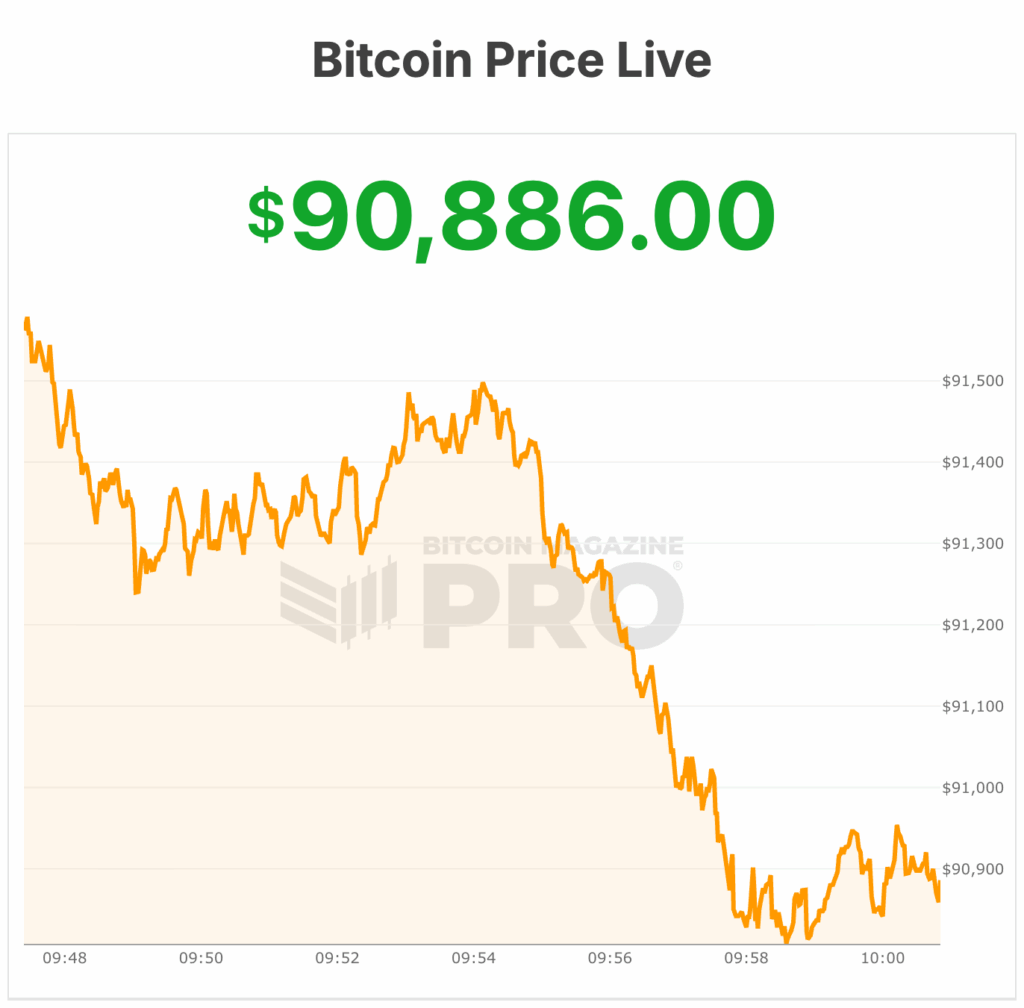

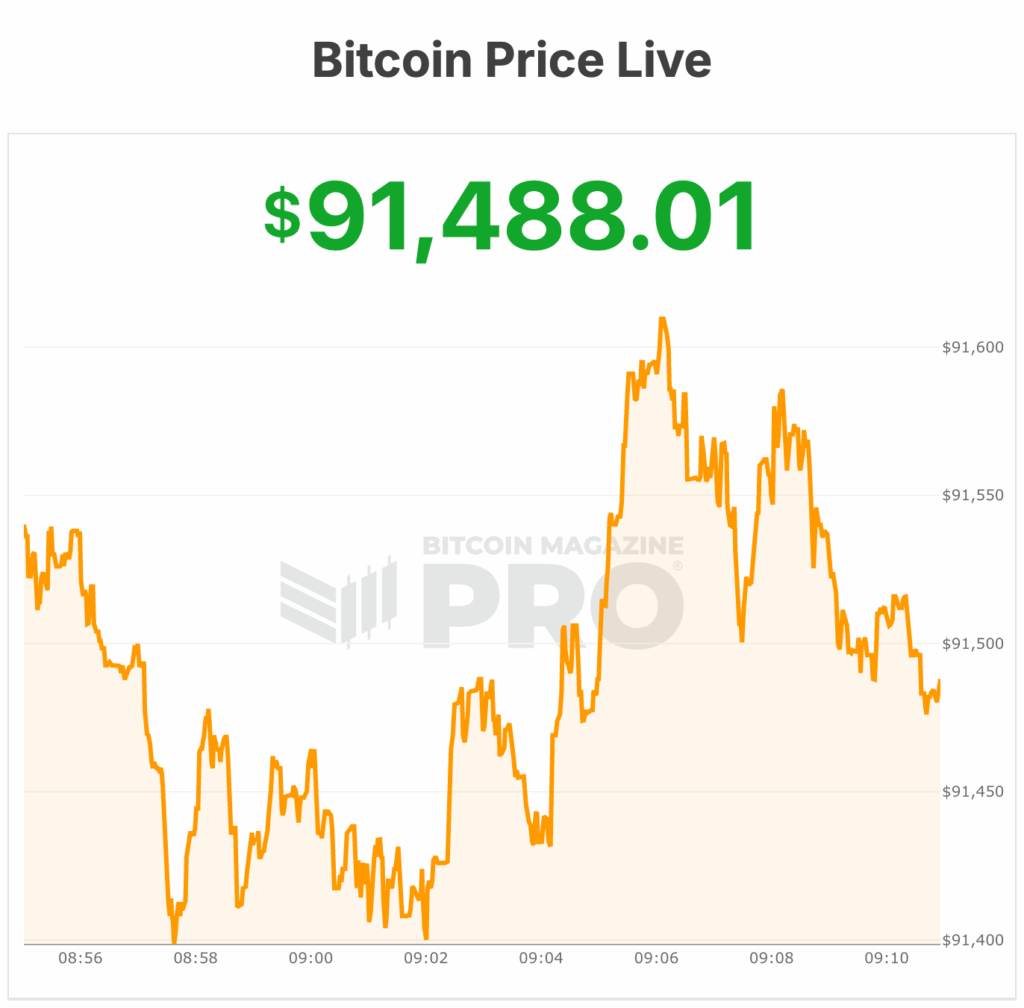





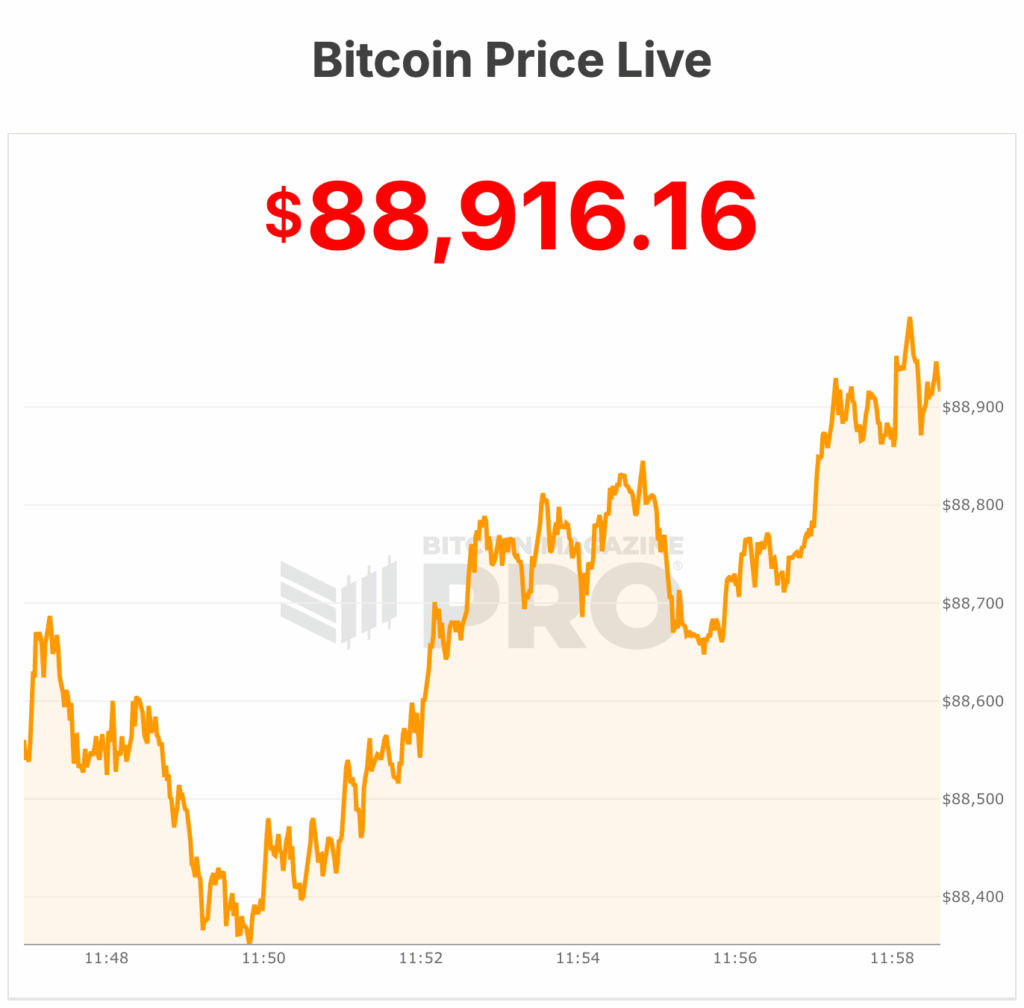





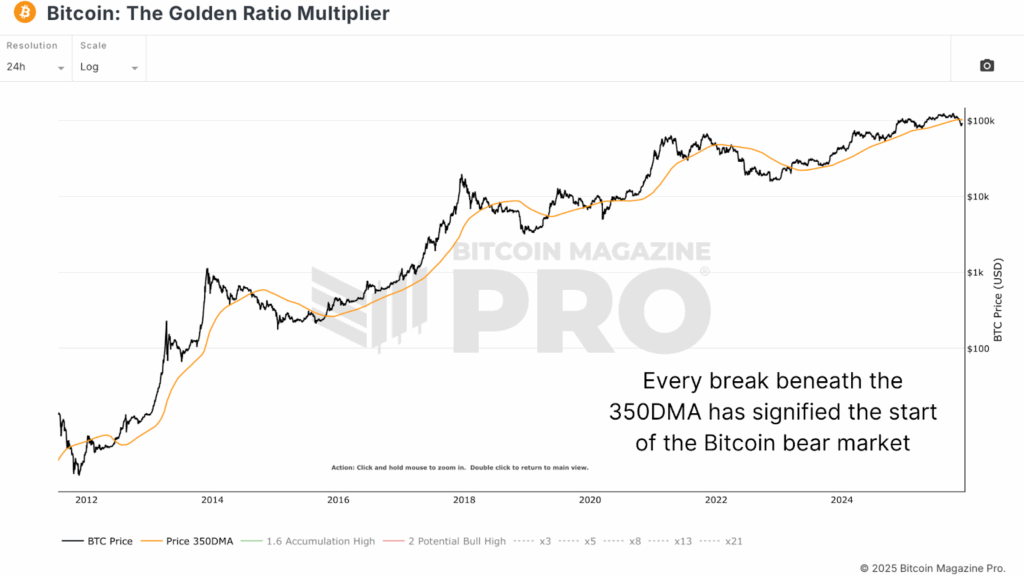
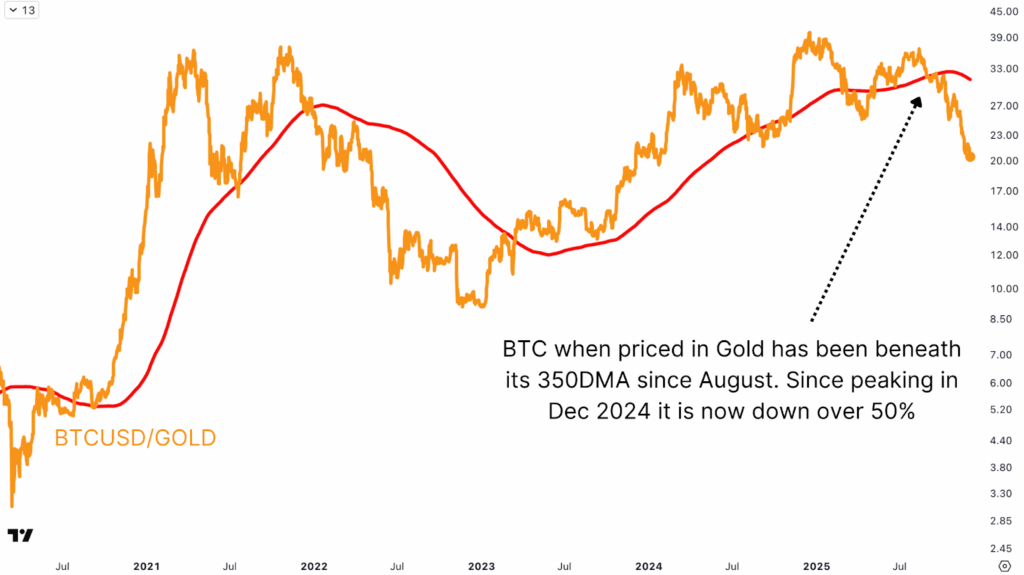
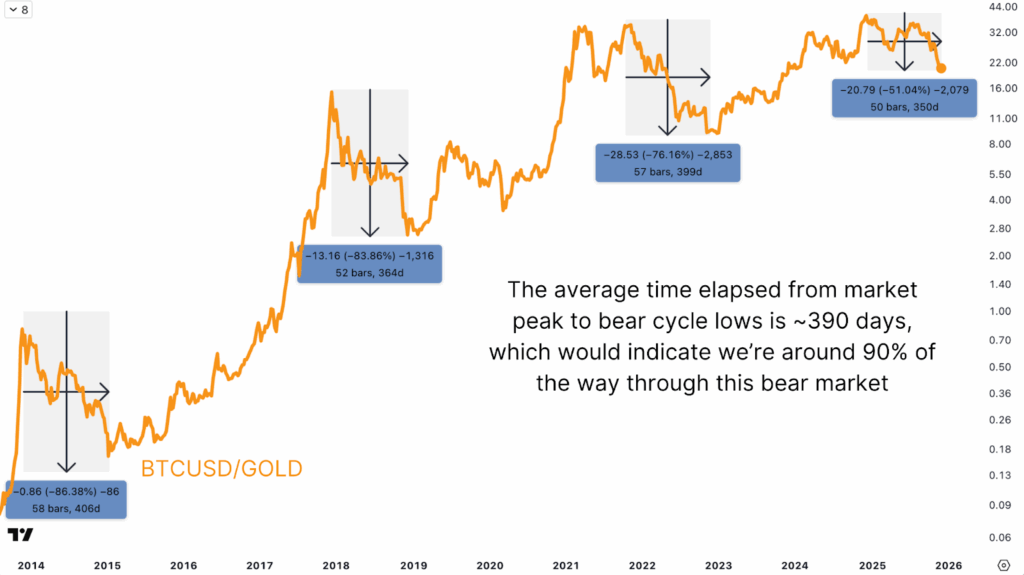
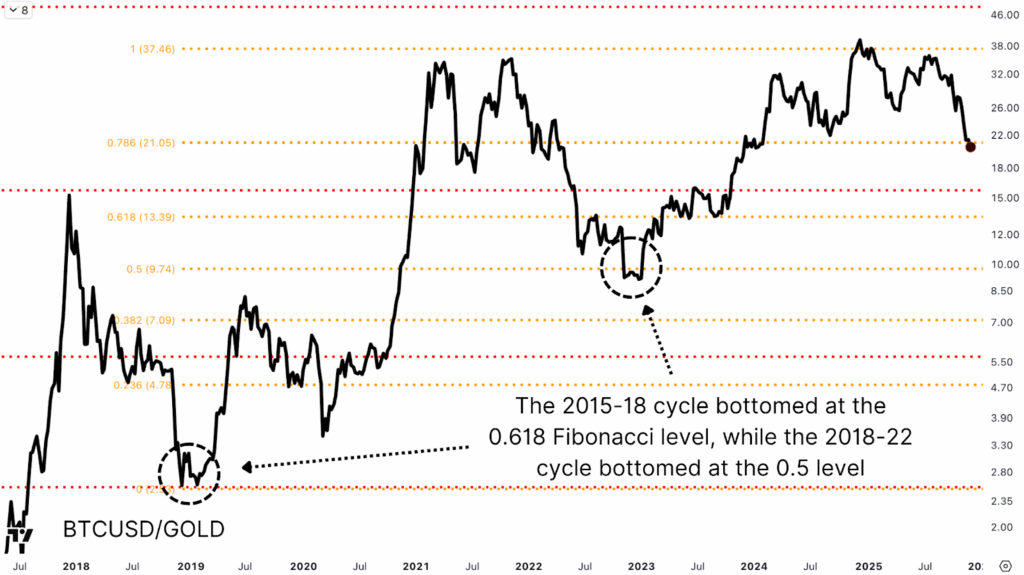
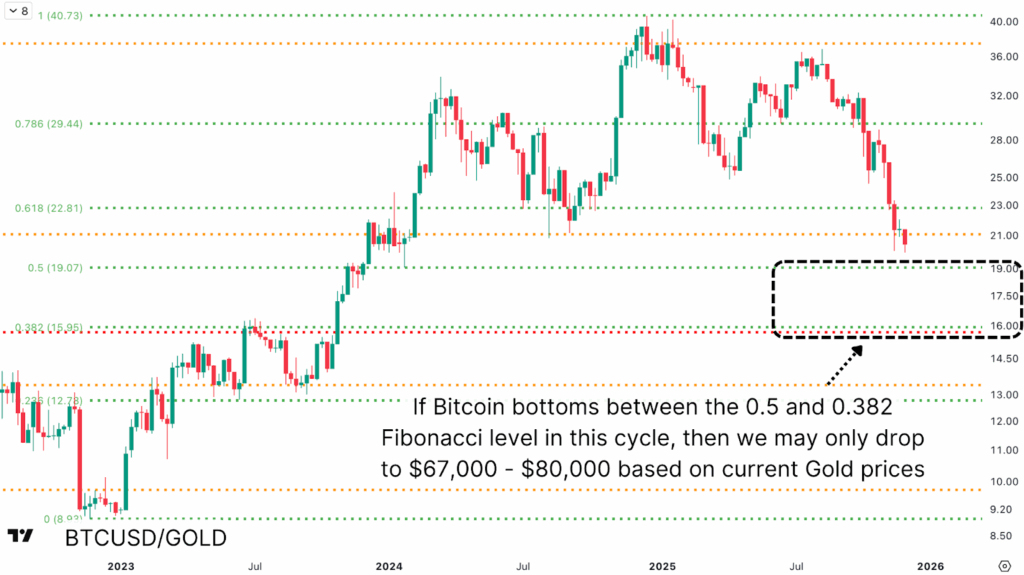









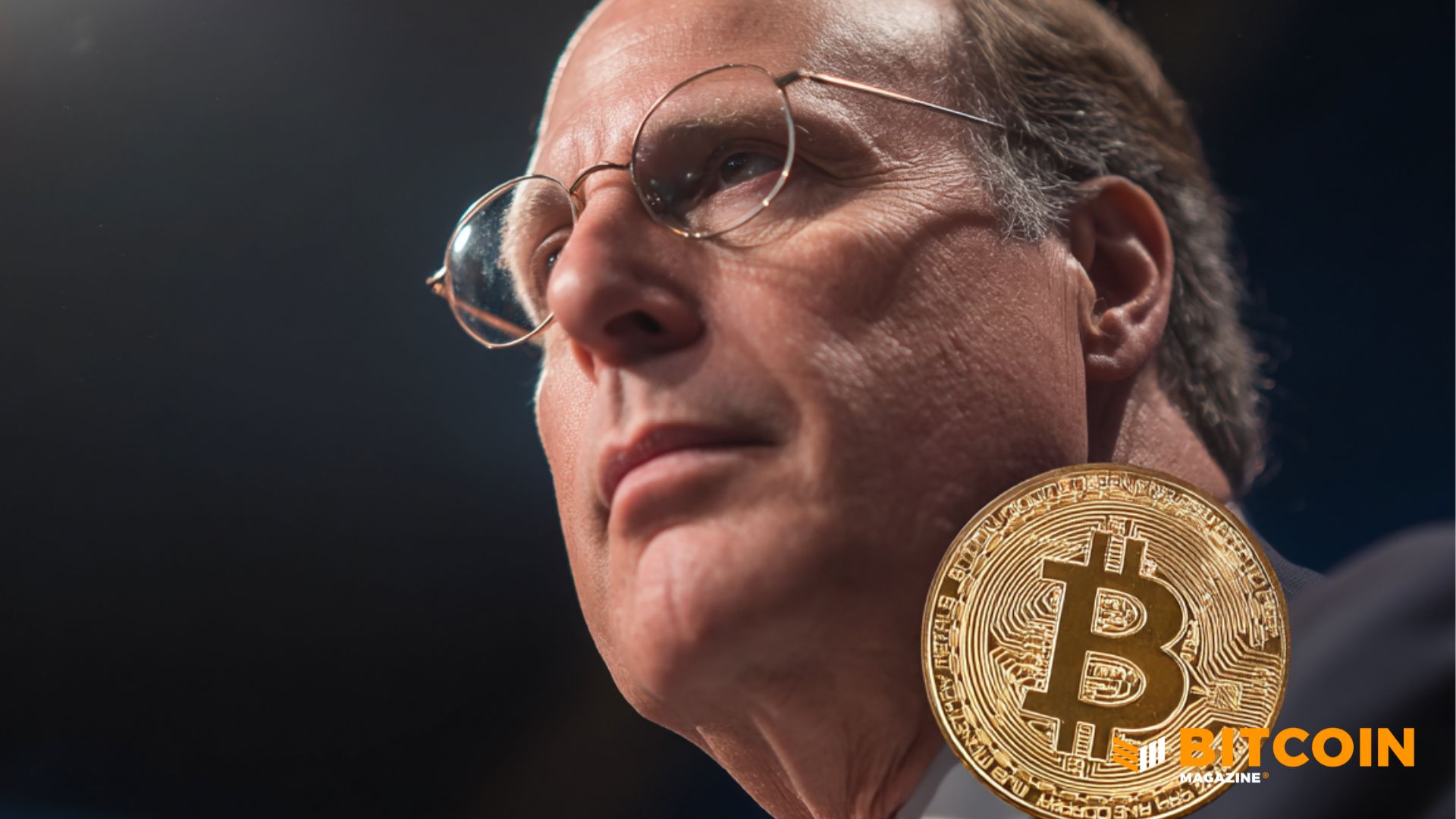




 UK passes law officially recognising crypto as property.











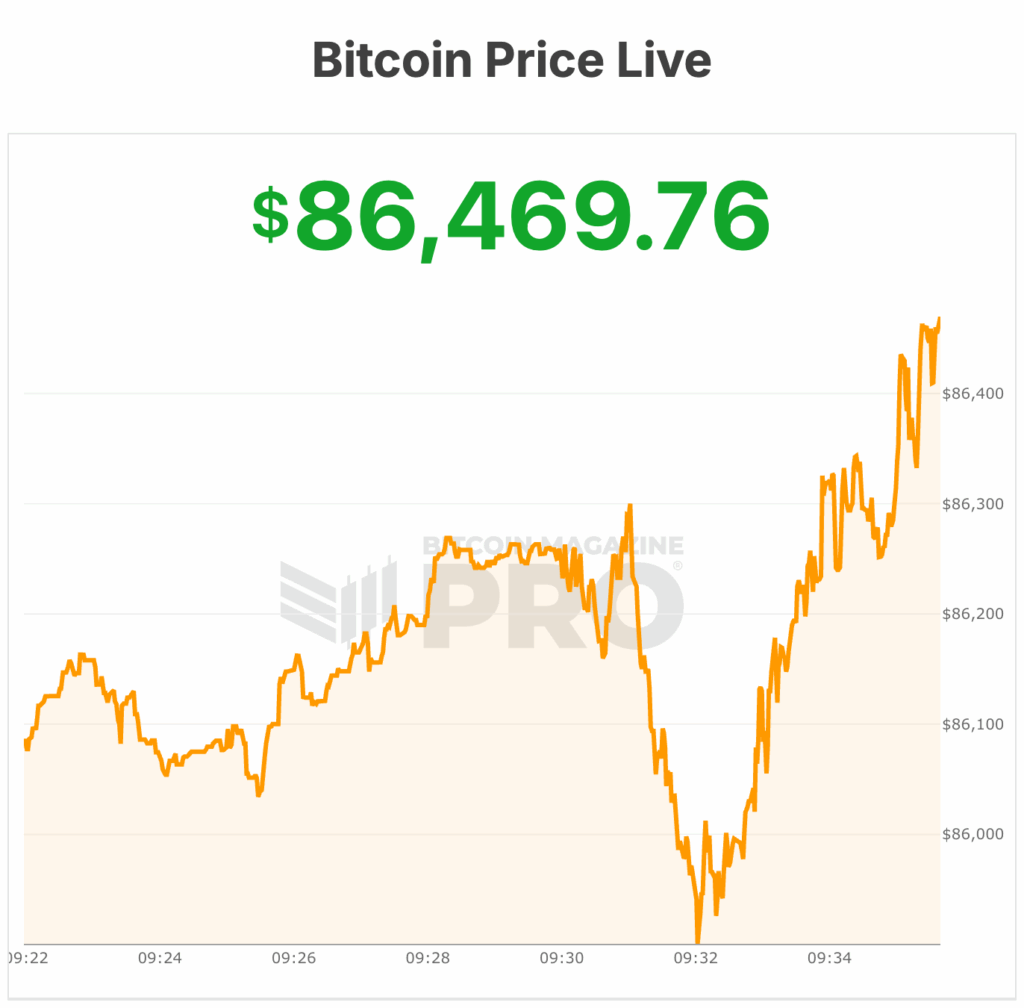







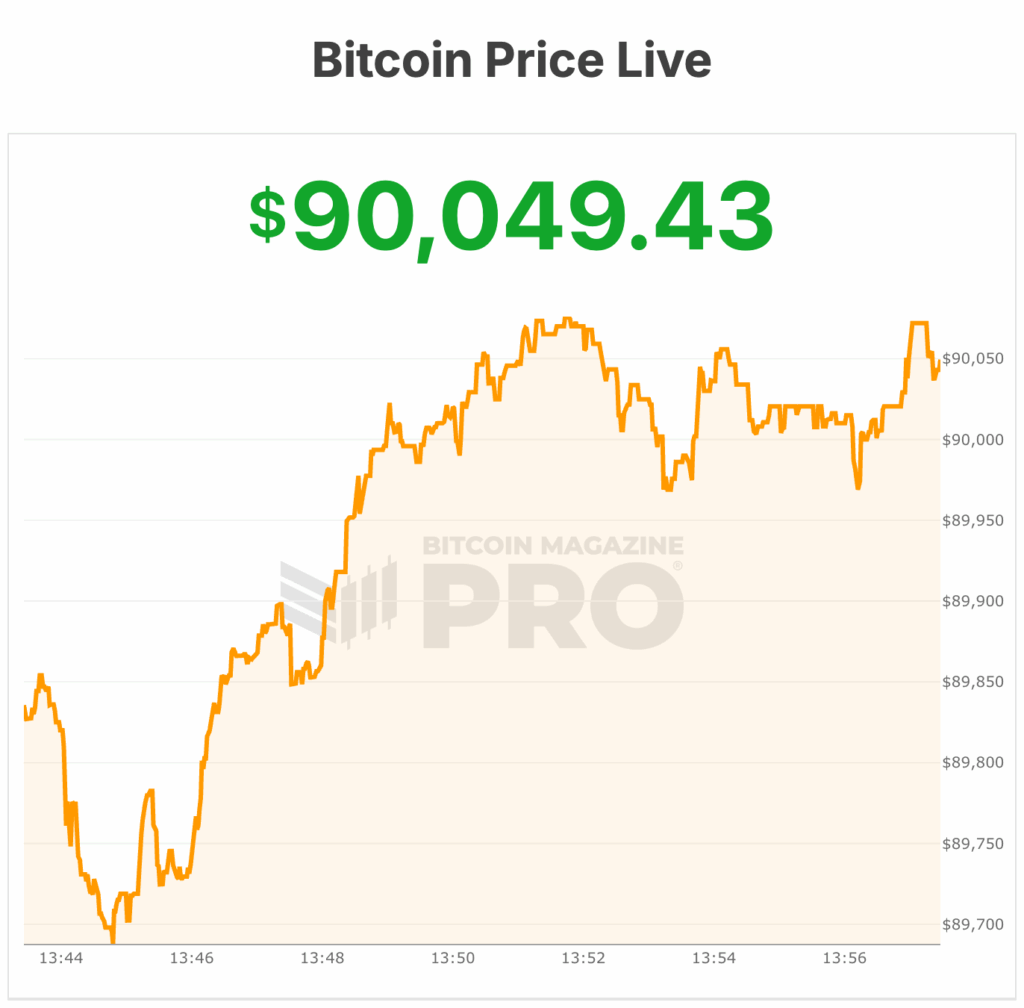




































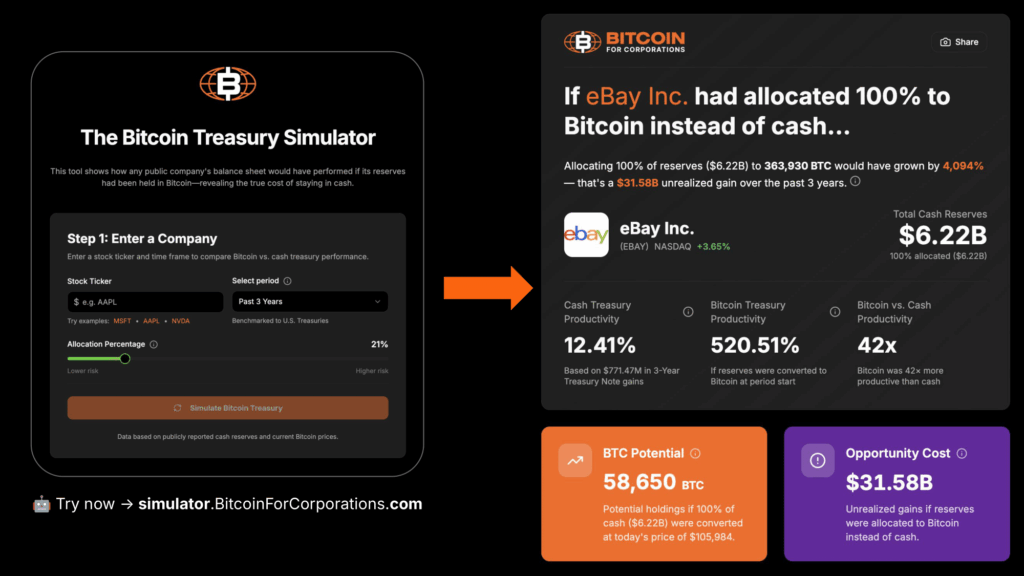
 Try the simulator:


 Abu Dhabi has tripled their position in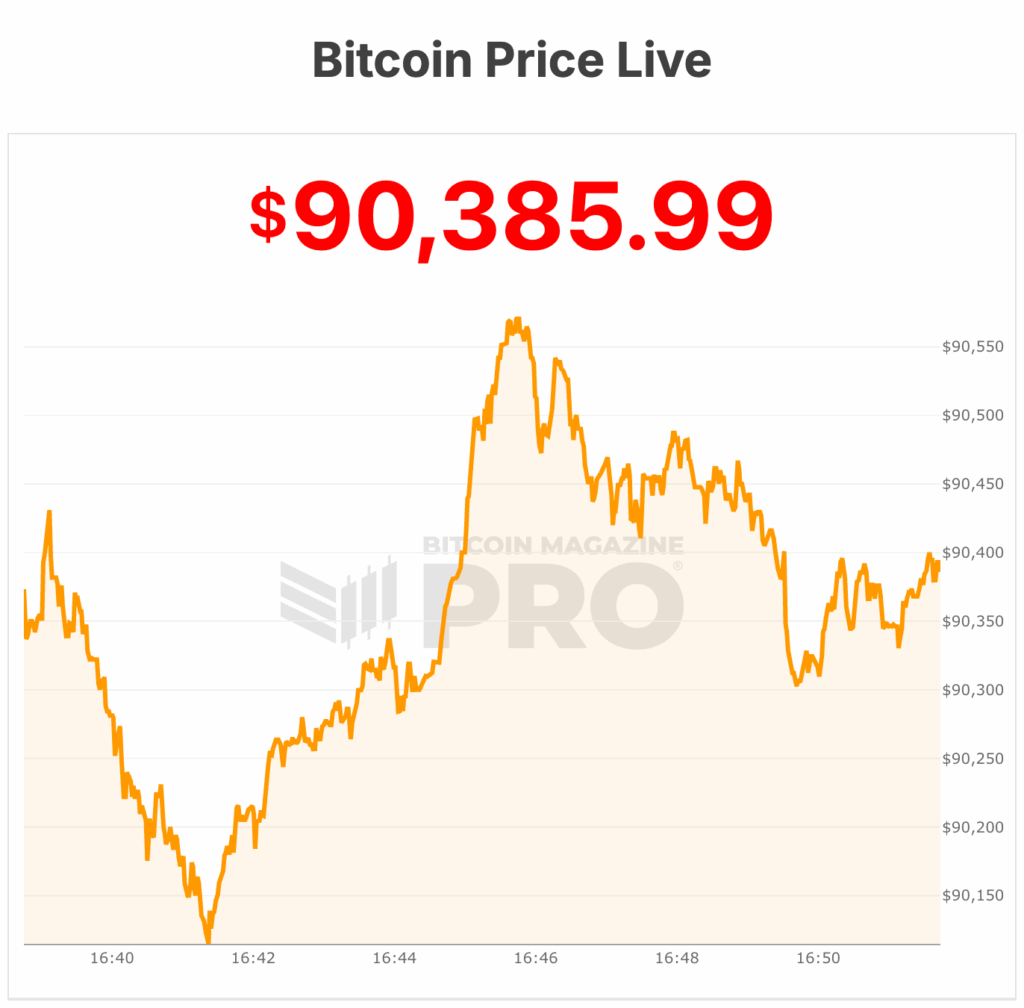







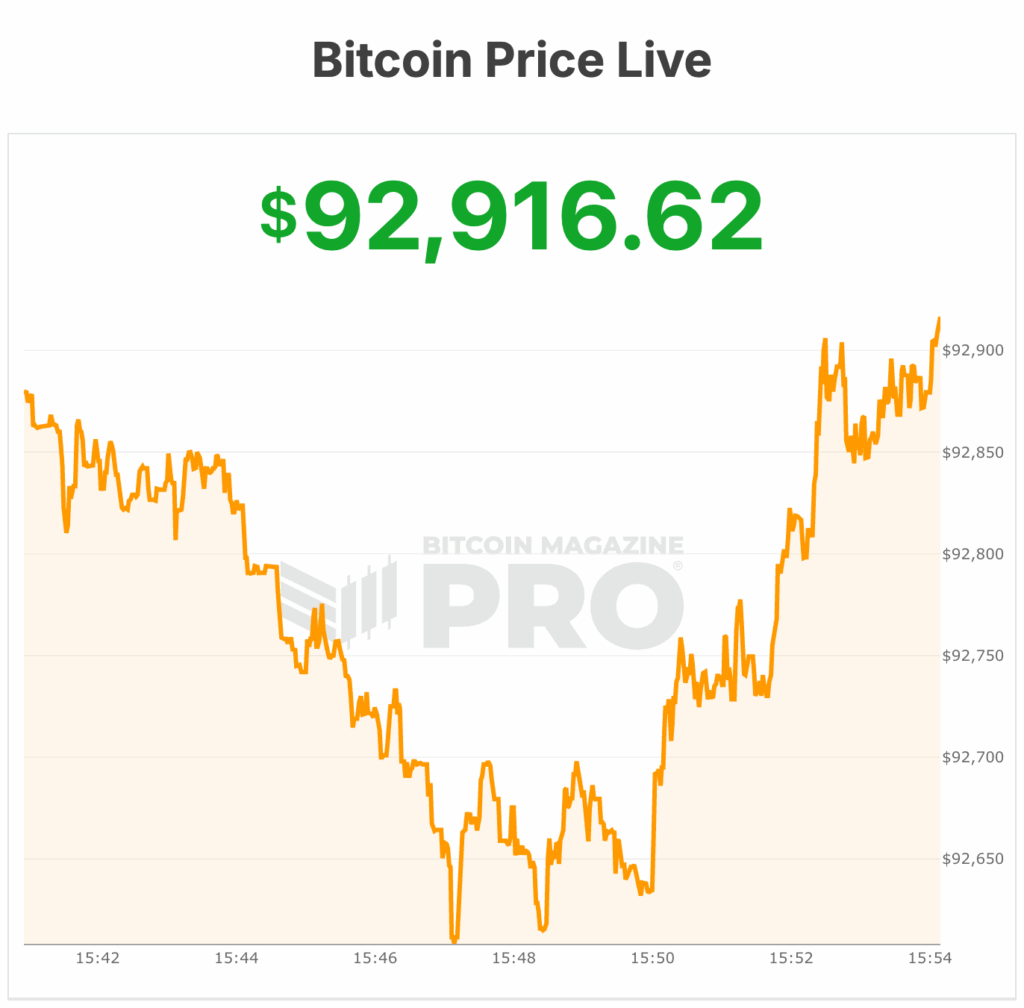


 Dreams do come true!







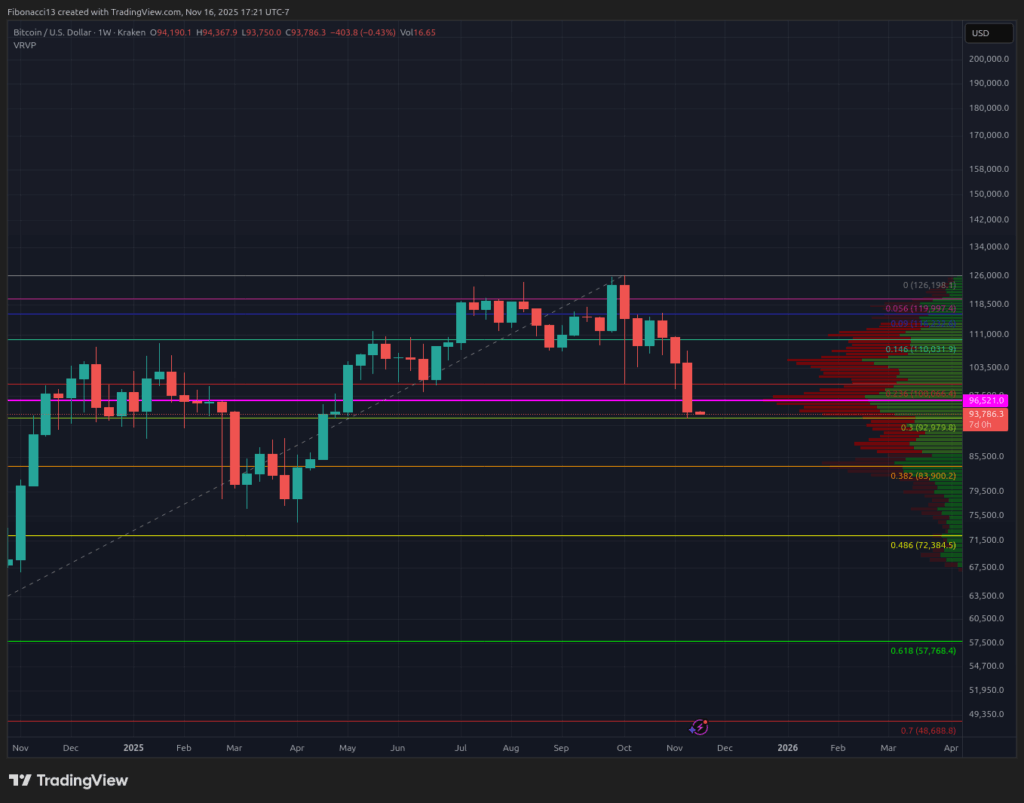
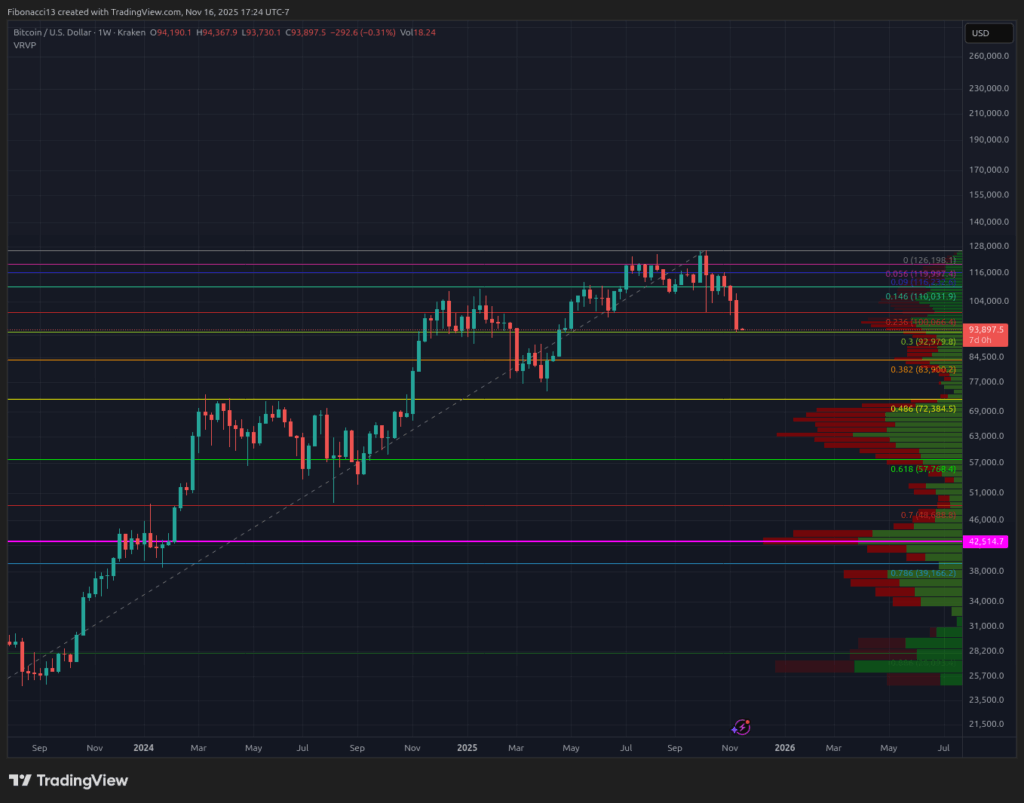
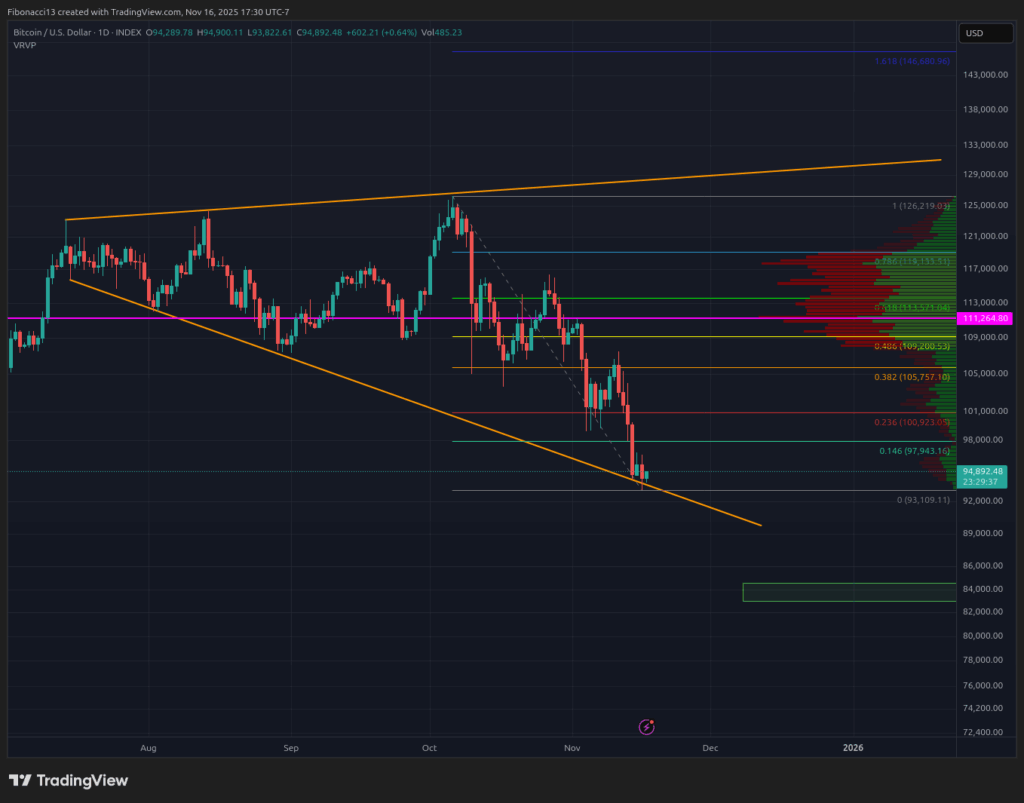


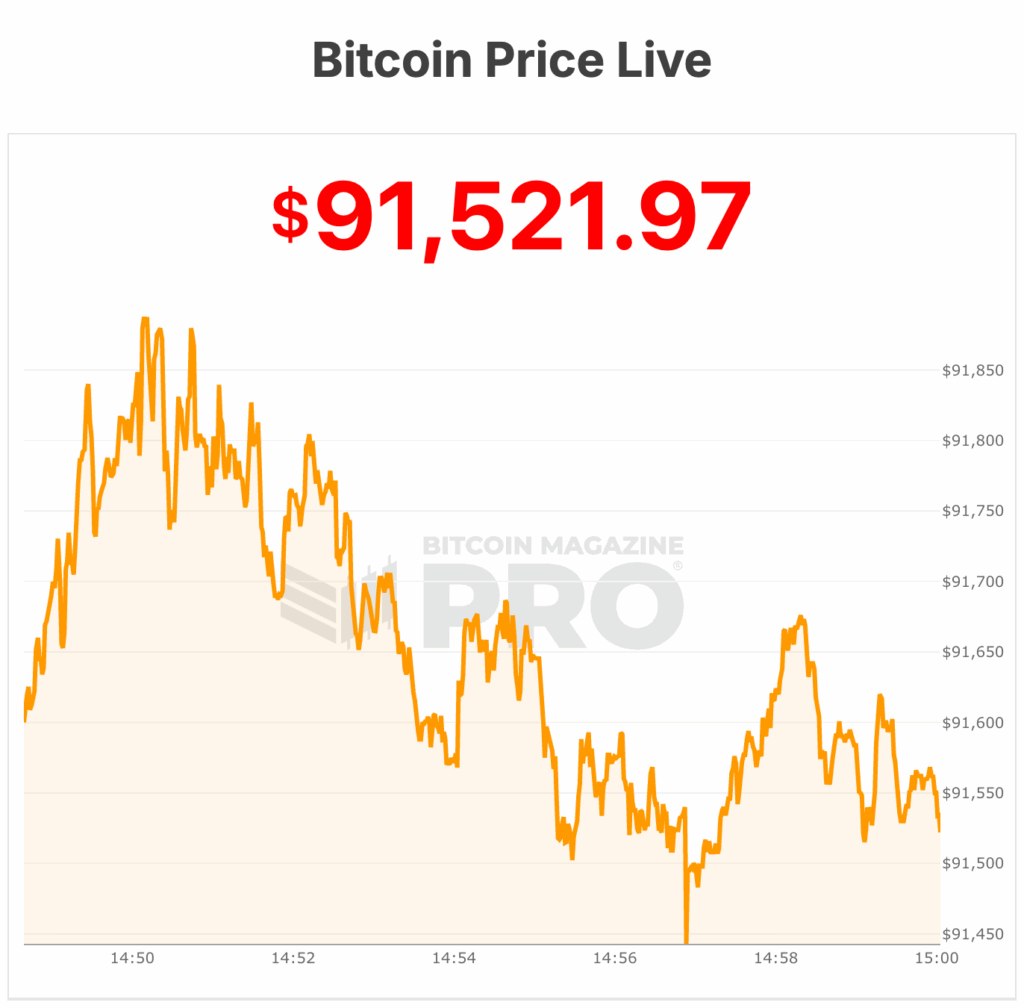




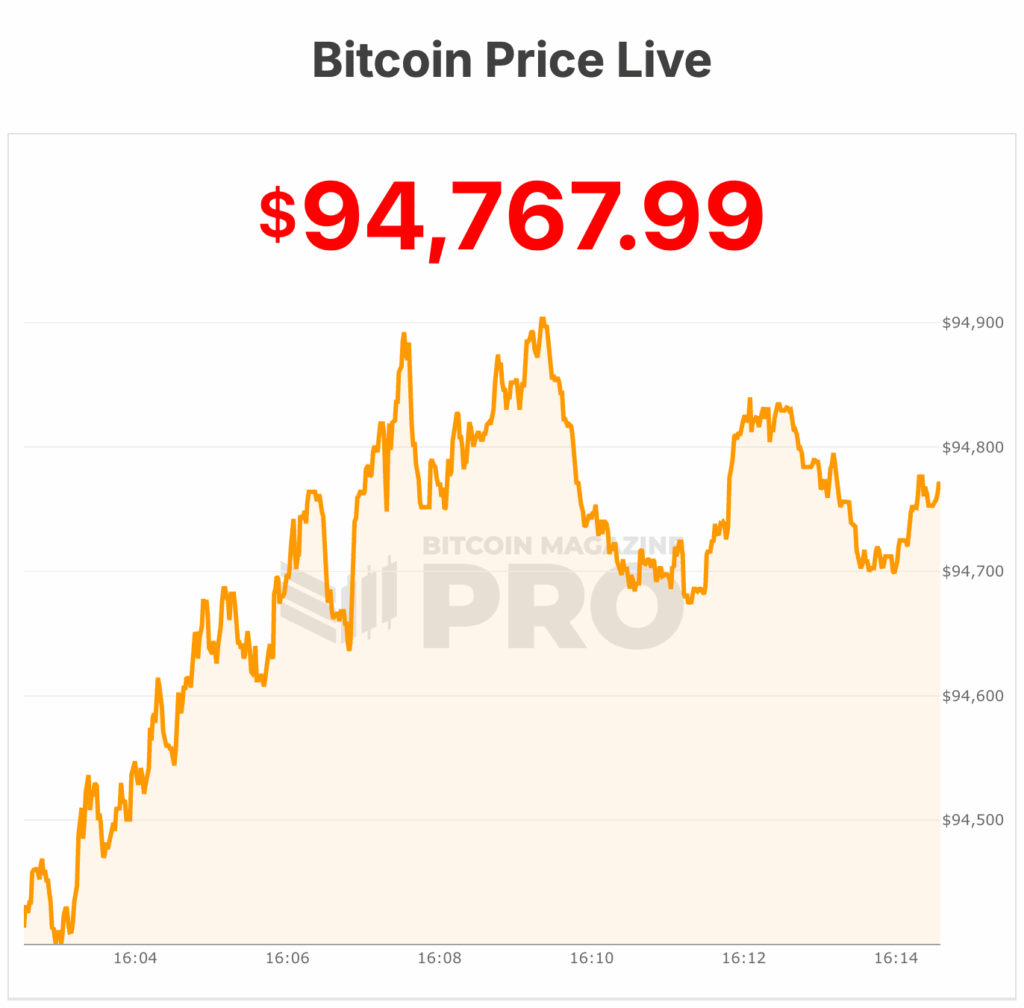



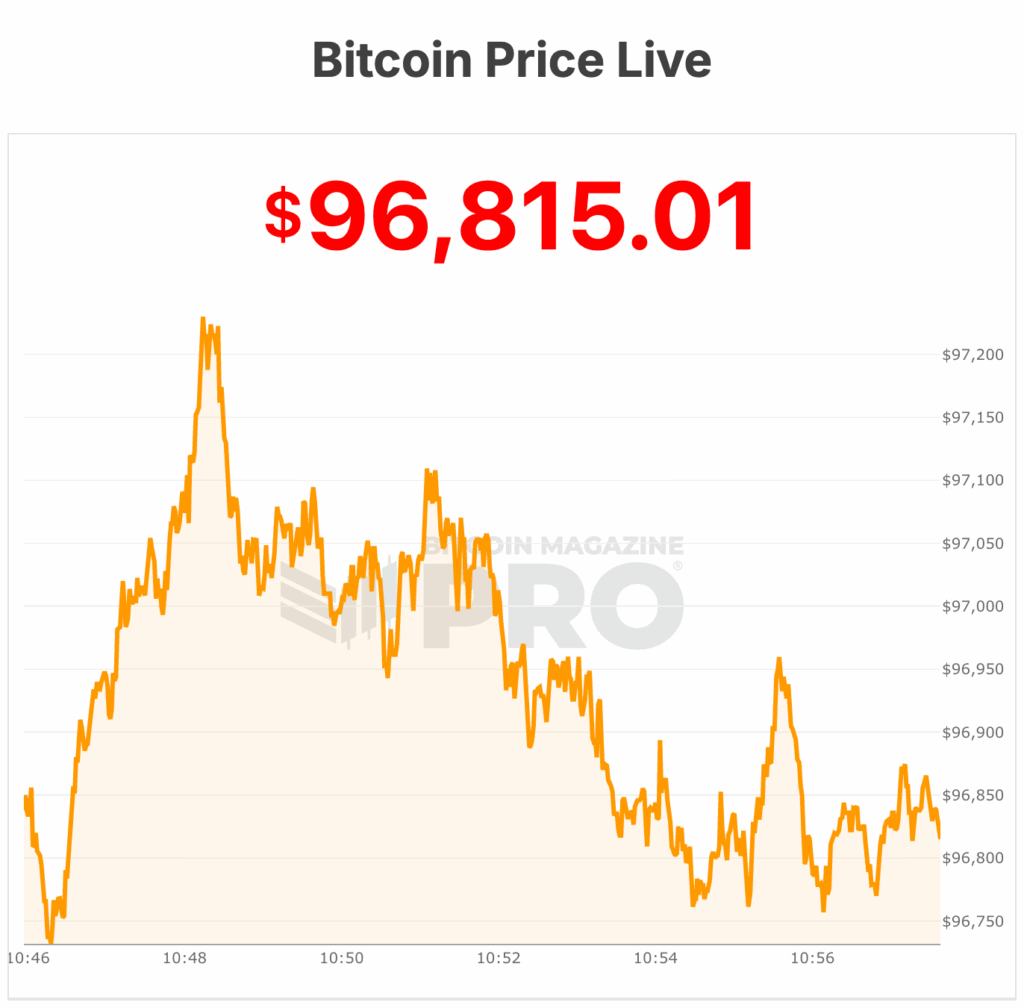












Social Media