People can now pay with Bitcoin to buy flights from Dubai-based airline Emirates.
Working with Crypto.com, Emirates said Tuesday the customers now have the option to book flights using the crypto exchange’s payment feature.
Crypto.com and Emirates last year announced they would work together.
Emirates’ Deputy President and Chief Commercial Officer Adnan Kazim said the move “reflects the rapidly evolving preferences of a younger, digitally fluent generation who manage their money and plan their journeys primarily from their phones and they expect the airlines they fly with to keep pace.”
Emirates first teased plans back in 2022 to implement Bitcoin payments; the latest move allows Crypto.com customers to use any digital assets to make payments.
Under the new setup, travelers with a Crypto.com account can select Crypto.com Pay at checkout when booking on emirates.com or through the Emirates App.
The option is limited for now to eligible UAE residents making bookings priced and settled in Emirati Dirham.
The integration runs through Crypto.com’s Dubai-licensed entity, which the company says was the first virtual asset service provider to receive a Stored Value Facilities license from the Central Bank of the UAE.
The launch also feeds into wider government targets. It supports Dubai’s Cashless Strategy, part of the D33 Economic Agenda, which is aiming to make 90% of transactions across the emirate’s government and private sectors digital by the end of 2026.
It follows on from an earlier Emirates partnership with Dubai Finance to advance digital payments, and comes after Crypto.com struck its own deal with Dubai Finance to accept digital payments for government services.
Bitcoin’s price slid further on Tuesday as investors weighed up the chances of lawmakers voting on the long-awaited crypto Clarity Act.
The price of Bitcoin was recently $63,634 after sliding 2% over a 24-hour period. The cryptocurrency dropped as low as $62,784 at one point.
Market observers now give the Clarity Act a 35% chance of getting signed into law this year on crypto betting platform Polymarket.
While major financial institutions like Fidelity and Goldman Sachs have thrown their weight behind the new bill, some Democrats are still unhappy with it in its current form. A group of Democrats last week said in a statement that the bill in its current form falls short.
A number of lawmakers are hoping the bill gets passed before Congress departs for August recess.
U.S. lawmakers have an action packed week of voting before its five-week recess, including sweeping Russian energy sanctions.
JUST IN: Sen. Mike Haridopolos talks CLARITY ACT on FOX
“The Clarity Act helps grow the American economy…CLARITY will allow us to make sure that we are the center of the action on digital assets, blockchain, and the internet in general.” pic.twitter.com/x4NtD6sTx6
Despite being passed in the house of representatives last year with strong bipartisan support, the Clarity Act has been in a deadlock for much of 2026, partially because big bankers raised concerns over stablecoin yield among Democrat concerns around ethics language.
Banking lobbyists have said that if crypto exchanges pay attractive yields to customers, banks could lose their deposit base.
An updated bill of the Clarity Act was introduced last week that addressed the ethics concerns, banning government officials and their families from issuing or promoting crypto.
Republicans are hoping to gain bipartisan support for the bill this week to advance the legislation. If passed, the long-awaited bill would create a regulatory framework for the cryptocurrency market.
I scanned the Bitcoin blockchain for images; what I found will shock you. Much has been said online about the arbitrary data and content that can be found on the Bitcoin blockchain. Not only has this possibility spawned a niche art scene, but it has also led to a movement against ‘non-monetary transactions’ on the Bitcoin network. Were you to hear from one of its proponents or detractors, you’d figure the blockchain is basically a wall filled with graffiti.
Well, I decided to put the question to the test: are there actually images on the blockchain? And what does this actually mean for Bitcoiners simply trying to run their own full node and maximize their financial sovereignty?
My methodology was simple: I was to buy a fresh hard drive to store the blockchain on, and then I was going to run classic image recovery software over the data- something used to rescue images from broken hard drives, something designed to find raw image data.
I chose PhotoRec to do the image recovery work, an open source image recovery program that’s been around for over 20 years. The software is designed to find image files in raw data. This can be used to recover images and other file formats from hard drives that have failed or been corrupted. It is actually often used to recover lost wallet.dat files from the early days of Bitcoin wallets, before the proliferation of the seed word format.
Syncing The Full Bitcoin Node
For storage of the full Bitcoin blockchain, I decided to buy a 4-terabyte disk drive for a couple hundred dollars. I then installed the latest version of Bitcoin Core on it and started to sync the chain. The process, which involves downloading and verifying the accounting integrity of all transactions in Bitcoin history, took about 72 hours or three days, automated and running in the background by the Bitcoin Core software.
I did this with an otherwise powerful gaming machine; the main bottleneck in terms of time was the disk drive, which is slow to read and write data as needed when syncing Bitcoin’s blockchain. The slow part of the process involves the unspent transaction output set, or UTXO. When a user syncs the blockchain, every unspent transaction value (output) or positive balance is organized into the UTXO set, and as those values are spent, they are removed from the set, while the new address to which those satoshi were sent is added.
On the disk drive, this UTXO indexing process could have taken three weeks according to some estimates, so to speed it up, my clanker (AI agent) suggested we index the data in RAM instead, then move the data back to the 4-terabyte disk drive. While the whole process took three days, running in the background, an SSD could have done the whole job in about a day. SSD drives are much faster than disk drives; they are more modern, but they are also easily four times the price, or more.
Once the blockchain was fully downloaded and validated, we moved the UTXO index from RAM back to the disk and booted the Bitcoin software; the chain was fully synced and the wallet ready to go. Now it was time for the next step: recovering the images stored on the blockchain.
Image Recovery on the Blockchain with PhotoRec
With the full Bitcoin blockchain on my disk drive, I turned off Bitcoin Core and asked my clanker (Cursor AI agent) to run PhotoRec 7.2 on the drive. The default PhotoRec process looks for jpg, png, gif, tif, bmp, ico, psd, and raw formats. The process ran for over 11 hours on the blockchain data and ultimately found … (drum roll) … nothing.
Over a terabyte of blockchain data and half a day of scanning and no images turned up. The PhotoRec wiki page gives a simple example of how the software works: “PhotoRec identifies a JPEG file when a block begins with: 0xff, 0xd8, 0xff, 0xe0, 0xff, 0xd8, 0xff, 0xe1, or 0xff, 0xd8, 0xff, 0xfe.” In other words, the program looks at the data on the disk for bytes that signal that there’s an image file.
The program is capable of false positives; it saved 8 ICOs and 4 identical PNG files that don’t show any images when opened, as seen in the picture below. So, effectively no meaningful images of any kind were found.
Where Did the Jpegs Go? XOR Magic Tricks
How is this possible? For years, crypto people have been talking about NFTs and how to engrave image data on the Bitcoin blockchain. Millions of dollars have moved in this niche, and a whole culture war is being fought on the matter as we speak. Can there really be no images on the chain?
Turns out the risks involved with arbitrary data have been discussed and planned for in Bitcoin Core development circles for a long time, as early as 2011. XOR, a simple data obfuscation technique, is used to scramble all the blockchain data while it is at rest on a hard drive.
You might have heard that the fundamental language of computers is made up of 0’s and 1’s. Well, in a nutshell, XOR compares two digits or bits and returns 1 if the bits are different or 0 if the bits are the same. In the case of Bitcoin, XOR compares every bit of the blockchain data to a random key generated during initial install, resulting in data at rest that other programs can find no meaning in. However, when the Bitcoin software runs, it has the key to unscramble that data and use it at will. XOR is also very fast, so it does not meaningfully impact performance. Here’s an example of the Bitcoin genesis block before and after an XOR.
XOR is currently applied to both the blockchain data and the UTXO set. XOR was initially discussed in 2014 when anti-virus software started getting tripped up by blockchain data it interpreted as virus code. The anti-virus software would then quarantine a block, corrupting the blockchain data and crashing Bitcoin, making sync impossible. By the end of 2015, XOR had been implemented on the UTXO set data at rest and in 2024 it was implemented on all blockchain data at rest.
Incidentally, the XOR process means that no arbitrary data can be identified or extracted from the blockchain without intentionally bypassing the XOR, a process that is not necessary for monetary use of Bitcoin. Since the Bitcoin Core software keeps a simple database of the location of each scrambled block, it can get its data, unscramble it and use it in a targeted manner easily.
Syncing Bitcoin in an unscrambled way is a custom process that can take as much time as syncing from scratch, since it basically has to re-write the full terabyte of data in a new order, and there’s not much point in that for someone that just wants the normal privacy and security benefits of running a Bitcoin node. So when it comes to the vast majority of copies of the Bitcoin blockchain data, resting on the computers of normal Bitcoiners throughout the world, there’s effectively no arbitrary data or images that can be identified. Shocking, I know. Feel free to run the PhotoRec test yourself on your own node!
https://bitcoindevelopers.org/wp-content/uploads/2026/07/tn2-1-NbYAvG.webp6301200Bitcoin Developerhttps://bitcoindevelopers.org/wp-content/uploads/2024/08/loho_hor_1-300x108.pngBitcoin Developer2026-07-28 18:05:142026-07-28 18:05:14I Scanned the Entire Bitcoin Blockchain for Images. What I Found Will Shock You
Lawmakers are hoping to push through the crypto market structure bill this week but the Democrats are holding things back, according to Senator Dave McCormick.
Speaking to Fox Business on Friday, the Republican senator said that a vote needs to happen now.
“The Democrats are starting to think, ‘We don’t want to give it a win,’” said McCormick.
Writing on X today, he added: “The time for delay is over. Bring the Clarity Act to the Senate Floor for a vote and let every senator go on the record. America needs clear rules that protect consumers and keep digital asset innovation and jobs here at home.”
NEW: Sen. Dave McCormic on CLARITY ACT
“The time for delay is over.”
“Bring the CLARITY Act to the Senate Floor for a vote and let every senator go on the record.” pic.twitter.com/FvHck526kE
Lawmakers have been mulling over the Clarity Act since last year, which would set in stone crypto regulation. The bill has been in a deadlock this year, partially because banking chiefs raised concerns over stablecoin yield and ethics concerns.
A new draft circulating last week bans officials and their families from issuing or promoting crypto — something opposition lawmakers previously had issue with.
Now, GOP lawmakers are hoping to get backing from Democrats to pass the bill. Bipartisan support for the bill exists though some lawmakers — such as senator Elizabeth Warren — have criticized the draft, claiming it would allow President Donald Trump to make money from crypto, as well as benefit criminals.
A group of Democrats last week penned a statement claiming the bill in its current form falls short.
Major institutions, including Fidelity and Goldman Sachs, as well as crypto lobby groups and politicians, have said the revised bill works in its current format.
Democrats — and some Republicans — have criticized President Trump’s crypto business interests, with some alleging conflicts of interest as his family has made money from meme coins and the decentralized finance protocol, World Liberty Financial.
Despite the Trump family being heavily involved in crypto, and the president winning office after receiving backing from major crypto entrepreneurs, the White House has always denied any wrongdoing on part of the President.
https://bitcoindevelopers.org/wp-content/uploads/2026/07/U.S.-Senator-Clarity-Act-is-Almost-There-Treasury-Secretary-Puts-It-at-the-1-Yard-Line-bIo8nj.jpg10801920Bitcoin Developerhttps://bitcoindevelopers.org/wp-content/uploads/2024/08/loho_hor_1-300x108.pngBitcoin Developer2026-07-27 19:20:432026-07-27 19:20:43Republicans Hope For Democratic Support on Crypto Clarity Act
Investors cashed out of American Bitcoin exchange-traded funds at the end of last week, ending a seven days winning streak.
Data from Farside Investors shows that over $475 million was redeemed from the investment products during trading hours on Thursday and Friday, with BlackRock’s iShares Bitcoin Trust handling most of the trading action.
Risk appetite appeared to be back, too: over a seven-day period, from July 14-22, the funds managed by the likes of Fidelity, Morgan Stanley, and Grayscale, took in just under $1 billion in new investment: $999.3 million.
The flurry of fresh cash put upwards pressure on the price of Bitcoin. The leading cryptocurrency then dipped on the outflows but is now unmoved over a seven-day period. Bitcoin’s price recently stood at $64,544.
Year-to-date, Bitcoin is down over 26% and the cryptocurrency has shed nearly 50% of its value since it notched a new record of $126,080 in October.
The ETFs — approved after nearly a decade of denials by the Securities and Exchange Commission in 2024 — have helped Bitcoin’s price surge as Wall Street investors now have an easy way to buy into the crypto space.
Despite investors cashing out of major crypto funds, the newest on the market, Morgan Stanley’s Bitcoin Trust, experienced inflows of nearly $9 million Thursday and Friday.
The fund, which debuted in April, now has close to $400 million in assets under management — making it one of the most successful ETFs of 2026.
While analysts have called Bitcoin’s bottom, some have said that uncertainty around war in the Middle East and rising oil prices may hold back the cryptocurrency making a rebound.
European asset management firm CoinShares said earlier this month that while investors are back at putting fresh cash in Bitcoin ETFs, other factors may hold digital asset markets from going higher.
https://bitcoindevelopers.org/wp-content/uploads/2026/07/Bitcoin-ETFs-See-Outflows-fzTFMD.jpg10801920Bitcoin Developerhttps://bitcoindevelopers.org/wp-content/uploads/2024/08/loho_hor_1-300x108.pngBitcoin Developer2026-07-27 16:24:092026-07-27 16:24:09Bitcoin ETFs Bled Nearly Half a Billion Dollars End of Last Week, Reversing Sentiment
Russia’s largest bank, Sberbank, will build crypto infrastructure by December, according to a report by Russian news agency Interfax.
A key piece will be a digital depository that tracks clients’ crypto rights and records off-blockchain transactions, while also handling wallet transfers to execute client orders, Interfax reported Monday.
Sberbank this month revealed plans to debut a Bitcoin and crypto wallet plus digital asset custody by December.
The news comes as the State Duma mulls over a new law “On Digital Currencies and Digital Rights,” which sets up comprehensive Russian regulation of crypto. The proposed law covers retail purchases through licensed intermediaries, exchange trading, clearing, and digital depositories.
First Deputy Chairman Alexander Vedyakhin was quoted as saying in the article that regulators and the market still need to draft numerous implementing regulations covering depository accounting, bookkeeping, and licensing for new types of intermediaries.
He added that Sberbank is ready to keep sharing its expertise and participating actively in that process.
Russia’s crypto journey
Using crypto has been illegal in Russia as a form of payment since 2022 but lawmakers in the country have been open about using them for international settlements.
President Vladimir Putin signed a law allowing cryptocurrency mining in the country last year, allowing legal entities to mine if they have been approved by the digital ministry. Foreign operations are currently banned from doing business in the country.
Back in 2023, the Russian legislature passed a bill legalizing the use of digital currency as a way to make international payments.
The bill likely has helped the country skirt international sanctions since the U.S. and European governments cut Russia off from the SWIFT payments system after it invaded Ukraine in 2022.
Top Russian banks are planning to launch crypto trading services when new regulations take hold in the country.
Lawmakers have said that investors will have to pass a test to start crypto investing and will be limited on the amount they can buy.
Wall Street giant Morgan Stanley Bitcoin exchange-traded fund now has close to $400 million in assets under management — despite only launching in April.
The NYSE Arca-listed fund, which is the first by a bank, got off to a roaring start when it debuted, bringing in over $33 million in fresh cash on its first day.
Now, the fund has over $391 million in assets, demonstrating the popularity of the product. Many ETFs never reach $400 million in assets at all, let alone in one quarter.
Senior Bloomberg Intelligence ETF analyst Eric Balchunas revealed Friday that the product has been one of the most successful funds launched this year so far.
This week alone, investors have thrown $15.7 million in new cash at the product, according to Farside Investors data.
Morgan Stanley has been making big crypto moves for years now. Back in 2021, it started offering wealthy clients exposure to Bitcoin via funds such as those by Galaxy Digital.
And last year, the bank’s CEO and Chairman, Ted Pick, said that the bank was working with regulators to see how they could offer crypto safely.
Back in April, the bank’s head of digital assets, Amy Oldenburg said client education — not product design — is the central challenge facing Bitcoin adoption.
ETF action this week
After weeks of outflows and sloppy price action, American Bitcoin ETFs have taken in fresh cash over the past seven days.
Farside Investors shows the products have received a total of $274 million in new investment so far this week.
The funds had been on a winning streak, receiving nearly $1 billion over seven days until Thursday, when every ETF experienced outflows — except for Morgan Stanley’s product.
Bitcoin’s price was recently trading for $64,096, down over 1% over the past 24 hours. The cryptocurrency is virtually unmoved over a seven-day period.
European asset management firm CoinShares last week said that while investors are back at putting fresh cash in Bitcoin ETFs, other factors may hold digital asset markets from going higher.
“We see no significant upside potential from here,” James Butterfill, head of research at CoinShares, wrote.
Lawmakers have been hashing out the crypto market structure bill since last year. A new improved draft circulating the Senate this week bans officials and their families from issuing or promoting crypto — a sticking point for opposition politicians.
“The time is now for clear rules of the road that are essential to strengthening investor confidence, providing certainty for market participants, and reinforcing U.S. leadership in global digital asset markets,” the company said.
Fidelity — which manages around $7 trillion in assets — was joined Friday by crypto advocacy groups the Crypto Council for Innovation, Blockchain Association, and the Digital Chamber, as well as the National Fraternal Order of Police and other politicians in backing the bill.
Top asset manager Fidelity is interested in the bill as the firm manages Bitcoin and other digital asset exchange-traded funds: products which give American investors exposure to crypto via shares that trade on stock exchanges.
The SEC approved a number of spot BTC ETFs in 2024, which have since gone on to be some of the most successful ETF launches ever.
Clarity stalls
Republicans passed the Clarity Act last year but the bill has been in deadlock — mainly because banking chiefs raised concerns over stablecoins and the yield they would potentially pay customers.
Coinbase pulled support for the bill in January after clashing with banking bigwigs who said that earning yield on stablecoins should be banned.
U.S. banks argue that they could lose customers if crypto exchanges like Coinbase offer more attractive products for their deposit base.
Some lawmakers — like Democratic senator Elizabeth Warren — have argued that President Donald Trump’s family has unfairly benefited from crypto ventures.
Warren this week argued that the Clarity Act could further be used for Trump to cash in on crypto but the latest draft bans officials and their families from issuing or promoting crypto.
The U.S. State Department is launching a program that includes Bitcoin as a way to advance digital freedom worldwide.
Named the Freedom Tech Excellence Program, the initiative will see the State Department work with the Bitcoin Policy Institute, data-analytics firm Palantir Technologies, defense technology company Anduril Industries, and the Victims of Communism Memorial Foundation on issues including online surveillance, encryption, AI governance, and protecting free expression online.
According to the program’s stated goals, participants will focus on five priority areas: First Amendment and free expression protections in the digital age; countering unlawful digital surveillance and online scams; privacy-enhancing technologies such as strong encryption and VPNs; responsible governance of emerging technologies including AI; and safeguarding children and other users online.
The inclusion of the Bitcoin Policy Institute signals that the Department views Bitcoin and blockchain technology as tools relevant to circumventing censorship and financial surveillance in authoritarian states — a theme the organization has long championed in its advocacy work.
The FTEP will operate through limited-term assignments, placing private sector personnel inside the State Department on temporary embeds tasked with shaping diplomatic efforts around specific digital freedom issues.
President Trump campaigned on a ticket to help the crypto space and since taking office, his government has taken a more pro-crypto approach to both regulating and including elements of the space in his administration.
In March 2025, for example, President Trump signed an executive order establishing a Strategic Bitcoin Reserve and a separate U.S. Digital Asset Stockpile, capitalized with roughly 200,000 Bitcoin already held by the government through criminal and civil forfeiture.
The order framed Bitcoin alongside strategic reserves the U.S. maintains for materials like gold, petroleum, and pharmaceuticals, treating it as a scarce national asset rather than merely a speculative one.
https://bitcoindevelopers.org/wp-content/uploads/2026/07/Pics-4-814r9v.jpg10801920Bitcoin Developerhttps://bitcoindevelopers.org/wp-content/uploads/2024/08/loho_hor_1-300x108.pngBitcoin Developer2026-07-24 20:20:052026-07-24 20:20:05State Department to Debut Freedom Tech Program with Bitcoin Policy Institute, Palantir as Founding Partners
The National Fraternal Order of Police became the latest organization to throw its support behind the long-awaited Clarity Act.
In a statement Friday, specifically addressed to Democratic senators Elizabeth Warren and Timothy Eugene Scott, the fraternal organization wrote that it approved of the latest bill. The FOP works to improve the working conditions of law enforcement officers.
The newest draft bans officials and their families from issuing or promoting crypto, something opposition lawmakers previously had issue with. On Wednesday, Senator Warren, a long-time crypto critic, said that the latest bill would allow President Donald Trump to make money from crypto, as well as benefit criminals.
JUST IN: The world’s largest organization of sworn law enforcement officers now officially endorses the passage of the Clarity Act: pic.twitter.com/N10g5jIZ0M
“The latest version of the ‘Clarity Act’ includes several provisions that improve the ability of State and local law enforcement to protect consumers, investigate financial crimes, and coordinate with their Federal partners,” the letter read.
“The revised bill establishes safeguards aimed at addressing fraud and victimization involving digital asset kiosks and related activity while also providing for anti-money laundering and sanctions compliance obligations across the digital asset ecosystem.”
U.S. lawmakers are currently mulling over the latest draft of the Clarity Act — a crypto market structure bill aims to set in stone digital asset regulation.
More support for the bill
Top crypto advocacy groups the Crypto Council for Innovation, Blockchain Association, and the Digital Chamber also threw their support behind the latest draft of the Clarity Act on Friday.
The trade associations said that passing the bill is necessary to establish the “first comprehensive federal consumer protection framework for digital asset markets” as more Americans begin to use and invest in crypto.
The Clarity Act, which Republicans passed last year, has been in a deadlock mainly because banking chiefs raised concerns over stablecoins and the yield they would potentially pay customers.
America’s biggest crypto exchange, Coinbase, pulled support for the bill in January after clashing with banking chiefs who said that earning yield on stablecoins should be banned.
U.S. banks have said they could lose customers if crypto exchanges offer more attractive products for their deposit base.
A new bill has been circulating this week and it is expected it will head to floor vote.
The latest draft bans officials and their families from issuing or promoting crypto — a sore point for Democratic politicians who have argued that President Donald Trump’s family has unfairly benefited from crypto ventures.
President Trump campaigned on a ticket to help the crypto space but his digital asset ventures have raised eyebrows among Washington lawmakers who think the Trump family has unfairly profited from crypto businesses.
https://bitcoindevelopers.org/wp-content/uploads/2026/07/Pics-3-0V7d9s.jpg10801920Bitcoin Developerhttps://bitcoindevelopers.org/wp-content/uploads/2024/08/loho_hor_1-300x108.pngBitcoin Developer2026-07-24 17:07:182026-07-24 17:07:18National Fraternal Order of Police Gives Green Light to Clarity Act in Latest Support for Crypto Bill
Somewhere right now, on a livestream, someone is tearing open a foil package while hundreds of people watch. Trading cards have become a spectator sport. The card market is at all-time highs, cardboard repriced by the hour, rare cards selling for eight figures, and a general sense of frenzy. But watch enough of it and something strange becomes clear. Nobody is looking at the cards. The audience isn’t consuming images, it’s consuming anticipation.
The card boom has also surfaced hard questions, and the hardest ones surround grading. The past year saw the hobby’s dominant grading house facing scrutiny over grades that shifted after cards moved through its own buyback program, and collectors began asking, who grades the grader. When a single subjective number separates a card from ten times its value, and the arbiter of that number also holds a position in the asset, the hobby has a verification problem. These are, in the language of bitcoiners, trusted-third-party problems.
The two worlds keep arriving at the same three questions: what’s real, what’s rare, and what holds value. A graded slab and a confirmed transaction on the timechain are answers to the same anxiety. Collectors demanding transparent grading and provenance that can’t be quietly revised are asking for verification over trust, whether they use those words or not. In that sense, card collectors and bitcoiners already share the same ideals.
This is why BMAG (Bitcoin Museum and Art Gallery) is making trading cards a serious part of its program. Seven years as the cultural wing of the Bitcoin Conference, more than 130 BTC ($8+ million) in art and collectibles sales, the first Magic: The Gathering tournament at a Bitcoin Conference, staged in Las Vegas with Kraken and on-site TAG grading, and the conviction that cards are asking the same questions bitcoin already answered.
The fullest expression of that focus arrives this August. At Bitcoin Asia 2026, August 27-28 at the Hong Kong Convention and Exhibition Centre, BMAG will debut a full Trading Card Expo on the conference floor. The Expo is anchored by a marketplace of established vendors from across Hong Kong and Southeast Asia, alongside live activations, grading and authentication, card auctions, and a curated gallery presentation surrounding it all. Cards and collectibles will be available for purchase, and attendees are encouraged to bring their own cards for grading or resale to the 40+ card vendors. Hong Kong is one of the most active card markets in the world and a Bitcoin conference is the natural room for it.
But a marketplace alone isn’t the point. The trading card has an art pedigree longer than most people realize. Jefferson Burdick, the father of American card collecting, spent his final years transferring thousands of cards into albums at the Metropolitan Museum of Art, where his collection remains today. Art Spiegelman worked at Topps inventing series like Garbage Pail Kids before his mainstream graphic novel successes. And the critic Brian Droitcour recently put his finger on why the format matters right now: a Magic card is an image that does something, rarity and function entwined, while NFTs inherited that logic and captured only the rarity. Droitcour argues that NFTs dissolved the old hierarchy between the artwork and the collectible, and that the most interesting artists working today make objects that are both at once.
A generation of artists has taken that invitation literally. Over the past few years, a loose scene of mostly pseudonymous artists, formed across crypto subcultures, Twitter timelines, and private group chats, has been quietly staging one of the more genuine artistic rebellions of the decade. Where the establishment crypto-art world courted galleries with polished generative work, these artists went the other direction, making images dense with meme references, anime, veiled art history, and internet debris, layered so deep that critics had to invent new words for them. They call the style schizocollage. In Spike Art Magazine, Dean Kissick placed the work in the lineage of deliberately “bad painting,” a tradition Marcia Tucker gave institutional credentials when she inaugurated the New Museum with an exhibition of that name in 1978. And increasingly, the scene’s work has been heading not toward the gallery wall but toward cardboard: the pack, the pull, the sleeve, and the slab treated not as merchandising afterthoughts but as the medium itself.
BMAG has spent years working in a room the traditional art world ignored, the art gallery inside a Bitcoin conference. When the painter Nardo showed at Bitcoin MENA in 2024, our conversation kept circling memes as units of cultural transmission and the internet’s layered debris as legitimate subject matter for painting. A year later his Citadel, a seven-foot oil painting built from a 4chan meme, debuted at the Bitcoin Conference in Las Vegas: a monument raised to an internet shitpost. The card movement runs on the same current at a different scale, small enough to fit in a penny sleeve. It’s a conversation we’ve continued in these pages all year, with founders like Alladan Flinn of Based Trading Cards, who describes cards as physical timestamps of the Bitcoin movement. We’ll have much more to say about the artists of this scene, and what they’re bringing to Hong Kong, in the weeks ahead.
The Card Expo debuts at Bitcoin Asia 2026, August 27-28 at the Hong Kong Convention and Exhibition Centre. Vendors of cards, collectibles, and related goods can apply for a table here. Tables are limited.
Follow BMAG on X at @BMAG_HQ for new partnership announcements, auctions, and first looks at the artists coming to Hong Kong.
https://bitcoindevelopers.org/wp-content/uploads/2026/07/BMAGs-New-Focus-on-Trading-Cards-vD8mme.png7171362Bitcoin Developerhttps://bitcoindevelopers.org/wp-content/uploads/2024/08/loho_hor_1-300x108.pngBitcoin Developer2026-07-24 16:20:252026-07-24 16:20:25Sealed in Foil: BMAG’s New Focus on Trading Cards
Top crypto advocacy groups the Crypto Council for Innovation, Blockchain Association, and the Digital Chamber have said in a letter that they support the latest draft of the Clarity Act.
In a letter Friday, the trade associations said that passing the bill is necessary to establish the “first comprehensive federal consumer protection framework for digital asset markets” as more Americans begin to use and invest in crypto.
U.S. lawmakers are currently mulling over the latest draft of the Clarity Act — a crypto market structure bill aims to set in stone digital asset regulation. The latest draft bans officials and their families from issuing or promoting crypto.
“Nearly 67 million Americans, about one in four, already own digital assets, and recent research demonstrates that this trend is only growing,” the letter said.
“This is a crucial opportunity for the Senate to improve upon the status quo by establishing durable rules for digital assets that protect consumers, safeguard markets, and ensure that innovation can thrive in the United States,” it added.
JUST IN: The Digital Chamber, CCI, and Blockchain Association send letter to Senate Leaders urging them to pass the Clarity Act:
“For the United States to maintain its position as the global leader of financial innovation, there is no substitute for the long-term certainty of… pic.twitter.com/2JFqqgKfip
Banking representatives, regulators and crypto industry leaders have been meeting at the White House to work on the Clarity Act since last year.
The bill was passed by the House of Representatives but has been in deadlock after banking chiefs raised concerns over stablecoins and the yield they would potentially pay customers.
America’s biggest crypto exchange, Coinbase, pulled support for the bill in January after clashing with banking chiefs who said that earning yield on stablecoins should be banned.
U.S. banks have said they could lose customers if crypto exchanges offer more attractive products for their deposit base.
Latest Clarity Bill
A new bill has been circulating this week and it is expected it will head to floor vote.
On Thursday, Goldman Sachs chairman and CEO David Solomon became one of the first big bankers to throw his support behind the bill.
The latest draft bans officials and their families from issuing or promoting crypto — a sore point for Democratic politicians who have argued that President Donald Trump’s family has unfairly benefited from crypto ventures.
“These improvements reflect engagement with policymakers across both parties and demonstrate that a well-crafted market structure framework can promote innovation while also bolstering national security,” the letter by the trade associations added.
https://bitcoindevelopers.org/wp-content/uploads/2026/07/Top-Crypto-Industry-Groups-Pen-Letter-to-Senate-Leaders-U-t0ztfW.jpg10801920Bitcoin Developerhttps://bitcoindevelopers.org/wp-content/uploads/2024/08/loho_hor_1-300x108.pngBitcoin Developer2026-07-24 16:05:352026-07-24 16:05:35Top Crypto Industry Groups Pen Letter to Senate Leaders Urging Them To Support the Clarity Act
The Smarter Web Company has sold a portion of its Bitcoin treasury to repay an $11.7 million convertible debt facility held by TOBAM, a move the company frames as a choice for balance-sheet flexibility over equity dilution.
The company sold 177.8909127 BTC at an average price of $65,762 to retire the instrument, known as the “Smarter Convert,” ahead of schedule. The transaction totaled $11,698,540 and was settled roughly two weeks early. After the sale, Smarter Web still holds 2,700 BTC in treasury.
Smarter Web’s financing decisions
On its face, a Bitcoin treasury company selling part of its holdings can read as a signal of weakening conviction. But the transaction is a debt-management decision.
Smarter Web was not exiting its Bitcoin position. It used BTC to extinguish a debt obligation and avoid issuing 7,718,551 ordinary shares, an outcome that would have diluted existing shareholders had the convertible converted into equity instead.
Bitcoin treasury companies typically generate headlines in one direction: a purchase, a rise in total holdings, a deeper commitment to Bitcoin as a balance-sheet asset. Investors respond according to their view of corporate crypto exposure, but the pattern is usually additive.
Smarter Web sold Bitcoin to settle a specific financing instrument, the company said. That is different from a sale driven by lost confidence in the asset, and different again from a forced sale tied to a liquidity shortfall.
The company faced a capital-structure choice. It could leave the convertible in place and risk dilution from a future conversion into shares, or it could draw down part of its Bitcoin position to repay the debt directly. Management chose the second path, prioritizing a cleaner balance sheet over preserving the full Bitcoin position.
For shareholders, the logic may be more legible than the alternative. A new issuance of millions of ordinary shares carries a direct and immediate dilutive effect on per-share value.
A reduction in Bitcoin holdings, by contrast, leaves the company’s per-share equity structure untouched while removing a fixed liability from the balance sheet.
Smarter Web’s remaining 2,700 BTC treasury indicates the company has not abandoned its Bitcoin strategy. The sale addressed one financing obligation, not the broader thesis behind the holdings.
https://bitcoindevelopers.org/wp-content/uploads/2026/07/Bitcoin-Treasury-The-Smarter-Web-Company-Listed-on-London-Stock-Exchange-iV8PYK.jpg10801920Bitcoin Developerhttps://bitcoindevelopers.org/wp-content/uploads/2024/08/loho_hor_1-300x108.pngBitcoin Developer2026-07-23 19:50:362026-07-23 19:50:36Smarter Web Company Sells Bitcoin to Clear $11.7 Million Debt Facility
Bitcoin may be slumping — along with the Nasdaq in general — but one technology investment seems to be doing well: publicly-traded mining companies.
Top U.S. Bitcoin mining companies — Hut 8, CleanSpark, and MARA — all experienced gains between 3-7% on Thursday, despite a sell-off across other assets.
The Bitcoin price was down about 2% Thursday, trading for $64,760. Major stock indices also took a hit — including the tech heavy Nasdaq — but a handful of miners continued to rally on new deals related to high-powered computing and artificial intelligence.
Hut 8 announced Monday that it had signed a second 15-year lease for 352 megawatts of IT capacity at its Beacon Point campus in Nueces County, Texas — doubling the site’s tenant to 704 MW of contracted capacity and fully commercializing the campus against its 1,000 MW of utility capacity.
And on Tuesday, IREN Limited signed $2.8 billion in new AI cloud contracts. Formerly a Bitcoin miner, IREN is now transitioning to mostly providing high-powered computing to power AI demand.
Both experienced price jumps Thursday morning in New York, with Hut 8 sustaining its rally.
AI deals
A number of Bitcoin miners are focusing on the industry as minting the biggest cryptocurrency becomes harder and demand for AI compute surges.
As the price Bitcoin has dipped, it has become harder for Bitcoin miners to make ends meet.
Instead of dropping mining operations completely, a number of Bitcoin miners have instead marketed themselves as “compute” or “digital infrastructure” companies while switching between minting digital coins and providing compute for AI — depending on which is more profitable.
Top miners Terawulf, IREN, and Cipher Mining all last year signed multi-year HPC contracts with Alphabet Inc.’s Google and Microsoft.
Both the crypto mining and HPC industries require huge amounts of energy and data centers. However, running AI data centres require more expertise than Bitcoin mining.
https://bitcoindevelopers.org/wp-content/uploads/2026/07/Bitcoin-Slumps-But-These-Mining-Stocks-Are-Up-Thanks-to-AI-Deals-YFiA3w.jpg10801920Bitcoin Developerhttps://bitcoindevelopers.org/wp-content/uploads/2024/08/loho_hor_1-300x108.pngBitcoin Developer2026-07-23 19:05:362026-07-23 19:05:36Bitcoin Slumps But These Mining Stocks Are Up Thanks to AI Deals
BlackRock, the world’s biggest asset manager, has chimed in on the crypto-quantum debate — and is surprisingly optimistic.
The firm, which manages over $15 trillion in assets, said in its new report, Quantum Computing and Blockchains, that upgrading existing cryptography to quantum-resistant standards is a far easier task than actually building a functional quantum computer capable of breaking that cryptography.
“In our view, PQ migration for cryptocurrencies is eminently addressable from a technical
standpoint, and the key challenge is one of timely coordination and implementation,” the report read.
The crypto community has sounded the alarm about hypothetical advancements in quantum computers that could in the future be able to break Bitcoin’s cryptography. Some in the space — including Bitcoin developers — have started preparing for a post-quantum future by testing quantum-resistant signatures on live sidechains.
Quantum computers do exist but make mistakes and a machine that can break Bitcoin’s cryptography currently does not exist. Bitcoin currently is the biggest computer network in existence.
BlackRock has skin in the game after having debuted in 2024 spot Bitcoin and Ethereum exchange-traded funds. BlackRock’s Bitcoin fund had the most successful launch in the history of the ETF industry.
BlackRock boss Larry Fink has also talked of Bitcoin being “digital gold” and an “international asset” and has spoken about how crypto networks can help tokenize everything.
JUST IN: Michael Saylor announces Strategy, BlackRock, Fidelity and Coinbase are pledging $15 million to support open source Bitcoin development “for the decades ahead.” pic.twitter.com/W5q60ph9n3
The report said that while solutions exist for protecting Bitcoin against quantum computers — it is technically simple to upgrade — coordination is hard given the cryptocurrency’s decentralized, consensus-driven development.
BlackRock noted that about 35% of circulating Bitcoin’s supply is potentially vulnerable to certain attack types due to exposed public keys, and 11-19% may be permanently lost regardless of migration.
Along with crypto bigwigs like Coinbase, Fidelity Digital Assets, and Block, BlackRock on Thursday announced a new Bitcoin Security Consortium aimed at donating funds to engineers to help their open-source work supporting proposals like BIP-360.
The asset manager added in the report that while BIP-360 is a credible, well-designed piece of a larger puzzle, it stopped short of calling it the solution. Still, it added that Bitcoin and other crypto networks had the advantage.
“That said, it is a much less daunting task to upgrade current cryptographic systems (including Bitcoin, Ethereum, and others) to a quantum-secure standard than it is to build a CRQC from where quantum computing progress stands today,” the report noted.
“Thus, advantage remains decidedly with the defense, at the current juncture.”
https://bitcoindevelopers.org/wp-content/uploads/2026/07/BlackRock-Says-Crypto-Can-Outrun-the-Quantum-Threat-GHlI1A.jpg10801920Bitcoin Developerhttps://bitcoindevelopers.org/wp-content/uploads/2024/08/loho_hor_1-300x108.pngBitcoin Developer2026-07-23 16:50:232026-07-23 16:50:23BlackRock Says Crypto Can Outrun the Quantum Threat — If It Moves Fast Enough
Investment bank Benchmark has raised its price target on Bitcoin miner Hut 8 following news that the company had signed a second 15-year lease worth $9.8 billion for its AI data center.
Equity research analyst Mark Palmer reiterated his “buy” rating on the Toronto- and Nasdaq-listed miner in a note Wednesday, raising its price target to $195, up from $165 — an 80% upside from Hut 8’s current share price of nearly $110 a pop.
Palmer argued that the deal validates Hut 8’s “power-first” approach to building out AI infrastructure.
Hut 8 announced Monday that it had signed a second 15-year lease for 352 megawatts of IT capacity at its Beacon Point campus in Nueces County, Texas — doubling the site’s tenant to 704 MW of contracted capacity and fully commercializing the campus against its 1,000 MW of utility capacity. Hut 8 shares climbed over 10% on the news, closing near $101 after peaking above $106.
Palmer estimates the new Beacon Point lease alone could contribute roughly $655 million a year in net operating income once stabilized, pushing the campus’s total contract value as high as $50.2 billion if renewal options are exercised.
Hut 8 is among a growing list of publicly traded Bitcoin miners pivoting toward AI and high-performance computing as mining margins get squeezed by a falling Bitcoin price and rising difficulty.
The company struck a Google-backed deal in December with Anthropic and Fluidstack to build out as much as 2.3 gigawatts of AI data center capacity in the U.S.
Hut 8’s mining ventures
Rivals including Terawulf, IREN, and Cipher Mining have signed similar multi-year HPC contracts with Google and Microsoft, while Bitfarms said last year it would wind down its mining operations entirely to focus on high-performance computing.
Hut 8, by contrast, has kept its mining business running through its majority stake in American Bitcoin, the mining venture backed by Eric Trump and Donald Trump Jr.
Hut 8 is scheduled to report second-quarter earnings on August 4.
https://bitcoindevelopers.org/wp-content/uploads/2026/07/Benchmark-Raises-Hut-8-Price-Target-After-Bitcoin-Miner-Signs-9.8-Billion-AI-Data-Center-Deal-KpgdFF.jpg10801920Bitcoin Developerhttps://bitcoindevelopers.org/wp-content/uploads/2024/08/loho_hor_1-300x108.pngBitcoin Developer2026-07-22 20:02:282026-07-22 20:02:28Benchmark Raises Hut 8 Price Target After Bitcoin Miner Signs $9.8 Billion AI Data Center Deal
In a July 21, 2026 blog post, Lightning Labs described Wavelength as “Bitcoin on Easy Mode for Agents and Humans.” The company stated that the Lightning Network already delivers instant, global, low-fee payments under user control, but previously required infrastructure most builders preferred not to operate. Wavelength closes that gap by turning the hard parts of Bitcoin and Lightning integration into a handful of API calls.
High-Level Overview
Wavelength embeds a self-custodial wallet that runs inside web or mobile apps (via WebAssembly or compiled binaries) or as a standalone client. Users control their own keys on-device. The system supports on-chain Bitcoin, Lightning payments via atomic swaps, and an Ark-like settlement layer for fast, low-cost off-chain transfers that can settle in batches to the blockchain. Every off-chain payment uses a standard BOLT 11 invoice, so the wallet interoperates with the existing Lightning Network from the first integration.
Lightning payments route through Loop for deep, reliable liquidity. A coordination service settles transfers between users but never takes unilateral control of funds. According to the announcement, users can always perform a unilateral exit to on-chain Bitcoin at any time via an explicit exit command, without needing cooperation, the Wavelength SDK is open source.
The same Wavelength API is exposed to AI agents as typed tool calls through the Model Context Protocol (MCP). Agents can hold balances and pay for API calls, data feeds, or other agent services in fractions of a cent. Wallet creation and unlocking designed to remain outside the agent channel so seeds and passwords are not exposed to the model. This pairs with L402, Lightning Labs’ protocol for machine-native authentication and per-request Lightning payments.
Core commands cover the full lifecycle: create/unlock, balance, recv (for addresses or invoices), send, activity, and exit. Integration options include the embedded SDK, a gRPC/REST API, browser WASM package, and an MCP server. Documentation is structured for both human developers and agents, including llms.txt indexes and agent onboarding guidance.
Availability and Roadmap
Wavelength is available immediately on Signet and testnet. Mainnet access is invitation-only; interested parties can request it after installing the toolkit. Bitcoin is supported at launch. Stablecoin support is planned via Taproot Assets so the same API surface can handle both. Future work includes deeper mobile embedding and optional direct Lightning channel support using Lnd.
Lightning Labs noted in its announcement that during the closed alpha, Lightning transactions carry a minimal 1 basis point service fee (plus standard network routing fees), with ordinary Bitcoin network fees applying for on-chain activity. Pricing may evolve.
On X, Lightning Labs summarized the release: “Announcing Wavelength, the easiest way to integrate bitcoin for agents and humans. With a simple non-custodial API, anyone can integrate Lightning into their app and get instant, high volume, low fee transactions. Machines can pay machines. Humans can pay humans. Anywhere.” A follow-up post directed builders to a form for early mainnet access.
The release positions Wavelength as infrastructure that lowers the barrier for application developers, “vibe coders,” and autonomous agents to offer self-custodial Bitcoin payments by default rather than as a specialist feature. Full documentation, quickstarts, and the open-source repository are available at wavelength.lightning.engineering and the linked GitHub project.
Senate Republicans released an updated version of the Clarity Act on Wednesday, a draft that for the first time carries a crypto ethics agreement barring the president, vice president, members of Congress, federal judges, and other covered officials from issuing or sponsoring digital assets.
The new Clarity Act text, posted after morning briefing calls with stakeholders, adds a section titled “Ban on certain digital asset transactions.” It states that a covered individual “shall not, in exchange for consideration,” issue or sponsor a digital asset, a prohibition that reaches public officials and employees during their service, and their spouses.
A companion clause bars the listing of any digital asset found to be issued or sponsored by a covered individual in violation of the ban.
The bill offers a safe harbor. A covered individual would avoid violation by placing a direct interest in a digital asset in a qualified blind trust, divesting it, or both, along procedures that track the ethics-agreement rules under section 208 of title 18.
A separate carve-out protects continued use of a covered individual’s name, image, or likeness when an issuer or intermediary used it before the person entered covered status.
JUST IN: Senate Republicans release updated Clarity Act text that bans the President and covered officials from issuing digital assets and requires them to sell their crypto holdings or put them in a blind trust. pic.twitter.com/v7UDXGI45B
The ethics package carries an expiration date. Under the draft, the provisions have no force after noon on January 20, 2029, and no person faces penalty after that sunset for conduct on or before it. The timing lines up with the end of the current presidential term.
Clarity Act dispute over President Trump’s crypto efforts
The ethics language answers a months-long Clarity Act dispute over President Trump’s crypto ventures, which a July financial disclosure tied to about $1.4 billion in 2025 income through the $TRUMP token and World Liberty Financial.
Eleanor Terrett reported the package was negotiated between the White House and Republican Senators Cynthia Lummis and Bernie Moreno, and that it does not carry Democratic sign-off.
Beyond ethics, industry sources say the Blockchain Regulatory Certainty Act stays intact from the committee version. The BRCA holds that non-custodial developers and infrastructure providers are not money transmitters for building or maintaining decentralized networks, a protection the industry has pushed to preserve.
Further amendment details
The Lummis-Grassley amendment keeps criminal liability for anyone who “knowingly” facilitates illicit transactions, and the Keep Your Coins Act preserves the right to self-custody.
The stablecoin-yield section holds the Tillis-Alsobrooks compromise: a ban on interest paid on idle payment-stablecoin balances, with room for rewards tied to activity such as transactions or staking, as long as those rewards do not function as interest on a bank deposit.
A new section of the Clarity Act builds out law enforcement tools. It raises funding for state and local crypto investigations and blockchain analytics, sets up training for police and prosecutors, creates a “cyber center” against nation-state actors such as North Korea and Iran, and forms a public-private task force on fraud.
It also requires stablecoin issuers to comply with lawful orders to freeze, seize, burn, and reissue tokens.
The text carries bankruptcy protections that treat customer digital assets as property of the customer rather than part of a failed company’s estate, a rule meant to head off another FTX-style loss.
The 616-page draft came from Republicans, and it lacks Democratic support for the moment.
Senator Lummis thanked her “Democratic colleagues for their important contributions” and voiced a commitment to “reaching a deal in the coming days that will allow this legislation to become law.” Majority Leader John Thune plans a floor vote in the coming weeks.
The release caps a stretch of pressure to move the Clarity Act. The House passed its version in July 2025 on a 294-134 vote, and the measure has waited in the Senate since.
https://bitcoindevelopers.org/wp-content/uploads/2026/07/New-Clarity-Act-Draft-Would-Bar-Trump-and-Officials-From-Issuing-Crypto-With-a-2029-Sunset-f5WYkY.jpg10801920Bitcoin Developerhttps://bitcoindevelopers.org/wp-content/uploads/2024/08/loho_hor_1-300x108.pngBitcoin Developer2026-07-22 17:28:562026-07-22 17:28:56New Clarity Act Draft Would Bar Trump and Officials From Issuing Crypto, With a 2029 Sunset
The White House is pushing Senate Democrats to accept a conflict-of-interest agreement that President Donald Trump worked out with Republicans, a move that negotiators hope will settle the last major dispute in the Digital Asset Market Clarity Act.
A White House official, who spoke on the condition of anonymity, toldCoinDesk that Trump “has agreed to the most comprehensive and wide-ranging ethics provision in history.”
No details have emerged on what crypto restrictions Trump has consented to, and Democrats have been kept out of the loop on the provision.
The ethics section would restrict senior government officials from personal business ties to the crypto industry, including Trump, whose family holdings have generated more than $2 billion in new wealth since he returned to office, according to Reuters. Release of the final draft has stalled for several days as negotiators work through the language.
Democratic lawmakers have not received a briefing on the concession, though Republicans and the crypto industry have begun a sales campaign that casts Democrats as the obstacle.
“If Senate Democrats block this historic legislation after the administration has bent over backward to accommodate their concerns, stakeholders should make no mistake: It is the Democrats who are blocking this legislation because they were never serious about a legislative outcome,” the White House official said.
Treasury Secretary Scott Bessent has added his voice to the push, saying that lawmakers stood at the “1-yard line” on the Clarity Act and urging Congress to pass the bill before the recess.
Clarity Act updates coming out of the White House
Democratic negotiators such as Senators Kirsten Gillibrand, Ruben Gallego and Angela Alsobrooks have not seen details of the agreement with Trump, who met with Republican senators at the White House last week.
Many of the Democrats have drawn a line that the ethics provision needs to be strong. Trump has pressed the Senate to pass the Clarity Act, and his disclosure that he made more than $1 billion from crypto in 2025 has given critics fresh ammunition.
Both said in May they would not back the final passage without an ethics provision. During the committee markup, an amendment from Senator Chris Van Hollen to bar the president, vice president and members of Congress from crypto business ties failed 11-13.
The industry expects full circulation of the legislative text this week, according to CoinDesk.
The Senate has fewer than three weeks to finish the bill and clear a floor vote before Majority Leader John Thune’s August 7 deadline, when lawmakers break for their reelection campaigns and enter a narrow stretch to finish the bill.
Hyperscale Data, Inc. has announced that it’s upped its Bitcoin holdings to over 1,000 digital coins.
The New York Stock Exchange-listed company said Tuesday that it had over 1,087.4527 BTC as of Sunday — or $72.4 million based on today’s prices.
The holdings are split across the company’s wholly owned subsidiaries, Sentinum, Inc. and Ault Capital Group, Inc. (ACG). During the week ended July 19, ACG added roughly 51.5 bitcoin through open-market purchases.
The latest disclosure marks a significant acceleration in Hyperscale Data’s accumulation strategy. The AI data center company held just 627.9 BTC in late March 2026 — meaning it has nearly doubled its position, adding about 460 BTC in under four months.
The buildout is part of the company’s goal of establishing a $100 million digital asset treasury and reaching full parity between its Bitcoin holdings and market capitalization. With a market cap of roughly $63 million, that threshold has now been crossed — the company’s bitcoin alone is worth more than the company itself, before counting cash or its operating businesses.
Executive Chairman Milton “Todd” Ault III leaned into that disconnect, stating, “We now hold more than $70 million in Bitcoin.” He argued the market is assigning zero value to the company’s cash, its Michigan data center, and its portfolio of operating businesses, and said Hyperscale will keep executing while highlighting the widening gap between its market capitalization and underlying value.
At the time of writing, GPUS is trading near $0.13 a share.
Hyperscale is following the Bitcoin treasury strategy playbook
Strategy Inc. (MSTR) has become the flagship case study in the evolution of Bitcoin treasury strategies in the corporate world.
Under the leadership of Michael Saylor, Strategy shifted from a traditional software business to buying Bitcoin and allowing investors to get exposure to the asset via its shares which trade on the Nasdaq.
This model has inspired other corporations like Hyperscale Data to add the leading cryptocurrency to their treasuries — though Hyperscale’s case is unusual in that its holdings now exceed its entire market cap, a situation more commonly seen in deeply discounted treasury plays.
https://bitcoindevelopers.org/wp-content/uploads/2026/07/Pics-2-1-Bk6u0r.jpg10801920Bitcoin Developerhttps://bitcoindevelopers.org/wp-content/uploads/2024/08/loho_hor_1-300x108.pngBitcoin Developer2026-07-21 16:46:292026-07-21 16:46:29Hyperscale Data Buys More Bitcoin, Bridging Holdings to Over $72 million
Senator Kevin Cramer said the Senate has moved close to a deal on the Clarity Act, the crypto market-structure bill, with a fresh set of amendments on ethics and enforcement before Democrats for review.
The North Dakota Republican, a member of the Senate Banking Committee, told Fox Business on Tuesday that the bill grows “clearer” as “each issue gets dealt with,” and that “we’re almost there.” He said the largest holdup is Democrats reading the new amendments, “some of them relevant to the ethics piece.”
The central compromise Cramer described concerns who enforces the law. He said there appears to be “some agreement that the Department of Justice would be the prevailing enforcer,” a structure he backed as the source of uniform rules. Democrats, he said, had preferred a role for state attorneys general, an approach he argued would create “too disparate a situation” for the clarity the industry seeks.
Ethics fight over President Trump
That enforcement question sits at the heart of a months-long ethics fight over President Trump’s crypto ventures.
Senator Cynthia Lummis, who chairs the Banking Committee’s digital assets subcommittee, had floated language that would let state attorneys general sue exchanges that list tokens issued by public officials, a provision aimed at holdings tied to the president and his family.
Democrats on the committee have pressed for enforceable conflict-of-interest rules, and an amendment to bar the president, vice president, and members of Congress from crypto business ties failed on a party-line vote during the committee markup.
Trump has met with senators over the ethics dispute as the White House and negotiators work toward terms. The shift Cramer outlined would route that enforcement to federal prosecutors rather than to fifty separate state offices, a change that narrows the paths available to challenge a listed token but centralizes the decision to act in the Justice Department.
Cramer said the Senate has “a couple more weeks” before the August recess, and echoed Lummis in the push for passage before the break.
“We have to get this done,” he said about the Clarity Act.
Lummis, in an interview last week, said the bill was “ready” and that it was “very important” to move it across the finish line before the recess, so that markets could see “the stability that will be provided to them if they remain on shore in the United States.”
Cramer flagged one more sticking point beyond enforcement: the definition of securities intermediaries. “The industry doesn’t like that,” he said, and noted a preference for a definition built around decentralization. He cast the remaining gaps as matters of “small details.”
Lots of clarity about the Clarity Act
The Clarity Act would split oversight of digital assets between the Securities and Exchange Commission and the Commodity Futures Trading Commission, set disclosure rules for certain tokens, and extend anti-money-laundering and sanctions rules to crypto exchanges. The House passed its version a year ago, and the measure has waited in the Senate since.
The timeline is tight. Majority Leader John Thune has aimed to bring the bill to the floor before the work period ends in early August, and House members have urged the Senate to act within the window.
Treasury Secretary Scott Bessen: Clarity Act on ‘1-yard line’
Treasury Secretary Scott Bessent added his voice to the push, telling Bloomberg that lawmakers stood at the “1-yard line” on the Clarity Act and urging Congress to pass the bill before the recess.
The bill competes for floor time with a continuing resolution to avert a government shutdown at the end of September and a reconciliation package, priorities Cramer ranked ahead of other items in the same interview. President Trump has pressed the chamber to pass the crypto measure, a message he has paired with warnings about competition from China.
For all the optimism, Cramer stopped short of a firm date. “I don’t know that we get to it this week,” he said, a caveat that leaves the bill’s fate to the narrow stretch of Senate days before lawmakers leave Washington.
https://bitcoindevelopers.org/wp-content/uploads/2026/07/U.S.-Senator-Clarity-Act-is-Almost-There-Treasury-Secretary-Puts-It-at-the-1-Yard-Line-gQippV.jpg10801920Bitcoin Developerhttps://bitcoindevelopers.org/wp-content/uploads/2024/08/loho_hor_1-300x108.pngBitcoin Developer2026-07-21 16:21:172026-07-21 16:21:17U.S. Senator: Clarity Act is ‘Almost There,’ Treasury Secretary Puts It at the ‘1-Yard Line’
Bitcoin Japan, a subsidiary of Asia’s answer to Strategy, Metaplanet, has announced it entered into a financing agreement to start buying the leading cryptocurrency for its treasury.
The Tokyo-based, publicly-listed company said Thursday that it had approved a convertible bond deal with EVO Fund to raise 9.66 billion yen ($59.5 million). The deal will see the company spend over 662 million yen — or over $4 million — on its first Bitcoin transaction.
Bitcoin Japan works on Bitcoin-related media, data platforms and events to promote the understanding of the leading cryptocurrency in Japan and “contribute to the development of its ecosystem globally,” according to its website.
Its parent company, Metaplanet, is a publicly-traded company following in the footsteps of Nasdaq-listed Strategy — formerly MicroStrategy — by buying and holding Bitcoin on its balance sheet. It first started buying the asset in 2024.
Metaplanet is one of the biggest Bitcoin treasuries in the world, with 43,000 digital coins worth over $2.8 billion in its coffers. Its stock is currently down over 50% year-to-date.
JUST IN: Japan Public company Bitcoin Japan Corporation has raised $60 million through convertible bonds, allocating $4.08 million to make its first buy for their BTC treasury
Bitcoin Japan’s announcement comes as treasury companies see their stock slide. Last year, the business model of buying and holding Bitcoin and other digital assets with spare cash suffered with a plunge in crypto prices.
Strategy, the biggest and oldest Bitcoin treasury, has seen its Nasdaq-listed stock nosedive by nearly 80% over the past year.
Little known publicly traded companies in 2025 rushed to announce they were buying digital assets in a hope to boost their stock prices. The strategy worked but since the market downturn, a number of firms in the space have had to sell a portion of their holdings as the price of Bitcoin has slumped.
But companies are still accumulating during the downturn — and firms like Bitcoin Japan are seeing the current market price of the leading asset as an opportunity to start a crypto treasury.
Regulatory push
While Japan has long been a hub for crypto enthusiasts — former major Bitcoin exchange Mt. Gox was based in Tokyo before a 2014 hack and its subsequent closure — lawmakers are now working on regulating the asset class.
Japan’s parliament last week passed a law amendment to designate cryptocurrency assets as “financial assets,” making the assets subject to stricter regulations, eventually paving the way for products like Bitcoin exchange-traded funds to debut in the Asian nation.
The regulation is likely to come into effect within a year, Reuters reported, citing NHK news.
https://bitcoindevelopers.org/wp-content/uploads/2026/07/Metaplanet-Bitcoin-Japan-to-start-treasury-enQVZq.jpg10801920Bitcoin Developerhttps://bitcoindevelopers.org/wp-content/uploads/2024/08/loho_hor_1-300x108.pngBitcoin Developer2026-07-20 20:05:562026-07-20 20:05:56Metaplanet’s Bitcoin Japan Announces Plan to Scoop Up Coins Despite Market Downturn
Capital B, the Paris-listed bitcoin treasury company once known as The Blockchain Group, will combine every 10 existing shares into one new share beginning September 8, according to a regulatory filing the company published Monday.
The consolidation reduces the number of outstanding shares from 300,650,632 to 30,065,063. Each new share will carry a par value of €0.80, up from €0.08 for the existing stock. The company framed the transaction as a “purely technical exchange” that leaves the aggregate value of each shareholder’s holdings unchanged, save for the treatment of fractional entitlements.
Capital B said the move aims to “support the company’s institutional development and to open the company’s shares to a broader universe of investors.”
Many institutional funds operate under internal rules that bar them from holding stocks below a set price, and some exchanges impose minimum-price thresholds for continued listing. A higher quoted price per share removes one barrier to that participation.
Capital B shares trade near €0.48 on Euronext Growth Paris and have declined about 40% since the start of the year, per Google Finance data. Should the company’s market value hold, each consolidated share would open near €4.80.
Key dates for Capital B shareholders
The reverse split period runs from August 6 through September 7. Shareholders who hold a number of shares divisible by 10 will see their positions converted with no action required.
Those holding leftover shares can buy or sell stock before the deadline to reach a round multiple of 10. For investors who do not, financial intermediaries will sell the shares tied to fractional entitlements and distribute the cash proceeds, with payments set to begin September 14.
September 7 marks the final trading day for the existing shares. The consolidated shares start trading the following day under a new ISIN, the code exchanges use to identify a security. The company has set September 9 as the record date and September 10 for settlement and delivery.
Capital B will also pause conversions of certain convertible bonds and exercises of share warrants from August 17 through September 10. After the split, the company will adjust conversion prices and warrant ratios to reflect the reduced share count, multiplying bond conversion prices by 10 while dividing warrant ratios and unvested free shares by 10.
Treasury strategy stays central
The share restructuring does not add bitcoin to the balance sheet or raise new capital on its own. It changes the number and nominal value of shares through a technical consolidation, a step the company tied to its goal of reaching a wider investor base.
Capital B’s bitcoin holdings
Capital B holds 3,139 BTC, a figure that ranks it as the second-largest listed corporate bitcoin holder in Europe, according to BitcoinTreasuries.net. Germany’s Bitcoin Group SE sits ahead of it with 3,605 BTC, the data shows. Capital B, which describes itself as Europe’s first bitcoin treasury company, built much of that position through fundraising rounds during the first half of 2026.
The company has moved to widen its access to capital. In June, shareholders approved authority for as much as €5 billion in capital increases and €100 billion in credit instruments, resolutions that drew more than 95% support from votes cast. Those approvals give the board financing capacity for future purchases.
Capital B measures progress through bitcoin held per fully diluted share rather than total reserves alone, a framework common among bitcoin treasury companies. The firm has also said it is developing a bitcoin-backed credit product for the European market, though it has not set a launch date.
https://bitcoindevelopers.org/wp-content/uploads/2026/07/Capital-B-Acquires-192-Bitcoin-for-E13-Million-Pushes-Total-Holdings-to-3135-BTC-WSCZyr.jpg10801920Bitcoin Developerhttps://bitcoindevelopers.org/wp-content/uploads/2024/08/loho_hor_1-300x108.pngBitcoin Developer2026-07-20 19:52:472026-07-20 19:52:47Bitcoin-Treasury Capital B Plans 10-for-1 Reverse Stock Split for September
Coinbase Vice Chair Ryan VanGrack said the Clarity Act has gained “tremendous momentum” in the Senate, in a CNBC “Squawk Box” appearance that made the case for a federal crypto framework and touched on bitcoin, blockchain, and the industry’s uneasy truce with Wall Street.
VanGrack, a former SEC official, framed the Clarity Act as an overdue set of rules rather than a giveaway. “It’s not about no regulation,” he said. “This is about imposing regulation on the industry for the first time.” He described a “win-win-win” for American investors, innovators, and standards should the measure pass, and said a bipartisan group of senators has kept up work “even in the last few weeks and days.”
Clarity Act updates
The House passed its version of the Clarity Act last year, and attention has shifted to the Senate, where the path to 60 votes remains the central hurdle.
President Trump added his voice last week, posting on Truth Social in support of Senator Lindsey Graham and calling on the Senate to pass the bill. Trump framed the stakes in terms of competition with China, a message he has repeated as he presses the chamber to move.
VanGrack said Democrats have won concessions that strengthen the bill’s consumer protections.
JUST IN: Coinbase Vice Chair talks CLARITY ACT on CNBC
“The Democrats have obtained meaningful concessions to make what was already a strong consumer protection bill, THAT much stronger” pic.twitter.com/y3n04dKdRi
He pointed to an illicit-finance framework, an “FTX loophole” that the text would close, insider-trading safeguards, and added disclosures.
“Across the board, the Democrats have obtained meaningful concessions to make what was already a strong consumer protection bill that much stronger,” he said.
He said the bill would not change how crypto is classified as a commodity or a security in a fundamental sense, and would preserve the registration, examination, and surveillance structure from the House version.
Asked how the industry reconciles with skeptics like JPMorgan chief Jamie Dimon, VanGrack pointed to a wave of bank and institutional deals.
“Not a week goes by,” he said, where a firm fails to announce a new crypto project or investment. He predicted an “inevitable convergence,” a point at which the market stops separating traditional finance from crypto and treats each as a modern financial institution.
Dimon, for his part, has declared war on the Clarity Act and aimed a crude insult at Coinbase CEO Brian Armstrong, a reminder that the détente carries friction.
Is bitcoin real?
The interview turned to a sharper question from CNBC’s Andrew Ross Sorkin: whether blockchain is real but bitcoin is not. VanGrack called it “a fair question” and said the technology’s benefits stand on their own — faster settlement, more transparency, and round-the-clock transactions.
He argued that no one building a financial system today would recreate the infrastructure of the past century. He cited Citadel Securities, which he said made another large investment in the crypto economy last week, as a sign that major institutions are trending the same course.
Sorkin pressed the harder edge of the design: the technology aims to remove the counterparty a customer might call when something goes wrong. VanGrack conceded the point as fair, then countered with the costs of the current system — days to reconcile trades and the counterparty risk that delay creates.
“I’m not here to tell you it’s the wrong technology,” he said. He acknowledged open questions, including whether crypto accounts should carry interest or loyalty rewards, a debate that bankers have raised and that the law will settle as “a blunt instrument.”
He closed on the case for Clarity Act passage. “In the absence of clarity, you do not have a federal oversight and framework,” he said. “So whether you love crypto or hate crypto, you should want” the Clarity Act.
https://bitcoindevelopers.org/wp-content/uploads/2026/07/Coinbase-Executive-Says-Clarity-Act-Has-Tremendous-Momentum-in-the-Senate-wYPw2X.jpg10801920Bitcoin Developerhttps://bitcoindevelopers.org/wp-content/uploads/2024/08/loho_hor_1-300x108.pngBitcoin Developer2026-07-20 18:20:552026-07-20 18:20:55Coinbase Executive Says Clarity Act Has ‘Tremendous Momentum’ in the Senate
The Bitcoin bottom may be in — but don’t get your hopes up: It might struggle to go up anytime soon, according to one investment firm.
A Friday report from European asset management firm CoinShares said that investors last week threw fresh cash at Bitcoin — and other crypto — exchange-traded products, indicating a change in sentiment.
But other factors may hold digital asset markets from going higher, James Butterfill, head of research at CoinShares, wrote.
“We have said for some time that Bitcoin has probably reached, or is close to, its floor,” the report read. “But we see no significant upside potential from here.”
The report added that current macroeconomic headwinds, such as the US bombing Iran and rising oil prices, could see inflation go up again.
Bitcoin’s price was up earlier this week, hitting a seven-day high of $65,501 on news that inflation in the US was softer than expected. It has since erased those gains and was recently trading for $64,010.
The price of Bitcoin has typically done well on news that inflation is coming down because investors expect interest rates to come down. But Butterfill said that “a rate cut does not look probable at this stage.”
Bitcoin’s worst run on record
CoinShares’ data showed that investors pulled a total of $8 billion out of funds giving crypto exposure — “the worst run on record.”
Last week, though, things reversed when $287 million hit crypto funds, CoinShares said, with the data so far showing that this week looks likely to be another positive streak.
The price of Bitcoin has typically done well when US investors — previously excluded from crypto investing — have bought shares in exchange-traded funds approved in 2024.
The products — handled by the likes of BlackRock, Fidelity, and Grayscale — allow more traditional investors or Wall Street institutions to buy positions in Bitcoin via shares that trade on stock exchanges.
Since BTC’s October all-time high of $126,080, crypto markets have faced a battering as those investors have fast cashed out of the funds. Bitcoin has struggled to make gains, especially after the US and Israel started bombing Iran, leading to a surge in the price of oil.
The leading cryptocurrency is now nearly 50% below its record.
“The dominant picture is that the current setup is prompting interest in adding positions, but caution prevails while sentiment remains broadly negative,” CoinShares added.
https://bitcoindevelopers.org/wp-content/uploads/2026/07/Bitcoin-Sentiment-Is-Turning-Bullish-But-Its-Too-Early-to-Celebrate-Report-IgBDoU.jpg10801920Bitcoin Developerhttps://bitcoindevelopers.org/wp-content/uploads/2024/08/loho_hor_1-300x108.pngBitcoin Developer2026-07-17 19:07:302026-07-17 19:07:30Bitcoin Sentiment Is Turning Bullish — But It’s Too Early to Celebrate: Report
This is a guest post by Jason Hughes, VP of Development and Engineering at Ocean Mining. Opinions expressed are entirely his own and do not necessarily reflect those of BTC Inc. or Bitcoin Magazine. The article originally appeared on X.com and has been published with the permission of the author.
Let me start off by saying I’m not pro BIP110, and I’m not anti-BIP110. If it actually succeeds as something that gains true consensus within the network and ends up being enforced by a majority of the network… cool. If so, then we’ll go with it because the network has spoken and accepted it, and all nodes, including non-BIP110 nodes, will be pulled along for the ride. Unfortunately for proponents of the proposal, that simply isn’t currently the case by any measurable metric, nor does it appear to have a trajectory suggesting that will change, either.
There’s been a lot of misleading information about this whole thing, especially in the context of mining. A few quick key bullet points to briefly counter some hyperbole from proponents: BIP110 is NOT inevitable. It CAN fail. BIP110 can and will cause a chain split/fork in a minority hashrate situation. BIP110 is NOT without risk to miners choosing to adopt it. Miners not supporting BIP110 are not suddenly mining “invalid” blocks just because a proposal that isn’t yet adopted simply exists. You’re not a bad person or evil simply because you don’t like or support BIP110. (The fact that I feel the need to point out that last part is actually kind of sad…)
I was going to write a long post to help keep miners informed about things they need to remain aware of as this all plays out… before realizing I already did so months ago, as a document I authored that I had hoped could be put out as a miner education piece at OCEAN. Sadly, it never got published. So I went ahead and updated it, and well, here it is.
Again, keep in mind this was written months ago, intended to be as agnostic as possible in an effort to make it acceptable as a corporate post. That effort failed, so I’m posting it as a personal document today instead. As a miner making important decisions about your operations, you need to be aware of all of this without the sugarcoating and, frankly, outright misleading information coming from some of the BIP110 proponents. You must be vigilant and decide what’s right for you.
While there is certainly some misleading information from the opposition as well, nothing I’ve seen is nearly as egregious as the extremely premature claims of victory and accompanying hyperbole pushed by the BIP110 side. Summarizing my doc a bit, my personal suggestion to miners is this: Signal if you support BIP110. Do not signal if you don’t support BIP110 or don’t care. Either way, monitor the network on/around/before block 961632.
If you continue to see non-signaling blocks from major pools, you can be reasonably certain they’re not going to suddenly decide later to throw away millions of dollars’ worth of revenue to backtrack and signal for BIP110. If they do, by some chance, start to signal for BIP110, you should monitor that and consider switching as required to stay on the heaviest chain. The key point is that, realistically, only one side can win. It’s either BIP110 succeeds, and miners not on the BIP110 side fail, or BIP110 fails, and miners on the non-BIP110 side succeed.
Moving on, let’s dive into a small fraction of my rationale.
QUICK FACT: Between 7 and 15% of Bitcoin Nodes are signaling support for BIP110.
Depending on which centralized crawler you look at… no way to know for sure [how many BIP110 nodes are signaling support]. My personal private crawler puts this number much lower, but that’s a discussion for another day. Suffice it to say, I think it’s logical and correct to say that even 15% is not a majority.
“But Jason! UASF got Segwit activated with fewer nodes!”
Yep, because many miners, merchants, users, etc., all actually wanted Segwit. There was tremendous economic and community weight behind it. Without rehashing that whole thing, as plenty of resources on the topic from before BIP110 are worth a read, suffice it to say that BIP110 and Segwit activations are not quite comparable, as many have already pointed out. Segwit, for example, went into its UASF territory with around 1/3rd of the network’s hashrate already signaling support. With that kind of backing, the UASF to help push the MASF over the tipping point made a lot of sense. It doesn’t make sense here for BIP110.
QUICK FACT: 0.6% of blocks over the past 60 days have signaled support for BIP110.
[0.6% is a] pretty stark contrast to even Segwit’s low baseline support. Yes, I know it’s increased slightly in the past couple of weeks, but no new entrants. Just more clearly rented hashrate from one of the same small proponents.
Something to keep in mind is that mining BIP110 signaling blocks via DATUM on OCEAN carries virtually no risk to the miner up until the fork point at block 961632. The cost is negligible, as you’re effectively guaranteed to recoup rental costs, etc.
It’s awesome that the ability to do so exists, and I wouldn’t have it any other way… but just something to keep in mind when weighing signaling from such blocks in the grand scheme of things from a risk-reward, money-on-the-table perspective.
“But Jason! Miners have no incentive to signal until the last minute!”
I also see no evidence to suggest that this could be the case. Subjectively, I disagree with the premise, as it’s not in a mining pool’s best interest to destabilize the network in such a way. Part of the reason for early signaling and lock-in periods is to help coordinate upgrades in a smooth fashion. Waiting until the last minute negates that benefit entirely. I see no compelling rationale or upside to doing so.
Continuing on this, as part of my personal node monitoring setup, I specifically monitor nodes known to belong to various entities, such as other mining pools, exchanges, large lightning nodes, merchants, etc. A supermajority of which are monitored with explicit permission and confirmation/coordination.
QUICK FACT: All major mining pools I monitor are currently running some variant of Bitcoin Core v30 or v31 (except OCEAN).
Expanding on that, most [mining pools] have updated their nodes since the proliferation of BIP110’s release, even since the release of Knots 29.3. Additionally, it is known that many mining pools run modified versions of their node software to facilitate various requirements of their specific infrastructure. Such changes would need to be ported to a BIP110-compatible client, tested, evaluated, and deployed ahead of time. I currently see no evidence that this is the case currently.
As far as I can tell, the pools are aware but ignoring.
This is one of the funniest and most ridiculous arguments I’ve heard from the pro-BIP110 crowd. Comparing a consensus change that can be unilaterally enforced upon the network by miners and accepted by 100% of existing nodes (a soft fork), with a hard fork which no existing node will accept… is disingenuous at best. T
ightening rules (like BIP110): Soft fork, can be enforced by miners if they choose to do so. Loosening rules (like canceling a halving): Hard fork, can not be enforced by miners without effectively 100% buy-in from the entire network… which isn’t likely to happen. Comparing the two is, bluntly, just stupid.
“But Jason! If you don’t upgrade to the latest consensus rules, you’re insecure! You’ll lose funds! You’ll mine invalid blocks! You’ll [insert additional hyperbole here]!”
This would be true of a consensus change that has, well, consensus. While BIP110 has made a valiant effort to gain that consensus, it has yet to have any measurable majority at what is now arguably the 11th hour. Not in nodes, not in hashrate, not in the social layers (consensus.health has a cool visual there where you’ll find me in the middle).
If somehow BIP110 gains 51%+ of the network hashrate on/before block 961632… then, alright. It’s enforced, since as a soft fork a majority of miners can unilaterally enforce it in the absence of a fully adopted URSF (effectively a misnomer, as this would kind of be a hard fork).
“But Jason! It can’t gain consensus by already having consensus! You have to give it a chance!”
Firstly… no I don’t, even though I have. Second, it’s a rushed proposal that never had the time to even try and gain real consensus. It’s been 7 months since the release of the first BIP110 client. There’s ~3 weeks to go before “mandatory” signaling starts as of now (less by the time you read this). 90% of the time available has passed with no change in overall sentiment from any relevant players. If it hasn’t gained sufficient adoption in the past 7 months, it’s not likely to do so in the next 3 weeks.
“But Jason! CSAM! CSAM! Pedophiles! CSAM!”
I’ll be the first to say, even I personally overstated the risk here early on when Core proposed its OP_RETURN change. I personally expected something particularly egregious to hit the chain almost immediately, and to the best of my knowledge, that’s not yet happened. Could it still happen? Yeah, I suppose.
But considering from a technical perspective, byte-for-byte the same contiguous arbitrary data can provably end up stored in the current chain or the BIP-110 chain without much issue… this particular argument for BIP-110 falls pretty flat to me at this point.
Do I want CSAM in the chain? Of course not. Am I a pedophile if I don’t support BIP110? Also not.
Concluding Thoughts
I could continue to go on and on and on, but I’ll stop here. I’ve wasted enough time on this. I’m sure I’ve done plenty to annoy both sides of the BIP110 debate at this point, as I don’t adopt either stance. I’m sure I’ll catch flak from all angles simply for daring to speak my mind on it.
Overall, I mostly think it was silly to approach addressing a real problem (the OP_RETURN default change in Bitcoin Core) with the maximum anti-spam manifesto based soft fork proposal… which provably cannot stop spam, arbitrary data, etc. (Yes, I know, proponents will claim it’s not about spam… and will also make semantic arguments that it does stop data as well… neither of which appears to be correct.)
I’ll close with the concession that I could be wrong. I’m not Nostradamus, and I can’t accurately predict the outcome with 100% certainty. I can only go by what the data tells me, and so I give BIP110’s success less than a 5% chance of actually succeeding… and I consider that generous. You can take my opinions on this however you wish, but I highly recommend you don’t discount the actual data points, remain vigilant, and do what’s best for you and your mining revenue. Don’t be gaslit by either side of the debate, and make your own decisions.
https://bitcoindevelopers.org/wp-content/uploads/2026/07/tn-5-ohIE2M.webp6301200Bitcoin Developerhttps://bitcoindevelopers.org/wp-content/uploads/2024/08/loho_hor_1-300x108.pngBitcoin Developer2026-07-17 17:45:132026-07-17 17:45:13Ocean Mining VP Jason Hughes: BIP-110 on Track to Fail as Miner Signaling Stays Below 1%
SBI Holdings has completed the acquisition of a majority stake in Coinhako, a Singapore-based cryptocurrency platform, after securing approval from the Monetary Authority of Singapore (MAS).
The Japanese financial group made the purchase through its subsidiary SBI Ventures Asset Pte. Ltd., which injected capital into Coinhako parent Holdbuild Pte. Ltd. and bought shares from existing shareholders. The transaction closed July 16, making Coinhako a consolidated subsidiary.
Coinhako operates through Hako Technology Pte. Ltd., holder of a Major Payment Institution license from MAS, and Alpha Hako Ltd., a crypto asset service provider registered with the British Virgin Islands Financial Services Commission.
The platform spent a decade building a customer base across Southeast Asia, a region SBI now positions as a base for its digital asset strategy.
SBI plans to combine Coinhako’s customer base, operational expertise, and regional network with its own financial services, technology, and global footprint. The company intends to expand a digital asset corridor that starts with Japan and Southeast Asia, and to develop services tied to its JPYSC yen-denominated stablecoin. SBI also flagged opportunities in tokenization, on-chain finance, and cross-border trading.
“Our group aims to create a global corridor for digital assets by connecting exchanges around the world, enabling investors worldwide to make optimal investments without being hindered by national borders or currency barriers,” Chairman Yoshitaka Kitao said. He described Singapore as a crucial region because its digital asset regulations are ahead of the curve.
Coinhako co-founder and CEO Yusho Liu called the deal a natural step. “For the past 10 years, we have built from the ground up Southeast Asia’s most trusted and legally compliant cryptocurrency platform in the world’s most advanced regulatory environment,” he said, adding that SBI’s backing gives the firm a stronger foundation.
SBI Holding’s crypto moves
The acquisition caps a run of crypto moves by the conglomerate, which holds more than 14 million users and $308 billion in assets under custody. In the past month, SBI led EDX Markets’ $76 million Series C, backed risk manager Gauntlet, launched JPYSC, and partnered with the Solana Foundation on an on-chain financial market in Japan.
In June, the group agreed to buy Tokyo exchange Bitbank for about $289 million, and this week it teamed with Ondo Finance to tokenize Japanese equities.
One limit remains: JPYSC does not yet support withdrawals to external wallets, which confines its use to SBI’s own platform.
https://bitcoindevelopers.org/wp-content/uploads/2026/07/SBI-Holdings-Takes-Majority-Stake-in-Singapores-Coinhako-After-MAS-Approval-HVqoN8.jpg10801920Bitcoin Developerhttps://bitcoindevelopers.org/wp-content/uploads/2024/08/loho_hor_1-300x108.pngBitcoin Developer2026-07-17 17:38:022026-07-17 17:38:02SBI Holdings Takes Majority Stake in Singapore’s Coinhako After MAS Approval
Asset manager T. Rowe Price on Thursday debuted its first crypto exchange-traded fund, giving investors exposure to Bitcoin and other digital coins.
T. Rowe Price, which with $1.89 trillion in assets is one of the largest U.S. asset managers, said that its Active Crypto ETF is the first actively managed multi-token spot ETF on the market.
The ETF, which trades on the NYSE Arca under the ticker TKNZ, mainly gives investors exposure to Bitcoin and Ethereum, weighed 40.75% and 18.42%, respectively, but includes other assets like Solana, XRP, Hyperliquid, Dogecoin, and BNB.
T. Rowe Price applied to the U.S. Securities and Exchange Commission for the product last October.
“Through the launch of the T. Rowe Price Active Crypto ETF, investors can gain access to a thoughtfully curated, professionally managed multi-coin portfolio that helps eliminate the guesswork of building a crypto allocation on their own,” Blue Macellari, who works as head of digital assets at the firm, said in an announcement.
The announcement added that the product was the “first of the firm’s lineup” for the digital asset space, hinting that more ETFs could soon follow.
Writing on X Thursday, Bloomberg Intelligence’s senior research analyst, James Seyffart, said: “Launching during a bear market and I know for a fact this product was years in the making. Legacy asset managers continue to build in the crypto space despite the pullback in prices.”
JUST IN: $1.9 trillion T. Rowe Price launched the first actively managed multi-token spot crypto ETP
In January 2024, the SEC approved Bitcoin ETFs by BlackRock, Fidelity, Grayscale and other asset managers after years of denying applications.
The funds had the most successful debut in the ETF industry’s history, and now manage billions in dollars in assets.
Ethereum funds followed the same year and a number of altcoin products are now on the market for U.S. and European investors.
More traditional investors and Wall Street institutions can now buy crypto via shares that trade on traditional stock exchanges.
Investors were previously put off by some of the harder aspects of crypto management, such as keeping private keys safe and digital coin storage.
The Bitcoin ETFs in particular have helped integrate the asset into traditional finance, making it easier to borrow against or use as collateral.
Under President Trump’s crypto-friendly administration, regulators have become more relaxed towards regulating the digital asset space; many SEC lawsuits and investigations targeting crypto firms have been scrapped since the Republican took office.
https://bitcoindevelopers.org/wp-content/uploads/2026/07/T-Rowe-Price-debuts-i8h8kx.jpg10801920Bitcoin Developerhttps://bitcoindevelopers.org/wp-content/uploads/2024/08/loho_hor_1-300x108.pngBitcoin Developer2026-07-16 19:00:452026-07-16 19:00:45T. Rowe Price Debuts New ETF With Bitcoin and Crypto Exposure
Federal Reserve Chair Kevin Warsh told the House Financial Services Committee on July 14 that the central bank will decline to rescue the cryptocurrency industry in a crisis, a message he delivered during his first semiannual monetary policy testimony as chair.
The exchange came from Rep. Brad Sherman (D-CA), a longtime crypto skeptic, who asked whether the Fed would backstop failing digital-asset firms the way it supported money market funds in 2008. Warsh rejected the premise. “We do not want to be in the bailout business, full stop,” he said. He added, “We want to be in a position where we’re not bailing out anybody, including crypto.”
Warsh, who took office May 15 and presided over his first FOMC meeting in June, framed the stance through his own history.
As a Fed governor under Chairman Ben Bernanke, he helped design the 2008 rescue effort. “I still have the scars from the 2008 financial crisis,” he said. “That is not something we want to repeat.” He argued that the post-crisis bailouts bred moral hazard, and he wants to spare digital assets the same fate.
For a market that spent years seeking legitimacy alongside traditional finance, the comments draw a hard line. Warsh, described as the first crypto-native Fed chair, has treated Bitcoin as a gauge rather than a ward of the state. During his nomination hearing he called Bitcoin “not a substitute for the U.S. dollar,” and he has used its price as a thermometer for whether monetary policy sits in the right place.
Warsh chimes in on the GENIUS Act rules deadline
The warning lands days before a pivotal deadline. Rules to implement the GENIUS Act, the stablecoin law enacted in 2025, are due Saturday, and Warsh confirmed the Fed is “racing” to publish its proposals on time.
The statute pays stablecoin holders ahead of other creditors when an issuer fails and requires full reserves behind each coin. With the stablecoin market near $310 billion, Sherman pressed the point that a run on one issuer could spread across the sector.
Warsh declined to offer an absolute pledge. He told lawmakers the Fed would act to limit “extraordinary” risks over the next four years, language that leaves room for intervention in a systemic event. American Banker noted that he declined to rule out any future step-in.
At the Senate Banking Committee the following day, Warsh urged banking regulators to coordinate on GENIUS Act rulemaking to prevent regulatory arbitrage, a race that lets firms hunt for the lightest oversight.
He paired that call with a defense of Fed independence on monetary policy and a pledge to shrink a balance sheet that sits near $6.7 trillion.
The takeaway for crypto is a market-discipline era: the Fed will set the rules of the road, yet firms that overreach will bear the cost of their own failures. For an industry that courted federal backing, Warsh’s message asks it to stand on its own.
https://bitcoindevelopers.org/wp-content/uploads/2026/07/Senate-Confirms-Bitcoin-Friendly-Kevin-Warsh-to-Fed-Board-Clearing-Path-to-Chairmanship-2S8mS1.jpg10801920Bitcoin Developerhttps://bitcoindevelopers.org/wp-content/uploads/2024/08/loho_hor_1-300x108.pngBitcoin Developer2026-07-16 18:30:062026-07-16 18:30:06Fed Chair Warsh: No Bailout for Crypto Industry in Crisis
But this time, with a twist: Earlier this week, macroeconomist and all-round Bitcoin legend Lyn Alden announced Orange Juice — an investment firm that aims to buy, improve and get businesses on a Bitcoin standard.
The idea is that Orange Juice will buy small and mid-sized businesses at low prices, improve their operations, and hold them indefinitely rather than reselling them.
A portion of the businesses’ profits will get converted into Bitcoin, which serves as the company’s treasury asset.
“Pure-play Bitcoin holding companies exist, but their cash-flowing operations tend to be small or non-existent,” Alden wrote in a blog post.
She added: “Orange Juice instead will emphasize building a strong and diversified base of cash flows, with a portion of the retained earnings of its businesses accumulating into a Bitcoin treasury.”
Ego Death Capital partners Jeff Booth, Lyn Alden, Nico Lechuga, Andi Pitt founded the company along with Adrian Steckel and Ruben Zweiban, while Mexican billionaire Ricardo Salinas participated as the anchor investor, a Wednesday announcement read.
Salinas — one of Mexico’s richest men — has long-praised Bitcoin and last month admitted he had increased his allocation in the asset from 10% to 70% of his portfolio.
It added that the company had already raised $40 million and intends to pursue a public listing in the future.
“Over the coming decades, a significant wave of business successions will take place,” the announcement said. “Unlike traditional private equity, Orange Juice is not constrained by fund cycles or the pressure to resell, allowing it to focus on the long-term health of its businesses.”
JUST IN: Lyn Alden’s ‘ORANGE JUICE’ Raises $40 million to launch a permanent capital holding company backed by a BTC treasury
“It’s a company that acquires, improves, and permanently holds cash-flowing businesses, backed by a bitcoin treasury” – Lyn Aldenpic.twitter.com/A8kyVpIVVx
The announcement comes at a time when Bitcoin treasuries have taken a hit: the business model — of buying and holding Bitcoin and other digital assets with spare cash — suffered last year with a plunge in crypto prices.
Strategy, the biggest and oldest Bitcoin treasury, has seen its Nasdaq-listed stock nosedive by nearly 80% over the past year.
Little known publicly traded companies in 2025 rushed to announce they were buying digital assets in a hope to boost their stock prices. The strategy worked but since the market downturn, a number of firms in the space have had to sell a portion of their holdings.
There are currently over 360 digital asset treasuries, according to BitcoinTreasuires.net, made up of private and public entities holding a variety of digital assets.
https://bitcoindevelopers.org/wp-content/uploads/2026/07/Bitcoin-VC-Veterans-Launch-40-Million-Holding-Company-Targeting-Small-Business-Acquisitions-KNBFPC.jpg10801920Bitcoin Developerhttps://bitcoindevelopers.org/wp-content/uploads/2024/08/loho_hor_1-300x108.pngBitcoin Developer2026-07-16 16:56:072026-07-16 16:56:07Bitcoin VC Veterans Launch $40 Million Holding Company Targeting Small Business Acquisitions
President Donald Trump plans to meet with a group of senators at the White House on Thursday afternoon to address the last major obstacle to the crypto market structure bill, according to people familiar with the plans that spoke to Politico and lawmakers involved in the talks.
The sticking point is the ethics section of the Digital Asset Market Clarity Act, which would restrict senior government officials from holding personal business interests in the crypto sector. Democrats have made such limits a condition of their support, in large part to address Trump’s own ties to the industry.
Negotiators have not reached a compromise, and the Senate calendar leaves a narrow window.
Senator Bernie Moreno, an Ohio Republican in the negotiations, said the senators will brief the president on the bill and its “path to success.”
“We’ll be talking about the entirety of the bill. I mean, obviously the president’s been very engaged in this bill,” Moreno said. “He’s the one who’s really driven the innovation that I think will pay dividends.”
Trump’s crypto disclosures as the Clarity Act teeters
Clarity’s fate may hinge on what Trump will accept, and on whether he will support a bill that restricts his own businesses. He has pressed the Senate to pass the legislation, though he has not stated which conflict-of-interest terms he will sign into law. His disclosure that he made more than $1 billion from crypto involvement in 2025 gave critics fresh ammunition.
The bill cleared the Senate Banking Committee in a 15-9 vote, with Democrats Ruben Gallego and Angela Alsobrooks joining Republicans to advance it. Both said in May they would not back final passage without an ethics provision. During the committee markup, an amendment from Senator Chris Van Hollen to bar the president, vice president and members of Congress from crypto business ties failed 11-13.
On Tuesday, a group of Democratic senators held a press conference to call for opposition to Clarity if it does not sever what they term Trump’s “corrupt” ties to the sector. Gallego, who has led the ethics negotiation for months, was not among them.
Timing on the revised text remains open. Senator Cynthia Lummis, a Wyoming Republican and a chief architect of the bill, said a draft could circulate as soon as Wednesday, but that senators were weighing whether to include the ethics language or bracket it for later.
Senate Majority Leader John Thune said he hopes to bring the bill to the floor before the work period ends August 7. Asked whether he would hold a vote absent a deal with Democrats, Thune said, “at some point, we’ll vote on it, yeah.”
The chamber breaks for its summer recess after the first week of August, which opens a narrow stretch to finish Clarity before members turn to the November midterms. Galaxy Research put the odds of passage at 50-50 as the clock runs down.
A new study argued that Polymarket’s five-minute Bitcoin contract became a machine for wealth transfer. It moved money from retail bettors to a small band of manipulators, and it made Bitcoin’s spot price worse in the process.
The paper, “Settlement Manipulation in Prediction Markets” by David Dai, Ruizhe Jia, and Shihao Yu of Stanford and Singapore Management University, studied a product that did not exist before February 12, 2026.
On that date Polymarket launched a binary contract that paid $1 if Bitcoin closed a five-minute window above where it opened, and $0 otherwise. A fresh contract opened every five minutes around the clock.
Within months, Polymarket’s five- and fifteen-minute crypto up/down markets traded more than $4 billion and tripled the platform’s daily volume. The flaw in polymarket was when the contract settled against a Chainlink oracle that averaged Bitcoin’s price across major spot exchanges.
A trader who held the contract could buy or sell real Bitcoin in the closing seconds, drag that reference price across the strike, and win the bet.
The oracle’s blend of exchanges looked like a defense, because moving it seemed to require moving many venues at once. The authors showed it was not much of a defense. Binance, the largest crypto exchange, sat about two and a half basis points from the oracle and moved near one-for-one with it. It finished on the same side of the strike as the resolution about 85%of the time. A push that drove the Binance price a few basis points past the strike carried the outcome.
The pattern was in the Binance data. After the five-minute contract went live, net order flow in the final ten seconds before each close jumped about 50% above the pre-launch level. The spike was sharpest where a push mattered: in the 6% of cycles the market judged near-even, the jump was about 3.9 times the rest.
The reversal gave it away. Real information stays in a price; a manipulative push does not. Within ten seconds the price reverted, by about a quarter in the near-even cycles. The pushes clustered in thin hours, when a dollar of flow moved the price the most: 56% landed overnight and 44%on weekends.
Who won, who paid with these Polymarket bets
In near-even cycles, a push against the favored side flipped the winner 65% of the time, against 41% in normal trading. Even when one side held a 90-to-100% chance before the close, a push against it reversed the outcome 34% of the time, against 1% in cycles with no push. A bet the market treated as near-certain lost one time in three.
Because Polymarket settled on a public blockchain, the authors traced each wallet. Just 821 traders fit the manipulator profile, about one in three hundred of the 243,000 who traded the contract. They took $8.2 million in the pushed cycles and broke even in the rest. Of the losses, 93% fell on retail.
The authors ruled out hedging as the innocent explanation. A binary contract carried little exposure to hedge once one side was near-certain, yet those were the cycles a push flipped. And the trades arrived in one burst in the final fifty seconds, not as a position built over the window.
The remedy
The fix was the contract’s horizon. Manipulation was absent from the fifteen-minute contract, because a longer window took in more ordinary trading before the close and made a fixed push a weaker force. The stakes reached past crypto: Nasdaq and Cboe each filed with the SEC to list binary asset-price contracts on equity indices, which would carry the same risk onto larger markets.
https://bitcoindevelopers.org/wp-content/uploads/2026/07/Traders-Took-8.2-Million-From-Polymarkets-Five-Minute-Bitcoin-Bets-Study-Found-CE7QvH.jpg10801920Bitcoin Developerhttps://bitcoindevelopers.org/wp-content/uploads/2024/08/loho_hor_1-300x108.pngBitcoin Developer2026-07-15 17:33:412026-07-15 17:33:41Traders Took $8.2 Million From Polymarket’s Five-Minute Bitcoin Bets, Study Found
The Bitcoin price jumped over $65,500 on Wednesday after US inflation data showed that producer prices fell in June.
Data from the Labor Department showed that the Producer Price Index posted its biggest decline in 14 months. The PPI, excluding food and energy, fell 0.3% in June, according to Bureau of Labor Statistics numbers.
Bitcoin’s price was recently trading at $64,943, a 2% 24-hour jump.
The Bitcoin price has typically surged when signs inflation is cooling emerge as investors then expect a bigger chance of lower interest rates. Crypto, stocks and other “risk-on” assets have in the past done well in a low-interest rate environment.
Still, the cooling inflation does not take into account the latest escalation in the US-Iran war: President Trump this week said the US would take control over the Strait of Hormuz.
On Wednesday, the US leader vowed to intensify the bombing until Tehran stops attacking ships in the Strait of Hormuz and agrees to open the waterway.
“We’re going to hit [Iran] very hard the night after,” President Trump told Fox News on Tuesday. “And then next week it gets really bad for them because next week comes the power plants.”
“The only way you can negotiate with these people is through strength,” he added.
Bitcoin’s price has faced increased volatility since the US and Israel attacked Iran on February 28, with the leading cryptocurrency dropping hard on initial reports of war.
Since the start of the year, the leading cryptocurrency has shed nearly 30% of its value, and is now close to 50% below the $126,080 record it notched in October.
Downwards pressure has been added to the Bitcoin price as US investors fast cashed out of spot exchange-traded funds throughout the month of June as inflation uncertainties and a boom in artificial intelligence-related stocks has led speculators to put their cash elsewhere.
Figures released on Tuesday from June’s Consumer Price Index also showed that inflation appeared to be easing in the US, also leading to a jump in the Bitcoin price.
Over a seven-day period, Bitcoin’s price has traded from $61,507 to as high as $65,501.
Traders are now keeping an eye on what new Federal Reserve Chair Kevin Warsh — who’s typically been an inflation hawk in the past — will do while leading the central bank.
The new Chair told congress this week that the Federal Reserve has “no tolerance for persistently elevated inflation,” and that policy makers at the bank share “a resolute commitment to restoring price stability.”
Kevin Warsh was sworn in as the new central bank chief in May. The former Federal Reserve governor has said he wanted to lower the cost of borrowing but markets initially priced him in as a hawk — someone who would raise interest rates to tackle inflation.
At the time of writing, the bitcoin price is near $65,000.
https://bitcoindevelopers.org/wp-content/uploads/2026/07/Bitcoin-Price-Jumps-Over-65500-on-Soft-Inflation-Data-ivKJib.jpg10801920Bitcoin Developerhttps://bitcoindevelopers.org/wp-content/uploads/2024/08/loho_hor_1-300x108.pngBitcoin Developer2026-07-15 16:37:322026-07-15 16:37:32Bitcoin Price Jumps Over $65,500 on Soft Inflation Data
China’s Supreme People’s Procuratorate has published a set of recommendations that would reshape how the country investigates and prosecutes cryptocurrency-related money laundering, including a proposal to treat the use of mixers and privacy coins as evidence of criminal intent.
The article, released in the official Procuratorial Daily, was written by two prosecutors from Hunan Province’s Yuhu District and an associate law professor at Xiangtan University.
The authors argue that the decentralized, pseudonymous, and cross-border design of virtual currencies has outpaced China’s legal framework and created a three-part problem: defining the offense, gathering evidence, and recovering stolen assets.
At the center of the debate is a gap between statutes. China’s Anti-Money Laundering Law has dropped restrictions on which predicate offenses qualify, but Article 191 of the Criminal Law still limits money laundering charges to seven categories.
As a result, most crypto cases fall under Article 312, which covers concealing criminal proceeds, a charge the authors describe as a catch-all. They call for wider use of the money laundering statute and a “one case, two checks” principle that would require investigators to look for laundering indicators in every major criminal probe.
Burden shifts in China’s courts
Three proposals stand out. The first, described as blockchain self-authentication, would treat on-chain records from public block explorers as reliable when hash values match, and would preliminarily establish their integrity.
The second would shift the burden of proof: once prosecutors submit a transaction-chain analysis report, the defense would need to disprove it.
The third would allow courts to presume laundering intent from conduct alone. Under that standard, the use of mixers or privacy coins, the sale of large holdings at off-market prices, or high-value transactions through anonymous wallets with no clear source would establish intent unless a defendant offered a reasonable rebuttal.
The authors also address evidence collection, noting that mixers, privacy coins, and decentralized exchanges allow multi-layered splitting and cross-chain transfers that traditional methods struggle to trace.
They propose adaptive rules for electronic data, tiered standards of proof, and clearer authorization for technical measures such as real-time monitoring and traffic analysis, with limits to protect personal information and cybersecurity.
Asset recovery presents a further obstacle. With crypto trading banned in China, authorities hold seized coins without a legal channel to liquidate them.
The paper recommends a national platform to store, value, and dispose of confiscated assets through compliant channels, along with an expert committee that would set values using on-chain data and international exchange prices.
It also urges bilateral and multilateral agreements and a blockchain-based “judicial cooperation chain” to trace and freeze funds moved abroad.
The recommendations carry no legal force, but they signal a possible direction for China’s courts. The proposals arrive as Chinese-language laundering networks processed $16.15 billion in 2025, about 20% of the global total, according to Chainalysis.
In 2024, Chinese prosecutors brought charges against more than 3,000 people in crypto-related laundering cases, a figure that underscores the scale of the challenge.
This is a guest post by Brandon Black. Opinions expressed are entirely their own and do not necessarily reflect those of BTC Inc. or Bitcoin Magazine.
Within the tiny internet bubble of Bitcoin X (formerly Bitcoin Twitter or Crypto Twitter), there has been a lot of noise in the past year about @dathon_ohm’s proposal for a Reduced Data Temporary Softfork, otherwise known as BIP110. Underlying this proposal is the idea that certain Bitcoin transactions have been violating the principles of the network by including in their locking or unlocking scripts data that can be interpreted in one or more additional ways besides their plain Bitcoin script interpretation. According to BIP110’s supporters, reducing the use of these transactions is sufficient justification for the most confiscatory Bitcoin softfork to date, on a deployment timeline that is dramatically faster than the two most recent softforks, and with a lower activation readiness threshold.
Bitcoin is an open-access, censorship-resistant ledger to which anyone can write entries if they are willing to pay fees sufficient to convince block template creators and miners to include their transaction. The fundamental value of Bitcoin vs. all other ledger systems is the aforementioned open access. Without it, Bitcoin’s ledger has no more value than the bowling alley scoreboard. Because of this fundamentally open access, we all know that Bitcoin will be used by those we hate. Much like the principle of free speech, which is meaningless unless it applies to speech that we don’t like, Bitcoin’s open access would be meaningless if it only applied to transactions of which you or I approve. I will therefore assume that we do not want to be in the business of inspecting how other people structure their ledger entries any more than we want them inspecting our entries.
BIP110 proponents might say, “Sure, but that only applies to monetary entries! What about these non-monetary entries?”, but the reality is that there simply is no such distinction. Every transaction made on Bitcoin is made by satisfying the conditions of some locking script to make an entry in the ledger, which consumes input coins and creates output coins. The fact that one transaction’s scripts are larger or smaller than another is of no relevance to me as a Bitcoin node operator or user. First, I simply do not look at other people’s transactions. They’re no more my business than other people’s orders at the local café. Second, my node makes no such distinction. Transactions are either valid or invalid, and they are either costly to validate (like a large multisig) or cheap to validate (like one of these Ordinals or OP_RETURNs).
One could argue that Bitcoin, like gold, would be a superior monetary asset if it could not also be looked at in other ways. Imagine if gold could not be used in industry or jewelry! It might be true that that would make it better as money. But of course, the very same properties that make gold good money also make it desirable in jewelry and industry. The same applies to Bitcoin. The very fact that Bitcoin allows anyone to make an entry if they are willing to pay the fees means that we must give up the idea that we can control how they will look at that entry. No matter what restrictions we put on the structure of the entries, it will always be possible to make entries that can be interpreted in other ways by non-Bitcoin software. So, both with Bitcoin and with gold, we accept that other use is inevitable. In gold, this leads to distortions in the market when non-monetary demand increases or decreases. In Bitcoin, this can lead to periods of higher transaction fees when there’s greater demand for its limited blockspace.
In Bitcoin, we have two advantages that gold does not have. First, making Bitcoin transactions that can be viewed in alternative ways does not affect the market for Bitcoin itself. Unlike gold, very little Bitcoin is allocated to these uses. Second, in Bitcoin, we have a protocol that is already designed to minimize cost to the validation network from such other interpretations. Bitcoin limits both the size of blocks and the number of signatures that can be used in transactions. These are the greatest costs to validating nodes, and the protocol limits on them have been in place since the very early days of Bitcoin, precisely to prevent abuse by any high-frequency or high-volume use of the ledger. These limits have already spurred innovations such as the Lightning Network, Ark, Spark, Cashu, and many more. Even the boom in demand for blockspace caused by these “non-monetary” ledger entries (yes, that does sound ridiculous) has increased the use of these scaling solutions, which require fewer entries on the main ledger.
With the justification for BIP110 thus explored, and hopefully shown to be woefully lacking, let’s look at the proposed change itself. BIP110 restricts the size of locking scripts, restricts the number of alternative scripts in taproot, makes the taproot annex invalid, removes all upgradable witness and tapscript versions, removes all tapscript upgradable opcodes, and makes OP_IF and OP_NOTIF invalid in tapscript. All of these restrictions apply to UTXOs created during the 52414 blocks (approximately 1 year) after its activation. BIP110 also proposes a miner readiness signaling threshold of 55% instead of the threshold used in prior miner signaled softforks of 90% or more. If 55% of blocks do not signal readiness before block 961632, nodes enforcing BIP110 will treat blocks not signaling readiness as invalid to force the change to lock in by block 963648 and activate by block 965664.
BIP110 would be the most sweeping restriction of Bitcoin script since Satoshi’s well-known deactivation of many opcodes in response to a critical vulnerability (CVE-2010-5137) back in 2010. It proposes miner signaled activation with an unprecedentedly low threshold and node-forced activation after less than 9 months from the date the BIP was assigned a number. It does all of this because (as discussed above) other people are viewing certain ledger entries in ways which the BIP110 supporters do not approve of. Worse yet, the folks who use such disapproved ledger entries have already updated their software to continue making such entries even if BIP110 were to become Bitcoin’s consensus rule set. This was, of course, a predictable outcome (many of us explicitly predicted it) because it is fundamentally impossible to restrict how other people use external software to analyze entries on an open-access public ledger.
In summary, BIP110 is a proposal to do something impossible (limit how users of an open access ledger use that ledger) in response to a problem that is already fully addressed through Bitcoin’s existing protocol limits. It proposes to do this impossible thing on an irresponsibly short activation timeline, with incredibly limited code review, and regardless of whether the change reaches any type of ecosystem consensus. Fortunately, Bitcoin is not such a delicate flower of a system that such a foolhardy attempt at modifying it will succeed. Not only have miners soundly rejected BIP110, but other voices throughout the developer, investor, influencer, and corporate landscape have spoken out against the changes. In August, this particular attack against Bitcoin’s consensus rules will have made Bitcoin stronger through its failure, and the network will continue its steady rhythm of tick-tock, next block.
CleanSpark, the Nasdaq-listed bitcoin miner, said on July 14 that it has signed a 20-year infrastructure lease with an unnamed high-investment-grade global technology company at its campus in Sandersville, Georgia.
The deal marks the firm’s largest step from pure bitcoin mining toward high-performance computing for hyperscale clients.
The lease covers data center infrastructure that will support 175 megawatts of critical IT load. CleanSpark expects the initial term to generate $6.6 billion in contracted revenue, a figure that would climb to $11.6 billion if the tenant exercises both extension options.
The company has recently announced that it would repurpose part of its electricity capacity and mining infrastructure to power AI data centers, aiming to diversify beyond bitcoin mining.
CleanSparks’ average annual net operating income from the agreement should reach $330 million. First deliveries are due in the fourth quarter of 2027.
In a further sign of the tenant’s appetite, the two sides executed a letter of intent and an exclusivity arrangement covering CleanSpark’s entire Texas portfolio, a base of up to 885 megawatts of secured and planned power capacity. Should that convert into firm contracts, CleanSpark’s transition into an infrastructure landlord for artificial-intelligence and cloud workloads would deepen.
CleanSpark holds 13,924 bitcoin
The announcement lands as CleanSpark’s core mining business posts records. The company produced 614 bitcoin in early July and lifted its operational hashrate to 50 exahashes per second, a company high.
Treasury holdings rose to 13,924 bitcoin, one of the larger corporate stashes among public miners. Management has kept much of its mined bitcoin rather than sell into the market, a bet on the asset’s long-term price.
Wall Street has warmed to the compute pivot. Citizens began coverage with an Outperform rating and a $27 price target, citing the shift toward hyperscale compute capacity. Chardan lifted its target to $19 from $16 and kept a Buy rating. Both notes framed the Sandersville lease as proof that CleanSpark can monetize its power and land assets beyond mining, where margins swing with bitcoin’s price and network difficulty.
Investor reaction has been mixed. Shares of CleanSpark gained more than 20% in pre-market on the news but have since dropped to 9% gains on the day.
The Georgia lease offers somewhat of a hedge. Contracted rent from a creditworthy tenant provides a revenue stream that does not rise and fall with hash prices, while the company keeps its mining fleet and bitcoin treasury intact.
The next test is execution: bringing 175 megawatts online before the close of 2027 and turning the Texas letter of intent into signed leases.
https://bitcoindevelopers.org/wp-content/uploads/2026/07/CleanSpark-Signs-6.6-Billion-Data-Center-Lease-as-Bitcoin-Miner-Pivots-to-Compute-yKAV0T.jpg10801920Bitcoin Developerhttps://bitcoindevelopers.org/wp-content/uploads/2024/08/loho_hor_1-300x108.pngBitcoin Developer2026-07-14 16:04:072026-07-14 16:04:07CleanSpark Signs $6.6 Billion Data Center Lease as Bitcoin Miner Pivots to Compute
Bitcoin closed the second quarter of 2026 mired in its deepest and longest downturn since the last bear market, according to Bitwise Asset Management’s newly released Q3 2026 Crypto Market Review.
Yet the $9 billion crypto asset manager frames the pain as a setup rather than a collapse, arguing the industry has never been sturdier beneath the surface.
Bitcoin fell 13.4% in Q2 and is down 32.9% for the year, dropping below $60,000 in June for the first time since 2024 and landing roughly 52% under its October peak of $126,080. That extends what Bitwise calls “crypto winter” to nine months and marks the third straight quarter of negative returns for the broader Bitwise 10 Large Cap Crypto Index, its longest losing streak since 2022.
Chief Investment Officer Matt Hougan does not sugarcoat it, writing that “the vibes in crypto are among the worst I’ve seen in my eight years in this industry.”
Even so, bitcoin held up far better than most of its peers. Its 32.9% year-to-date decline was the shallowest drawdown among major large-cap tokens, easily beating Ethereum’s 46.9% slide, Solana’s 40.6% and Cardano’s 56.5%.
Bitcoin now commands a 64.2% share of the roughly $1.88 trillion total crypto market and carries a 77.4% weight inside the Bitwise 10 index, cementing its status as the sector’s relative safe haven even in a broad selloff.
Bitcoin ETF outflows hit a record
The quarter’s most jarring statistic came from the exchange-traded product complex that has anchored bitcoin’s institutional era. U.S. spot bitcoin ETPs bled $4.9 billion in Q2, their worst quarter since launching in January 2024, according to Bitwise.
Assets under management still stand at $72.4 billion, with $53.4 billion in cumulative net flows since inception, but the reversal underscored how quickly professional sentiment can sour.
Filings show investment advisors hold about 43% of professionally owned ETP shares and hedge fund managers another 28%, with Jane Street ($1.8 billion) and Millennium ($1.0 billion) the largest reported holders.
Structural demand nonetheless continued to outstrip new issuance. Bitwise noted in their report that spot ETPs and public companies have together bought roughly 3.6 times the bitcoin mined since the ETFs debuted — about 1.55 million BTC of demand against just 455,416 BTC of new supply.
Treasury companies keep buying, but Strategy blinks
Public-company bitcoin treasuries grew to 1.28 million BTC, up 11.3% quarter over quarter and equal to 6.11% of the 21 million cap, even as the number of firms holding bitcoin slipped by three to 184. Companies added 130,467 BTC in Q2. Strategy remains the runaway leader at 846,842 BTC, trailed by XXI (43,514), Metaplanet (40,177), MARA Holdings (35,303) and Bitcoin Standard Treasury Company (30,021).
The most symbolically loaded move belonged to Strategy, which sold bitcoin for the first time since 2022 — offloading $218 million late in the quarter to fund dividend obligations while keeping holdings valued at $52.3 billion and a $2.55 billion cash reserve. Falling prices punished the equity harshly: Strategy’s stock (MSTR) dropped 30.3% in Q2 and 42.8% year to date, making it one of the worst performers among crypto equities.
The report also touched on several developments that are reshaping bitcoin’s market plumbing. The CFTC approved the first bitcoin perpetual futures at a U.S.-regulated exchange, Kalshi, pulling crypto’s dominant derivative onshore.
Charles Schwab launched retail spot BTC trading, and E*Trade extended access to its 8.6 million users. On the regulatory front, the market-structure CLARITY Act stalled in the Senate over ethics provisions, with prediction markets pricing its 2026 passage odds at just around 20%, down from 75% in May.
Bitwise argues that if CLARITY passes it would likely mark the bottom, and if it fails the industry keeps building under friendly regulators.
Hougan’s core argument is one of cycle-over-cycle progress. Bitcoin’s seasonality data offers modest near-term hope, with July historically averaging a 10.7% gain.
And the firm’s portfolio work still shows a 5% bitcoin allocation adding to a traditional 60/40 mix in 100% of three-year rolling windows since 2014.
“The market is quoting bear-market prices on an industry that is twice the size it was at the last cycle’s bottom,” Hougan writes — a foundation, he says, that “determines what grows in the spring.”
https://bitcoindevelopers.org/wp-content/uploads/2026/07/Bitcoin-Backed-Loans-Could-Hit-1-Trillion-Ledn-Says-E28094-But-Most-Crypto-Holders-Still-Havent-Borrowed-uUPyDw.jpg10801920Bitcoin Developerhttps://bitcoindevelopers.org/wp-content/uploads/2024/08/loho_hor_1-300x108.pngBitcoin Developer2026-07-13 19:08:342026-07-13 19:08:34Bitwise Sees a Bottom in Bitcoin’s Worst Vibes Yet: ‘Darkest Before the Dawn’
The Senate returns to Washington on July 13, with the clock running down on the most consequential piece of crypto legislation in years. Lawmakers now have roughly four weeks to schedule, debate, and pass the CLARITY Act before the August recess.
President Trump weighed in directly on Monday, posting on Truth Social that “in honor of Senator Lindsey Graham, a big supporter, the U.S. Senate should pass the Clarity Act” and warning that China and other countries “would like to take complete and total control of this major financial ‘happening,’” as well as A.I.
White House crypto adviser Patrick Witt amplified the urgency, noting the critical week coincides with the one-year anniversary of the GENIUS Act and cautioning, “We cannot afford to delay any longer.”
This is a window many policy watchers see as the last realistic chance to enact comprehensive digital-asset market structure legislation this Congress.
The CLARITY Act would draw a firm regulatory line between the SEC and the CFTC, granting the commodities regulator exclusive jurisdiction over spot markets for “digital commodities” while leaving the SEC to oversee investment-contract assets.
It cleared the House in July 2025 by a bipartisan 294–134 vote and advanced out of the Senate Banking Committee in May by a 15-9 margin, with two Democrats joining all Republicans.
Those committee votes, however, came with warnings that floor support was not guaranteed.
This week’s milestone is the release of updated text merging the Senate Banking and Agriculture Committee versions, the clearest signal yet of what survived negotiations and what remains unsettled.
The bill missed the July 4 signing ceremony that White House crypto adviser Patrick Witt had targeted, and while meetings ran through the recess, the thorniest issues remain unresolved, according to Crypto in America. Getting to 60 votes may prove harder than getting this far, and with the Republican conference shrinking, Democratic buy-in matters more than ever.
Chief among them is the Blockchain Regulatory Certainty Act, folded into the CLARITY Act as Section 604, which would shield non-custodial software developers from being treated as money transmitters.
Law enforcement groups argue the language, as written, would hamper investigations into on-chain crime, and Democratic support may hinge on revisions.
An ethics standoff
The more explosive fight is over ethics. Negotiators have yet to reach a CLARITY Act deal with the White House on guardrails around conflicts of interest tied to President Trump’s crypto ventures, after disclosures showed he earned more than $1 billion from crypto-related businesses last year.
House members have pressed the Senate to act while addressing those concerns, and a coalition of more than 200 companies has urged leadership to bring the bill to the floor. The coalition argued that the bill would establish a clear federal framework for digital assets and help keep innovation in the U.S.
Complicating the math, the death of Senator Lindsey Graham (R-SC) and the continued absence of Mitch McConnell (R-KY) leave Republicans with almost no room for error in reaching 60 votes.
Sentiment is split. Solana Policy Institute President Kristin Smith says momentum is building and a floor vote before recess remains achievable, echoing CFTC leadership calling the bill “so close.”
Others are wary: Galaxy Digital cut its passage odds to 50-50, citing the shrinking calendar and competing priorities like the NDAA. The firm said the legislation still faces procedural hurdles, unresolved ethics and developer-protection disputes, and a crowded Senate agenda that could delay consideration until September. Galaxy said the odds would improve if Senate leaders commit to a July vote. Odds were as high as 70% earlier this year.
The next four weeks may be CLARITY’s last chance in the 119th Congress.
https://bitcoindevelopers.org/wp-content/uploads/2026/07/President-Trump-Presses-Senate-on-Clarity-Act-in-Final-Stretch-vzOuI4.jpg10801920Bitcoin Developerhttps://bitcoindevelopers.org/wp-content/uploads/2024/08/loho_hor_1-300x108.pngBitcoin Developer2026-07-13 14:50:202026-07-13 14:50:20‘Don’t Let China Win’: President Trump Presses Senate on Clarity Act in Final Stretch
Strive, Inc. (Nasdaq: ASST) bought 18 bitcoin last week, a modest addition that lifted the Dallas-based company’s treasury to 19,900 coins, according to an 8-K filing with the Securities and Exchange Commission on Monday.
The purchases ran from July 6 through July 10 at an average price of about $64,028 per bitcoin, including fees and expenses, for a total of some $1.2 million. The buy is small next to Strive’s earlier moves this year, and it tracks a bitcoin price that has fallen well below the levels the firm paid in prior rounds.
Alongside the purchase, Strive reported cash and cash equivalents of $154.1 million as of July 10, up $700,000 from July 2. The company still holds 505,000 shares of Strategy’s Variable Rate Series A Perpetual Stretch Preferred Stock, known as STRC, with a fair value of $44.2 million, down $202,000 over the same stretch.
Its own preferred instrument, the Variable Rate Series A Perpetual Preferred Stock that trades as SATA, remains at 7.83 million shares outstanding.
Strive’s jump from an asset manager to treasury company
Strive traces its bitcoin strategy to a fast run of moves that began last year. Vivek Ramaswamy and Anson Frericks founded Strive Asset Management in 2022, and in 2025 the firm went public through a reverse merger with Asset Entities, taking the ASST ticker and reframing itself as the first public asset-management bitcoin treasury company. Its stated aim is to accumulate bitcoin and outperform the asset over the long run.
The accumulation came in bursts. Strive bought 1,567 bitcoin in late 2025 at an average of $103,315 and funded the effort through preferred-stock offerings. In January 2026, it added 123 more at $91,561 and won Semler Scientific shareholder approval for an all-stock acquisition that would bring about 5,048 bitcoin onto its balance sheet.
The combined company would hold close to 12,800 coins at that time, a total that would rank among the largest corporate holders and place it ahead of names such as Tesla and Trump Media. By May 1, Strive’s own treasury had reached 15,000 bitcoin.
A smaller step in a lower market
Monday’s filing shows a different pace. An 18-coin purchase at $64,028 stands in contrast to the six-figure prices Strive paid a few months ago, a gap that reflects a broad decline in bitcoin through the first half of the year.
The measured addition, paired with a cash balance that held near $154 million, points to a company adding to its position at a slower cadence while it works through the Semler deal.
One year after the House passed the Digital Asset Market CLARITY Act, the Arkansas Republican who chairs the House Financial Services Committee used a Fox Business interview with anchor Maria Bartiromo to press Senate leaders for a floor vote before the August recess.
“I’ve encouraged Senate leadership to put it on the floor,” Hill said. “I think if you schedule a floor date here in the month of July, that will cause these final meetings, these final discussions to take place. You’ve got to have a deadline in Congress to get people to move and find consensus.”
Hill thanked Senators Kirsten Gillibrand, Cynthia Lummis, John Boozman and Tim Scott for working toward a deal, and pointed to the 78 Democrats who backed the House measure a year ago.
Hill’s central argument is that the CLARITY Act would resolve the ethics concerns now used to block it, rather than deepen them.
Critics point to President Trump’s crypto ventures, including $TRUMP meme coin licensing and World Liberty Financial token sales, which a July 1 financial disclosure tied to about $1.4 billion in 2025 income.
Hill contends a market framework offers the transparency those critics want.
“If we passed the CLARITY Act last summer, many of the things that people are expressing concern about — meme coin issuance, co-investment, use of exchange, investing in exchanges — all that would be under a market framework of regulation with clarity, no pun intended, and that would provide a lot of transparency to people that are concerned about the Trump family’s investments,” he said.
JUST IN: Congressman French Hill says lawmakers are going to have a field hearing for the Clarity Act in New York next week
“We’ve got to get this market framework in place to be combined with the GENIUS Act” pic.twitter.com/F1b9QpSdQT
Hill framed the bill as the missing half of a system that pairs it with the GENIUS Act, the stablecoin law enacted last year.
“Stablecoin is like a cell phone not connected to a cell phone network,” he said, “and the market framework is in fact that network that we need.” To keep the pressure on, Hill plans a field hearing in New York next week, led by digital assets subcommittee chair Rep. Bryan Steil, to make the case for a market structure.
His push drew support from two other voices in the same Bartiromo appearance. CFTC Chairman Michael Selig warned of “mission creep beyond what’s really critical here” and cautioned that a stalled bill leaves the rules to regulators.
Coinbase Vice Chair Ryan VanGrack, a former SEC official, described the measure as “on the one-yard line,” with senators from both parties “working around the clock to get this across the finish line.”
JUST IN: Coinbase Vice Chair says Clarity Act has bipartisan support
“Democratic and Republican senators are working around the clock to get this across the finish line.” pic.twitter.com/OvKPU3SHuC
The Senate returns July 13 with about three weeks before recess. Prediction market Polymarket prices Clarity Act 2026 passage near 39%, a fall from the prior month’s 74%.
Circle Internet Group secured final approval from the U.S. Office of the Comptroller of the Currency today, to establish a national trust bank, a milestone that sent the stablecoin issuer’s shares higher and deepened its ties to the federal banking system.
The regulator cleared Circle to charter First National Digital Currency Bank, N.A., which will operate under the name Circle National Trust.
The company, which trades on the New York Stock Exchange under the ticker CRCL, said the charter places the new entity under direct federal oversight by the OCC, the primary supervisor for national banks and national trust banks.
Circle National Trust will provide fiduciary custody services for digital assets held by Circle and its affiliates. Under the business plan the OCC approved, the bank could extend custody services to a limited set of institutional customers, with a focus on banks and regulated derivatives organizations.
The charter opens a path for the bank to manage the reserve backing USDC, the largest regulated stablecoin, which would bring that multibillion-dollar pool under federal supervision.
National trust banks differ from traditional lenders. They safeguard client assets and provide fiduciary services, and they do not take deposits or issue loans. The structure aligns its digital-asset infrastructure with a long-standing model for holding client assets under strict fiduciary standards.
“OCC approval to establish Circle National Trust marks a defining step in bringing blockchain technology and digital assets into the core of the U.S. financial system,” said Jeremy Allaire, co-founder, chairman, and chief executive of Circle. He said federal oversight of the trust bank “sets a new standard for transparency, governance, and scale” and unlocks a phase of adoption in which large financial institutions can build on public blockchains with confidence.
Investors welcomed the decision. CRCL shares climbed as much as 14% on the day of the announcement, a rebound from a three-month low. Other crypto-linked names, including Coinbase and Strategy, posted gains near 5% this morning as bitcoin bounced.
CRCL shares have since settled to 5% gains.
Circle’s federal framework
The approval caps a process that began when Circle filed its application on June 30, 2025. The OCC granted conditional approval in December 2025, alongside peers such as Ripple, BitGo, Fidelity Digital Assets, and Paxos.
The final decision arrives as the GENIUS Act, the federal stablecoin law enacted in July 2025, moves toward full implementation in early 2027.
That statute requires OCC supervision of large stablecoin issuers, and the trust charter positions Circle to meet the mandate while bringing USDC reserves into a federal framework.
Circle has built a record of regulatory engagement across markets. It received a BitLicense from New York in 2015, became the first global stablecoin issuer to comply with the European Union’s Markets in Crypto-Assets framework in 2024, and holds licenses in the United Kingdom, Singapore, Bermuda, and Abu Dhabi.
The charter strengthens USDC’s role as regulated digital-dollar infrastructure for payments, settlement, and capital markets, Circle said.
https://bitcoindevelopers.org/wp-content/uploads/2026/07/Circle-CRCL-Wins-Final-OCC-Approval-for-National-Trust-Bank-ZDeMc8.jpg10801920Bitcoin Developerhttps://bitcoindevelopers.org/wp-content/uploads/2024/08/loho_hor_1-300x108.pngBitcoin Developer2026-07-10 16:43:522026-07-10 16:43:52Circle (CRCL) Wins Final OCC Approval for National Trust Bank
Metaplanet wants to turn its bitcoin pile into a credit market. On Friday, Japan’s largest corporate bitcoin holder said it has opened a joint study with three partners to build tokenized credit products backed by bitcoin, a step that pushes the company past simple treasury accumulation and toward the role of a financial platform.
The study group brings together Metaplanet, the yen stablecoin issuer JPYC, the regulated security token platform Progmat, and Siiibo Securities, the licensed brokerage Metaplanet bought last month for 2.1 billion yen, or about $13 million. Siiibo becomes Metaplanet Securities on July 13.
The four firms will examine whether bitcoin can serve as collateral for credit instruments that pay interest each day. Metaplanet frames this as a product that exists in the United States but not in Japan.
Digitization, the company said, would allow trading and settlement of these instruments around the clock, 24 hours a day, 365 days a year, with rights management at the holder level, pro-rata interest math handled in software, and redemptions recorded on a public ledger.
Bitcoin-backed credit is a young product class. Public companies that hold bitcoin use the asset as core collateral for debt offerings, and those offerings pay dividends or interest. The design takes a static coin balance and turns it into an instrument that throws off cash.
Metaplanet was blunt about how early this is. “The four companies will examine issues in product design, the need for proof-of-concept initiatives, and the possibility of future issuance,” the company said. “At this time, nothing has been determined regarding issuance timing, terms, yield, product details, distribution methods, or the form of collaboration.”
Why Japan?
The pitch rests on a gap in Japan’s debt market. That market favors large corporations that can float public bonds. Mid-sized and growth companies face steep costs and heavy operational load around issuance, sales, investor management, interest payments, and redemptions. Many of them stay shut out.
Digital credit, in Metaplanet’s telling, could open the door to those smaller firms. Onchain infrastructure would bridge traditional capital markets and blockchain rails, cut the manual work, and give issuers a path to raise money that a public bond sale did not offer them. If it works, a growth company in Tokyo could raise debt on a system that settles at any hour and tracks every holder in code.
Each partner brings one piece. Metaplanet and its securities arm will design the products that fuse bitcoin with credit, sell them to investors, field customer questions, and manage the instruments after issuance.
JPYC will test whether its yen-pegged stablecoin can move payments and redemptions through the system. Progmat will supply the regulated tokenization layer, which tracks ownership, processes transfers, and wires the whole thing to the stablecoin payment system.
The division of labor maps onto a full stack: an issuer and distributor with a license, a settlement asset, and a token platform.
Metaplanet’s bigger plan
The study fits a strategy the company calls Project Nova, its plan to build a bitcoin-centric financial platform in Japan. The Siiibo purchase gave Metaplanet a Type I Financial Instruments Business Operator registration, the license Japan requires to structure and sell financial products to retail investors.
Siiibo, founded in 2019, runs an online platform for private-placement corporate bonds and has backed more than 40 issuers across 100-plus offerings. Metaplanet gains that track record, plus a shareholder base of about 250,000 investors to sell into.
Simon Gerovich, Metaplanet’s president and CEO, has cast the shift in stark terms. “We view Bitcoin not as a treasury reserve asset, but as the foundation of the next generation of financial ecosystems,” he said when the Siiibo deal was announced.
Metaplanet holds 43,000 BTC, worth about $2.47 billion. Strategy and Twenty One Capital are the two public holders ranked above it.
For the moment, the digital credit plan is a set of questions and four companies willing to study them. Whether it becomes a product depends on the proof-of-concept work that remains. But the direction is clear: Metaplanet wants its bitcoin to do more than sit on a balance sheet. It wants the coin to underwrite a market.
https://bitcoindevelopers.org/wp-content/uploads/2026/07/Metaplanet-Acquires-Siiibo-Securities-in-Push-to-Build-Bitcoin-Financial-Ecosystem-Tfv4Ai.jpg10801920Bitcoin Developerhttps://bitcoindevelopers.org/wp-content/uploads/2024/08/loho_hor_1-300x108.pngBitcoin Developer2026-07-10 15:14:132026-07-10 15:14:13Metaplanet Announces Joint Study to Bring Bitcoin-Backed Digital Credit to Japan
Standard Chartered maintained its end-2026 Bitcoin price forecast of $100,000 in a note to investors on Friday, arguing that the recent weakness reflects a failure by Strategy to explain a strategic shift rather than any deterioration in the company’s balance sheet.
Geoffrey Kendrick, the bank’s global head of digital assets research, wrote that Strategy — the largest corporate holder of Bitcoin, with 843,775 coins, more than 4% of the 21 million that will ever exist — “appears to be pivoting from its ‘never sell Bitcoin’ mantra to a more complex approach.”
Clear communication of that pivot, he wrote, will determine how fast the pressure on BTC lifts.
Between 2020 and mid-2025, Strategy’s mNAV — enterprise value divided by the value of its Bitcoin — traded above 1.0. That premium lets the company issue shares, buy Bitcoin, and grow its value by more than the value of the new stock. Convincing the market it would never sell was the load-bearing part of the model.
With mNAV near 1.0, that arithmetic no longer works. Kendrick said Strategy is pivoting toward holding Bitcoin as backing for STRC, its perpetual preferred stock, which functions as a credit product.
JUST IN: Standard Chartered Bank says it still predicts Bitcoin to hit $100,000 this year, calling BTC “a screaming buy.” pic.twitter.com/zDgF66jvxf
STRC pays a 12% annual dividend, settled twice a month in cash, with the rate reset each month to keep the security near its $100 par value. It has about $10 billion notional outstanding, the largest of the instruments Strategy has deployed.
A negative feedback loop took hold once STRC broke from par, hitting an intraday low of $71.25 on June 26. The divergence began after the June 1 disclosure that Strategy had sold 32 BTC the prior week. STRC still trades near $90, according to Standard Chartered. The USD reserve for STRC dividends stands at $2.55 billion, or 17.4 months of coverage.
Bitcoin is a ‘screaming buy’
The problem with “never sell,” Kendrick argued, is that it constrains how Bitcoin gets perceived. Strategy has announced a monetization program that lets it sell BTC from time to time, including up to $1.25 billion in proceeds for the reserve.
Given its Bitcoin backing, STRC is over-collateralized and should trade back toward $100, the note said. Kendrick compared the mechanism to a central bank promising to do “whatever it takes” and, through credibility, never having to act.
Effective signaling, he wrote, should remove the need for Strategy to sell any Bitcoin. Kendrick treats the episode as noise rather than a signal about BTC’s medium-term direction. At $64,000, he calls the coin “a screaming buy.”
Strategy sold 3,588 BTC for about $216 million last week, its largest disposal to date, using the proceeds to fund preferred stock distributions and refill the reserve. JPMorgan analysts said the formal sale policy introduces “avoidable two-way risk” by making Strategy both buyer and seller.
Strategy’s stock trades near $98 on Thursday. BTC traded above $64,400 on Friday.
Public companies kept stacking Bitcoin in June, but the month’s real story played out in a corner of the market that did not exist a couple of years ago: the preferred shares that treasury firms now use to fund their coin purchases.
A new report from BitcoinTreasuries.net calls June the first true stress test for this “digital credit” market, and the results offer a mixed but telling verdict on where corporate Bitcoin adoption goes next.
First, the buying. Public treasuries added close to 9,000 BTC before sales in June, or about 7,300 BTC on a net basis, worth some $427 million at the month-end price of $58,398. That counts as moderate growth, and two names did most of the work.
Michael Saylor’s Strategy added 3,625 BTC net, and Strive added 3,364, with each company spending in the neighborhood of $200 million.
Strip out those two and the rest of the field bought about 2,000 BTC. For the full second quarter, the report estimates 110,000 BTC in net additions, a pace that beat the two quarters before it.
The context matters here. Bitcoin sat well below its October 2025 peak near $126,000 and dipped under $60,000 during the month. That backdrop set the stage for the drama in digital credit.
Preferred shares to fuel bitcoin
To understand why that drama matters, it helps to know how the model works. Companies such as Strategy no longer rely on their own cash to buy Bitcoin. They issue preferred shares that promise investors a fixed or variable dividend, sell them near a $100 par value, and route the proceeds into coins.
Strategy’s flagship product, STRC, and Strive’s version, SATA, became the two biggest of these instruments. For a stretch, they traded in a tight band around par, and investors treated them as a place to park money at a healthy yield.
That calm bred risk. As the report explains, a long run near par let leverage build inside STRC as buyers borrowed to amplify the trade. When Bitcoin’s price slid, that leverage turned into a trigger.
Starting June 18, STRC and SATA fell below their $100 par. Leveraged holders got margin-called, forced sales pushed prices down, and STRC bottomed near $75. SATA weakened from a mix of its own pressures and spillover from STRC.
This was not a crisis of the underlying dividends, which kept flowing, but a crisis of positioning, the report framed.
The recovery came fast enough to reassure the faithful. By July 2, STRC changed hands near $87 and SATA near $97, prices that held into the report’s July 9 publication. Neither Strategy nor Strive missed a dividend.
Strategy’s bitcoin holdings
The report notes that Strategy held 847,363 BTC at an average cost near $75,651 and had a $1.1 billion dollar reserve in mid-June, while Strive kept an 18-month dividend reserve. The pitch: these are cash-flow questions, not solvency questions.
Strategy did not sit still. Saylor’s firm rolled out share and digital-credit buybacks, raised STRC dividends, and set up a dollar reserve, a package meant to steady prices while it keeps buying coins. Saylor framed it as a balance between commitment to Bitcoin and the “liquidity, discipline, and active capital management” the credit strategy demands.
Since then, Strategy has sold $3,588 and now holds 843,775 bitcoin.
The market voted with volume. Combined STRC and SATA trading topped $10 billion in June, a monthly record for each, and that came without new at-the-market share sales feeding the pipeline. Demand for the paper, in other words, did not vanish when the price broke.
BitcoinTreasuries.net polled its readers, an audience it concedes leans pro-digital-credit, and found more optimism than fear. A slim majority, 52%, did not see the price drop as a major problem. Most holders sat tight, and 52% of all respondents bought STRC or SATA after June 18.
At the same time, three-quarters expect price swings to recur, so nobody is calling the risk gone. Looking ahead, 77.8% expect the digital-credit supply to grow by the end of 2027, and about a fifth expect it to clear $50 billion.
https://bitcoindevelopers.org/wp-content/uploads/2026/07/Bitcoins-New-Debt-Machine-is-Facing-Its-First-Major-Test-MwumWj.jpg10801920Bitcoin Developerhttps://bitcoindevelopers.org/wp-content/uploads/2024/08/loho_hor_1-300x108.pngBitcoin Developer2026-07-09 17:47:232026-07-09 17:47:23Bitcoin’s New Debt Machine is Facing Its First Major Test
The New Hampshire Executive Council rejected a plan on Wednesday to authorize a $100 million bond backed by Bitcoin, killing a proposal that state officials had cast as a first-in-the-nation bid to draw digital finance to the Granite State.
The New Hampshire councilors voted 3-2 against it, according to reporting from The Boston Globe.
The New Hampshire Business Finance Authority and Governor Kelly Ayotte had promoted the bond as “groundbreaking” and “historic.” The deal would have stood as the world’s first Bitcoin-backed municipal bond. The plan had cleared Moody’s ratings and reached the Executive Council for its final vote before issuance.
The council did not share that enthusiasm. Karen Liot Hill, the lone Democrat, framed her opposition as caution rather than hostility.
“I’m not opposed to Bitcoin or cryptocurrency in general,” she told The Boston Globe. “But I do think that we are being asked as a state to lend a kind of legitimacy to a financial transaction, which is from … an emerging asset class that has been shown to be very volatile.”
Bitcoin is ‘emerged’
James Key-Wallace, executive director of the Business Finance Authority, disputed the framing. “The only quibble I would have is … I wouldn’t call them ’emerging,’” he said. “They’ve ’emerged.’ They’re here.”
Key-Wallace stressed that the bond carried zero risk for New Hampshire taxpayers. The loan agreement would create a conduit between private investors and a private borrower, with cryptocurrency as collateral.
The state would owe nothing, even in a Bitcoin crash. Should Bitcoin climb across the three-year term, the authority could collect millions in fees for small business, child care, housing, and economic development programs. He said the deal could lead to “several more.”
“I think it’s something that we really need to think about,” she said, “because our state continues to thrive when we are continuing to be innovative — and especially if we can do so in a way that protects the taxpayers.”
Liot Hill moved to table the proposal, but no colleague seconded the motion, a silence that sent the plan to its final vote. Janet Stevens and David Wheeler joined her in opposition. Joseph Kenney and John Stephen voted in favor.
Key-Wallace said his team remains excited about the state’s role in the digital asset economy, and he offered to present the idea to the council in the future.
https://bitcoindevelopers.org/wp-content/uploads/2026/07/New-Hampshire-Council-Rejects-100-Million-Bitcoin-Backed-Bond-Aep05C.jpg10801920Bitcoin Developerhttps://bitcoindevelopers.org/wp-content/uploads/2024/08/loho_hor_1-300x108.pngBitcoin Developer2026-07-09 15:28:302026-07-09 15:28:30New Hampshire Council Rejects $100 Million Bitcoin-Backed Bond
BitGo Holdings, Inc. (NYSE: BTGO) introduced a set of tools to help institutions measure and reduce the quantum-computing risk tied to their Bitcoin holdings. The digital asset infrastructure company said the features apply to UTXO-based wallets and its multi-signature custody service.
The release builds on BitGo’s multi-signature architecture, which the firm pioneered for Bitcoin to reduce single points of failure. The new controls give clients more visibility into wallet-key exposure, better handling of unspent transaction outputs, and workflows for institutional wallet operations.
At the center of the launch is a Quantum Risk Score, an in-platform system that rates potential quantum exposure across supported Bitcoin wallets. A Fix Exposed Addresses Workflow guides clients through moving funds from addresses with elevated exposure into new addresses with stronger key hygiene.
A new UTXO Selection Method groups and prioritizes coins by address to limit the exposure that partial spends create. Updated default address-type controls steer wallets away from transaction patterns that raise quantum concerns.
Bitcoin could face quantum attacks
The risk stems from how Bitcoin addresses work. An address whose public key has appeared on-chain could, in a future with capable quantum machines, face attack.
Estimates place 6.9 million Bitcoin in addresses with exposed public keys. Funds in address types that reveal a public key from creation, such as Taproot or Pay-to-Public-Key, fall outside the scope of the application and need separate remediation.
“We believe the safest key is one whose public key has never been revealed on-chain,” said Mike Belshe, CEO and co-founder of BitGo. “These capabilities give institutions a practical way to understand and reduce quantum exposure while continuing to rely on the proven security of multi-signature.”
BitGo said no quantum computer can break Bitcoin at present. Adam Back, co-founder and CEO of Blockstream and BSTR, framed the timing as a reason to act. “Nobody has a quantum computer that can touch Bitcoin today, but that’s exactly why the work should start now, while it’s calm and optional rather than urgent and forced,” he said.
The company described the tools as a complement to future protocol-level post-quantum signature upgrades to Bitcoin, rather than a replacement.
The features cover supported UTXO-based assets and multi-signature configurations.
Commodity Futures Trading Commission Chairman Michael Selig said the Clarity Act remains within reach, days after Congress missed its July 4 target to pass the crypto market-structure bill. “We’re so close. We have to get this done,” Selig told Fox Business host Maria Bartiromo.
Some analysts give the measure even odds of passage before the August 7 recess.
The bill would divide oversight of digital assets between the CFTC and the Securities and Exchange Commission, a split the industry has sought for years. The House passed the legislation last summer. The Senate has yet to hold a floor vote.
Selig, a Trump appointee confirmed in December, backed the Clarity Act effort as a matter of national competitiveness. He backed the effort as a matter of national competitiveness.
“It’s critical that we have a federal standard for crypto assets,” he said, pointing to a patchwork of state laws that, in his account, has hurt U.S. business. He described the goal as certainty, clarity, and consumer protection, and called the measure bipartisan. “We have to get it across the line,” he said.
Asked about the holdup, Selig pointed to scope. Democrats have pressed for ethics language addressing President Trump, his family, and their crypto ventures, a demand he characterized as a distraction.
“There’s a little bit of creep into ethics and other issues, and they’re just derailing the real opportunity to have a bipartisan bill,” he said.
Democrats have framed the Clarity Act provisions as consumer protection. The bill has also drawn disputes over illicit-finance rules and over a reopened piece of the GENIUS Act, the stablecoin law, that concerns whether exchanges may pay yield on stablecoin balances.
Senator Cynthia Lummis, who leads the Senate Banking Committee’s digital assets subcommittee, has said negotiators aim to release bill text and hold a vote this month.
The committee advanced the measure in a 15-9 vote, with two Democrats joining Republicans. Lawmakers have warned that a failure to act before the recess could delay the next opening for years.
Selig on prediction markets, Iran beyond Clarity Act
Bartiromo also asked Selig about prediction markets, where Kalshi and Polymarket processed a combined $24 billion in volume over the past year.
Selig said the CFTC has proposed rules for the sector and has sued nine states in a fight over jurisdiction. On markets during the U.S. strikes on Iran near the Strait of Hormuz, he said crypto held its ground and served as a hedge, while the agency worked to keep oil and derivatives markets orderly.
For now, the Clarity Act’s fate rests on released text, a Senate vote, and a calendar that leaves a few weeks before the August recess.
Bull Bitcoin exchange, recently licensed under MiCA, is challenging the European directive in French courts that sets up a mass surveillance database, putting millions of crypto users at risk.
Bull Bitcoin, the world’s oldest Bitcoin-only and non-custodial exchange, recently licensed under MiCA by France’s financial markets regulator AMF, has filed a legal challenge before the Conseil d’État, France’s supreme administrative court. The challenge seeks to annul Decree No. 2025-1276, the main measure transposing the European DAC8 directive into French law, on the grounds that it creates a massive surveillance grid and database that institutions can not secure from leaks and data hacks, ultimately putting civilians at risk of kidnapping and physical harm.
Alongside the legal action, the company is making dac8.com public: “a complete, fully sourced resource for citizens, journalists and policymakers,” according to a press release shared with Bitcoin Magazine.
In recent years, there has been an alarming rise in kidnappings and physical attacks on crypto users, most concentrated in Europe, with France being an epicenter. Organized crime seems to be exploiting poor data reporting laws of law-abiding crypto users who, by paying their taxes, expose their ownership of crypto assets. Given that Bitcoin and other cryptocurrencies are not reversible and can be transferred internationally with ease, criminals are hunting down crypto users. France has had the second most physical attacks on crypto users after the USA, which has a much larger population, according to Gart, a company dedicated to protecting users from this rising threat.
High-profile figures in the Bitcoin and broader crypto industry have been targeted in recent years, such as Binance France CEO David Prinçay and Ledger co-founder David Balland, who lost a finger during the incident, among many others. Jameson Lopp, co-founder of Casa, a high-security Bitcoin and Ethereum wallet company, has organized ‘wrench attack’ data for years in a database on GitHub showing an accelerating trend of attacks.
Bull Bitcoin argues in its legal challenge to the DAC8 that further consolidation and sharing of crypto user data will only perpetuate this trend of physical attacks. However, they also argue that these personal security risks created by the DAC8 are also working against the stated intentions of the regulations. They argue that users will simply find legal alternatives to centralized, regulated exchanges, opting to purchase the assets off the grid via peer-to-peer exchanges, home mining or offshore unregulated alternatives, making tax collection even more difficult.
User Data Honey Pots
DAC8 turns the natural incentive a company has to protect its users’ data into a valuable multinational database with many entry points, which cybersecurity experts have for a long time called a honey pot. Bull Bitcoin points out that regulated crypto-asset service providers (CASPs) under MiCA, DORA and the GDPR are supervised, sanctionable professionals with financial incentives to protect their customers. DAC8, in turn, does the opposite: it moves data into administrative reporting networks where access is broader, and accountability is harder for users to assess. The security of the whole — Bull Bitcoin concludes — is then only as strong as its weakest link.
The history of data security over the past decades shows that amassing user data and keeping it safe over time is very difficult. Just this year, the French National Agency for Secure Credentials (ANTS, also known as France Titres) suffered a major breach detected on April 15, 2026, exposing data from up to 11.7–19 million accounts. Compromised information included login IDs, full names, email addresses, dates of birth, account identifiers, and, in some cases, postal addresses, places of birth, and phone numbers.
Months earlier, the French National Bank account registry also suffered a major hack, exposing data tied to approximately 1.2 million accounts. The compromised information included IBANs, account holder names, addresses, and, in some cases, tax identification numbers, though officials stated the attacker could not view balances or conduct transactions.
In the United States, the situation is not much better. The Equifax Data Breach in 2017 affected 147 million Americans, and the National Public Data Breach of 2024 affected over 200 million Americans, leading to leaks of social security numbers among other critical information. And back in 2015, the Office of Personal Management of the U.S. government was also breached, compromising a large number of U.S. Government officials. The data stolen included everything from social security numbers to medical records.
The list of such breaches is long, and the only logical conclusion to draw from it is that the less user information that ends up in these honeypots, the better, as ultimately all of these hacks put civilians at risk either from physical attacks or from identity-theft related fraud.
Families On the Front Lines
Of the many issues identified by Bull Bitcoin and documented on the DAC8 website, the most alarming one might be how even individuals who have not purchased crypto might end up harmed by this concentration of data, just by familial association with a Bitcoiner or crypto user.
Citing data by Certik, Bull Bitcoin highlights that more than half of the violent incidents recorded in 2026 against crypto owners targeted a family member — spouse, child, elderly parent — as a direct victim or as a pressure lever over the key holder. On the topic, Bull Bitcoin assets that “DAC8 therefore exposes not only crypto-asset holders, but their entire close family circle: between 40 and 135 million Europeans fall into a physical-risk zone, without any of them ever having consented.”
Francis Pouliot, CEO of Bull Bitcoin considers this overreach into the privacy of Euroeans to be potentially catastrophic for the prosperity of the continent, he minced no words in the press release saying that “DAC8 has transformed the concept of Know Your Customer into Kill Your Customer.” He added, “We cannot let the very foundations of civilization be shattered by this attack on privacy rights. We must draw a line in the sand and refuse to cede any more territory before we have nothing left. Someone must take a stand. It appears that no one else is willing and able to do so. Therefore, it falls to BULL to lead this fight.”
The DAC8.com is rich with facts, figures, official sources (EUR-Lex, OECD, Legifrance) and analysis, in French, English and other European languages for those interested in reviewing it and freely using it.
Strategy remains under pressure as Bitcoin hovers near $60,000, but recent capital moves have bought the company time, according to Jim Ferraioli, director of crypto research and strategy at the Schwab Center for Financial Research.
Speaking on Morning Trade Live at the New York Stock Exchange, Ferraioli said the firm led by Michael Saylor faces scrutiny while the price of Bitcoin sits 50% below its peak. Strategy, the largest corporate holder of Bitcoin, has funded much of its buying through preferred equity, including its variable-rate Stretch preferred stock, known as STRC.
That product fell near $70 from its $100 par value before a rebound. To defend the peg, Strategy raised the STRC dividend to 12% and authorized $2 billion in buybacks while unlocking further Bitcoin sales. The stock has since started climbing back toward par.
“The market is supportive of these actions,” Ferraioli said, describing the response as a check on fears of cascading liquidations.
The shift marks a change in tone for a company known for a “never sell” stance.
“We went from never sell Bitcoin to strategically sell Bitcoin,” Ferraioli said, acknowledging fair criticism. He cautioned that a lower multiple could limit Strategy’s capacity to issue shares and buy more Bitcoin in the second half of the year.
Schwab’s perspective on Bitcoin’s slump
Ferraioli weighed in on a market bump that followed comments from President Trump, who signaled openness to holding Bitcoin in the new Trump Accounts savings program.
Ferraioli read the move as a sign of one more potential class of buyer, alongside mainstream investors who entered through spot ETFs.
“The crypto market loves narratives,” he said, calling the asset momentum-driven.
On correlations, Ferraioli described Bitcoin as a low-correlation asset, a trait he traced to the four-year halving that cuts new supply. Past ties to tech stocks have broken down, and a historic inverse relationship with the dollar has wavered; Bitcoin has rallied during periods of dollar strength this year.
“Starting points matter,” he said, noting that Bitcoin rose during the Iran conflict as the dollar gained.
He addressed the dollar-yen rate, which trades near 40-year lows. A stronger yen could unwind the carry trade, in which investors sell the yen to buy growth assets. Ferraioli framed a yen rebound as a possible headwind for risk assets, though not a primary near-term risk for Bitcoin.
On the debasement trade, Ferraioli pushed back on the idea that last year’s gold rally, set against a halving of Bitcoin’s market cap, disproved the store-of-value case.
He attributed the gold move to supply constraints and momentum rather than fiscal fear. The federal budget deficit has narrowed from 8-9% of GDP to 5%, near the median across Bitcoin’s life.
“It’s not an endorsement of the fiscal health,” he said, “but it helps put that narrative in check.”
Polymarket, the crypto-native prediction market, has begun supporting instant Bitcoin deposits over the Lightning Network. The feature uses infrastructure from Spark, a Bitcoin protocol built for payments and stablecoins.
In a post on X, Spark told users they can deposit BTC to the platform with more speed and more privacy than the older method offered.
The move extends a funding push that started in October 2025, when Polymarket switched on standard on-chain Bitcoin deposits. Those deposits carried a wait: most on-chain Bitcoin transactions need three to six confirmations, a window of 10 to 60 minutes, before a platform credits an account.
The on-chain route carried a higher minimum deposit, a reflection of bridging costs. For a trader who wants a position on a live market, both the delay and the fee are a cost.
Lightning and Spark close the gap. Spark validates a Bitcoin transaction at the moment it broadcasts, checking for double-spend risk, fee adequacy, and replace-by-fee flags.
JUST IN: The world’s largest predictions market Polymarket now accepts Bitcoin Lightning deposits! pic.twitter.com/CxOObnbyJ2
— Bitcoin Magazine (@BitcoinMagazine) July 7, 2026
The protocol credits the deposit in under a second and absorbs the confirmation risk, a design Spark markets as zero-conf.
Polymarket does not have to manage confirmation thresholds or run its own Lightning nodes; a single Spark SDK handles on-chain, Lightning, and stablecoin rails.
Spark keeps deposits self-custodial. Each wallet ties to the user’s own keys, so the protocol, not Polymarket, carries the operational load, and users retain control of funds until a trade.
Spark counts wallet providers such as Breez, Xverse, and Cake among the teams building on the same rails, and Tether chief Paolo Ardoino has praised the protocol as a route to programmable Bitcoin over Lightning.
Polymarket’s boom over the years
Timing matters for a company in a growth phase.
Founded in 2020, Polymarket rose to prominence during the 2024 U.S. presidential election and has added Chainlink oracles, earnings markets, and a fresh contest with regulated rival Kalshi.
Faster, cheaper funding lowers the barrier for the Bitcoin holders who make up a large share of the crypto audience, and it hands Polymarket a fresh answer to a rival that has pressed it on volume.
Payward, the parent company of the cryptocurrency exchange Kraken, has asked the Delaware Court of Chancery to enter a final judgment against its former auditor, Mazars USA, after an arbitrator awarded the firm $22 million.
The exchange disclosed the request on July 7 through an open letter from co-CEO Arjun Sethi and a series of posts from CEO Dave Ripley.
The dispute traces to December 2023, when Mazars withdrew from Kraken’s 2022 audit days before its completion. Mazars had audited Kraken for three prior years and issued two clean opinions, according to the company.
In writing, Sethi said, the auditor confirmed it had no disagreement with management, no concerns about the firm’s integrity, and no findings of fraud.
Mazars attributed its resignation to legal developments, among them a complaint the Securities and Exchange Commission had filed against Kraken weeks before.
That SEC complaint was dismissed with prejudice, with no penalties and no admission of wrongdoing. Kraken said the abandoned audit cost it years and millions of dollars in legal fees to secure new auditors and reassure banks, regulators, and counterparties. The exchange said it has received a clean audit in each year that followed.
The letters come as Kraken pursues a full European banking license, reportedly through Lithuania, a move that would allow the company to offer traditional banking services across the European Economic Area and potentially become the first cryptocurrency exchange to secure a full European bank license, according to CoinDesk reporting.
The effort is part of Kraken’s broader regulatory strategy as it expands beyond crypto into mainstream financial services, building on milestones including U.S. Federal Reserve payment access and authorization in the UAE.
Operation Chokepoint 2.0
Sethi placed the episode within what critics call Operation Chokepoint 2.0, a term for what they describe as a coordinated effort by regulators to cut lawful crypto firms off from banking and other services. In December 2022, a year before quitting the Kraken audit, Mazars Group halted proof-of-reserves work for the crypto sector and removed those reports from its website.
The letter cited a chain of actions from 2022 and 2023. On January 3, 2023, the Federal Reserve, FDIC, and OCC issued a joint statement warning that crypto business models raised safety and soundness concerns for banks.
Documents released after a Freedom of Information Act lawsuit showed the FDIC sent at least 25 letters to two dozen banks urging them to pause or refrain from expanding crypto activity. The SEC’s SAB 121 accounting guidance required public companies holding crypto to record those assets on their balance sheets, a step that made custody uneconomical for banks.
The Federal Reserve denied a master account to Custodia, a Wyoming bank built for digital assets. And in March 2023, the payment networks run by Silvergate and Signature shut down within days of each other.
As the debanking era ends, Kraken demands rules
Much of that framework has come undone. The SEC rescinded SAB 121, the banking regulators withdrew the joint statement, and a House committee report concluded that regulators used vague rules and informal pressure to push banks away from lawful digital asset firms.
Sethi also recounted the experience of Kraken founder Jesse Powell, who started the exchange in 2011. In March 2023, federal agents raided Powell’s home and seized his devices in connection with a dispute involving a nonprofit unrelated to Kraken.
After two years, the government closed the investigation, returned the devices, and brought no charges. Powell handed the chief executive role to Ripley, and Sethi joined Ripley in leading the company.
The letter closed with a call for Congress to pass the CLARITY Act, which would establish market-structure rules for digital assets, dividing oversight between the Commodity Futures Trading Commission and the SEC and adding protections for software developers.
The House passed the bill in July 2025 by a vote of 294 to 134, with 78 Democrats in support, and the Senate Banking Committee advanced its version in May.
Sethi contrasted the U.S. timeline with the European Union, where the MiCA framework took effect across member states.
https://bitcoindevelopers.org/wp-content/uploads/2026/07/Kraken-Pauses-IPO-Due-to-Market-Uncertainty-Report-iBrjcs.jpg10801920Bitcoin Developerhttps://bitcoindevelopers.org/wp-content/uploads/2024/08/loho_hor_1-300x108.pngBitcoin Developer2026-07-07 19:35:052026-07-07 19:35:05Kraken Seeks Final Judgment After $22 Million Award Against Former Auditor
Vanguard, one of the world’s largest asset managers and a longtime skeptic of cryptocurrency, has opened a search for a head of digital assets, a senior role that would shape the firm’s strategy across crypto and blockchain-based finance.
The job, posted this week within Vanguard Personal Wealth and based in Dallas, calls for an executive to develop the firm’s digital asset vision, identify business opportunities, and lead execution across product, technology, operations, legal, and compliance teams.
According to the posting, the hire would serve as Vanguard’s “senior subject matter expert,” advise senior leadership on market developments, and represent the firm in discussions with regulators and industry groups.
Vanguard also wants the executive to help shape “market standards” and build a scalable, end-to-end strategy for personal wealth clients.
The listing extends beyond crypto trading. It names tokenization, stablecoins, digital wallets, custody, and blockchain-based settlement as areas the new leader would evaluate, along with deciding whether Vanguard should build capabilities in-house, partner with outside firms, or hold off on entering parts of the market.
The role would involve constructing a multi-year roadmap and designing governance and risk frameworks.
Vanguard’s journey into bitcoin
Vanguard reported $12 trillion in assets under management at the end of 2025, a scale that places it second only to BlackRock.
The move appears to mark the first time the firm has sought to hire someone dedicated to cryptocurrency strategy, and it comes after years in which the bank stood apart from rivals. BlackRock, Fidelity, and Franklin Templeton rolled out spot Bitcoin exchange-traded funds and other blockchain products while Vanguard declined to follow.
The firm’s public posture has been pointed. Vanguard has described Bitcoin as an “immature asset class” ill-suited to long-term investors.
Chief Executive Salim Ramji, who joined the company from BlackRock in July 2024 after leading its iShares business — the unit behind the large iShares Bitcoin ETF — has said the decision not to launch a Bitcoin ETF was “entirely consistent” with the firm’s investment philosophy, stressing the value of consistency in the products a firm offers.
Even so, Vanguard has not stayed on the sidelines entirely. In December, the firm began allowing brokerage clients to trade cryptocurrency ETFs and mutual funds on its platform, a shift that opened access to funds holding Bitcoin and some other crypto.
At one point last year, the bank also became the largest shareholder in Strategy, the company that holds the world’s biggest corporate Bitcoin treasury — a position that flowed from its index funds rather than an active bet on the asset.
The new search does not signal an imminent product launch, and Vanguard has maintained that it has no plans to issue its own crypto investment vehicles.
What the posting does suggest is a broadening of focus beyond simply granting access to third-party funds, toward assessing how digital assets might fit within its wealth management business over the long term.
https://bitcoindevelopers.org/wp-content/uploads/2026/07/Vanguard-Opens-Its-Platform-to-Bitcoin-and-Crypto-ETFs-zzjBrL.jpg10801920Bitcoin Developerhttps://bitcoindevelopers.org/wp-content/uploads/2024/08/loho_hor_1-300x108.pngBitcoin Developer2026-07-07 17:41:172026-07-07 17:41:17Vanguard Warms to Crypto With Search for Digital Assets Chief
American Bitcoin Corp (Nasdaq: ABTC) has moved its treasury past 8,000 bitcoin, the company said. The total marks a climb from about 5,401 BTC at the end of 2025, a gain of close to 50% across six months.
The company, a majority-owned subsidiary of Hut 8 Corp and backed by the Trump family, said its bitcoin reserve and its bitcoin-per-share have grown close to threefold since its Nasdaq debut. Co-founder Eric Trump has framed the growth as disciplined and large in scale.
American Bitcoin builds its stack through two channels: mining production and treasury purchases. In the first quarter of 2026, the firm mined 817 BTC and added 1,620 BTC to its reserve, a rise of about 30 percent in three months. That pace has carried into the summer.
Mining capacity has grown to match the treasury ambitions. In March, the company deployed 11,298 ASIC miners at its site in Drumheller, Alberta, a move that lifted capacity by about 12 percent and added 3.05 EH/s. The cost to mine a single bitcoin fell to about $36,200 in the first quarter, a drop of 23 percent from $46,900 in the prior quarter.
The financial picture remains mixed. American Bitcoin reported a net loss of $81.8 million for the first quarter on revenue of $62.1 million, a result that reflects a wider crypto market decline and the heavy spending behind its expansion.
JUST IN: Eric Trump’s ‘American Bitcoin’ increases their Bitcoin holdings by 500 BTC
— Bitcoin Magazine (@BitcoinMagazine) July 6, 2026
American Bitcoin’s reverse stock split
The company also reshaped its share structure. A 1-for-15 reverse stock split took effect at 5:00 p.m. on July 2, with shares trading on a split-adjusted basis from July 6. Shareholders approved the measure at the annual meeting on June 22.
The strategy sets American Bitcoin apart from a segment of the mining industry that has shifted resources toward artificial-intelligence data centers. Rather than pivot, the firm has doubled down on bitcoin mining and treasury accumulation, a bet that ties its fortunes to the price of the asset it collects.
At more than 8,000 BTC, American Bitcoin ranks among the larger corporate holders of the asset, and its stack has, at points, surpassed that of Galaxy Digital.
The company positions itself as a pure-play bitcoin accumulation platform, a structure that gives public investors exposure to both mining output and a growing reserve.
Whether the model rewards shareholders depends on the path of bitcoin and the discipline of the company’s spending. For the moment, the treasury keeps its climb.
Tether, the company behind USDT, is preparing to issue the stablecoin natively on Bitcoin through the RGB protocol version v0.11.1. Deployed by the UTEXO software lab, USDT is set to return to the chain where it first launched in 2014 via the Omni-Mastercoin Layer.
UTEXO, the company leading the commercial rollout, has positioned itself as the issuer and distributor of this Bitcoin-native USDT in partnership with Tether. “Finally, after eight years of development—if not more—we are the company that is launching USDT over Bitcoin with strong support from Tether,” said Viktor Ihnatiuk, UTEXO co-founder, in an exclusive interview with Bitcoin Magazine.
The RGB protocol combines its novel client-side validation with the Lightning network for instant, private settlements, while anchoring security to Bitcoin’s UTXO model. Users can expect to be able to handle USDT on native Bitcoin addresses as well as send and receive it over the Lightning network with compatible wallets.
The RGB protocol on Bitcoin also offers significant privacy features to USDT users as the asset benefits from Bitcoin’s UTXO model, which standardizes fresh addresses for every transaction compared to the account-based address reused commonly in EVM blockchains like Tron, Ethereum or Solana. Address reuse is the first mistake of onchain privacy, yet most altcoins built their interfaces to reuse addresses, despite the risk it poses to users. RGB’s integration with the Lightning network further protects user privacy by moving USDT via the offchain payments network, which leaves few marks on the public blockchain. The deep integration with Tether also means that there are fewer middleman companies charging extra fees or collecting data.
On the topic, Vktor emphasized that, “We built Utexo so that USDT could move on Bitcoin the way money is supposed to move: instantly, privately, with no surprises on costs. Our partners integrate our API once and can route USDT on the most resilient open network ever built, with full control over cost structure.”
UTEXO vs TRON
UTEXO emerged from a joint venture involving Viktor’s Boosty Venture Studio, Fulgur Ventures, and Tether Investments. The goal was straightforward: bring RGB to mainnet after years of delays under prior development teams. The protocol had been in active development since at least 2016, but failed to be ready for the 2017 bull market, giving the TRON blockchain dominance over USDT volume and usage throughout the developing world, a dominance which it still retains.
UTEXO of specifically building “the last mile” of software needed for wide USDT deployment across the Bitcoin ecosystem, which includes a software development kit, APIs, mid-level protocols, UI design work and even a mint bridge that is live today at mint.utexo.com. This bridge lets users move USDT across popular blockchains with “deterministic low fees” and no middlemen thanks to its direct integration with Tether as the primary mint. The RGB protocol layer was developed by Bitfinex R&D Strategist Federico Tenga.
“Right now if you want to swap USDT to Bitcoin you need to pay high fees for all these wallets who charge you a one percent wallet fee plus a swap provider charge of one percent plus, and you have slippage one percent as well, so you pay three percent, and also you wait forever until the swap happens” Viktor told Bitcoin Magazine, adding that; “with USDT and Bitcoin over Lightning, for the first time you have two main assets on one chain, you can swap instantly without any slippage. You can swap decentralized USDT to Bitcoin and back on-chain. The price is almost the same as spot markets in Binance.”
Networks like Tron that are primarily used to move USDT also add extra fees, swap commissions and friction to the user experience. They require a different address type, with fees paid in an asset like TRX, which is only ever used to move the stablecoin. With most of the monetary volume in the crypto market concentrated in Bitcoin and Tether, having to buy an altcoin just to pay fees ends up feeling like red tape.
Bitcoin, as the payment rails of USDT, also comes with blockchain levels of security that other chains simply can not offer. While USDT will always be fundamentally centralized in Tether as a corporation, the rails can also add risk, for example, if a contentious fork occurs or major bugs are found on novel blockchain systems. Bitcoin, being the oldest and most conservative blockchain, delivers a quality assurance of sorts that can not be matched by other chains.
RGB traces its roots to Peter Todd’s single-use seals back in 2014 and was formalized in 2016 by Giacomo Zucco and Riccardo Casatta. The RGB acronym, originally derived from “Riccardo Giacomo Bitcoin,” was later rebranded “Really Good Bitcoin”. Tether explored the protocol early but faced delays with the previous team. Had RGB shipped on schedule around 2019, the stablecoin landscape and broader DeFi industry might have developed differently around Bitcoin’s UTXO model instead of Ethereum’s account-based system.
As such, bringing USDT back to Bitcoin is a core motivation for UTEXO. Viktor minced no words on the matter: “For the first time in eight years or nine years, USDT is coming back home. We have no chance to fail. If we fail, no one will think about Bitcoin as a settlement layer anymore.”
USDT on Bitcoin via RGB is expected to be launched within weeks, possibly this July, with wallets like Tether Wallet among others announcing support, and exchanges across the world announcing integrations.
President Donald Trump said earlier today that Bitcoin could one day play a role in the new Trump Accounts savings program, telling reporters that “something could happen” when asked whether the accounts might hold the cryptocurrency.
Trump made the comments Monday during an Oval Office ceremony marking the launch of Trump Accounts. In a first-of-its-kind event, he rang the opening bells for both the New York Stock Exchange and the Nasdaq from the Oval Office, a joint bell-ringing that had never been conducted from the White House.
He was joined by Treasury Secretary Scott Bessent, Securities and Exchange Commission Chairman Paul Atkins, leaders of the NYSE and Nasdaq, and technology executive Michael Dell and his wife, Susan, who pledged more than $6 billion to supplement the accounts.
JUST IN: President Donald Trump when asked if Bitcoin will be put in Trump Accounts:
— Bitcoin Magazine (@BitcoinMagazine) July 6, 2026
What Trump said about bitcoin
Pressed on whether there were plans to add Bitcoin to the accounts, Trump did not commit to a timeline but used the moment to describe his shift toward digital assets.
“Well, I’m a big crypto. I’ve become a big crypto guy only for one reason,” he said. “If we don’t have it, China is going to have it, and they would like to have it. But now they’re not even trying that hard because we’ve taken over crypto, but I’m a fan.”
Trump said his interest developed over time. “I wasn’t initially. I didn’t know much about it, but for some of my first term I wasn’t really, I wasn’t much involved, but I’d watch,” he said.
He credited the sector’s scale and its appeal to voters for drawing him in: “I realized there are a lot of people love crypto and even me as a businessman, I’d see a lot of money starting to come in with Bitcoin.”
BREAKING: President Trump says “a lot of people” are using Bitcoin
— Bitcoin Magazine (@BitcoinMagazine) July 6, 2026
He said Bitcoin was being used “at levels that nobody…understands really” and repeated his framing of competition with China.
The president also veered into other subjects. He said the United States leads China in artificial intelligence, tying that lead to his approach on energy permitting for data centers while criticizing wind power. He also confirmed he had spoken with FIFA President Gianni Infantino to seek a review of U.S. forward Folarin Balogun’s red card suspension. FIFA’s independent board reversed the ban on Sunday, a decision that drew objections from Belgium and other figures in the sport. Belgium has appealed the reversal.
What Trump Accounts are
Trump Accounts, created under the One Big Beautiful Bill Act that Trump signed in 2025 and referred to in Treasury guidance as 530A accounts, launched July 4, 2026. Each is a tax-advantaged investment account for a child.
On July 4, the government deposited one-time $1,000 seed contributions into accounts for more than 500,000 children. Children born between January 1, 2025, and December 31, 2028, who are U.S. citizens qualify for that federal deposit, and families can contribute up to $5,000 a year. Funds are locked until age 18, when the account converts to a traditional individual retirement account.
Trump’s record on crypto
The remarks fit a pattern from Trump’s second term. In March 2025, he signed an executive order establishing a Strategic Bitcoin Reserve and a U.S. Digital Asset Stockpile, directing that Bitcoin held through forfeiture be retained rather than sold; the government held more than 207,000 Bitcoin at the time, valued near $17 billion.
In July 2025, he signed the GENIUS Act, the first major federal crypto law, setting a framework for payment stablecoins. His administration has eased Biden-era enforcement at the Justice Department and SEC and rolled back restrictions on banks’ crypto activities. A broader market-structure bill, the CLARITY Act, remains in Congress.
https://bitcoindevelopers.org/wp-content/uploads/2026/07/President-Trump-Signals-Openness-to-Bitcoin-in-Trump-Accounts-Calls-Himself-a-Big-Fan-of-Crypto-RgDK8f.jpg10801920Bitcoin Developerhttps://bitcoindevelopers.org/wp-content/uploads/2024/08/loho_hor_1-300x108.pngBitcoin Developer2026-07-06 15:54:092026-07-06 15:54:09President Trump Signals Openness to Bitcoin in Trump Accounts, Calls Himself ‘a Big Fan of Crypto’
CryptoQuant’s weekly report, “Incoming Volatility?”, makes a clean, data-backed case that something is about to break.
Bitcoin exchange inflows spiked to roughly 49,000 BTC on June 30 — an extreme reading seen only four other times in 2026. Ethereum inflows blew past 1.25 million ETH the same week. Altcoin deposit transactions hit nearly 45,000 a day, the highest in two months and the exact pattern that front-ran Bitcoin’s slide from $82K in early May to below $58K in late June.
Every one of those signals has historically preceded a directional move, usually down.
And yet, as of Thursday morning, Bitcoin is trading around $61,600 — back above the $60K support the report frames as the line in the sand, and up several thousand dollars from Wednesday’s print near $58,600. The chain is screaming risk-off but the price just shrugged it off.
The most bearish detail in the report isn’t the raw inflow volume — it’s the composition. The average deposit size doubled from 1 BTC to 2 BTC. That’s not retail panic-selling in dribs and drabs; that’s whales and institutions deliberately repositioning coins onto exchanges.
As CryptoQuant’s Julio Moreno notes, a jump in average deposit size is a more bearish tell than high volume alone, because it signals intent rather than noise. When large holders queue up to sell, they usually know something, or think they do.
So why did price go the other way? Because the flows aren’t happening in a vacuum. Bitcoin’s June bleed had less to do with anything crypto-native than with capital rotating out of digital assets and into the semiconductor trade, U.S.-Iran tensions stoking inflation fears, and Strategy trimming its stack.
Mt. Gox moving 10,422 BTC last month revived creditor-selling anxiety ahead of the October repayment deadline. Spot Bitcoin ETFs, meanwhile, have bled billions across a double-digit streak of outflow sessions.
The whales moving coins to exchanges may simply be positioning for that same macro storm and not really causing it.
Thursday’s bounce came courtesy of dovish Fed commentary that eased rate-cut fears. That’s the tell within the tell: in this market, macro is the dog and on-chain flows are the tail.
Bitcoin price action
At the time of writing, Bitcoin is trading at $61,469.98, up $1,322.54 (+2.2%) on the day after bouncing off a 24-hour low of $59,520 and peaking near $62,148 around 10 a.m.
The recovery back above $60,000 — with $32.49B in daily volume and a $1.23T market cap — lines up with the report’s read that $60K is the battleground level, and today the bulls are holding it.
https://bitcoindevelopers.org/wp-content/uploads/2026/07/Bitcoin-Exchange-Inflows-Spike-to-49000-BTC-in-a-Day-Signaling-Volatility-is-Coming-Report-78Ar0A.jpg10801920Bitcoin Developerhttps://bitcoindevelopers.org/wp-content/uploads/2024/08/loho_hor_1-300x108.pngBitcoin Developer2026-07-02 19:56:522026-07-02 19:56:52Bitcoin Exchange Inflows Spike to 49,000 BTC in a Day, Signaling More Volatility is Coming: Report
Wavespace, a Bitcoin neobank serving the Eurozone, has announced MiCA compliance of its ‘self-custodial’ debit card. The young fintech company is at the cutting edge of Bitcoin payments technology in Europe, with support for the Lightning Network, and auto DCA to self-custody.
Debit cards in the Bitcoin and broader crypto industry have traditionally worked by preloading custodial accounts with bitcoin or stablecoins. The process of preloading was usually on-chain, taking time to settle and requiring manual input from the user to send from self-custody wallets or cold storage. If the preloaded balance ran out on the card, spending would not be possible.
Wavespace’s self-custody debit card solves these problems with a novel Bitcoin technology called Nostr Wallet Connect, or NWC for short. This protocol, documented in NIP-47, allows users to connect a service like this debit card to a self-hosted Lightning node. The user sets a minimum balance, say $200 and every time the user spends from the card via the VISA network, Wavespace pulls sats from the user’s self-custodial wallet to top up the card. This process minimizes custodial exchange risk while maximizing user exposure to the asset and automating away the friction to spend bitcoin.
NWC is a technology developed by the Nostr ecosystem, a high-tech niche within the Bitcoin industry that is branching out into social media and other communication protocols.
The Wavespace Neobank
As a high-tech neobank, Wavespace gives users a personal IBAN account, which they can send fiat to, to purchase Bitcoin. Their automated DCA services can be set to withdraw bitcoin upon purchase to a selected Bitcoin address.
The company is MiCA compliant, making it one of the few surviving Bitcoin exchanges in Europe, as the complicated crypto regulations came online.
On the privacy front, the deep Lightning network integration of Wavespace lets user get access to the banking system in a clear and compliant manner, without exposing all their payment data on the Bitcoin blockchain. Since Lightning payments are off-chain, there is no single public record that leaks user data; instead, transactions move through payment channels between various user services, leaving no obvious public trace. The result is a growing compromise between the high privacy, cypherpunk values that created the Bitcoin and crypto industry, while also unlocking access to the legacy financial system, and compliant integration with regulation-heavy areas like Europe.
In an interview with Bitcoin Magazine, Eivydas Račkauskas, Chief Orange Pill Giver at Wavespace, said that 70% of the payments made on the platform use the Lightning Network and that the company is looking into the ARK protocol for further self-custody-oriented payments integrations. He also revealed that the company is integrated with Lightspark and is ready for an expansion into the USA, though he did not reveal further details on the matter.
Wavespace has been almost entirely bootstrapped and self-funded, according to Račkauskas, except for an early Relai angel investor who supported them in 2025. They are currently in the middle of another fundraising round.
Crypto exchange Bitget has launched US stock options, allowing users to trade options on US-listed companies.
The company described itself in a note to Bitcoin Magazine as the world’s largest Universal Exchange and states that it is the only major crypto exchange offering US stock options alongside crypto and contract-for-difference markets in gold, forex, commodities and indices.
The initial release includes long call and long put strategies for eligible users. A call option lets a trader take a bullish position on a stock, while a put option allows a trader to express a bearish view or manage downside exposure.
Risk for buyers is limited to the premium paid, and an option can expire without value if the expected price movement does not occur.
The launch expands Bitget’s stock product line.
The company’s earlier products include tokenized stocks and pre-IPO access to private market opportunities. Stock options join the Stock+ offering, which the company positions as a direct-access venue for US equities built for traders familiar with established stock market products and regulated market infrastructure.
Bitget stated that the addition supports its goal of combining crypto, stocks, commodities and other assets in one trading environment.
Bitget: The U.S. options market is booming
Demand for listed options has reached record levels. The US options market processed more than 15.2 billion contracts in 2025, an average of about 60 million contracts per trading day. The figures reflect wider use of options among retail and institutional participants for directional trading, hedging and capital management.
“We have moved first to connect stock opportunities with our users,” said Gracy Chen, CEO of Bitget. “From tokenized stocks to now options, we are executing on convergence. Our products provide advanced trading access to stocks, gold, crypto and worldwide assets.”
The first release focuses on single-leg options buying to provide an entry point for users. The company plans additional functionality, including multi-leg strategies, as the Stock+ options product develops.
For the launch, eligible users who complete a first US stock options trade may receive $15 in NVIDIA stock, subject to campaign terms and regional availability.
Bitget said they have more than 125 million users and access to over two million crypto tokens, along with 500-plus tokenized stocks, ETFs, commodities, foreign exchange and precious metals such as gold.
The company holds partnerships with MotoGP and UNICEF, the latter to support blockchain education for 1.1 million people by 2027. Bitget states that it leads the tokenized traditional-finance market across 150 regions.
FBI Director Kash Patel disclosed a six-figure investment in Strategy (MSTR), the world’s largest corporate holder of Bitcoin, more than six months past the deadline set by federal ethics law, according to a report from NOTUS. The lapse has reopened a fight over stock trading by senior government officials and raised questions about a potential conflict of interest.
Patel purchased between $100,001 and $250,000 in shares of Strategy on November 21, 2025. He did not report the trade to federal regulators until May 26, 2026, a gap of more than 180 days. The Stop Trading on Congressional Knowledge (STOCK) Act requires senior executive-branch officials to disclose individual stock trades over $1,000 within 45 days of the transaction.
In his May 26 letter to the Office of Government Ethics, Patel said the trade had been “inadvertently omitted” from a prior filing. Two days later, Deputy Assistant Attorney General William Taylor attributed the omission to a miscommunication, and an FBI official told NOTUS the late reporting was “not realized and unintentional.”
First-time STOCK Act violators face a $200 fine. The Department of Justice, which would issue or waive the penalty, has not fined Patel. The bureau said the corrected filing was reviewed and approved by a DOJ ethics official.
Why Patel’s stock omission is drawing attention
Strategy, the firm led by Michael Saylor, pioneered the corporate Bitcoin-treasury model and holds more than 760,000 BTC. The stock functions as a proxy for the price of Bitcoin, which makes it one of the most direct routes to a Bitcoin bet through a brokerage account. Strategy’s shares have lost about half their value since the date of Patel’s purchase.
The identity of the company is the crux of the concern. The FBI, under Patel, plays a central role in cryptocurrency enforcement, and Patel has promoted that record.
In a June 19 post on X, he warned crypto fraudsters that “this FBI will find you, and we will bring you to justice.” Weeks before his purchase, he had touted a case that seized roughly $15 billion
Strategy has done millions of dollars in business with the Justice Department, of which the FBI is a part, along with the Departments of Health and Human Services, Defense, and State, over the past decade, according to the report.
Taylor maintained that Patel’s stake does not create a conflict of interest with his oversight of the bureau.
Patel is not an outlier. Vice President JD Vance disclosed up to $500,000 in Bitcoin, and President Trump and his sons reported more than $1 billion in crypto-related income last year.
A pair of executive orders signed by President Trump on June 22 has pushed the quantum computing question from the research lab into the boardrooms of crypto exchanges, custodians and stablecoin issuers.
In a June 24 sector comment, Moody’s Ratings warned that the credit implications for digital assets are significant, and that the industry now faces pressure to prove it can defend the cryptography at its foundation.
The orders make quantum computing and its security a strategic national priority. One directs the development of a quantum computer “powerful enough to initiate the era of quantum-enabled scientific discovery,” with system specifications due within 90 days.
A second accelerates the federal migration to post-quantum cryptography, moving preparedness deadlines to 2030-31 from the prior 2035 target.
That four-year jump is the detail crypto builders should note.
Moody’s frames the risk in stark terms for public blockchains. Bitcoin relies on public-key cryptography to secure ownership, authorize transactions and manage core infrastructure. A sufficiently capable quantum computer could break the elliptic-curve signatures that guard private keys.
Unlike a bank wire, an on-chain transaction offers limited ability to reverse a theft or recover funds. As the analysts put it, compromised keys “may lead to immediate and irreversible on-chain outcomes.”
The finality that makes Bitcoin trustless also removes the safety net.
Moody’s: There is a 2030 deadline for a decentralized network
The near-term danger is not a working quantum machine but a strategy called “harvest now, decrypt later.” Adversaries capture encrypted data today and store it for the day a capable machine arrives, an event the industry calls “Q-Day.”
For Bitcoin, dormant wallets and reused addresses with exposed public keys form a standing target. Satoshi-era coins, held in early pay-to-public-key outputs, sit among the most exposed.
Moody’s expects market participants to face growing demand for “cryptographic agility,” the ability to inventory, update and replace vulnerable algorithms without severe disruption.
The firm suggests exchanges, custodians and tokenization platforms will need migration paths toward quantum-resistant standards, plus honest assessments of the exposure in existing wallets, custody arrangements and smart contracts.
There is a credit-rating logic underneath the warning. Institutions that present credible quantum transition plans, Moody’s argues, stand better positioned to win adoption from regulated financial players and to satisfy rising supervisory expectations on cyber resilience.
For a sector courting Wall Street and pension money, quantum readiness becomes a gatekeeping requirement rather than a distant science project.
For Bitcoin, the technical fix exists in the form of proposed quantum-resistant signature schemes, but adoption demands consensus, soft forks and coordinated wallet migration across a decentralized network. That is the harder problem. Moody’s has now put a date on the deadline, and the clock reads 2030.
https://bitcoindevelopers.org/wp-content/uploads/2026/07/Moodys-Flags-Quantum-Threat-to-Bitcoin-and-Digital-Assets-After-Trump-Orders-1vkjbY.jpg10801920Bitcoin Developerhttps://bitcoindevelopers.org/wp-content/uploads/2024/08/loho_hor_1-300x108.pngBitcoin Developer2026-07-01 19:37:112026-07-01 19:37:11Moody’s Flags Quantum Threat to Bitcoin and Digital Assets After Trump Orders






 Sen. Mike Haridopolos talks CLARITY ACT on FOX


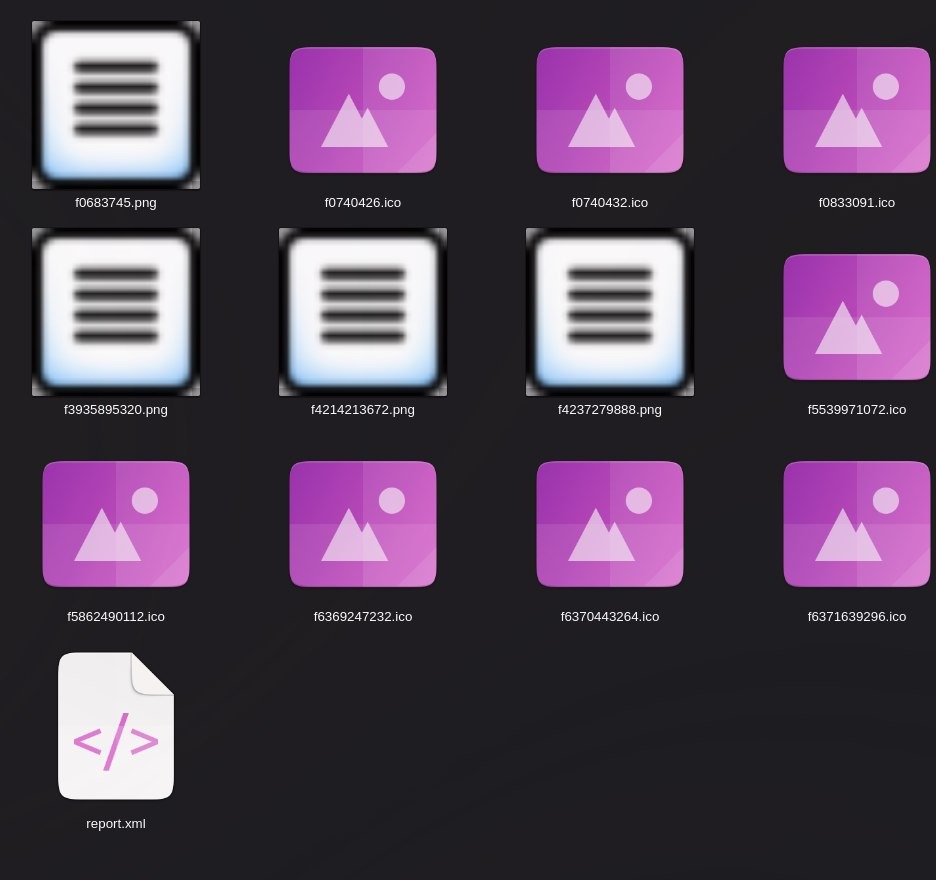
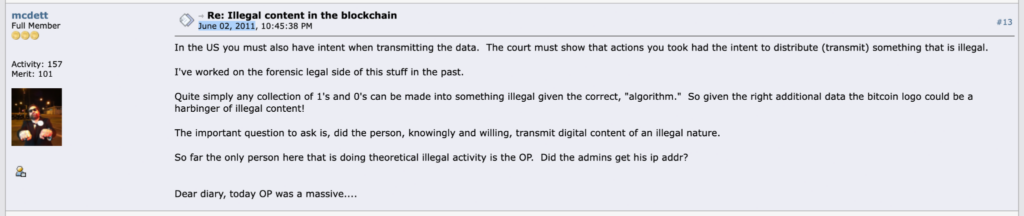
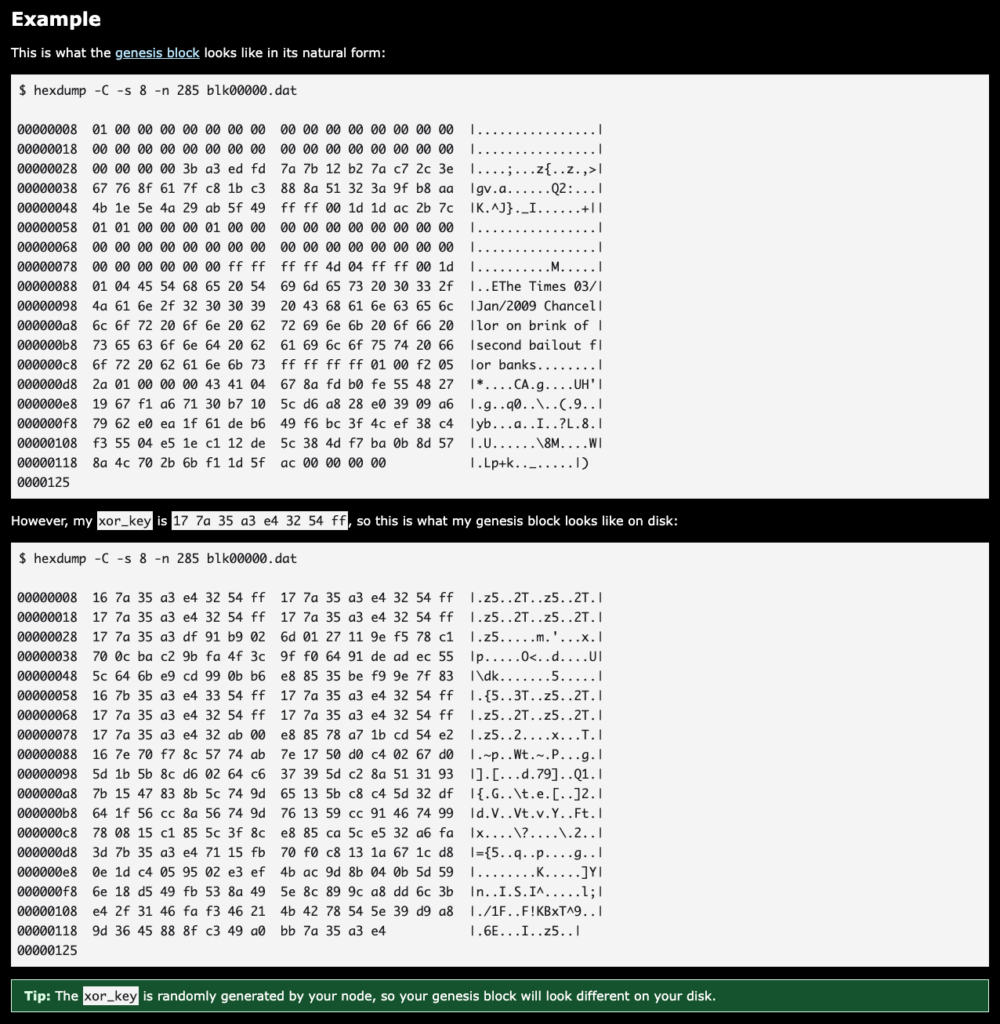




































 Japan Public company Bitcoin Japan Corporation has raised $60 million through convertible bonds, allocating $4.08 million to make its first buy for their BTC treasury





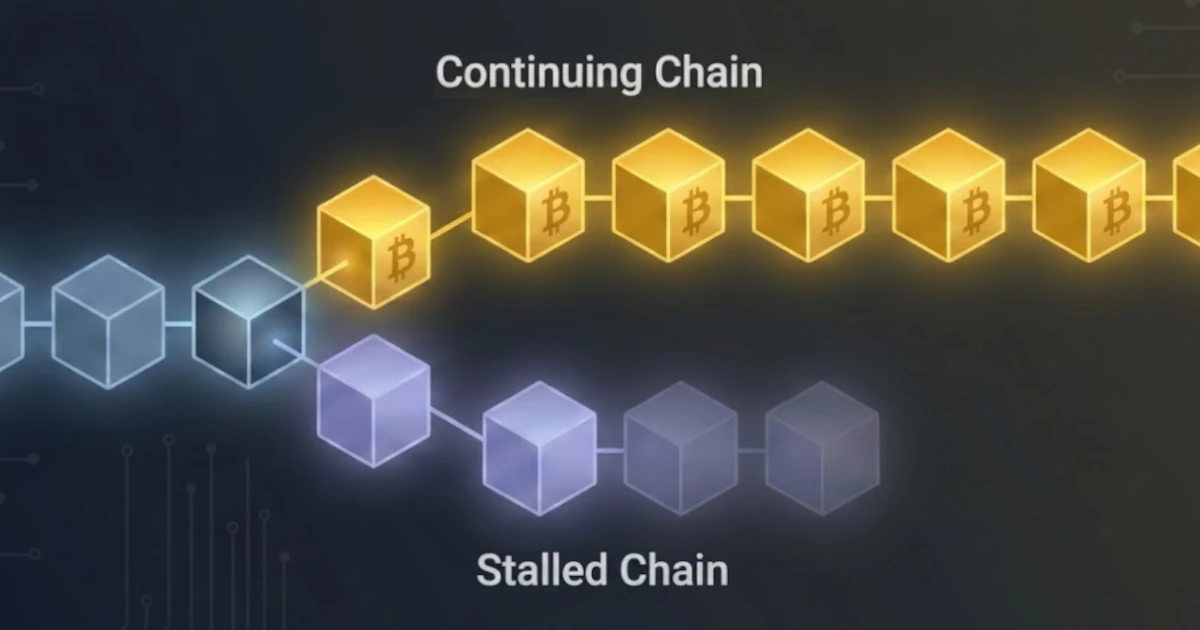

 (Yes, I know, proponents will claim it’s not about spam… and will also make semantic arguments that it does stop data as well… neither of which appears to be correct.)













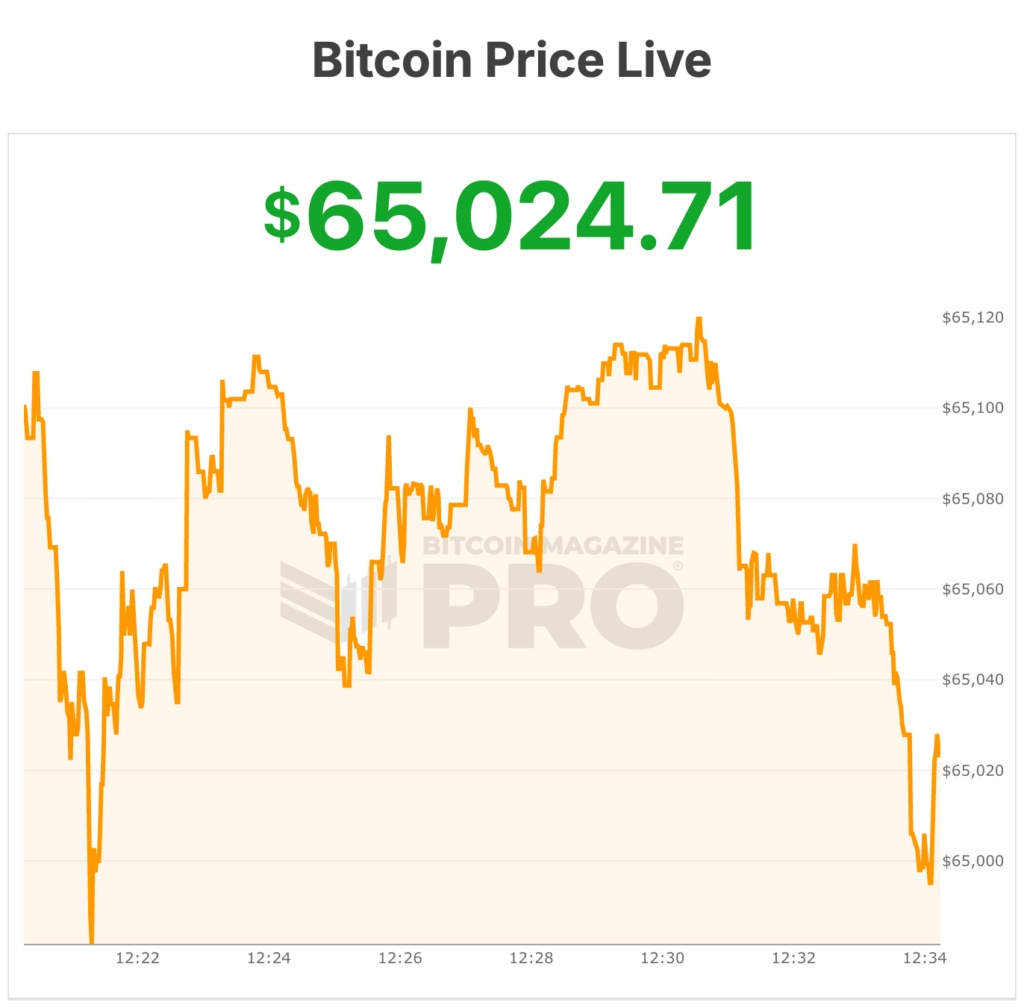








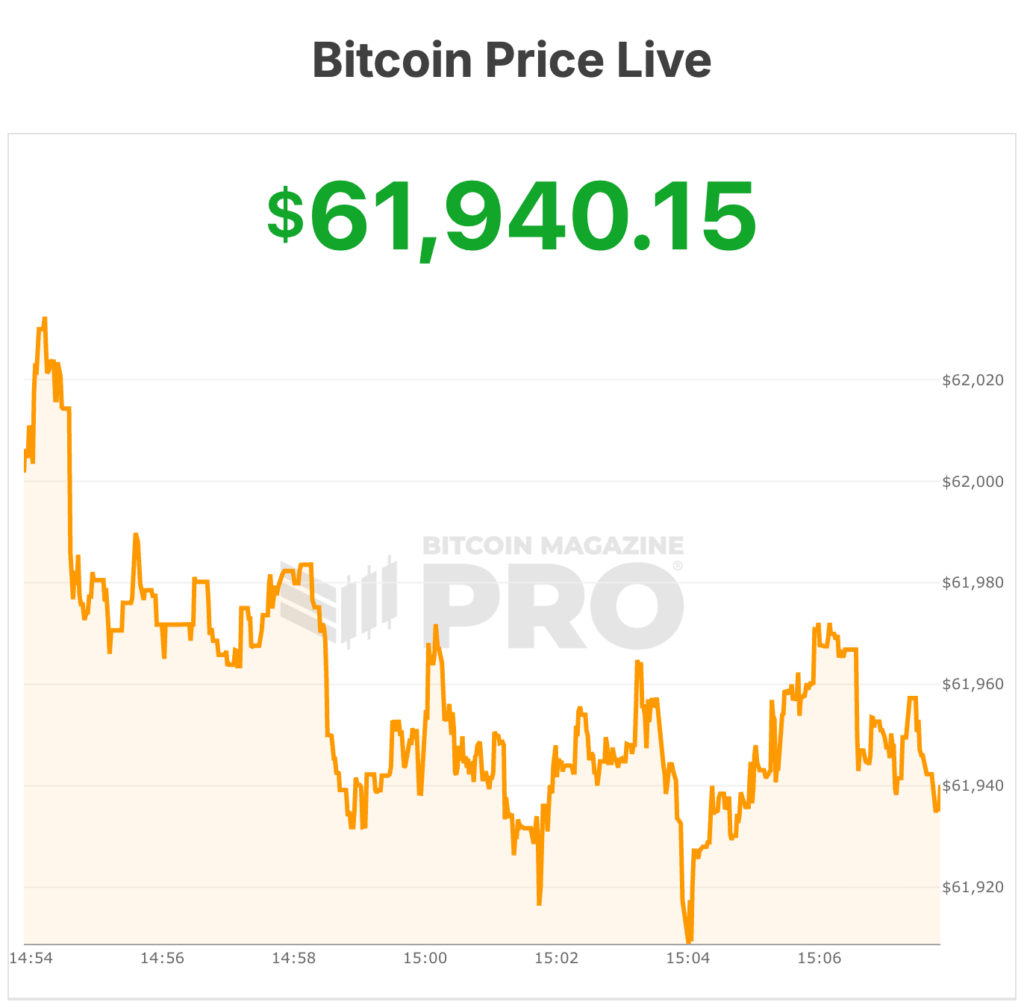

















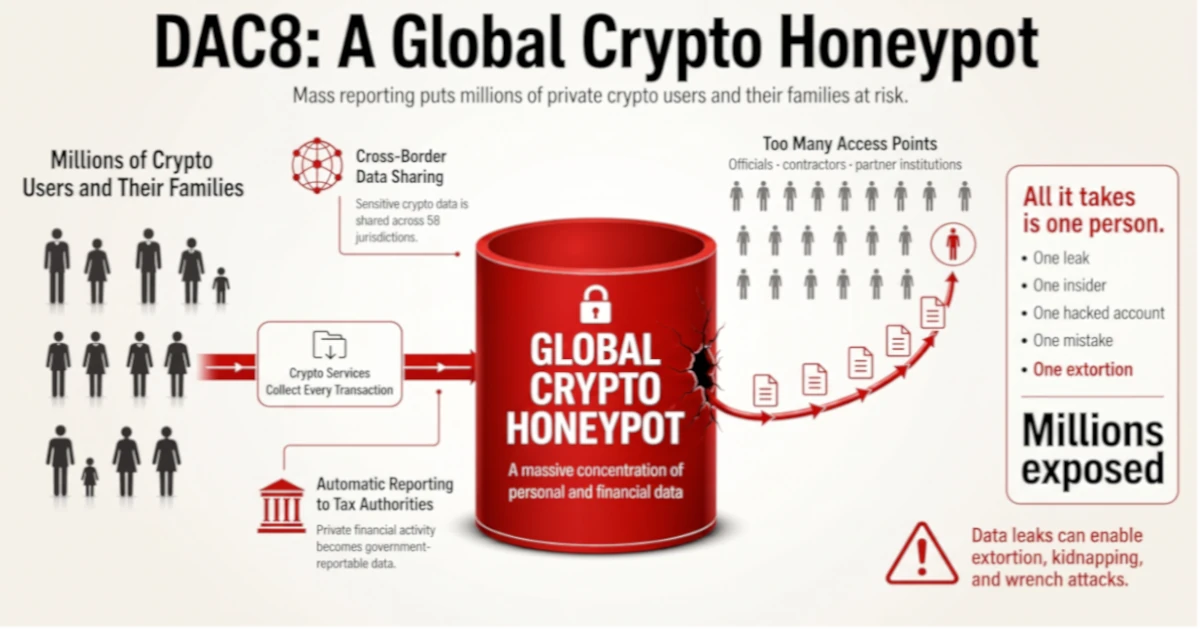
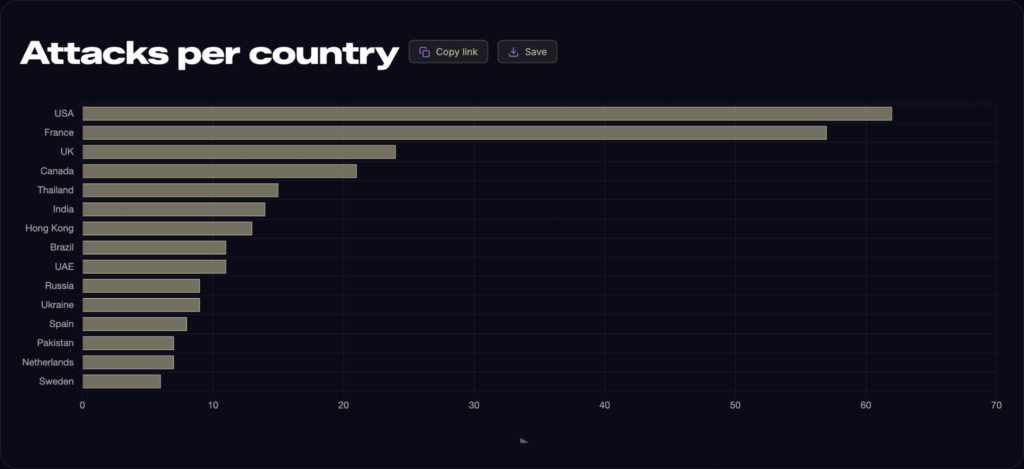
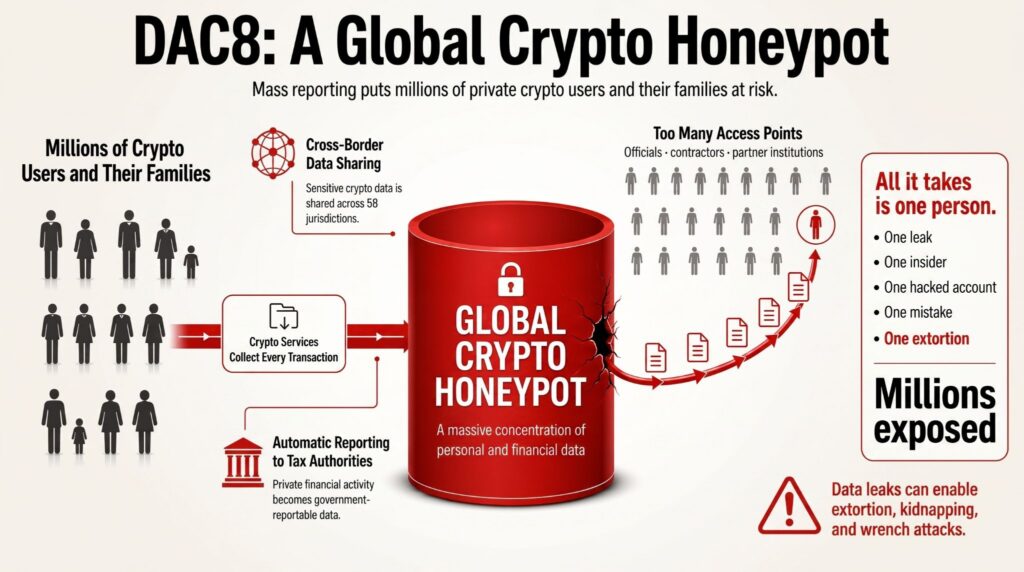


























Social Media