Bitwise Asset Management has become the first strategic yield partner in Lombard’s Bitcoin Smart Accounts ecosystem, signaling a growing bridge between institutional custody and productive on-chain Bitcoin deployment.
The collaboration is designed to unlock yield and liquidity for an estimated $500 billion in BTC currently held in regulated custody, without requiring asset transfers or modifications to existing custodial arrangements, Lombard said.
Scheduled for a Q2 2026 launch, Bitcoin Smart Accounts will allow high-net-worth individuals, institutional asset managers, and corporate treasuries to earn yield or borrow against BTC while maintaining full control of their assets.
Bitwise will provide institutional-grade yield strategies, combining DeFi lending with curated real-world asset portfolios, while Morpho will facilitate stablecoin liquidity for borrowing products.
Jacob Phillips, co-founder of Lombard, highlighted the significance of institutional adoption: “Following the February introduction of Bitcoin Smart Accounts, we’ve observed substantial demand for solutions that enable productive Bitcoin deployment while preserving existing custody. Bitwise brings the credibility and capabilities required to serve this market at scale.”
The partnership addresses longstanding operational inefficiencies in institutional Bitcoin markets. Traditionally, holders seeking liquidity faced three limited options: exiting custody, using opaque OTC lending channels, or selling assets — each presenting risk, cost, or lost upside.
Lombard’s Smart Accounts leverage custodian-integrated infrastructure to recognize Bitcoin positions as collateral using cryptographic receipts (BTC.b) without transferring the underlying asset.
Generate returns while preserving bitcoin
Hunter Horsley, CEO of Bitwise, framed the collaboration as a milestone for institutional Bitcoin: “We’re seeing growing demand for strategies that generate returns while preserving Bitcoin’s core properties.
This partnership helps shape an ecosystem where BTC can function as productive, yield-generating capital while maintaining security and compliance standards.”
According to Horsley, the recent BTC rebound and dip is attracting institutional interest, with investors viewing sub-$70,000 levels as an opportunity to accumulate. While some retail traders remain cautious, looking for signs that the market has found a floor, larger investors are approaching the pullback with a different perspective.
Horsley believes long-term holders may feel uncertain during price drops, whereas institutions are seizing the chance to enter at levels they previously thought were out of reach. Some buyers are taking advantage of broader market weakness, as BTC becomes part of a wider selloff in liquid risk assets, creating renewed opportunities for accumulation.
The architecture for the collaboration is designed to scale. Each new custodian or protocol integration increases the utility of the system, creating network effects akin to those seen in ACH or SWIFT over decades.
Lombard plans to expand custodian partnerships and whitelisted protocol integrations throughout 2026, aiming to mobilize hundreds of billions in institutionally held BTC into productive on-chain capital.
Editorial Disclaimer: We leverage AI as part of our editorial workflow, including to support research, image generation, and quality assurance processes. All content is directed, reviewed, and approved by our editorial team, who are accountable for accuracy and integrity. AI-generated images use only tools trained on properly license material. In Bitcoin, as in media: Don’t trust. Verify.
Bitcoin’s price has steadied after recent volatility, suggesting the worst of the market turbulence may be behind investors.
Following a sharp weekend selloff that pushed bitcoin from around $75,000 to lows near $67,000, the digital asset has rebounded, supported by signs of constructive U.S.–Iran talks and easing selling pressure from ETFs and long-term holders.
Despite closing the week down roughly 6%, the cryptocurrency shows resilience in its current range.
Research from K33 highlights that bitcoin has been trading sideways between $60,000 and $75,000 in recent weeks, a pattern often linked to market bottoms.
K33 Head of Research Vetle Lunde noted that this consolidation reflects stabilization in both exchange-traded product flows and long-term holder behavior. “With bitcoin trading below $100,000, fewer investors are inclined to exit positions, helping anchor prices,” Lunde said.
ETF flows have turned mildly positive since late February, signaling an end to the heavy distribution phase that began after October’s all-time highs.
Meanwhile, supply held for more than six months is rising again, reinforcing the market’s structural stability.
Broader financial conditions remain uncertain, with rising oil prices, geopolitical tensions in the Middle East, and a hawkish Federal Reserve limiting risk appetite. Open interest in bitcoin perpetual swaps hovers near yearly lows, funding rates remain negative, and institutional participation has been muted.
Still, K33 describes the environment as constructive. Reduced selling pressure, stabilized flows, and range-bound price action suggest bitcoin may be transitioning out of a distribution phase toward a potential bottom.
For medium- and long-term investors, the current low $70,000 levels could represent an attractive entry point, even as macro uncertainty keeps upside limited in the near term.
What’s going on in Iran?
Negotiations involving Iran, the United States, and Israel are ongoing but remain indirect and uncertain.
The U.S. has put forward a multi-point proposal aimed at ending the current conflict, reopening key shipping routes like the Strait of Hormuz, and limiting Iran’s nuclear and missile programs.
Talks are being mediated through countries such as Oman and Pakistan rather than conducted face-to-face.
This reflects a common strategy where Iran avoids signaling concessions domestically while remaining engaged diplomatically.
Major disagreements remain. Iran is demanding an end to military actions, security guarantees, and compensation, while rejecting limits on its missile program. The U.S., meanwhile, is pushing for restrictions on Iran’s nuclear activity.
The situation remains unstable, with diplomacy and military activity happening simultaneously.
When most people download Bitcoin Core, their interaction with the build system is over in a few clicks. They grab the executable binary of the software, verify a signature (hopefully!), and start running a Bitcoin node. What they immediately see is running software. What they don’t see is the build system and extensive processes that produced that software. A build system that represents Bitcoin’s principles of decentralization, transparency, and verifiability.
Behind that download lies years of engineering work designed to answer a simple question: “Why should anyone trust this software?” The answer is: you shouldn’t have to. You should be able to verify.
In a time when software supply-chain attacks make global headlines, from compromised npm packages, backdoored libraries, rogue CI servers, Bitcoin Core’s build process stands as a quiet project of discipline. Its methods may seem slow and complicated compared to the frictionless convenience of “push to deploy,” but that’s the point. Security isn’t convenient.
To understand Bitcoin Core’s build system, we should understand:
Bitcoin Core’s Build System Philosophy
Reproducible Builds
Minimizing Dependencies
No Auto-Updates
Continuous Integration
Ongoing Adaptation
Bitcoin Core’s Build System Philosophy
When it comes to Bitcoin’s decentralization, most people focus on miners, nodes, and developers. But decentralization doesn’t stop at the protocol’s participants. It extends to the way the software itself is built and distributed.
One principle in the Bitcoin ecosystem is “don’t trust, verify.” Running your own node is an act of verification, checking every block and transaction against the consensus rules. But the build system itself gives you another opportunity to verify, at the software level. Bitcoin is money without trusted intermediaries and Bitcoin Core works to be software without trusted builders. The build system takes great lengths to ensure that anyone, anywhere, can independently recreate the exact same binaries that appear on the bitcoincore.org website.
This philosophy traces back to Ken Thompson’s 1984 essay Reflections on Trusting Trust, which warned that even a clean-looking source code can’t be trusted if the compiler that built that software was itself compromised. Bitcoin’s developers took that lesson to heart. In the words of Bitcoin Core contributor Michael Ford (fanquake):
“Reproducible builds are critical, because no user of our software should have to trust that what’s contained inside is what we say it is. This must always be independently verifiable.”
A statement that is both a technical goal and part of the Bitcoin ethos.
In the security world, people talk about “attack surfaces.” Bitcoin Core’s build system treats the build process itself as an attack surface to be minimized and defended.
Reproducible Builds: Verification all the way down
The process of producing a Bitcoin Core release begins with the open-source codebase on GitHub. Every change is public. Every pull request is reviewed. But the journey from human-readable code to runnable binary software involves compilers, third-party libraries, and operating-systems which are themselves potential vectors for tampering, backdoors, or errors.
“Trusted third parties are security holes” – Nick Szabo (2001)
To address these concerns, Bitcoin Core architected a build process pipeline using Guix, a package manager designed to create reproducible, deterministic software environments.
When a new Bitcoin Core release is tagged, multiple independent contributors build the binaries from scratch using Guix. Each builder works in an isolated environment that guarantees identical toolchains, compiler versions, and system libraries. If all builders produce identical-bit outputs they know the build is deterministic.
Contributors then cryptographically sign the resulting binaries and publish those signatures on a separate GitHub repository ‘guix.sigs’ that lists these attestations for each release of Bitcoin Core. Some builders are Bitcoin Core developers, but it is not a requirement as the attestation process is open to anyone from the public. In fact, many non-code-contributors regularly contribute signatures.
This process is known as reproducible builds, and it is the antidote to Thompson’s “trusting trust.” It means anyone can take the open-source code, the same Guix environment, and independently confirm that the official binary matches what they built themselves. While reproducible builds can verify the software is a genuine representation of the software’s source code, the software’s correctness is left to processes around thorough testing and code review.
Most people will never perform a full compilation or check the Guix manifests or compare build hashes. They don’t need to. The existence of that infrastructure, and the people maintaining it, gives every user a foundation of earned confidence.
The official binaries on bitcoincore.org aren’t just “produced by the Bitcoin Core maintainers”. They’re the intersection of dozens of independent builders’ outputs. What you eventually download is what everyone else built and verified to be authentic.
It’s verification all the way down.
Minimizing Dependencies: Less to Trust
Reproducibility is one side of the equation. The other is minimizing what needs to be reproduced. Bitcoin Core’s code is not the only code executed when running Bitcoin Core. Bitcoin Core also relies on external, third-party code and libraries to speed up development and productivity.
Over the past decade, Bitcoin Core developers have steadily stripped away these unnecessary and sometimes problematic third-party dependencies, like OpenSSL and MiniUPnP. Whether it is an external library or toolkit, these dependencies add complexity or import hidden assumptions. Projects like Boost and Libevent, once staples of Core’s codebase, are gradually being phased out or replaced with simpler, self-contained alternatives.
Why? Because every dependency you inherit is a potential supply-chain risk. It’s more code you didn’t write, don’t audit, and can’t fully control. Reducing dependencies makes the build system leaner, safer, and easier to verify.
Brink recently highlighted this effort in its “Minimizing Dependencies” blog post[1], noting that it’s not just a matter of simplicity, it’s about preserving the project’s security and autonomy. Each removed dependency is one fewer external party the project must trust and one less potential for a backdoor.
The eventual goal is to produce fully static binaries: executables that contain everything they need to run, with no dynamic or runtime dependencies. This self-containment means no reliance on external libraries that could differ from one operating system to another.
In a world where most software grows heavier and more dependent on centralized package ecosystems, Bitcoin Core is moving in the opposite direction: toward minimalism and independence.
No Auto-Updates
In most modern software, users are shielded from decisions of what software version to update to, or decisions to update the software at all. You install an app, and it quietly and automatically updates itself to the latest versions in the background. While this is convenient, it is antithetical to Bitcoin Core’s philosophy.
Bitcoin Core has never included automatic updates, and developers have said it never will. Automatic updates concentrate power. They create a single group that can push (potentially malicious) code to every node on the network. This is exactly the sort of centralized control Bitcoin was built to avoid. By requiring users to manually download, verify, and install new versions, Bitcoin Core reinforces individual responsibility and verifiable consent.
The build system and the lack of auto-updates are two halves of the same principle. Only the node runner decides what to run and can verify that the software that is run is authentic.
Continuous Integration: Move slow and fix things
In Silicon Valley, continuous integration and continuous deployment (CI/CD) are the hallmarks of agile software development. Ship fast. Iterate faster. Let automation do the rest.
Bitcoin Core takes a different approach. Its CI systems exist not to accelerate deployment but to safeguard integrity. Automated builds test consistency across platforms. Bitcoin Core’s build system is designed to be agnostic to hardware and operating systems as much as possible. The project can build binaries for Linux, macOS, and Windows as well as for multiple architectures including x86_64, aarch64 (ARM), and even riscv64. The continuous integration system ensures this compatibility as well as software integrity by performing hundreds of tests for each proposed change.
The result is a culture where “continuous integration” means continuous testing, verification and security, not continuous innovation.
Move slow and fix things.
Ongoing Adaptation: Are we done yet?
The build system isn’t static. Developers continue to refine it by reducing dependencies, improving cross-architecture builds, and exploring a fully static build future with zero runtime dependencies.
While Bitcoin Core’s build system strives for determinism, the build system itself cannot be static. The world it operates within is constantly shifting. Operating systems, compilers, libraries, and hardware architectures all change. Each new release of macOS or glibc, every deprecation of a compiler flag, or emerging CPU architecture introduces subtle incompatibilities that must be addressed. A build system that stood still would, over time, cease to build at all.
The paradox of reproducible builds is that they require continual evolution to remain reproducible. Developers must constantly pin, patch, and sometimes replace toolchains to preserve determinism against a moving backdrop of change. Maintaining this balance between stability and adaptability is part of Bitcoin’s ongoing resilience.
This piece is the Letter from the Editor featured in the latest Print edition of Bitcoin Magazine, The Core Issue. We’re sharing it here as an early look at the ideas explored throughout the full issue.
Publicly listed DV8 (SET: DV8) has signed a Share Purchase Agreement to acquire Rakkar Digital, a licensed digital asset custodian in Thailand.
This move represents DV8’s first direct entry into regulated digital asset operations and marks a strategic pivot toward building infrastructure that institutional investors can rely on across Asia.
Rakkar Digital, with over $700 million in assets under custody, was established as a joint venture between SCBX, the parent company of Siam Commercial Bank, and Fireblocks, a global digital asset infrastructure provider, according to a note shared with Bitcoin Magazine.
Early backing from SCB 10X helped lay the foundation for its growth. For DV8, the company’s regulatory standing, operational framework, and trust among institutional clients made it a natural fit.
Custody lies at the heart of any institutional-grade digital asset strategy. It demands licensing, compliance, security expertise, and constant engagement with regulators.
By acquiring Rakkar Digital, DV8 said they gained a platform already meeting those standards, giving the company a firm foothold in Asia’s evolving digital asset ecosystem.
This deal follows DV8’s September 2025 investment in Bitplanet, a Korean digital asset treasury platform.
Taken together, these steps illustrate a consistent approach: backing regulated, resilient businesses that enhance DV8’s ability to operate across borders while meeting institutional expectations.
DV8 was originally a media company but is now transforming into a builder of regulated digital asset infrastructure, the company said.
Bitcoin as a reserve asset
Over the last five years, Bitcoin has become a more and more popular treasury reserve asset for traditional finance companies.
Strategy (MSTR) has become the flagship case study in the evolution of bitcoin treasury strategies in the corporate world.
Under the leadership of Michael Saylor, Strategy shifted from a traditional software business to a firm whose primary reserve asset is Bitcoin, pioneering a model where BTC sits at the heart of corporate balance sheet strategy.
Strategy uses capital markets to finance its BTC accumulation. Instead of hoarding cash or traditional securities, Strategy has consistently issued equity and convertible debt to fund Bitcoin purchases, aiming to maximize its “BTC per share” metric and align shareholder value with long‑term BTC appreciation.
This model has inspired other corporations like DV8 to consider adding bitcoin to their treasuries. At the time of writing, Bitcoin is trading slightly below $70,000 after flirting with $71,000 earlier this morning.
https://bitcoindevelopers.org/wp-content/uploads/2026/03/DV8-Becomes-First-Bitcoin-Treasury-Company-in-Southeast-Asia-with-Digital-Asset-License-Awk6SD.jpg10801920Bitcoin Developerhttps://bitcoindevelopers.org/wp-content/uploads/2024/08/loho_hor_1-300x108.pngBitcoin Developer2026-03-24 16:25:112026-03-24 16:25:11DV8 Becomes First Bitcoin Treasury Company in Southeast Asia with Digital Asset License
The Commodity Futures Trading Commission has launched a new Innovation Task Force aimed at developing clear regulatory frameworks for emerging technologies in U.S. derivatives markets.
CFTC Chairman Michael S. Selig said the task force will focus on crypto assets, blockchain, artificial intelligence, autonomous systems, and prediction markets. “By establishing a clear regulatory framework for innovators building on the new frontier of finance, we can foster responsible innovation at home,” Selig said.
The task force will collaborate with the SEC and its Crypto Task Force, as well as the CFTC’s Innovation Advisory Committee, which includes over 30 executives from companies like Kalshi and Nasdaq. Michael J. Passalacqua, senior advisor to the Chairman, will lead the initiative.
Selig emphasized the goal of creating a space for innovators to engage directly with regulators. The move comes amid increasing coordination between the CFTC and SEC on crypto regulation, including recent guidance clarifying jurisdictional boundaries.
The CFTC is also intensifying oversight of prediction markets, asserting authority despite opposition from states citing local gaming laws.
SEC and CFTC join hands over crypto
Earlier this month, the U.S. Securities and Exchange Commission (SEC) and the CFTC announced a historic Memorandum of Understanding (MOU) aimed at harmonizing their regulatory approaches to the digital asset and emerging technology sectors.
The agreement made it clear they have a commitment to support innovation, protect investors, and reduce duplicative or conflicting rules that previously created a “turf war” between the agencies.
Also, the two agencies issued joint guidance last week clarifying that most digital assets — including stablecoins, digital commodities, and collectibles — are not securities, introducing a formal “token taxonomy” while reserving traditional securities laws only for blockchain-based assets resembling equities or debt.
The framework also clarifies that crypto activities like mining, staking, and airdrops generally do not qualify as securities transactions, and that an asset’s classification can change.
Under the MOU, the SEC and CFTC will coordinate oversight, data sharing, and joint rulemaking, particularly around product definitions, clearing, margin, trade reporting, and intermediaries.
SEC Chair Paul Atkins said that the effort seeks to align definitions of digital assets as securities or non-securities and provide a clear, predictable regulatory framework.
Selig said that harmonization will modernize the regulatory landscape, reduce burdens, and close gaps, helping maintain U.S. financial market leadership.
The agencies also launched a Joint Harmonization Initiative, co-led by Robert Teply (SEC) and Meghan Tente (CFTC), to facilitate cross-agency coordination in policymaking, examinations, risk monitoring, and enforcement.
This coordinated approach marks a major step toward clarity and efficiency for bitcoin and crypto firms, investors, and other market participants navigating U.S. financial regulations.
Capital B, Europe’s first Bitcoin Treasury Company, has completed the acquisition of 44 bitcoin for €2.7 million, bringing its total holdings to 2,888 BTC.
The purchases were executed as part of the company’s ongoing Bitcoin Treasury Company strategy, which aims to increase the number of bitcoin per fully diluted share over time, according to a company press release seen by Bitcoin Magazine.
The company also finalized multiple capital raising operations. An “ATM-type” capital increase with TOBAM generated €0.5 million through the issuance of 669,906 new shares at €0.76 per share.
Additionally, €3 million was raised via share subscription warrants, with €2 million subscribed by TOBAM and €1 million by UTXO Management.
These operations funded the latest BTC acquisition and supported the company’s broader treasury strategy.
Capital B reported a year-to-date (YTD) BTC Yield of 0.72%, equivalent to a gain of 20.4 BTC and €1.2 million. The company also achieved a quarterly BTC Yield of 0.72%, highlighting the incremental growth of its bitcoin holdings relative to fully diluted shares. The average acquisition cost of its BTC portfolio stands at €92,495 per coin, representing a total investment of €267.1 million.
Swissquote Bank Europe SA, a Luxembourg-registered virtual asset service provider (VASP), executed the bitcoin acquisition and provided secure custody through Taurus technology. The company maintains an additional 60 BTC for operational needs, separate from its treasury holdings.
Capital B is listed on Euronext Growth Paris and specializes in data intelligence, artificial intelligence, decentralized technology consulting and development, and corporate treasury.
Bitcoin surges
Bitcoin surged to $71,000 on Monday, rebounding from weekend lows near $67,000, following a sudden easing of geopolitical tensions after Donald Trump announced a five-day pause on planned U.S. strikes against Iran.
The pause came after what Trump described as “very good” and “productive” talks with Tehran, reversing the market’s defensive posture from prior threats to target Iranian energy infrastructure.
Amid this backdrop, Strategy continued its corporate bitcoin accumulation, albeit at a slower pace. Between March 16 and March 22, the company acquired 1,031 BTC for $76.6 million at an average price of $74,326 per coin, funded through common stock sales. This contrasts with the prior two weeks, when Strategy deployed over $1 billion into bitcoin via equity and preferred share offerings, signaling a more measured approach.
Strategy now holds 762,099 BTC, purchased for approximately $57.7 billion at an average cost of $75,694 per coin.
Disclaimer: Bitcoin Magazine is owned by Nakamoto Inc. (NASDAQ: NAKA). Nakamoto Inc. also owns UTXO Management.
Strategy has moved to sharply expand its capacity to raise capital through at‑the‑market equity and preferred offerings, adding new Wall Street agents and reshaping its preferred stock authorization to favor a key floating‑rate series.
The steps, disclosed in a March 23 Form 8‑K, give the company scope to sell up to an additional $44.1 billion in securities on top of large existing programs.
In the filing, Strategy said it entered joint agreements with Moelis & Company LLC, A.G.P./Alliance Global Partners, and StoneX Financial Inc., adding them as sales agents under its Omnibus Sales Agreement dated November 4, 2025.
That agreement already named TD Securities (USA), The Benchmark Company, Barclays Capital, BTIG, Canaccord Genuity, Cantor Fitzgerald, Clear Street, Compass Point, H.C. Wainwright, Keefe Bruyette & Woods, Maxim Group, Mizuho Securities USA, Morgan Stanley, Santander US Capital Markets, SG Americas Securities, and TCBI Securities doing business as Texas Capital Securities as agents.
Under the joinders, each of Moelis, Alliance, and StoneX becomes an agent on the same contractual footing as the original banks, with the right and obligation to place Strategy’s securities in at‑the‑market, or “ATM,” transactions.
JUST IN: Michael Saylor’s Strategy announces new $42 billion plan to buy more Bitcoin pic.twitter.com/w2WA2YIzHl
Alongside the added agents, Strategy and the syndicate executed three “Additional Program Addenda” that establish new ATM programs for its Class A common stock (ticker MSTR), its Variable Rate Series A Perpetual Stretch Preferred Stock (STRC), and its 8.00% Series A Perpetual Strike Preferred Stock (STRK).
These addenda operate under Section 8(i) of the Omnibus Sales Agreement and are structured so they do not cancel or limit rights under the underlying framework.
The company then filed new prospectus supplement annexes under its automatic shelf registration statement, which became effective on January 27, 2025.
Those annexes authorize at‑the‑market offerings of:
Up to $21.0 billion of new Class A common stock (the “New Common ATM Shares”).
Up to $21.0 billion of new STRC preferred shares (the “New STRC ATM Shares”).
Up to $2.1 billion of new STRK preferred shares (the “New STRK ATM Shares”).
In other words, Strategy has established new ATM programs to sell up to $21 billion of common stock, $21 billion of STRC preferred, and $2.1 billion of STRK preferred shares.
These programs supplement existing authorizations, with the old STRK program replaced by the new $2.1 billion offering.
These new capacities sit alongside existing shelf authorizations. Strategy had previously registered the sale of about $15.85 billion of common stock and $4.2 billion of STRC preferred under prior annexes and the base prospectus, and it intends to keep using those prior prospectuses until those capacities are fully sold.
In contrast, the company terminated its prior STRK preferred ATM program effective March 22, 2026, and the new $2.1 billion STRK annex replaces that earlier effort.
Strategic tilt in preferred structure
To support this mix of funding options, Strategy also amended its charter with two targeted preferred stock actions. A Certificate of Increase raised authorized shares of STRC preferred from 70,435,353 to 282,556,565, more than tripling the pool available for issuance. A separate Certificate of Decrease reduced authorized STRK preferred shares from 269,800,000 to 40,270,744.
Both certificates were adopted by the board’s Pricing and Financing Committee under authority granted in the company’s Second Restated Certificate of Incorporation and Section 151(g) of the Delaware General Corporation Law.
Strategy also said they secured legal opinions confirming that its new ATM shares — both common and preferred — will be validly issued, fully paid, and non-assessable.
The 8‑K clarifies that no offers or sales are happening yet, and any actual issuances will depend on market conditions, investor demand, and internal decisions.
Overall, the expanded ATM programs and reallocated preferred shares give Strategy flexibility to raise capital while prioritizing floating‑rate preferred issuance over the 8.00% STRK series.
H100 Group AB (H100), the Stockholm-based publicly listed bitcoin treasury company, announced a letter of intent (LOI) to acquire Norwegian bitcoin-focused firms Moonshot AS and Never Say Die AS.
The move, if completed, would roughly triple H100’s holdings to around 3,500 BTC, positioning the company among Europe’s largest listed bitcoin treasury firms and enhancing its institutional profile, according to a press release seen by Bitcoin Magazine.
Currently holding 1,051 BTC, the company would add the target companies’ combined 2,450 BTC through the transaction.
The acquisition is structured as a bitcoin-for-bitcoin exchange, meaning ownership in the combined entity will be determined solely by the number of BTC contributed.
This preserves the existing shareholders’ exposure per share while significantly expanding the company’s balance sheet. The deal is set up as an all-share transaction with no cash consideration, consistent with H100’s strategy of bitcoin-based mergers and acquisitions.
The move comes on the heels of H100’s January announcement regarding its combination with Switzerland-based Future Holdings AG, also a bitcoin treasury company, highlighting the firm’s ongoing effort to consolidate institutional-scale bitcoin holdings in Europe.
H100’s backing
Both acquisitions have backing from Adam Back, the British cryptographer and co-founder of Blockstream, reinforcing the network of experienced bitcoin investors involved in the transactions.
Chairman Sander Andersen emphasized the industrial rationale for the deal, citing scale, credibility, and access to capital markets as increasingly important for publicly listed bitcoin firms.
“This transaction would significantly strengthen H100 in all these areas,” Andersen said, noting that the acquisition aligns with H100’s ongoing capital markets and M&A strategy while leaving its listing structure and core operations unchanged.
The target companies bring more than just bitcoin holdings. Moonshot AS and Never Say Die AS are led by seasoned professionals including CEO Eirik Grøttum, a former systematic trader and asset manager, and CIO Peter Warren, a hedge fund veteran with extensive experience across equities, derivatives, and FX markets.
Together with founder Geir Harald Hansen, the pioneer behind the Bitminter BTC mining pool, the Norwegian teams bring operational expertise and technology capabilities expected to complement H100’s treasury management and capital markets activities.
Following completion, the company will remain the listed parent company. Management and board positions are expected to include representatives from both H100 and the acquired firms, ensuring continuity of existing leadership while integrating new expertise.
Current executives, including Andersen and CEO Johannes Wiik, will continue in central roles. Definitive agreements are targeted by April 22, 2026, with completion expected shortly after H100’s annual general meeting on May 21, subject to regulatory approvals and customary conditions.
The company continues to operate its health technology business alongside its bitcoin treasury strategy, combining digital health tools and AI-powered solutions for providers of health and lifestyle services.
The firm said its core business model and listing structure will remain unchanged even as it pursues aggressive growth in bitcoin holdings.
Key senators and the White House have reached a tentative agreement on cryptocurrency legislation aimed at resolving a dispute between banks and digital asset firms over stablecoin yields, according to Politico reporting.
The move could clear the way for a landmark crypto regulatory bill stalled in the Senate Banking Committee since January.
Sen. Thom Tillis (R-N.C.) and Sen. Angela Alsobrooks (D-Md.) said Friday they have an “agreement in principle” on language intended to balance innovation with financial stability. The legislation seeks to prevent stablecoin rewards programs from triggering widespread deposit withdrawals from traditional banks, a concern raised by Wall Street groups.
“The agreement allows us to protect innovation while giving us the opportunity to prevent widespread deposit flight,” Alsobrooks said. Tillis described the deal as a positive step but noted the need to consult with industry stakeholders before finalizing details.
While specifics of the agreement remain unclear, early indications suggest it could bar yield payments on passive stablecoin balances. The tentative deal signals progress toward an April vote on the crypto market-structure bill, potentially unlocking the first major federal regulatory framework for digital assets.
Crypto legislation background
The fight over a U.S. crypto market‑structure bill stems from a broader effort to build on 2025’s landmark stablecoin legislation, the GENIUS Act, which established a federal framework for stablecoins — requiring full backing, transparency and reserve disclosures for digital dollars.
That law was widely seen in the crypto industry as a breakthrough for regulatory clarity while attempting to align digital assets with traditional financial standards.
After the GENIUS Act’s passage, the Senate turned its attention to more expansive digital asset oversight through what’s often referred to as the CLARITY Act or the crypto market‑structure bill.
This legislation aims to define how U.S. regulators would police and oversee trading platforms, tokens, custody services and other infrastructure — essentially the backbone of a regulated digital asset ecosystem.
However, negotiations bogged down over one central issue: whether regulated exchanges should be allowed to offer yield‑bearing rewards on stablecoin holdings.
Banks and major financial institutions argue that these rewards resemble unregulated deposit‑like products that could siphon funds away from FDIC‑insured accounts, potentially threatening lending and financial stability.
Crypto firms — including major issuers like Circle and Coinbase — counter that such incentives are crucial for competitive markets and for user adoption of digital money.
The current tentative deal being negotiated between senators and the White House seeks a middle ground — potentially allowing activity‑based rewards while restricting passive yield — in hopes of unlocking Senate committee action by April. Whether that compromise holds both bank and crypto support will be decisive for the future of U.S. digital asset regulation.
Phong Le, President and CEO of Strategy, the world’s first and largest Bitcoin treasury firm, said Morgan Stanley’s proposed bitcoin ETF could unlock as much as $160 billion in demand under a modest portfolio allocation scenario.
“Morgan Stanley Wealth Management oversees about $8 trillion in AUM and recommends 0–4% bitcoin allocation,” Le wrote on X. “A 2% allocation would represent $160 billion, about three times the size of IBIT. MSBT: Monster Bitcoin.”
In other words, Le is saying that even a modest 2% bitcoin allocation across Morgan Stanley’s $8 trillion wealth platform could drive about $160 billion into bitcoin, far exceeding the size of existing ETFs like BlackRock’s iShares Bitcoin Trust.
The comment landed as Morgan Stanley advanced plans for its own spot BTC ETF, revealing new details in a filing with the U.S. Securities and Exchange Commission. The fund would trade under the ticker MSBT, a symbol that Le cast as shorthand for the potential scale of institutional demand.
Morgan Stanley’s amended S-1 outlines a structure familiar to the growing class of spot BTC ETFs. The trust is set to list on NYSE Arca with a 10,000-share creation unit and an initial seed basket of 50,000 shares, expected to raise about $1 million. The bank also disclosed it purchased two shares earlier this month for audit purposes.
Key service providers mirror those used across the ETF ecosystem. BNY Mellon will act as cash custodian, administrator, and transfer agent, while Coinbase is set to serve as prime broker and custodian for the fund’s bitcoin.
The product would hold BTC directly, aligning with the structure that has defined the current wave of the U.S.-listed spot ETFs.
Capital managers are migrating to bitcoin
Le’s framing points to a larger question that sits beyond the mechanics of the filing: how much capital wealth managers may allocate if BTC becomes a standard portfolio component. Morgan Stanley Wealth Management, with trillions in client assets, has signaled that bitcoin exposure can range from zero to four percent depending on client profile.
Even a midpoint allocation, as Le noted, would imply flows that exceed the size of existing flagship products such as iShares Bitcoin Trust.
So far, adoption has moved in stages. Since spot BTC ETFs launched in 2024, the category has attracted more than $50 billion in inflows, driven in large part by self-directed investors. Within advisory channels, uptake remains uneven, shaped by internal policies, risk models, and client demand.
Morgan Stanley has already taken steps in that direction, allowing brokerage clients to access spot BTC ETFs and widening availability over time. The MSBT filing suggests a shift from distribution toward ownership of the product itself, a move that could deepen the bank’s role in the market if approval is granted.
The SEC has not provided a timeline for a decision, and approval is not assured. Still, the application marks a notable development: a major U.S. bank seeking to issue its own spot bitcoin ETF in a market it once approached with caution.
https://bitcoindevelopers.org/wp-content/uploads/2026/03/Phong-Le-Calls-Morgan-Stanleys-BTC-ETF-a-Monster-Bitcoin-Bet-With-160-Billion-Potential-5qinQ9.jpg10801920Bitcoin Developerhttps://bitcoindevelopers.org/wp-content/uploads/2024/08/loho_hor_1-300x108.pngBitcoin Developer2026-03-20 18:03:502026-03-20 18:03:50Phong Le Calls Morgan Stanley’s BTC ETF a “Monster Bitcoin” Bet With $160 Billion Potential
Bitcoin price held near the $70,000 level today as geopolitical risks tied to the conflict involving Iran shifted and macro expectations weighed on broader risk markets, while derivatives data and on-chain metrics pointed to a market in consolidation rather than capitulation.
The bitcoin price hovered around $70,500 in early Friday trading, following a pullback from a recent high near $76,000.
The move came as energy markets surged and inflation concerns returned to the forefront, limiting upside across risk assets. Despite the pressure, Bitcoin price has shown relative stability compared with commodities and equities during the same period.
Research from VanEck frames the current environment as a post-stress reset. The firm’s mid-March ChainCheck report notes that Bitcoin price’s 30-day average price declined 19%, yet spot prices stabilized as realized volatility fell from 80 to near 50.
At the same time, futures funding rates dropped from 4.1% to 2.7%, signaling reduced leverage and lower speculative intensity.
Options markets reflect a defensive posture. VanEck data shows the put-to-call open interest ratio averaged 0.77, the highest level since mid-2021, placing current positioning in the 91st percentile of observations since 2019.
Demand for downside protection remains elevated, with put premiums reaching record levels relative to spot trading volume. Investors continue to allocate capital toward hedging, even as volatility declines.
Future positive returns for Bitcoin price?
This pattern has historical significance. According to VanEck, similar levels of options skew have preceded positive forward returns. Periods with comparable readings have produced average gains of more than 13% over the following 90 days and more than 100% over a one-year horizon.
The data suggests that extreme caution in derivatives markets has often coincided with late-stage drawdowns rather than the start of new declines.
Onchain activity presents a quieter picture. Transfer volume fell 31% over the past month, while daily fees dropped 27%. Active addresses declined modestly, indicating limited participation at the network level.
This trend led to the growing role of offchain venues, including exchange-traded products and derivatives platforms, which now account for a larger share of trading activity.
Long-term holders appear to be reducing distribution. Transfer volume declined across all age cohorts, signaling that older coins remain largely inactive. This shift points to reduced selling pressure from experienced market participants, a factor often associated with price stabilization phases.
Miner behavior adds another layer. Revenues declined 11% in the past month, reflecting tighter economics. Yet selling pressure from miners has not surged. Onchain flows to exchanges rose only 1%, while aggregate miner balances declined at a gradual pace. Over the past year, miners have sold most newly issued supply but have not accelerated liquidation of existing reserves.
Institutional flows, however, have softened.
Spot Bitcoin exchange-traded funds recorded net outflows in recent sessions, reversing a prior streak of inflows. The shift aligns with broader risk aversion as investors respond to macro uncertainty and rising energy costs.
Yesterday, Morgan Stanley confirmed that its proposed spot bitcoin exchange-traded fund will trade under the ticker MSBT on NYSE Arca, according to an updated filing with the U.S. Securities and Exchange Commission.
At the time of writing, the bitcoin price is $70,371.
North Carolina lawmakers introduced legislation on Wednesday to create a state-controlled Bitcoin reserve.
Senate Bill 327, titled the North Carolina Bitcoin Reserve and Investment Act, would allow the Office of the State Treasurer to allocate up to 10% of public funds into BTC as part of the state’s long-term financial strategy.
The bill, sponsored by Senators Johnson and Overcash, passed its first Senate reading and was referred to the Rules and Operations Committee. Its stated goals include establishing a Strategic Bitcoin Reserve, promoting BTC as a financial innovation, and positioning North Carolina as a leader in state-level crypto adoption.
Under the proposal, the Treasurer would manage the reserve using cold storage wallets with multi-signature authentication.
A new department within the Treasurer’s office would take custody of the assets, ensuring state control. The bill also calls for a Bitcoin Economic Advisory Board composed of industry experts to provide guidance and monthly audits to verify reserve balances, security, and performance.
Bitcoin acquisitions would be conducted through regulated U.S.-based exchanges, with bulk purchases timed to take advantage of market conditions. The bill also directs the Treasurer to explore BTC mining operations as a potential method to increase state holdings.
Use of the reserve would be restricted to severe financial crises, approved investment strategies, funding for critical infrastructure and economic development projects, and support for Bitcoin-related research, education, and business incentives.
Any liquidation of BTC would require approval from at least two-thirds of both chambers of the General Assembly. The bill allows the reserve to back bonds as an alternative financing tool for public projects.
The Treasurer would submit quarterly reports to the General Assembly detailing the reserve’s status, value, and performance.
Reports would also be publicly available on the Treasurer’s website, according to the bill’s text. The bill includes provisions to comply with federal and state laws regarding cryptocurrency holdings and taxation and encourages advocacy for federal regulations favorable to Bitcoin.
JUST IN: North Carolina introduces bill for a Strategic Bitcoin Reserve
Several U.S. states are exploring or have implemented BTC reserves as part of state treasury strategies.
Texas, New Hampshire, and Arizona have enacted laws allowing portions of state funds to be allocated to Bitcoin, while Maryland, Iowa, Kentucky, North Carolina, Michigan, South Dakota, Illinois, Tennessee and Missouri have introduced legislation proposing similar reserves.
Other states, including Oklahoma, Utah, and Pennsylvania, have considered bills that remain in committee, while proposals in Wyoming, Montana, and Florida have stalled or been rejected. These efforts reflect a growing trend to use BTC as a potential store-of-value hedge and diversify state financial assets.
Adam Back has been officially confirmed as a speaker at Bitcoin 2026, returning to the conference as one of the few people in the world whose contributions to Bitcoin predate Bitcoin itself. As Co-Founder and CEO of Blockstream and CEO of Bitcoin Standard Treasury Company (BSTR), Back comes to Las Vegas operating at the intersection of Bitcoin infrastructure and capital markets like never before.
In 1997, Back invented Hashcash — a proof-of-work system originally built to combat email spam that became the direct technical foundation for Bitcoin’s mining process. Satoshi Nakamoto cited Back by name in the Bitcoin white paper, writing that the network would need “a proof-of-work system similar to Adam Back’s Hashcash.” Before the genesis block was ever mined, Satoshi emailed Back directly.
Blockstream, which Back co-founded in 2014, develops Bitcoin infrastructure across three areas: consumer self-custody tools including the open-source Jade hardware wallet, enterprise settlement and asset issuance on the Liquid Network, and institutional products through Blockstream Asset Management — with with Liquid Network closing 2025 with close to $5 billion in TVL. At Bitcoin 2025, Back framed the company’s direction: “We’re laser-focused on Bitcoin. At Blockstream, we are here to provide the infrastructure to enable that.”
On the capital markets side, Bitcoin Standard Treasury Company has entered into a definitive agreement to go public through a merger with Cantor Equity Partners I (CEPO), structured with 30,021 BTC on its balance sheet and up to $1.5 billion in PIPE financing — the largest ever announced alongside a Bitcoin treasury SPAC merger. As of March 2026, BSTR is awaiting completion of the de-SPAC process, with shareholder approval targeted as early as April, after which the combined company is expected to trade on Nasdaq under the ticker “BSTR.”
From inventing the proof-of-work system that makes Bitcoin possible, to building the infrastructure layer on top of it, to now bringing over 30,000 BTC to public markets — Back’s is unlike anyone else on the Bitcoin 2026 stage. His appearance at The Venetian this April will be one of the most technically credible perspectives at the conference on where Bitcoin’s protocol, infrastructure, and capital markets are all heading at once.
— The Bitcoin Conference (@TheBitcoinConf) March 9, 2026
Bitcoin 2026 Returns to Las Vegas Bigger Than Ever
Bitcoin 2026 will take place April 27–29 at The Venetian, Las Vegas, and is expected to be the biggest Bitcoin event of the year.
Focused on the future of money, Bitcoin 2026 will bring together Bitcoin builders, investors, miners, policymakers, technologists, and newcomers from around the world. The event will feature a wide range of pass types, including general admission passes designed specifically for those new to Bitcoin, alongside premium passes for professionals, enterprises, and institutions.
With multiple stages, immersive experiences, technical workshops, and headline keynotes, Bitcoin 2026 is designed to serve both first-time attendees and long-time Bitcoiners shaping the next era of global adoption.
Past Bitcoin Conferences in the U.S.
Bitcoin’s flagship conference has scaled dramatically over the past five years:
2021 – Miami: 11,000 attendees
2022 – Miami: 26,000 attendees
2023 – Miami: 15,000 attendees
2024 – Nashville: 22,000 attendees
2025 – Las Vegas: 35,000 attendees
Get Your Bitcoin 2026 Pass
Bitcoin Magazine readers can save 10% on Bitcoin 2026 tickets using code ‘ARTICLE10‘ at checkout.
Stay at The official hotel of Bitcoin 2026, The Venetian, and get a guaranteed low rate plus 15% off your pass. Hotel Prices increase soon, be in the middle of where the fun is all happening, and where the networking never ends.
All students ages 13+ can apply for a Student Pass and get free general admission access to Bitcoin 2026.
Location: The Venetian, Las Vegas Dates: April 27–29, 2026
For more information and exclusive offers, visit the Bitcoin Conference on X here.
Why Attend Bitcoin 2026?
Bitcoin 2026 is the definitive gathering for anyone serious about the future of money. With 500+ speakers, multiple world-class stages, and programming spanning Bitcoin fundamentals, open-source development, enterprise adoption, mining, energy, AI, policy, and culture, the conference brings every corner of the Bitcoin ecosystem together under one roof.
From headline keynotes on the Nakamoto Stage to deep technical sessions for builders, institutional strategy discussions for enterprises, and beginner-friendly Bitcoin 101 education, Bitcoin 2026 is designed for everyone—from first-time attendees to the leaders shaping Bitcoin’s global adoption.
Whether you’re looking to learn, build, invest, network, or influence, Bitcoin 2026 is where Bitcoin’s next chapter is written.
Bitcoin 2026 Pass Types: Something for Everyone
Bitcoin 2026 offers a range of pass options designed to meet the needs of newcomers, professionals, enterprises, and high-net-worth Bitcoiners alike.
Most deals are done with a drink in your hand. Get exclusive access to 3 official Bitcoin 2026 after-parties across Las Vegas — each with a 2-hour open bar — where the real conversations happen and the best connections are made.
Access to 3 official Bitcoin 2026 after-parties
2-hour open bar at each event
Evening events across Las Vegas, April 27–29
Network with Bitcoiners, builders, and industry leaders after hours
More headline speaker announcements are coming soon.
https://bitcoindevelopers.org/wp-content/uploads/2026/03/B26-Green-VIP-adam-back-ESwDw6.png6291200Bitcoin Developerhttps://bitcoindevelopers.org/wp-content/uploads/2024/08/loho_hor_1-300x108.pngBitcoin Developer2026-03-19 20:07:002026-03-19 20:07:00Adam Back Confirmed As A Bitcoin 2026 Speaker
Today, the Federal Reserve Board released a trio of proposals to modernize the U.S. capital framework which, if adopted, could fundamentally alter the cost and accessibility of institutional Bitcoin services. While the 14-page Board memorandum focuses on the technicalities of the “Basel III Endgame” and “GSIB surcharges,” our analysis suggests the most significant development for corporate treasuries is hidden in the proposed recalibration of operational risk.
1. Shattering the “Toxic Asset” Capital Barrier
For years, the primary hurdle for corporations looking to hold Bitcoin through traditional banks has been the “advanced approaches” to capital requirements. These internal, model-based assessments often resulted in punitive capital hits for digital asset activities, effectively labeling them “toxic” on a bank’s balance sheet. Under previous interpretations of the Basel SCO60 standard, certain digital assets were hit with a 1,250% risk weight… This proposal seeks to move beyond those models by recommending the elimination of the advanced approaches entirely for Category I and II firms. In their place, the Fed proposes a single, “expanded risk-based approach” designed to be more consistent and risk-sensitive across all asset classes.
In practice, a 1,250% risk weight combined with an 8% minimum capital ratio creates a 100% capital requirement. This “dollar-for-dollar” mandate made bank intermediation uneconomic, functioning as a de facto prohibition rather than objective risk management. Today’s proposal recommends eliminating the advanced approaches entirely for Category I and II firms. In their place, the Fed is introducing a single, “expanded risk-based approach” designed to be more consistent and risk-sensitive.
2. The Massive “Custody Service” Win
Critically, the proposed framework for operational risk is designed to “appropriately reflect business activities,” specifically naming custody services as a key area for this recalibration. The Fed staff noted that certain elements of the previous framework resulted in “excessive requirements for traditional banking activities.”
If Bitcoin custody is treated under this broader service definition, it would allow Tier 1 banks to offer these services without the prohibitive capital overhead that has previously driven up fees for corporate clients. By ensuring that operational risk requirements for custody are better aligned with actual historical risk, the Fed is signaling a move away from using punitive weights as a normative judgment.
3. A 4.8% Liquidity Injection and G-SIB Indexing
Got it. Keeping your structure intact, here is the updated Section 3 with the technical refinements (G-SIB indexing and capital relief) and the original bullet formatting you preferred.
3. A 4.8% Liquidity Injection and G-SIB Indexing
Perhaps the most notable projection for institutional adoption is the estimated impact on bank balance sheets. According to the Board memo, the cumulative impact of these proposals—including revisions to stress testing—is projected by staff to decrease the aggregate common equity tier 1 (CET1) capital requirements for Category I and II firms by 4.8 percent.
This reduction provides the nation’s largest banks with the capital “breathing room” necessary to expand into new service lines. For a corporate treasurer, this means:
Increased Competition: More Tier 1 banks will have the capacity to offer digital asset services without hitting capital ceilings.
Lower Fees: Reduced capital burdens on banks typically translate to more competitive pricing for fee-based services like custody.
G-SIB Indexing: By indexing surcharges to economic growth, the Fed prevents “bracket creep,” ensuring banks aren’t penalized simply because the market value of the Bitcoin they hold grows over time.
Regulatory Predictability: Moving to a “single set of risk-based capital calculations” provides the standardized environment corporate boards require for long-term strategic allocations.
4. Streamlining Through a Single Standard
The proposal aims to “substantially simplify the framework” by subjecting firms to a single set of risk-based capital calculations. This is intended to reduce the “regulatory lottery” where different banks faced vastly different costs for the same custody service due to overlapping or conflicting rules. For a corporation, this could ensure that Bitcoin custody becomes a more transparent, standardized banking product that fits within existing Basel market-risk and operational-risk frameworks.
5. Reversing the “Non-Bank” Migration
The Fed staff explicitly noted that excessive capital requirements in previous years may have accelerated the migration of certain banking activities to unregulated “non-banks.” According to the memo, these proposed revisions are intended to “support on-balance sheet lending and services” by regulated banks, potentially reversing some of that migration.
By bringing activities like high-scale custody back into the regulated banking fold, the Fed appears to be providing the “safe and sound” institutional infrastructure that many corporations have sought. This shift suggests an acknowledgement that transparent and liquid assets—including Bitcoin—benefit from being housed within the oversight of the federal banking system.
Conclusion
The Fed’s proposal represents a significant step toward “increasing the efficiency of capital allocation” and “reducing burden” across the U.S. banking system. By modernizing the risk weights for custody and streamlining the overall capital framework, the Federal Reserve is proposing the removal of several structural barriers that have long separated Wall Street from the digital asset ecosystem. While the final impact will depend on the results of the 90-day public comment period, the path to institutional-grade, bank-provided Bitcoin services appears significantly clearer than it did yesterday.
Disclaimer: This content was prepared on behalf of Bitcoin For Corporations for informational purposes only. It reflects the author’s own analysis and opinion and should not be relied upon as investment advice. Nothing in this article constitutes an offer, invitation, or solicitation to purchase, sell, or subscribe for any security or financial product.
Strive, Inc., the corporate treasury firm founded by Vivek Ramaswamy, reported that it amassed 13,628 bitcoin as of March 17, 2026, placing the company among the top 10 corporate holders globally.
The accumulation came in the roughly six months following Strive’s September 2025 public listing, even as the company posted a GAAP net loss of $393.6 million for the period ending December 31, 2025.
The bulk of Strive’s bitcoin holdings came from multiple sources. Initial private investment proceeds and stock exchange activity contributed 5,886 bitcoin, while the acquisition of Semler Scientific, Inc. added approximately 5,048 bitcoin, the company said.
Semler Scientific had built its own digital asset reserve prior to the acquisition. An additional 2,694 bitcoin came from capital markets activity, including public offerings of Strive’s Variable Rate Series A Perpetual Preferred Stock (“SATA”), follow-on offerings, and at-the-market issuances.
Strive’s losses
Strive’s financial statements highlighted the tension between aggressive asset accumulation and market volatility. The firm’s GAAP net loss largely stemmed from non-cash items. Unrealized losses on bitcoin holdings accounted for $194.5 million, or nearly 50 percent of the total GAAP deficit.
Impairment of goodwill and intangible assets tied to the Semler acquisition added $140.8 million, and transaction-related expenses contributed $12.4 million. Adjusted for these items, the company’s non-GAAP loss attributable to common shareholders narrowed to $208.2 million, or $4.73 per diluted share.
Management introduced a proprietary metric, “Bitcoin Yield,” to measure the performance of its digital asset portfolio. By that measure, Strive reported a 22.2 percent yield in Q4 2025 and 13.8 percent quarter-to-date through mid-March 2026, equating to bitcoin gains of 1,305 and 1,050 coins, respectively. In dollar terms, these gains translated to $114.3 million and $78.2 million over the same periods.
The company financed its bitcoin strategy largely through structured finance products. Strive raised $148.4 million in net proceeds from its initial SATA preferred stock offering in November 2025, priced at $80 per share.
A follow-on offering in January 2026 generated $109.2 million at $90 per share. Proceeds were used to retire a $20 million loan from Coinbase Credit Inc., assumed as part of the Semler acquisition, and to exchange preferred shares for $90 million of Semler’s convertible debt.
Strive’s acquisition of Semler Scientific also included an operating business now held under a wholly-owned subsidiary, Clinivanta, focused on preventative healthcare.
The company appointed Michelle Fox, formerly Chief Medical Officer of Teleflex, as CEO of Clinivanta in February 2026, signaling an intent to develop the business alongside its primary focus on bitcoin accumulation.
Chairman and CEO Matthew Cole framed the results as a validation of Strive’s structured finance approach. “The most important success in our first six months as a public company was cementing our foundation as a structured finance company laser-focused on digital credit,”
Cole said. He emphasized that the SATA instrument provides a liquid, scalable solution for investors seeking double-digit yield with minimal volatility, aligning with Strive’s strategy of balancing bitcoin accumulation with broader financial operations.
As of March 17, 2026, Strive held $83.7 million in cash and $50.4 million in fair value of STRC preferred stock.
https://bitcoindevelopers.org/wp-content/uploads/2026/03/Pics-24-1-JXF8be.jpg10801920Bitcoin Developerhttps://bitcoindevelopers.org/wp-content/uploads/2024/08/loho_hor_1-300x108.pngBitcoin Developer2026-03-19 14:16:472026-03-19 14:16:47Strive (ASST) Accumulates 13,600 Bitcoin Despite $393 Million Loss in First Six Months as Public Company
BTQ Technologies has released the first working implementation of Bitcoin Improvement Proposal 360 (BIP 360), marking an early attempt to bring quantum-resistant transaction infrastructure into a live testing environment.
Announced Thursday, the upgrade is now running on the Bitcoin Quantum testnet v0.3.0, a separate blockchain designed to simulate how Bitcoin could function in a post-quantum world. The release moves BIP 360 beyond theory, offering developers, miners, and researchers a place to test quantum-resistant transactions in practice.
BIP 360 introduces a new transaction format known as Pay-to-Merkle-Root (P2MR), which restructures how transaction data is committed on-chain.
The design removes the need to expose public keys during certain transaction paths, a feature that could become critical if quantum computers advance enough to break current cryptographic protections.
“BIP 360 represents the Bitcoin community’s most significant step toward quantum resistance and we’ve turned it from a proposal into running code,” said Olivier Roussy Newton, CEO of BTQ Technologies, in the company’s press release.
The implementation also preserves key functionality tied to Bitcoin’s scaling roadmap. According to BTQ, P2MR maintains compatibility with scripting features that underpin systems like Lightning and emerging frameworks such as BitVM and Ark, while eliminating the key-path spend mechanism introduced with Taproot that could expose public keys to quantum attacks.
Beyond the core transaction structure, the testnet includes full wallet tooling, allowing users to create, fund, sign, and broadcast P2MR transactions.
BTQ said this end-to-end functionality makes the upgrade immediately testable, rather than remaining a purely academic proposal.
Bitcoin experimentation and quantum-resistance
The company’s broader goal is to accelerate experimentation around quantum-resistant infrastructure at a time when concern over future cryptographic risks is growing. The Bitcoin Quantum testnet currently includes more than 50 miners and has processed over 100,000 blocks, according to the release.
Still, the technical progress highlights a deeper challenge: adoption.
BTQ has effectively bypassed Bitcoin’s traditional governance process by launching its own testing network rather than waiting for consensus within the main ecosystem. That decision reflects longstanding friction around major protocol changes, which historically require broad agreement among developers, miners, and users.
Christopher Tam, BTQ’s head of innovation, framed the issue in human terms. “It’s a social problem,” he toldDecrypt, pointing to the difficulty of coordinating change across a decentralized network with entrenched stakeholders.
The approach also raises questions about whether a parallel chain can meaningfully influence Bitcoin’s future.
Bitcoin Quantum does not share Bitcoin’s ledger or balances, instead launching from a new genesis block with its own asset and ruleset. Users would need to opt in rather than automatically inherit the upgrade.
Even with a working implementation, BIP 360 addresses only part of the quantum threat. Tam noted that while the proposal can help secure future transactions, it does not retroactively protect older addresses that may already have exposed public keys.
The urgency, however, remains. Researchers widely expect that sufficiently advanced quantum computers could eventually break the elliptic-curve cryptography that secures Bitcoin, though the timeline is uncertain.
For now, BTQ’s testnet serves as an early proving ground. Whether its work translates into changes on Bitcoin itself may depend less on code—and more on consensus.
https://bitcoindevelopers.org/wp-content/uploads/2026/03/BTQ-Deploys-First-Working-BIP-360-Implementation-on-Bitcoin-Quantum-Testnet-Mwpvyn.jpg10801920Bitcoin Developerhttps://bitcoindevelopers.org/wp-content/uploads/2024/08/loho_hor_1-300x108.pngBitcoin Developer2026-03-19 13:14:262026-03-19 13:14:26BTQ Deploys First Working BIP 360 Implementation on Bitcoin Quantum Testnet
A Canadian crypto entrepreneur survived a kidnapping attempt Monday night on one of Madrid’s busiest nightlife streets, after witnesses alerted police and helped foil the attack.
The incident occurred at approximately 11 p.m. near the intersection of Calle Claudio Coello and Calle Jorge Juan in the Salamanca district, a hub of high-end restaurants and bars.
The victim had just left Lobito de Mar, the restaurant owned by chef Dani García, when three men forcibly removed him from the street, pepper-sprayed him, and threw him into a Ford Transit van.
Several pedestrians and residents on nearby balconies immediately called authorities. Spanish National Police tracked the vehicle to Ronda de Toledo, about 15 minutes from the scene, and arrested two of the attackers. One suspect escaped and remains at large, according to reports.
Police identified the arrested suspects as Serbian men, ages 33 and 45, both with no prior criminal record.
Investigators say the attackers had planned the abduction to extract the victim’s cryptocurrency passwords and gain access to his digital assets. The suspects also attempted to steal the Canadian’s €100,000 luxury watch.
Authorities determined the kidnappers had followed the businessman from Barcelona to Madrid, where he had traveled to finalize a cryptocurrency deal.
The van used in the crime had an altered license plate, rented specifically for the abduction, and contained plastic zip ties and sedative pills, suggesting a premeditated scheme. GPS data recovered from the vehicle indicated the suspects intended to transport the victim to Petrer, a town in Alicante.
Inside the van, the victim was left alone while police focused on detaining the suspects. He freed himself from the zip ties and flagged down a taxi, which took him to La Princesa Hospital for treatment of injuries sustained during the initial assault. Police recovered firearms from the van during their investigation.
Be careful with your crypto
The kidnapping aligns with a recent rise in physical attacks targeting cryptocurrency holders across Europe. France, for example, has recorded 11 similar incidents so far in 2026, reflecting a trend of criminals seeking direct access to digital assets rather than traditional bank accounts.
Security experts refer to such attacks as “wrench attacks,” in which criminals attempt to obtain wallet seed phrases or private keys through coercion or violence.
Authorities warn that cryptocurrency entrepreneurs are increasingly at risk due to the digital and highly liquid nature of their assets.
Police continue to search for the third suspect and have appealed to the public for information.
The investigation remains open, with officers examining surveillance footage and digital evidence to determine whether the plot involved additional collaborators or extended surveillance beyond the two confirmed attackers.
https://bitcoindevelopers.org/wp-content/uploads/2026/03/Zip-Ties-Sleeping-Pills-and-Pepper-Spray-Canadian-Crypto-Millionaire-Targeted-in-Foiled-Madrid-Kidnapping-bFlZcz.jpg10801920Bitcoin Developerhttps://bitcoindevelopers.org/wp-content/uploads/2024/08/loho_hor_1-300x108.pngBitcoin Developer2026-03-18 16:37:162026-03-18 16:37:16Zip Ties, Sleeping Pills and Pepper Spray: Canadian Crypto Millionaire Targeted in Foiled Madrid Kidnapping
Crypto exchange Kraken has suspended its plans for an initial public offering, sources familiar with the matter told CoinDesk.
The company’s parent, Payward, had filed a confidential draft S-1 registration statement with the U.S. Securities and Exchange Commission in November 2025. The filing valued Kraken at $20 billion, following an $800 million funding round that included a $200 million investment from Citadel Securities.
Kraken had planned to go public this year but now faces a market environment marked by falling crypto prices and weaker trading volumes. The downturn has prompted many digital asset companies to reconsider timing and structure for public listings.
Last year saw a surge in crypto IPOs, with at least 11 companies, including Circle, Bullish, and Gemini, raising a combined $14.6 billion.
So far in 2026, only crypto custodian BitGo has listed publicly, and its shares have declined 45%, highlighting the risks for new entrants.
Kraken has not ruled out a future IPO but appears unlikely to pursue one until market conditions stabilize.
A company spokesperson reiterated the November announcement and declined further comment.
Kraken’s master account
Earlier this month, Kraken secured a master account with the Federal Reserve Bank of Kansas City, making it the first crypto-native firm to access the Fed’s core payment infrastructure.
The approval gives Kraken Financial direct entry into Fed payment systems, including Fedwire, a real-time network that handles trillions of dollars in daily transfers.
This allows the firm to settle dollar transactions without relying on intermediary banks, streamlining operations for large customers.
Kraken’s master account does not provide all traditional banking privileges: it will not earn interest on reserves or access the Fed’s lending facilities. Nonetheless, the move represents a breakthrough for crypto firms, which have historically faced repeated rejections in efforts to connect to the central bank’s payment rails.
Sen. Cynthia Lummis of Wyoming called the approval a “watershed milestone” for digital assets.
Other firms, including Ripple and Custodia Bank, have applied for master accounts, though approval has been uneven.
Kraken’s success is a sign the Fed may explore “skinny” master accounts, granting crypto institutions limited access to payment rails without full bank benefits, signaling cautious but growing acceptance of crypto in mainstream finance
Under such a framework, crypto firms could connect to settlement systems while remaining outside certain capital and reserve regimes applied to depository institutions.
Boltz Exchange launched USDT Swaps on March 18, 2026, introducing atomic, non-custodial swaps between sats on the Lightning Network and USDT on Arbitrum-based networks via USDT0.
The integration relies on USDT0, an omnichain version of Tether built on LayerZero’s Omnichain Fungible Token (OFT) standard. USDT0 concentrates liquidity into a single token primarily on Arbitrum, eliminating the need for Boltz to build separate liquidity pools and integrations across dozens of USDT chains like Ethereum, Polygon, Optimism, Rootstock, and others. This approach delivers seamless swaps to and from USDT to Bitcoiners that do not care to understand the complexities of blockchain bridge networks. While giving DEFI a direct path to lightning payments, without counterparty risk.
Users also gain practical access to the world’s leading stablecoin, while sidestepping custody risks from centralized exchanges or anonymous “trust me bro” swap services, as well as the privacy trade-offs of KYC-heavy platforms. Business applications include topping up crypto debit cards that natively support USDT by converting Lightning sats in seconds, receiving Lightning payments when clients or counterparties send USDT, or merchants accepting USDT inflows but settling revenue in Lightning sats on their preferred terms—all without relinquishing control of funds or trusting third parties at any point. Its all open source.
Atomic swaps ensure trustless, simultaneous execution of trades across different blockchains or layers, preventing one party from defaulting after receiving assets. In traditional swaps, especially cross-chain, users face timing risks where one side could claim funds without delivering the other. Atomic swaps resolve this through cryptographic commitments (like hash preimages) and conditional claims: both legs of the trade either complete together or fail entirely, reverting funds to their original owners. Boltz achieves this for Lightning and USDT by routing through tBTC, Threshold’s permissionless ERC20 Bitcoin wrapper on Arbitrum. The flow is Lightning to tBTC via an atomic Boltz swap, then to USDT0 via a DEX swap akin to those on Uniswap, stitched into one irreversible transaction by the Router contract on Arbitrum. Gas abstraction removes the need for ETH on Arbitrum, making the process seamless for Bitcoin-native users.
Boltz plans to expand USDT Swaps across all currently supported Bitcoin layers, including on-chain BTC, Liquid, Rootstock, and Arkade, broadening the utility for businesses and individuals holding Bitcoin in various forms. Future updates will also incorporate USDT0’s Legacy Mesh, which is expected to enable direct support for additional chains such as Tron and Solana. Tron currently holds the largest USDT supply at approximately $83.9 billion according to Tether’s March 17, 2026 transparency report, underscoring the demand for eventual integration on high-volume networks beyond the initial OFT-focused deployment.
Strategy (MSTR) is closing in on BlackRock’s iShares Bitcoin Trust (IBIT), with the gap in Bitcoin holdings shrinking to a level that could be erased within the next couple of weeks.
Recent data shows IBIT holding roughly 781,000 BTC, while Strategy holds about 761,000 BTC. The difference, now around 40,000 BTC, has tightened as Strategy accelerates its accumulation pace, according to investor Mark Harvey.
The shift reflects diverging models. IBIT holdings rise and fall based on investor inflows and outflows into its spot ETF, while Strategy raises capital through equity and preferred share issuance to fund direct Bitcoin purchases.
This allows Strategy to acquire Bitcoin independent of ETF demand cycles.
Strategy has added significant volume in recent weeks, including two multibillion-dollar purchases in March that pushed its total higher. Last week, the company bought 2,337 bitcoin for about $1.57 billion.
The company continues to frame its performance around Bitcoin accumulation and “BTC Gain” as a proxy for net income under its Bitcoin-centric strategy.
Over the first two weeks of March 2026, Strategy acquired 40,332 BTC and posted a 3.0% yield, reinforcing its aggressive treasury approach, according to Michael Saylor.
Year to date, the firm has accumulated 88,568 BTC with a 3.4% yield, signaling sustained momentum behind its balance sheet transformation.
NEW: Michael Saylor’s Strategy could surpass BlackRock’s BTC holdings in the next couple weeks pic.twitter.com/7i70XB0pBN
Bitcoin has posted eight consecutive days of gains, a rare streak seen only 15 times since its creation, with past instances delivering a median 30-day return of about 19%, according to Bitcoin Magazine Pro data.
Bitcoin recently climbed from below $66,000 to $76,000 before easing back near $73,800, even as historical patterns show such rallies can precede sharp pullbacks like the 30% drop four years ago.
Bitcoin’s latest surge comes after the asset bottomed near $63,000 in February during heightened geopolitical tensions linked to the Iran–Israel War.
Since then, prices have staged a steady recovery as macroeconomic conditions stabilized and investor confidence returned.
Bitcoin has outperformed other assets like gold and the S&P 500.
Markets received a boost over the weekend after signs of easing tensions around the Strait of Hormuz, one of the world’s most important oil shipping routes.
For now, traders are watching whether bitcoin price can maintain support above the $72,000 region.
A sustained hold above that level could open the door to a push toward $80,000, which previously acted as a key support zone before the early-2026 correction.
https://bitcoindevelopers.org/wp-content/uploads/2026/03/Strategy-MSTR-is-About-to-Have-More-Bitcoin-Than-BlackRocks-IBIT-4BnnD9.jpg10801920Bitcoin Developerhttps://bitcoindevelopers.org/wp-content/uploads/2024/08/loho_hor_1-300x108.pngBitcoin Developer2026-03-17 14:43:322026-03-17 14:43:32Strategy (MSTR) is About to Have More Bitcoin Than BlackRock’s IBIT
Vietnam is preparing to restrict access to overseas cryptocurrency platforms as regulators push forward with a plan to launch the country’s first licensed digital asset exchanges, according to a government document reviewed by Reuters.
The Ministry of Finance is drafting rules that would prohibit Vietnamese citizens from trading on foreign exchanges such as Binance, OKX, and Bybit. The move aligns with a five-year pilot program designed to bring crypto trading under domestic supervision while limiting capital outflows.
The policy shift comes as Vietnam ranks among the most active cryptocurrency markets globally. Data from Chainalysis shows Vietnamese users transacted more than $200 billion in digital assets in the 12 months through June 2025, placing the country fourth on its global adoption index. Crypto usage in Vietnam spans remittances, savings, and gaming, reflecting integration into daily financial activity.
Under the proposed framework, only locally licensed platforms would be permitted to operate, requiring users to migrate away from international exchanges.
Authorities say the approach aims to strengthen oversight, reduce fraud risks, and retain transaction-related revenue within the domestic economy.
A Vietnamese crypto licensing arms race begins
At least five firms have passed an initial qualification round for exchange licenses, including affiliates of Techcombank, VPBank, and LPBank, along with VIX Securities and Sun Group.
The licensing regime sets a high bar for entry. Applicants must meet a minimum charter capital requirement of 10 trillion Vietnamese dong, or roughly $400 million, and comply with strict standards covering governance, cybersecurity, and anti-money laundering controls. Foreign ownership is capped at 49%, signaling a preference for domestic control over key market infrastructure.
The effort builds on a legal shift that began in 2025, when Vietnam’s National Assembly recognized crypto assets as property under the Law on Digital Technology Industry. While cryptocurrencies remain non-legal tender, the change established a foundation for regulated market development.
Officials and industry representatives say restricting offshore trading could redirect liquidity toward domestic platforms, though it may limit access to global markets.
Authorities are also considering a tax framework that could include a levy on crypto transactions conducted through licensed exchanges. Details remain under review as regulators finalize the structure of the pilot program.
The first licensed exchanges could launch as early as March 2026. The outcome of the pilot is expected to shape Vietnam’s long-term approach to digital asset regulation and position the country within the broader Southeast Asian crypto market.
Capital B, also known as The Blockchain Group, announced a €3 million capital raise on Tuesday alongside amendments to existing convertible bonds, as the company moves to accelerate its Bitcoin treasury strategy.
The Paris-listed firm said the financing includes €2 million raised through share subscription warrants subscribed by TOBAM and €1 million from UTXO Management. The transaction is structured through the issuance of 27.39 million warrants, each priced at €0.11 and exercisable into ordinary shares.
According to the company, proceeds from the raise could support the acquisition of approximately 36 additional bitcoin, potentially bringing total holdings to 2,880 BTC. The move aligns with Capital B’s stated objective of increasing bitcoin exposure on a per-share basis over time.
Alongside the capital raise, the company also announced adjustments to the conversion prices of three tranches of convertible bonds subscribed by TOBAM.
The conversion price for the A-03 tranche was reduced from €6.24 to €3.12 per share, while A-04 was adjusted from €5.174 to €2.59, and A-05 from €3.656 to €1.83.
The revised terms also introduce additional incentives for bondholders. Upon conversion, each bond will now grant a share subscription warrant with a two-year maturity. In addition, conversion conditions tied to share price thresholds have been removed for the A-03 and A-04 tranches, allowing holders to convert at any time.
Europe’s first Bitcoin Treasury Company
Capital B said the changes are intended to enhance flexibility for investors and support the execution of its treasury strategy. Capital B has positioned itself as Europe’s first “Bitcoin Treasury Company,” a model focused on accumulating bitcoin as a core balance sheet asset while growing bitcoin per fully diluted share.
The exercise price of the newly issued warrants will be set at the higher of €1.01 or a metric tied to the company’s bitcoin holdings, referred to as “mNAV 1.1.” This metric reflects a 10% premium to the per-share value of the company’s bitcoin reserves, calculated on a fully diluted basis.
The transaction was carried out under an existing shareholder authorization granted at the company’s June 2025 general meeting, allowing for capital increases without preferential subscription rights for existing shareholders in favor of specific investors.
Capital B operates across multiple business lines, including data intelligence, artificial intelligence, and decentralized technology consulting, but has started to work on bitcoin accumulation as a central component of its corporate strategy.
The announcement reflects a broader trend of companies adopting bitcoin-focused treasury strategies, using capital markets instruments to increase exposure to bitcoin.
Yesterday, Strategy, led by Michael Saylor, disclosed the purchase of 22,337 additional bitcoin for approximately $1.57 billion.
The acquisition increased the company’s total holdings to 761,068 BTC, with a combined market value of roughly $50 billion.
Disclaimer: Bitcoin Magazine is owned by Nakamoto Inc. (NASDAQ: NAKA). Nakamoto Inc. also owns UTXO Management.
https://bitcoindevelopers.org/wp-content/uploads/2026/03/Capital-B-Raises-E3-Million-to-Expand-Bitcoin-Treasury-Holdings-pAgdLg.jpg10801920Bitcoin Developerhttps://bitcoindevelopers.org/wp-content/uploads/2024/08/loho_hor_1-300x108.pngBitcoin Developer2026-03-17 14:04:192026-03-17 14:04:19Capital B Raises €3 Million to Expand Bitcoin Treasury Holdings
Bitcoin investors have shown surprising resilience despite recent market turbulence, fueled by institutional investors and aggressive corporate treasury buyers.
Analysts say this trend highlights a structural shift in ownership that could support long-term growth. Institutional demand is clearly back, with “four consecutive sessions of ETF inflows and aggressive spot demand…suggesting one thing: institutional buyers have returned and they’re ready to increase their holdings around current prices, which recovered to above $70k as a result,” Bitfinex said in a note to Bitcoin Magazine.
Bitfinex wrote that “a sustained break above resistance could trigger momentum expansion, as positioning and the balance of flows suggest that the market is preparing for its next directional move after weeks of range trading.”
Bitwise Chief Investment Officer Matt Hougan also noted Bitcoin ETFs have held up despite a roughly 50% price drop since October 2025, underlining institutional commitment.
“The best evidence we have is in the ETF market,” Hougan said, according to Coindesk reporting.
“Bitcoin ETFs accumulated roughly $60 billion in net flows from their launch in January 2024 through October 2025. Since October 2025, prices are down 50%, but we’ve seen less than $10 billion in outflows from ETFs,” he said.
Hougan described institutional investors as exhibiting “diamond hands,” maintaining positions despite severe market drawdowns. He attributes this persistence to the non-consensus status of BTC.
Hougan said that institutional investors who buy into BTC today are still sticking their neck out and standing out from their peers. That career risk, he explained, fosters unusually high conviction, meaning investors allocating capital to bitcoin today tend to be 80–90% convinced of its long-term value rather than mildly optimistic.
This conviction underpins Hougan’s reaffirmed long-term bitcoin forecast of $1 million per coin.
“The wildest thing about my $1 million prediction is that it’s not wild at all,” he said. “All you need for bitcoin to get to $1 million is for the global store of value market to continue to grow as it has for the past 20 years and for bitcoin to become a minor but material part of that market.”
Last week, Hougan argued that skepticism over Bitcoin reaching $1 million stems from a misunderstanding of its valuation, as many analysts use “static math” that ignores the rapidly growing global store-of-value market.
Framing BTC as an emerging competitor to gold, he estimates that with a $38 trillion market and BTC’s fixed supply of 21 million coins, the $1 million price target is plausible.
Bitcoin isn’t very speculative anymore
Supporting this thesis, Bernstein analysts also noted that bitcoin’s ownership base has matured, reducing reliance on retail speculation.
In a March 16 research note seen by Bitcoin Magazine, they highlighted the growing influence of spot BTC ETFs and corporate treasury buyers such as Strategy.
The firm described Strategy as a “bitcoin central bank of last resort,” citing its aggressive accumulation model, which has added more than 66,000 BTC so far in 2026 at an average cost near $85,000. Strategy’s total holdings now exceed 761,000 BTC, valued around $56 billion.
Bernstein emphasized that institutional inflows are reshaping BTC’s ownership structure. Spot ETFs absorbed about $2.1 billion in inflows over three weeks, nearly offsetting year-to-date outflows of $460 million.
Institutional vehicles now control roughly 6.1% of BTC’s total supply, while coins inactive for over a year represent approximately 60% of circulating supply, signaling a growing base of long-term holders.
On top of this, on-chain indicators point to a late-stage bear cycle, as Lacie Zhang of Bitget Wallet explained to Bitcoin Magazine: “The convergence of on-chain indicators such as realized price and MVRV suggests Bitcoin may be entering the late stage of a typical bear cycle, a phase historically associated with long-term accumulation rather than continued capitulation.”
Despite short-term macro headwinds, the current conditions signal a strategic accumulation phase, with BTC likely fluctuating between $68,000 and $84,000 as longer-term investors position for the next cycle.
https://bitcoindevelopers.org/wp-content/uploads/2026/03/Bitcoins-Ownership-Base-is-Maturing-Reducing-Reliance-on-Retail-Analysts-al7c5m.jpg10801920Bitcoin Developerhttps://bitcoindevelopers.org/wp-content/uploads/2024/08/loho_hor_1-300x108.pngBitcoin Developer2026-03-16 17:17:202026-03-16 17:17:20Bitcoin’s Ownership Base is Maturing, Reducing Reliance on Retail: Analysts
South Korea’s Financial Intelligence Unit (FIU) has fined cryptocurrency exchange Bithumb 36.8 billion won ($24.6 million) and ordered a six-month partial suspension of new-user services after uncovering millions of anti-money laundering (AML) violations, according to local reporting.
The FIU’s investigation found roughly 6.65 million breaches of the country’s AML and customer verification rules. About 3.55 million involved failures to verify customer identities, while 3.04 million cases concerned transactions that should have been blocked but were allowed.
Authorities also identified 45,772 transactions with 18 unregistered overseas exchanges.
The sanctions, part of ongoing regulatory oversight of South Korea’s top crypto platforms, include a reprimand for Bithumb’s CEO and a six-month suspension for the exchange’s reporting officer.
Existing customers can continue trading, while the restrictions primarily affect new user account activity, including deposits and withdrawals.
Bithumb, founded in 2014, is one of South Korea’s largest exchanges by trading volume. The fine is the country’s largest imposed on a virtual asset exchange, slightly surpassing a 35.2 billion won penalty handed to Upbit in 2025.
The violations were uncovered during on-site inspections of South Korea’s five largest crypto exchanges between 2024 and 2025.
Regulators have emphasized that strict compliance with customer verification and AML obligations is critical to maintaining market trust.
The exchange had planned to distribute small cash rewards through a “Random Box” event at around 6 p.m. local time. Winners were supposed to receive between 20,000 and 50,000 Korean won.
Instead, staff reportedly entered the payment unit as Bitcoin rather than won.
As a result, some users received at least 2,000 BTC each, worth roughly 196 billion won per person based on prices near 98 million won per Bitcoin at the time, according to social media screenshots and accounts.
The operational error briefly caused Bitcoin prices on the platform to drop over 10% below broader market levels. Bithumb stated the incident did not result in any customer losses.
The FIU will finalize the fine after giving Bithumb at least 10 days to submit its opinion.
Authorities said the enforcement action signals continued tightening of crypto market oversight in South Korea.
At the time of writing, Bitcoin is trading near $74,000.
https://bitcoindevelopers.org/wp-content/uploads/2026/03/South-Korea-Fines-Bithumb-24M-Imposes-6-Month-Partial-Suspension-Over-AML-Violations-MuLF3X.jpg10801920Bitcoin Developerhttps://bitcoindevelopers.org/wp-content/uploads/2024/08/loho_hor_1-300x108.pngBitcoin Developer2026-03-16 13:59:332026-03-16 13:59:33South Korea Fines Bithumb $24M, Imposes 6-Month Partial Suspension Over AML Violations
The price of Bitcoin pushed above $74,000 early Monday, as easing geopolitical tensions and improving risk sentiment helped lift the broader crypto market.
The move capped one of bitcoin’s strongest weekly performances since the outbreak of the Iran–Israel War in late February.
The rally coincided with signs of de-escalation in the Middle East. Two commercial tankers transited the Strait of Hormuz on Sunday for the first time since the conflict began, after Iran indicated its shipping restrictions would apply only to vessels linked to its adversaries.
At the same time, Donald Trump said the United States was in talks with Tehran, helping calm energy markets. Oil prices retreated from recent highs, the U.S. dollar weakened and equity futures turned positive, signaling a broader shift toward risk assets.
The move higher also triggered a wave of short liquidations in crypto derivatives markets. Roughly $344 million in positions were wiped out over the past 24 hours, with bearish traders accounting for more than 80% of the total, according to Bitcoin Magazine Pro data.
Market participants are now watching whether the bitcoin price can hold momentum above the $74,000 region.
A sustained break could open the door to a move toward $80,000, a level that previously served as support late last year before prices slid during the early-2026 correction.
For now, traders are also bracing for macro signals from the upcoming policy meeting at the Federal Reserve, which begins Tuesday and could influence risk appetite across global markets.
Later on Wednesday, the market will hear the Fed’s interest-rate decision and Chair Jerome Powell’s press conference, with rates expected to remain steady.
Despite being down from its October peak, Bitcoin price has outperformed some traditional assets during the conflict, though volatility could increase depending on short-term selling and Fed signals.
Earlier today, Strategy, led by Michael Saylor, bought 22,337 more bitcoin for $1.57 billion, raising its total holdings to 761,068 BTC. The average acquisition bitcoin price cost is $75,696 per coin, giving the holdings a current market value of about $50 billion.
Tokyo-listed investment firm Metaplanet said they also secured approximately $255 million from global institutional investors as it accelerates a corporate strategy centered on accumulating Bitcoin. The company has additional warrants that could lift total funding to roughly $531 million for bitcoin purchases.
At the time of writing, the bitcoin price is near $73,800.
Bitcoin miners are caught in the tightest squeeze of the network’s history, and a new Wintermute report argues that simply waiting for the next bull run is no longer a strategy.
Instead, the firm says miners will have to reinvent themselves as infrastructure and treasury managers if they want to make it to the next halving.
Wintermute analyst Jasper De Maere says the current mining cycle is structurally different from prior ones in 2018 and 2022. Bitcoin’s design cuts block rewards in half every four years, but this time the price has not doubled over the same window, which means miner revenue is shrinking in real terms.
On a rolling four‑year basis, Bitcoin has only returned about 1.15x in this epoch, far below the 10x–20x multiples seen in earlier cycles.
In past cycles, huge price gains covered up a lot of problems. Miners could count on bull markets to bail out weak margins after each halving.
Today, with institutions, ETFs, and corporate treasuries in the mix, Bitcoin trades more like a mainstream macro asset, and those explosive 20x runs are less likely.
For miners that built their business on the assumption of permanent hypergrowth, Wintermute frames this as a regime change, not a bad quarter.
Margins are getting crushed
Under the hood, Bitcoin mining has a very simple cost structure: energy and compute. That simplicity means there are not many ways to protect profits when revenue falls. Wintermute’s analysis shows gross margins in this epoch peaked around 30%, a level that marked the bottom during prior bear markets, not the top.
Earlier epochs saw long stretches where miners enjoyed 70–80% margins; now, the “good times” look more like prior stress points.
Transaction fees are not saving the day either. Fee spikes tied to hype cycles and mempool congestion show up on charts, but they fade fast and rarely contribute more than a few percent of total miner revenue over time.
Wintermute notes that even when you include fees, the margin lines for each cycle barely move apart, especially in the current epoch. In other words, the protocol’s built‑in “second revenue stream” is not acting as a reliable backstop.
The AI pivot is an opportunity for a few
One path out of the squeeze is getting plenty of attention: pivoting into high‑performance computing (HPC) and AI workloads. Big tech firms and AI startups are racing to lock in power and data center capacity, and they do not want to wait five to ten years for new grid connections and construction.
Miners, who already control cheap power and built‑out sites, are a natural shortcut.
Wintermute points out that sites once valued at roughly 1–7 dollars per watt as pure mining operations have changed hands at close to 18 dollars per watt after being repositioned for AI compute, helped by deals like HUT’s work with Google and Anthropic.
Public‑market investors have rewarded miners that announce credible AI plans with higher valuations and cheaper capital through equity and convertible debt.
The catch is that not every miner has the location quality, balance sheet, or operational capacity to turn into a data‑center business.
Putting “idle” Bitcoin to work
That is where Wintermute sees a second, underused lever: active balance sheet management. Miners together hold close to 1% of all Bitcoin, a legacy of the “HODL” playbook that dominated earlier cycles.
At the same time, many listed miners have been selling down parts of their treasuries to cover tighter margins and debt, with some even wiping out holdings altogether.
Instead of letting reserves sit idle until they are dumped in a liquidity crunch, Wintermute argues miners should treat BTC like a working asset. On the “active” side, that means using derivatives strategies such as covered calls and cash‑secured puts to earn yield on holdings, at the cost of taking some market risk.
On the “passive” side, miners can deploy coins into on‑chain lending markets, including a new wrapped‑BTC market on Wildcat that Wintermute has highlighted, to generate interest income.
Wintermute’s bottom line is that Bitcoin’s design is working, but the easy era for miners is over. Difficulty can still adjust, yet it cannot overcome slower price growth, a fee market that has not scaled, and rising energy costs that eat into every block reward.
The AI pivot will likely reshape the upper tier of the industry, turning some miners into full‑blown infrastructure companies.
Eskom, a South African electricity public utility, is exploring plans to sell excess daytime electricity to Bitcoin mining companies as rooftop solar installations reduce grid demand during daylight hours.
Speaking at the Biznews Conference 2026 in Hermanus, Eskom chairman Mteto Nyati said the utility is evaluating ways to monetize surplus power generated during the middle of the day, according to local reporting.
South Africa’s rapid adoption of rooftop solar systems has begun to reshape the country’s electricity demand profile. Many households and businesses now generate their own power during daylight hours, leaving Eskom with unused capacity once solar panels begin producing electricity.
Nyati said the pattern is increasingly predictable.
Demand spikes in the early morning as households prepare for work and businesses open. As solar generation ramps up later in the day, grid demand falls, leaving Eskom with surplus electricity.
Eskom is looking at creative ways and means of using that capacity. One option under review is offering discounted electricity to Bitcoin mining companies operating in South Africa. The sector runs large data centers that perform energy-intensive computations to secure the Bitcoin network.
Nyati said industries such as Bitcoin mining are contributing to rising global electricity demand. He said that the technology did not exist two decades ago but now represents a growing source of power consumption.
Selling excess electricity to miners could allow Eskom to generate revenue from power that might otherwise go unused during solar-heavy hours.
South African Bitcoin mining opportunities
The idea also builds on earlier comments from Eskom chief executive Dan Marokane, who said the state-owned utility is examining opportunities tied to Bitcoin mining, artificial intelligence infrastructure, and large-scale data centers.
Those sectors require large, continuous electricity supplies and could provide new demand for Eskom’s generation fleet.
Nyati framed the initiative as part of a broader strategy to adapt to structural changes in South Africa’s electricity market.
The country’s power sector is opening to private investment, allowing independent companies to build generation capacity and compete in electricity distribution. At the same time, rising rooftop solar adoption is shifting demand away from the national grid.
Nyati said Eskom must adapt to remain viable in a more competitive environment.
Alongside new revenue strategies, Eskom is pursuing cost reductions. Nyati said the utility plans to eliminate about R112 billion in expenses over the next five years.
Reducing those costs could help lower electricity prices for households and energy-intensive industries such as mining and smelting.
Despite the changes in the energy landscape, Nyati said South Africa still needs a strong national utility.
He argued that Eskom’s coal and nuclear power stations provide the base-load electricity required to support industrial growth and economic development.
The proposal to supply discounted electricity to Bitcoin miners reflects how utilities are beginning to treat flexible energy consumers as tools for balancing supply and demand in an evolving power system.
https://bitcoindevelopers.org/wp-content/uploads/2026/03/South-African-Eskom-Considering-Discount-Power-for-Bitcoin-Miners-as-Solar-Creates-Surplus-Yv10Ih.jpg10801920Bitcoin Developerhttps://bitcoindevelopers.org/wp-content/uploads/2024/08/loho_hor_1-300x108.pngBitcoin Developer2026-03-13 17:02:202026-03-13 17:02:20South African Eskom Considering Discount Power for Bitcoin Miners as Solar Creates Surplus
The Bitcoin price has outperformed gold, silver, and major U.S. equity indexes since the outbreak of the Iran–Israel conflict escalation 2026, climbing above $73,000 even as oil surged and expectations for near-term interest rate cuts faded.
Market data shows Bitcoin price rising about 8% since the first strikes against Iran, reaching a one-month high above $73,000. The move placed the digital asset ahead of several traditional safe-haven and risk assets during a period of geopolitical stress.
Gold declined during the same stretch, falling roughly 3% from levels seen before the conflict began. Silver dropped more than 10%, sliding from above $90 to around $82. U.S. equities also weakened, with the S&P 500 and the Nasdaq Composite each down between 1% and 2%.
The divergence came as global markets responded to a surge in energy prices. Crude oil climbed close to 20%, breaking above $100 per barrel for the first time in nearly four years as tensions threatened supply routes across the Middle East.
These conditions often pressure crypto markets because higher oil prices and tighter financial conditions raise inflation concerns and reduce risk appetite across global portfolios.
The bitcoin price followed that pattern at first.
In the hours after the conflict began, the asset dropped sharply as traders cut exposure across crypto derivatives markets. Roughly $300 million in leveraged positions were liquidated during the initial weekend selloff. Bitcoin briefly fell toward the mid-$63,000 range as uncertainty spread through global markets.
The selloff matched Bitcoin’s historical behavior during geopolitical shocks, where it often trades in line with other high-beta assets during the first wave of risk reduction.
The market response changed during the following week.
Bitcoin price recovery
Instead of remaining near those lows while energy prices climbed, Bitcoin price recovered steadily and broke back above the $70,000 level. The rebound left it outperforming metals and equities during the same window despite the challenging macro backdrop.
Derivatives data via Bitcoin Magazine Pro shows that part of the recovery followed a reset in market leverage. After the liquidation event cleared large speculative positions, traders began rebuilding exposure.
Open interest across major exchanges climbed back to roughly 88,000 BTC. The increase signals renewed participation without reaching extreme leverage levels that often precede sharp corrections.
Institutional demand also contributed to the rebound.
U.S. spot Bitcoin exchange-traded funds recorded strong inflows during the week. Data from ETF trackers shows the funds attracted about $586 million, marking one of the largest inflow weeks of the year.
The flows represent a steady source of demand entering the market even as geopolitical tensions intensified and inflation concerns returned.
Robert Mitchnick, head of digital assets at BlackRock, said the behavior of ETF investors has remained stable during periods of volatility.
Speaking on CNBC, Mitchnick said ETF flows show a long-term accumulation pattern even during large price declines in Bitcoin price.
He said the investor base across financial advisors, institutions, and direct retail buyers has taken a steady approach to the asset, with many participants using price weakness to add exposure.
He also pointed to the performance of the iShares Bitcoin Trust ETF (IBIT), which continued attracting inflows despite a sharp drop in Bitcoin’s price from its previous peak.
Mitchnick said IBIT ranked among the largest ETF inflows globally during 2025 even while the underlying asset declined, highlighting sustained demand from long-term investors.
NEW: $14 trillion BlackRock says Bitcoin ETF investors are “long term buy and hold fundamental type investors” and flows are positive
The growth of spot ETFs has expanded Bitcoin’s investor base and deepened market liquidity compared with earlier geopolitical episodes. Institutional capital can now enter the market through regulated products that trade alongside equities.
For now, Bitcoin’s performance during the conflict has reinforced its status as a liquid macro asset that reacts to both global market forces and crypto-native demand.
While oil, inflation expectations, and central bank policy continue to shape the backdrop, the digital asset has managed to recover faster than many traditional benchmarks during one of the most volatile geopolitical episodes of the year.
At the time of writing, Bitcoin price is trading at $72,941.
Strategy appears to have purchased more than 4,000 bitcoin on Thursday, according to estimates derived from real-time trading data and community tracking dashboards monitoring the firm’s preferred equity sales.
Data from STRC.live and market trackers suggests the purchases were funded through heavy issuance of the company’s Variable Rate Series A Preferred Stock (STRC), a perpetual preferred instrument that Strategy has increasingly used to raise capital for bitcoin accumulation.
By end of day in New York, trading activity implied the firm had already raised enough capital to acquire more than 4,000 BTC, marking the largest single-day bitcoin purchase funded through STRC since the instrument launched.
The surge follows unusually strong activity earlier in the week. On March 10, STRC recorded a record $409 million in daily trading volume while maintaining roughly 3% 30-day volatility and a one-month volume-weighted average price near $99.78.
On-chain indicators and community monitoring suggested that day’s activity funded the purchase of more than 2,000 BTC, already one of the largest one-day accumulations tied to the instrument.
Thursday’s pace easily surpassed that figure.
Strategy, already the largest public corporate holder of bitcoin, has increasingly leaned on its preferred equity program to finance additional acquisitions.
Earlier this year the company amended its at-the-market (ATM) program, allowing multiple agents to sell STRC shares simultaneously. The change increased liquidity in the instrument and made it easier for Strategy to raise large amounts of capital quickly, with proceeds directed toward bitcoin purchases.
Real-time dashboards tracking STRC trading attempt to estimate how many shares Strategy itself is issuing versus secondary market trades.
Because the company previously indicated it may sell shares when the price trades above its $100 stated amount, analysts can approximate capital raised when trading occurs above that threshold.
A recent SEC filing disclosed that the company purchased 17,994 BTC between March 2 and March 8 for approximately $1.28 billion. That acquisition lifted the firm’s total holdings to about 738,731 BTC, representing roughly 3.5% of bitcoin’s circulating supply.
The filing showed the purchase was funded through a combination of $377.1 million in STRC sales and $899.5 million raised through common stock issuance.
Based on those figures, STRC accounted for about 29.5% of the funding for that five-day accumulation period, equivalent to roughly 5,300 BTC acquired through preferred share sales.
If Thursday’s estimates prove accurate, the day’s purchases alone could exceed the average daily bitcoin acquisition pace seen during that earlier buying window.
The data remains unofficial. Strategy typically confirms purchases later through SEC filings or public disclosures.
BREAKING: Michael Saylor’s Strategy is now estimated to have accumulated 4,038 BTC today via STRC
STRC acts as a bridge between traditional income investors and Strategy’s Bitcoin-focused balance sheet. Income investors typically seek steady payouts, while Strategy’s large Bitcoin holdings bring long-term upside along with short-term price swings. The preferred stock helps connect these two profiles.
The security is structured to keep demand near its $100 par value while paying a monthly dividend that yields about 11.5% annually. In effect, it converts the economics of a Bitcoin treasury into a format that appeals to fixed-income investors who prioritize regular income.
Strong liquidity and relatively low volatility suggest that the investor base is shifting toward income-focused capital. That shift can help stabilize trading activity compared with instruments driven mainly by speculation.
These early results point to product-market fit. Rather than relying on marketing or hype, the structure appears to meet a clear demand among investors seeking yield tied to Bitcoin exposure.
For corporate leaders considering Bitcoin treasury strategies, STRC offers a way to integrate Bitcoin into broader capital structures. It allows companies to draw funding from multiple investor groups while building a shared strategic reserve around the asset.
At the time of writing, Bitcoin trades near $70,000, while shares of MicroStrategy (MSTR) are down about 0.75% on the day.
Corporate ownership of bitcoin has reached a new high in early 2026 as exchange-traded funds, multinational corporations, and private firms expand their exposure to the asset, according to the latest corporate adoption report from BitcoinTreasuries.net.
The data shows that institutional demand now forms a central pillar of the bitcoin market. Public companies, private firms, ETFs, and government-linked entities collectively hold a growing share of the circulating supply, with a small number of large buyers responsible for most accumulation.
The findings illustrate a shift in bitcoin’s ownership structure. Early adoption was driven by retail investors and technology enthusiasts. Today, large financial vehicles and corporate balance sheets shape the flow of capital into the asset.
A major force behind that transition has been the rise of spot BTC ETFs. These funds have accumulated substantial reserves since their introduction in major markets, offering investors exposure through regulated exchange-listed products rather than direct custody of the underlying asset.
Institutional allocators often prefer ETFs because they fit within traditional portfolio frameworks and comply with regulatory requirements. The result has been a steady inflow of capital into ETF products, tightening supply on exchanges and anchoring bitcoin within mainstream financial markets.
Alongside ETFs, a small group of public companies continues to dominate direct corporate ownership. The largest holders maintain treasuries measured in tens of thousands of bitcoin and treat the asset as a primary reserve rather than a speculative investment.
Strategy is dominating bitcoin treasury activity
The most prominent example remains Strategy, the software firm led by Michael Saylor. Strategy continued to expand its holdings during February, purchasing 5,075 BTC through a series of weekly acquisitions. That activity represented roughly 65% of all bitcoin added by corporate treasuries during the month.
Despite that buying, February delivered an unusual milestone for the sector. Corporate treasuries collectively added about 7,800 BTC but disposed of approximately 8,600 BTC, producing a net decline of roughly 800 BTC for the first time since standardized data tracking began, according to the report.
The setback appears limited when placed within a broader time frame. Corporate treasuries have added roughly 62,000 BTC so far in the first quarter of 2026, with most purchases occurring in January and early March. Strategy again accounted for a large share of those acquisitions, reinforcing its position as the dominant corporate holder.
Beyond direct purchases, the structure of corporate bitcoin finance is evolving. Companies linked to the sector now rely on preferred shares, convertible securities, and other forms of “digital credit” to fund acquisitions while offering investors high yields.
Among those products, several preferred share classes issued by Strategy and other firms offer yields well above traditional benchmarks. One floating-rate instrument linked to Strategy carries a credit spread of roughly 7.60 percentage points above three-month U.S. Treasury bills, according to research cited in the report.
In total, five digital credit instruments tied to bitcoin treasury strategies were projected to distribute about $435 million in dividends by the end of February.
Advocates argue that such financing tools allow companies to convert bitcoin’s long-term appreciation potential into steady income streams for investors. During a keynote presentation at the Bitcoin For Corporations 2026 conference, Saylor described the approach as an attempt to extract stable credit returns from bitcoin’s historically volatile price movements.
At the same time, smaller public companies have begun experimenting with BTC allocations, though their holdings remain modest compared with the largest corporate treasuries. Many firms treat BTC as a diversification asset or a signal of alignment with digital-asset markets rather than as a primary treasury reserve.
Private companies and family-controlled entities represent another important but opaque segment of the market. Public disclosure remains limited, yet available evidence suggests that several large private holders accumulated bitcoin over many years and maintain long-term positions outside the scrutiny faced by public companies.
Regional patterns also shape corporate adoption. Firms based in North America and parts of Europe show higher levels of exposure, reflecting more developed capital markets and regulatory frameworks for digital assets. In jurisdictions with unclear tax treatment or strict financial rules, companies often hesitate to hold bitcoin directly, according to the report.
Treasuries bought bitcoin 2.8× issuance
Another notable dynamic involves the relationship between corporate treasuries and the bitcoin supply itself. Since the April 2024 halving, companies tracked by BitcoinTreasuries.net have acquired BTC at a pace that frequently exceeds new mining output.
Across a survey of 94 weeks since the halving event, treasury companies accumulated bitcoin at about 2.8 times the rate at which new coins entered circulation through mining. Over a shorter window, Strategy alone acquired roughly 1.8 times the BTC produced by miners.
Those figures highlight how institutional demand can influence supply conditions in the market. When long-term holders absorb newly mined coins, the amount available for trading declines, which can amplify price movements during periods of rising demand.
https://bitcoindevelopers.org/wp-content/uploads/2026/03/Pics-23-Gtp28Y.jpg10801920Bitcoin Developerhttps://bitcoindevelopers.org/wp-content/uploads/2024/08/loho_hor_1-300x108.pngBitcoin Developer2026-03-12 17:06:502026-03-12 17:06:50Corporate Bitcoin Holdings Hit Record High as Institutions Accumulate 2.8x Mining Supply: Report
Whale Pass holders for the Bitcoin Vegas 2026 conference get a 10% off the 3rd Annual Bitcoin Golf Championship as well! With code WHALE26 at checkout.
The announcement follows the 2nd Max & Stacy Invitational, which BSN organized in January at El Encanto Country Club in La Libertad, El Salvador, in partnership with Max Keiser and Stacy Herbert and sponsored by Ikigii (Towerbank).
The El Salvador event included a poker tournament sponsored by Casino Colonial and a poolside 19th Hole Challenge. Attendees included Mike Peterson, Dr. Jack Kruse, Texas Slim, Archie from The Bitcoin Archives, and Bitcoin educator Jimmy Song.
“Nothing is impossible for Chris and Frieda. It is almost magical how they nail it every single time,” said Max Keiser.
Keiser also said: “I love this event. It’s like an amusement park for Bitcoiners. Everybody is focused on having maximalist fun. Chris and Frieda are the wizards behind the scenes making it all come together.”
Patrick Lowry, CEO of Samara Asset Group, said: “BSN once again proves to be the best at bringing Bitcoiners from around the world together. My wife and I enjoyed golf, poker, and meeting Bitcoiners from around the world—we’ve already begun planning next year’s trip.”
The Las Vegas event will use a 2-person scramble format. It will include Bitcoin-themed hole activations, exclusive prizes, and the Bitcoin Kickoff Party at the clubhouse. Organizers expect more than 300 attendees, including founders, builders, investors, and creators. Bali Hai Golf Club is located minutes from the main conference venue.
Following the Las Vegas event, BSN plans to host an event in Canada and launch the World Bitcoin Poker Tour.
Tickets and sponsorships for the Las Vegas event are available at bitcoingolfchampionship.com. Details for the Canada event are at https://thebtcopen.com/.
https://bitcoindevelopers.org/wp-content/uploads/2026/03/Gemini_Generated_Image_33i94y33i94y33i9-AAD3Jg.webp6301200Bitcoin Developerhttps://bitcoindevelopers.org/wp-content/uploads/2024/08/loho_hor_1-300x108.pngBitcoin Developer2026-03-12 14:29:002026-03-12 14:29:003rd Bitcoin Golf Championship Lands at Bali Hai Golf Club Before Bitcoin 2026 Vegas Conference
New research from Binance suggests the upcoming 2026 United States midterm elections could set the stage for a recovery in both Bitcoin and equities, even as markets face pressure from geopolitical tensions and rising energy prices.
In a report released this week, Binance Research found that risk assets have shown a consistent rebound after U.S. midterm election cycles. Historical data shows the S&P 500 has produced an average return of 19% in the 12 months following midterm elections, with no negative annual return recorded since 1939.
Bitcoin has shown an even stronger pattern in the limited number of cycles since its emergence as a liquid asset. In the three post-midterm years on record, the cryptocurrency delivered an average gain of 54%, according to the report.
“Once election outcomes are determined and uncertainty is resolved, markets have historically staged powerful rallies,” the report stated.
NEW: Binance report shows that following US midterm elections, “Bitcoin has rallied an average of 54% in all three post-midterm years on record.”
The research arrives about eight months before voters head to the polls on Nov. 3 to determine the composition of the 120th Congress. Historically, midterm election years have produced some of the most volatile periods in the four-year presidential cycle as investors adjust expectations around fiscal policy, regulation, and government spending.
Binance Research noted that midterm years have often brought meaningful drawdowns before the subsequent recovery. The S&P 500 has experienced an average peak-to-trough decline of about 16% during midterm election years, making it the weakest period in the presidential cycle.
Bitcoin has shown similar behavior in past cycles, though with greater volatility. The cryptocurrency posted sharp declines during the previous three midterm years on record, including a 56% drawdown in 2014, a 73% decline in 2018, and a 64% drop in 2022.
Despite those losses, each cycle was followed by a strong recovery once the election period passed, Binance wrote.
Bitcoin, oil, Iran, and macro events
Market participants say the historical pattern reflects the removal of political uncertainty once the balance of power in Washington becomes clear.
Fiscal policy expectations, regulatory agendas, and legislative priorities tend to stabilize after election outcomes are known, giving investors a clearer framework for positioning capital.
The report also touched on the ongoing conflict involving the United States, Israel, and Iran as a central source of macro risk.
Disruptions tied to the conflict have pushed oil prices higher and raised concerns about supply flows through the Strait of Hormuz, one of the most important shipping corridors for global energy markets.
The energy shock has added pressure to risk assets across global markets, including Bitcoin. Binance analysts say sustained supply disruptions could keep oil prices elevated and weigh on investor sentiment.
Bitcoin has traded near the $70,000 level in recent sessions, with market structure showing repeated liquidity sweeps above and below key price ranges. Derivatives analysts say that pattern suggests traders are waiting for clearer signals from macro events before taking directional positions.
Despite near-term uncertainty, Binance Research argues that the historical record around U.S. midterm cycles offers a longer-term perspective for investors.
If the pattern holds, the months following the 2026 midterm elections could provide one of the strongest windows for risk assets in the political cycle, potentially setting up a new rally for both equities and Bitcoin once political uncertainty fades.
https://bitcoindevelopers.org/wp-content/uploads/2026/03/Pics-22-H7m9B0.jpg10801920Bitcoin Developerhttps://bitcoindevelopers.org/wp-content/uploads/2024/08/loho_hor_1-300x108.pngBitcoin Developer2026-03-12 14:19:182026-03-12 14:19:18Binance: U.S. Midterms Historically Followed by Strong Bitcoin Gains
Synchronizing a new node to the network tip involves several distinct stages:
Peer discovery and chain selection where the node connects to random peers and determines the most-work chain.
Header download when block headers are fetched and connected to form the full header chain.
Block download when the node requests blocks belonging to that chain from multiple peers simultaneously.
Block and transaction validation where each block’s transactions are verified before the next one is processed.
While block validation itself is inherently sequential, each block depends on the state produced by the previous one, much of the surrounding work runs in parallel. Header synchronization, block downloads and script verification can all occur concurrently on different threads. An ideal IBD saturates all subsystems maximally: network threads fetching data, validation threads verifying signatures, and database threads writing the resulting state.
Without continuous performance improvement, cheap nodes might not be able to join the network in the future.
Intro
Bitcoin’s “don’t trust, verify” culture requires that the ledger can be rebuilt by anyone from scratch. After processing all historical transactions every user should arrive at the exact same local state of everyone’s funds as the rest of the network.
This reproducibility is at the heart of Bitcoin’s trust-minimized design, but it comes at a significant cost: after almost 17 years, this ever-growing database forces newcomers to do more work than ever before they can join the Bitcoin network.
When bootstrapping a new node it has to download, verify, and persist every block from genesis to the current chain tip – a resource-intensive synchronization process called Initial Block Download (IBD).
While consumer hardware continues to improve, keeping IBD requirements low remains critical for maintaining decentralization by keeping validation accessible to everyone – from lower-powered devices like Raspberry Pis to high-powered servers.
Benchmarking process
Performance optimization begins with understanding how software components, data patterns, hardware, and network conditions interact to create bottlenecks in performance. This requires extensive experimentation, most of which gets discarded. Beyond the usual balancing act between speed, memory usage, and maintainability, Bitcoin Core developers must choose the lowest-risk/highest-return changes. Valid-but-minor optimizations are often rejected as too risky relative to their benefit.
We have a significant suite of micro-benchmarks to ensure existing functionality doesn’t degrade in performance. These are useful for catching regressions, i.e. performance backslides in individual pieces of code, but aren’t necessarily representative of overall IBD performance.
Contributors proposing optimizations provide reproducers and measurements across different environments: operating systems, compilers, storage types (SSD vs HDD), network speeds, dbcache sizes, node configurations (pruned vs archival), and index combinations. We write single-use benchmarks and use compiler explorers for validating which setup would perform better in that specific scenario (e.g. intra-block duplicate transaction checking with Hash Set vs Sorted Set vs Sorted vector).
We’re also regularly benchmarking the IBD process. This can be done by reindexing the chainstate and optionally the block index from local block files, or doing a full IBD either from local peers (to avoid slow peers affecting timings) or from the wider p2p network itself.
IBD benchmarks often show smaller improvements than micro-benchmarks since network bandwidth or other I/O is often the bottleneck; downloading the blockchain alone takes ~16 hours with average global internet speeds.
For maximum reproducibility -reindex-chainstate is often favored, creating memory and CPU profiles before and after the optimization and validating how the change affects other functionality.
Historical and ongoing improvements
Early Bitcoin Core versions were designed for a much smaller blockchain. The original Satoshi prototype laid the foundations, but without constant innovation from Bitcoin Core developers it would not have been able to handle the network’s unprecedented growth.
Originally the block index stored every historic transaction and whether they were spent, but in 2012, “Ultraprune” (PR #1677) created a dedicated database for tracking unspent transaction outputs, forming the UTXO set, which pre-caches the latest state of all spendable coins, providing a unified view for validation. Combined with a database migration from Berkeley DB to LevelDB validation speeds were significantly improved.
However, this database migration caused the BIP50[1] chain fork when a block with many transaction inputs was accepted by upgraded nodes but rejected by older versions as being too complicated. This highlights how Bitcoin Core development differs from typical software engineering: even pure performance optimizations have the potential to result in unintended chain splits.
The following year (PR #2060) enabled multithreaded signature validation. Around the same time, the specialized cryptographic library libsecp256k1 was created, and was integrated into Bitcoin Core in 2014. Over the following decade, through continuous optimizations, it became more than 8x faster than the same functionality in the general-purpose OpenSSL library.
Headers-first sync (PR #4468, 2014) restructured the IBD process to first download the block header chain with the most accumulated work, then fetch blocks from multiple peers simultaneously. Besides accelerating IBD it also eliminated wasted bandwidth on blocks that would be orphaned as they were not in the main chain.
In 2016 PR #9049 removed what appeared to be a redundant duplicate-input check, introducing a consensus bug that could have allowed supply inflation. Fortunately, it was discovered and patched before exploitation. This incident drove major testing resource investments. Today, with differential fuzzing, broad coverage, and stricter review discipline, Bitcoin Core surfaces and resolves issues far more quickly, with no comparable consensus hazards reported since.[2].
In 2017 -assumevalid (PR #9484) separated general block validity checks from the expensive signature verification, making the latter optional for most of IBD, cutting its time roughly in half. Block structure, proof-of-work, and spending rules remain fully verified: -assumevalid skips signature checks entirely for all blocks up to a certain block height.
In 2022 PR #25325 replaced Bitcoin Core’s ordinary memory allocator with a custom pool-based allocator optimized for the coins cache. By designing specifically for Bitcoin’s allocation patterns, it reduced memory waste and improved cache efficiency, delivering ~21% faster IBD while fitting more coins in the same memory footprint.
While code itself doesn’t rot, the system it operates within constantly evolves. Every 10 minutes Bitcoin’s state changes – usage patterns shift, bottlenecks migrate. Maintenance and optimization aren’t optional; without constant adaptation, Bitcoin would accumulate vulnerabilities faster than a static codebase could defend against, and IBD performance would steadily regress despite advances in hardware.
The increasing size of the UTXO set and growth in average block weight exemplify this evolution. Tasks that were once CPU-bound (like signature verification) are now often Input/Output (IO)-bound due to heavier chainstate access (having to check the UTXO set on disk). This shift has driven new priorities: improving memory caching, reducing LevelDB flush frequency, and parallelizing disk reads to keep modern multi-core CPUs busy.
A look at IBD times for different Bitcoin Core releases.
Recent optimizations
The software designs are based on predicted usage patterns, which inevitably diverge from reality as the network evolves. Bitcoin’s deterministic workload allows us to measure actual behavior and course correct later, ensuring performance keeps pace with the network’s growth.
We’re constantly adjusting defaults to better fit real-world usage patterns. A few examples:
PR #30039 increased LevelDB’s max file size – a single parameter change that delivered ~30% IBD speedup by better matching how the chainstate database (UTXO set) is actually accessed.
PR #31645 doubled the flush batch size, reducing fragmented disk writes during IBD’s most write-intensive phase and speeding up progress saves when IBD is interrupted.
PR #32279 adjusted the internal prevector storage size (used mainly for in-memory script storage). The old pre-segwit threshold prioritized older script templates at the expense of newer ones. By adjusting the capacity to cover modern script sizes, heap allocations are avoided, memory fragmentation is reduced, and script execution benefits from better cache locality.
All small, surgical changes with measurable validation impacts.
Beyond parameter tuning, some changes required rethinking existing designs:
PR #28280 improved how pruned nodes (which discard old blocks to save disk space) handle frequent memory cache flushes. The original design either dumped the entire cache or scanned it to find modified entries. Selectively tracking modified entries enabled over 30% speedup for pruned nodes with maximum dbcache and ~9% improvement with default settings.
PR #31551 introduced read/write batching for block files, reducing the overhead of many small filesystem operations. The 4x-8x speedup in block file access improved not just IBD but other RPCs as well.
PR #31144 optimized the existing optional block file obfuscation (used to make sure data isn’t stored in cleartext on disk) by processing 64-bit chunks instead of byte-by-byte operations, delivering another IBD speedup. With obfuscation being essentially free users no longer need to choose between safe storage and performance.
Other minor caching optimizations (such as PR #32487) enabled adding additional safety checks that were deemed too expensive before (PR #32638).
Similarly, we can now flush the cache more frequently to disk (PR #30611), ensuring nodes never lose more than one hour of validation work in case of crashes. The modest overhead was acceptable because earlier optimizations had already made IBD significantly faster.
PR #32043 currently serves as a tracker for IBD-related performance improvements. It groups a dozen ongoing efforts, from disk and cache tuning to concurrency enhancements, and provides a framework for measuring how each change affects real-world performance. This approach encourages contributors to present not only code but also reproducible benchmarks, profiling data, and cross-hardware comparisons.
Future optimization suggestions
PR #31132 parallelizes transaction input fetching during block validation. Currently, each input is fetched from the UTXO set sequentially – cache misses require disk round trips, creating an IO bottleneck. The PR introduces parallel fetching across multiple worker threads, achieving up to ~30% faster -reindex-chainstate (~10 hours on a Raspberry Pi 5 with 450MB dbcache). As a side effect, this narrows the performance gap between small and large -dbcache values, potentially allowing nodes with modest memory to sync nearly as fast as high-memory configurations.
Besides IBD, PR #26966 parallelizes block filter and transaction index construction using configurable worker threads.
Keeping the persisted UTXO set compact is critical for node accessibility. PR #33817 experiments with reducing it slightly by removing an optional LevelDB feature that might not be needed for Bitcoin’s specific use case.
SwiftSync[3] is an experimental approach leveraging our hindsight about historical blocks. Knowing the actual outcome, we can categorize every encountered coin by its final state at the target height: those still unspent (which we store) and those spent by that height (which we can ignore, merely verifying they appear in matching create/spend pairs anywhere). Pre-generated hints encode this classification, allowing nodes to skip UTXO operations for short-lived coins entirely.
Bitcoin Is Open To Anyone
Beyond synthetic benchmarks, a recent experiment[4] ran the SwiftSync prototype on an underclocked Raspberry Pi 5 powered by a battery pack over WiFi, completing -reindex-chainstate of 888,888 blocks in 3h 14m. Measurements with equivalent configurations show a 250% full validation speedup[5] across recent Bitcoin Core versions.
Years of accumulated work translate to genuine impact: fully validating nearly a million blocks can now be done in less than a day on cheap hardware, maintaining accessibility despite continuous blockchain growth.
This piece is the Letter from the Editor featured in the latest Print edition of Bitcoin Magazine, The Core Issue. We’re sharing it here as an early look at the ideas explored throughout the full issue.
Mastercard has unveiled a new global initiative aimed at bringing crypto into the mainstream of financial services.
The Crypto Partner Program, announced Wednesday, gathers more than 85 companies across the blockchain, fintech, and traditional banking sectors, including Binance, Circle, Gemini, PayPal, Paxos, Ripple, BitGo, and Crypto.com.
The program is designed to explore practical applications for on-chain technology within existing payment infrastructure, focusing on areas such as cross-border transfers, business-to-business payments, and global payouts.
Executives at Mastercard, including Raj Dhamodharan, executive vice president of Digital Asset Blockchain Products & Partnerships, and Sherri Haymond, executive vice president of Digital Commercialization, described the launch as a response to the evolving role of digital assets in financial markets.
They said that digital assets are entering a new phase, noting that blockchain and crypto are increasingly used to solve real-world problems rather than operate purely as parallel systems.
For instance, blockchain tools can enable instant settlement, programmable payments, and round-the-clock cross-border transfers—capabilities that complement existing payment rails rather than replace them.
Mastercard’s collaboration across crypto
The Crypto Partner Program is structured to promote collaboration across the ecosystem. Participants will work directly with Mastercard teams on product development and strategic direction, helping to shape services that integrate the speed and flexibility of on-chain payments with the global infrastructure of card networks.
The program also provides forums for partners to exchange ideas, share expertise, and coordinate on industry standards.
According to Mastercard, the goal is practical execution: translating technical innovation into solutions that are scalable, compliant, and capable of operating across multiple markets.
Mastercard has supported crypto-linked payment cards, backed blockchain startups through its Start Path accelerator, and developed services to help banks manage compliance and risk around digital assets.
By creating a structured partnership framework, the company hopes to accelerate adoption of digital assets while maintaining the trust, oversight, and global connectivity that define its core business.
The move comes amid broader efforts by traditional payment networks to integrate digital assets. Visa, for example, has tested settlements using stablecoins and collaborated with blockchain firms to explore tokenized dollar payments.
Banks are similarly experimenting with blockchain-based deposits and payment systems. Mastercard’s approach emphasizes the integration of innovation into the systems consumers and businesses already rely on.
Its network touches banks, merchants, and consumers in over 200 countries, providing a scale and reliability that on-chain solutions alone cannot match.
Mastercard describes the program as “built for innovators, designed for deployment.” By fostering collaboration among crypto-native companies, payment providers, and financial institutions, the initiative aims to align innovation across the industry while supporting responsible growth.
For Dhamodharan and Haymond, the objective is clear: “By bridging on-chain innovation with the framework that powers everyday payments, we’re helping ensure that what’s next works with what already does.”
https://bitcoindevelopers.org/wp-content/uploads/2026/03/Mastercard-Launches-Global-Crypto-Partner-Program-to-Bridge-Digital-Assets-and-Traditional-Payments-TeIrrj.jpg10801920Bitcoin Developerhttps://bitcoindevelopers.org/wp-content/uploads/2024/08/loho_hor_1-300x108.pngBitcoin Developer2026-03-11 14:57:422026-03-11 14:57:42Mastercard Launches Global Crypto Partner Program to Bridge Digital Assets and Traditional Payments
Strive, Inc. said Wednesday it raised the dividend rate on its preferred equity product while adding more bitcoin and a new credit instrument to its balance sheet, moves the firm said are designed to stabilize its digital credit strategy.
The Dallas-based company increased the dividend rate on its SATA preferred stock by 25 basis points to 12.75% and declared a dividend of $1.0625 per share payable April 15 to shareholders of record on April 1.
At the same time, Strive narrowed its targeted trading range for SATA to $99–$101 from the previous $95–$105 and updated guidance to avoid issuing new shares below $100 through at-the-market or follow-on offerings.
The firm also disclosed additional balance sheet activity, including the purchase of 179 bitcoin since its last filing. That brings Strive’s holdings to roughly 13,311 BTC.
Separately, Strive allocated $50 million to acquire 500,000 shares of Strategy Inc.’s Variable Rate Series A Perpetual Stretch Preferred Stock, trading under the ticker STRC on Nasdaq Composite.
Executives framed the moves as part of a broader effort to strengthen the credit profile of SATA, which the company describes as a “digital credit” product tied to bitcoin-focused capital strategies.
CEO Matthew Cole said the adjustments are intended to maintain a stable trading range for the preferred shares while supporting long-term returns for common shareholders relative to bitcoin performance.
Chief Risk Officer Jeff Walton said the addition of STRC reflects the company’s view that the instrument offers higher yield and liquidity than traditional fixed income, allowing Strive to manage short- and medium-duration capital more efficiently.
As of March 9, Strive held $143.4 million in cash and cash equivalents before the STRC purchase, alongside its bitcoin holdings.
The company said its combined bitcoin, STRC, and cash reserves currently cover more than 19 years of SATA interest payments.
Strive and Strategy get upgraded ratings
This comes as Strategy Inc. disclosed that it spent $1.28 billion to acquire 17,994 bitcoin last week, raising its total holdings to 738,731 BTC worth about $50 billion at current prices.
Against that backdrop, investment bank B. Riley Financial initiated coverage of Strategy and Strive, Inc. with Buy ratings and price targets of $175 and $12, respectively, arguing that the recent decline in bitcoin and related equities has compressed valuations and created a potential entry point for investors.
Analysts pointed to Strategy’s scale and market dominance as the largest corporate bitcoin holder, as well as its ability to raise capital across cycles through a layered structure that includes common equity, convertible notes, and multiple series of perpetual preferred stock.
Meanwhile, Strive was highlighted for its “dual-engine” model combining a roughly 13,132 BTC treasury with an asset management business overseeing about $2.5 billion, alongside a recent all-stock acquisition of Semler Scientific.
Netflix blocked Bitcoin-related sponsors from appearing on a pro boxer’s fight trunks and gear during a major event it streamed live, forcing last-minute changes days before the bout, according to Sazmining CEO Kent Halliburton.
Halliburton, whose company provides Bitcoin mining-as-a-service using renewable hydroelectric energy, detailed the incident in a statement shared with Bitcoin Magazine. The sponsorship involved welterweight fighter Justin Cardona‘s appearance on the undercard of the Jake Paul vs. Anthony Joshua fight card, held December 19, 2025, at Miami’s Kaseya Center. Netflix served as the exclusive broadcaster, estimating viewership between 20 million and 100 million.
Sazmining, Bitcoin lending platform LEDN, and a standalone Bitcoin logo secured placement on Cardona’s trunks in mid-October 2025. Sponsors were submitted by late October, meeting the October 31 deadline for approval and embroidery. Logos were produced, invoices paid, and Cardona promoted the partnership publicly on social media. No objections arose for nearly two months.
On December 12, 2025—one week before fight night—promoter Most Valuable Promotions (MVP), co-promoting with Netflix, informed Cardona’s team of a “secondary review” by Netflix. The decision banned all Bitcoin-related content from fight-night trunks, press conferences, weigh-ins, and other fight-week activities. Cardona could have faced potential fines for non-compliance. The rejection cited “Prohibited per our policy,” with no additional explanation.
Netflix’s sponsor guidelines, reviewed by Halliburton, prohibit categories such as weapons, drugs, tobacco, political ads, sexually explicit content, and “speculative financial products.” Examples under the latter include get-rich-quick schemes, pyramid schemes, credit repair services, and payday loans. Bitcoin receives no explicit mention. Financial services appear in a “restricted” category requiring case-by-case approval, alongside alcohol, insurance, and gambling.
Other sponsors in restricted categories cleared the process without issue. An insurance firm backing Cardona gained approval. Polymarket and Draft Kings, two well-known betting sites, enabling real-money wagers on elections, sports, and cultural events, featured prominently on the broadcast—including stream branding and a main-event fighter displaying related merchandise on camera. Both of these platforms involve speculative financial elements and gambling, yet encountered no restrictions.
The ban compelled Cardona to replace custom-embroidered trunks at his own expense, disrupting preparations for what he called the biggest fight of his career. “In the ring, I fight for every round because time is scarce and every punch counts. Bitcoin is the same way—there’s a fixed supply, no one can inflate it away. I took a lot of pride in having Bitcoin companies on my trunks,” Cardona stated.
Halliburton highlighted the inconsistency, emphasizing Bitcoin’s institutional growth by 2026. Spot ETFs from BlackRock and Fidelity have drawn billions in inflows, publicly traded companies hold Bitcoin on balance sheets, and nations discuss adding it to reserves. The U.S. government has debated a Strategic Bitcoin Reserve. “It’s unbelievable that Bitcoin and Bitcoin companies continue to be censored,” Halliburton said, calling the reversal “incoherent” given Netflix’s guidelines and approvals for similar sponsors.
He urged Netflix to clarify its stance: If Bitcoin faces a blanket ban, it should appear explicitly in guidelines to avoid misleading athletes and businesses. Platforms set their own rules, Halliburton acknowledged, but demanded consistent, upfront application—especially after initial silence implied approval.
The incident illustrates ongoing hurdles for Bitcoin firms pursuing mainstream visibility through sports and media partnerships, despite the asset’s maturation into a $2 trillion class with regulated financial products.
For Bitcoin businesses like Sazmining, the episode reinforces the need for promoters aligned with Bitcoin’s principles. Cardona’s next fights prioritize such environments, potentially amplifying Bitcoin’s exposure in combat sports.
https://bitcoindevelopers.org/wp-content/uploads/2026/03/Gemini_Generated_Image_9atjhq9atjhq9atj-WCtae4.webp6301200Bitcoin Developerhttps://bitcoindevelopers.org/wp-content/uploads/2024/08/loho_hor_1-300x108.pngBitcoin Developer2026-03-10 17:20:482026-03-10 17:20:48Netflix Censored Bitcoin Sponsors on Boxer Trunks During Jake Paul vs Anthony Joshua Broadcast
Investment bank B. Riley has entered the corporate bitcoin treasury sector with formal coverage of two Nasdaq-listed companies, Strategy Inc. (NASDAQ:MSTR) and Strive, Inc. (NASDAQ:ASST), assigning Buy ratings and price targets of $175 and $12, respectively.
Analyst Fedor Shabalin led the Strive initiation, according to Investing.com The move comes as both stocks trade well below their previous highs, with bitcoin near $70,000.
B. Riley framed the current valuation compression in both companies as an opportunity rather than a structural concern. Strategy shares currently trade at 1.2 times net asset value (NAV), down from a 3.4x peak in 2024.
Strive trades around 0.9 times modified NAV, reflecting early-stage volatility and a discount to the company’s combined bitcoin and asset management value.
Strategy’s market dominance and Strive’s dual engine structure
For Strategy, B. Riley highlights scale and market dominance. The company holds 738,731 BTC, the largest corporate treasury in the world, and has built a digital credit platform spanning six securities, including five series of perpetual preferred stock alongside common equity and convertible notes.
This capital structure allows Strategy to access funding across market cycles.
The company also added 41,002 bitcoin in January 2026 alone and raised $25.3 billion in FY2025 through equity issuance, making it the largest U.S. public issuer for the second consecutive year. Its software subscription business saw Q4 2025 revenue grow 62.1% year over year.
Despite operational progress, MSTR shares have fallen 51.6% over the past year.
Strive operates a dual-engine model, combining a bitcoin treasury of roughly 13,132 BTC with an asset management business overseeing $2.5 billion in assets. The company went public via a reverse merger in September 2025 and completed an all-stock acquisition of Semler Scientific in January 2026, adding a medical device business.
B. Riley highlighted Strive’s strong capital structure and minimal near-term convertible debt, offering predictable cash flows for income-focused investors. ASST shares are down 42.3% year to date and 28.6% over the past month, according to the analysts.
B. Riley’s initiation comes amid a broader pullback in bitcoin and related equities. Bitcoin fell more than 45% from about $126,000 in October 2025 to roughly $69,000 in early March 2026, compressing NAV multiples and slowing equity-driven BTC accumulation.
Each $1,000 move in bitcoin translates to roughly $739 million in treasury value for Strategy and $13.1 million for Strive, underlining the price sensitivity of both firms.
Yesterday, Strategy said they spent a whopping $1.28 billion to buy 17,994 more bitcoin last week, raising its total holdings to 738,731 BTC worth about $50 billion at current prices.
Bhutan’s state-owned investment arm has steadily sold portions of the country’s Bitcoin reserves, moving about $42.5 million in BTC and USDT so far in 2026 through a small set of recurring counterparties.
Data from blockchain analytics firm Arkham Intelligence shows that the Royal Government of Bhutan transferred 175 BTC, valued at $11.85 million, on Monday to an address that had previously received 184 BTC in February.
The February activity included multiple transfers totaling roughly $30.7 million, including two sends to QCP Capital, a trading firm, and a $1.5 million USDT transfer to a Binance hot wallet.
The pattern suggests a planned treasury drawdown and liquidity management strategy rather than panic selling. Bhutan mined much of its Bitcoin using surplus hydropower, giving the government a near-zero cost basis. Every sale, therefore, represents a profit for the state.
Bhutan’s Bitcoin stack peaked around 13,000 BTC in late 2024, after several years of accumulation through state-backed mining operations.
tSince then, the holdings have fallen to approximately 5,400 BTC, a 58% reduction.
Dollar value has also dropped due to the decline in Bitcoin prices from roughly $126,000 at the peak to around $69,000 today. Holdings once worth over $1.5 billion are now valued near $374 million.
Druk Holding and Investments (DHI), Bhutan’s sovereign wealth fund, manages the country’s cryptocurrency assets.
Bhutan is one of the world’s largest bitcoin holders
The fund oversees state-owned enterprises and acts as the principal financial arm of the government. In December, Bhutan pledged up to 10,000 BTC to fund Gelephu Mindfulness City, a special economic zone designed to hold digital assets for its financial reserves.
The transfers have consistently gone to the same counterparties in similar sizes, with no clear correlation to price movements. This pattern points to structured liquidity management rather than reactive selling.
Bhutan ranks as the seventh-largest government Bitcoin holder, behind the first place United States, which holds 328,372 BTC valued at nearly $22 billion.
Bhutanese Prime Minister Tshering Tobgay has previously noted that Bitcoin proceeds support public services, including healthcare, environmental initiatives, and salaries for public employees.
Surplus hydropower generated during summer months has enabled the kingdom to continue state-backed mining operations efficiently.
Since the 2024 Bitcoin halving, mining rewards declined to 3.125 BTC, reducing overall profitability and prompting some energy resources to be redirected to high-performance computing.
https://bitcoindevelopers.org/wp-content/uploads/2026/03/Bhutan-Keeps-Selling-Its-Bitcoin-Reserves-Sold-by-Over-Half-602jv2.jpg10801920Bitcoin Developerhttps://bitcoindevelopers.org/wp-content/uploads/2024/08/loho_hor_1-300x108.pngBitcoin Developer2026-03-10 15:40:542026-03-10 15:40:54Bhutan Keeps Selling Its Bitcoin, Reserves Sold by Over Half
Bitcoin price traded near $69,000 on Monday, stabilizing after last week’s brief rally and then sell-off into the weekend. The cryptocurrency has remained resilient even as traditional equities and oil markets experience sharp swings.
Bitcoin price remains confined to the $62,500–$72,000 range following February’s sharp decline, with repeated attempts to break above $72,000 failing, according to Bitfinex analysts.
A high of $74,047 on March 4 marked a brief breakout for the bitcoin price, but momentum could not be sustained, and the move was quickly reversed. The March 6 spike in negative realized profits of around $900 million shows that many investors exited positions at a loss during the failed rally.
Passive sell orders and late-entry leveraged longs absorbed buying pressure, keeping the price trapped within its established range.
Since the February low, dip buyers have supported a 20.5% recovery, helping stabilize the market.
Realized losses have now sharply compressed, suggesting that forced selling has largely subsided, but upside remains capped until $72,000 is decisively cleared, according to Bitfinex.
Bitcoin price weathers macro turbulence
The surge in volatility comes alongside dramatic movements in energy markets, where West Texas Intermediate crude briefly rose above $110 per barrel before easing back.
Supply concerns driven by geopolitical tensions in the Middle East have weighed on global equities and safe-haven assets such as gold, while pushing demand toward the U.S. dollar.
Bitcoin’s own volatility measures suggest the crypto market may have already experienced its most stressful phase. The Bitcoin Volmex Implied Volatility Index (BVIV) spiked earlier this year when bitcoin price briefly fell to $60,000, indicating heightened market stress.
Since then, volatility has eased, suggesting that crypto markets front-ran some of the turbulence now affecting traditional assets.
Despite macro uncertainty, bitcoin’s price has held above $66,000, recovering from minor pullbacks that followed attempts to break through resistance near $74,000. The market has seen a consolidation phase, with buyers defending levels around $66,000 to $69,000, according to Bitcoin Magazine Pro data.
The ongoing conflict in the Middle East and disruptions to shipping routes have contributed to sharp spikes in oil prices. The Strait of Hormuz closure and recent strikes on regional depots tightened supply, adding upward pressure on crude and fueling concerns about global inflation. Rising energy costs ripple through industries worldwide, potentially increasing borrowing costs and putting pressure on risk-sensitive assets, including bitcoin.
On top of this, underlying financial pressures that could influence Bitcoin’s appeal.
“While chaotic global events are getting most of the attention and are often credited for bitcoin’s price moves, there may be deeper stresses forming beneath the surface,” Timot Lamarre, director of market research at Unchained Pressure, wrote to Bitcoin Magazine. “In the private credit market, including unusually high withdrawal requests from large funds, suggests liquidity in parts of the financial system may be tightening. Markets tend to anticipate the policy response to financial stress before it happens, and if investors begin expecting another round of monetary expansion, the incentive to hold bitcoin only grows stronger.”
Global equities have reflected these pressures. Japan’s Nikkei and South Korea’s KOSPI both dropped more than 7% after market openings, while China and Hong Kong’s indices recorded smaller declines.
The strength of the U.S. dollar, coupled with elevated yields, has reinforced its role as a primary defensive asset in the current environment, leaving bitcoin price and other risk assets to navigate a more complex landscape.
Within this context, bitcoin price has maintained relative stability. Its market capitalization has remained above $1.3 trillion, and trading activity shows continued interest across spot and derivatives markets.
Bitcoin’s mined supply also surpassed 20 million BTC today — over 95 % of the 21 million cap — leaving just about 1 million coins left to be mined over the next century.
Bitcoin has just crossed a major milestone: more than 20 million of its 21 million coins have now been mined. That means over 95% of the cryptocurrency’s total supply is out in the world, leaving less than one million coins yet to be created.
But don’t expect them to appear anytime soon — the last fractions of Bitcoin, called satoshis, are projected to be mined around the year 2140.
Bitcoin’s supply is built into its code, making it very different from traditional money like dollars or euros. When Satoshi Nakamoto launched the network in 2009, the system was designed to release coins gradually.
Miners earn new bitcoins as rewards for validating transactions and adding them to the blockchain. These rewards started at 50 BTC per block and are cut in half roughly every four years in an event called a “halving.”
The latest halving in 2024 reduced the reward to 3.125 BTC per block, slowing the pace of new BTC entering circulation.
This means the early years saw a faster creation of coins, while the final million will trickle out extremely slowly. Right now, miners produce about 450 BTC per day, half of what they did before the 2024 halving.
BREAKING: Over 20 million of Bitcoin’s 21 million supply cap has officially been mined.
As the rewards continue to shrink, miners will increasingly rely on transaction fees rather than new coins to sustain their operations.
Another factor affecting BTC’s supply is that some coins are effectively lost. Some early coins were sent to addresses with no private keys, and estimates suggest between 2 and 3.5 million BTC may never be recovered.
In addition to lost keys, some BTC are unspendable by design — for example, the 50 BTC from Bitcoin’s very first block cannot be spent — taking them permanently out of circulation.
That reduces the number of coins actually available to trade, increasing scarcity and reinforcing BTC’s “hard money” characteristics.
Bitcoin price fluctuations
Despite the slowing issuance, Bitcoin and other cryptocurrencies still move with global markets, investor sentiment, and economic news. Prices can swing daily, showing that even though the supply is predictable, demand and market conditions still drive short-term value.
At the time of writing, Bitcoin is trading in between $69,000 and $70,000.
Over the long term, however, Bitcoin’s fixed supply and transparent issuance schedule are expected to give it a unique edge compared to traditional currencies.
Analysts say that predictability and scarcity are features that people tend to value in money, especially in a world of unpredictable central bank policies and inflation risks.
Looking ahead, the final BTC isn’t just a theoretical number. By 2140, miners will rely entirely on transaction fees to secure the network, which could make sending Bitcoin more expensive but also ensures the system remains operational without new coins.
In short, BTC is moving from a fast-growing experiment to a rare, hard-to-get digital asset. While daily prices will keep bouncing with the world’s economy, its ultimate scarcity is now hard-coded into its DNA, making it a long-term experiment in digital money that no one can change.
https://bitcoindevelopers.org/wp-content/uploads/2026/03/U.S.-Treasury-Recognizes-Legitimate-Uses-for-Crypto-Mixers-Proposes-Hold-Law-for-Suspicious-Assets-XESPkd.jpg10801920Bitcoin Developerhttps://bitcoindevelopers.org/wp-content/uploads/2024/08/loho_hor_1-300x108.pngBitcoin Developer2026-03-09 15:32:562026-03-09 15:32:56Bitcoin Hits 20 Million Mined: Less Than 1 Million Coins Left
The U.S. Treasury Department told Congress that bitcoin or crypto mixers can serve legitimate financial privacy purposes, signaling a shift in the government’s approach to blockchain privacy tools.
The 32-page report, submitted under the GENIUS Act, also proposes new legislative tools to combat illicit finance, including a “hold law” that would give financial institutions temporary safe harbor to freeze suspicious digital assets.
The report acknowledges that lawful users may employ mixers to protect sensitive information on personal wealth, business payments, or charitable donations.
This represents a recalibration from Treasury’s earlier stance, which included sanctioning Tornado Cash in 2022 and designating international mixers as money-laundering hubs in 2023.
At the same time, Treasury data shows that criminal actors, particularly those linked to North Korea, continue to exploit mixers.
The report cites DPRK-affiliated cybercriminals who stole at least $2.8 billion in digital assets between January 2024 and September 2025, including a $1.5 billion hack of the Bybit exchange.
In these operations, mixers are commonly used to break tracing links, often in combination with stablecoin swaps and cross-chain bridges.
JUST IN: US Treasury reports to Congress that using Bitcoin and crypto privacy mixers are NOT unlawful:
“Lawful users of digital assets may leverage mixers to enable financial privacy when transacting through public blockchains.”
The report provides original Treasury analysis of mixing activity involving stablecoins and bridges.
Since May 2020, more than $37.4 billion in withdrawals from over 50 bridges were denominated in the two largest stablecoins by market capitalization. Of that total, approximately $1.6 billion flowed from mixing services, with over $900 million concentrated in a single bridge scrutinized for DPRK-linked activity.
The Treasury noted in the report that direct stablecoin deposits into crypto mixers for illicit purposes are relatively low, but criminals frequently convert other digital assets through mixers before swapping into stablecoins to obscure the source.
The report distinguishes between custodial and non-custodial crypto mixers. Custodial services, which must register with FinCEN as money services businesses, can provide identity data, off-chain transaction information, and behavioral patterns.
The Treasury does not recommend new restrictions on non-custodial mixers and refrains from finalizing FinCEN’s 2023 proposed recordkeeping rule, instead citing a 2025 Presidential Working Group report recommending careful evaluation of privacy and illicit finance risks.
‘Hold law’ to crack down on illicit activity
Treasury also urged Congress to enact a digital asset–specific “hold law,” creating a temporary safe harbor for freezing suspicious assets during brief investigations.
The department described such a law as particularly useful for countering illicit finance involving permitted stablecoins.
On decentralized finance, the report recommends Congress specify which actors should face anti-money laundering (AML) and countering the financing of terrorism (CFT) obligations based on their roles and associated risks.
It also proposes expanding Section 311 of the USA PATRIOT Act to authorize the Treasury to impose conditions on certain digital asset transfers that fall outside correspondent banking relationships.
These proposals align with concerns raised by industry groups, including Galaxy Research, which in January warned that the Senate Banking Committee’s CLARITY Act could represent the largest expansion of financial surveillance authority since the Patriot Act.
The report comes at somewhat of an inflection point for crypto regulation.
Treasury lifted Tornado Cash sanctions in March 2025 after a federal appeals court found OFAC had exceeded its authority, though a Manhattan jury later convicted co-founder Roman Storm of operating an unlicensed money transmitter.
The Department of Justice has indicated a narrower approach to prosecuting developers, suggesting that coding privacy tools without criminal intent should not constitute a violation.
The U.S. Treasury framed the report within a broader effort to study “innovative or novel” tools for detecting illicit activity in crypto, as mandated by the 2025 GENIUS Act.
The report draws on more than 220 public comments and consultations with financial institutions, blockchain analytics firms, crypto firms, law enforcement, and recent national risk assessments.
Utexo, a startup building Bitcoin-native stablecoin settlement infrastructure, announced a $7.5 million seed round co-led by Tether, Big Brain Holdings, and Portal Ventures.
The round also included participation from Franklin Templeton, Maven11 Capital, Fulgur Ventures, Alchemy VC, Ethereal Ventures, Auros Ventures, Arcanum Capital, Paper Ventures, Axia8, FlowTraders, Plan B, Gate Ventures, Sats Ventures, and strategic angels including operators from Ledger, Hyperion, BTC Turk, Echo, Legion, and SOLV.
The company was founded to address a longstanding gap in the cryptocurrency ecosystem: enabling USDT to settle natively on Bitcoin with robust, production-ready payment rails. Tether’s
CEO, Paolo Ardoino, said that Bitcoin has been central to the stablecoin issuer’s long-term vision for USDT. “Market cycles come and go, but the need for open and resilient settlement infrastructure remains constant,” Ardoino said.
He added that Utexo provides a layer that makes Bitcoin-native USDT settlement viable at scale, strengthening Bitcoin’s role as a global settlement rail for real-world dollar transactions.
Historically, the Lightning Network and RGB protocols have offered technical capabilities for Bitcoin-based payments, but their complexity limited adoption in production environments. Utexo abstracts these complexities behind a single API layer, allowing payment operators to route USDT settlement over Bitcoin-native rails without modifying custody, compliance workflows, or user experiences.
Chris Hutchinson, co-founder of Utexo, explained the system’s value proposition: “We built Utexo so that USDT could move on Bitcoin the way money is supposed to move: instantly, privately, with no surprises on costs. Our partners integrate our API once and can route USDT on the most resilient open network ever built, with full control over cost structure.”
Viktor Ihnatiuk, co-founder, added that the infrastructure allows wallets to offer free USDT transactions while boosting adoption of Bitcoin-native stablecoins.
The infrastructure supports atomic settlement, privacy-preserving execution, and predictable fees for every transaction, independent of network congestion.
Settlement occurs in USDT and is anchored to Bitcoin’s security model, completing in under one second. Utexo encrypts all on-chain transactions, preventing disclosure of counterparties and wallet addresses, distinguishing it from public transaction graphs on other networks.
Tether and Bitcoin
By providing a reliable, predictable settlement layer, the company enables Bitcoin to serve as a viable rail for dollar-denominated payments, advancing Tether’s vision of native USDT on Bitcoin.
In February, Tether open-sourced MiningOS (MOS), a modular operating system for managing and automating bitcoin mining operations, unveiled at the 2026 Plan ₿ Forum in San Salvador.
The system provides unified control over hardware, energy, and site infrastructure using a peer-to-peer architecture, reducing reliance on proprietary or centralized software.
Targeted at exchanges, wallets, payment service providers, high-frequency trading firms, and platforms handling large volumes of USDT, Utexo focuses on routing existing stablecoin flows over Bitcoin rather than launching speculative L2 solutions.
The National Bank of Kazakhstan plans to allocate up to $350 million from the country’s gold and foreign exchange reserves toward investments tied to digital assets, marking one of the most significant steps by a central bank to gain exposure to the crypto sector.
Governor Timur Suleimenov said the initiative will focus on companies and financial instruments connected to cryptocurrency markets rather than direct purchases of assets like Bitcoin. The investments are expected to include shares of technology firms involved in digital asset infrastructure as well as index funds whose performance tracks crypto-related markets.
The allocation represents a small portion of Kazakhstan’s overall reserves.
As of February, the country held roughly $69.4 billion in gold and foreign exchange reserves, according to data from the central bank.
Deputy chair Aliya Moldabekova said the investment program is scheduled to begin in April and May as the bank finalizes a list of eligible companies and financial instruments.
“We are not talking about any large investment in cryptocurrencies,” Moldabekova said, noting that officials are concentrating on firms involved in digital asset infrastructure and related technologies.
Kazakhstan already plays a prominent role in the global crypto ecosystem. Following China’s sweeping ban on crypto mining in 2021, many mining operations relocated to the Central Asian country due to its energy resources and permissive regulatory environment.
As a result, Kazakhstan emerged as one of the world’s leading centers for industrial-scale bitcoin mining.
NEW: Kazakhstan’s central bank to invest up to $350 million in Bitcoin and crypto assets — Reuters pic.twitter.com/HHN5lV3Iig
Financial institutions in Kazakhstan are also experimenting with consumer-facing crypto services. Suleimenov said two banks have already launched crypto-fiat payment cards that allow users to transact between traditional currencies and digital assets. Two additional banks are preparing to introduce similar products.
These initiatives are currently operating in a regulatory sandbox while authorities finalize broader legislation governing digital financial assets.
The central bank is also pushing to create a licensing framework for cryptocurrency exchanges operating in the country. Under the proposal, exchanges would be required to comply with anti-money laundering rules, tax regulations and other financial oversight measures.
Officials say the broader regulatory push aims to integrate digital asset services into Kazakhstan’s financial system while maintaining oversight of the sector.
Suleimenov has framed the effort as part of a broader transformation of financial markets driven by technology. According to the governor, innovations such as tokenized assets, digital bonds and crypto-linked payment rails are creating entirely new categories of financial instruments.
“In essence, a completely new sector of the financial market is emerging,” he said.
The central bank believes digital financial assets could expand access to funding for businesses and investors. For example, real estate developers could tokenize property holdings and sell fractional ownership through digital tokens, offering an alternative to traditional bank financing.
https://bitcoindevelopers.org/wp-content/uploads/2026/03/Kazakhstans-Central-Bank-to-Channel-350-Million-of-Reserves-into-Crypto-and-Bitcoin-Investments-q1cCoA.jpg10801920Bitcoin Developerhttps://bitcoindevelopers.org/wp-content/uploads/2024/08/loho_hor_1-300x108.pngBitcoin Developer2026-03-06 16:09:532026-03-06 16:09:53Kazakhstan’s Central Bank to Channel $350 Million of Reserves into Crypto and Bitcoin Investments
Russia’s central bank is weighing a plan that would allow banks and brokerage firms to operate cryptocurrency exchanges through a simplified licensing pathway tied to their existing financial permits, according to remarks from Governor Elvira Nabiullina.
Under the proposal, financial institutions could obtain authorization to run crypto trading platforms through a “notification process,” rather than applying for a new standalone license.
The approach would allow firms that already hold banking or brokerage licenses to expand into digital asset services using their current regulatory status.
Back in January, Anatoly Aksakov, head of the State Duma Committee on the Financial Market, made comments that Russia was preparing to introduce its first comprehensive regulatory framework for cryptocurrencies like Bitcoin, with lawmakers aiming to finalize the draft for a parliamentary vote by the end of June.
Nabiullina presented the idea during a meeting between the central bank and Russian lending institutions, according to reports from the Interfax news agency.
The governor framed the proposal as an effort to integrate cryptocurrency activity into Russia’s existing financial infrastructure.
She argued that banks already maintain compliance systems designed to meet anti–money laundering and countering the financing of terrorism requirements, which could provide a foundation for supervising digital asset markets.
“We have proposed allowing banks and brokers to obtain crypto exchange licenses through a notification process and to act as intermediaries based on their current banking licenses,” Nabiullina said, adding that the sector’s existing compliance frameworks could help protect customers entering the crypto market.
The central bank also outlined limits designed to manage financial risk during the early stages of integration.
Under the proposal, banks’ exposure to cryptocurrency activities would be capped at 1% of their capital.
Nabiullina said regulators plan to monitor how institutions operate within that threshold before considering any expansion.
“Let’s start by seeing how banks operate within the one percent cap, and then see whether we need to move forward,” she said.
The licensing proposal forms part of a broader effort by the Central Bank of Russia and the Ministry of Finance of the Russian Federation to establish a clearer legal framework for digital assets in the country.
In late 2025, the central bank submitted a regulatory concept to the Russian government that would formally recognize cryptocurrencies and stablecoins as currency assets that can be bought and sold through regulated intermediaries. The framework would allow trading through exchanges, brokers and trustees operating under existing financial licenses.
Crypto for domestic payments
At the same time, the proposal maintains a strict ban on the use of cryptocurrencies for domestic payments, a position the central bank has held for years. Digital assets would function as investment instruments rather than alternatives to the national currency.
Draft legislation reflecting the concept is expected to reach the State Duma during the spring legislative session. Deputy Finance Minister Ivan Chebeskov has indicated that lawmakers could review the bill as early as March, with the main regulatory framework scheduled to take effect on July 1, 2026.
The proposed rules would also introduce a tiered system governing who can access crypto markets.
Qualified investors would face no limits on purchases. Non-qualified investors would be restricted to buying up to 300,000 rubles, or roughly $3,800, in crypto assets each year through a single intermediary.
Russia updated the definition of “qualified investor” last year. Individuals may now qualify based on several criteria, including a master’s degree in finance, annual income of at least 20 million rubles, or meeting property ownership thresholds set by regulators.
Those wealth requirements are scheduled to rise in 2026, when the property threshold increases from 12 million rubles to 24 million rubles.
John Daghita, an alleged U.S. government contractor accused of stealing more than $46 million in cryptocurrency from the U.S. Marshals Service (USMS), was arrested last night on the island of Saint Martin in a coordinated operation between the FBI and French authorities.
The arrest, confirmed via tweet by FBI Director Kash Patel, involved the French Gendarmerie’s elite tactical unit and the International Cooperation Team Serious Crime Unit.
“Thanks to the International Cooperation Team Serious Crime Unit of the French Gendarmerie National in Saint Martin, and the Groupe d’intervention de la Gendarmerie nationale of Guadeloupe for the outstanding coordination,” Patel wrote. “The FBI will continue working 24/7 with our international partners to track down, apprehend, and bring to justice those who attempt to defraud American taxpayers—no matter where they try to hide.”
The case centers on allegations that Daghita, identified online by blockchain investigator ZachXBT as “Lick,” exploited insider access to siphon digital assets from government-linked wallets.
Daghita is the son of Dean Daghita, president and CEO of Command Services & Support (CMDSS), a Virginia-based technology firm contracted by the USMS to manage and dispose of certain categories of seized cryptocurrency.
CMDSS was awarded the contract in October 2024 to handle digital assets not supported by major exchanges, including funds tied to complex criminal cases and high-profile seizures, such as the 2016 Bitfinex hack.
Daghita had access to millions in crypto
According to ZachXBT, Daghita demonstrated the ability to move millions of dollars in real time during a dispute recorded in a private Telegram chat. Subsequent on-chain analysis linked those wallets to addresses known to hold government-seized assets.
ZachXBT reported that one wallet allegedly controlled by Daghita held 12,540 ether, valued at roughly $36 million at current prices.
Other transaction trails suggest approximately $20 million was removed from USMS-linked wallets in October 2024, most of which was returned within a day, though roughly $700,000 routed through instant exchanges was not recovered.
Estimates of total suspected thefts may exceed $90 million when accounting for activity observed in late 2025.
U.S. officials have not publicly detailed how Daghita allegedly accessed the crypto or the wallets, nor whether CMDSS’s internal controls were bypassed or exploited.
The case follows heightened scrutiny of the U.S. Marshals Service’s cryptocurrency holdings, which some analysts estimate at over 198,000 BTC, worth tens of billions of dollars.
Allegations of insider theft and improper management have intensified calls for reform in how federal agencies secure and track digital assets, especially those seized from criminal cases.
https://bitcoindevelopers.org/wp-content/uploads/2026/03/U.S.-Contractor-Arrested-in-46-Million-Theft-of-Seized-Government-Crypto-wzRe77.jpg10801920Bitcoin Developerhttps://bitcoindevelopers.org/wp-content/uploads/2024/08/loho_hor_1-300x108.pngBitcoin Developer2026-03-05 15:49:072026-03-05 15:49:07U.S. Federal Contractor’s Son Arrested in $46 Million Theft of Seized Government Crypto
American Bitcoin, a bitcoin mining company backed by the Trump family, has expanded its corporate treasury to more than 6,500 bitcoin, placing the firm among the largest publicly traded holders of the digital asset as it continues to scale its mining operations.
The company disclosed the updated holdings this week, with co-founder and chief strategy officer Eric Trump stating that the firm accumulated over 500 BTC during the past 21 days. At current market prices, the treasury stands near $470 million.
Data from Bitcoin Treasuries shows the miner now ranks about 17th among public companies that hold BTC on their balance sheets. The firm sits behind companies including Galaxy Digital as the number of publicly traded companies adopting bitcoin treasury strategies continues to grow.
American Bitcoin trades under the ticker ABTC and carries a market capitalization near $1.4 billion. Shares traded today at $1.21, rising about 6% during the session.
Despite the recent move higher, the stock remains down more than 30% since the start of the year following a sharp decline from post-listing highs.
Yesterday, Eric Trump took to X to say that major U.S. banks including JPMorgan Chase, Bank of America and Wells Fargo are lobbying in Washington, D.C. to block higher-yield crypto and stablecoin products.
He said banks pay depositors near-zero interest while earning higher rates from the Federal Reserve and claimed lobbyists are backing legislation such as the CLARITY Act to limit crypto yields and protect traditional banks from competition.
Bitcoin mining expansion drives accumulation
The increase in holdings follows a series of infrastructure investments aimed at boosting the company’s BTC production capacity.
Earlier this week, American Bitcoin announced the purchase of 11,298 application-specific integrated circuit (ASIC) mining machines. The equipment is expected to add roughly 3.05 exahash per second of computing power to the company’s operations.
Once deployed, the company expects its fleet to reach about 89,242 machines with a combined hashrate near 28.1 EH/s. The new hardware is scheduled for installation at the company’s mining facility in Drumheller, Alberta.
The expansion forms part of a strategy centered on acquiring BTC through large-scale self-mining rather than purchasing the asset on the open market. Company executives have argued that scaled operations allow the firm to produce bitcoin at costs below prevailing spot prices.
President Matt Prusak said the company’s operational decisions focus on increasing the amount of BTC held on its balance sheet. American Bitcoin reported mining BTC at a gross margin of about 53% during the fourth quarter of 2025.
Insider purchases disclosed
The company also reported insider share purchases following the release of its latest earnings report.
Board member Justin Mateen acquired roughly 1.3 million shares of American Bitcoin stock in open-market purchases at an average price near $1 per share. Mateen co-founded the dating app Tinder and joined American Bitcoin’s board in 2025.
Another director, Richard Busch, purchased about 330,000 shares over two days of trading, according to filings with the U.S. Securities and Exchange Commission.
The purchases took place after the company’s trading window reopened following the disclosure of its fourth-quarter earnings.
American Bitcoin reported a fourth-quarter loss of roughly $59 million, while its full-year 2025 results showed a net loss exceeding $150 million. The losses stem in part from accounting rules that require companies to mark BTC holdings to market, which can create large paper losses during periods of price declines.
Despite those results, the company generated more than $185 million in revenue during its first year as a public firm.
https://bitcoindevelopers.org/wp-content/uploads/2026/03/American-Bitcoin-Expands-Treasury-to-6500-BTC-as-Eric-Trump-Accuses-Big-Banks-of-Lobbying-Against-Crypto-TxvXn0.jpg10801920Bitcoin Developerhttps://bitcoindevelopers.org/wp-content/uploads/2024/08/loho_hor_1-300x108.pngBitcoin Developer2026-03-05 15:37:282026-03-05 15:37:28American Bitcoin Expands Treasury to 6,500 BTC as Eric Trump Accuses Big Banks of Lobbying Against Crypto
Intercontinental Exchange, the parent company of the New York Stock Exchange, has made a strategic investment in crypto exchange OKX, valuing the platform at $25 billion, marking one of the most significant partnerships between a global exchange operator and a crypto trading firm.
The investment, announced Thursday, forms part of a broader collaboration between Intercontinental Exchange (ICE) and OKX aimed at connecting traditional financial markets with blockchain-based infrastructure.
Financial terms of the deal were not disclosed, though ICE will take a seat on OKX’s board as part of the arrangement.
The partnership reflects a growing effort by established market operators to adapt to a financial landscape shaped by digital assets and tokenization. ICE, which operates derivatives markets and clearing houses alongside the NYSE, plans to integrate elements of OKX’s crypto market infrastructure into its own offerings.
One component of the agreement will see ICE license spot cryptocurrency price data from OKX. The exchange operator intends to use that data to develop U.S.-regulated crypto futures products, giving institutional investors access to digital asset exposure through established regulatory frameworks.
JUST IN: New York Stock Exchange parent company ICE invests in Bitcoin exchange OKX at a $25 BILLION valuation pic.twitter.com/cSr3Z9MpbI
At the same time, the collaboration could extend the reach of ICE’s traditional markets into crypto-native trading environments. Subject to regulatory approval, OKX plans to provide its global user base access to tokenized equities and derivatives tied to markets operated by ICE, including securities listed on the New York Stock Exchange.
Tokenization refers to the process of representing traditional financial assets on blockchain networks. Advocates argue that blockchain-based securities can improve settlement speed, expand access to global investors and lower operational costs tied to clearing and recordkeeping.
ICE Chairman and Chief Executive Officer Jeffrey C. Sprecher said the relationship aligns with the company’s long-term effort to build blockchain-based infrastructure across trading, settlement and custody functions.
“Star has created a highly successful company with enormous distribution,” Sprecher said in a statement, referring to OKX founder and CEO Star Xu. “Connecting ICE and NYSE markets to OKX’s customer base opens the door to a new stage of financial market integration.”
OKX, which says it serves more than 120 million users worldwide, has built trading and custody infrastructure across centralized exchanges and on-chain applications. The company operates in multiple jurisdictions, including the United States, Europe, Singapore, the United Arab Emirates and Australia.
For OKX, the investment comes as the firm attempts to deepen its presence in the U.S. and reposition itself as a regulated global market operator rather than an offshore crypto exchange.
The collaboration also highlights a broader trend in which traditional financial institutions form partnerships with crypto firms rather than compete with them. Many large market operators are studying tokenized securities, which could reshape how equities and derivatives are issued, traded and settled.
ICE has explored several initiatives tied to blockchain-based markets. Earlier this year the company said it was building infrastructure designed to support tokenized assets and on-chain settlement for capital markets.
The new relationship with OKX is expected to complement those efforts.
President Donald Trump met privately on Tuesday with Coinbase CEO Brian Armstrong, according to two people familiar with the matter who spoke with Politico.
The meeting occurred shortly before Trump publicly criticized banks for blocking progress on a cryptocurrency market structure bill, aligning with Coinbase’s position in an ongoing policy dispute.
Trump posted on Truth Social that banks “need to make a good deal with the Crypto Industry” to advance digital asset legislation. He said a recently passed crypto law, the GENIUS Act, “is being threatened and undermined by the Banks, and that is unacceptable,” echoing concerns raised by Coinbase.
Neither Coinbase nor the White House responded to requests for comment. It is unclear whether the meeting between Trump and Armstrong was a formal sit-down or part of a broader discussion with other industry representatives.
NEW: President Donald Trump met privately with Coinbase CEO Brian Armstrong before publicly backing the crypto industry against the banks for the crypto market structure bill — Politico pic.twitter.com/8CGMR0ojve
The dispute centers on whether crypto exchanges should be allowed to offer rewards programs paying annual percentage yields on stablecoins, digital tokens designed to maintain a $1 value.
Banks warn that permitting such yield payments could draw deposits away from traditional bank accounts and threaten lending operations critical to the economy.
Financial institutions are seeking a ban on stablecoin yield payments as part of broader crypto legislation pending in the Senate. Digital asset firms, including Coinbase, have pushed back, arguing that the restrictions would stifle competition and innovation.
In January, Armstrong publicly opposed amendments to the crypto bill that would have restricted stablecoin rewards. The Senate Banking Committee had scheduled a markup of the legislation, which was postponed, leaving the bill stalled.
White House officials have since attempted to mediate between the banking and crypto sectors through a series of meetings, but no compromise has emerged.
Trump’s Truth Social posts on Tuesday echoed language used by Armstrong and Coinbase in interviews. He wrote, “Americans should earn more money on their money,” and described the CLARITY Act as necessary to maintain the United States’ position as a global leader in cryptocurrency.
He said, “The Banks should not be trying to undercut The Genius Act, or hold The Clarity Act hostage. They need to make a good deal with the Crypto Industry because that’s what’s in the best interest of the American People.”
NEW: President Trump says the U.S. needs to get the crypto market structure bill done “ASAP.”
The GENIUS Act, passed last year, was the first federal legislation providing a roadmap for stablecoin issuers. The CLARITY Act, approved by the House in 2025, would further define regulatory authority over crypto tokens.
Senate committees, including Banking and Agriculture, have produced competing drafts, with banks seeking tighter restrictions on stablecoin yields.
Senator Cynthia Lummis also reposted the president’s comments, stating, “America can’t afford to wait. Congress must move quickly to pass the CLARITY Act.”
Banks continue to defend their position, citing risks to the financial system. JPMorgan Chase CEO Jamie Dimon said that stablecoin yield programs should be regulated under bank-style rules to ensure a level playing field.
https://bitcoindevelopers.org/wp-content/uploads/2026/03/President-Trump-Meets-With-Coinbases-Brian-Armstrong-Then-Blasts-Banks-Over-Stalled-Crypto-Legislation-cgYmJC.jpg10801920Bitcoin Developerhttps://bitcoindevelopers.org/wp-content/uploads/2024/08/loho_hor_1-300x108.pngBitcoin Developer2026-03-04 15:53:582026-03-04 15:53:58President Trump Meets With Coinbase’s Brian Armstrong, Then Blasts Banks Over Stalled Crypto Legislation
Bitcoin soared over $73,000 this morning, reaching a one-month high as institutional demand and technical positioning supported the market amid ongoing geopolitical conflict in the Middle East.
The bitcoin price has recovered from recent lows following six straight weekly losses and five consecutive months of declines.
Yesterday, the Bitcoin price approached $70,000 but did not surpass it. During Asian trading hours on March 4, it broke through that threshold.
Market participants said the rebound reflected traders covering bearish bets and adjusting positions rather than fresh bullish demand. Many had built heavy short positions on fears the Iran conflict would escalate.
When the situation did not broaden into a wider regional conflict, those shorts were forced to unwind, helping push bitcoin higher.
Bitcoin price has macro tailwinds
“If BTC holds above 71k through Friday’s NFP print and builds continuation, the range structure shifts materially,” Nicolai Søndergaard, Research Analyst at Nansen, wrote to Bitcoin Magazine.
“A soft payrolls number would likely reinforce rate cut expectations ahead of the March 18 FOMC decision, providing a macro tailwind at the margin. However, if this level fails to hold as it has before, the 60k to 71k range remains intact, and fading the edges is the more defensible positioning until a clear direction is confirmed.”
Institutional flows have provided additional support. U.S.-listed spot bitcoin ETFs recorded roughly $1.45 billion in net inflows over the past five trading days.
Daily ETF inflows remained elevated, with $225 million recorded on March 3 following $458 million the day before.
On-chain and derivatives data indicate stabilization, though traders remain cautious. Glassnode reported a moderate rebound in momentum indicators, including bitcoin’s relative strength index rising to 41 from 36 the previous week.
Spot trading volume increased to $9.6 billion from $6.6 billion, while derivatives markets continue to reflect defensive positioning.
Perpetual futures funding rates remain negative, and open interest in major contracts has grown as traders adjust positions rather than chase fresh gains.
President Trump: Genius Act ‘under threat’
Yesterday, President Trump criticized the banking industry, claiming that the stablecoin legislation he signed last year, the GENIUS Act, is “being threatened and undermined by the banks.”
The dispute centers on a provision barring stablecoin issuers from paying interest to holders, which banks argue creates a loophole for third-party reward programs.
Crypto advocates insist such rewards are essential for stablecoins to compete in payments, while banks are pushing lawmakers to adjust the rules in new market structure legislation, including the Clarity Act.
NEW: President Trump says the U.S. needs to get the crypto market structure bill done “ASAP.”
The standoff has stalled progress in the Senate, despite White House-led meetings between banking and crypto representatives.
Despite this, the bitcoin price appears to have found near-term support after months of selling pressure, bolstered by ETF inflows, defensive derivatives positioning, and a moderation of long-term holder outflows.
At the time of writing, the bitcoin price is near $73,050.
https://bitcoindevelopers.org/wp-content/uploads/2026/03/Bitcoin-Price-Soars-to-72000-as-ETFs-Help-Stabilize-Markets-Amid-Middle-East-Tensions-fZCB8Y.jpg10801920Bitcoin Developerhttps://bitcoindevelopers.org/wp-content/uploads/2024/08/loho_hor_1-300x108.pngBitcoin Developer2026-03-04 14:54:042026-03-04 14:54:04Bitcoin Price Soars to $73,000 as ETFs Help Stabilize Markets Amid Middle East Tensions
Morgan Stanley has tapped Coinbase and BNY Mellon to serve key custody and administrative roles for its proposed spot Bitcoin exchange-traded fund, according to an amended registration statement filed with the U.S. Securities and Exchange Commission.
The filing for the Morgan Stanley Bitcoin Trust outlines a structure in which Coinbase Custody Trust Company and BNY will act as bitcoin custodians, responsible for safeguarding the fund’s digital assets and facilitating transfers tied to share creations and redemptions.
BNY will also serve as administrator, transfer agent and cash custodian, overseeing accounting, shareholder records and cash management for the trust.
The ETF is designed as a passive vehicle that will hold bitcoin directly rather than using derivatives or leverage. Shares of the trust would reflect the performance of the underlying bitcoin held in custody, giving investors exposure through brokerage accounts without requiring direct ownership of the cryptocurrency.
JUST IN: Morgan Stanley issues new SEC filing for a spot Bitcoin ETF, announcing Coinbase and BNY Mellon as the custodians pic.twitter.com/52UCwS7geu
Under the proposed custody framework, most of the trust’s bitcoin would be stored in offline cold-storage vaults, where private keys remain disconnected from the internet.
The structure is a popular one and is intended to reduce exposure to cyber threats that have long concerned institutional allocators.
A portion of the holdings may move to trading wallets during periods of share creation or redemption, when authorized participants exchange cash for bitcoin or redeem shares for the underlying asset.
The filing notes that custody insurance is maintained but shared across multiple clients and may not cover all potential losses. The disclosure mirrors language used across other spot Bitcoin ETF filings, reflecting industry practice as traditional asset managers move into direct digital asset exposure.
Morgan Stanley first filed for the trust in January, marking one of the most significant entries by a major U.S. bank into the spot Bitcoin ETF race.
Morgan Stanley: Bullish on bitcoin
The latest filing comes as Morgan Stanley expands its crypto strategy across its wealth management and brokerage platforms. Executives have said the firm plans to allow clients on its E*Trade platform to buy and sell spot cryptocurrencies through a partnership before rolling out a more integrated custody and exchange solution.
Last week at Strategy World, Amy Oldenburg, head of digital asset strategy at Morgan Stanley, said the bank views custody as a core component of its long-term roadmap. The firm manages about $8 trillion in client assets, and leadership has indicated that a significant share of clients already hold crypto off-platform.
Bringing those holdings in-house would allow Morgan Stanley to provide custody, trading and related services under its own oversight.
The bank has also applied for a national trust bank charter that would permit it to hold cryptocurrencies directly for institutional clients. Approval would position Morgan Stanley to compete with crypto-native custodians and deepen its role in the digital asset market.
https://bitcoindevelopers.org/wp-content/uploads/2026/03/Morgan-Stanley-Will-Use-Coinbase-and-BNY-to-Power-Its-New-Bitcoin-ETF-kXwjaA.jpg10801920Bitcoin Developerhttps://bitcoindevelopers.org/wp-content/uploads/2024/08/loho_hor_1-300x108.pngBitcoin Developer2026-03-04 14:34:572026-03-04 14:34:57Morgan Stanley Will Use Coinbase and BNY to Power Its New Bitcoin ETF
Paraguay’s state-owned electricity monopoly, Administración Nacional de Electricidad (ANDE), has signed a Memorandum of Understanding (MOU) with Morphware, setting the stage for a government-led Bitcoin mining program built around thousands of seized mining machines and unused hydroelectric power.
The agreement formalizes cooperation between ANDE and Morphware, positioning Morphware as a technical and advisory partner for regulated Bitcoin mining operations in Paraguay.
At the center of the deal is a growing stockpile of confiscated bitcoin miners that Paraguayan authorities have seized from illegal operations across the country.
According to Morphware founder and CEO Kenso Trabing, the government is holding “roughly 30,000” Bitcoin miners that were taken from operators accused of stealing electricity or falsely registering as other types of businesses to secure lower power rates.
“They’re literally stacked to the ceiling,” Trabing told Bitcoin Magazine, describing government warehouses filled with idle machines.
Paraguay has become a destination for Bitcoin miners in recent years due to its abundance of low-cost hydroelectric power, much of it generated by the Itaipu Dam and exported to Brazil.
But the rapid inflow of miners has also led to widespread electricity abuse, with many operators tapping the grid illegally or misclassifying their activities to avoid industrial tariffs.
Those practices prompted enforcement actions that resulted in large-scale seizures. While the government successfully removed these miners from the grid, it was left with tens of thousands of machines and no clear plan to use them.
Morphware’s proposal, now reflected in the MOU, is to redeploy those seized miners at utility-controlled sites near substations. Under the arrangement, ANDE would retain ownership and oversight, while Morphware would provide training, operational guidance, and technical expertise.
“They have no experience mining Bitcoin,” Trabing said. “Our role is an advisory role.”
The company plans to help ANDE convert existing utility buildings into basic mining facilities. Many of these structures already sit next to substations and can be retrofitted by removing walls, installing ventilation, and adding transformers, distribution units, and metering equipment. The goal is to turn stranded or underused electricity into a new source of revenue for the state utility.
Electricity in Paraguay is highly political, with different tariff regimes for households, favored industries, and mature sectors. BTC mining falls into a higher-rate category, but illegal operators often attempt to bypass those costs.
By running mining operations directly through ANDE-controlled infrastructure, the government can enforce compliance while capturing the upside itself.
“This is about regulated, utility-controlled sites,” Trabing said. “Not people hiding in the countryside.”
JUST IN: Paraguay’s National Electricity Administration signs memorandum to “explore the role of Bitcoin mining as a national level opportunity.”
They will use Bitcoin miners to transform unused electricity into “a new revenue engine for Paraguay.” pic.twitter.com/LwEWmUrJW5
A key question under discussion is how Paraguay will handle the Bitcoin it produces. Trabing said there are active debates within government agencies. Some officials support selling Bitcoin immediately to fund public programs such as social security, education, and infrastructure.
Others have raised the idea of holding some Bitcoin or managing price risk through financial markets.
Morphware has advised a conservative approach centered on derivatives. Trabing said the company has discussed selling BTC futures on U.S. exchanges as a way to hedge production and stabilize revenue.
The company has also warned against allowing government agencies to custody Bitcoin directly. Paraguay has suffered major cybersecurity breaches in recent years, including a ransomware incident that compromised systems across multiple ministries.
While the agreement focuses on Bitcoin mining, it also reflects a broader shift in how Paraguay views its electricity exports. The country consumes only a fraction of the power it generates and sells the rest abroad at relatively low rates.
Mining offers a way to monetize excess energy domestically without waiting for traditional industrial demand to appear.
“When you do the math, it’s so simple,” Trabing said. “You’re selling electricity for a fraction of what it can earn if you use it locally.”
The MOU marks the first formal step in that direction. Trabing said the initial phase will focus on deploying seized miners and training ANDE staff on mining operations, grid integration, and basic Bitcoin concepts.
Over time, he believes the model could expand. If the pilot proves successful, Paraguay could finance new mining equipment using structured financial products tied to future Bitcoin production, rather than relying solely on seized hardware.
“This is what the future of midstream electricity looks like,” Trabing said. “Grids that don’t just deliver power, but own a stake in the digital infrastructure they enable.”
On February 28, 2026, U.S.-Israeli airstrikes struck key targets across Tehran, including nuclear facilities, missile sites, and the Pasteur district, where Supreme Leader Ayatollah Ali Khamenei resided.
Hours later, reports confirmed Khamenei’s death and the deaths of other senior officials. Amid the shock, Iranians turned to bitcoin as a channel for preserving value and moving funds outside the country’s collapsing financial infrastructure.
On-chain data compiled by Chainalysis shows a sharp surge in cryptoactivity from major Iranian exchanges in the hours following the strikes.
Between February 28 and March 2, roughly $10.3 million in crypto assets flowed out of exchanges, a spike that mirrors patterns observed throughout 2025.
Chainalysis’ analysis of Iran’s $7.8 billion crypto ecosystem highlighted how trading volumes and withdrawals typically rise during periods of domestic unrest and geopolitical shocks, reflecting the real pressures faced by ordinary citizens and state actors alike.
Breaking down the outflows, Chainalysis identified three plausible drivers. First, individual Iranians appear to move funds from centralized exchanges to personal wallets, seeking self-custody amid instability.
JUST IN: Iranians are buying Bitcoin and mass withdrawing it into self-custody amid the war.
“We also documented how Bitcoin withdrawals from Iranian exchanges to personal wallets surged during the most recent protest wave, as citizens sought a self-custodial hedge against economic instability and potential crackdowns,” the report read, “until authorities imposed a blanket internet blackout that restricted access to centralized platforms.”
Second, Iranian exchanges may cycle funds across wallets to manage liquidity or obscure operational activity, a practice that gained urgency after a 2025 hack of Nobitex, which saw over $90 million in assets stolen.
Third, some transfers may involve state-aligned actors using domestic platforms for cross-border trade, sanctions evasion, or proxy financing. In the immediate aftermath, distinguishing between these motives remains difficult, requiring deeper wallet-level analysis over time.
The recent activity resembles earlier events. During January’s anti-regime protests, bitcoin withdrawals from Iranian exchanges surged in anticipation of government-imposed internet blackouts, then plateaued during connectivity restrictions, before resuming once access returned.
The February 28 airstrikes appear to have triggered a similar pattern, with outflows climbing sharply in the hours following the attacks.
Surge in Nobitex crypto and bitcoin activity
Nobitex, Iran’s largest cryptocurrency exchange, experienced an even more pronounced spike. Blockchain analytics firm Elliptic reported that outflows from Nobitex jumped 700 percent within minutes of the first strikes.
Nobitex serves more than 11 million users and processed $7.2 billion in crypto transactions in 2025, providing Iranians with a direct conduit from rials to crypto and onward to external wallets.
Elliptic traced many of these funds to overseas exchanges that have historically received Iranian inflows, suggesting that citizens sought to move capital outside the country’s crumbling banking system and international sanctions framework.
The human element behind the numbers is striking. For many Iranians, bitcoin is clearly functioning as a hedge against rapid economic deterioration, currency collapse, and the uncertainty of war.
The February 28 strikes underscore cryptocurrency’s dual role: a lifeline for citizens under duress, and a strategic tool in a broader geopolitical and financial struggle.
Stablecoin-issuer Tether and the City of Lugano today announced the launch of Plan ₿ Phase II (2026–2030), marking an expansion of the city’s initiative to integrate digital assets and decentralized technologies into public and economic infrastructure.
Building on the pilot projects of the original Plan ₿ launched in 2022, Phase II emphasizes structural development, technological resilience, and long-term digital sovereignty.
Over the past four years, Lugano has emerged as a European leader in real-world adoption of digital assets. More than 400 local merchants now accept Bitcoin, Tether’s USDT stablecoin, and the city’s own LVGA token.
Municipal services have experimented with digital bond issuance and select blockchain-based payments, integrating decentralized systems into public finance. Tether’s involvement has provided technical support, infrastructure, and strategic guidance.
A central component of the initiative is PoW.space, a physical hub created to foster blockchain and fintech innovation. The space has attracted over 100 companies, positioning Lugano as a bridge between traditional financial institutions and decentralized infrastructure.
Complementing this, the Plan ₿ Forum has grown into an international platform attracting more than 4,000 participants from over 60 countries, facilitating discussions on financial sovereignty, digital assets, and resilient urban infrastructure.
What is Plan ₿’s Phase II?
Phase II is structured around five strategic pillars. The first focuses on institutional infrastructure for digital assets, developing SwissLedger as an open blockchain for banks and enterprises. The second positions Lugano as a hub for digital trade and commodities, leveraging tokenization and programmable payments to modernize trade flows.
The third pillar addresses privacy-preserving digital identity, enabling voluntary and secure verification of citizens, businesses, and autonomous agents through zero-knowledge technologies.
The fourth pillar emphasizes the development of decentralized artificial intelligence and autonomous economic agents, creating an integrated ecosystem for public services and programmable transactions. The fifth pillar seeks to establish resilient urban digital infrastructure, including distributed networks, decentralized computing, and advanced cybersecurity systems to ensure operational continuity in critical services.
Tether has committed up to CHF 5 million ($6.3 million) over the next five years, primarily in the form of expertise, infrastructure development, research, and applied training, while governance and oversight remain fully with the City of Lugano. Initiatives will follow a rigorous framework of pilot projects, compliance evaluations, and iterative scaling, ensuring public accountability and risk management.
Paolo Ardoino, Tether’s CEO, said, “Phase II focuses on infrastructure, resilience, and local capacity building. Our goal is to support Lugano in becoming a globally relevant digital infrastructure hub while preserving public governance and autonomy.”
Mayor Michele Foletti added, “By 2030, a city’s freedom will increasingly depend on its ability to govern its data and essential services. Plan ₿ Phase II invests in open, resilient civic digital infrastructure that safeguards public interest.”
https://bitcoindevelopers.org/wp-content/uploads/2026/03/Pics-11-idrAul.jpg10801920Bitcoin Developerhttps://bitcoindevelopers.org/wp-content/uploads/2024/08/loho_hor_1-300x108.pngBitcoin Developer2026-03-03 16:18:282026-03-03 16:18:28Tether and Lugano Launch Plan ₿ Phase II, Targeting Global Leadership in Digital Infrastructure
Cake Wallet has announced the integration of Bitcoin’s Lightning Network into its advanced privacy wallet. The move comes after a series of Bitcoin-specific updates that put Cake at the forefront of mobile wallets across the broader crypto industry.
This is not Cake Wallet’s first inroad into advanced Bitcoin features. Unlike most multi-coin wallets such as Binance’s popular Trust Wallet, Cake has gone a lot further than just supporting basic on-chain addresses. Cake has deployed some of Bitcoin’s more sophisticated technology, such as Silent Payments and Payjoin, powerful privacy technologies that most other blockchains and crypto wallets are not even close to. Features of this sort protect users from a wide range of risks, such as targeted scams, as third parties have a harder time tracking user behaviour across the blockchain.
The Lightning Network integration brings Cake wallet into a small group of wallets that support Bitcoin’s fast payments layer with self-custody and privacy in mind. The update is powered by the Breez SDK and Spark, which unlocks self-custody control for users without the need to manage a lightning node.
On the privacy front, Cake has a custom implementation of the Spark suite, which further protects user privacy. In a press release shared with Bitcoin Magazine, the company said, “Lightning transactions in Cake Wallet do not embed your Spark address in Lightning invoices, and transaction data is not published to public explorers by default. Visibility is intentionally limited, reducing unnecessary exposure of user activity and safeguarding user privacy.”
Seth for Privacy, COO of Cake Wallet, highlighted that “Lightning should not require users to sacrifice privacy or custody just to get speed,” adding that “what we have today makes Lightning practical with solid privacy defaults, simple self-custody, and a clear on-chain exit.”
Vikrant Sharma, CEO of Cake Labs, also commented on the announcement, adding that “with Breez and Spark, Lightning finally reaches a point where it can be fast and intuitive without turning bitcoin into an IOU or giving up control. This is the first time Lightning felt aligned with the principles Cake was built on.”
This latest Cake Wallet update also rolled out a variety of improvements to the user interface, including social features like Birdpay, which lets users send crypto to X.com accounts by simply sending to their username.
In recent months, Cake also added support for xStocks, letting users trade and invest in tokenized equities, a breath of fresh air from the tsunami of meme coins and hype chains that have, up until recent years, flooded the broader crypto market.
https://bitcoindevelopers.org/wp-content/uploads/2026/03/image-30-bN0JhK.png8751600Bitcoin Developerhttps://bitcoindevelopers.org/wp-content/uploads/2024/08/loho_hor_1-300x108.pngBitcoin Developer2026-03-02 16:59:002026-03-02 16:59:00Cake Wallet Launches Bitcoin Lightning Network Support With Full Self-Custody and Privacy Defaults
The bitcoin price is on the move again this morning, pumping sharply from the mid‑$65,000 range to push toward $70,000, representing roughly a 6% gain in just a few hours as leveraged short positions face heavy liquidations.
Last week, Bitcoin price briefly surged past $69,000 on February 25 before retreating over the weekend, falling back to around $65,000.
The move today comes after a volatile weekend marked by heightened geopolitical tensions in the Middle East, when joint U.S. and Israeli strikes on Iranian targets, including reports of attacks near Tehran and Iran’s leadership, and then Iran’s retaliatory actions rocked risk assets across global markets.
Bitcoin initially sold off sharply over the weekend, dipping as low as the low $63,000s as markets digested the news. But, within a couple of hours, the price rebounded back to levels it was at before the news.
Macro conditions continue to influence Bitcoin’s trajectory. Elevated U.S. interest rates and persistent inflation signals have kept the opportunity cost of holding non-yielding assets high, limiting aggressive upside moves.
Meanwhile, geopolitical developments—including the conflict in Iran—have amplified short-term swings but have not fundamentally shifted Bitcoin’s broader trend.
Investor sentiment remains cautious, with the Crypto Fear & Greed Index hovering near extreme fear, reflecting hesitancy to push prices significantly higher amid ongoing uncertainty.
Bitcoin price is also on track for a historically weak first quarter, down more than 25% in 2026, marking its worst Q1 performance since 2014, according to Bitcoin Magazine Pro data.
Historical patterns suggest that bear markets in dollar terms can extend 12 to 13 months, potentially stretching through late 2026. However, when priced in gold, the market may be closer to a bottom, with some analysts pointing to a possible rebound beginning this month.
Large-scale investors are also increasingly treating the current environment as an accumulation zone, suggesting that long-term holders are positioning for future gains even as retail activity remains subdued.
Earlier today, Strategy ($MSTR) bought 3,015 bitcoin for roughly $204 million, raising its total holdings to 720,737 BTC, worth over $47 billion.
The purchases, made between Feb. 23 and March 1 at an average price of $67,700 per coin, were funded through at-the-market sales of common and preferred stock. With bitcoin trading near $65,500, the company now controls more than 3.4% of the total 21 million bitcoin supply, maintaining its status as the largest publicly traded corporate holder.
At the time of writing, the bitcoin price is $69,882.
https://bitcoindevelopers.org/wp-content/uploads/2026/03/Bitcoin-Price-Pumps-7-in-Early-Trading-to-Over-70000-UiSBrg.jpg10801920Bitcoin Developerhttps://bitcoindevelopers.org/wp-content/uploads/2024/08/loho_hor_1-300x108.pngBitcoin Developer2026-03-02 16:52:022026-03-02 16:52:02Bitcoin Price Pumps 7% in Early Trading to Over $70,000
Citrea, a Bitcoin application platform backed by Founders Fund and Galaxy Ventures, announced the creation of the Citrea Foundation, an independent organization aimed at accelerating the growth and decentralization of Bitcoin’s programmable ecosystem.
The foundation will serve ‘as the steward’ of the Citrea Network, supporting open-source development, fostering community growth, and expanding access to Bitcoin applications focused on self-custody, privacy, and capital market activity.
Orkun Kilic, director of the Citrea Foundation and co-founder of Chainway Labs, said the initiative will guide research and ecosystem development to shape a future where interactions with Bitcoin rely on secure self-custody, privacy, and efficient capital markets.
Kilic said, in a press release sent to Bitcoin Magazine, that the foundation will provide the structure needed to enable builders and institutions to participate in the network while maintaining its decentralized principles.
The foundation will fund cryptography research and infrastructure projects designed to create trustless bridges that remove reliance on external collateral or liquidity constraints.
It will also provide strategic support to developers and projects that expand Bitcoin’s financial utility, offering grants and technical guidance to foster a broader ecosystem of capital-efficient applications.
Murat Karademir, co-founder and COO of Chainway Labs, and an independent non-executive director based in the Cayman Islands join Kilic on the foundation’s board.
The board is responsible for ensuring that the foundation’s activities align with its mission to support decentralization while promoting a healthy and active developer community.
The Citrea Foundation is positioned as a central element in Citrea’s long-term goal of network decentralization.
By coordinating research, funding development, and engaging the community, the foundation intends to expand access to Bitcoin applications and reduce barriers for users seeking self-custodial and privacy-focused solutions.
Observers say the initiative signals a strategic push to strengthen Bitcoin’s position as a programmable financial network capable of supporting complex capital market activity.
Citrea itself operates as a Bitcoin application layer, providing institutions and individual users with tools to access Bitcoin capital markets while maintaining alignment with the network’s security model.
Citrea mainnet
Back in January, Citrea launched its mainnet along with ctUSD, a U.S. dollar–pegged stablecoin fully backed by short-term Treasuries, aiming to enable lending, trading, and other financial activity directly on the Bitcoin network.
The company said they seek to unlock the largely idle $1.2 trillion of Bitcoin that hasn’t moved in over a year by providing compliant, on-chain capital market infrastructure.
The platform has drawn investment from Founders Fund, Galaxy Ventures, Maven 11, Delphi Digital, Erik Voorhees, and Balaji Srinivasan, reflecting growing confidence in Bitcoin’s evolving financial ecosystem.
DCTRL, a Bitcoin hub and hacker space out of Vancouver, the fair-weather Canadian city, has announced the sunset of its downtown basement location, iconic among early adopters for its tinkerer mindset and hardware hacker culture. The community will be migrating to a new location in the coming weeks, and updates to the vision of the hub. The Vancouver Bitcoin community is renowned for having set up the first Bitcoin ATM in History, with DCTRL specifically having hosted a variety of renowned characters that, over the years, gave this industry much of its cultural and innovative flair.
Visited by some of the most influential people in the Bitcoin and broader Crypto industry in its 12 year run, DCTRL is far from done being a hub of the Canadian Bitcoin and Crypto scene. Preparing to move due to a change in zoning laws, plans to relaunch in a new location are in the works, as active members consolidate the historical moments, relationships, and lessons learnt during perhaps the longest-running Bitcoin hackspace experiment in the young industry’s history.
It all started at Waves cafe on Howe Street, in Vancouver. The Bitcoiniacs, a group of four OGs that operated a Bitcoin brokerage at the time — still active to this day — decided it was time to get the robots involved. So they rigged up an ATM to sell bitcoin to the public, rallied the local Vancouver tech, finance, and burgeoning crypto scene, and hosted a historical launch party.
“The first Bitcoin ATM in the world was a massive event,” said Freddie Heartline, a Bitcoin enthusiast and co-founding member of the DCTRL hacker space. In an exclusive interview with Bitcoin Magazine, Heartline went on to recall the event, saying, “Oh man, the vibes were incredible. It literally felt like a really good rave. But it was smarter. Way smarter. That’s how it all came about, actually.” referring to the founding of DCTRL.
The timing for the Bitcoin ATM event was perfect; it was October 2013, and Bitcoin had just gone from a few dollars to almost 150, consolidated for a few weeks around 100, and was getting ready to take a shot at 1,000 a coin. The energy across the Bitcoin community as electric, this was the end of the longest bear market in Bitcoin history, in a way this rise in price was proof that Bitcoin was here to stay.
The launch of the first Bitcoin ATM, as a result, made national and international news. The idea of a Bitcoin ATM being operational was considered a historical milestone in the adoption of Bitcoin as money.
Tens of thousands of Canadian dollars worth of bitcoin were sold that day and over the coming weeks, likely creating a few millionaires over the years, spawning copycat ATM projects and even a handful of Bitcoin ATM manufacturing companies to boot. It also inspired the creation of the DCTRL hacker space, called “Decentral Vancouver” at the time.
Cameron Gray, another Bitcoin enthusiast who was volunteering with the Bitcoiniacs event and a friend of Heartline, was the one who had the idea. “Cam was absolutely an essential part of founding Decentral.” Heartline recalled “He literally turned to me one day – as he was operating the bitcoin ATM at Waves – after I complained about the lighting at the coffee shop – and said ‘we should open a space.’ And that was it.”
Soon, they had secured a basement location in downtown Vancouver, grimy, humid, but cozy. Over the years, this spot became a hub for Bitcoin engineers, founders, crypto enthusiasts, and eventually legends. The decor got better, the leaks patched, and the walls decorated with Bitcoin art. The empty spaces filled up with hardware of all kinds, modified to operate or somehow interact with the orange coin.
Heartline and Gray were starting a lifestyle project of sorts, and while Bitcoin may have been doing well at over $1,000, it would soon correct back to $300, another bear market, which had important consequences for the industry. During that time, the bills for DCTRL’s rent had to be paid somehow, and so Heartline moved in. Not into the basement, but onto the rooftop. In order to keep the lights on during that bear market, he literally set up a tent. Not a bad setup either if you have a look.
DCTRL started hosting meetups, the Vancouver Startup Weekend community got wind of it, and a gentleman known as Gregg Peacock began to visit the hub. Soon enough, the Startup Weekend events were taking place at DCTRL as well, pulling in the local tech startup scene. Before long, even Vitalik Buterin, founder of Ethereum and former writer for Bitcoin Magazine, showed up.
Peacock had another important contribution to DCTRL; he made a donation that created a symbol for the local community. He donated $500 to the space with one condition: “It has to be used for something creative …” Heartline recalled, “so I found a Pepsi machine on Craigslist. Peacock even helped us move the thing in a pickup. Him, me, Cam, and Mike Olthoff moved that fucking insanely heavy and awkward thing down the stairs – lol almost killing Cam.” The Pepsi machine would soon get backwards engineered, hacked, and rebranded to the Bepsi, for obvious Bitcoin reasons.
In the above video, you can see Peacock making an on-chain transaction to the pop machine, milliseconds later dropping a soda for him on Q. The satisfying sound of Bitcoin being used as money for the small pleasures of life became a staple of DCTRL. A digital version of the Bepsi was eventually made, which fans from all over the world used to make donations. Many iterations of the underlying software took place over time, rig-wired into the Cold War era pop machine with a Raspberry Pi and some hacker ingenuity. A decade later, even the Mayor of Vancouver Ken Sim, dropped by to pay homage to this staple of Vancouver hacker culture, this time buying a soda from Bepsi with a lightning payment.
Today, the Bepsi supports practically every Bitcoin protocol, a testing ground for the cutting edge of Bitcoin technology, including protocols like Taproot Assets, Spark, and Arcade OS. “We even issued our own Bepsi token. One Bepsi equals one soda from the Bepsi machine… it’s like a stable coin… pegged to the price of the pop can.” said Heartline. The Bepsi, which in a way was inspired by the Bitcoin ATM, also inspired copycats, such as the 21up vending machine hosted in a nearby Blockchain lab known as MintGreen. To this day, funds collected by the Bepsi machine have gone to support the operation of the hacker space and cover costs, serving as a cornerstone of the community. Control over the Bepsi’s underlying wallets and tech stack in a way setting rank among the most active members and hosts.
Visited by Legends
Throughout the years, big names within the industry visited or engaged with DCTRL in one way or another. Vitalik Buterin personally visited the space and hung out there in the very early days of Ethereum, as demonstrated by this photograph hung on their wall, featuring Gray, Heartline, Vitalik, and another active member referred to as Kyle.
The founders of CaVirtex, the first Canadian Bitcoin exchange, were also photographed there. This brand is little known now as they were bought out by Kraken years later, but they had a deep influence on the Canadian Bitcoin scene, selling the coin to Canadians since before the first bull run, which peaked at $30 per coin. Without this exchange, many of the big Canadian Bitcoiners may not have gotten in.
Virtually, Bitcoin celebrities also attended DCTRL events throughout the years, answering questions from the local crowd, such as Roger Ver, before the fork wars, Andreas Antonopoulos, and Willy Woo. Erik Vorhees, who came to fame in Bitcoin for creating the first major instant swap, crypto-to-crypto exchange called ShapeShift, is seen in this video doing a fireside chat at DCTRL during a local meetup.
Even one famous scammer attended the hub, a man who was a regular in the Canadian Bitcoin scene in the 2014 era, and who to this day remains one of the unsolved mysteries of crypto-related crime, Gerald Cotten of QuadrigaCX. Cotten, whom I personally met multiple times in Toronto at the time, was a charming and smooth-talking entrepreneur in the scene at the time, before his turbulent professional history was revealed and the exchange went down in bankruptcy, leaving millions of dollars of user funds unpaid. Cotten allegedly died suddenly and mysteriously in India just before the exchange went bankrupt, taking the crypto keys with him, but many who were personally affected by this centralized exchange collapse are skeptical of that story.
Further evidence of DCTRL as a microcosm of the industry as a whole was seen years later during the fork wars, as Gray, the other primary co-founder of the hub, took the ‘big block’ side of the debate, resulting in intense debates and ultimately a falling out with the local community and broader Bitcoin scene. Gray, nevertheless, is highly respected and appreciated by the active members of DCTRL for his contributions to the DCTRL social scene, which would inevitably suffer from the same forks and tensions that the Bitcoin protocol went through at the time.
During those difficult times, DCTRL served as a forum and debate space for these topics, even hosting Peter Rizun of the alternative implementation Bitcoin Unlimited — a big blocker — who debated Taylor, seen on the right in the photo below.
Overall, DCTRL enjoyed more than 12 years of continuous operation, boasts hundreds of events hosted, over 1500 registered community members, and 69 recorded talks published on YouTube, which touched many elements of the Bitcoin and crypto industry. Throughout this whole time, the hub was operated entirely by volunteers and sustained through public donations and, of course, the Bepsi.
As the location of DCTRL gets rezoned by the city government, and a new building will be going up in its place, the active members and hosts of DCTRL, have begun organizing a transition to a new location, alongside an update to the brand.
According to DJ, one of the active members who prefers to stay pseudonymous, the hub has had record attendance in recent months. And while the location will change, its future is brighter than ever. Those who would like to be a part of the future of DCTRL can learn more at www.DCTRL.wtf.
https://bitcoindevelopers.org/wp-content/uploads/2026/02/screenshot-2026-02-27_15-34-50-d8nfk7.png7131026Bitcoin Developerhttps://bitcoindevelopers.org/wp-content/uploads/2024/08/loho_hor_1-300x108.pngBitcoin Developer2026-02-27 20:39:032026-02-27 20:39:03DCTRL Vancouver: Iconic Bitcoin Hackerspace Closes Downtown Location After 12 Years Due to Zoning Changes
Eleven Democrats on the U.S. Senate Banking, Housing, and Urban Affairs Committee are pressing the Trump administration to investigate Binance over allegations that the exchange facilitated illicit finance activity tied to Iran and may be violating its 2023 federal settlement.
In a letter sent Friday to Attorney General Pam Bondi and Treasury Secretary Scott Bessent, the senators urged the Justice Department and Treasury to conduct a “prompt, comprehensive review” of Binance’s sanctions compliance controls.
The lawmakers cited recent media reports alleging that billions of dollars in digital assets flowed through the platform to Iranian entities, including groups linked to terrorism.
The letter was led by Sen. Mark Warner and signed by Ranking Member Elizabeth Warren along with Sens. Chris Van Hollen, Jack Reed, Catherine Cortez Masto, Tina Smith, Raphael Warnock, Andy Kim, Ruben Gallego, Lisa Blunt Rochester and Angela Alsobrooks.
According to the senators, Binance compliance personnel uncovered evidence last year that roughly $1.7 billion in digital assets had been routed through the exchange to Iranian entities, including the Iran-backed Houthis and the Islamic Revolutionary Guard Corps.
In one instance, a Binance vendor allegedly moved $1.2 billion in funds connected to Iran-linked actors. The letter also claims that Iranian users accessed more than 1,500 Binance accounts and that the platform may have been used in efforts by Russian actors to evade sanctions.
The lawmakers raised concerns that employees who identified the transactions were dismissed and that Binance has become less responsive to law enforcement requests. They argued that such actions would conflict with the company’s obligations under its 2023 plea agreement and related settlements.
In 2023, Binance pleaded guilty to federal charges including violations of U.S. sanctions laws and anti-money laundering failures. The company agreed to pay more than $4 billion in penalties and committed to sweeping reforms under U.S. supervision, including enhanced know-your-customer procedures and sanctions screening.
The senators contend that the latest reports call into question whether those reforms have been implemented and maintained. In its settlement with the Treasury’s Office of Foreign Assets Control, Binance committed to implement controls capable of identifying and blocking prohibited transactions.
Allowing $1.7 billion in digital assets to move to sanctioned Iranian entities, they wrote, would be inconsistent with that commitment.
Binance and President Donald Trump
The letter also touched on Binance’s recent business relationships involving President Donald Trump and his family’s crypto ventures. Lawmakers pointed to the exchange’s promotion of USD1, a stablecoin issued by World Liberty Financial, a Trump family-backed project.
According to the letter, Binance offered interest incentives for users holding USD1, assisted with technology related to the token and accepted a $2 billion investment tied to it.
The senators further referenced Trump’s pardon last fall of Binance founder Changpeng Zhao, who had pleaded guilty to failing to implement an effective anti-money laundering program and served a four-month prison sentence.
The lawmakers argued that these connections heighten the need for what they described as a “thorough, impartial” probe.
Binance’s dubious ties with Russia
Beyond Iran-related concerns, the letter cites Binance’s recent launch of crypto-linked payment cards in parts of the former Soviet Union. The senators warned that similar products have been used to bypass restrictions on the Russian financial system.
They also noted the exchange’s partnership with Kyrgyzstan to launch a stablecoin and digital currency initiative, raising questions about exposure to sanctions evasion risks.
“These allegations raise grave concerns that poor illicit finance controls at Binance remain a significant threat to national security,” the senators wrote. They warned that weak safeguards at the world’s largest digital asset exchange could allow terrorist groups or sanctions evaders to access the global financial system.
A Binance spokesperson disputed the allegations, stating that the company detected and reported suspicious activity and that claims it retaliated against compliance staff are false.
The company has said it remains committed to meeting its regulatory obligations under the 2023 agreements.
The senators requested a response from Bondi and Bessent by March 13.
Bitplanet Inc. has accumulated 300 BTC through a structured purchase program, positioning the South Korea-listed company among the top 20 corporate Bitcoin holders in Asia.
The company, backed by Sora Ventures, began building its BTC treasury in the fourth quarter of 2025. Its most recent purchases were carried out in phases between Feb. 23 and Feb. 26 via Upbit, one of South Korea’s largest cryptocurrency exchanges.
The BTC will be held with a professional custody provider, the company told Bitcoin Magazine.
Chief Executive Paul Lee said Bitplanet is focused on more than balance sheet exposure. “We are not simply accumulating Bitcoin,” Lee said in a statement. He added that the company plans to explore operational strategies that could contribute to revenue generation and cash flow over time, linking BTC treasury management with artificial intelligence computing initiatives.
Bitplanet said it views Asia as a key driver of the next phase of digital asset treasury adoption and aims to position itself as a transparent, institutional-grade corporate holder of Bitcoin.
The company said it may expand its holdings further, subject to market conditions, regulatory developments, and financing availability.
Corporate bitcoin strain
The firm counts several digital asset treasury investors among its backers, including Simon Gerovich of Metaplanet, as well as AsiaStrategy, UTXO Management, KCGI, Kingsway Capital, and ParaFi Capital.
Metaplanet did post a net loss of 95 billion yen ($619 million) for fiscal 2025, driven by a 102.2 billion yen ($665.8 million) valuation decline on its bitcoin holdings.
The disclosure marks the latest example of a corporate bitcoin buyer facing pressure as the cryptocurrency’s price slid from record highs in October.
The company closed the year with 35,102 BTC, valued at approximately $2.4 billion, making Metaplanet the fourth-largest public corporate BTC holder globally, behind Strategy.
Since it began accumulating BTC 21 months ago, Metaplanet has spent nearly $3.8 billion, averaging $107,000 per coin, according to data from two weeks ago.
Last quarter, when Sora Ventures unveiled its plans at Taipei Blockchain Week, the firm said it plans to purchase $1 billion in BTC within six months, backed by a $200 million initial commitment from regional partners.
Today, Bitcoin (BTC) is trading near $65,000, drifting lower from mid‑week highs near $70,000 amid persistent selling pressure across crypto markets.
U.S. Attorney Jeanine Ferris Pirro said federal authorities have frozen and seized more than $580 million in cryptocurrency tied to Southeast Asian scam networks, marking a major escalation in the government’s campaign against cross-border crypto fraud.
The funds were restrained through the Justice Department’s Scam Center Strike Force, a task force formed in November to target cryptocurrency investment and confidence schemes linked to Chinese transnational criminal organizations.
Officials said the groups use social media platforms and text messaging to target U.S. victims and siphon billions of dollars each year. Recent estimates place annual losses to Americans near $10 billion.
“In only three months, we have made significant progress, freezing, seizing, and forfeiting cryptocurrency worth more than $578 million from these criminals,” Pirro said in a statement. She said her office will seek forfeiture through the courts and aims to return funds to victims.
Authorities describe the schemes as “pig butchering” operations, in which fraudsters build relationships with victims before steering them into fraudulent crypto investments. Victims are persuaded to purchase legitimate digital assets and then transfer them to counterfeit trading platforms controlled by the scam networks.
The operations often run out of secured compounds in parts of Southeast Asia, including Burma, Cambodia, and Laos. U.S. officials said some workers inside the compounds are trafficking victims who are forced to carry out scams under threat of violence. In certain areas, revenue generated from scam activity accounts for a large share of local economic output.
The Strike Force is focused on identifying senior figures within the criminal networks, including organizers and money launderers who move proceeds through blockchain transactions and shell accounts. Investigators are tracing funds across exchanges and wallets to disrupt cash-out points and freeze assets before they are dispersed.
The initiative brings together the U.S. Attorney’s Office for the District of Columbia and several Justice Department divisions, along with the Federal Bureau of Investigation, the U.S. Secret Service, and the Internal Revenue Service’s Criminal Investigation unit. U.S. Attorney’s Offices in Rhode Island and the Western District of Washington are also participating.
The Justice Department said the Strike Force will continue targeting infrastructure, financial channels, and leadership structures tied to the fraud networks.
Crypto crime hit $154 Billion last year
Data from Chainalysis shows illicit crypto addresses received at least $154 billion in 2025, a 162% year-over-year increase, with sanctioned entities driving much of the surge. Nation-states including Russia, Iran, and North Korea played an outsized role, leveraging blockchain infrastructure for sanctions evasion, money laundering, and large-scale thefts.
Stablecoins accounted for 84% of illicit transaction volume, the report said.
The report also highlights the expansion of Chinese money laundering networks offering “laundering-as-a-service” and other full-stack illicit infrastructure. Although illicit activity still represents less than 1% of total crypto volume, the scale and geopolitical dimension of the activity pose rising risks for regulators, law enforcement, and national security.
https://bitcoindevelopers.org/wp-content/uploads/2026/02/U.S.-Government-Seizes-Over-580-Million-in-Crypto-Linked-to-Southeast-Asian-Scams-V44LS2.jpg10801920Bitcoin Developerhttps://bitcoindevelopers.org/wp-content/uploads/2024/08/loho_hor_1-300x108.pngBitcoin Developer2026-02-27 15:57:202026-02-27 15:57:20U.S. Government Seizes Over $580 Million in Crypto Linked to Southeast Asian Scams
















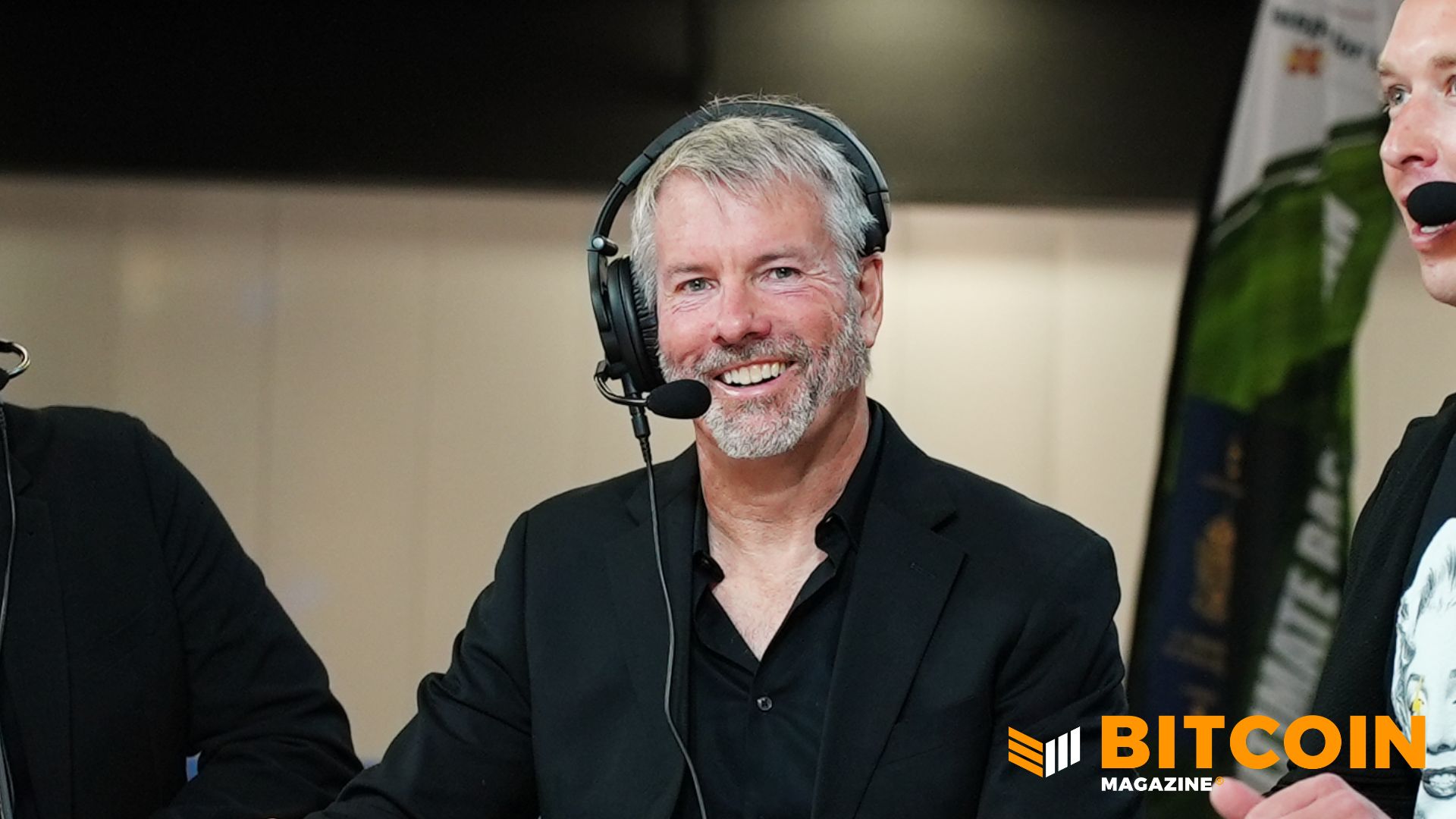



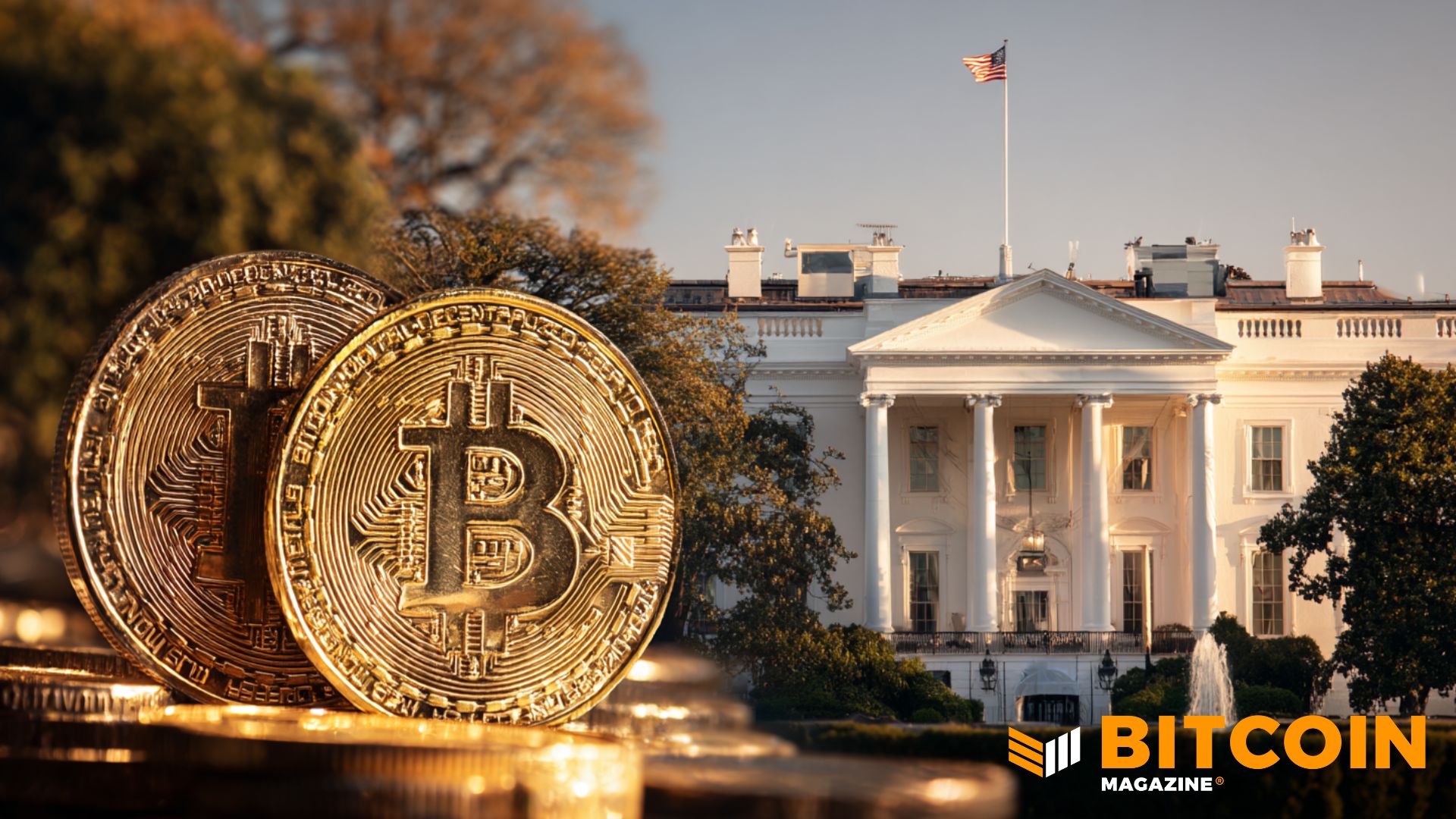











 Get Your Bitcoin 2026 Pass
  Location: The Venetian, Las Vegas
 Dates: April 27–29, 2026

 Bitcoin 2026 Whale Pass












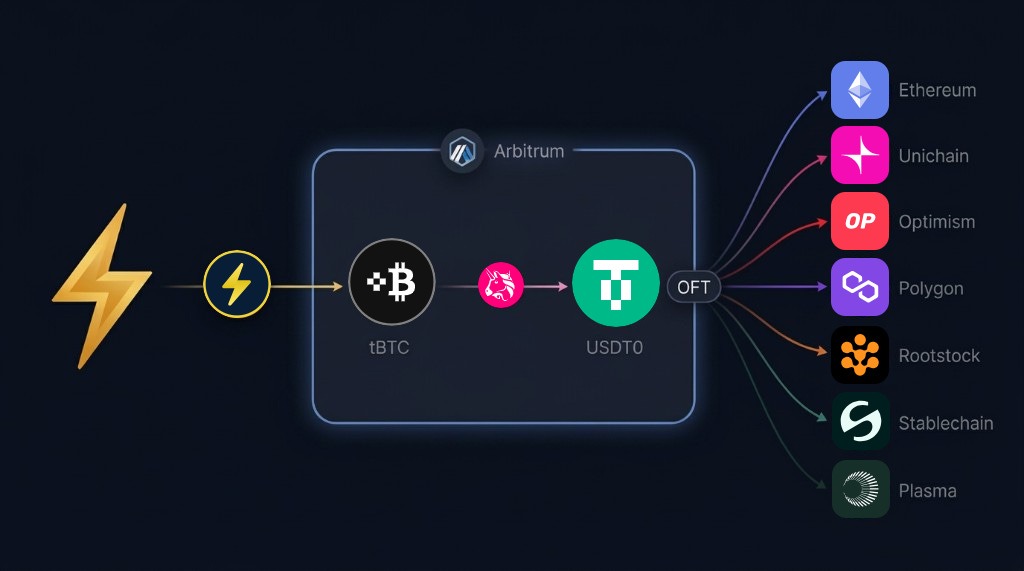







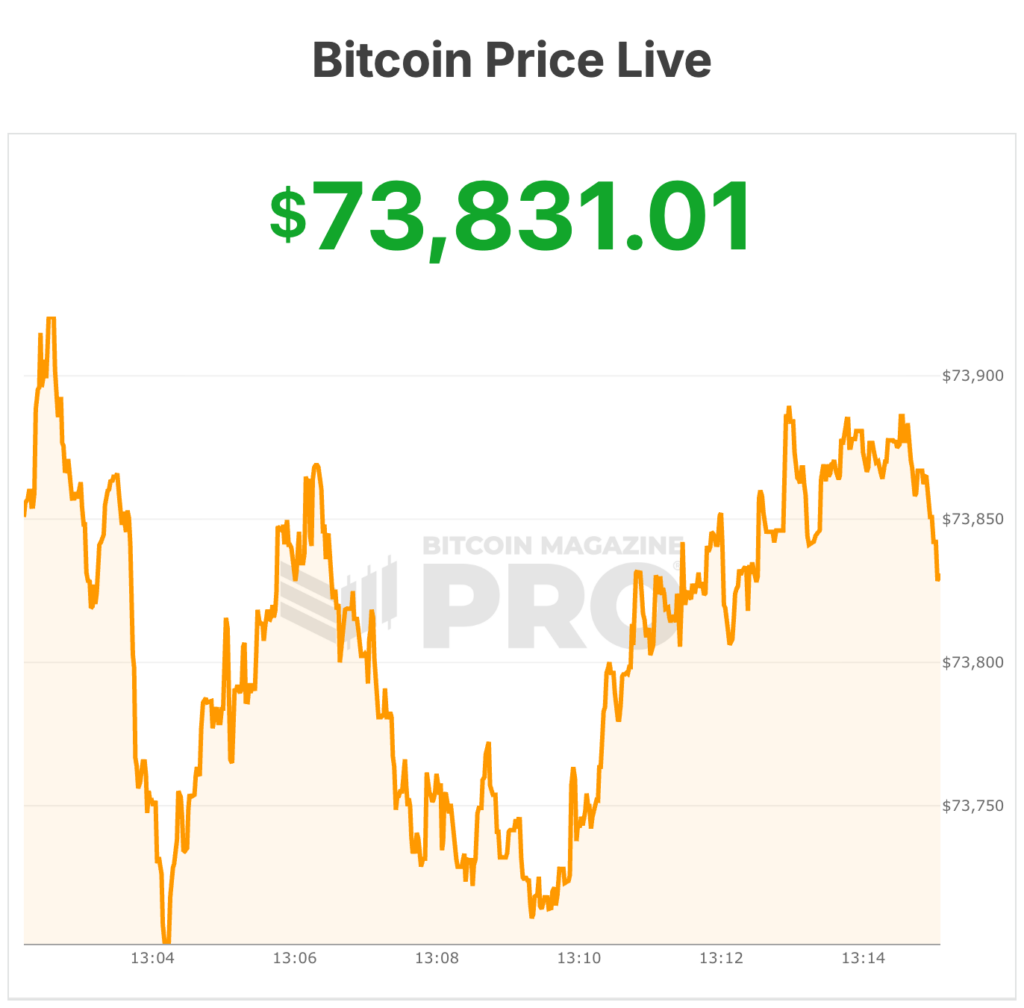





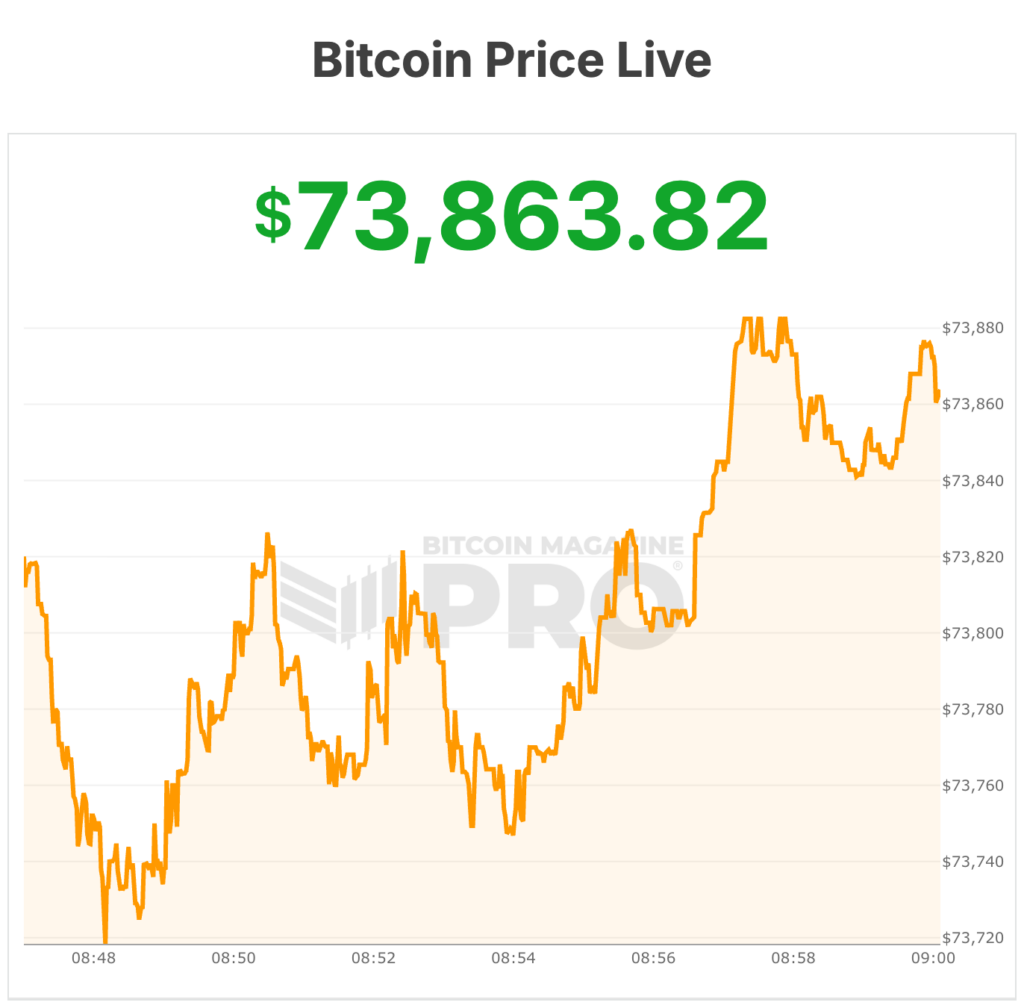







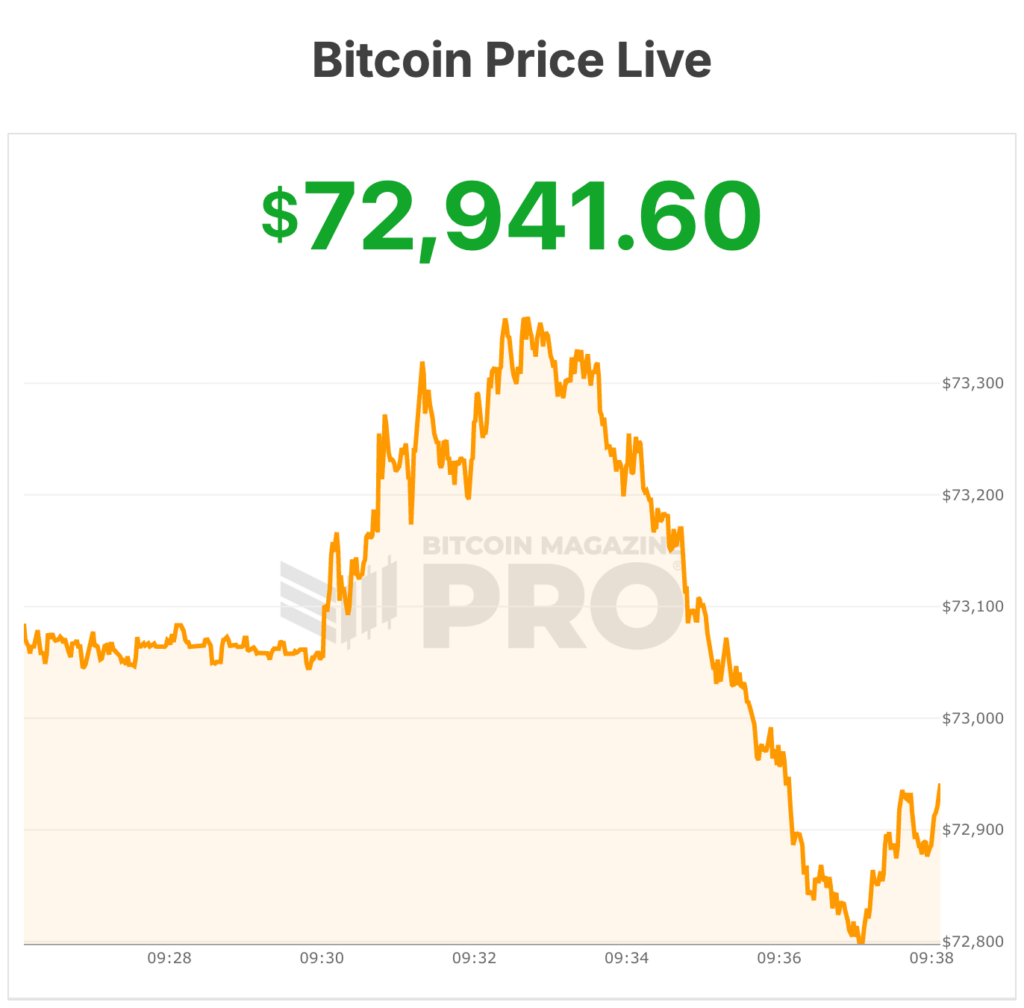


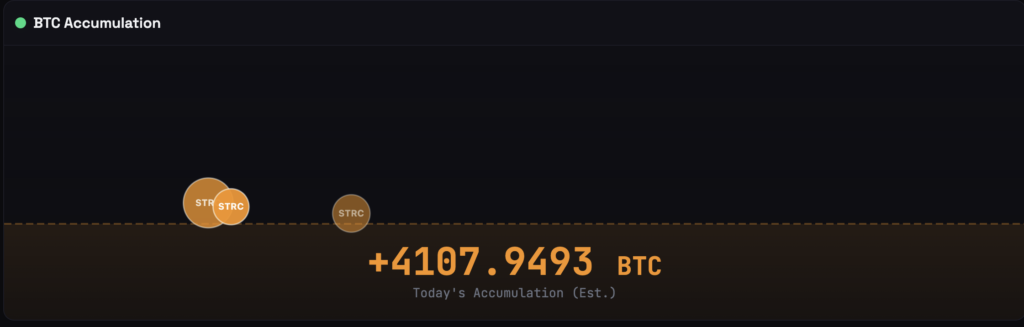




 Whale Pass holders get 10% off the 3rd Annual Bitcoin Golf Championship in Las Vegas on April 26, 2026




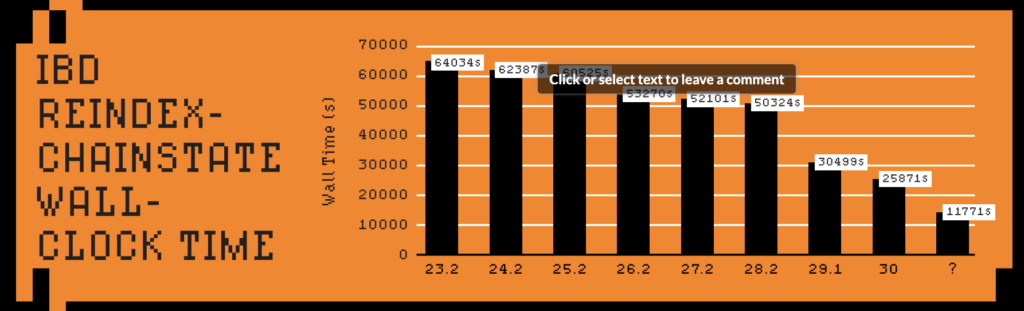














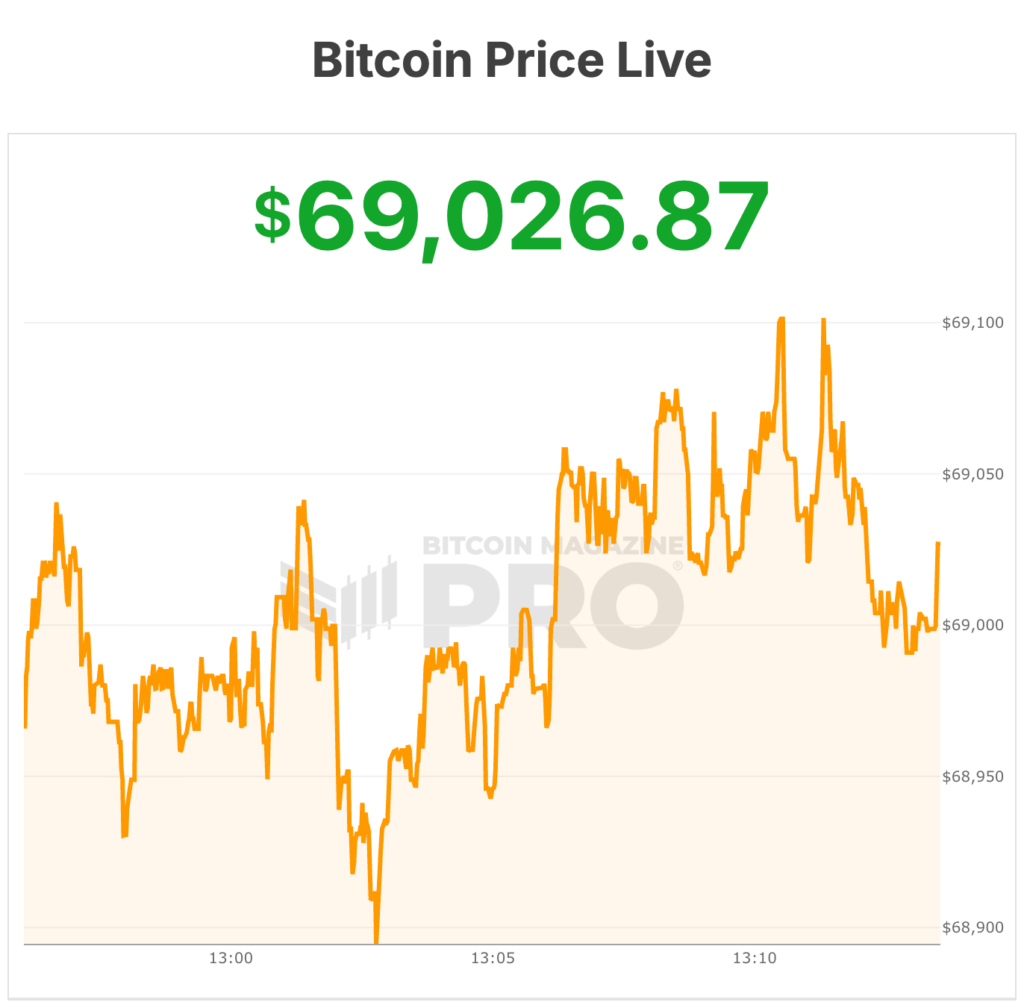







 Kazakhstan’s central bank to invest up to $350 million in Bitcoin and crypto assets — Reuters












 Paraguay’s National Electricity Administration signs memorandum to “explore the role of Bitcoin mining as a national level opportunity.”
 Iranians are buying Bitcoin and mass withdrawing it into self-custody amid the war.



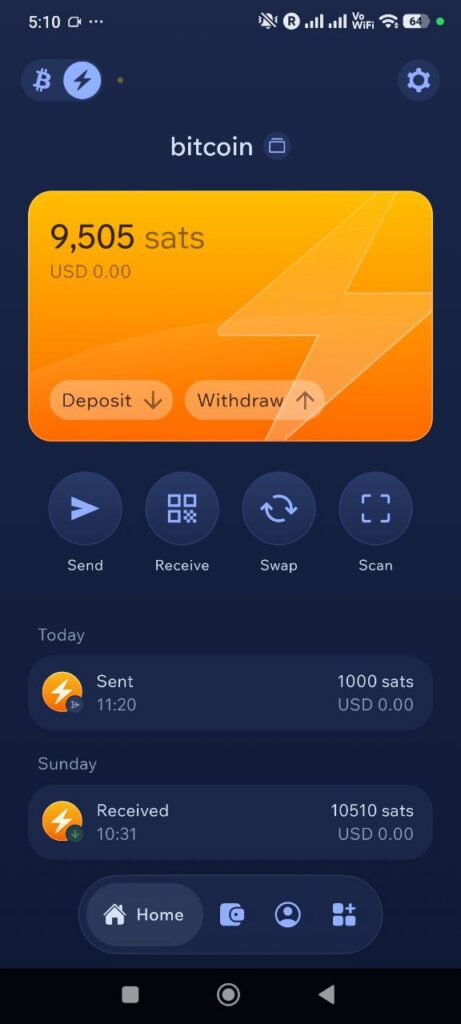
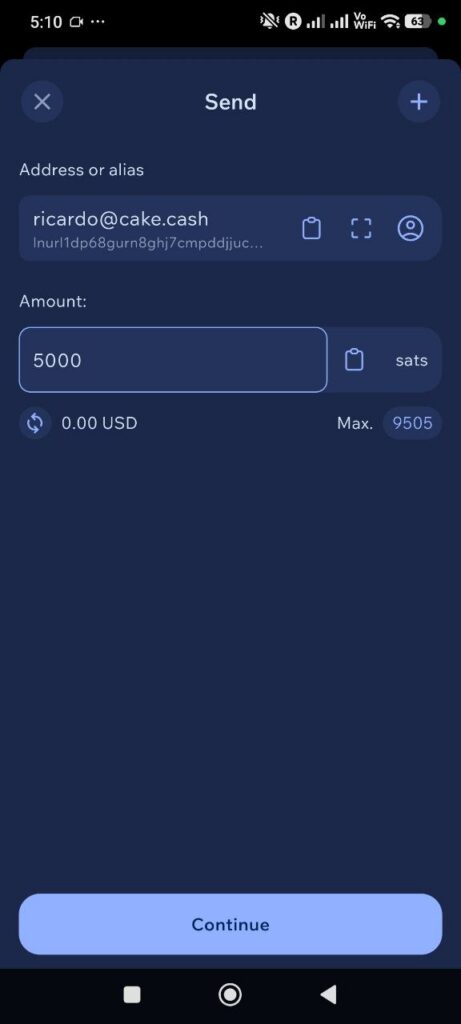







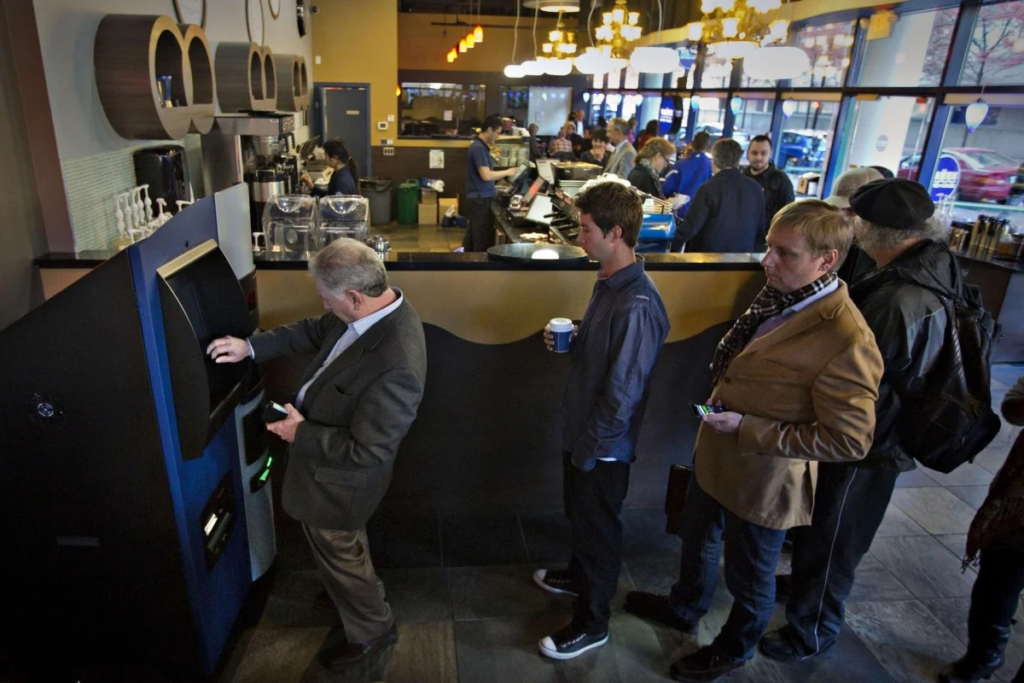
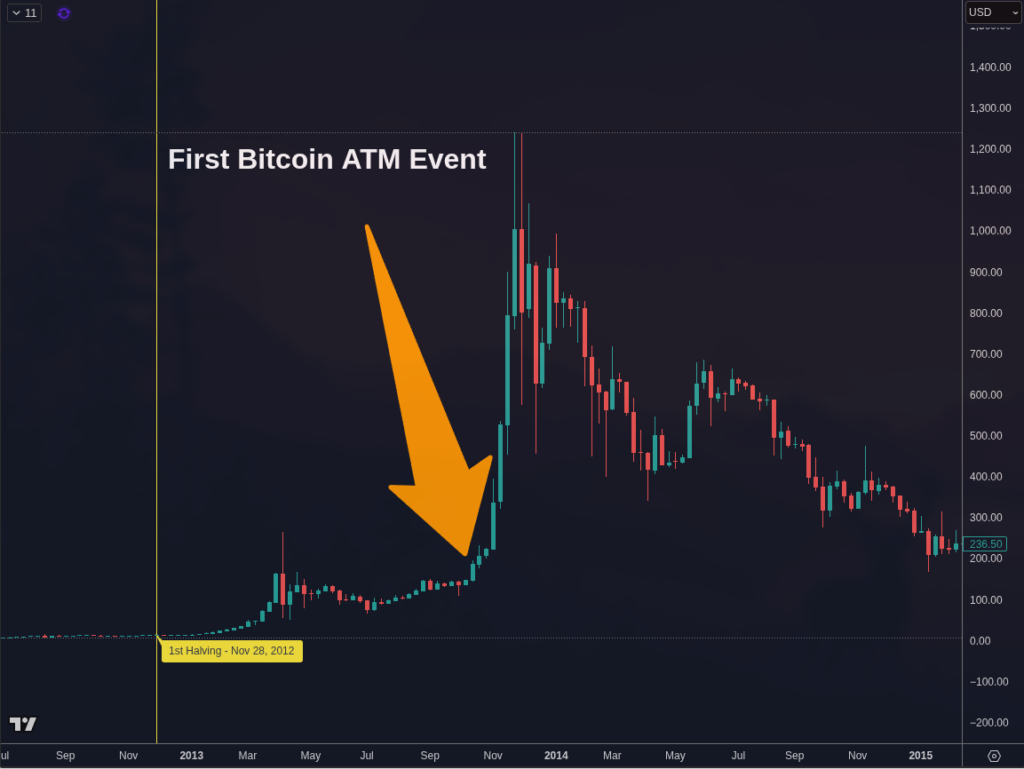









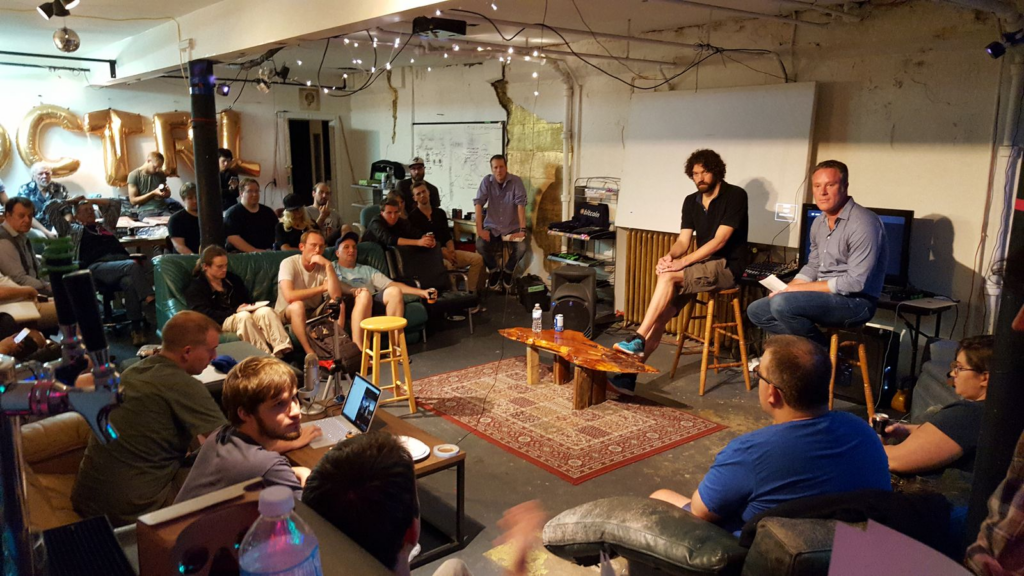

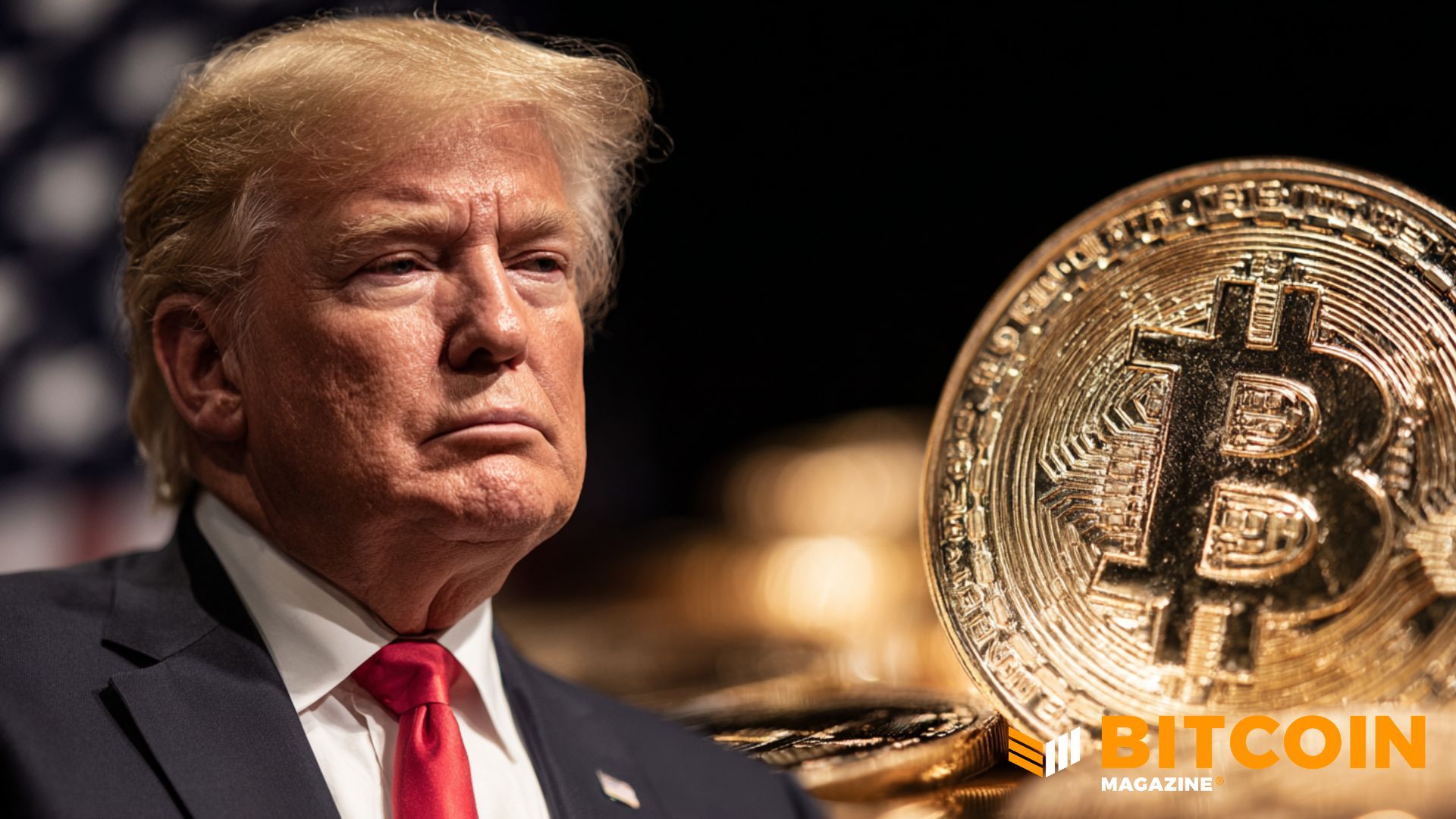



Social Media