Metaplanet Inc., Japan’s leading Bitcoin treasury company, surged to a new all time high in market capitalization this week, propelled by Bitcoin’s own historic ATH. The firm’s aggressive Bitcoin acquisition strategy, innovative financing, and rising investor confidence have driven its valuation to ¥470.3 billion, up 554.5% year-to-date, closely tracking Bitcoin’s surge past its new ATH of $109,500 today.
In just over a year, Metaplanet has expanded its holdings from 98 BTC to 7,800 BTC (as of May 19, 2025), acquired at an average price of $103,873 per coin. That stash is now worth over $800 million, as Bitcoin’s record-breaking run this year.
The latest rise followed the company’s announcement of completing the full exercise of its 13th to 17th series of stock acquisition rights under its innovative “21 Million Plan.” This equity financing campaign raised ¥93.3 billion in just 60 trading days, fueling additional Bitcoin purchases, without diluting shareholder value. In a rare move, these MS Warrants were issued at a 6.8% premium over the share price at the time.
Since announcing its listing on the OTCQX Market, Metaplanet’s growth has been relentless. “We are thrilled to begin trading on the OTCQX Market, enabling greater access for U.S. investors to participate in Metaplanet’s journey,” said the President of Metaplanet Simon Gerovich. “As Asia’s only dedicated Bitcoin Treasury Company, this step reflects our commitment to advancing Bitcoin adoption globally while enhancing shareholder value.”
Metaplanet’s growth is more than just a case of good timing; it reflects a strong, deliberate alignment with Bitcoin’s price action. Since shifting to a Bitcoin-focused strategy in 2024, the company has posted impressive quarterly BTC yields of 41.7%, 309.8%, 95.6%, and 47.8%. These returns have helped drive its net asset value up by 103.1 times and its market capitalization by 138.1 times, following Bitcoin’s rapid climb.
In Q1 FY2025, Metaplanet reported its strongest financial results yet. Revenue increased 8% quarter-over-quarter to ¥877 million, while operating profit rose 11% to ¥593 million. Net income surged to ¥5.0 billion, complemented by unrealized gains of ¥13.5 billion from its Bitcoin holdings, further strengthening the company’s balance sheet.
Although Bitcoin prices dipped briefly at the end of March, causing a ¥7.4 billion valuation loss, Metaplanet swiftly recovered as BTC surged to new record levels. This strong connection with Bitcoin’s performance has led many investors to use Metaplanet as an investment vehicle to get Bitcoin exposure on the Tokyo Stock Exchange.
Apparently Metaplanet is the most shorted stock in Japan. Do they really think betting against Bitcoin is a winning strategy? pic.twitter.com/SAKsOMO4MX
https://bitcoindevelopers.org/wp-content/uploads/2025/05/Metaplanet-Hits-New-All-Time-High-As-Bitcoin-Hits-Record-Price-aDBJ4k.jpg6291200Bitcoin Developerhttps://bitcoindevelopers.org/wp-content/uploads/2024/08/loho_hor_1-300x108.pngBitcoin Developer2025-05-21 17:33:112025-05-21 17:33:11Metaplanet Hits New All Time High As Bitcoin Hits Record Price
Today, the State of Wyoming has officially chartered Gannett Trust Company, the first bitcoin-native trust company in the United States, according to a press release sent to Bitcoin Magazine. Backed by Unchained, a leader in bitcoin financial services, Gannett Trust is purpose-built to serve individuals, family offices, and businesses integrating bitcoin into estate and inheritance plans, investment portfolios, trusts, and treasury strategies.
The launch of Gannett Trust directly addresses a growing need for secure, compliant, bitcoin-native solutions for long-term wealth management. Estimates say around 3.7 million bitcoin may be lost forever, largely due to poor planning and the absence of trusted custodial tools. Gannett Trust seeks to prevent future loss by offering a suite of fiduciary services tailored to the unique needs of bitcoin holders. Gannett Trust will offer both qualified custody and non-custodial configurations, enabling clients to manage, protect, and transfer their bitcoin with confidence. Gannett Trust advances Unchained’s long-term vision of building a durable foundation for multigenerational Bitcoin wealth.
“Bitcoin is becoming a pillar of long-term wealth,” said CEO of Unchained Joe Kelly. “With Gannett Trust, we’re combining the regulatory clarity of a trust company with the proven security of Unchained’s collaborative custody – a major step forward for bitcoin as a generational asset that holders have been waiting for.”
Prioritizing sovereignty, control, compliance, Gannett Trust aims to equip families and businesses with clear, tax-optimized strategies tailored to every aspect of bitcoin-based planning and wealth management.
“Most trust companies don’t understand bitcoin, and most crypto custodians don’t offer true fiduciary services,” said CEO of Gannett Trust Joshua Preston. “Gannett Trust bridges the gap – giving existing bitcoin holders and those interested in allocating bitcoin a path to protect and grow their legacy.”
With the launch of Gannett Trust, Unchained adds another layer to its bitcoin-native infrastructure, contributing to the development of institutional tools designed to support the long-term custody and management of bitcoin wealth.
For more information about Gannett Trust, visit here.
Sangha Renewables has officially broken ground on a 19.9-megawatt (MW) bitcoin mining facility in West Texas, marking a notable step in its mission to merge sustainable power with digital asset infrastructure, according to a recent press release sent to Bitcoin Magazine. Sangha also announced it has raised $14 million toward its $17 million target, helping bring its vision for renewable-powered bitcoin mining to life.
Developed in partnership with an independent power producer (IPP), the behind-the-meter facility will be located on an established solar energy site. Sangha’s project is designed to transform underutilized renewable assets into high-yield bitcoin-generating operations while delivering “optimized power monetization and attractive bitcoin-backed returns for investors.”
“Sangha is not just building bitcoin mining sites—we’re building a new model for how capital flows in and out of bitcoin,” said Spencer Marr, co-founder and CEO of Sangha Renewables. “By applying a project finance structure honed-in the renewable energy and real estate sectors, we enable investors to participate directly in productive assets—without intermediaries, speculative equities, or inefficiencies of datacenter hosting. Investors put cash or bitcoin into the construction of the project and then enjoy streaming distributions of bitcoin for years to come at well below the market price of bitcoin.”
Under the offtake agreement, Sangha will purchase 19.9 MW of power directly from the IPP. The solar site is impacted by grid congestion and negative energy pricing, making it an ideal fit for Sangha’s load-balancing model. “It’s a win-win-win,” Marr added. “The IPP earns more per megawatt-hour, our investors gain exposure to low-cost bitcoin production, and we deliver grid-stabilizing load where it’s needed most.”
The project is set to begin operations in Q3 2025 and will offer one of the lowest power costs in North America, according to the company. Sangha’s model is underpinned by smart site selection, transparent capital structures, and regulatory acumen—positioning it as a leader in institutional-grade bitcoin mining.
This facility represents Sangha’s proof-of-concept and the next chapter in the founders’ pivot from Sangha Systems to Sangha Renewables, emphasizing a commitment to sustainable, scalable, and investor-aligned bitcoin infrastructure.
Today, New York City hosted its first ever crypto summit.
The event took place at Gracie Mansion, the mayor’s residence, and was attended by prominent figures from the crypto industry, many of whom are based in New York.
At the event, Mayor Adams made the case that he felt the attendees’ pain, stating that they’ve wrongfully been persecuted, and he claimed that it’s now safe for those in the Bitcoin and crypto industry to both speak up and set up shop in New York.
“Look how they’ve treated you,” said Mayor Adams.
“You were treated as though you were the enemy instead of the believers,” he added.
“You’ve been hiding in the shadows, afraid to come out — come out now.”
As Mayor Adams continued, he recommitted to making New York the “crypto capital of the world,” something he first claimed he’d do in 2021, though not much has materialized on this front since then.
New York has continued to be a jurisdiction that’s nearly impossible for Bitcoin and crypto start ups to do business in thanks to the BitLicense, a license required to operate a digital asset company within the state.
Obtaining a BitLicense often costs upwards of $100,000 and takes months, if not years, of cutting through red tape and hopping over bureaucratic hurdles to attain.
Most start ups don’t have the time or funds to obtain one.
So, when Mayor Adams and New York City’s Chief Technology Officer, Matthew Fraser, tasked the attendees at today’s event, with coming up with solutions that would help to make New York City a more crypto-friendly jurisdiction, many brought up the need to abolish the BitLicense — or to at least make New York City immune to its reach.
New York City As A Bitcoin And Crypto Sanctuary City
“To build a thriving [crypto] economy, we have to get rid of the BitLicense,” said one attendee. “We at least need to build a regulatory sandbox in New York City.”
Another attendee argued that “New York City should become a sanctuary city from the BitLicense.”
Attendees made comments like these after sessions of roundtable discussions during which the attendees discussed different issues related to Bitcoin and crypto before having a representative from their table share proposals with the room at large. (Because the attendees agreed to honor the Chatham House Rule, I cannot offer the names of those who spoke on behalf of their groups at the event. However, I can offer the names of the keynote speakers.)
Another attendee who said that New York should become a “crypto sanctuary city” pointed out that there is precedent for this, as the city allowed the cannabis industry to operate within its borders while the rest of the state did not.
Nick Spanos, who founded the first in-person exchange and the earliest in-person Bitcoin meeting space in New York City, the Bitcoin Center, in 2013, also made the case for New York as a crypto sanctuary city.
“We’re giving sanctuary to immigrants — we can give sanctuary to crypto companies,” he said in an impassioned tone.
Nick Spanos claims that NYC should be a crypto sanctuary city. | Photo credit: Frank Corva
Spanos went on to critique the BitLicense, calling into question its legitimacy.
“What kind of license is it when, after 12 years, there are only 30 of them?!” cried Spanos. “That’s an insider license!”
Now Is The Time To Pass Crypto Legislation In New York State
Galaxy CEO Mike Novogratz highlighted that now is the time for New York to pass legislation that will benefit the crypto industry.
“After five difficult years, DC has said let’s embrace this technology,” said Novogratz, alluding to the notion that New York should follow the federal government’s lead.
“New York State has not made crypto easy — it’s taken a long time for people to get licenses,” he added.
Novogratz also shared that the crypto industry is “ready for take off,” though he also put the onus on the industry to prove itself by creating products that provide real value to users.
He concluded by saying that, thus far, he’s only really seen value in Bitcoin and stablecoins.
On the topic of stablecoins, Brock Pierce, co-founder of Tether, called on Albany (New York’s capitol) to pass Assembly Bill 6266 and Senate Bill 3262, both of which would establish requirements for the creation and operation of limited purpose trust companies if enacted into law. Such a law would seemingly play a role in enabling Tether to operate in New York.
Other Suggestions For Crypto Applications From The Attendees
A number of attendees also suggested creating crypto products that would help offer financial services to New York City’s approximately 305,000 residents who do not have a bank account (though, none suggested including bitcoin in these services).
Many also stressed the importance of “crypto and blockchain education” within New York’s public school system.
Even Mayor Adams touched on this in his talk.
“Every young person in the DOE [Department of Education] should know about blockchain and crypto,” he said.
And one attendee suggested using blockchain to safeguard the city’s public records.
(I piggybacked on this idea by suggesting that the city consider employing Simple Proof, a company that utilizes the OpenTimestamps protocol on Bitcoin to safeguard public documents, including election results, to help safeguard its important documents.)
Call To Action
Mayor Adams said that when he, the “mayor of the greatest city on the globe,” starts talking about Bitcoin and crypto the rest of the world will pay attention.
For this reason, he said he wanted the best and brightest to help guide him as he broaches the topic.
At the conclusion of the event, attendees were asked to share their notes so that Adams’ team could review them and potentially call on certain attendees to help the mayor forge a more favorable regulatory path forward.
It seems his staff was primed to help, as Fraser asked the attendees to “help the city deregulate the industry.”
Only time will now tell if Mayor Adams and his team will follow through on working with the Bitcoin and crypto industry to make it easier for companies to operate in New York City, or if he’ll lose interest in such an initiative, like he did four years ago.
https://bitcoindevelopers.org/wp-content/uploads/2025/05/Eric-Adams-New-York-City-Crypto-Summit-7pInn7.webp6281200Bitcoin Developerhttps://bitcoindevelopers.org/wp-content/uploads/2024/08/loho_hor_1-300x108.pngBitcoin Developer2025-05-21 00:45:282025-05-21 00:45:28Attendees At First New York City Crypto Summit Implore Mayor Adams To End The BitLicense
The majority of KindlyMD’s shareholders delivered written consent in favor of the merger on May 18, 2025. The transaction is now on track to close in the third quarter of 2025, following the SEC’s review and distribution of an information statement to shareholders. Under current terms, the deal will close 20 days after the statement is mailed.
Full release: https://t.co/jsn4XNW1dK “We are pleased to achieve this important milestone in the merger process,” said Tim Pickett, CEO of KindlyMD. “As a combined company, we are excited to leverage Bitcoin’s dominance and real-world utility to strengthen our company and drive… pic.twitter.com/YPD3ajZFNf
“This milestone brings us one step closer to unlocking Bitcoin’s potential for KindlyMD shareholders,” said David Bailey, Founder and CEO of Nakamoto. “We are grateful that KindlyMD shares our vision for a future in which Bitcoin is a core part of the corporate balance sheet, and investors across global capital markets have exposure to the world’s greatest asset and store of value.”
Nakamoto is building a global portfolio of companies aligned around Bitcoin’s core principles. Through treasury strategy and targeted acquisitions, the company aims to redefine capital markets infrastructure with Bitcoin at the center.
KindlyMD, meanwhile, brings to the table a unique model of integrated, data-driven healthcare focused on reducing opioid dependence and improving outcomes through personalized treatment and alternative medicine education. Its clinical services are reimbursed through Medicare, Medicaid, and commercial insurance.
Tim Pickett, CEO of KindlyMD, emphasized the strategic benefits of the deal: “We are pleased to achieve this important milestone in the merger process. As a combined company, we are excited to leverage Bitcoin’s dominance and real-world utility to strengthen our company and drive sustained long-term value for our investors.”
Disclosure: Nakamoto is in partnership with Bitcoin Magazine’s parent company BTC Inc to build the first global network of Bitcoin treasury companies, where BTC Inc provides certain marketing services to Nakamoto. More information on this can be found here.
The Blockchain Group (ALTBG), listed on Euronext Growth Paris and known as Europe’s first Bitcoin Treasury Company, has announced a capital increase of approximately €8.6 million as it pushes forward with its Bitcoin Treasury Company strategy. The funding was raised through two operations, a Reserved Capital Increase and a Private Placement, with both priced at €1.279 per share.
— Bitcoin Magazine (@BitcoinMagazine) May 20, 2025
This price represents a 20.18% premium over the 20-day volume-weighted average share price but a 46.26% discount compared to the closing price on May 19, 2025, reflecting recent high share price volatility.
“The Company’s Board of Directors decided on May 19, 2025, using the delegated authority granted by the shareholders’ meeting held on February 21, 2025, under the terms of its 5th resolution, on an issuance, without pre-emptive rights for shareholders, of 3,368,258 new ordinary shares of the Company at a price of €1.2790 per share, including an issuance premium, representing a premium of approximately 20.18% compared to the weighted average of the twenty closing prices of ALTBG shares on Euronext Growth Paris preceding the decision of the Company’s Board of Directors, corresponding to a total subscription amount of €4,308,001.98,” said the press release.
In the Reserved Capital Increase, 3.37 million shares were issued to selected investors, including Robbie van den Oetelaar, TOBAM Bitcoin Treasury Opportunities Fund, and Quadrille Capital, raising over €4.3 million. The Private Placement raised another €4.35 million via the issuance of 3.4 million shares, targeting qualified investors.
“The Board of Directors also decided on a capital increase without pre-emptive rights for shareholders through an offering exclusively targeting a limited circle of investors acting on their own behalf or qualified investor, ” stated the press release.
The funds will support The Blockchain Group’s ongoing strategy of accumulating Bitcoin and expanding its subsidiaries in data intelligence, AI, and decentralized tech. Following this capital increase, the company’s share capital stands at €4.37 million, divided into over 109 million shares.
“The funds raised through the Capital Increase will enable the Company to strengthen its Bitcoin Treasury Company strategy, consisting in the accumulation of Bitcoin, while continuing to develop the operational activities of its subsidiaries,” said the press release.
Additionally, on May 12, The Blockchain Group announced it secured approximately €12.1 million through a convertible bond issuance reserved for Adam Back, CEO of Blockstream.
https://bitcoindevelopers.org/wp-content/uploads/2025/05/The-Blockchain-Group-Secures-E8.6-Million-to-Boost-Bitcoin-Strategy-OExHtA.jpg6291200Bitcoin Developerhttps://bitcoindevelopers.org/wp-content/uploads/2024/08/loho_hor_1-300x108.pngBitcoin Developer2025-05-20 21:04:082025-05-20 21:04:08The Blockchain Group Secures €8.6 Million to Boost Bitcoin Strategy
A new report from River reveals that the United States dominates Bitcoin ownership globally, holding about 40% of all available Bitcoin. With 14.3% of its population owning Bitcoin, the U.S. outpaces Europe, Oceania, and Asia combined.
The United States is the global Bitcoin superpower.
Our new report breaks down how this advantage can fuel the next era of American prosperity. pic.twitter.com/v5BNgTGsKA
Corporate America also leads in Bitcoin holdings. Thirty-two U.S. public companies, with a combined market cap of $1.26 trillion, hold Bitcoin as a treasury asset. These firms account for 94.8% of all Bitcoin owned by publicly traded companies worldwide. Major holders include Strategy with 569,000 BTC, U.S. mining companies with 96,000 BTC, and others with 68,000 BTC, totaling 733,000 BTC in the U.S., compared to 40,000 BTC held elsewhere.
Since China’s ban on Bitcoin mining in 2021, the United States has become the global leader in Bitcoin mining, responsible for 38% of all new Bitcoin mined since then. The U.S. attracts miners thanks to its stable regulatory environment, access to deep and liquid capital markets, and abundant energy resources. These advantages have helped the U.S. increase its share of the global Bitcoin mining hashrate by over 500% since 2020, solidifying its position as the center of the industry.
Bitcoin is also emerging as America’s preferred reserve asset, overtaking gold. Over 49.6 million Americans are in favor of holding Bitcoin, compared to 36.7 million who still prefer gold.
The US government’s bitcoin advantage is greater than that of gold, where the US accounts for just 29.9% of the world’s central bank gold reserves.
“Because there is a fixed supply of BTC, there is a strategic advantage to being among the first nations to create a strategic bitcoin reserve,” said the White House on March 7, 2025.
Politically, support for Bitcoin is gaining significant momentum across the U.S. government. As of now, 59% of U.S. Senators and 66% of House Representatives openly support pro-Bitcoin policies, signaling a notable shift in political attitudes and greater acceptance of digital assets as key components of America’s economic future.
The study highlights that Bitcoin ownership is highest among American males aged 31-35 and 41-45, with ownership rates ranging from 3% to 41% within these age groups. Politically, those identifying as “very liberal” or “neutral” are more likely to own Bitcoin than conservatives, though conservatives still make up a significant portion of holders.
https://bitcoindevelopers.org/wp-content/uploads/2025/05/U.S.-Leads-the-World-in-Bitcoin-Ownership-New-Report-Shows-LGQOvR.jpg6291200Bitcoin Developerhttps://bitcoindevelopers.org/wp-content/uploads/2024/08/loho_hor_1-300x108.pngBitcoin Developer2025-05-20 19:37:412025-05-20 19:37:41U.S. Leads the World in Bitcoin Ownership, New Report Shows
Parker Day and Casey Rodarmor’s FUN! Collection is an unprecedented synthesis of photographic maximalism and protocol-level innovation—a work that stands alone within the landscape of Bitcoin-native art. Saturated with Day’s bold color palette, surreal personas, and layered identity play, the collection is anchored by Rodarmor’s foundational role as the creator of the Ordinals protocol. Most notably, the series is inscribed directly under Inscription 0—the first inscription ever made using the Ordinals Protocol—marking it as an ontological outlier in the digital art canon. No other collection occupies this same foundational location on-chain, making FUN! a conceptual and technical landmark in Ordinals history.
Now expanded with new reflections from both collaborators, this interview explores the project’s deeper ideological dimensions—from the mechanics of trustless auctions to the ethics of artistic compensation, from pro wrestling and portraiture to capitalist generosity and the social roots of value. Together, Day and Rodarmor form a rare creative pairing: artist and dev, photographer and protocol architect, equal parts absurdity and rigor.
One of the collection’s most iconic works—featuring Rodarmor himself—is set to headline the Megalith.art auction, a Bitcoin-native sale structure that concludes on June 3rd and will be showcased at both Bitcoin 2025 in Las Vegas and its satellite event, Inscribing Vegas. The piece anchors a broader lineup that includes standout contributions from leading digital artists such as Post Wook, Coldie, Ryan Koopmans, FAR, Rupture, and Harto.
It’s less an interview than a glimpse into a high-voltage collaboration:
Parker, your photography is known for its bold color, eccentric characters, and fearless exploration of identity and persona. How did this collaboration with Casey come about, and what visual or cultural influences helped shape The FUN! Collection?
PARKER: Casey and I have known each other since high school. You could even say he was one of my first models—I shot his portrait for my sophomore year darkroom photography class. We kept in touch over the years, and in 2017 he encouraged me to turn my ICONS series into crypto art. I passed on that at the time, but in 2021 I did release an Ethereum NFT collection of ICONS. Right after that, Casey called me and said, “Yo! You need to go even bigger! Do 10k!” And I’m like, “You know these are all unretouched and shot on film, right?” But with his encouragement and funding, we figured out how to produce 1,000 unique portraits.
The visual and cultural influences behind FUN! are too numerous to name—just a mishmash of pop culture that’s been stewing in my brain since childhood.
The FUN! collection was released under a CC0 license, meaning anyone can reuse, remix, or recontextualize the work without restriction. In a project so rooted in persona, authorship, and performance, what led you to make that decision—and how do you think about authorship or artistic control in the context of open licensing on Bitcoin? What would you find interesting to see done with the collection beyond your original photography methodology? What kinds of reinterpretations or mutations of the collection would genuinely intrigue you?
PARKER: I love it. As an artist, once you create something and it leaves the studio, it’s out of your hands. The audience shapes the work in their own interpretations. You have no control over it. It seems silly to say “this is my IP, you can’t do anything with it.” We live in a world of memes, of reproduction ad infinitum. It seems anachronistic in today’s world to clutch copyright with an iron fist. And it’s perfectly in keeping with the ethos of Bitcoin to make the work CC0. In terms of value, the inscriptions are the scarce collectibles. Even more so than any editioned prints will ever be. Their inscriptions’ provenance is on chain, directly descended from inscription 0.
There’s nothing in particular that I’d like to see or not like to see done with FUN! I just hope people find meaning in it, and make meaning from it.
You two have an unusual creative relationship: artist and protocol dev, patron and co-conspirator. Casey, you basically invented a new medium to support Parker’s work. What does it mean to build something enduring together in a space that often prizes individualism?
CASEY: I love it. I mean—I really love it. Parker and I are super complementary. We each have our own strong wheelhouses, and we’re always engaging with each other’s work, but in this very chill, supportive way.
Like, when we’re shooting, I’ll tell her what I think looks cool or what might work well in the collection—but it’s never directive. It’s more like, “Hey, here’s some data. Do with it what you will.” And same goes for the technical stuff. We’ll talk about metadata, domains, the website layout—she gives me her thoughts, and it’s just… input. Take it or leave it.
We’re both so solid in our own lanes that it makes collaboration easy. There’s no weird insecurity. She’s the creative force behind the collection—I know that. I’m the technical backbone—and she knows that. That kind of clarity makes it fun.
And honestly, I’m just really proud of this partnership. We’ve been in each other’s lives in a positive way for so long—since high school. Parker’s given me Bitcoin haircuts. I was bugging her to do NFTs in 2017. Even when we’d go long stretches without talking, we always checked back in.
“Hey, how’s it going?” “Saw you on Twitter.” “Saw you on Instagram.”
It’s just one of those great, long-running collaborations that’s rooted in mutual respect—and a shared willingness to go weird.
Casey, did you draw on any past modeling experience—or take notes from Raph? And what was it like working under Parker’s direction: more Kubrick or camp counselor?
CASEY: I think I was pretty self-directed for the shoot. I wasn’t drawing on past modeling experience exactly—more like theater kid energy. I’ve always loved professional wrestling. It’s incredibly cool… and also incredibly formulaic, so I get bored if I watch too much. But every couple of years, I check back in, see what the storylines are.
For this shoot, I knew exactly how I wanted to ham it up—like a professional wrestler. That wild, sweaty, insane energy. The spiked ball pressed against my face. All the weird faces. American pro wrestling is super operatic, honestly.
The character I was channeling? Mostly Ultimate Warrior. Parker really nailed the eyes—those classic, intense Ultimate Warrior eyes. He wore wild makeup and had that jacked-up look. Ric Flair was another influence—mainly for the hair. He had this long blond hair, and when it got bloody in the ring, it looked insane.
As for Parker—definitely more camp counselor than Kubrick. She sets the scene: everything ready, hair and makeup dialed, wardrobe laid out. We talked through the costumes a bit. She’ll give direction, a few hints here and there—but it’s really up to the model to bring it.
You can include that (Casey snaps his fingers.)
Yeah. You know? You know.
The FUN! collection features an interactive website where visitors can filter portraits by mood, prop, background color—even astrological sign. What inspired that kind of functionality?
PARKER: Before FUN!, I had been thinking about an exhibition that grouped photos based on emotional expression. Even though the personas may appear wildly different, the core humanity is the same. I’ve always tried to equate disparate identities by shooting people in the same way—with simple fabric backdrops that strip away time and place.
The FUN! website (fun.film), reflects this idea: difference in sameness, or sameness in difference. It’s a tool for play—but also a way to reflect on identity in a fragmented age.
Casey, you’ve described yourself as a capitalist—but you’ve also given away tools for free and pursued an almost obsessive elegance in your work. How do you reconcile market belief with this ethic of generosity? And what does that tension mean for the future of Ordinals?
CASEY: There’s absolutely no tension—and that’s because most people just don’t understand what capitalism is. Like, I can’t even begin to unpack what people think capitalism means.
Capitalism simply means the means of production are privately controlled. That’s it. That’s the whole definition. The alternatives? You’ve got two: either (1) violent chaos, or (2) the government owns and allocates all capital. That’s it. Those are your three options.
So when people say they’re “anti-capitalist,” what they usually mean is: “I want the government to control who gets what.” I’m not about that. I’m a staunch capitalist. I allocate my own means of production—my computers, my resources, my energy—how I see fit, not how the state tells me to.
And sometimes? That allocation includes giving things away. That’s not anti-capitalist. If the government confiscated my stuff and handed it out? Sure, that’s anti-capitalist. But me choosing to make something—sometimes selling it, sometimes not—is 100% aligned with the spirit of capitalism.
People need to get with the program.
You asked about the tension between generosity and profit in Ordinals? There isn’t one. We’re social creatures. It’s great to make money—money’s fun. But the real magic is the people you meet along the way. You’re not gonna be on your deathbed wishing you made more money. You’ll wish you spent more time with people who matter.
The beauty of capitalism is that it gives us so much productivity that we can afford to be generous. You build so much surplus, you can finally do things that aren’t transactional—mentorship, gift-giving, weird creative stuff just because it feels good. That’s the bounty of capitalism. It enables non-market joy.
Honestly? The best moments in this space haven’t been about money. Yeah, the rare times I’ve made some have been fun. But the truly great stuff? The fun projects, the weird experiments, the friends. That’s the soul of it.
Like, if I had to live in some crummy little place—but had healthcare, enough to get by, and this incredible network of people and ideas—I’d take that any day over ten times the money and no friends.
So I hope the degens are listening.
Megalith.art’s auction model introduces a novel approach by leveraging atomic swaps for settlement. Could you elaborate on how this mechanism ensures trustless, on-chain finality for high-value digital art transactions, and how it contrasts with the delayed, custodial settlements typical of traditional auction houses like Sotheby’s or Christie’s?
CASEY: So, normally, when you swap goods—say you walk into a pottery store and want to buy a pot—you hand the guy a dollar. Now he’s got your money… but you don’t have the pot. He could just yell, “Get out!” and poof—you’re down a buck, no pottery.
Or maybe he gives you the pot first, but you don’t hand over the dollar. You run out the door. Same problem. This is what we’d call a non-atomic swap—one party has to trust the other to follow through.
Bitcoin changes that. With Bitcoin, you can set up atomic swaps. Meaning: the artist gives up the art and the buyer gives up the bitcoin, and either both things happen or neither do. Fully trustless.
It doesn’t guarantee the art will sell, but if it does, the artist definitely gets paid. And the buyer definitely gets the piece. No middlemen. No weird escrow.
What’s even better is that in this setup—like the way we’re doing it with Megalith—you can literally see the platform’s cut. It’s all baked in and visible. Super transparent. No funny business. It’s just… a great way to do things.
Megalith.art implements immediate, protocol-level split payments to artists and collaborators, minimizing KYC exposure and reducing reliance on centralized intermediaries. How does this system enhance transparency and efficiency in artist compensation compared to the conventional post-auction invoicing and payout processes?
CASEY: Yeah, the problem with traditional auctions is they’re just super opaque. Every artist ends up negotiating a different deal with the auction house. If you’re selling a high-value piece, maybe you can negotiate a better cut. But if you’re a newer artist—or your work sells for less—you’re probably giving up a bigger chunk.
What we’re doing here is way more transparent. It doesn’t mean you can’t do variable arrangements in theory—but in this case, everyone’s getting the same cut, and you can see that they’re getting the same cut. I think that matters—a lot.
I’ve done events before, usually VJing, and sometimes I’ve done it for free. Then I’d find out later that some of the DJs got paid, and I didn’t. That sucks. It just puts a bad taste in your mouth. Either everyone gets paid, or no one gets paid—especially if it’s supposed to be a volunteer thing. I feel pretty strongly about that.
Same goes for auctions. Some artists will sell for more than others—that’s fine. But they should all get the same percentage cut. That should be enforced on-chain, and it should be fully transparent.
With this system, you can actually see what each artist is getting from each auction. That’s how it should be.
See more from Parker and Casey at Inscribing Vegas on May 27th, and the Bitcoin Conference Las Vegas May 27–29th. Bidding for all Megalith.art auction lots concludes June 3rd.
Want to experience it in person? The Bitcoin Week pass gives you full access to both Bitcoin 2025 and Inscribing Vegas—plus top-tier afterparties: https://b.tc/conference/2025/bitcoin-week
https://bitcoindevelopers.org/wp-content/uploads/2025/05/Building-FUN-yOzGcu.webp6301200Bitcoin Developerhttps://bitcoindevelopers.org/wp-content/uploads/2024/08/loho_hor_1-300x108.pngBitcoin Developer2025-05-20 19:18:502025-05-20 19:18:50Building FUN! on Bitcoin: Parker Day and Casey Rodarmor Talk Collaboration and the Future of On-Chain Art and Auctions
Today, KULR Technology Group, Inc. (NYSE American: KULR) announced a $9 million expansion of its Bitcoin Treasury, bringing total acquisitions to $78 million. The latest purchase was made at a weighted average price of $103,234 per bitcoin, bringing the company’s total holdings to 800.3 BTC.
The move follows KULR’s December 2024 strategy to allocate up to 90% of surplus cash reserves to bitcoin. Year-to-date, the company reports a BTC Yield of 220.2%, a proprietary performance metric reflecting growth in BTC holdings relative to assumed fully diluted shares outstanding.
In Q1 2025, KULR reported revenue of $2.45 million, a 40% increase driven by product sales totaling approximately $1.16 million. Gross margin declined to 8%, while combined cash and accounts receivable stood at $27.59 million. Operating expenses rose, with Selling, General and Administrative (SG&A) Expenses at $7.20 million and Research and Development (R&D) Expenses at $2.45 million, contributing to an operating loss of $9.44 million. Net loss widened to $18.81 million, mainly due to a mark-to-market adjustment on bitcoin holdings.
“2025 is a transformational year for KULR and the transformation is well on its way,” commented KULR CEO Michael Mo. “With over $100M in cash and Bitcoin holdings on our balance sheet as of the present day and virtually no debt, we are well capitalized to grow our battery and AI Robotics businesses, while our capital market activities in the foreseeable future are geared to turbocharge our Bitcoin acquisition strategy, establishing KULR as a pioneer BTC-First Bitcoin Treasury Company.”
CEO @michaelmokulr speaks about the origins of KULR’s Bitcoin treasury strategy and how it will shape the future of the company’s growth.
This surge in bitcoin holdings by companies like KULR and Metaplanet highlights a growing trend among firms embracing BTC as a core treasury asset, reflecting confidence in bitcoin’s long-term value and utility as part of broader financial strategies.
Last week, Metaplanet reported its strongest quarter to date for Q1 FY2025. Metaplanet’s bitcoin holdings rose to 6,796 BTC—a 3.9x increase year-to-date and over 5,000 BTC added in 2025 alone. Despite a temporary ¥7.4 billion valuation loss from a bitcoin price dip in March, the company rebounded with ¥13.5 billion in unrealized gains as of May 12. Since adopting the Bitcoin Treasury Standard, Metaplanet’s BTC net asset value has surged 103.1x, and its market cap has grown 138.1x.
Magic Eden is integrating with Spark to improve Bitcoin trading by addressing issues like slow transaction times, high fees, and poor user experience. According to a pressrelease sent to Bitcoin Magazine, the integration will introduce a native settlement system aimed at making transactions faster and more cost-effective, without using bridges or synthetic assets.
Big day: @MagicEden is coming to Spark. New native Bitcoin experiences coming to you very soon.
The integration will enable users to buy, sell, and earn Bitcoin-native assets more efficiently through Spark’s infrastructure, starting with support for stablecoin-to-BTC swaps and expanding to additional use cases over time.
Spark is built entirely on Bitcoin’s base layer. It provides transaction finality in under a second and fees below one cent.
“We’re proud to be betting on BTC DeFi,” said the CEO of Magic EdenJack Lu. “We’re going to lead the forefront of all Bitcoin DeFi to make BTC fast, fun, and for everyone with Magic Eden as the #1 BTC native app on-chain.”
The collaboration between Spark and Magic Eden will officially begin at BitGala on May 26th. At this event, they will host a joint gathering to mark their partnership and engage with the Bitcoin community. This event will also serve as the starting point for further integration, the development of new tools for developers, and expanded opportunities within the Bitcoin ecosystem.
“Spark is a completely agnostic protocol, it’s purpose-built for developers to create the next generation of financial applications,” said the CEO & Co-founder of Lightspark David Marcus. “We’re incredibly excited to see Magic Eden building the future of on-chain Bitcoin DeFi directly on Spark.”
https://bitcoindevelopers.org/wp-content/uploads/2025/05/Magic-Eden-Partners-with-Spark-to-Bring-Fast-Cheap-Bitcoin-Settlements-LA7xnQ.jpg6291200Bitcoin Developerhttps://bitcoindevelopers.org/wp-content/uploads/2024/08/loho_hor_1-300x108.pngBitcoin Developer2025-05-20 16:55:462025-05-20 16:55:46Magic Eden Partners with Spark to Bring Fast, Cheap Bitcoin Settlements
The United States government stands mere months, if not weeks, from the passing of stablecoin legislation that will set the playing field for the global economy for decades, if not centuries, to come.
During this crucial moment, in which we should all be keeping our eyes locked with precision on the prize, the best and brightest defenders of the one neutral digital asset have once again bifurcated into the trenches of “Us. Vs Them.” As sure as the next block, seemingly every ten minutes there’s another attempt from a faction within the group to imbue an intense ethical intention over the invention of Bitcoin. These groups converge to share interpretations of the Sacred Text –– Satoshi’s Whitepaper ––or pour over his forum posts on BitcoinTalk, hoping to find a path forward. It seems without fail, no matter when looking at the factional Part, or the amorphous Whole, the selected writings of Bitcoin’s inventor always conveniently enable the exact behavior and optionality –– or lack thereof –– that is best for the current arguing party.
This is to say, the observer of Bitcoin, when attempting to gain influence over more users, simply projects and amplifies their own reflection upon the monetary protocol, as it relates to their own position via their specific stake within the system. There is no neutral reflection or position to be expressed –– every voice and every idea fundamentally must come from a place of origin. While many attempt to go to great lengths to curb this bias from their publicly articulated analysis –– not to mention the many more that could claim ignorance entirely –– whether you are able, willing, or aware, your beliefs are beheld by the context you witness, and cannot be separated to create an objective meaning from a subjective experience. In short, everyone talks their own book. It’s a requirement to talking.
On today’s social media platforms, the actualization of one talking their book is even further manipulated beyond strictly fundamental financial incentives, and each idea becomes a piece of content competing for air in the rough seas of algorithmic influence. To not have an opinion on the latest thing, to not express and articulate said opinion publicly, is to drown in the void of irrelevancy. On Twitter, a Bluecheck raft is seen as a necessity, normalized by the supposed dissidents and mainstream alike. The digital front, while an important one, has been eroded not by the proverbial stick, but by the poisoned carrot. Payouts, likes, and followers have replaced credibility as the currency of relevance, not due to actions by the consumers, but by the creators. Even worse, many creators have off-shored their creative capabilities –– i.e., their ideas –– to AI Chat Bots and Large Language Models, removing the humanity entirely from the output, rendering the content ocean littered with homogenous globs of unthought thoughts. The late-stage creator economy has ultimately failed to promote originality, and instead has given rise to an multi-headed hydra of next-up influencers ready and able to churn out the freshest of ChatGPT chum at the behest of curtained algorithmic masters out of sight.
The unseen incentives will be our downfall –– not our ideologies, not our intellect, and not our preparedness, nor the lack of any of these things. While applicable to many mediums and masteries, the hidden incentives of programmable money demonstrate this concept far greater than, say, independent media figures, fitness and health gurus, or dissident philosophers.
Today’s Bitcoin culture war comes at a dangerous time, when the single greatest threat to its neutrality of incentives comes to the protocol layer. While hours and hours of podcasts from both sides of the divorce might lead you to believe this attack vector comes from JPEGs or the filters that discourage them, in fact, the imminent corrupting agent comes from the reintroduction of dollar stablecoins to the blockchain as Bitcoin itself remains infeasible as a medium of exchange that can service billions.
Both sides of the debate, the Knots/Pro-Filters or the Core/Filters-Agnostics, are not dealing with the core of the real problem brewing in Bitcoin today. The Knotsians claim all non-monetary use cases of Bitcoin are against the nature of the protocol, while remaining absolutely silent on whether or not these same ethics are to be applied to Tether’s homecoming –– “Bitcoin-native” USDT dollar stablecoins via Taproot Assets –– being stored in the distributed database known as the blockchain. The Core defenders, who claim to rightfully stand beside the most ambitious and successful open source project of all time, have little to say about the maintainers lack of interest in pursuing optionality that would enable billions of users to benefit from Bitcoin’s disinflationary monetary policy, rather than simply the millions of already-adopters. Both sides are, at best, silent partners in the scaling-by-financialization of Bitcoin via stocks and debt-instruments, custodians, exchange traded funds, and tokenized dollars, rather than by making UTXO ownership feasible and efficient. Filters, spam, Core, Knots, are all distractions from the real problem brewing on the horizon: the incentive distortion of stablecoins.
If Bitcoin remains programmable money, and the mere existence of this protocol-level debate perpetuates the idea that ossification has not yet arrived, why must we pledge allegiance between two teams that directly serve neither of the issues at hand? Bitcoin deserves more client optionality, and Knots is not innately a bad idea, nor are many of the mining concepts marketed by OCEAN employees. Bitcoin Core has secured trillions of dollars of value with an unparalleled up-time for a financial protocol. But Bitcoin will fail to stablecoins, inadvertently perpetuating the United States’ Treasury ponzi across the globe, while introducing dollarized, perverse incentives to the entire game theory of Bitcoin’s block production –– and thus unstoppable transaction settlement –– if we are slothful and distracted in failing to maximize self-custody and keep dollar tokens off the only currently-decentralized chain.
Did inscriptions create a newly-found demand for blockspace that directly competes with the companies enabling Larry Fink’s vision for Bitcoin as “a technology for asset storage?” Do Dickbutts and Monkey JPEGs make the Tether-ification –– i.e., the dollarization –– of Bitcoin more expensive? Perhaps. But there is simply no evidence that the players on either side of this culture war are actively or willingly compromised, and to suggest such is a dangerous game.
As we wrote nearly two years ago in a previous call to action, “the network must remain practically useful for anyone, or it risks becoming practically useless for everyone.” The only responsibility today’s Bitcoiner must uphold is to leave the protocol as permissionless and as serviceable as it was when they found it. Part of this innately involves the mission Core sets out to achieve with its tireless approach to perpetuating an extremely complicated, novel piece of software across an ever-changing landscape of hardware and software updates. Part of this, also, innately involves the mission Knots and OCEAN attempts to achieve with its pursuit of purity of financial activity and mining decentralization via block construction and payout methods.
Blindly opposing or supporting the Current Thing because of Twitter posts and podcasts will not deliver us from the known evils, nor prepare us for the unknown. Ultimately, both paths forward on their own will fail to achieve the promise of Bitcoin to its fullest extent.
Reject the binary presented by the culture war and think for yourself.
This is a guest post by Mark Goodwin. Opinions expressed are entirely their own and do not necessarily reflect those of BTC, Inc. or Bitcoin Magazine.
https://bitcoindevelopers.org/wp-content/uploads/2025/05/Tribalism-Is-Not-The-Core-Problem-zbQSm1.webp6301200Bitcoin Developerhttps://bitcoindevelopers.org/wp-content/uploads/2024/08/loho_hor_1-300x108.pngBitcoin Developer2025-05-20 16:44:242025-05-20 16:44:24Tribalism Is Not The Core Problem
Sovereign investment in Bitcoin is accelerating—just not always in the most direct way. In a new report, Standard Chartered Bank says indirect exposure via Strategy (formerly MicroStrategy) is quietly increasing among government entities, reinforcing the bank’s long-standing price prediction that Bitcoin will reach $500,000 before President Donald Trump leaves office in 2029.
— Bitcoin Magazine (@BitcoinMagazine) May 20, 2025
“The latest 13F data from the U.S. Securities and Exchange Commission (SEC) supports our core thesis that Bitcoin (BTC) will reach the $500,000 level before Trump leaves office as it attracts a wider range of institutional buyers,” wrote Geoffrey Kendrick, Standard Chartered’s global head of digital assets research. “As more investors gain access to the asset and as volatility falls, we believe portfolios will migrate towards their optimal level from an underweight starting position in BTC.”
Q1 13F filings revealed a slowdown in direct bitcoin ETF buying—Wisconsin’s state fund exited its entire 3,400 BTC-equivalent IBIT position—while government-linked purchases of MSTR shares were on the rise. Abu Dhabi’s Mubadala, for instance, upped its IBIT exposure to 5,000 BTC equivalent, but Kendrick says the bigger story is elsewhere.
“We believe that in some cases, MSTR holdings by government entities reflect a desire to gain Bitcoin exposure where local regulations do not allow direct BTC holdings,” he said.
France and Saudi Arabia took first-time MSTR positions in Q1. Meanwhile, Norway’s Government Pension Fund, the Swiss National Bank, and South Korea’s public funds each added exposure equivalent to 700 BTC. U.S. retirement funds in states like California and New York added a combined 1,000 BTC equivalent via MSTR. Kendrick called the trend “very encouraging.”
“The quarterly 13F data is the best test of our thesis that BTC will attract new institutional buyer types as the market matures, helping the price reach our USD 500,000 level,” Kendrick said. “When institutions buy Bitcoin, prices tend to rise.”
SEC DATA BACKS BITCOIN $500K TARGET BY 2028: STANDARD CHARTERED
Standard Chartered’s Geoff Kendrick says recent SEC 13F filings support a possible rise in Bitcoin to $500,000 by end-2028. While direct ETF holdings dipped in Q1, government entities boosted stakes in Strategy…
This isn’t Kendrick’s first bullish call. Last month, he admitted his prior $120K forecast for Q2 2025 was “too low,” citing surging inflows into U.S. spot BTC ETFs—totaling $5.3 billion over just three weeks. At the time, Kendrick revised his 2025 year-end target to $200,000.
Standard Chartered’s latest analysis shows that Bitcoin’s role in institutional portfolios is maturing beyond tech volatility correlation—now increasingly seen as a macro hedge. “It is now all about flows,” Kendrick said. “And flows are coming in many forms.”
Auradine Inc., a U.S.-based Bitcoin miner manufacturer, today announced it is unveiling a broadened portfolio of mining products at the Bitcoin 2025 Conference in Las Vegas, featuring high-performance ASIC chips, specialized cooling systems, and fully integrated modular containers engineered for scalable, megawatt-class mining operations, according to a press release sent to Bitcoin Magazine.
“Our goal is to democratize access to Bitcoin mining and enable innovative integrations,” said the CEO and Co-Founder of Auradine Rajiv Khemani. “Whether you’re running a megawatt container or building a small form-factor heater-miner for your home, we provide the chips, systems, and support to help you succeed. This new chapter is about giving miners the tools to innovate, scale, and operate efficiently.”
The new ASIC offerings, designed for both industrial and small-scale deployments, support customizable form factors and have already been adopted by operators including MARA Holdings, FutureBit, and Deep South Operating. Alongside the chips, Auradine continues to produce a full range of mining rigs to support a variety of deployment needs.
“Auradine’s ability to deliver both high-performance chips and scalable infrastructure aligns with MARA’s mission to stay at the forefront of bitcoin mining,” stated the Chief Technology Officer of MARA Holdings Ashu Swami. “We have been pleased with the partnership with Auradine with their leading edge engineering capability and innovation.”
Auradine’s modular 1 MW container units, developed in collaboration with Fog Hashing and FBox, are designed to accommodate 100–200 miners each. Merkle Standard, the first to deploy the system, reported improved energy efficiency and operational flexibility.
“We were the first to deploy Auradine’s container solution, and it immediately exceeded our expectations,” said the COO at Merkle Standard Monty Stahl. “The combination of performance, energy efficiency, and modular design gives us the flexibility to scale our operations faster and smarter than traditional infrastructure allows. This is the kind of innovation the mining industry has needed for a long time.”
Their recent $153 million Series C funding supports its push to offer flexible mining infrastructure and supplying ASIC chips for third-party integration. The company also plans to extend its hardware expertise to AI and networking through its AuraLinks initiative.
“We were one of the first to try Auradine’s ASIC chips and were immediately impressed by the support and customization that the team provided,” added the CEO of Deep South Operating, LLC Brock Tompkins. “It helps miners like us to stay scalable and efficient while raising the standard for what decentralized mining looks like.”
Ben Allen has been named the third recipient of the Maelstrom Bitcoin Developer Grant, the family office of Arthur Hayes announced in a recent press release sent to Bitcoin Magazine. Over the next year, Allen will focus on enhancing the Payjoin Dev Kit project, a privacy-focused Bitcoin transaction tool designed to improve user anonymity and network scalability.
Payjoin, first introduced in 2019 by Nicolas Dorier in BIP 78, allows both the sender and receiver to contribute inputs to a single Bitcoin transaction. This disrupts common assumptions used by financial surveillance firms, namely the idea that multiple transaction inputs must come from a single entity. By breaking this assumption, even limited adoption of Payjoin can bolster privacy across the Bitcoin network.
“Maelstrom would like to congratulate Ben Allen on this grant,” said Arthur Hayes, Chief Investment Officer of Maelstrom. “The great thing about Payjoin, is that if only a small amount of adoption is achieved, it breaks a key assumption used by financial surveillance companies. The assumption they have is that if a Bitcoin transaction has multiple inputs, all the inputs must all belong to the same entity. Therefore, Payjoin adoption improves the privacy of even the people who don’t use it. We are excited to support Ben Allen’s work on open-source tools and software to increase Payjoin adoption.”
Allen, who will be working alongside Dan Gould, aims to expand the implementation of Payjoin so it can be integrated into more Bitcoin wallets. He acknowledged the technical complexities of the project—including the requirement for receivers to be online—but expressed optimism about overcoming these challenges.
“I’m deeply grateful to Arthur Hayes and Maelstrom for generously providing me with this grant to support my work on the Payjoin Dev Kit project,” said Allen. “With this funding, I can dedicate myself full-time to enhancing the Payjoin implementation, improving testing, and ensuring that the dev kit remains robust, well-documented, and maintainable for the future.”
Allen also emphasized the broader mission of his work: “Improving privacy for bitcoin is an area where continued improvement allows for a better experience by empowering users to control their financial data and foster greater peace of mind when using bitcoin day to day. This is an exciting opportunity to contribute to Bitcoin’s privacy and scalability, and I’m looking forward to continuing to collaborate with the community to make Payjoin more widely adopted.”
Maelstrom, which is focused on supporting digital asset infrastructure, is led by Arthur Hayes, co-founder of BitMEX. Through grants like this one, the firm is investing in the foundational tools that promote a more private, scalable, and decentralized Bitcoin ecosystem.
https://bitcoindevelopers.org/wp-content/uploads/2025/05/Ben-Allen-Receives-Maelstrom-Bitcoin-Developer-Grant-to-Advance-Payjoin-Tech-o9ytEi.jpg6291200Bitcoin Developerhttps://bitcoindevelopers.org/wp-content/uploads/2024/08/loho_hor_1-300x108.pngBitcoin Developer2025-05-20 11:00:002025-05-20 11:00:00Ben Allen Receives Maelstrom Bitcoin Developer Grant to Advance Payjoin Tech
“The root problem with conventional currency is all the trust that’s required to make it work. The central bank must be trusted not to debase the currency, but the history of fiat currencies is full of breaches of that trust. Banks must be trusted to hold our money and transfer it electronically, but they lend it out in waves of credit bubbles with barely a fraction in reserve.” — Satoshi Nakamoto (2009)
Bitcoin was created to eliminate the need for trusted intermediaries. It replaced opaque, permissioned systems with transparency, auditability, and decentralized verification. The ethos was clear from day one: don’t trust—verify.
And yet, many of the institutions now holding Bitcoin—custodians, exchanges, ETFs, even public companies—continue to rely on trust-based assumptions, the very problem Bitcoin was designed to solve.
For Bitcoin treasury companies, this contradiction is especially glaring. These are firms that claim to operate on a Bitcoin standard—yet without verifiable Proof of Reserves (PoR), there’s no way for shareholders to know whether the Bitcoin is actually there.
The Problem: Unproven Bitcoin Is Just Another IOU
Bitcoin is designed to be verifiable—but most corporate disclosures aren’t. When companies report BTC holdings without public wallet visibility or on-chain proof, investors are left to trust balance sheets, auditors, and custodians.
That opens the door to systemic risks:
Rehypothecation: BTC pledged or lent behind the scenes
Custodial failure: Centralized services operating without 1:1 backing
“Paper Bitcoin”: Multiple claims on the same BTC, echoing legacy financial opacity
The mere presence of Bitcoin on a balance sheet is not a guarantee. Without verification, it’s no different than a fiat-denominated claim—an IOU dressed up in BTC terms.
What We Learned from Gold: The Paper Problem
Bitcoin is not the first hard asset to face this challenge. The gold market offers a cautionary tale.
For decades, gold investors have dealt with “paper gold” systems—unallocated accounts, synthetic ETFs, and derivatives with little or no linkage to actual metal. These claims often outnumber real reserves many times over, leading to widespread suspicion of price distortion and systemic misrepresentation.
Most gold investors don’t own gold—they own a claim to gold. And they have no way to prove it.
Bitcoin gives us the tools to break this cycle. But only if companies choose to use them.
Bitcoin Is Built for Proof—and Companies Should Use It
Unlike legacy assets, Bitcoin is designed to make proof of ownership and solvency a native function of the asset itself. Through public key cryptography, on-chain auditability, and permissionless transparency, Bitcoin enables real-time, trust-minimized verification.
This isn’t just a technical capability—it’s a governance feature. Bitcoin allows companies to demonstrate, cryptographically and without intermediaries, that their reserves exist, are intact, and are unencumbered. No bank statements. No opaque custodial claims. Just data, on-chain.
That’s a radical shift—and it’s one that Bitcoin treasury companies are uniquely positioned to take advantage of. In doing so, they can reduce audit complexity, strengthen shareholder communication, and align their internal capital practices with the trustless architecture of the asset they’re holding.
And it’s already happening. Metaplanet, Premiere Member of Bitcoin For Corporations, publicly discloses its BTC reserve addresses and transaction history. Anyone in the world—including shareholders, analysts, and regulators—can independently verify the existence and movement of their treasury. That’s not just compliance. That’s Bitcoin, applied. View the snapshot of Metaplanet’s proof of reserves dashboard below.
Public Companies Face the Greatest Responsibility
Public companies don’t operate in a vacuum. Their disclosures shape market perception, influence investor behavior, and—especially when Bitcoin is involved—serve as a proxy for the maturity of the asset class itself.
When a publicly traded company holds Bitcoin but offers no visibility into how that Bitcoin is held or verified, it exposes itself to multiple levels of risk: legal, reputational, operational, and strategic. It undermines trust at the very moment it claims to be embracing a trustless system.
More importantly, public companies send signals. Whether they like it or not, they become de facto representatives of the Bitcoin strategy they’ve adopted. Their behavior becomes part of the playbook for others considering similar moves.
That’s why the responsibility is higher. Transparency isn’t optional for companies who lead with Bitcoin. It’s a duty. And companies that choose opacity not only take on unnecessary risk—they weaken the credibility of the entire movement.e.
What Proof of Reserves Should Actually Include
For Proof of Reserves to have real integrity, it must go beyond vague references to “custody partners” or internal assurance statements. The key is verifiability—independent, data-driven, and actionable by any shareholder or auditor.
At a minimum, Bitcoin treasury companies should provide:
Custody model clarity: Is the company using self-custody, shared multisig, or third-party solutions? Who controls the keys, and under what governance?
On-chain transparency: Whether through view-only wallet addresses or cryptographic attestations (like Merkle tree proofs), companies must make it possible to verify balances against public disclosures.
Encumbrance disclosure: Reserves that are pledged, lent out, or locked in yield strategies should be disclosed clearly, with timelines and risk parameters attached.
Routine updates: Proof should be refreshed regularly—not once per year in an audit footnote, but as part of ongoing financial communication.
Reconciliation framework: Companies should explain how on-chain data maps to reported BTC NAV in filings or investor materials.
For boards and CFOs, this doesn’t need to introduce operational risk. Tools already exist—xpub view-only wallets, custody APIs, third-party validators—to provide assurance without compromising security. The obstacle isn’t capability. It’s willingness.
Setting the Industry Benchmark: Where Bitcoin Treasury Companies Must Lead
Bitcoin treasury companies are not just financial outliers—they are structural pioneers. Their decision to hold BTC signals not only a belief in long-term value, but a rejection of legacy capital inefficiency. That’s why they must also lead on standards of integrity.
By adopting PoR voluntarily and early, companies can position themselves as trustworthy, sophisticated, and future-ready. This will matter more as institutional capital rotates into Bitcoin, as index inclusion expands, and as regulators begin asking sharper questions about crypto asset disclosures on balance sheets.
PoR isn’t just a way to comply with future standards—it’s a way to shape them. The companies that lead now will not only avoid future scrutiny—they’ll attract capital from allocators who are seeking transparency but don’t yet know where to find it.
At BFC, we believe the market rewards clarity. Bitcoin treasury companies have a chance to bake transparency into their structure, not as an afterthought, but as a strategic differentiator.
Shareholders Must Demand It
Proof of Reserves isn’t just a company initiative—it’s a shareholder obligation. When a public company holds Bitcoin on its balance sheet, it is acting as a fiduciary for shareholder capital denominated in one of the hardest, most transparent assets in history. To accept opacity in that context is to forfeit the very advantage Bitcoin offers.
If you’re an investor in a Bitcoin treasury company and you can’t verify the Bitcoin, you don’t own a monetary reserve—you own a narrative. You’re trusting that someone else is telling the truth, rather than requiring the proof Bitcoin makes possible.
That’s not aligned with the principles of sound capital stewardship.
Institutional allocators, activist shareholders, and governance professionals have a growing role to play here. Just as proxy advisors and investor coalitions have pushed for climate disclosures, board transparency, and ESG clarity in the past decade, it’s time to apply that same rigor to Bitcoin disclosures—especially for companies who claim to operate on a Bitcoin standard.
Demand direct answers:
Can we verify the holdings on-chain?
Are reserves fully collateralized and unencumbered?
Has management made public disclosures or implemented any verifiable PoR tooling?
If not—why not, and what is the plan to do so?
The point is not to undermine trust in leadership—but to reinforce the principles of verifiability that Bitcoin makes possible.
Shareholder pressure has moved capital markets before. It can do so again—this time, in service of a system that was built for transparency from the start.
Don’t just ask for alignment with Bitcoin. Require it. Not eventually. Not optionally. But now, and continuously, until Proof of Reserves becomes the cost of credibility.
Conclusion: Proof Is the New Standard
Bitcoin was born out of a financial crisis fueled by opaque risk and trusted third parties. Proof of Reserves isn’t a compliance checklist—it’s a return to the reason Bitcoin exists.
For public companies holding Bitcoin, proof is now a proxy for seriousness. It tells investors: we didn’t just adopt BTC—we understand what it demands. We’re not here to speculate. We’re here to build.
If you’re holding Bitcoin for its security, prove it’s secure. If you’re holding Bitcoin for your shareholders, show them it’s real. If you’re holding Bitcoin to escape fiat risk, don’t recreate fiat opacity.
Proof of Reserves is not just about credibility. It’s about capital discipline, investor protection, and strategic leadership.
Let’s make it the standard.
Disclaimer: This content was written on behalf of Bitcoin For Corporations. This article is intended solely for informational purposes and should not be interpreted as an invitation or solicitation to acquire, purchase, or subscribe for securities.
https://bitcoindevelopers.org/wp-content/uploads/2025/05/Proof-of-Reserves-Should-Be-the-Standard-for-Bitcoin-Treasury-Companies-TgP5ki.webp6301200Bitcoin Developerhttps://bitcoindevelopers.org/wp-content/uploads/2024/08/loho_hor_1-300x108.pngBitcoin Developer2025-05-20 10:50:372025-05-20 10:50:37Proof of Reserves Should Be the Standard for Bitcoin Treasury Companies
Today, BitMine Immersion Technologies, Inc. (OTCQX: BMNRD) announced the launch of its Bitcoin Treasury Advisory Practice and a $4 million deal with a U.S. exchange-listed company. The deal saw Bitmine surpass its last year’s total revenue in that single transaction alone, according to the announcement.
BitMine ( OTCQX: $BMNRD$BMNR) launches Bitcoin Treasury Advisory Practice and secures $4M deal with first client.
This single transaction exceeds our 2024 revenue and sets the stage for major growth.
— Bitmine Immersion Technologies, Inc. (@BitMNR) May 19, 2025
BitMine will provide “Mining as a Service” (MaaS) by leasing 3,000 Bitcoin ASIC miners to the client through December 30, 2025, in a $3.2 million lease deal, with $1.6 million paid upfront. Additionally, the client has signed an $800,000 consulting agreement for one year focusing on Bitcoin Mining-as-a-Service and Bitcoin Treasury Strategy.
“Currently, there are almost 100 public companies that have adopted Bitcoin as a treasury holding. We expect this number to grow in the future. As more companies adopt Bitcoin treasury strategies, the need for infrastructure, revenue generation, and expert guidance grows along with it,” said Jonathan Bates, CEO of BitMine. “This single transaction is greater than our entire 2024 fiscal year revenue, and we feel there is an opportunity to acquire more clients in the near future as interest in Bitcoin ownership grows.”
BitMine’s first quarter 2025 results showed strong revenue growth, with GAAP revenue rising approximately 135% to $1.2 million, up from $511,000 in Q1 2024, supported by an expanded mining capacity of 4,640 miners as of November 30, 2024, compared to 1,606 the previous year. Despite this growth, the company reported a net loss of $3.9 million in Q1 2025, primarily due to a one-time, non-cash accounting adjustment related to preferred stock; excluding this charge, the adjusted loss was approximately $975,000, consistent with the prior year’s results.
$BMNR reports a 135% revenue increase YOY for Q1 2025 and tripled self-mining capacity with 3,000 new miners! CEO Jonathan Bates credits a team-driven approach and creative financing for this growth. Read the full release here: https://t.co/slNrZv8Ocnpic.twitter.com/Gb4tk1UfAO
— Bitmine Immersion Technologies, Inc. (@BitMNR) January 13, 2025
BitMine’s new Bitcoin Treasury Advisory Practice, along with the $4 million deal, joins a trend among public companies exploring Bitcoin not just as a treasury asset but also as a source of revenue.
Bitcoin has officially recorded its highest-ever weekly candle close, finishing the week at $106,516. The milestone was achieved on Sunday evening, marking a notable moment in Bitcoin’s ongoing price history and underscoring growing institutional and retail interest.
— Bitcoin Magazine (@BitcoinMagazine) May 19, 2025
This weekly close sets a new benchmark for BTC’s price performance and positions the asset in a historically rare range. As of Monday, Bitcoin is trading at $102,924, reflecting typical price movement following a new high as markets adjust to key levels.
Historical data helps illustrate the significance of this moment. According to an analysis shared by on-chain researcher Dan, Bitcoin has closed above $106,439 only once—this week—accounting for just 0.02% of its entire trading history. Closures above $100,000 have occurred in only 40 days total. Even levels like $75,000 and $50,000 remain relatively uncommon in Bitcoin’s lifespan, appearing on just 181 and 586 days, respectively.
This data highlights how current prices place Bitcoin in a historically narrow range of time — a reflection of the long-term upward trend of the asset over the past decade. For market participants, this type of price action often serves as an indicator of continued momentum and interest in Bitcoin’s role as a digital store of value.
The broader Bitcoin ecosystem continues to show strength, with on-chain metrics reflecting growing user engagement and long-term holder confidence. Notably, activity on the Bitcoin network remains elevated, with transaction volumes and address growth signaling continued adoption. Analysts are closely watching inflows into Bitcoin-focused ETFs and the behavior of long-term holders, both of which are key indicators of sustained interest and belief in Bitcoin’s long-term value.
Some traders are watching the $100,000 level closely as a key psychological and technical zone. Bitcoin’s ability to maintain this level following a record weekly close could be important in setting the tone for the weeks ahead.
While near-term price movements are always part of market dynamics, the latest close represents a milestone in Bitcoin’s history. It reaffirms the asset’s resilience and ongoing relevance in the global financial landscape.
Today, Chairman and CEO of JPMorgan Chase Jamie Dimon reiterated his personal disapproval of Bitcoin during the bank’s annual Investor Day event. Despite the bank’s decision to provide clients with access to Bitcoin investments, Dimon emphasized his personal disapproval of Bitcoin.
“I am not a fan” of Bitcoin, stated Dimon.
JPMorgan is going to allow clients to buy Bitcoin, but the bank won’t custody it, according to Bloomberg. Dimon made clear that while JPMorgan will provide clients access to Bitcoin investments, the bank will not hold or manage the digital asset directly.
— Bitcoin Magazine (@BitcoinMagazine) May 19, 2025
In a January 2025 interview with CBS News, Dimon expressed continued skepticism toward Bitcoin. “Bitcoin itself has no intrinsic value. It’s used heavily by sex traffickers, money launderers, ransomware,” said Dimon.
Although he acknowledged, “We are going to have some kind of digital currency at some point,” he added, “I just don’t feel great about bitcoin. I applaud your ability to wanna buy or sell it. Just like I think you have the right to smoke, but I don’t think you should smoke.”
These comments from Dimon contrast with recent optimism from JPMorgan analysts regarding Bitcoin’s market prospects. JPMorgan analysts reported that Bitcoin is likely to continue gaining ground at gold’s expense in the second half of the year, driven by rising corporate demand and growing support from U.S. states.
— Bitcoin Magazine (@BitcoinMagazine) May 15, 2025
“Between mid-February and mid-April gold was rising at the expense of bitcoin, while of the past three weeks we have been observing the opposite, i.e. bitcoin rising at the expense of gold,” said JPMorgan analysts. “In all, we expect the YTD zero sum game between gold and bitcoin to extend to the remainder of the year, but are biased towards crypto-specific catalysts creating more upside for bitcoin over gold into the second half of the year.”
Since April 22, gold has dropped nearly 8%, while Bitcoin has surged 18%, reflecting a notable shift in investor sentiment. Capital has been moving out of gold ETFs and into Bitcoin. Several U.S. states are also warming to Bitcoin—New Hampshire now permits up to 5% of its reserves in Bitcoin, while Arizona is launching a Bitcoin reserve and has pledged not to raise taxes this year. At the corporate level, companies like Strategy and Metaplanet are expanding their Bitcoin holdings.
“As the list grows, with other U.S. states potentially considering adding bitcoin to their strategic reserves, this could turn out to be a more sustained positive catalyst for bitcoin,” said the analysts.
Nebraska lawmakers have just passed Legislative Bill 526 (LB526), and while not explicitly anti-Bitcoin, its effects may be anything but neutral. With a unanimous 49-0 vote, the Legislature sent the bill to Governor Jim Pillen’s desk, where it’s expected to be signed into law. Supporters call it a commonsense infrastructure bill. Bitcoin miners call it a slow-motion exodus in the making.
On paper, LB526 is about large energy users. But in practice, it singles out Bitcoin mining facilities with one megawatt (MW) or greater loads and layers on operational constraints that look more like punishment than policy.
Cost Shifting, Public Shaming, and Curtailment
At the heart of LB526 is a mandate: miners must shoulder the costs of any infrastructure upgrades needed to support their demand. Utilities are empowered to demand direct payments or letters of credit after conducting a “load study.” And while the law pays lip service to “fairness” and non-discrimination, it’s clear who the target is. Bitcoin miners are the only industry named.
Further, mining operators must notify utilities in advance, submit to their interconnection requirements, and, critically, accept interruptible service. That means that when the grid gets tight, it’s miners who go dark first. Voluntary demand response, the hallmark of Bitcoin mining’s grid-friendly posture? Replaced with mandated curtailment and utility discretion.
And the kicker: public disclosure of energy consumption. Utilities must publish annual energy usage for each mining operation. No such requirement exists for other data-heavy sectors — not for cloud computing, not for AI clusters, not for Amazon data centers. Just Bitcoin. It’s not just surveillance, it’s signaling.
The Tax That Wasn’t, and the Costs That Remain
To its credit, the Legislature dropped an earlier provision that would’ve added a 2.5¢/kWh tax on mining. This punitive levy would’ve tacked 50% onto typical industrial rates. That tax would have been an open declaration of hostility. Removing it was necessary. But not sufficient.
Because what remains in LB526 is a less visible, but no less potent deterrent: uncertainty. Miners already operate on razor-thin margins and seek jurisdictions with predictable power costs and clear rules. Instead, Nebraska is offering infrastructure tolls, discretionary curtailment, and regulatory spotlighting.
The Market Responds: Warning Shots from Miners
Industry leaders didn’t stay silent. Marathon Digital Holdings, one of the largest publicly traded mining firms, testified that it had invested nearly $200 million in Nebraska and paid over $6.5 million in taxes, and warned that if LB526 passed, further expansion would likely be scrapped.
Their message was clear: Nebraska had been a pro-mining, pro-growth jurisdiction. But LB526 sends a signal that miners aren’t welcome, or at best, are second-class citizens in the energy economy. As one executive put it, “If the same rules don’t apply to other energy-intensive industries, this isn’t about infrastructure, it’s about discrimination.”
Others warned that mandatory curtailment replaces cooperative grid services with coercion. Bitcoin miners can, and do, offer real-time load shedding that stabilizes grids during peak demand. But that value proposition only works when there’s a market signal. LB526 turns it into a liability.
Politics, Power, and Public Utilities
Senator Mike Jacobson, the bill’s sponsor, insisted LB526 is agnostic toward Bitcoin. “This is about electricity usage,” he said. But that’s hard to square with a bill that surgically targets one user class.
Jacobson pointed to Kearney, where half the city’s power goes to a single mining facility. But rather than view that as an opportunity, a dispatchable industrial customer willing to scale up or down based on grid needs, the Legislature opted for risk aversion and central planning.
And in Nebraska’s public power model, that matters. With every utility publicly owned, the regulatory posture of the state isn’t advisory, it’s existential. There is no retail competition. If Nebraska’s power authorities begin treating Bitcoin miners like unreliable freeloaders rather than willing partners, miners have no recourse. Just the exit.
For now, LB526 awaits only the governor’s signature. Given that LB526 was introduced at the behest of the governor, it is likely to be signed. Once enacted, it will take effect October 1, 2025. Miners have until then to decide: adapt, relocate, or fold.
States like Texas, Wyoming, and North Dakota have gone the opposite direction, offering tax clarity, grid integration, and legal protection. Nebraska, once on that shortlist, may find itself dropping off the radar.
Bitcoin mining doesn’t need handouts. But it does need equal footing. LB526 imposes costs, limits flexibility, and broadcasts suspicion. If the goal was to balance innovation with infrastructure, the execution leaves much to be desired.
Because when one industry is burdened while others are exempted, when voluntary partnerships are replaced with mandates, and when operational data is made public for no clear reason, it’s not hard to see why miners view LB526 not as regulation, but as retaliation.
This is a guest post by Colin Crossman. Opinions expressed are entirely their own and do not necessarily reflect those of BTC, Inc. or Bitcoin Magazine.
https://bitcoindevelopers.org/wp-content/uploads/2025/05/Nebraskas-New-Mining-Rules_-Infrastructure-Safeguard-or-Soft-Ban-in-Disguise_-RS1C8r.webp6301200Bitcoin Developerhttps://bitcoindevelopers.org/wp-content/uploads/2024/08/loho_hor_1-300x108.pngBitcoin Developer2025-05-19 17:15:582025-05-19 17:15:58Nebraska’s New Mining Rules: Infrastructure Safeguard or Soft Ban in Disguise?
Fold, a leading Bitcoin financial services company, recently announced the launch of its Bitcoin Gift Card, marking the first step in integrating Bitcoin into the $300 billion U.S. retail gift card market. This innovative product enables consumers to purchase and gift bitcoin through familiar retail channels, is available now at Fold’s website and is expected to expand to major retailers nationwide throughout the year.
The Fold Bitcoin Gift Card allows users to acquire bitcoin for personal savings or as a gift, redeemable via the Fold app. “Once you buy that gift card, you can give it to someone or use it yourself. You open the Fold app, and your bitcoin appears,” said Will Reeves, Chairman and CEO of Fold, in an interview with Bitcoin Magazine. Available initially at the Fold website, the product will soon reach physical and online retail shelves, bringing Bitcoin to everyday shopping experiences.
This launch positions Fold as a trailblazer in making Bitcoin accessible through gift cards, the most popular gift in America.
“We’re now talking about Bitcoin gift cards on sale on the racks of the largest retailers in the country. You can pick up Bitcoin at the checkout line, buy it for yourself, or share it as a gift,” Reeves told Bitcoin Magazine.
The gift card, a white Bitcoin “B,” adorned by vibrant orange, taps into the retail market’s demand for alternative assets, following the success of Costco’s $200 million monthly gold sales.
Fold’s partnership with Totus, a gift card issuance provider, enables distribution through over 150,000 points of sale nationwide.
“In our announcement, we reference one of our partners who has direct distribution into all primary retailers in the country,” Reeves said. While specific retailer names will be revealed later, Fold plans to expand throughout 2025, ensuring Bitcoin’s presence in stores like grocery chains and gas stations. “Throughout the rest of this year, we’ll announce distribution partners, including some of the largest retailers in the US,” Reeves added.
The Bitcoin Gift Card targets millions of Americans curious about Bitcoin but hesitant to navigate apps or exchanges.
“This gift card gives us distribution directly to millions of Americans who may not be buying Bitcoin because they haven’t downloaded a new app, don’t have a brokerage account, or haven’t seen the ETF,” Reeves explained. By leveraging trusted retail channels, Fold is opening a new avenue for Bitcoin adoption.
Since 2019, Fold has empowered over 600,000 users with Bitcoin-based financial tools, holding over 1,485 Bitcoin in its treasury.
“I think there’s a real chance by the end of 2025 that Bitcoin becomes the most popular gift in America because of this card,” Reeves predicted.
https://bitcoindevelopers.org/wp-content/uploads/2025/05/Fold-Bitcoin-Gift-Card_Multiple-AQY8Fw.webp6301200Bitcoin Developerhttps://bitcoindevelopers.org/wp-content/uploads/2024/08/loho_hor_1-300x108.pngBitcoin Developer2025-05-19 17:14:112025-05-19 17:14:11Fold Unveils Bitcoin Gift Card, Pioneering Bitcoin in U.S. Retail Gift Card Market
Today it was announced that Al Abraaj Restaurants Group B.S.C. has become the first publicly traded company in the region to adopt Bitcoin as a treasury reserve asset. The Bahrain-based hospitality firm announced today it has acquired 5 Bitcoin for its balance sheet, with plans to significantly increase its allocation over time.
JUST IN: Al Abraaj Restaurants Group becomes first publicly traded company in middle east to purchase #Bitcoin as a treasury reserve asset pic.twitter.com/QUH5FMGRoy
— Bitcoin Magazine (@BitcoinMagazine) May 19, 2025
“Our initiative towards becoming a Bitcoin Treasury Company reflects our forward-thinking approach and dedication to maximizing shareholder value,” said Abdulla Isa, Chairman of the Bitcoin Treasury Committee at Al Abraaj. “We believe that Bitcoin will play a pivotal role in the future of finance, and we are excited to be at the forefront of this transformation in the Kingdom of Bahrain. 10X is a proven leader in advising and bringing capital to listed Bitcoin Treasury Companies, and we welcome their partnership in helping us build the MicroStrategy of the Middle East.”
The decision makes Abraaj not only the first in Bahrain, but also in the GCC and wider Middle East, to publicly hold Bitcoin on its balance sheet. The investment is a direct response to growing institutional interest in Bitcoin and comes amid what appears to be a regional shift toward digital assets.
Abraaj’s strategic partner in the transition is 10X Capital, a New York-based investment firm with a strong track record in digital asset treasury management. 10X previously advised companies like Nakamoto on its $710 million Bitcoin-focused financing round.
“I’d like to congratulate Abdalla Isa and the team at Al Abraaj for adopting Bitcoin at the corporate treasury level, finally enabling anyone in the GCC with a brokerage account to gain Bitcoin exposure,” said Hans Thomas, CEO of 10X Capital. “Bahrain continues to be a leader in the Middle East in Bitcoin adoption, backed by a forward-thinking regulatory framework.”
Thomas added, “The GCC, with a combined GDP of $2.2 trillion and over $6 trillion in sovereign wealth funds, has until now lacked a publicly listed Bitcoin treasury company like Strategy, Tesla, or Metaplanet. That changes today with ABRAAJ’s historic Bitcoin purchase.”
Abraaj said it will continue to work under the regulatory oversight of the Central Bank of Bahrain (CBB) and has pledged full compliance with all digital asset transaction laws. The company will adopt robust custody, risk management, and governance protocols for its Bitcoin holdings.
Disclosure: Nakamoto is in partnership with Bitcoin Magazine’s parent company BTC Inc to build the first global network of Bitcoin treasury companies, where BTC Inc provides certain marketing services to Nakamoto. More information on this can be found here.
https://bitcoindevelopers.org/wp-content/uploads/2025/05/Abraaj-Restaurants-Becomes-First-Bitcoin-Treasury-Company-in-the-Middle-East-M2hWTh.jpg6291200Bitcoin Developerhttps://bitcoindevelopers.org/wp-content/uploads/2024/08/loho_hor_1-300x108.pngBitcoin Developer2025-05-19 16:06:292025-05-19 16:06:29Abraaj Restaurants Becomes First Bitcoin Treasury Company in the Middle East
Metaplanet, known as Japan’s leading Bitcoin treasury company, has announced the acquisition of 1,004 Bitcoin for approximately $104.3 million, at an average price of around $103,873 per BTC. This latest purchase brings the company’s total Bitcoin holdings to 7,800 BTC.
Metaplanet started accumulating Bitcoin in April 2024 with about 98 BTC, costing around 1 billion yen. By the end of 2024, they had increased their holdings to nearly 1,762 BTC with a cost basis of about 20.9 billion yen. After officially launching their Bitcoin Treasury Operations on December 18, 2024, the company rapidly expanded their Bitcoin holdings, reaching 7,800 BTC by May 19, 2025. This growth was funded through capital market activities and operating income, increasing their total cost basis to over 105 billion yen.
BTC holdings have exploded, up 3.9x year-to-date with over 5,000 BTC added in 2025 alone. Since switching to a Bitcoin-focused strategy, Metaplanet has seen its BTC net asset value grow by 103.1x and its market cap by 138.1x.
Over the past 30 days alone, Metaplanet has added 3,275 BTC, aggressively expanding its Bitcoin treasury amid a 189.1% year-to-date yield on Bitcoin. Metaplanet’s Bitcoin strategy has delivered significant returns for shareholders, with BTC Yield reaching 47.8% quarter-to-date. Since July 2024, the firm has reported quarterly BTC Yields of 41.7%, 309.8%, 95.6%, and 47.8%, driving strong Bitcoin-based performance even amid capital market activities and dilution from share issuances.
Metaplanet also posted its best quarter yet. In Q1 FY2025, revenue hit ¥877 million (up 8% quarter-over-quarter), and operating profit hit a record ¥593 million (up 11%). Total assets jumped 81% to ¥55.0 billion, and net assets surged 197% to ¥50.4 billion.
Even though Bitcoin’s price dip at the end of March caused a ¥7.4 billion valuation loss, the company bounced back fast. As of May 12, it reported ¥13.5 billion in unrealized gains thanks to the market rebound. Net income for the quarter came in at ¥5.0 billion, and core operations stayed strong.
“Guided by this conviction, we pivoted in 2024 to become Japan’s first dedicated Bitcoin Treasury Company,” said Metaplanet’s management in its Q1 earnings presentation. “In Q1 2025, we launched—and have already executed 87% of—a two-year, ¥116 billion “moving-strike” warrant program: the largest and lowest-cost equity financing of its kind ever placed in Japan.”
Strategy has acquired 7,390 Bitcoin for approximately $764.9 million, according to a Form 8-K filed with the Securities and Exchange Commission on Monday, as the company continues its aggressive Bitcoin accumulation strategy amid rising institutional adoption.
The business intelligence firm purchased the Bitcoin at an average price of $103,498 per coin between May 12 and May 18, funded through a combination of stock offerings. The company raised $705.7 million through an at-the-market (ATM) offering of Class A common stock, and an additional $59.7 million from issuing 621,555 shares of Series A STRK preferred stock.
— Bitcoin Magazine (@BitcoinMagazine) May 19, 2025
This latest acquisition brings Strategy’s total Bitcoin holdings to 576,230 BTC, worth approximately $59 billion at current market prices. The company’s average purchase price across all its Bitcoin holdings now stands at $69,726 per coin, with a total investment of $40.18 billion.
The announcement comes as Strategy faces a class action lawsuit filed on May 16 in the U.S. District Court for the Eastern District of Virginia. The lawsuit, filed by Anas Hamza, alleges that the company, along with executives Michael Saylor, Phong Le, and Andrew Kang, made misleading statements about the risks associated with its Bitcoin-focused investment strategy.
The complaint covers the period from April 30, 2024, to April 4, 2025, claiming the defendants failed to adequately disclose information about the anticipated profitability of their Bitcoin strategy and the potential magnitude of losses following new accounting standards. Strategy stated in its filing that it “intends to vigorously defend against these claims.”
Strategy has significantly expanded its Bitcoin acquisition program in 2025, utilizing two ATM offerings totaling $42 billion – a $21 billion common stock program established on May 1 and a $21 billion preferred stock program. As of May 18, approximately $18.98 billion remains available under the common stock ATM and $20.79 billion under the preferred stock ATM.
Strategy maintains its position as the largest corporate holder of Bitcoin, with its holdings representing a significant portion of the total Bitcoin supply in circulation. The company continues to execute its strategy of converting excess cash flow and raising capital to acquire additional Bitcoin, despite market volatility and legal challenges.
I recently sat down with Vitor Pomplona, creator of Nostr client Amethyst, to discuss how Nostr in 2025 is a lot like what Bitcoin was like in 2012 — a bit rough around the edges, but exciting to use.
Nostr, a decentralized protocol for social media and other forms of communication, is only four years old, and developers are still figuring out how to create the best possible user experience within the clients they’ve created. These clients include apps like Primal (which is comparable to X) to Olas (which is like Instagram) to Yakihonne (which is similar to Substack).
What’s unique about Nostr clients, though, is that users can “zap” (send small amounts of) bitcoin to one another to show appreciation for the content their fellow users have created.
And Pomplona is optimistic that more and more Nostr clients are starting to gain traction, just as Bitcoin began to do so 13 years ago.
“We are starting to see communities being formed and more money being transferred,” Pamplona told Bitcoin Magazine in the interview.
A Bitcoin-Fueled Creator Economy
Pomplona acknowledged that part of the purpose of social media is to enable means for users to monetize what they create in ways that they can’t do in their physical environment.
“[Some social media] users want to earn a living,” said Pomplona. “They have hope that they can achieve more with social media than they can alone or in their cities.”
Pamplona believes that Nostr clients can help transform that hope into a reality, and it’s his mission to help users do this.
“That is our end goal: If we can get creators to the point where they can earn a living, we will win as a platform.”
This potential for users to earn a living with Nostr becomes greater everyday, especially as the Nostr user base expands and it continues to grow as the largest bitcoin circular economy in the world.
Amethyst
In creating Amethyst, Pamplona had a vision for a Nostr client that served as an all-in-one app, which was inspired by a plan similar to the one that Elon Musk had for X (formerly Twitter).
“Amethyst came in at the same time that Elon was talking about buying Twitter,” explained Pomplona. “He was like let’s make a mega app out of Twitter, and I went for the same thing.”
While Pomplona understands that Amethyst didn’t quite achieve this, he’s excited that it’s come to play a different role. It serves as a lab for people who are developing new Nostr clients.
“Amethyst is helping everybody kickstart their own applications,” he said. “Olas came from Amethyst.”
Nostr As A Bitcoin Onboarding Tool
Pomplona sees Nostr as a great way to onboard people to Bitcoin, though he doesn’t think this should be the primary goal of Nostr clients.
“The main goal for [Nostr] apps is to get people to do their thing — to get people to be creative, or to talk to their friends or to have a chat with their family,” explained Pomplona.
“No app should ever talk about either Nostr or Bitcoin. They should just be what they are,” he added.
Pamplona believes that, after some time, the app’s users will inevitably start to learn about Nostr’s self-sovereignty Nostr provides when it comes to users being able to control their own data and about Bitcoin.
“[They’ll realize that] it just so happens that the platform helps them to manage their own data, and use best payment protocol we have today.”
And he highlighted that most new users are coming to Nostr because of the freedom and censorship resistance it offers.
“In the past two years, most of the new Nostr users came in because of freedom, because of some censorship in their country,” said Pomplona. “And they learned about Bitcoin after that.”
https://bitcoindevelopers.org/wp-content/uploads/2025/05/Vitor-Pomplona-Amethyst-Nostr-IWmTMM.webp6281200Bitcoin Developerhttps://bitcoindevelopers.org/wp-content/uploads/2024/08/loho_hor_1-300x108.pngBitcoin Developer2025-05-16 20:56:352025-05-16 20:56:35Nostr In 2025 Is A Lot Like Bitcoin In 2012
Steak ‘n Shake has officially launched Bitcoin payments via the Lightning Network, following the announcement reported on May 9. At the time, the fast food chain teased its plans to integrate BTC, generating excitement across the Bitcoin community. And today, it is an option at the cash register, or better said, Bitcoin Register.
— Bitcoin Magazine (@BitcoinMagazine) May 16, 2025
As of today, customers can pay for their meals with Bitcoin at Steak ‘n Shake locations across the United States. This marks a major step in mainstream Bitcoin adoption, as the chain serves over 100 million customers annually and now gives them the option to use Lightning for instant, low-fee transactions.
First Bitcoin purchase in the world with @SteaknShake
Following up, they clarified the scale of the implementation—this isn’t a small test or pilot program. It’s a full rollout across their system.
The Lightning Network, Bitcoin’s second-layer solution, is designed for fast, scalable, and low-cost payments, making it ideal for point-of-sale purchases like burgers and fries. Steak ‘n Shake customers can now scan a Lightning QR code at checkout using any supported wallet, completing transactions in seconds. The system uses a backend payment processor to handle real-time conversion to USD, ensuring stability and ease of use for both the customer and the merchant.
NEW: Fast food giant Steak ‘n Shake will begin accepting Bitcoin payments for their over 100 million customers pic.twitter.com/g1OErM82BI
In Bitcoin Magazine’s previous coverage, the significance of even the hint of this move was noted, and now that it’s official, it confirms Steak ‘n Shake as one of the first major fast food brands to fully embrace Bitcoin through Lightning. This goes beyond the occasional “Bitcoin accepted here” sign; this is a practical, streamlined payment option that reflects a commitment to Bitcoin integration.
Cashback Alert at Steak ’n Shake!
Buy your next meal in Bitcoin Lightning
Pay using Speed Wallet at any @SteaknShake store and get 1,000 SATS cashback via Lightning
More Bonus: Post a video of your payment & tag us — we’ll send you an extra 2,000 SATS to your… pic.twitter.com/D2aV4biJP4
With tools like the Lightning Network making payments faster and more accessible, Steak ‘n Shake is positioning itself at the forefront of a shift toward practical, everyday BTC utility.
This update could signal a larger trend on the horizon. With more brands watching consumer behavior and the Lightning Network’s increasing usability, Steak ‘n Shake’s move might spark a wave of similar integrations.
https://bitcoindevelopers.org/wp-content/uploads/2025/05/Steak-n-Shake-Now-Accepting-Bitcoin-via-Lightning-Network-Across-U.S.-Locations-8IKeQx.jpg6291200Bitcoin Developerhttps://bitcoindevelopers.org/wp-content/uploads/2024/08/loho_hor_1-300x108.pngBitcoin Developer2025-05-16 16:52:382025-05-16 16:52:38Steak ‘n Shake Now Accepting Bitcoin via Lightning Network Across U.S. Locations
Yesterday, Heritage Distilling Holding Company, Inc. (NASDAQ: CASK), a leading U.S. craft spirits producer, announced that it will begin accepting Bitcoin as payment through its direct-to-consumer (DTC) e-commerce platform and will hold bitcoin as strategic assets under a newly approved Cryptocurrency Treasury Reserve Policy.
— Heritage Distilling (@HeritageDistill) May 15, 2025
The policy, approved by the company’s Board of Directors as part of a broader sales and treasury diversification strategy, was developed by the Technology and Cryptocurrency Committee, chaired by tech and digital payments leader Matt Swann. The move makes Heritage the first in the craft spirits sector to formally integrate bitcoin into both its payment and treasury operations.
“A new age of commerce is emerging, with cryptocurrencies leading the way to reduce friction between parties, buyers and sellers of goods and services,” stated Matt Swann on behalf of the Board. “Having been immersed in the convergence of technology and currencies for nearly two decades, it is exciting to see Heritage forge headfirst into the opportunity to combine the power of the consumer and cryptocurrency.”
Heritage’s decision comes amid rapidly growing public interest in digital assets. The company said it estimates that between 65 to 86 million Americans currently hold Bitcoin and crypto, and realizes the opportunity Heritage has to acquire more BTC by accepting it as payment.
“Heritage has always been an innovator and once again we are leading the way in the craft spirits space as we prepare to accept Bitcoin and Dogecoin as a form of payment for online e-commerce sales and to acquire and hold these cryptocurrencies as assets,” commented the CEO of Heritage Justin Stiefel. “As I have noted in the past, unlike traditional investors who purchase crypto with cash and are immediately subject to potential pricing volatility, as a company producing goods for sale, acceptable margins between the retail price of our products and their cost of production is expected to offset potential fluctuations in the value of cryptos we accept as payment. This provides us considerable financial flexibility as we develop product offerings for users and enthusiasts of these fiat alternatives.”
The company sees Bitcoin as a long-term strategic asset and a forward-looking step in connecting with modern consumers while also exploring new efficiencies in financial operations. Heritage is not only integrating Bitcoin as a payment method but also incorporating it into its treasury strategy.
The new Cryptocurrency Treasury Policy can be found here.
https://bitcoindevelopers.org/wp-content/uploads/2025/05/Heritage-Distilling-Now-Accepts-Bitcoin-and-Will-Hold-It-as-a-Company-Asset-idPs4Q.jpg6291200Bitcoin Developerhttps://bitcoindevelopers.org/wp-content/uploads/2024/08/loho_hor_1-300x108.pngBitcoin Developer2025-05-16 16:22:472025-05-16 16:22:47Heritage Distilling Now Accepts Bitcoin and Will Hold It as a Company Asset
Nakamoto Holdings Inc. has been announced as the title sponsor of the Bitcoin 2025 Conference, the world’s largest gathering of Bitcoin enthusiasts, uniting builders, leaders, and believers in the world’s most resilient monetary network. The event will take place May 27-29, 2025, at the Venetian Convention and Expo Center in Las Vegas, Nevada.
— The Bitcoin Conference (@TheBitcoinConf) May 16, 2025
This landmark sponsorship follows Nakamoto’s recent merger with KindlyMD, Inc. (NASDAQ: KDLY), a Utah-based healthcare services provider, announced on May 12, 2025. The $710 million transaction, financed through $510 million raised via private placement in public equity (PIPE) at $1.12 per share and $200 million in senior secured convertible notes maturing in 2028, will create a publicly traded company focused on establishing a robust Bitcoin treasury strategy.
David Bailey, founder of BTC Inc. and Nakamoto Holdings, is seeking to bring Bitcoin to the center of global capital markets. The KindlyMD leadership team will attend Bitcoin 2025, highlighting their commitment to this vision.
The Bitcoin 2025 Conference will feature a keynote speech by Nakamoto’s David Bailey on May 28, following U.S. Vice President JD Vance on the main stage. Bailey will also host an X Spaces event today, May 16, at 1:30 PM EST to discuss Nakamoto’s vision and the conference.
Join thousands of Bitcoin enthusiasts in Las Vegas for three days of groundbreaking discussions, networking, and innovation. For tickets and more information, visitwww.b.tc/conference/2025.
Disclaimer: The Bitcoin 2025 Conference is owned by BTC Inc., Bitcoin Magazine’s parent company, which is affiliated with Nakamoto Holdings Inc. through common ownership. BTC Inc. also has a contractual relationship with Nakamoto to provide marketing services.
https://bitcoindevelopers.org/wp-content/uploads/2025/05/B25-Nakamoto-sxSXLb.jpg6301200Bitcoin Developerhttps://bitcoindevelopers.org/wp-content/uploads/2024/08/loho_hor_1-300x108.pngBitcoin Developer2025-05-16 14:00:252025-05-16 14:00:25Nakamoto to Headline Bitcoin 2025 as Title Sponsor
Bitcoin is surging in 2025, igniting speculation about a historic Bitcoin supercycle. After a volatile start to the year, renewed momentum, recovering sentiment, and bullish metrics have analysts asking: Are we on the cusp of a 2017 Bitcoin bull run repeat? This Bitcoin price analysis explores cycle comparisons, investor behavior, and long-term holder trends to assess the likelihood of an explosive phase in this cryptocurrency market cycle.
How the 2025 Bitcoin Cycle Compares to Past Bull Runs
The latest Bitcoin price surge has reset expectations. According to the BTC Growth Since Cycle Low chart, Bitcoin’s trajectory aligns closely with the 2016–2017 and 2020–2021 cycles, despite macro challenges and drawdowns.
Historically, Bitcoin market cycles peak around 1,100 days from their lows. At approximately 900 days into the current cycle, there may be several hundred days left for potential explosive Bitcoin price growth. But do investor behaviors and market mechanics support a Bitcoin supercycle 2025?
Bitcoin Investor Behavior: Echoes of the 2017 Bull Run
To gauge cryptocurrency investor psychology, the 2-Year Rolling MVRV-Z Score provides critical insights. This advanced metric accounts for lost coins, illiquid supply, growing ETF and institutional holdings, and shifting long-term Bitcoin holder behaviors.
Last year, when Bitcoin price hit ~$73,000, the MVRV-Z Score reached 3.39—a high but not unprecedented level. Retracements followed, mirroring mid-cycle consolidations seen in 2017. Notably, the 2017 cycle featured multiple high-score peaks before its final parabolic Bitcoin rally.
Figure 2: MVRV-Z Score shows behavioral similarities to the 2017 Bitcoin bull run. View Live Chart
Using the Bitcoin Magazine Pro API, a cross-cycle Bitcoin analysis reveals a striking 91.5% behavioral correlation with the 2013 double-peak cycle. With two major tops already—one pre-halving ($74k) and one post-halving ($100k+)—a third all-time high could mark Bitcoin’s first-ever triple-peak bull cycle, a potential hallmark of a Bitcoin supercycle.
Figure 3: Cross-cycle behavioral correlations using rolling MVRV-Z scores and price action.
The 2017 cycle shows a 58.6% behavioral correlation, while 2021’s investor behavior is less similar, though its Bitcoin price action correlates at ~75%.
Long-Term Bitcoin Holders Signal Strong Confidence
The 1+ Year HODL Wave shows the percentage of BTC unmoved for a year or more continues to rise, even as prices climb—a rare trend in bull markets that reflects strong long-term holder conviction.
Figure 4: The rate of change in the 1+ Year HODL Wave suggests confidence in future Bitcoin prices. View Live Chart
Historically, sharp rises in the HODL wave’s rate of change signal major bottoms, while sharp declines mark tops. Currently, the metric is at a neutral inflection point, far from peak distribution, indicating long-term Bitcoin investors expect significantly higher prices.
Bitcoin Supercycle or More Consolidation?
Could Bitcoin replicate 2017’s euphoric parabolic rally? It’s possible, but this cycle may carve a unique path, blending historical patterns with modern cryptocurrency market dynamics.
Figure 5: A repeat of 2017’s exponential Bitcoin price growth may be ambitious.
We may be approaching a third major peak within this cycle—a first in Bitcoin’s history. Whether this triggers a full Bitcoin supercycle melt-up remains uncertain, but key metrics suggest BTC is far from topping. Supply is tight, long-term holders remain steadfast, and demand is rising, driven by stablecoin growth, institutional Bitcoin investment, and ETF flows.
Conclusion: Is a $150k Bitcoin Rally in Sight?
Drawing direct parallels to 2017 or 2013 is tempting, but Bitcoin is no longer a fringe asset. As a maturing, institutionalized market, its behavior evolves, yet the potential for explosive Bitcoin growth persists.
Historical Bitcoin cycle correlations remain high, investor behavior is healthy, and technical indicators signal room to run. With no major signs of capitulation, profit-taking, or macro exhaustion, the stage is set for sustained Bitcoin price expansion. Whether this delivers a $150k rally or beyond, the 2025 Bitcoin bull run could be one for the history books.
For more deep-dive research, technical indicators, real-time market alerts, and access to a growing community of analysts, visit BitcoinMagazinePro.com.
Disclaimer: This article is for informational purposes only and should not be considered financial advice. Always do your own research before making any investment decisions.
Mubadala, Abu Dhabi’s sovereign wealth fund, disclosed a $408.5 million stake in the iShares Bitcoin Trust (IBIT), according to a 13F filing released today. The fund reported holding 8,726,972 shares as of March 31, 2025, an increase from 8,235,533 shares reported at the end of 2024.
In a 13F filed today, Mubadala, the Abu Dhabi sovereign wealth fund, disclosed owning 8,726,972 shares of IBIT as of March 31, valued at $408.5 million.
That’s an increase from 8,235,533 shares previously reported as of December 31.
This big move from Mubadala adds fuel to the fire for U.S. spot Bitcoin ETFs, which have been raking in serious inflows this May. Seeing collective total inflows of $674.9 million on May 2, $425.45 million on May 5, and $334.58 million on May 9, and counting, including a $319.12 million inflow yesterday. IBIT, BlackRock’s Bitcoin ETF, continues to stand out as a top choice for institutional investors, taking in $232.46 million of that alone.
Mubadala’s increased exposure coincides with high-level discussions between U.S. crypto policy leaders and the UAE. Newly appointed President Trump’s AI and Crypto Czar David Sacks met with Emirati officials earlier this year on March 20 to explore the future of digital currencies and artificial intelligence.
“I explored with David Sacks, the Special Advisor on AI and Crypto, the transformative effects of artificial intelligence across various sectors, the expanding role of digital currencies in reshaping financial systems, and the investment opportunities emerging at their convergence,” said on X Tahnoon Bin Zayed Al Nahyan. “As technological advancements accelerate, fostering collaboration and adopting forward-looking strategies remain essential pillars for driving sustainable growth and achieving long-term impact.”
I explored with @davidsacks47 , the Special Advisor on AI and Crypto, the transformative effects of artificial intelligence across various sectors, the expanding role of digital currencies in reshaping financial systems, and the investment opportunities emerging at their… pic.twitter.com/BXz5ZTl5FV
— Tahnoon Bin Zayed Al Nahyan (@hhtbzayed) March 20, 2025
The UAE has seen a notable increase in Bitcoin adoption in the last year, including hosting the Bitcoin MENA Conference in Abu Dhabi, that attracted big names like Eric Trump to deliver impassioned remarks about Bitcoin. Trump argued that hesitation to embrace change is nothing new. He shared a story about a friend who dismissed Bitcoin only to see his own bank adopt it shortly afterward.
“People are slow as hell to adapt to new technology,” said Eric Trump. “We’re going to see banks have to adapt. Governments will adapt. Those who embrace this digital revolution early are going to be the ones who win.”
Trump called Bitcoin a “global asset” that protects against uncertainty and disruptions, highlighting its decentralized system as a better alternative to the costly inefficiencies of traditional finance.
“Bitcoin is a store of value,” added Eric Trump. “It’s a hedge against inflation. It’s a hedge against political turmoil, political instability, acts of God, hurricanes, fires, floods, tornadoes. That’s what makes it so powerful.”
“I am confident that Bitcoin is going to hit $1 million,” he said.
NEW: Eric Trump just delivered one of the most bullish #Bitcoin speeches ever in the capital of the UAE
https://bitcoindevelopers.org/wp-content/uploads/2025/05/Abu-Dhabis-Sovereign-Wealth-Fund-Reveals-408-Million-Investment-In-BlackRocks-Bitcoin-ETF-eV7WlF.jpg6291200Bitcoin Developerhttps://bitcoindevelopers.org/wp-content/uploads/2024/08/loho_hor_1-300x108.pngBitcoin Developer2025-05-15 21:15:092025-05-15 21:15:09Abu Dhabi’s Sovereign Wealth Fund Reveals $408 Million Investment In BlackRock’s Bitcoin ETF
DDC Enterprise Ltd., a China- and U.S.-based consumer brand and e-commerce company, has announced plans to adopt Bitcoin as a strategic reserve asset, targeting the accumulation of 5,000 BTC over the next 36 months. The move, revealed in a shareholder letter today by Founder, Chairwoman, and CEO Norma Chu, positions DDC as one of the first companies in its sector to embrace Bitcoin as part of its core financial strategy.
JUST IN: Chinese public company DDC Enterprise to adopt a Strategic #Bitcoin Reserve, plans to buy 5,000 BTC. pic.twitter.com/wZ9278EZTc
— Bitcoin Magazine (@BitcoinMagazine) May 15, 2025
“I am exceptionally enthusiastic to announce DDC’s Bitcoin Accumulation Strategy, a cornerstone of our long-term value creation plan,” said Chu. “Bitcoin’s unique properties as a store of value and hedge against macroeconomic uncertainty align perfectly with our vision to diversify reserves and enhance shareholder returns.”
The strategy begins with an immediate purchase of 100 BTC, with short-term goals to acquire 500 BTC within six months, still with an overall target to hit 5,000 BTC in 36 months on the agenda. DDC will implement the plan under the guidance of a newly expanded crypto-familiar advisory board and treasury management team, ensuring optimal execution.
“Our team’s relentless focus on operational efficiency and strategic reinvestment has positioned DDC as a leaner, more agile organization, ready to capitalize on emerging opportunities,” Chu said.
The announcement comes after a record-breaking financial year for DDC in 2024. The company reported USD 37.4 million in revenue, representing a 33% year-over-year increase. Gross profit margin improved to 28.4%—up from 25.0% in 2023—thanks to strategic U.S. acquisitions and efficient operations in China. Shareholders’ equity rose 33% to USD 11.3 million, with cash, cash equivalents, and short-term investments estimated at $23.6 million as of March 31, 2025.
“As founder and CEO, I am more optimistic than ever about DDC’s trajectory,” Chu concluded. “We are not merely adapting to the future; we are shaping it.”
Bitcoin Magazine is proud to announce the launch of a new flagship series: “The Bitcoin for Corporations Show,” hosted by Pierre Rochard, CEO of The Bitcoin Bond Company. Pierre brings financial expertise and a decade-long track record of advocating for Bitcoin’s investment potential.
Following the momentum of the recent Bitcoin for Corporations 2025 event, hosted by Strategy (formerly MicroStrategy), this new show will serve as a dedicated platform to accelerate corporate Bitcoin adoption and demystify cutting-edge financial strategies for commercial, enterprise, and institutional market participants.
Each episode will feature exclusive interviews with global leaders in Bitcoin, treasury management, and corporate finance—including executives from Bitcoin for Corporations member firms such as Strategy and Metaplanet, the first publicly traded company in Japan to hold Bitcoin on its balance sheet. Viewers will gain first-hand insight into complex topics including:
Using convertible bonds to finance Bitcoin acquisitions
Techniques for harvesting Bitcoin’s volatility as a balance sheet advantage
The emerging design space for financial products built on Bitcoin
The show builds on the success of the Bitcoin for Corporations initiative, which has now expanded to include 17 companies across the Americas, Asia, and Europe—a fast-growing network committed to exploring how Bitcoin can drive long-term value creation in the corporate world.
“We’re seeing a historic convergence of corporate finance and Bitcoin,” said Rochard. “This show is about giving CFOs, board members, and institutional allocators the tools they need to navigate that intersection. Whether it’s leveraging Bitcoin’s volatility or understanding the future of debt and equity markets built on sound money, we’ll be breaking it down for serious decision-makers.”
Bitcoin: The Corporate Finance Revolution w/ Pierre Rochard | Bitcoin for Corporations Ep. 1
About Bitcoin Magazine
Founded in 2012, Bitcoin Magazine is the original and most trusted source for news, analysis, and thought leadership on Bitcoin and its transformative potential. Through multimedia content, global events, and strategic partnerships, Bitcoin Magazine connects and educates the world’s leading investors, technologists, and policymakers.
Follow Bitcoin for Corporations on X and LinkedIn for updates and highlights
https://bitcoindevelopers.org/wp-content/uploads/2025/05/BFC-Show-Header-FINAL-DF6XVj.png6281200Bitcoin Developerhttps://bitcoindevelopers.org/wp-content/uploads/2024/08/loho_hor_1-300x108.pngBitcoin Developer2025-05-15 20:56:252025-05-15 20:56:25Bitcoin Magazine Launches “The Bitcoin for Corporations Show” Hosted by Pierre Rochard, CEO of The Bitcoin Bond Company
Flash, a Bitcoin payment platform, has officially launched Flash 2.0, its latest version designed to simplify and accelerate Bitcoin adoption for businesses. The update introduces a redesigned interface, expanded e-commerce compatibility, and a streamlined setup process that allows merchants to start accepting Bitcoin in just three minutes.
Accepting Bitcoin payments has at times been challenging for businesses, requiring third-party services and lengthy verifications. Flash 2.0 aims to eliminate those hurdles. Businesses can now accept Bitcoin directly, without any intermediaries, technical knowledge, or delays.
In addition to being a payment gateway, Flash 2.0 also serves as a complete monetization tool. It allows online and in-store payments, supports donation options and paywalls for content creators, and lets freelancers send invoices via payment links. For example, a jewelry designer using WooCommerce can accept Bitcoin online, at trade shows through a point-of-sale system, and even monetize digital artwork through donations and premium content, according to the release.
The platform also boasts integrations with major e-commerce platforms like Shopify and WooCommerce, with support for Wix and OpenCart coming soon. According to Flash, this enables compatibility with 95% of online stores globally. Businesses can add Bitcoin as a payment method in just a few clicks and also build full e-commerce sites within Flash if needed.
Flash is fully non-custodial. The company does not hold or process any funds, businesses receive Bitcoin directly. There are no chargebacks or frozen accounts, and the platform does not require Know Your Customer (KYC) verification.
The interface has also been overhauled for better usability. Flash 2.0 features a new dashboard, improved mobile compatibility, and a simplified checkout experience.
“The world is waking up to Bitcoin. Just like the internet revolutionized commerce, Bitcoin is reshaping finance,” said the CEO of Flash Pierre Corbin. “Businesses need solutions that are simple, efficient, and truly decentralized. Flash 2.0 is more than just a payment processor—it’s a gateway to the future of digital transactions, putting financial power back into the hands of businesses.”
FTX Recovery Trust announced that they will begin distributions of more than $5 billion to approved creditors on May 30, 2025, as outlined in the Chapter 11 Plan of Reorganization. This will apply to holders of allowed claims in the Plan’s Convenience and Non-Convenience Classes who have completed all pre-distribution requirements.
“Eligible creditors should expect to receive funds from their selected distribution service provider (a “Distribution Service Provider”), either Bitgo or Kraken, within 1 to 3 business days from May 30, 2025,” the company stated. Additional distribution dates will be announced in the future.
In the Second Distribution, in accordance with the waterfall priorities set forth in the Plan:
Allowed Class 5A Dotcom Customer Entitlement Claims will receive a 72% distribution
Allowed Class 5B U.S. Customer Entitlement Claims will receive a 54% distribution
Allowed Classes 6A General Unsecured Claims and 6B Digital Asset Loan Claims will each receive a 61% distribution
Allowed Class 7 Convenience Claims will receive a 120% distribution.
“These first non-convenience class distributions are an important milestone for FTX,” said the Plan Administrator of the FTX Recovery Trust John J. Ray III. “The scope and magnitude of the FTX creditor base makes this an unprecedented distribution process, and today’s announcement reflects the outstanding success of the recovery and coordination efforts of our team of professionals. Our focus remains on recovering more for creditors and resolving outstanding claims.”
Customers who onboard with a Distribution Service Provider will forfeit their right to receive cash distributions directly from FTX, with payments instead going through their chosen provider.
“Customers should be aware that by onboarding with a Distribution Service Provider, they have irrevocably elected to forego their right to receive cash distributions from FTX and have instead directed FTX to pay, directly to such Distribution Service Provider, any distributions to which they otherwise would be entitled to under the Plan,” said FTX. “If customers have any questions related to the availability of the funds in their account with their selected Distribution Service Provider, they should contact customer support at their Distribution Service Provider directly.”
The company warned users to remain vigilant against phishing attempts, emphasizing that FTX will never request wallet connections. For transferred claims, distributions will only be made to transferee holders of allowed claims that are properly processed and registered with the Notice and Claims Agent.
https://bitcoindevelopers.org/wp-content/uploads/2025/05/FTX-to-Begin-5-Billion-Creditor-Payouts-Starting-May-30-1-8upEQz.jpg6291200Bitcoin Developerhttps://bitcoindevelopers.org/wp-content/uploads/2024/08/loho_hor_1-300x108.pngBitcoin Developer2025-05-15 18:15:572025-05-15 18:15:57FTX to Begin $5 Billion Creditor Payouts Starting May 30
Coinsilium Group Limited, which became the first blockchain firm to IPO in 2015, has launched a Bitcoin treasury strategy, raising £1.25 million in an oversubscribed placing to accelerate its Bitcoin treasury initiative through Forza (Gibraltar) Limited, its fully-owned treasury vehicle.
The placing, priced at 3 pence per share, will fund the next phase of the company’s Bitcoin-focused strategy and support general operations.
— Bitcoin Magazine (@BitcoinMagazine) May 15, 2025
“I am delighted to announce this Placing today,” said Executive Chairman Malcolm Palle. “We have been very pleased by the response to the Company’s Forza! Initiative and these funds will allow us to advance the implementation of our Bitcoin Treasury Strategy.”
In addition to the institutional raise, Coinsilium is offering retail investors access to a £250,000 raise through the Winterflood Retail Access Platform (WRAP), a platform that enables retail investors to access investment trusts and listed securities, under the same terms as the main placing.
Board member at Coinsilium, James Van Straten stated, “Coinsilium has raised £1.25 million to kick start its Bitcoin treasury strategy. A WRAP retail offering of £250,000 is on offer to provide retail investors the opportunity to participate. We are laser focused on our bitcoin treasury strategy.”
The company also announced the appointment of Oak Securities as a Joint Broker, marking a strategic move to strengthen its market positioning and investor outreach. “I am also pleased to welcome Oak Securities as Joint Broker to the Company and would like to acknowledge their role as a cornerstone in this Placing,” added Palle. The addition of Oak to Coinsilium’s broker lineup signals growing interest and a more aggressive approach to capital markets as the company scales its Bitcoin treasury initiative.
Admission of the new shares to the Aquis Growth Market is expected on 22 May 2025. In addition to the placing shares, 6,560,000 ordinary shares have been issued in lieu of £196,800 in service payments. Following the issuance, Coinsilium will have 274,782,557 shares in issue.
Since 2019, the Bitcoin Conference Art Gallery has invited artists to do something radical—at least by traditional art world standards: price their work in bitcoin—not as metaphor, but as method. What began as a modest experiment in peer-to-peer art sales has, by 2025, evolved into a growing body of work that reflects the movement’s shifting values, symbols, and cultural debates. With over 65 BTC in cumulative art sales, the gallery hasn’t just challenged legacy pricing—it’s built a visual archive of Bitcoin’s ascent. To price a painting in sats is to assert that value can be sovereign—that creative labor need not pass through fiat institutions or legacy art systems to be real.
This year’s Bitcoin 2025 Las Vegas exhibition features some of the most ambitious pieces yet: monumental paintings and mosaics, hand-carved relics, poster campaigns, and recursive digital portraits. The ten artists featured in this Q&A span diverse media and intent, yet share a common urgency. Whether invoking Renaissance myth or elevating meme culture to the scale of temple fresco, they explore value—economic, symbolic, and spiritual. These aren’t just observers of the Bitcoin movement—they’re shaping its iconography.
In the following Q&A, ten artists share their perspectives on their work, offering insights into what they created for B25.
Most works featured in this interview will be available through the conference auction, hosted in partnership with Scarce.City, where each piece will be priced natively in Bitcoin. The full preview gallery can be viewed here.
Bitcoin Apex has become one of the more incisive visual commentators in the Bitcoin cultural sphere, with contributions ranging from exhibitions at Bitcoin Amsterdam to the 2024 release of his book Apex: Bitcoin, Art, and the Myth of Value, which maps the evolving mythos of Bitcoin through hyper-detailed drawings. For B25 Las Vegas, he unveils a new original—meticulous in detail and symbolic density, rendered in a Dürer-esque style that echoes the intensity of traditional engraving. Apex has voiced hesitation about selling originals, making this auction a rare and meaningful opportunity.
Q: What has it meant to live as an artist after adapting to a Bitcoin standard—and what has it meant to you to value your time and labor in sats?
BITCOIN APEX: These are interesting questions. Being a Bitcoin artist has completely changed my life. It’s changed who I am, how I spend my time, and made me realize that through my creative work, I’m encouraging others to get creative and engage with Bitcoin in their own unique way.
In almost three years of actively creating pencil drawings as a self-employed Bitcoin artist, focused on this paradigm shift influencing so many aspects of society, I’ve been delighted to hear from many Bitcoiners (especially on social media) who’ve either started using Bitcoin artistically for the first time, returned to drawing or painting after a long pause, or found a new path to Bitcoin-related self-employment.
For me, it’s still a special and surreal experience to walk this path. After more than 10 years working in a supermarket, filling fruit crates and stocking shelves, I can hardly believe I now have this privilege.
The freedom that comes with this work is unmatched. Not only in the act of drawing itself—shaped by diverse influences like historical architecture, spontaneous thoughts, or meditation, which I believe is an endless source of ideas—but also in the freedom to plan and live my life beyond drawing and beyond Bitcoin, in line with my own interests and wishes. Compared to the time before I was self-employed, it’s a completely new outlook on life, and I’m grateful for it every day.
Bitcoin isn’t just a theme in my art, it’s also how I get paid. In my opinion, accepting bitcoin is the best way to stack it. I gain multiple advantages: I support the Bitcoin circular economy, attract customers who want to pay in sats, and no longer rely on exchanges or apps to acquire bitcoin. That’s something I really value.
The first time I received bitcoin for my artwork, it felt like real money—even though I’d long understood its superior properties. There’s a difference between using Bitcoin and simply holding it. Spending or receiving it makes its potential real in a new way.
The last three years feel like a decade. So much has happened; exhibitions, travel, and countless learning experiences that continue to shape me. But one of the most meaningful aspects is knowing that over 3,000 prints of my drawings now hang in homes across 50 countries. So many unique people, all intersecting through Bitcoin, united in a shared belief: building a better world, especially for future generations.
Salvador Dalí once said, “A true artist is not someone who is inspired, but someone who inspires others.”
Mining imagery from the internet, mass media, and art history, Pepenardo (also known as Nardo) explores the role of internet memetics within contemporary art through a blend of classical technique and digital language. Earlier this year, he presented a sold-out solo show at Bitcoin MENA, centered around a Subway sandwich meme—a playful yet pointed reflection on consumer culture and value perception. Now, at B25, he returns with his most ambitious work to date: The Citadel. Titled after a 2013 Bitcoin meme, The Citadel draws on the visual language of Medici-era Renaissance painting—employing grand architecture and spatial hierarchy to depict a stratified, satirical vision of power. Ancient symbols are reworked into a contemporary narrative about Bitcoin, touching on themes of control, accelerating change, and logarithmic value creation.
Q: Is this the Bitcoin-era version of the art that has always emerged at history’s turning points? And what might Hieronymus Bosch think of such a piece?
X-NARDO: Yes, but only in the sense that every era’s greatest art holds a mirror to its dominant mythologies. The Citadel is not merely an artwork, it is a reckoning. It confronts the viewer with their position on a speculative hierarchy that feels both prophetic and surreal. It is a world where Bitcoin has reshaped not just markets, but meaning itself. Hand-painted in oil yet built like a multi-layered Photoshop file, it drags the digital detritus of 4chan or Reddit meme aesthetics into the studio, and suspends it in a composition not unlike the chaotic allegories of Bosch or the vertical wealth narratives commissioned by the Medici. In this sense, it is the Bitcoin era’s Garden of Earthly Delights – a dream, a warning, a satire, and a prayer, all at once. It is also a deeply personal work, a response to the anonymous 2013 Reddit post from the so-called Bitcoin Time Traveler, a post that, like myth, cannot be proven but continues to abstractly unfold.
If art once documented the divine right of kings, and later the rise of man, what does it mean now when sovereignty is self-issued, and the castle gates are made of code?
Flo Montoya’s visual practice draws from protest signage, revolutionary iconography, and grassroots aesthetics—framing Bitcoin within a lineage of resistance-based art. In 2024, she co-founded the Art of Freedom Twitter Spaces with UK-based artist Rebel Money, creating an ongoing platform for dialogue and mutual support in the Bitcoin art movement. Her Genesis Block Inflation Posters debuted at The Space in Denver and return to B25 in an expanded iteration, installed across two oversized gallery walls beneath the phrase “THE ART OF FREEDOM.” Presented alongside a major exhibition of Ross Ulbricht memorabilia and prison-made artworks, the posters underscore the deeper stakes of freedom. A free, downloadable wheatpaste version was also released for street-level installation and public engagement.
Q: How do visual traditions of resistance—revolutionary, diasporic, or rooted in everyday struggle—inform your framing of Bitcoin as a tool for cultural and economic sovereignty? And how has the public response to the wheatpaste version, encountered outside traditional art spaces, shaped your sense of how everyday people perceive Bitcoin as a way to confront inflation and reclaim agency?
FLO: To understand Bitcoin as a tool for sovereignty—economic and cultural—we first have to examine humanity’s relationship to money, and to art. Both are rooted in our ability to assign value: to recognize what is scarce, beautiful, or meaningful. This capacity helped early humans evolve and build civilizations—and it’s precisely this instinct that has been manipulated by those seeking to control money and perception.
If you can redefine what people see as valuable, you can control how they behave. Today, just as we’ve lost sight of what money is, we’ve also lost clarity around art. Bitcoin offers a way to reclaim that instinct—to separate money from state control and return the power of valuation to the individual. A mind freed from fiat begins to trust its own senses again.
The wheatpaste poster project was born from a desire to reach the everyday passerby. We started with a simple question: What is inflation? From there, we developed clear, accessible language, ending with Bitcoin as a possible solution. Each artist created a poster designed to engage both the general public and those already familiar with Bitcoin themes.
Pasting them in the streets was my first time doing street art—and the first time I placed my work outside of Bitcoin spaces. Conversations emerged. I noticed the discomfort in people, the intuitive sense that something is wrong. I don’t know if they scanned the QR code or if it changed anything. But for me, the act was performative, and it stands on its own—whole and complete.
We later created a limited collectible edition of the posters so people could support the project and own something scarce, beautiful, and intentional. And now, at B25, we’re expanding the series to include 14 new artists. I’m incredibly proud of this body of work. The full set of 21 Art of Freedom posters speaks not only to inflation, but to the deeper possibilities of art as activism.
Madex is a Canadian artist, designer, and creative director of Bull Bitcoin, renowned for his commitment to craftsmanship and artistic integrity. His work often critiques the commodification of art in the fiat economy and explores themes of sovereignty and authenticity. In 2024, he released the Madex Manifesto—a rejection of fiat-fueled art commodification and a declaration of his commitment to craftsmanship and artistic integrity. That same year, he publicly clashed with Bitcoin Magazine CEO David Bailey, calling out the magazine’s political alignment—particularly its support of Donald Trump—as a betrayal of Bitcoin’s core principles of neutrality and decentralization. Now it’s 2025.
Q: You’re returning to Bitcoin Conference Vegas amid ongoing cultural digitization and AI, renewed infighting over block space and Bitcoin Core, Vice President JD Vance taking the stage, and your home country of Canada teetering on political unrest. Given all of this, what does coming back to this event mean to you—and how does your current work respond to or wrestle with these overlapping tensions?
MADEX: First, let me correct the record: I never clashed with David Bailey over Trump. That’s not the issue. What I called out, and will continue to call out, is Bitcoin Magazine’s willingness to sell out Bitcoin’s core values by pushing scams like ordinals to trusting followers, and promoting state-aligned initiatives like a “strategic bitcoin reserve.” That’s not decentralization. That’s state capture.
My critique isn’t about party politics. It’s about the fiat mindset infiltrating Bitcoin through suits, bureaucrats, and rent-seekers. I’ve always believed that tradespeople, builders, and artisans are the true allies of Bitcoin; not investment bankers, politicians and bureaucrats who lie, cheat, and produce nothing of value. These people are parasites; fiat profiteers and Keynesian cultists who’ve drained the world of wealth, beauty, and meaning.
Bitcoin isn’t about appeasing them. It’s about bankrupting slave masters and returning sovereignty to individuals. That’s what the Madex Manifesto stands for: a call to makers, craftsmen, and artists to resist the fiat system’s corrupting influence and remain loyal to their work, their creativity, and their values. It’s about reclaiming artistic excellence and rejecting the satanic sludge peddled as “modern culture.”
So why am I showing up to the Bitcoin Magazine conference in Sin City? Because I still believe in the power of signal. I’m coming to broadcast my message, loud and clear, to capital allocators who want their wealth to mean something, to creators that dream of reaching their full potential. I’m here to demonstrate that creative energy built on integrity and mastery, not compromise, is essential to the progression of our sovereign dreams.
Bitcoin Magazine and I may disagree, but I know there are people in that building, maybe even in their ranks, who hunger for greatness. And they understand that if anons witnessing Madex can awaken even one sleeping giant, it will all have been worth it.
We are entering a decisive era. Fiat is crumbling. AI is accelerating. The state is flailing. Creation remains our greatest power. The future belongs to the maker, to the entrepreneur, to the craftsman. I’m here to awaken the sleeper, to ignite the beacon.
Anik Todd is a multidisciplinary artist whose background in painting, sound, and precision carpentry informs a practice rooted in materiality, labor, and symbolism. In 2024, he contributed to several Bitcoin exhibitions, including Adopting Bitcoin in El Salvador, where his text-based drawings stood out for their conceptual rigor. For his first contribution to the Bitcoin Conference, Todd unveils Proof of Paradigm-Defining Work (Past / Future)—an ambitious hand-painted diptych totaling over 400 hours of labor. Inspired by the memetic power of the “Buy Bitcoin” sign, the two-panel work functions as both tribute and proposition: a visual testimony to the conviction and collective effort behind Bitcoin’s emergence, and a call to the continued proof-of-work—economic, spiritual, and philosophical—that lies ahead. Monumental in both execution and intention, the piece gestures toward a new era where value is reclaimed through effort, faith, and shared purpose.
Q: How does time, effort, and precision shape the meaning of these works? And how do you see the artist’s role evolving in the paradigm Bitcoin makes possible?
ANIK TODD: The original ‘Buy Bitcoin’ sign to me was so powerful precisely because of its rapid execution and immaculate timing – a rapid execution which however was the apex of unfathomable amounts of time and passionate dedication which had laid the path to it appearing as and when it did. With my work I wanted to monumentalise that vast and hidden undercurrent of visionary effort – both looking back in time but also forward in the indented blank-page ‘future’ piece – elegantly simple at a first glance but meticulously laboured and decidedly human upon closer inspection. Each scribbled line is precisely reproduced (by hand rather than mechanical means) and so is a true human homage to the magnitude of the wonders of Bitcoin.
I also wanted the physical scale to represent Bitcoin’s growth since the time of the original sign so as to visually communicate the expansion we are witnessing, and settled upon the growth in market capacity which produced an exact 100x129cm size!
Although I appreciate the value of humour and contemporary culture in certain Bitcoin artworks, the true beauty of Bitcoin art, to me, is the visual expression of the time that Bitcoin has granted back to humanity – and the resulting desire to once again create works of outstanding craftsmanship and awe. In an age in which our manual skills and age-old abilities are rapidly becoming redundant, I find it paramount that art can anchor us to who we are, what we are individually capable of, and inspire us to continue striving for greatness along the path ahead.
From illustrating the iconic Bitcoin Roller Coaster Guy—a meme forever etched in Bitcoin’s lore—to painting a massive mural in Nashville and performing original music from his 2024 album Blues Before Bitcoin, Marcus Connor has long shaped Bitcoin’s cultural ascent. A foundational contributor to the art gallery since its early years, his practice carries a distinctly analog sensibility: wood, working parts, hand-cut wheels, and functional objects that recall the tactile ingenuity of folk museum displays. At B25 Las Vegas, Connor stages a new immersive installation—a wall-sized graphic overlaid with physical artworks that together form a playable game with movable pieces. Connor treats interactivity as more than engagement; it becomes a vehicle for one-on-one connection and shared discovery.
Q: How have projects like Blues Before Bitcoin, and now The Game of Money, informed your approach to interactivity, and in what ways do you see these physical installations shaping how people connect to value, freedom, and cultural memory through Bitcoin?
MARCUS CONNOR: All of my Bitcoin art shares the same sensibility: it’s about showing that Bitcoin is fun. Not only is Bitcoin fun, but it’s also accessible to the everyman. My art is meant to demystify Bitcoin and show that it’s not just for shadowy super coders and techno nerds. Its playful nature is meant to appeal to everyone—with a bit of innocence and a welcoming smile. Another important aspect is letting people know that we all experience the same emotional ups and downs that come with volatility—and that we can face it all with a smile.
My latest piece for Vegas, The Game of Money, continues this theme: we’re playing the game, and we’re enjoying it. As a child, my father told me that life is a game we play, and the game of money is one part of that larger game. We increase our freedom by recognizing the game so we can play it—and play to win. One angle of this new project is the idea that Bitcoin is the game—or the gaming of money itself. From its inception, Bitcoin was designed to outplay fiat by introducing a competition fiat was unprepared for. But most importantly, Bitcoin is fun and accessible. I hope my art brings a smile to the faces of those who see it. I create to spread positivity and truth—because Bitcoin is verifiable truth.
Well-known Bitcoin artist Brekkie returns to B25 Las Vegas with Bitaxe Gothic—a hand-carved stone display for a functional Bitaxe gamma, complete with 24k gold leaf, gothic lettering, and a niche for an Opendime wallet. Renowned for his commitment to traditional stone carving—a material whose permanence echoes the immutability of Bitcoin—Brekkie reframes open-source mining hardware as an object of ritual and lasting significance. The piece is signed and marked with the block height at which it was completed.
Q: How does the slow, physical labor of stone carving shape your relationship to Bitcoin’s rapidly evolving hardware landscape? And in evoking the visual language of religious relics and medieval craftsmanship, what legacy do you hope Bitaxe Gothic will carry within Bitcoin’s cultural canon?
BREKKIE: When I first learned of Bitcoin, it was still possible to mine it using GPU’s. Since then, we’ve seen the rise and evolution of ASICs and now the exciting resurgence of home mining hardware like the various Bitaxe iterations. While the hardware continues to change, the fundamental nature of Bitcoin mining, the proof of work required, remains the same, with every miner, big or small, attempting to beat the odds and find the next block. As an artist working in stone, I like to think that my process embodies that same proof of work. There’s no avoiding the energy expenditure needed to work in stone, just as there’s no way to cheat at Bitcoin mining. And as I learn and grow as an artist, my own skill and efficiency goes up, much as the efficiency of Bitcoin mining improves as hardware evolves. I love this parallel between my craft and mining, and it only deepens my appreciation for Bitcoin in general.
Though I don’t personally subscribe to Bitcoin as a religion, I do think Bitcoin is one of the most, if not the most, important developments in the history of humankind. To many, a Bitcoin miner is just a computer, but to me, the hardware that allows Bitcoin to exist and thrive is worthy of elevation and maybe even a little veneration. Bitcoin hardware in general, whether for mining or running a node, deserves a place of honor and respect in our society. I hope Bitaxe Gothic can serve as a starting point for how Bitcoiners think about showcasing the technology that is so vital to Bitcoin and improving our collective future.
A first-time contributor at B24 Nashville, Ariel Birdie debuted with works like Bitcoin Buddha, which draw on mythic and historical references to frame Bitcoin not merely as a technological breakthrough, but as part of a longer continuum of sacred and symbolic systems used by civilizations to encode value, power, and transcendence. By collapsing temporal and cultural distance, she positions Bitcoin as a modern-day relic—something both ancient and emergent, invoking belief structures as much as market structures.
Q: How do you use visual language to recast Bitcoin as a site of myth, memory, or sacred value? What themes or evolutions can viewers expect in your new work at B25?
ARIEL BIRDIE: I started making Bitcoin Art in 2020 to explore the relationship between Bitcoin and the Divine. Our images of God… the way that humans have perpetuated images of Divinity throughout history with the use of long lasting and recognizable symbols and awe inspiring art and architecture, what is left behind is true proof of work with longevity and value. Bitcoin is analogous to God and to Art in so many ways. These connections are vast and there are infinite opportunities to create visual smorgasbord. I collect and re-document the details I like the most. I like to layer imagery I find beautiful, powerful or humorous and I like playing with the more common narratives that exist. I hope I don’t upset people too much.
Coming to Las Vegas I have two art pieces I am excited to show. I got detailed with these and have evolved a bit with lettering and political commentary. One theme is the Battle of Good versus Evil and the iconic representation of Angelic and Demonic forces. Another is Vegas Themed with imagery that mixes ancient mayan inscriptions, Art Nouveau and Time Travel…. A bit of Alien Visitation and Paranoid Conspiracy Theory is thrown in there too for good measure.
Coldie’s stereoscopic portraits layer depth with symbolic charge, drawing on Cubist and Futurist strategies while embedding Bitcoin figures into a lineage of cultural myth-making. His Filthy Fiat series—launched at Bitcoin 2024 and projected inside the B24 Dome—features glitch-based compositions made from deteriorated dollar bills he buried and later unearthed from his own backyard. The first work in the series, Warren Buffett – Filthy Fiat, was auctioned at Christie’s in December 2024, marking a rare institutional entry for Bitcoin-inscribed physical and digital artwork. For Bitcoin 2025, Coldie returns with a new magnetic portrait from the same series, designed for audience interaction and tactile rearrangement.
Q: By inviting viewers to recompose your magnetic works, are you asking them to participate in the symbolic reconstruction of value—much like Bitcoin invites individuals to build alternatives to fiat and centralized control? Beyond the magnetic piece, what else can attendees expect to see from you at B25?
COLDIE: A major breakthrough since B24 has been realized with my latest physical works using magnets. My body of work plays with the illusion of 3D depth on a screen while also being interactive. I began thinking about how I could take this practice and turn it digital. Using magnets to hold pieces on a backboard that can change position, I have realized the vision of creating customizable living compositions. The viewer is now the collaborator. The art is meant to be touched.
This concept comes to life in Jack Dorsey – Decentral Eyes, a magnetic portrait and the latest evolution of my interactive series. It’s an opportunity to reconstruct identity and value. Dorsey’s Twitter helped reshape digital self-representation, while his support for Bitcoin aligns with the decentralized nature of the face pieces—separate parts coming together to form a unified whole. Building financial alternatives by reconstructing the definition of value is a core theme embedded into this series. This will be the first public display of one of these magnetic portraits, and I’ll be in the B25 gallery for three days to help viewers physically customize the piece in real time.
The work featured in the B25 gallery reflects this dual-track focus: Magnets and Filthy Fiat.
Alongside Decentral Eyes, I’m showing two other works. The first is Filthy Flag, a Filthy Fiat–themed living artwork. It’s a U.S. flag made of dollar bills that refreshes layout based on local time and date—acting as both a clock and calendar, referencing moments in USD and Bitcoin history. The hourly change to the orange stripe reminds the viewer that it is always time to choose Bitcoin. This piece is also inscribed as a 1/1 recursive ordinal.
The second is the Michael Saylor – Decentral Eyes print, originally released as an ordinal on the day of the 2024 halving. Both Saylor and Dorsey are central figures in Bitcoin history, and these portraits explore the reassembly of public personas and the shifting nature of value in decentralized systems.
Filthy Fiat is a wild story—check out filthyfiat.money for the deep dive.
Spanish artist Luis Simo is known for producing some of the most ambitious and visually commanding works for the Bitcoin Conference art gallery. At B23 Miami, his multi-panel mural Pepernica reimagined Picasso’s Guernica through the lens of Rare Pepe iconography—fusing historical gravity with meme-driven absurdity. As a centerpiece of the exhibition, Pepernica mirrored the ideological battleground Bitcoin faced at the time, turning satire into political commentary at monumental scale. For B25, Simo returns with KEKIUS MAXIMUS, a monumental pixel mosaic composed of over 30,000 hand-placed resin tiles. Styled after an ancient Greco-Roman floor piece, it depicts the meme-god Kekius Maximus riding a mystical bull, his Bitcoin-woven cape billowing as storm clouds part to reveal radiant light. At 78 x 59 inches, the work serves as both a shrine to meme culture and a maximalist gesture toward Bitcoin’s mythic potential.
Q: What draws you to tackling such large-scale, labor-intensive works—and how do you think monumentality transforms how meme-based art is perceived? Do you see this physical scale as a kind of cultural counterweight to the ephemeral, fast-moving nature of meme creation online?
LUIS SIMO: For me, working at a large scale is both a creative decision and a way of responding to how fast and disposable the online world has become. Memes are designed to go viral and then disappear, but when you take that fleeting energy and anchor it in something monumental and physical, like Pepernica or Kekius Maximus, it alters how people engage with it. It forces a pause. It invites reflection.
It’s a statement that this strange, internet-born culture matters—that it’s worth the time, the labor, the materials. That gesture alone resists the idea that meme culture is trivial or short-lived. At that scale, the work begins to function more like a shrine or an icon—even if irony still plays a role.
It’s my way of resisting how forgettable digital culture has become. Memes explode one day and vanish the next. But ancient civilizations understood how to make meaning last, they carved narratives into stone, assembled mosaics that still speak to us today. I’m trying to do the same with Bitcoin and meme culture: to give these symbols a material presence that demands attention.
I’m not trying to make them sacred in a traditional sense, but I do believe that memes—however absurd—are shaping beliefs, economies, and systems. By committing to the time, the craft, the scale, I’m asserting that this isn’t just noise. It’s part of something much larger. For me, maximalism isn’t just an aesthetic—it’s a way of turning digital ephemera into modern mythology.
A longtime contributor to the Bitcoin Conference art gallery and a foundational figure in Prague’s Parallelní Polis scene, Cypherpunk Now returns with one of the exhibition’s most ambitious works. Bitcoin is not the bubble, but the pin uses glass—a medium both fragile and defiant—to frame Bitcoin as a force puncturing the inflated structures of fiat finance. Part propaganda relic, part alchemical object, it plays with themes of fragility, permanence, and symbolic disruption.
Q: How did working in such a breakable medium shape your approach to Bitcoin’s imagery—and in a world still clinging to its bubbles, what kind of rupture are you hoping this piece provokes? As the sculpture itself suggests, have we ever been closer to witnessing the fiat bubble finally burst?
CYPHERPUNK NOW: Working with glass made me reflect on fragility—not just of the material itself, but of the structures we continue to tolerate in our economic systems. Glass is a paradoxical medium: seemingly delicate and fragile, yet in the right form, incredibly sharp and strong. Much like Bitcoin—a technology often perceived as abstract or “fragile” compared to traditional institutions, yet capable of piercing through them with force.
In this piece, glass is not just an aesthetic choice—it’s a metaphor. The fiat world is a bubble: inflated, but with a thin surface. The pin, representing Bitcoin, isn’t destructive out of malice—it simply makes rupture inevitable. I hope this work provokes questions—about what we hold together purely through belief, and how ready we really are to reshape the world when that belief bursts.
And are we close? I’d say we can all feel the pressure building. It’s about to pop!
Returning for his fifth year at the Bitcoin Conference, MEAR ONE arrives following major exhibitions at the Museum of Graffiti and a North American tour of Metaphysical Surrealism. His work continues to explore metaphysical themes that increasingly intersect with the mind-expanding nature of Bitcoin. At B25, he unveils two new pieces—including The Magician—accompanied by a limited edition print series, and a second painting [insert title], addressing themes of liberation from debt slavery.
Q: In a moment dense with economic omens, your work evokes the reemergence of the archetypal magician. What signals do you perceive in the cultural landscape—and how do they inform your sense of what comes next for humanity?
MEAR: To me, the magician represents our creative ingenuity consciousness, a revolution in one’s mind. The more I learn about the mechanics of reality, I begin to observe these philosophical and metaphysical manifestations in my daily life. I subscribe to the thinking that reality is an agreement of various thought patterns. Ideas fall in and out of being real based on necessity and eventually disappear when they become obsolete. It is always the stranger who introduces novelty into our world, presenting something never before seen, yet so familiar that we accept it into our collective consciousness. Nikola Tesla was one of these remarkable figures, so too was/is Satoshi Nakamoto. These archetypes introduce balance in a world of nefarious ill-intended charlatans; the magic in our mind is how we make the intangible tangible.
My works have been recording a chronology of events for over three and a half decades, exposing the conspiracies of our lives and seeking alternatives while promoting an inner state of revolt against the authorities. I have gotten beaten up, shot at, jailed, fined, and more recently slandered/cancelled online for creating art that speaks out against the system. But I remain steadfast to my mission of art, fueled by my early graffiti adventures and evolving to a more refined form of storytelling, a metaphysical surrealism narrative designed to awaken the viewer from their economic debt-slave slumber and spiritual deprivation. I paint the archetype of the magician to inspire the rebel within and fill one’s soul with magic inspiration so they might challenge the status quo. When you awaken to the malicious reality of our monetary oppression the revelation is always the same – the human spirit seeks its liberation and Bitcoin is our new LSD, our new Jesus Christ, our first real challenge to the authority’s omnipotent control.
Explore and bid on an extraordinary collection of over 75 artworks by a diverse group of artists at the Scarce.City auction page. This diverse exhibition features a wide array of pieces, including the Ross Ulbricht Collection and Max Mellenbruch’s $2.2 million sculpture, RARE. All artworks are currently available for preview or bidding online and will be on-view at Bitcoin 2025 in Las Vegas, May 27–29th.
Use ticket code BITCOINART at checkout for a discount. Additionally, don’t miss the digital art auctions hosted by Megalith.art, offering a curated selection of top digital artworks.
https://bitcoindevelopers.org/wp-content/uploads/2025/05/Bitcoin-Horizontal-no-border-blue_ratio-scaled-PzXbUI.webp13452560Bitcoin Developerhttps://bitcoindevelopers.org/wp-content/uploads/2024/08/loho_hor_1-300x108.pngBitcoin Developer2025-05-15 16:48:302025-05-15 16:48:30Creative Energy Priced In Sats: 12 Bitcoin Artists Preview Bitcoin 2025 Art Gallery and Auction
JPMorgan analysts reported that Bitcoin is likely to continue gaining ground at gold’s expense in the second half of the year, driven by rising corporate demand and growing support from U.S. states.
— Bitcoin Magazine (@BitcoinMagazine) May 15, 2025
According to analysts led by managing director Nikolaos Panigirtzoglou, the ‘debasement trade’—where investors turn to gold and bitcoin to guard against weakening fiat currencies—has turned into a zero-sum contest, where bitcoin is now gaining the upper hand.
“Between mid-February and mid-April gold was rising at the expense of bitcoin, while of the past three weeks we have been observing the opposite, i.e. bitcoin rising at the expense of gold,” said JPMorgan analysts. “In all, we expect the YTD zero sum game between gold and bitcoin to extend to the remainder of the year, but are biased towards crypto-specific catalysts creating more upside for bitcoin over gold into the second half of the year.”
Since April 22, gold has dropped nearly 8%, while bitcoin has surged 18%. Investor flows reflect this shift, with capital moving out of gold ETFs and moving into bitcoin. Futures data reflects the same trend, with gold positions decreasing and bitcoin positions increasing.
JPMorgan attributes bitcoin’s momentum not just to weakening gold but to crypto-specific catalysts. Companies like Strategy and Metaplanet are increasing their bitcoin holdings, with Strategy planning to raise $84 billion for bitcoin purchases by 2027 and already hitting 32% of that target.
Yesterday, Metaplanet reported its strongest quarter to date for Q1 FY2025. Metaplanet’s bitcoin holdings rose to 6,796 BTC—a 3.9x increase year-to-date and over 5,000 BTC added in 2025 alone. Despite a temporary ¥7.4 billion valuation loss from a bitcoin price dip in March, the company rebounded with ¥13.5 billion in unrealized gains as of May 12. Since adopting the Bitcoin Treasury Standard, Metaplanet’s BTC net asset value has surged 103.1x, and its market cap has grown 138.1x.
Several U.S. states are also warming to bitcoin. New Hampshire now permits up to 5% of its reserves in bitcoin. Arizona is launching a Bitcoin reserve and pledges not to raise taxes this year.
“As the list grows, with other U.S. states potentially considering adding bitcoin to their strategic reserves, this could turn out to be a more sustained positive catalyst for bitcoin,” wrote the analysts.
https://bitcoindevelopers.org/wp-content/uploads/2025/05/JPMorgan-Forecasts-Bitcoin-to-Outperform-Gold-in-Second-Half-of-2025-8zTkeU.jpg6291200Bitcoin Developerhttps://bitcoindevelopers.org/wp-content/uploads/2024/08/loho_hor_1-300x108.pngBitcoin Developer2025-05-15 15:50:482025-05-15 15:50:48JPMorgan Forecasts Bitcoin to Outperform Gold in Second Half of 2025
Digital asset broker FalconX has announced a strategic partnership with British multinational bank Standard Chartered to enhance services for institutional clients.
In the first phase of the partnership, Standard Chartered will offer a range of banking and foreign exchange (FX) services to FalconX, helping to improve the platform’s ability to handle cross-border payments. Over time, this partnership will expand into other offerings and mutual opportunities, the company stated.
By integrating Standard Chartered’s banking infrastructure, FalconX will now have access to more currency pairs, making cross-border transactions faster and more reliable for clients.
“We are pleased to partner with Standard Chartered, one of the most forward-thinking global banks in digital asset adoption” said Matt Long, General Manager for APAC & Middle East at FalconX. “At FalconX, we work with some of the world’s largest institutions in the digital asset space, and this partnership will allow us to provide even better banking and FX solutions to clients who need to operate in the crypto world.”
The partnership comes soon after recent comments from Geoffrey Kendrick, Head of Digital Assets Research at Standard Chartered, who apologized for his earlier Bitcoin price target of $120,000. Kendrick now believes Bitcoin could surpass his initial forecast due to the growing institutional demand. He highlighted $5.3 billion in recent inflows to U.S. Bitcoin ETFs, a sign of increasing interest from large investors. Kendrick now expects Bitcoin to reach up to $200,000 by the end of the year.
“Our partnership with FalconX shows our commitment to advancing the digital asset ecosystem,” said Luke Boland, Head of Fintech at Standard Chartered. “We’re proud to provide the banking infrastructure that helps firms like FalconX offer world-class trading and financing solutions to institutional clients.”
https://bitcoindevelopers.org/wp-content/uploads/2025/05/Standard-Chartered-Bank-Signs-Partnership-With-Digital-Asset-Broker-FalconX-J1wazn.jpg6291200Bitcoin Developerhttps://bitcoindevelopers.org/wp-content/uploads/2024/08/loho_hor_1-300x108.pngBitcoin Developer2025-05-14 22:36:082025-05-14 22:36:08Standard Chartered Bank Signs Partnership With Digital Asset Broker FalconX
Metaplanet Inc. widely recognized as Japan’s leading Bitcoin treasury company, has reported its strongest quarter to date for Q1 FY2025, marked by record operating profit and a significant expansion of its balance sheet.
Metaplanet Q1 Financials released:
– Revenue: ¥877M (+8% QoQ) (88% from BTC Income Generation business) – Operating Profit: ¥593M (a new company record) – Net Assets: ¥50.4B (+197% QoQ)
Revenue reached ¥877 million, an 8% increase quarter-over-quarter (QoQ), while operating profit hit a record ¥593 million, up 11% QoQ. This marks the company’s highest operating profit ever. Total assets surged to ¥55.0 billion, up 81%, and net assets soared to ¥50.4 billion, a 197% increase compared to the previous quarter.
Despite a ¥7.4 billion valuation loss due to the lower Bitcoin price at the end of March, Metaplanet has rebounded strongly. As of May 12, the company holds ¥13.5 billion in unrealized gains thanks to a recovery in Bitcoin’s market value. The temporary dip impacted net income, which came in at ¥5.0 billion for the quarter, but core operations remained strong.
The company’s Bitcoin holdings have skyrocketed to 6,796 BTC — a 3.9x increase year-to-date. In 2025 alone, Metaplanet added over 5,000 BTC to its treasury, reinforcing its commitment to the Bitcoin Treasury Standard. Since adopting this strategy, the company has seen its BTC net asset value increase 103.1x and its market cap grow by 138.1x.
“Guided by this conviction, we pivoted in 2024 to become Japan’s first dedicated Bitcoin Treasury Company,” said Metaplanet’s management in their Q1 2025 Earnings Presentation. “In Q1 2025, we launched—and have already executed 87% of—a two-year, ¥116 billion “moving-strike” warrant program: the largest and lowest-cost equity financing of its kind ever placed in Japan.”
Metaplanet also reported a substantial rise in shareholders, growing from 10,854 in December 2023 to 63,654 by March 2025. The growth trend saw major jumps throughout the year, with 29,796 shareholders in June 2024,37,537 in September, 41,553 in October, and 47,292 in December 2024, before surging to its current peak.
“Our results speak for themselves: we don’t set targets to feel safe—we set them to exceed them, quarter after quarter,” said Metaplanet’s management. “The global feedback loop between capital markets and Bitcoin is just beginning. Metaplanet intends to be its premier conduit.”
For those interested in reading the full Metaplanet earnings report, you can do so here.
Disclaimer: Tyler Evans is a co-founder and Chief Investment Officer of UTXO, which is also owned and operated by BTC INC, Bitcoin Magazine’s parent company.
https://bitcoindevelopers.org/wp-content/uploads/2025/05/Japans-MicroStrategy-Metaplanet-Posts-Record-Quarter-Numbers-Now-Owns-Over-700-Million-Bitcoin-LhcvLM.jpg6291200Bitcoin Developerhttps://bitcoindevelopers.org/wp-content/uploads/2024/08/loho_hor_1-300x108.pngBitcoin Developer2025-05-14 19:37:552025-05-14 19:37:55Japan’s ‘MicroStrategy’ Metaplanet Posts Record Quarter Numbers, Now Owns Over $700 Million Bitcoin
Coinbase CEO Brian Armstrong isn’t just celebrating his company’s inclusion in the S&P 500—he’s forecasting a major shift in the way Americans invest for retirement. In an interview with CNBC following the May 12 announcement, Armstrong stated that cryptocurrencies like Bitcoin are “going to be a part of everyone’s 401(k).”
JUST IN – Coinbase CEO on joining the S&P 500: “Crypto is here to stay. It’s going to be a part of everyone’s 401(k).” pic.twitter.com/9vWaWDTuHd
— Bitcoin Magazine (@BitcoinMagazine) May 14, 2025
The comment follows news that Coinbase will officially be added to the S&P 500 on May 19, replacing Discover Financial Services after its merger with Capital One. While the listing itself is a milestone for the company, Armstrong made clear that its broader impact will be felt in the retirement accounts of everyday investors.
“Crypto is here to stay,” Armstrong declared. “We’re very happy to be included in the S&P 500.” He pointed out that Coinbase’s inclusion in the index opens the door for passive exposure to crypto through retirement plans, since many 401(k) funds track the S&P 500 and will now include Coinbase stock by default.
Armstrong’s remarks reflect a growing conviction within the crypto industry that digital assets are moving from speculative side-bets into core financial planning tools. With Bitcoin ETFs gaining traction and companies like Coinbase being folded into traditional financial indices, Armstrong believes the wall between crypto and mainstream finance is crumbling fast.
“This is a testament to the hard work of our employees, our investors, and a big appreciation to our customers,” Armstrong said. His comments arrive amid broader optimism in the sector, as U.S. policy shifts under a more pro-crypto administration led by President Donald Trump.
Armstrong’s prediction follows similar remarks earlier this year by Eric Trump, who warned that banks unwilling to embrace crypto would be “extinct in 10 years.” Now, with Coinbase’s S&P 500 entry and Armstrong’s 401(k) forecast, the message is clear: digital assets are becoming foundational.
Whether it’s through ETFs, index fund exposure, or direct allocation, Armstrong highlights that Bitcoin is becoming more and more integrated into Americans retirement plans and traditional finance.
https://bitcoindevelopers.org/wp-content/uploads/2025/05/Bitcoin-Crypto-Will-Be-in-Everyones-401k-Says-Coinbase-CEO-Brian-Armstrong-2N6ZLb.jpg6291200Bitcoin Developerhttps://bitcoindevelopers.org/wp-content/uploads/2024/08/loho_hor_1-300x108.pngBitcoin Developer2025-05-14 19:00:232025-05-14 19:00:23Bitcoin & Crypto Will Be in Everyone’s 401(k), Says Coinbase CEO Brian Armstrong
After inventing the Hash League competition at Bitcoin Plus Plus Austin, ATLBitlab is dominating the leaderboards. Bitcoiners worldwide need to step up and stop them!
I for one think Austin should be giving them serious competition given the concentration of Bitaxes in offices all over the city. Who will step up and start the Austin Hash Force? Will Nashville answer the call? Someone needs to challenge the Atlanta Bitaxe army.
Their project called Hash League pits Bitcoin communities against each other in a war for hash rate. He who plugs the most hash rate wins!
Their interface vibes on a dark mode slick neon design as you’d expect from deeply cypherpunk projects with a sense of aesthetics.
Right now the Atlanta Hash Force is dominating the game, possibly because no one else knows the game is taking place, but you no longer have that excuse!
To join the frey simply click the ‘add your pool’ button and fill out the form. Might need to start your own local mining pool, a topic beyond the scope of this take but hey, I’m sure you can vibe code one easily enough.
During the hackathon they delivered a short demo if you want to see it, taking home 5 million sats, multiple Bitaxes and prices and a few tickets to future Bitcoin Plus Plus events.
Rumors on the internet say Hash League is secretly backed by Bitaxe in a bid to “sell shovels” in the upcoming hash wars among hyper competitive Bitcoin tribes, but these rumours remain entirely unsubstantiated.
https://bitcoindevelopers.org/wp-content/uploads/2025/05/thumbnail-FMRO6y.webp6301200Bitcoin Developerhttps://bitcoindevelopers.org/wp-content/uploads/2024/08/loho_hor_1-300x108.pngBitcoin Developer2025-05-14 17:39:232025-05-14 17:39:23WE CAN’T LET ATLANTA WIN THE HASH LEAGUE!
Metaplanet’s Q1 earnings weren’t just a breakout—they were a case study in Bitcoin-native treasury execution. This analysis unpacks how the company transformed balance sheet volatility into shareholder performance, offering a blueprint for corporate treasury strategy in the Bitcoin era.
In Q1 FY2025, Metaplanet posted the strongest financial results in its 20-year corporate history—driven by a Bitcoin treasury strategy that is now operating at scale.
Metaplanet isn’t just aligning with Bitcoin. It’s compounding shareholder value through it—by using capital markets infrastructure, BTC-native KPIs, and recurring income strategies to systematically increase Bitcoin per share.
With 6,976 BTC on its balance sheet, a 170% BTC Yield year-to-date, and a growing global footprint, Metaplanet is no longer a signal — It’s a system.
For a quick summary of Metaplanet’s Q1 financial highlights, see our news coverage here.
A Breakout Quarter for Japan’s Bitcoin Treasury Leader
Metaplanet’s Q1 FY2025 results marked a turning point—not only in terms of scale, but in consistency. For the first time, both core operating metrics and Bitcoin treasury KPIs broke company records.
Quarterly Financials:
Revenue: ¥877M (+8% QoQ)
Operating Profit: ¥593M (+11% QoQ)
Total Assets: ¥55.0B (+81%)
Net Assets: ¥50.4B (+197%)
Unrealized BTC Gains (as of May 12): ¥13.5B
While the company reported a ¥7.4B valuation loss on its Bitcoin position as of the March quarter-end due to market prices, it noted that those losses had fully reversed—and then some—by mid-May.
This context matters: valuation volatility is expected in a BTC-denominated capital model. What matters more is BTC per share growth, operational profitability, and capital efficiency—all of which trended strongly upward.
BTC Holdings Surge to 6,976—Up 3.9x Year-to-Date
Metaplanet added 5,034 BTC in Q1 alone, growing its Bitcoin holdings to 6,976 BTC—a 3.9x increase since January 1.
It now holds:
~68% of its near-term 10,000 BTC target
A cost basis of ¥13.27M per BTC
A top 11 position globally and #1 in Asia among public companies by Bitcoin held
This accumulation was funded via Japan’s largest moving-strike warrant program, which allows the company to issue equity into market strength without setting a fixed discount or strike. As of May 10:
87% of the 210M-share program has been executed
¥76.6B has been raised
The program enabled continuous BTC purchases without disrupting share price stability
BTC Yield Hits 170%—A Defining KPI
Metaplanet tracks a unique Bitcoin-native KPI: BTC Yield, which measures the growth in Bitcoin per diluted share. In Q1:
BTC Yield: 170.0%
BTC Gain: 2,996 BTC
BTC ¥ Gain: ¥45.4B
This metric is central to how Metaplanet evaluates treasury performance—not in fiat returns, but in how effectively it grows BTC per shareholder unit.
BTC Yield reflects not just accumulation, but capital strategy. Equity raised must result in BTC that outpaces dilution. If that happens, BTC Yield goes up. If not, it drops. It’s a precision tool for treasury discipline.
This mirrors the innovations pioneered by Strategy (formerly MicroStrategy), but with a distinctly Asia-Pacific capital markets model.
Operating Profit Hits New Record—Driven by Bitcoin Income
Unlike many Bitcoin-focused firms, Metaplanet isn’t just raising capital and buying Bitcoin—it’s also generating recurring profit.
Q1 operating income was ¥592M, a new company record.
Breakdown:
¥770M from Bitcoin Income Generation (primarily from writing BTC cash-secured puts)
¥104M from its legacy hotel business
Operating margin: 67.6%
Why it matters: this income model reduces dependence on equity issuance and improves capital flexibility. It also means new capital can go directly into BTC—not to fund operations. This reinforces Metaplanet’s ability to grow both BTC and BTC per share.
The company has now monetized 30 out of 58 days in 2025 via its BTC volatility strategies, while maintaining strict downside protection. This turns balance sheet volatility into a revenue source.
Metaplanet’s Premium to NAV and Global Liquidity Edge
One of the defining features of Metaplanet’s public market presence is its ability to maintain a premium to NAV—a rare feat among Bitcoin treasury companies.
At current levels, its equity trades well above the mark-to-market value of its BTC holdings, adjusted for dilution. This premium isn’t a speculative fluke—it’s a reflection of how the company is structurally positioned to outperform Bitcoin per share, and how global investors are beginning to understand and price in that capability.
Drivers of this premium include:
Consistent BTC Yield growth that reinforces long-term per-share value
A clean cap table with no preferred equity and no debt
Deep domestic liquidity on the Tokyo Stock Exchange, where Metaplanet has become one of the top 3 most actively traded stocks by volume in 2025
Broad ETF inclusion and algorithmic index participation, due to its high volatility, sector neutrality, and tradability
Global exposure through MTPLF (U.S. OTC listing) and DN3 (Germany), providing accessibility to retail and institutional capital across time zones
Transparent, BTC-native treasury reporting that aligns with modern investor expectations
Metaplanet has also attracted cross-border capital flows from Bitcoin-aligned investors seeking jurisdictional diversification and treasury growth, not just raw BTC exposure. The firm’s consistently positive BTC Yield and operating margin has helped reinforce this shareholder base, leading to organic demand-driven equity issuance at accretive prices.
A Scalable Bitcoin Treasury Model for Asia
As a Premiere Member of Bitcoin For Corporations, Metaplanet is playing a vital role in shaping the global Bitcoin treasury movement—particularly within the Asia-Pacific region.
While most Bitcoin treasury companies to date have emerged from the U.S., Metaplanet’s model proves that Bitcoin-native capital strategy can scale within different regulatory frameworks, capital markets, and investor cultures.
The company’s design is purpose-built to maximize Bitcoin per share without relying on fixed debt instruments or opportunistic “buy-the-dip” moments. Instead, it leverages:
Moving-strike equity programs that allow it to issue shares only when market demand supports it
A programmable treasury acquisition framework, enabling daily BTC purchases without timing discretion or manual trading
BTC Income Generation strategies that turn volatility into operating profit
Integrated liquidity infrastructure spanning three regions and currencies (JPY, USD, EUR)
As a Premiere Member of BFC, Metaplanet actively shares learnings, metrics, and execution insights with other public companies exploring Bitcoin treasury adoption. Its structure is not only repeatable—it’s exportable.
For corporates in Japan, Korea, Taiwan, Hong Kong, and Southeast Asia, Metaplanet offers more than proof of concept. It offers a blueprint.
And as BFC continues to expand its international footprint, Metaplanet’s role will be central to how the playbook for Bitcoin-native capital design evolves across global markets.
Conclusion: Metaplanet Moves From Signal to System
Metaplanet is no longer just Japan’s first public Bitcoin treasury company. It’s becoming the first in Asia to build an operational model that proves Bitcoin treasury strategy can deliver:
With 6,976 BTC on the balance sheet, 170% BTC Yield, and a premium valuation supported by execution—not hype—Metaplanet is setting a new standard.
It’s not just holding Bitcoin. It’s showing what a Bitcoin-first capital structure can really do.
Disclaimer: This content was written on behalf of Bitcoin For Corporations. This article is intended solely for informational purposes and should not be interpreted as an invitation or solicitation to acquire, purchase, or subscribe for securities. For full transparency, please note that BTC Inc., the parent company of UTXO Management, (i) holds a stake in Metaplanet and (ii) is an affiliate of Nakamoto through common ownership and provides marketing services to Nakamoto.
The current “debate”, and even calling it that is me being wildly over-charitable, over OP_RETURN is one of the most absurd situations I have ever seen in this space. I say that as someone who has been in Bitcoin for over a decade. Even the blocksize wars don’t hold a candle to this, at least in terms of utter absurdity. At least back then it was focused around an actual engineering disagreement.
I want to comment on one thing today though. Stop directing your irrational rage and nonsense at the wrong targets. You aren’t mad at Bitcoin Core, you are mad at me.
NO ONE can alter your node except you. NO ONE can make you download a version of Bitcoin Core that changes something except you. End of story. Full stop. YOU are responsible for your node, what it enforces, and what it does. You and you alone.
The entire issue of removing the OP_RETURN limit has nothing to do with Bitcoin Core “forcing” anything on anyone. They literally cannot do that, it is impossible to. All they are doing with this pull request is acknowledging the reality of people like me. They are making a logical engineering decision in the face of a minority of users who will not run clients enforcing current OP_RETURN limits.
I will never run a node that is configured to enforce these limits. Ever. It’s that simple. I do not think it is my job, or my place, or my right to arbitrate or decide what types of consensus valid transactions other users make. Period. If it’s consensus valid and pays a fee, it’s not my business. If you have a problem with transactions that are consensus valid, address that problem where it should be, at the consensus level. As someone is so well known for quipping constantly in this nonsense: use the right tool for the job.
Bitcoin is supposed to be a permissionless system, and that actually means something to me.
As long as people like me will not enforce the relay filter on OP_RETURN that many people are upset with, your use of that filter is pointless. It accomplishes nothing. It does not stop these transactions from being relayed across the network. It does not stop them from getting mined in blocks. It accomplishes nothing. It is a pointless feature from an engineering perspective.
All Core developers proposed doing is to acknowledge this reality that is entirelyoutside of their control.
Core developers are not the ones configuring datacarriersize to the maximum limit, or running LibreRelay, or building the private miner APIs/mempools that allow direct access to blockspace bypassing public mempools. They have nothing to do with any of this.
All they are doing is reacting to the actions of othersto mitigate harm to the network.
If you want to get angry about this, that’s your prerogative. If you want to “take action” against the people who created this situation, that is also your prerogative. But direct it in the appropriate direction: the other users of Bitcoin who have created this situation that developers must react to.
Don’t be a chickenshit directing your rage at a party not responsible for this situation just because you think they’re an easier target. Be a man and direct your anger where it belongs
This article is a Take. Opinions expressed are entirely the author’s and do not necessarily reflect those of BTC Inc or Bitcoin Magazine.
https://bitcoindevelopers.org/wp-content/uploads/2025/05/takes2-EmdoP8.webp6301200Bitcoin Developerhttps://bitcoindevelopers.org/wp-content/uploads/2024/08/loho_hor_1-300x108.pngBitcoin Developer2025-05-14 17:01:502025-05-14 17:01:50You Aren’t Mad At Bitcoin Core, You’re Mad At Me
On Monday, May 12, the defense in the Samourai Wallet case submitted a letter to the SDNY in which it made the case for the court to schedule a hearing regarding the information that came to light on April 1, 2025 about an August 23, 2023 call between the prosecution (“Government”) and FinCEN in which members of FinCEN stated that they didn’t believe that Samourai Wallet was a money transmitting business due to the noncustodial nature of the product.
The submission of this letter comes on the heels of a letter that the prosecution submitted to the court on Friday, May 9 in which it claimed that it didn’t violate the Brady rule (withhold exculpatory evidence).
Defense Claims Prosecution Did Suppress Key Evidence
In this recent letter, the defense stated that the prosecution did withhold evidence that could clear the Samourai developers of their alleged crime of conspiring to operate a money service business.
“The information the Government suppressed for almost a year is classic Brady: During its investigation of Samourai Wallet, prosecutors called FinCEN to determine whether it would qualify as a ‘money service business’ that was required to have a license and to implement anti-money laundering controls,” wrote the defense.
“Two FinCEN employees, including the Chief of FinCEN’s Virtual Assets and Emerging Technology Section in the Enforcement and Compliance Division, responded that, under FinCEN’s guidance, the answer was ‘no’ because Samourai did not take custody of a user’s cryptocurrency,” they added.
“Because this response precisely echoes the public statements Samourai Wallet made about why its business did not run afoul of the licensing and money laundering requirements for money transmitters, FinCEN’s statements provide powerful corroboration of Mr. Hill and Mr. Rodriguez’s [the defendants] good faith belief that they were not violating any laws.”
The defense went on to state that the prosecution brought the conspiracy to operate an unlicensed money transmitting business charge despite what the members of FinCEN had told them. It also argued that the prosecution has persisted with this charge despite the fact that two U.S. Senators have protested it in a letter and that a recent memo from U.S. Deputy Attorney General Todd Blanche stated that the U.S. Department of Justice will no longer target virtual currency mixing or tumbling services.
What is more, the defense highlighted that it is customary that evidence favorable to the defense be disclosed within two weeks of an indictment — whether the defense has requested it or not — and that two separate court orders under Rule 5(f) reiterated the need to disclose Brady information as soon as it is discovered.
The defense argued that both the Government’s year-long delay in disclosing what it learned on the August 23, 2023 call with FinCEN is enough to warrant the hearing on the matter it requested.
The Government Downplayed What It Learned From FinCEN
The defense also noted that the Government minimized the importance of the information that the members of FinCEN shared with it on the August 23, 2023 call.
It highlighted how the Government had referred to the call with FinCEN as “informal” and that the information from the FinCEN members was their “individual opinion” and that these FinCEN members’ interpretation of the law lacks any “authoritative effect.”
“This is sophistry,” wrote the defense about the way the Government downplayed the information it had received from FinCEN.
The defense added that it is important to consider that the two members of FinCEN expressed interpretations of FinCEN guidance that were identical to the interpretations that the defendants expressed in their public statements.
The Dangers Of Withholding Evidence
The defense acknowledged that the Brady rule only requires the disclosure of evidence that would be favorable to the defendants before the onset of trial. However (and importantly), it also stated that the Government’s suppressing what it learned on its called with FinCEN is problematic in that there is “no reason to believe that prosecution would have not have accepted a guilty plea” in regard to the conspiracy to operate an unlicensed money transmitting business charge between when it first indicted the Samourai Wallet developers over a year ago and when the information from the FinCEN call came to light last month.
It also stated that, during this year-long period, the defendants “endured significant restrictions on their liberty and spent a substantial portion of their savings to defend themselves,” in part as a result of the Government’s withholding information.
Precedent For A Hearing
In the final portion of the letter, the defense noted that there is precedent for the type of hearing that it’s requesting.
“When confronted with belated disclosures of Brady information, courts in this district have not hesitated to require prosecutors to explain their actions, including by disclosing internal correspondence about whether and when to disclose the information,” wrote the defense, which also cited the cases in which this precedent was established.
“Before the Government has refused to disclose this information to the defense, the Court should compel it to do so, and then hold a hearing to determine the circumstances of the Government’s late disclosure of Brady information and the proper remedy,” concluded the defense.
https://bitcoindevelopers.org/wp-content/uploads/2025/05/Samourai-Wallet-Case-SDNY-ACQW6V.webp6281200Bitcoin Developerhttps://bitcoindevelopers.org/wp-content/uploads/2024/08/loho_hor_1-300x108.pngBitcoin Developer2025-05-14 16:47:322025-05-14 16:47:32Defense In Samourai Case Argues That Hearing Over Delayed Brady Disclosure Is Warranted
A new report from CoinCorner reveals that most UK Bitcoin investors are playing the long game. According to its 2024 UK Customer Report based on a sample of 2,000 users, 51% of customers have never sold their Bitcoin. Instead, they’re consistently buying in small amounts, embracing the HODL strategy.
“The 2024 Bitcoin analysis revealed that our sample tended to buy in small, frequent amounts and sell in larger, more significant transactions, strategically reacting to Bitcoin’s price movement,” the report explains.
On average, users bought £412 worth of Bitcoin per transaction, with some starting as low as £5. Meanwhile, the average sell was £5,513 (10x higher) indicating that customers are accumulating on a regular basis and only selling during strong price surges. This behavior aligned closely with Bitcoin’s market highs in 2024.
A staggering 86% of all transactions were buys, reinforcing the accumulation trend. Even more telling: 88% of customers bought more than once, and 51% have been buying Bitcoin for over three years.
Demographics in the report also challenge stereotypes. Instead of the usual young, risk-driven image of crypto traders, 56% of CoinCorner users fall within the 35–54 age range. The report notes, “This suggests CoinCorner… attracts a more mature and financially established user base.”
Regionally, London led both in user count and total transaction volume, likely due to higher average savings in the capital. Male users made up 86% of the sample, and those working in IT held the largest portion of Bitcoin, while retirees recorded the highest overall transactional volume.
At the end of 2024, 97% of users who had only bought and sold Bitcoin through CoinCorner were in profit. This result underscores how long-term engagement and strategic buying patterns are paying off. Even among smaller investors (56% of whom held under £1,000) conviction remains strong. In the chart below, you can see the results over the last seven years.
As Bitcoin adoption grows in the UK, CoinCorner’s data shows that investors are treating it more like digital gold than a get-rich-quick scheme. “These insights reinforce Bitcoin’s evolving role in the financial landscape,” the report concludes, “balancing steady accumulation with active, strategic engagement.”
https://bitcoindevelopers.org/wp-content/uploads/2025/05/Majority-of-UK-Bitcoin-Users-Have-Never-Sold-CoinCorner-Report-Shows-Fs8tIF.jpg6291200Bitcoin Developerhttps://bitcoindevelopers.org/wp-content/uploads/2024/08/loho_hor_1-300x108.pngBitcoin Developer2025-05-14 16:34:092025-05-14 16:34:09Majority of UK Bitcoin Users Have Never Sold, CoinCorner Report Shows
Bitcoin Magazine has dropped the latest iteration of its exclusive Bitcoin Crocs collection, the V3, blending the worlds of Bitcoin and casual footwear in a bold new way. This limited-edition release, capped at just 2,100 pairs, features the iconic Crocs clog style with a striking orange base stamped with black Bitcoin logos. Each pair also comes with a custom Bitcoin Magazine Jibbitz charm, adding a unique touch of BTC flair.
The launch was announced via a post on X, generating buzz among Bitcoin enthusiasts and fashion-forward collectors alike.
Claim your pair of limited edition Bitcoin Crocs V3 at the Bitcoin Magazine Store. Visit Store.
Bitcoin Magazine Store Product Owner Michael Markle emphasized the significance of this collaboration, stating, “Cross-brand partnerships like this are key to introducing Bitcoin to new audiences. Working with household names like Crocs allows us to promote Bitcoin adoption in a fun, accessible way, bridging the gap between Bitcoin culture and everyday life.”
This V3 collection is a collaborative effort between Bitcoin Magazine and Collect and Hodl Co., with Bitcoin Magazine serving as the exclusive merchant for the Bitcoin Crocs line. The sale kicked off on Wednesday, May 14, 2025, targeting both “magic internet money fans” and “comfort-minded podiatric connoisseurs.” The vibrant design not only celebrates Bitcoin’s growing cultural impact but also offers a practical, stylish option for fans to showcase their passion.
Mark Mason, Bitcoin Magazine’s International Publisher and Head of Products, stated, “Our core mission statement is hyperbitcoinization, fostering Bitcoin adoption across the board. We want to serve the Bitcoin community and look forward to launching future product offerings by partnering with more household names and creating highly collectible limited-edition products that champion the same scarcity and sound mindset that we love about Bitcoin. Make sure you follow us on social media and subscribe to our daily newsletter for future product releases.”
Don’t miss your chance to explore this unique fusion of Bitcoin and comfort—check out the Bitcoin Magazine Store for more details and future releases: Bitcoin Magazine Store.
The Bitcoin price has recently surged $30,000 in just one month, signaling a strong return of the bull market. However, as excitement builds, it’s essential to take a step back and assess whether this rally is sustainable or if we might be getting ahead of ourselves. Let’s break down the current situation and what it means for investors.
Key Takeaways
Bitcoin’s price has jumped from around $75,000 to nearly $106,000 in a month.
Indicators suggest a potential cooling off period may be necessary.
Historical data shows that rapid price increases often lead to corrections.
Monitoring key metrics can help gauge market sentiment and future price movements.
Recent Bitcoin Price Action
Recent Bitcoin price action has been nothing short of spectacular. In just about 30 days, it rallied from approximately $75,000 to around $106,000. This kind of movement is exciting, especially after a long period of sideways trading and downward trends. The market seems to be buzzing with optimism, but we need to be cautious.
The Bitcoin Fear and Greed Index
One of the first indicators to look at is the Fear and Greed Index, which currently sits at 70. This level indicates a healthy amount of greed in the market, but it also raises a red flag. When sentiment is overly positive, it can often lead to a pullback.
Figure 1: Bitcoin Magazine Pro Bitcoin Fear and Greed Index. View Live Chart.
Bitcoin Profitable Days Chart
Another encouraging sign is the Bitcoin Profitable Days Chart, showing that 99.7% of days holding Bitcoin are now profitable. This is a strong indicator of market health, but it also suggests that many investors are sitting on gains, which could lead to profit-taking if prices start to dip.
Figure 2: Bitcoin Magazine Pro Bitcoin Profitable Days. View Live Chart.
Bitcoin Historical Context
To put this rally into perspective, we need to look at how long it took the Bitcoin price to first reach $30,000. It took over 11 years to get there, but now we’ve seen a similar price increase in just a month. This rapid rise can often lead to a correction, as markets tend to overextend themselves.
Figure 3: Bitcoin Magazine Pro Live Bitcoin Price. View Live Chart.
Bitcoin MVRV Z-Score
The MVRV Z-Score is another critical metric to consider. This score helps us understand whether Bitcoin is overvalued or undervalued based on historical data. Currently, we are approaching a key level that has historically indicated a potential pullback. If we see a rejection at this level, it could signal a cooling off period.
Figure 4: Bitcoin Magazine Pro MVRV Z-Score. View Live Chart.
Bitcoin Active Address Sentiment
Looking at the Active Address Sentiment Indicator, we can see that when Bitcoin’s price rises significantly without a corresponding increase in active users, it often leads to unsustainable price levels. If we see a surge in price but not in active addresses, it could indicate that the rally is not backed by strong fundamentals.
Figure 5: Bitcoin Magazine Pro Active Address Sentiment Indicator. View Live Chart.
Bitcoin Advanced NVT Ratio
The Advanced NVT Ratio also shows similar trends. When this ratio rises above a certain level, it suggests that the market may be overextended. Historically, this has been a signal to be cautious about entering new positions or making large investments.
Figure 6: Bitcoin Magazine Pro Advanced NVT Ratio. View Live Chart.
Technical Resistance Levels
From a technical analysis standpoint, we need to keep an eye on key resistance levels. The recent price action has touched a level where sellers have previously stepped in, leading to retracements. If Bitcoin can hold above $100,000 and turn it into support, that would be a positive sign for future growth.
While the current bullish sentiment is exciting, it’s essential to remember that a slight pullback could be healthy for the market. A cooling off period allows for a reset in expectations and can help new capital flow in without the market becoming too overextended.
Bitcoin Macro Perspective
Despite the short-term concerns, the macro outlook for Bitcoin remains strong. The MVRV Momentum Indicator shows that we have reclaimed a significant moving average, which historically indicates the start of bullish market conditions. This suggests that while we may see some short-term volatility, the long-term trend is still upward.
Figure 7: Bitcoin Magazine Pro MVRV Momentum Indicator. View Live Chart.
Conclusion
In summary, the recent Bitcoin price rally is impressive, but we need to be cautious. The data suggests that while the market is strong, it may be due for a correction. Investors should focus on the data and avoid getting swept up in the excitement. A healthy pullback could set the stage for even greater gains in the future.
As always, keep an eye on the metrics and be prepared for whatever the market throws your way. Stay informed, and don’t let emotions drive your investment decisions.
For more deep-dive research, technical indicators, real-time market alerts, and access to a growing community of analysts, visit BitcoinMagazinePro.com.
Disclaimer: This article is for informational purposes only and should not be considered financial advice. Always do your own research before making any investment decisions.
Today, Cantor Equity Partners, Inc. revealed in a new filing with the SEC that Tether bought 4,812.2 Bitcoin for a total of $458.7 million on behalf of Jack Mallers’ recently launched Bitcoin treasury company, Twenty One Capital, which plans to eventually go public under the ticker $XXI.
— Bitcoin Magazine (@BitcoinMagazine) May 13, 2025
“Pursuant to the Business Combination Agreement, Tether agreed that within ten (10) business days thereof, it would purchase a number of Bitcoin equal to an aggregate purchase price of $458,700,000,” Cantor stated in the filing. “With the Convertible Notes PIPE, entered into on April 22, 2025 by Pubco and the Company with certain investors, less a holdback amount of $52,000,000), and place such Bitcoin in a digital wallet held or operated by or on behalf of Tether.
Tether is holding the Bitcoin in a digital wallet, which anyone can view the holdings online here, showcasing further transparency into their holdings similar to how some spot Bitcoin ETF issuers and other public corporations, such as Bitwise and Metaplanet, have done with their holdings.
“The Initial PIPE Bitcoin will be sold by Tether to Pubco at the closing of the transactions contemplated by the Business Combination Agreement upon the funding of the PIPE Investments by the PIPE Investors for a purchase price of $458,700,000,” the filing further stated.
Cantor Equity Partners Inc., currently trading under the ticker CEP, is now live in the markets as it works toward completing its merger with Twenty One Capital. CEO Jack Mallers recently emphasized the firm’s aggressive Bitcoin acquisition strategy, stating: “We do intend to raise as much capital as we possibly can to acquire Bitcoin… We will never have Bitcoin per share negative. At least that is our intent. Our intent is to make sure when you are a shareholder of Twenty One that you are getting wealthier in Bitcoin terms.”
JUST IN: Twenty One Capital CEO Jack Mallers says “we do intend to raise as much capital as we possibly can to acquire #Bitcoin” pic.twitter.com/IrCyy2QVnS
At launch, the company will hold over 42,000 Bitcoin, instantly making it one of the largest corporate holders of BTC worldwide—only behind industry giants like Strategy.
In an also recent interview, Jack Mallers described Twenty One Capital’s mission clearly: “We want to be the ultimate vehicle for the capital markets to participate in Bitcoin…building on top of Bitcoin. So we are a Bitcoin business at our core. It’s our founding, it’s in our name, it’s on our board, it’s at our leadership.”
https://bitcoindevelopers.org/wp-content/uploads/2025/05/Jack-Mallers-Twenty-One-Capital-And-Tether-Bought-4812-Bitcoin-For-458700000-NhSgNm.jpg6291200Bitcoin Developerhttps://bitcoindevelopers.org/wp-content/uploads/2024/08/loho_hor_1-300x108.pngBitcoin Developer2025-05-13 23:05:072025-05-13 23:05:07Jack Mallers’ Twenty One Capital And Tether Bought 4,812 Bitcoin For $458,700,000
Semler Scientific (Nasdaq: SMLR) now holds 3,808 BTC after purchasing 1,510 coins since the start of 2025 according to their Q1 earnings report. The growing bitcoin reserve helped generate a 22.2% BTC Yield year to date through May 12, despite a net loss of $64.7 million for the first quarter.
“We continue to accretively grow our bitcoin arsenal using operating cash flow and proceeds from debt and equity financings,” said Eric Semler, chairman of Semler Scientific. “And we are excited to launch the Semler Scientific dashboard today on our website to provide the public with regularly updated information on our bitcoin holdings and other key metrics.”
Semler has introduced a public facing Bitcoin Dashboard on its website to provide real time updates on BTC holdings and key performance indicators like BTC Yield, BTC Gain, and BTC $ Gain.
In Q1 2025, the company added 894 BTC for $90.7 million, followed by another 616 BTC acquired through May 12 for $59.6 million. The total fair value of the bitcoin holdings now stands at $387.9 million, based on prices as of May 12.
The quarter was marked by substantial non operating charges. These included a $41.8 million unrealized loss from changes in bitcoin valuation and a $29.75 million contingent liability related to an agreement in principle with the U.S. Department of Justice (DOJ).
Revenue for Q1 2025 was $8.8 million, down 44% year-over-year. Operating expenses surged to $39.9 million, driven by litigation provisions and audit related costs. As a result, the company reported a pre-tax loss of $74.9 million.
MD and CEO of Semler Scientific Doug Murphy-Chutorian said the company’s healthcare business is showing early promise from its cardiovascular product line, “We are expecting growth and cash generation from these FDA-cleared products and services, which will add to our bitcoin treasury strategy.”
Semler also detailed several financing initiatives, including a $100 million convertible notes offering and a new at the market equity program, which has raised over $61 million to date under its latest agreement.
My First Bitcoin, a nonprofit focused on grassroots Bitcoin education, just announced they are receiving a $1 million grant from Start Small. This funding will help scale efforts to provide free, open source Bitcoin education for the world.
My First Bitcoin receives $1 million grant from #startsmall to advance independent Bitcoin Education around the world
May 13, 2025 – We are proud to announce that My First Bitcoin has received a $1 million grant from #startsmall. With this financial support from Jack Dorsey’s… pic.twitter.com/Bl5OajOgQu
— Mi Primer Bitcoin (@MyfirstBitcoin_) May 13, 2025
“The revolution of Bitcoin education is that it teaches students HOW to think, not WHAT to think,” said Founder and Executive Director of My First Bitcoin John Dennehy. “Funding from sources with their own incentives is the greatest vulnerability that threatens that. Education will be captured by whoever funds it. We will never take any government money and frequently turn down funding from corporations and companies. The subtle influence of funding has ruined fiat education and we need to create alternative models for the revolution of Bitcoin education to realize its full potential.”
This grant gives My First Bitcoin the ability to expand its reach and improve tools like the Bitcoin Diploma, Intro Course, and teacher training workshops. It also strengthens their Online School and Community Hub, making Bitcoin education more accessible to people everywhere.
This funding is not just a milestone—it’s a statement. As Dennehy added, “My First Bitcoin is a proof-of-concept for all independent Bitcoin educators that if you stay on the mission, even when it’s challenging, then you will come out the other side even stronger.”
My First Bitcoin started in 2021 as a small local project. Since then, it’s grown into a global movement. Over the years, the team has taught tens of thousands of students in-person, testing and refining materials based on real-world feedback.
In 2022, My First Bitcoin awarded Bitcoin diplomas to 38 high school students in El Salvador. As part of the program, the students had 10 lessons which included the introduction to monetary systems, the consequences of fiat, monetary history, understanding bitcoin, wallets and the Bitcoin network, the double-spend problem and nodes, security and mining, the value of bitcoin, the Lightning Network and Bitcoin’s future, and the final project.
In 2023, the organization launched the Independent Bitcoin Educators Node Network—now with over 65 projects across more than 35 countries. These include circular economies, meetup groups, and other local Bitcoin projects. What unites them is their shared commitment to six core values: “that their education is independent, impartial, community-led, Bitcoin-only, quality, and focused on empowerment over profit.”
“Open source money deserves open source education. Over the past few years, we’ve seen growing demand for our resources around the world, and we remain committed to serving everyone in the Bitcoin space who needs support,” said Director of Communications at My First Bitcoin Arnold Hubach.
this is EPIC
I’m so proud of this team and so honored to be a part of this movement
this is going to accelerate independent bitcoin education EVERYWHERE! https://t.co/8ytQvIQD0n
https://bitcoindevelopers.org/wp-content/uploads/2025/05/My-First-Bitcoin-Receives-1-Million-Grant-from-Jack-Dorsey-to-Expand-Global-Bitcoin-Education-28Hfui.jpg6291200Bitcoin Developerhttps://bitcoindevelopers.org/wp-content/uploads/2024/08/loho_hor_1-300x108.pngBitcoin Developer2025-05-13 18:55:142025-05-13 18:55:14My First Bitcoin Receives $1 Million Grant from Jack Dorsey to Expand Global Bitcoin Education
Dubai is officially making Bitcoin a part of everyday life.
At the Dubai FinTech Summit, the city’s Department of Finance (DOF) signed a Memorandum of Understanding (MoU) with Crypto.com enabling people to use cryptocurrencies such as Bitcoin to pay for government services.
JUST IN: Dubai partners with Crypto dot com to launch crypto payments for government services. pic.twitter.com/OjXZTY2NSb
— Bitcoin Magazine (@BitcoinMagazine) May 13, 2025
The deal was signed with Dubai officials including His Excellency Abdulla Mohammed Al Basti and His Excellency Abdulrahman Saleh Al Saleh, and was made official by Ahmad Ali Meftah from DOF and Mohammed Al Hakim, President of Crypto.com UAE.
“Dubai continues to advance through coordinated efforts… deploying the latest secure financial technology solutions that support its cashless strategy,” said Al Basti. “I extend my sincere appreciation to the Department of Finance for enabling new global partnerships.”
This move is part of Dubai’s plan to go almost completely cashless by 2026. With this partnership, people will have the option to use Crypto.com’s app to pay in Bitcoin, which will then get converted into Emirati dirhams and sent straight to the government. It’s designed to be simple, fast, and secure.
“We take great pride in Dubai Finance’s role in shaping a digital financial future,” added Al Saleh. “This partnership with Crypto.com is a big part of moving that forward.”
Ahmad Ali Meftah stated that this kind of public private collaboration is what helps build trust, push innovation, and make financial systems more accessible for everyone.
This is all part of Dubai’s D33 Economic Agenda, which includes using tech and innovation to grow the economy. The government expects this to bring in at least AED8 billion every year.
“The Government of Dubai has been a true global visionary,” stated Eric Anziani, President and COO of Crypto.com. “We’re proud to support this first ever full scale government use of crypto payments.”
Technical arrangements still need to be finalized before the system goes live. Once that happens, individuals and businesses will be able to make government payments through Crypto.com’s platform.
https://bitcoindevelopers.org/wp-content/uploads/2025/05/Dubai-just-became-the-first-government-in-the-world-to-allow-people-to-pay-for-public-services-using-cryptocurrency-thanks-to-a-new-partnership-with-Crypto.com_.-ntXhvB.jpg6291200Bitcoin Developerhttps://bitcoindevelopers.org/wp-content/uploads/2024/08/loho_hor_1-300x108.pngBitcoin Developer2025-05-13 17:29:582025-05-13 17:29:58Dubai Partners To Accept Bitcoin And Crypto for Government Services
Missouri’s House Bill 594 (HB594), which would eliminate capital gains taxes for residents in the state, recently passed a vote in the state’s House of Representatives and now awaits a signature from Missouri’s governor, Mike Kehoe (R).
If the bill passes, Missourians can write off “one hundred percent of all income reported as a capital gain for federal income tax purposes,” according to the language in the bill. This means that residents of Missouri would not have to pay a capital gains tax when they spend (or sell) their bitcoin.
Page 1 of HB594
This bill differs from a bill recently introduced in Rhode Island that would permit the state’s residents to spend up to $10,000 per month in bitcoin without incurring a capital gains tax on the state level while still paying it on the federal level in that it stipulates that the adjusted gross income for Missourians under this bill would alter their federal gross income.
The language in the bill reads as follows: “The Missouri adjusted gross income of a resident individual shall be the taxpayer’s federal adjusted gross income subject to the modifications in the [bill].”
It’s unclear as to whether Governor Kehoe will sign the bill or not, as, if it were to be enacted, it would reduce the state’s revenue by almost $300 million per year at a time when public schools in Missouri are underfunded and Governor Kehoe has acknowledged that public schools are underperforming.
With that said, other Republicans (Gov. Kehoe is a Republican) in the state have made the argument that enacting HB594 into law would fuel economic growth in the state and provide tax relief for the average Missourian.
HB594’s passing in the Missouri House of Representatives comes in the wake of a broader push back on taxation within the United States, as President Trump recently shared on Truth Social that he’s considering eliminating income taxes on those making less than $200,000 per year as he implements tariffs to make up for the difference in revenue.
It’s only May, and public corporations have already bought 3.3 times more Bitcoin than has been supplied in 2025, according to a new graphic from asset manager Bitwise. To put that into perspective, the new supply for the year is around 60,000 BTC, and companies have already surpassed 196,000 BTC in purchases.
*** NOTE: In 2025, public corporations already bought
— André Dragosch, PhD (@Andre_Dragosch) May 13, 2025
A year ago, there were only a few companies, notably Strategy and Metaplanet, holding Bitcoin on their balance sheets. Now there are over 70 companies with a public Bitcoin treasury strategy, and according to Strategy CEO Phong Le, “Next year we could be at 700 companies.”
That kind of growth isn’t random—it’s a clear signal that corporate strategy is evolving fast. Companies aren’t just testing the waters anymore; they’re diving in. This isn’t some short-term trend—this is a major shift in how businesses are thinking about money, reserves, and long-term value protection.
During last week’s Bitcoin For Corporations event at Strategy World 2025 in Orlando, Florida, Michael Saylor, Executive Chairman of Strategy, said Bitcoin treasury companies are becoming “exponentially more powerful,” and he’s not just hyping it. He predicts 30–60% growth annually for the next decade, with a long-term forecast of 29–30% ARR. That’s not normal corporate growth—that’s exponential compounding with conviction.
JUST IN: Strategy CEO predicts there will be 700 #Bitcoin treasury companies next year
Michael Saylor says Bitcoin treasury companies are getting “exponentially more powerful” pic.twitter.com/5BuUAdu6WO
Saylor pointed out how even political pushback is helping Bitcoin. “Every single time a politician blocks something or reacts negatively, they are driving it forward,” Saylor said. “You can’t pay for the marketing we just got in Arizona. That is going to catalyze millions and millions of people to say, ‘What is this thing? Was that the right decision? Should we reevaluate this?’ Everything is good for Bitcoin.”
And he’s not wrong. Whether it’s state-level bans or media panic, all it does is make people curious. That curiosity leads to research, which leads to understanding—and for a lot of companies and investors, that ends with buying Bitcoin.
Le Phong also highlighted how recent U.S. government actions are actually bullish:
“What is happening in the U.S. Government—the embracement of the Strategic Bitcoin Reserve, digital asset framework, stablecoin bills—we have an administration that is very supportive of Bitcoin and makes everybody wake up and say ‘what is this Bitcoin thing?’”
https://bitcoindevelopers.org/wp-content/uploads/2025/05/Public-Companies-Have-Already-Bought-3.3x-More-Bitcoin-Than-This-Years-Supply-LwCkoz.jpg6291200Bitcoin Developerhttps://bitcoindevelopers.org/wp-content/uploads/2024/08/loho_hor_1-300x108.pngBitcoin Developer2025-05-13 16:27:422025-05-13 16:27:42Public Companies Have Already Bought 3.3x More Bitcoin Than This Year’s New Supply
An OP_RETURN debate flared up in the Bitcoin industry in recent weeks and has by now invaded most conversation spaces within the industry. The topic is rich and complex, and many people have strong opinions on the matter.
OP_RETURN is an opcode in Bitcoin’s scripting language used to store meta data or arbitrary data that is not relevant for bitcoin transaction validation, as such can be pruned by node runners without much issue, enabling more efficient management of spam while also giving developers a controlled environment to anchor data on chain.
Taking a harm reduction approach to the problem of spam, the OP_RETURN controversy was recently triggered by a pull request submitted by Peter Todd to the Bitcoin Core repository. Proponents of the update seek to uncap the amount of arbitrary data that can be placed in the OP_RETURN by removing the mempool policy rule that restricts it to 80 bytes. By consequence, this moves the limit up to the consensus block size cap of 1MB of non-SegWit data. They argue that this limit is no longer effective at stopping spam and, on the contrary, is leading to more harmful behaviors such as stuffing data in UTXOs, which harm node runners.
Furthermore, the proposal removed the datacarrier flag, a configuration option that allowed node runners to choose which transactions to filter from their local mempool based on how much arbitrary data the OP_RETURN carried.
The opposition, led by Luke Dashjr, not only wants to keep the OP_RETURN limit in place and retain the datacarrier size but proposes further mempool policy restrictions on arbitrary data and “non-monetary” transactions on Bitcoin.
Both camps generally agree that arbitrary data on Bitcoin is a bad thing for the network. They also agree that filters cannot possibly filter all kinds of spam. What they disagree on is how effective these kinds of filters are in mitigating spam. They also disagree on the consequences of imposing or removing these filters from the network, their impact on the costs of running a node, and their impact on mining centralization.
Author’s note: Of course, not all proponents of the OP_RETURN changes agree with all of the arguments in favor of the pull request, and not all opponents agree with all of the arguments against it. This is just a general (and probably incomplete) overview of the various arguments out there.
In Support Of Removing the OP_RETURN Size Limit
Spearheaded by Peter Todd, though supported by many Bitcoin Core contributors, the removal of the OP_RETURN limit represents a harm reduction approach to the problem of spam and arbitrary data on Bitcoin.
Todd argues that the current OP_RETURN limit, initially placed over a decade ago to give spammers a safe and controlled space for arbitrary data, no longer serves its purpose as companies and enthusiasts have developed direct-to-miner private mempools, such as MARA’s Slipstream, that bypass mempool policy.
The OP_RETURN limit was put in place after Satoshi Nakamoto left, to protect the network from similar spam but during a very different era, when blocks were rarely full, much less boasting a high-fee environment. There were also few to no tools for pruning, and the software was very inefficient. Many optimizations have been implemented over the last decade, and their cumulative effects influence this debate.
The OP_RETURN limit was thus more effective when it was first created and more difficult to bypass. Today, NFT and arbitrary data enthusiasts with ambitious projects, pressured out of the OP_RETURN space by the current mempool limit, have resorted to stuffing arbitrary data into the UTXO set instead. Unlike OP_RETURN or SegWit spaces, which can be reasonably pruned off nodes, the UTXO set is generally held in RAM, the most expensive form of memory. The UTXO set needs to be processed by nodes, to verify the supply of coins and be able to validate the integrity of new transactions, a fundamental piece of running a node, without which home nodes lose much of their value proposition. UTXO data stuffing as a result imposes significant costs on node runners by increasing initial block download, overall sync time, and hardware requirements that ultimately harm the decentralization of the Bitcoin network.
Finally, supporters argue that miners are “rational economic actors,” an economics term meaning that to stay alive in a very competitive market, miners need to optimize for profits wherever possible. Thus, if mining consensus-valid non-standard transactions gives them an edge, they will take it.
Back in 2023, Luke Dashjr proposed a change that sought to apply datacarrier mempool policy to SegWit and Taproot arbitrary data, such as Inscriptions, further restricting the options for spammers. Peter Todd opposed the PR, explaining that “The transactions targeted by this pull request are a very significant source of fee revenue for miners. It is very unlikely that miners will give up that source of revenue. Censoring those transactions would simply encourage the development of private mempools – harmful to small miners – while making fee estimation less reliable.”
In Support of Removing the datacarrier Flag
Todd’s pull request did one more thing aside from removing the OP_RETURN limit: it also removed the datacarrier flag from the configuration options of node operators. Users of Bitcoin Core node software can control what transactions they relay through their node based on a configuration option called the datacarrier flag, which looks specifically at the amount of data inside the OP_RETURN, the default today being 80 bytes of arbitrary data.
Supporters argue that the flag is obsolete now and that the prevalence of tools like the mining pool MARA’s Slipstream program or Todd’s Libre Relay streamline the inclusion of consensus-valid transactions, even if they are “non-standard” by mempool policy.
Consensus-valid non-standard transactions are in conflict with mempool policy rules like the OP_RETURN limit but do not break any consensus rules and thus can be included in Bitcoin by a miner directly if the miner can simply be made aware of the transaction. Such systems already obsolete controversial filters, supporters argue, making the datacarrier flag irrelevant, particularly if the default OP_RETURN size limit is lifted.
Supporters argue that the flag only gives users the illusion of control and is a “footgun” – a tool that is dangerously easy to misuse – and in this case has no utility to the user.
Finally, removing the datacarrier flag alongside the OP_RETURN limit can remove a recurring point of conflict and controversy for Bitcoin Core, as filter-supporting Bitcoin maximalists are not the only ones with an opinion on the matter or capable of rallying the internet to oppose a pull request.
In 2023, a pull request was made to Bitcoin Core that sought to change the default mempool policy around routing bare multisig transactions. This is an old standard that is used today by NFT protocols such as Stamps, among others, to ensure their arbitrary data easily makes it to the chain and, better yet, cannot be easily pruned. The pull request quickly devolved into an internet flame war between “spammers” and supporters of the change, pausing its integration into Bitcoin Core in a similar way as Todd’s pull request did last week.
By removing the datacarrier flag, which supporters argue is irrelevant anyway, drama of this sort can be put to bed, and Bitcoin Core contributors can move on to other, more pressing issues, they argue.
In Opposition to Removing the OP_RETURN Size Limit
The opposition – colloquially known as the Filterors – and led by long-time Bitcoin Core contributor Luke Dashjr, argue that removing the OP_RETURN size limit is a surrender to the spammers, that perfect filters are not what is needed, rather that the mere act of filtering sends a message to companies or projects looking to build arbitrary data-reliant systems on top of Bitcoin. The message is: go build that somewhere else or find a better way to do it.
They argue that Bitcoin is a network for monetary transactions only, that anything outside of that definition is spam. Monetary transactions are, in their view, Bitcoin transactions that seek only to transfer bitcoin-denominated value between two users, with goods and services transferred off-chain in return.
According to Chris Guida, a Lightning developer and Bitcoin Knots supporter, there are roughly two formal definitions for monetary transactions on Bitcoin.
“I think there are effectively two different definitions: one has to do with whether the transaction is actually using Bitcoin as a payment rail, and not a database for scammy ‘products’,” referring to NFTs, adding “and the other definition is, effectively, ‘does it fit within 40/80 bytes’ in OP_RETURN. If neither of these standards apply, they consider it spam.”
NFT trades or arbitrary data used to anchor Layer 2 protocols on top of Bitcoin do not count as monetary transactions in this sense and thus are considered spam, even if these Layer 2s might be conducting financial transactions of various kinds.
Furthermore, Filterors argue that Bitcoin Core should be actively looking for ways to discourage this kind of behavior. They argue that spammers moving to UTXO stuffing is evidence that the filters work, in that the pressure effectively leads them to find other ways to spam the network. In other words, if the filters did not work, then spammers would not be looking for more expensive terrain on which to build their spam systems, such as the UTXO set.
Thus, not only should the OP_RETURN limit be kept, but it should probably be shrunk further, perhaps back to the historical 40 bytes. Furthermore, the datacarrier flag should be expanded to govern Segregated Witness and Taproot transactions, which are uncapped for arbitrary data up to the block size limit and are being exploited by spammers, the most prominent of which are Inscriptions.
Finally, the Filterors affirm that systems like Todd’s Libre Relay or MARA’s Slipstream can be fought in various ways, and they do not intend to simply fold if Bitcoin Core continues with its current development path. The result has been growing interest in Bitcoin Knots, the alternative implementation of Bitcoin maintained by Luke Dashjr, among others, to empower Bitcoin users to run their own filters as they see fit and fight the spam. As of the time of writing and according to Luke’s network analysis, over 5% of the Bitcoin nodes are running Bitcoin Knots.
In Opposition to Removing the datacarrier Flag
Filterors and Bitcoin Knots enthusiasts also defend the datacarrier flag on principle. They argue that with sufficient numbers, coordinated node runners have a path to successfully filter a certain set of spam, going as far as to argue for the expansion of what the datacarrier flag governs, as seen in that pull request from 2023 by Luke Dashjr. In it, SegWit and Taproot arbitrary data storage capabilities would also be limited by the node runner-controlled datacarrier flag; they currently are not.
This point, in particular, has resonated with many people, as seen by the growing numbers of Bitcoiners running the Bitcoin Knots implementation of Bitcoin, which includes mempool policy changes of this sort while keeping all other Bitcoin Core code intact.
Some Bitcoin Knots supporters, like Chris Guida, are starting to talk about user-controlled relay policies or “modular filters” which can be created from refactoring mempool policy code and updated to follow certain actively managed templates – a kind of automated spam filter algorithm that users could choose from a provider.
On X he argued “It is often claimed that filtering spam is a “cat-and-mouse game” where somehow the filterers are at a disadvantage.
I think that’s absurd. We can create filters as fast as new fungible token metaprotocols can create their new tx formats, before they even hit mainnet.”
While even Filterors recognize that there are limits to spam control, they maintain that a hostile environment to spam-related software systems and business models is a good thing and one that needs to be maintained to deter bad behavior, even if the more price-insensitive versions will nevertheless go direct to miners and pay to make it into a block.
Japanese public company Metaplanet announced Monday it will issue $15 million in zero-interest bonds to fund additional Bitcoin purchases, marking its latest move to expandBitcoin holdings amid rising institutional adoption.
According to regulatory filings, the company’s 15th Series of Ordinary Bonds will be issued exclusively to EVO FUND, with each bond carrying a face value of $375,000. The bonds will mature on November 12, 2025, and investors will receive full principal repayment without interest.
— Bitcoin Magazine (@BitcoinMagazine) May 13, 2025
The latest bond issuance follows Metaplanet’s recent acquisition of 1,241 Bitcoin valued at $126.7 million, bringing its total holdings to 6,796 BTC (approximately $705 million at current prices). The company aims to reach 10,000 Bitcoin by the end of 2025.
“The funds raised through this issuance are scheduled to be allocated to Bitcoin purchases,” Metaplanet stated in its filing. The company plans to secure redemption funds through proceeds from its 15th and 16th Series of Stock Acquisition Rights.
The zero-interest bonds are being issued without collateral or guarantees, reflecting growing institutional confidence in Bitcoin as a treasury asset. Metaplanet noted that while the issuance is expected to have a minimal impact on its FY2025 financial results, it will provide updates if material changes occur.
The bond issuance represents another step in Metaplanet’s Bitcoin-focused strategy, following similar moves by North American institutions in using low-cost debt to accumulate Bitcoin. The company’s growing Bitcoin position highlights the increasing mainstream acceptance of it as a corporate treasury asset.
https://bitcoindevelopers.org/wp-content/uploads/2025/05/japan-scaled-i4lAoc.jpg13652560Bitcoin Developerhttps://bitcoindevelopers.org/wp-content/uploads/2024/08/loho_hor_1-300x108.pngBitcoin Developer2025-05-13 13:57:172025-05-13 13:57:17Metaplanet Issues $15 Million in Bonds To Buy More Bitcoin
In my prior article on the mempool, I laid out a simple conceptual framework to reason about the basic functionality of the mempool, and how it was used by different kinds of users of the Bitcoin network. In this piece I will be looking at the differences between relay policy and consensus rules, and why by default Bitcoin nodes do not relay some types of bitcoin transactions despite being consensus valid.
First and foremost, regardless of the peer-to-peer network refusing to relay certain kinds of consensus valid transactions, if those transactions were to find up in a miner’s mempool and be selected for inclusion in a block, they will be received and downloaded by nodes when they receive that block. Nothing can prevent this short of consensus changes to make those classes of transactions invalid under consensus rules.
There are different types of filters for different reasons. The three general types of filters are those protecting nodes (and therefore the network) from Denial of Service (DoS), those protecting upgrade hooks for future softforks, and those gently discouraging things that Bitcoiners might not like but otherwise present no serious harm to individual nodes or the network.
Denial of Service Vectors
Bitcoin nodes are computer programs running on computers. This means they have all the technical constraints of any programming running on any computer, limitations for storage, memory, processing power, etc. This is the root of why the blocksize limit was introduced and maintained, so as to create a global constraint keeping the verification costs reasonable for normal devices.
This class of filters is designed specifically to ensure that even with the blockspace limit individual transactions that can be created that can consume too much of a node’s resources do not do so.
The simplest example of such a filter is the minimum feerate needed for a transaction to propagate, and the Replace-By-Fee (RBF) rules dictating when a different version of the same transaction can replace the previous one, i.e. only when it pays a higher fee than the last version. Once you sign a transaction with a fee, you are on the hook. Unless you doublespend it, any miner who gets that transaction can mine it and collect that fee. There is no way to escape paying that cost other than spending your UTXO in a different transaction first (which also requires a fee).
The reason for this is DoS protection. Without having to put themselves on the hook for a fee that they can’t escape paying, a user could simply create infinite variations of a single transaction and spam the mempools of every node on the network, eating bandwidth and memory in the process. Nothing would be stopping them from doing this forever. Nodes on the network would outright crash, or bandwidth costs become so exorbitantly high that users couldn’t afford them.
Another example of transactions filtered by relay policy are expensive to validate transactions. It is possible to create transactions that are incredibly expensive to verify. Some blocks can be created that will take a Bitcoin node running on normal consumer hardware over an hour to verify. This is done by creating large custom scripts that are designed to create the maximum amount of signature checks that can be and stuffing a block full of nothing but these transactions.
Such script structures have been constructed before and verification times tested on different types of machines, but the exact structure of those scripts has not been publicly revealed by the developers who did so for obvious reasons. These are transactions that could literally stall the entire network.
A last example of DoS protection would be the dust limit. Transactions creating UTXOs with a satoshi value below the dust limit are not relayed because the fee to spend that UTXO would be higher than the satoshi value of the output. This makes it uneconomical and unlikely that it would ever be spent, meaning that the UTXO set would have to store these outputs forever. This could create a bloating UTXO set that makes block validation more computationally intensive.
Future Softforks
All major upgrades to the Bitcoin protocol have been done with softforks, an upgrade mechanism that allows new script functionality to be added to the protocol in a way that un-upgraded nodes will still accept as valid.
This is possible because Bitcoin script includes “undefined” opcodes, meaning that any use of them automatically is considered valid because no verification rules are currently defined for them. When people upgrade their nodes to enforce the new rules, upgraded nodes will apply the new rules against that opcode, and older ones will simply accept any use of them. As long as miners do not mine transactions violating the new rules before the network of nodes all upgrade, everyone stays on the same blockchain and everything is backwards compatible.
Transactions using these undefined opcodes are filtered by relay policy. This is done in order to preserve the upgradeability of the Bitcoin protocol in the future.
If users were to make UTXOs using such undefined opcodes, say in combination with a defined ones so that they weren’t spendable by anyone, if that undefined opcode were given verification rules in a softfork that UTXO would become unspendable. The structure of the script would not be able to meet the new verification rules applied during the softfork.
Allowing these to propagate and be confirmed could allow UTXOs using undefined opcodes to turn any potential softfork upgrade in the future into a philosophical dilemma of not upgrading or rendering some user’s coins unspendable.
Discouragement
There are some types of transactions that while causing no actual harm to nodes on the network, i.e. crashing nodes, using excessive memory or resources, a large segment of network users find undesirable or contrary to the primary purpose of Bitcoin.
Examples of such transactions would be those making use of large OP_RETURN outputs, or Inscriptions making use of the Witness field, to write arbitrary information to the blockchain. These are discouraged because they are not seen as a primary use case of the Bitcoin network.
Not Everything Is The Same
These different classes of filters in relay policy are very clearly distinctly different things. Not all relay filters exist for the same reason, not all of them involve the same incentives for miners to mine (or not mine) them. Each of them exists for a specific purpose to protect your node, or the blockchain, from different types of things that are either legitimately damaging or just undesirable.
All filters are not the same, and the difference between the things they are filtering is massive. Everything from problematic transactions that could crash the network (which should be fixed at the consensus level), to just discouraging harmless transactions that people find undesirable.
It’s important to realize the difference between these things. For instance, a miner might mine a simply undesirable transaction if a user pays for it, but no rational miner would construct and mine a block full of transactions that would crash the entire network. That would undermine their investment.
On May 19, 2025, Coinbase ($COIN) will officially join the S&P 500—widely regarded as the most trusted, most tracked equity index in the world. With over $5 trillion in assets benchmarked to it, the S&P 500 isn’t just a measure of corporate strength—it’s a gravitational center of global capital allocation.
And starting next week, it will include a Bitcoin treasury company.
Coinbase currently holds 9,267 BTC on its balance sheet, valued at $963.8 million at today’s price of $104,000 per Bitcoin, making it the 9th largest public corporate Bitcoin holder globally.
This marks a quiet turning point for Bitcoin in capital markets—one that reframes the treasury conversation and reshapes how companies think about index eligibility, institutional flows, and balance sheet strategy.
The Most Passive Flows in Finance Just Found Bitcoin
Coinbase’s addition to the index means something profound: millions of investors will soon have indirect exposure to Bitcoin—and they didn’t choose it.
Because the S&P 500 is tracked by passive strategies, funds and institutions must purchase Coinbase stock in proportion to its index weight. If Coinbase is assigned even a 0.20% weighting, that implies more than $10 billion in net inflows from index-tracking vehicles.
This is not speculative capital. This is mandatory exposure—capital governed by rules, not conviction.
And for the first time, those rules lead directly to Bitcoin.
Bitcoin Treasuries Are Now Index-Eligible
For years, Bitcoin on the corporate balance sheet was treated as a novelty—or worse, a liability. But Coinbase’s inclusion signals something different: Bitcoin exposure is now compatible with the highest standards of institutional eligibility.
It’s a powerful validation for public companies already holding Bitcoin—and a strategic consideration for those that aren’t. Index inclusion is not reserved for fiat-only treasuries. Coinbase’s addition confirms that sound operations and a Bitcoin-aligned balance sheet are not mutually exclusive.
In fact, they may now be complementary.
Strategy ($MSTR) May Be Next to Join The S&P 500
Coinbase may be the first S&P 500 company with a Bitcoin treasury—but it likely won’t be the last.
Strategy ($MSTR), formerly MicroStrategy, is widely viewed as the next potential candidate. The company meets many of the S&P 500’s baseline criteria:
It is U.S.-based and publicly listed on the Nasdaq.
It has sufficient free float and market capitalization.
Its last four quarters of GAAP earnings are positive.
And perhaps most notably: Strategy is the largest corporate Bitcoin holder in the world—by far. As of today, it holds 568,840 BTC, currently worth $59.16 billion.
Its balance sheet is no longer just Bitcoin-heavy—it is Bitcoin-native. If admitted, Strategy would represent an even deeper exposure to Bitcoin inside the world’s most influential index.
This matters. Because it signals that Bitcoin is becoming a foundational component of corporate capital formation—not an outlier.
From Signal to Strategy: A New Corporate Playbook
Coinbase’s entry—and Strategy’s potential follow-on—reinforces an emerging thesis: a Bitcoin treasury can enhance a company’s capital profile—not detract from it.
Here’s why:
Visibility: Index inclusion provides perpetual exposure to new capital.
Flows: Passive funds are forced buyers—providing liquidity and price support.
Perception: Bitcoin is no longer a reputational liability—it’s becoming a marker of long-term vision and resilience.
In this context, treasury strategy becomes a capital markets strategy. Holding Bitcoin isn’t just about hedging inflation or diversifying reserves—it’s about aligning your company with where capital is flowing.
BFC Perspective: The Bridge Has Been Crossed
From a Bitcoin For Corporations standpoint, this is not just news—it’s a case study in what institutional acceptance looks like.
Coinbase has:
Navigated the public markets as a Bitcoin-native company,
Maintained a material Bitcoin treasury position, and
Demonstrated that such positioning is not a barrier to index inclusion—it can be a feature.
And Strategy, with its commanding treasury and growing influence, may soon follow—cementing Bitcoin’s place at the core of U.S. corporate indices.
This should embolden public companies and pre-IPO candidates alike. It’s proof that Bitcoin alignment doesn’t isolate you from the traditional system—it can embed you deeper into it.
This is the BFC thesis in action: Bitcoin-native capital structures are compatible with institutional legitimacy.
What Comes Next: Bitcoin Is Entering the Core Portfolio
With Coinbase’s S&P 500 inclusion and Strategy potentially next, the implications are clear:
Bitcoin is no longer confined to speculative portfolios.
Bitcoin treasuries are now appearing in default asset allocations.
The passive indexing era is now passively onboarding Bitcoin—whether the end investor realizes it or not.
For CFOs and capital allocators, the takeaway is simple: Bitcoin on the balance sheet is no longer a bet—it’s a bridge. To the index. To the allocators. To the long game.
With Coinbase joining the S&P 500, Bitcoin exposure is entering the core of institutional portfolios—not through a financial product, but via a public company’s balance sheet. As Strategy positions to follow, this marks a broader shift: Bitcoin treasury strategy is becoming part of the mainstream capital structure.
Disclaimer: This content was written on behalf of Bitcoin For Corporations. This article is intended solely for informational purposes and should not be interpreted as an invitation or solicitation to acquire, purchase, or subscribe for securities.
Coinbase Global Inc. (NASDAQ: COIN) is officially joining the S&P 500 starting May 19. It will replace Discover Financial Services (NYSE: DFS), which is being acquired by Capital One Financial (NYSE: COF), an existing member of the index.
— Bitcoin Magazine (@BitcoinMagazine) May 12, 2025
This is a big move for Coinbase and an even bigger signal for Bitcoin. For a crypto company to be added to one of the most important indexes in the U.S. shows how far this industry has come. It’s not just hype anymore—it’s becoming a real part of the traditional financial system.
“Thank you to everyone who made it possible for a crypto company to join the S&P 500 for the first time in history,” Coinbase posted on their X account.
To get into the S&P 500, a company needs to meet a few strict requirements. They need a market cap of at least $18 billion, have most of their shares held by the public, be profitable over the last four quarters, and be listed on a U.S. exchange. Coinbase checks all of those boxes, with a market cap over $40 billion and solid recent earnings.
Once Coinbase is added, every fund that tracks the S&P 500 will need to include it in their portfolios. That means more demand for the stock, which could push the price up in the short term. But even more important, it brings more exposure and credibility to the entire crypto space.
“Congratulations Brian Armstrong on $COIN being added to the S&P 500 Index,” said Strategy Executive Chairman Michael Saylor. “A major milestone for Coinbase and for Bitcoin.”
Now let’s talk about Bitcoin. Coinbase is one of the top platforms people use to buy and sell Bitcoin. Having it in the S&P 500 makes Bitcoin exposure more accessible to traditional investors. It also helps reduce the idea that Bitcoin and crypto are just some risky gamble.
And the numbers speak for themselves. Over the past 14 years, Bitcoin has outperformed the S&P 500 and gold by a huge margin. Since 2010, Bitcoin has surged a staggering 7,200,000%, compared to the S&P 500’s 306% and gold’s 116%. Even when looking at shorter timeframes, Bitcoin consistently beats both. For instance, in the past year, Bitcoin is up 27%, while gold is up 37%, and the S&P 500 is only up 5%. In the last five years, Bitcoin has gained 1,138%, far surpassing gold’s 85% and the S&P 500’s 92%.
As the saying goes…
“First they ignore you. Then they laugh at you. Then they fight you. Then they add you to the S&P 500.”
https://bitcoindevelopers.org/wp-content/uploads/2025/05/Coinbase-Becomes-First-Bitcoin-And-Crypto-Company-To-Join-The-SP-500-ZZlFA5.jpg6291200Bitcoin Developerhttps://bitcoindevelopers.org/wp-content/uploads/2024/08/loho_hor_1-300x108.pngBitcoin Developer2025-05-12 22:39:252025-05-12 22:39:25Coinbase Becomes First Bitcoin And Crypto Company To Join The S&P 500
Exodus Movement, Inc. (NYSE American: EXOD), a leading self-custodial Bitcoin and cryptocurrency platform, has announced unaudited financial results for Q1 2025, showcasing record-setting revenue and a notable increase in digital asset holdings.
In its strongest first quarter yet, Exodus reported $36.0 million in revenue, up 24% from $29.1 million in Q1 2024. The company attributed the growth to continued product innovation and demand for self-custody solutions. “Exodus continues to offer innovative solutions that capitalize on the growing market for digital assets,” said JP Richardson, CEO and co-founder. “Meanwhile, our focus on self-custody remains a difference-maker.”
In addition to the revenue milestone, the company now holds 2,011 BTC, according to its Q1 filing—an increase of 70 BTC since December 31, 2024. The bitcoin holdings are valued at $166.0 million, comprising the bulk of the company’s $238.0 million in digital assets, cash, and cash equivalents. The company also holds 2,693 ETH valued at $4.9 million and $62.8 million in USD Coin and Treasury bills.
Despite a decline in user activity—monthly active users dropped 30% to 1.6 million—Exodus maintained a strong user base, with 1.8 million funded users by quarter end. Exchange volume processed in Q1 totaled $2.18 billion.
Expenses rose significantly, with technology, development, and user support up 39% to $14.9 million, and general and administrative costs up 79% to $14.3 million. Exodus posted a net loss of $12.9 million, compared to a $54.8 million net income in Q1 2024, largely due to a $28.8 million loss on digital assets.
Still, Exodus leadership remains optimistic. “Q1 saw our highest first quarter revenue and second best revenue quarter on record,” said James Gernetzke, CFO. “With an abundance of opportunities at our doorstep, Exodus is well-positioned to expand within our industry and beyond, well into the future.”
A webcast to discuss Q1 results will be held at 4:30 PM ET on May 12, available atexodus.com/investors.
The Blockchain Group (ALTBG), a Premiere Member of Bitcoin For Corporations and Europe’s first publicly traded Bitcoin Treasury Company, has completed two major capital raises totaling over €22 million in less than a week—a bold signal of institutional conviction in its Bitcoin-native strategy.
These moves are not just capital raises—they’re a blueprint for how public companies can re-architect their balance sheets around Bitcoin, while attracting world-class partners along the way.
Part One: €9.9M Equity Raise Anchored by Major Institutions
On May 9, The Blockchain Group announced a €9.9 million capital increase, pricing shares at €1.0932, a 61.7% premium over the 20-day average. The raise was conducted without preemptive rights and drew participation from respected institutional and strategic investors including:
Tobam (€4M)
Generali Ambition Solidaire (€1.1M)
Jean-Marie Formigé (€2.2M)
Quadrille Capital, EFG Bank, VP Bank, and others
This tranche was structured under Article L. 411-2 of the French Monetary and Financial Code, enabling fast, strategic deployment of capital toward two fronts:
Strengthening the company’s Bitcoin accumulation strategy, centered on increasing Bitcoin per fully diluted share.
Fueling growth of its operating subsidiaries, which focus on Data Intelligence, AI, and decentralized tech consulting.
This equity round demonstrates The Blockchain Group’s ability to attract forward-looking capital while preserving dilution discipline.
Part Two: €12.1M Bitcoin-Denominated Convertible with Adam Back
On May 12, ALTBG followed up with a second raise—this time in Bitcoin.
The company’s Luxembourg subsidiary issued a €12.1 million BTC-denominated convertible bond, subscribed in full by Adam Back, CEO of Blockstream and one of Bitcoin’s earliest pioneers.
This is Tranche 2 of the company’s OCA convertible series, issued at a 30% premium over Tranche 1’s conversion price. Upon conversion, it could result in the issuance of up to 17.2 million new shares at €0.707 per share, with conversion terms based on future share price performance.
This issuance brings Bitcoin-native capital structure innovation directly to the European public markets—aligning long-term investors with the company’s mission to grow Bitcoin per share.
A Model for the Future of Public Company Finance
Together, these two raises represent something more profound than capital inflow—they mark a strategic realignment of corporate finance around Bitcoin.
The Blockchain Group is not simply raising funds; it is redefining the role of capital markets in the Bitcoin era. By leveraging equity placements, Bitcoin-denominated convertibles, and a treasury mandate focused on hard assets, the company is aligning its capital structure with the monetary principles of Bitcoin: scarcity, transparency, and time preference.
As a Premiere Member of Bitcoin For Corporations, The Blockchain Group stands at the frontier of a growing movement—one where public companies don’t just hold Bitcoin, but design their entire capital formation strategy around it. This model introduces a new standard of corporate discipline: drive Bitcoin per share up over time, attract long-term aligned capital, and build investor trust through structural clarity.
In a financial system defined by fiat dilution and short-termism, The Blockchain Group offers a blueprint for public firms looking to escape the treadmill and build lasting shareholder value on a Bitcoin standard.
Don’t Miss the Live Discussion
To unpack these moves and explore what’s next, join the company’s first official BTC Strategy X Space, hosted by The Blockchain Group with special guest Adam Back.
This marks the first public dialogue around The Blockchain Group’s capital strategy—and offers a front-row seat to how Bitcoin treasury companies are rewriting corporate finance in real time.
Disclaimer: This content was written on behalf of Bitcoin For Corporations. This article is intended solely for informational purposes and should not be interpreted as an invitation or solicitation to acquire, purchase, or subscribe for securities.For full transparency, please note that UTXO Management, a subsidiary of BTC Inc., holds a stake in The Blockchain Group.
https://bitcoindevelopers.org/wp-content/uploads/2025/05/The-Blockchain-Group-Raises-E22M-to-Accelerate-Its-Bitcoin-Treasury-Strategy-X9Ydsi.webp6301200Bitcoin Developerhttps://bitcoindevelopers.org/wp-content/uploads/2024/08/loho_hor_1-300x108.pngBitcoin Developer2025-05-12 20:45:142025-05-12 20:45:14The Blockchain Group Raises €22M to Accelerate Its Bitcoin Treasury Strategy
Today, The Blockchain Group (ALTBG), listed on Euronext Growth Paris and known as Europe’s first Bitcoin Treasury Company, announced it has raised approximately €12.1 million through a convertible bond issuance reserved for Adam Back. This investment is part of their effort to strengthen and accelerate their Bitcoin Treasury Company strategy.
The Blockchain Group announces a convertible bond issuance of ~€12.1M with @adam3us to accelerate its Bitcoin Treasury Company strategy
$ALTBG Europe’s First Bitcoin Treasury Company, focused on increasing the number of bitcoin per fully diluted share over time.
The company’s main focus is to increase the number of bitcoin per fully diluted share over time, not just hold bitcoin, but grow its value on a per-share basis. The €12.1 million was raised through their wholly-owned subsidiary, The Blockchain Group Luxembourg SA. The bonds issued, officially called OCA Tranche 2, can be converted into ALTBG shares at a price of €0.707. This price reflects a roughly 30% premium compared to Tranche 1, which was issued earlier in March 2025.
Tranche 2 was actually part of the original agreement back in March. Adam Back had a three-month option to subscribe to this second tranche after Tranche 1, and now he’s decided to move forward with it. These convertible bonds give him the potential to receive up to 17,176,106 new ALTBG shares—assuming the market conditions for conversion are met.
The conversion can happen at any time if the company’s average stock price reaches at least 30% over the €0.707 conversion price (which is €0.919) over 20 consecutive trading days. The bonds have a maturity period of five years, giving both parties a long-term horizon to see value from this deal.
Also worth noting, the €0.707 conversion price is a 51.61% discount compared to the company’s market price on May 12, 2025. That makes this a very strategic move, especially given current price movements and market conditions.
In an update shared on April 30, The Blockchain Group emphasized that their goal is to grow the amount of bitcoin per fully diluted share—not just accumulate bitcoin passively. This investment deal helps them push that mission forward.
The Blockchain Group, Europe’s First Bitcoin Treasury Company since Nov. 5, 2024, publishes its 2024 annual results and confirms its return to profitability.
The Blockchain Group aims to accelerate its Bitcoin Treasury Company strategy by fully utilizing the €300 million… pic.twitter.com/F4AfXbw8iZ
What stands out here is that the subscription was made entirely in bitcoin, not cash. That choice reflects the company’s full commitment to bitcoin and its long-term value. It also aligns with their stated goal of operating as a true Bitcoin Treasury Company. This new capital will not only help grow their bitcoin holdings but will also support innovation efforts through their subsidiaries working in artificial intelligence, data intelligence, and decentralized technology.
https://bitcoindevelopers.org/wp-content/uploads/2025/05/The-Blockchain-Group-Raises-E12.1M-with-Adam-Back-to-Push-Bitcoin-Strategy-U4qoCV.jpg6291200Bitcoin Developerhttps://bitcoindevelopers.org/wp-content/uploads/2024/08/loho_hor_1-300x108.pngBitcoin Developer2025-05-12 20:43:282025-05-12 20:43:28The Blockchain Group Raises €12.1M with Adam Back to Push Bitcoin Strategy



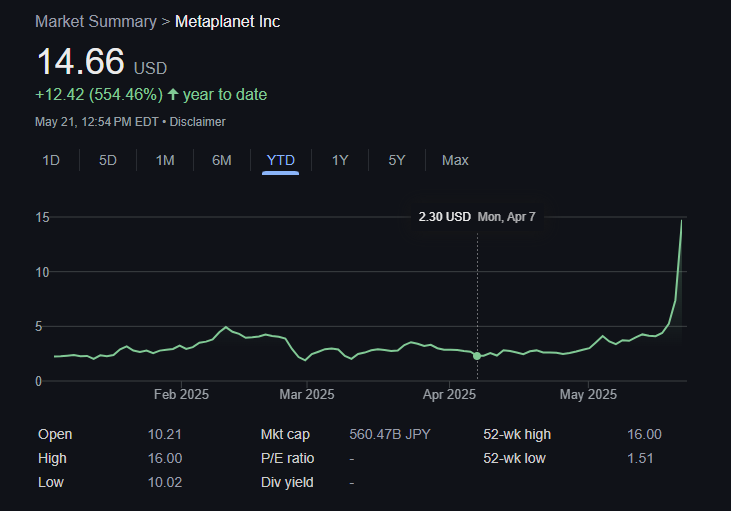
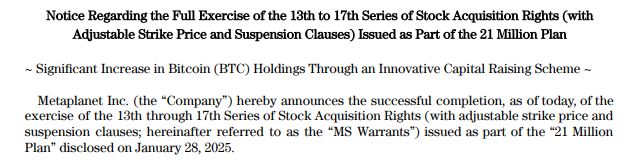







 French company The Blockchain Group raises €8.6 million to buy more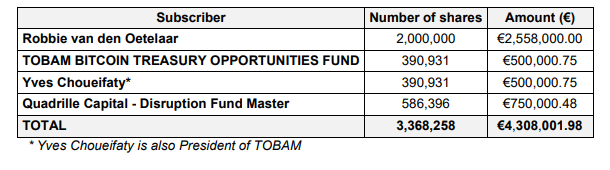
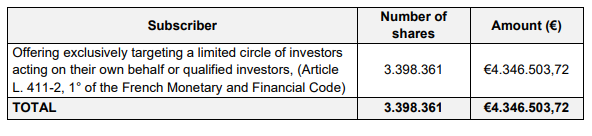


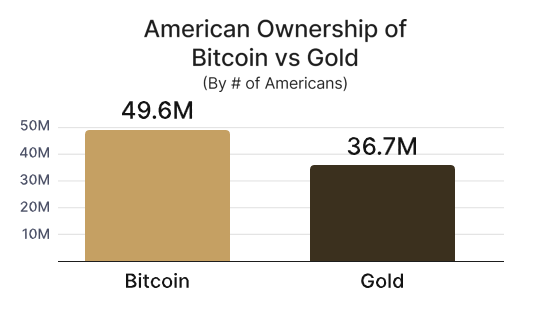
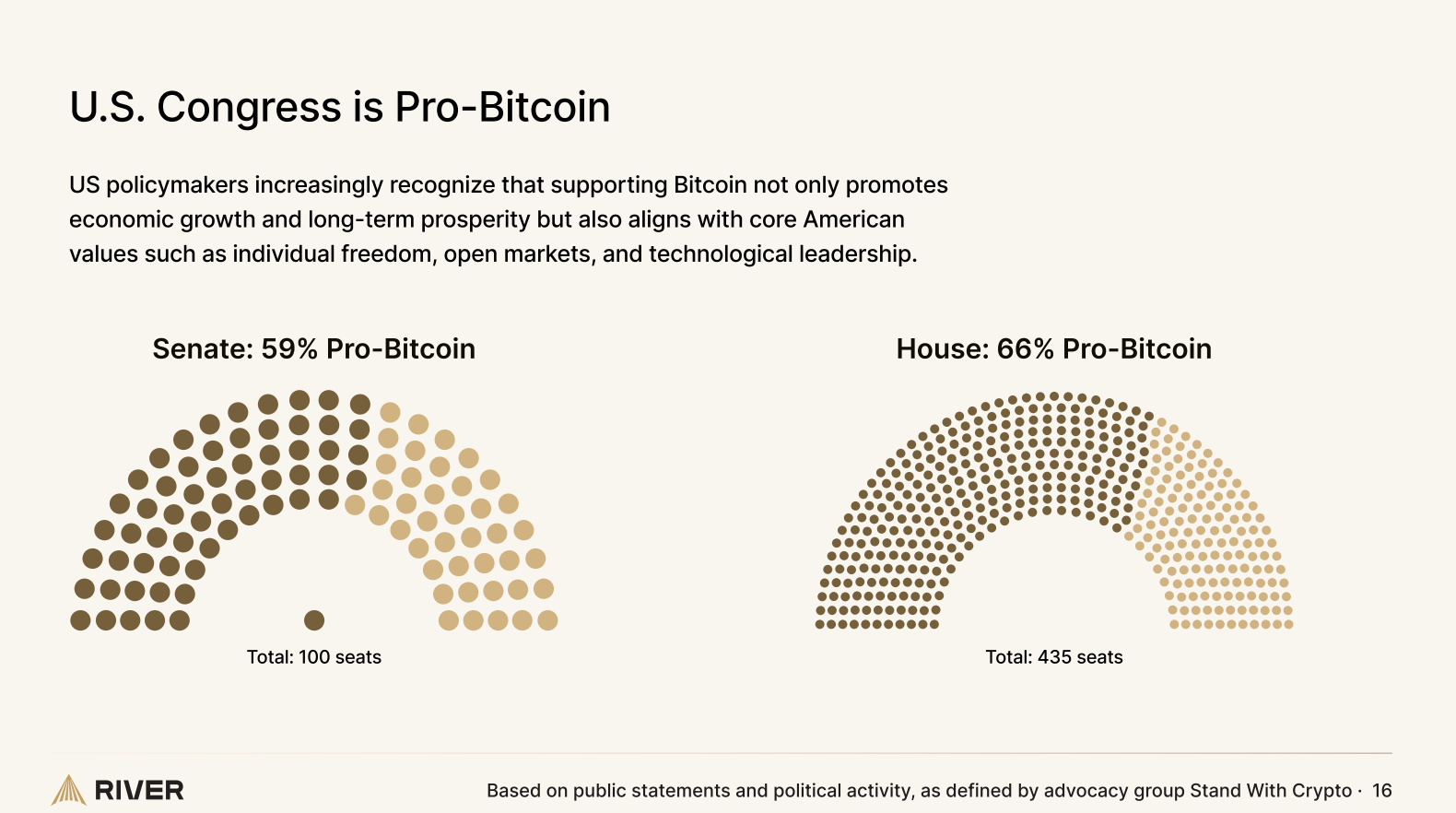
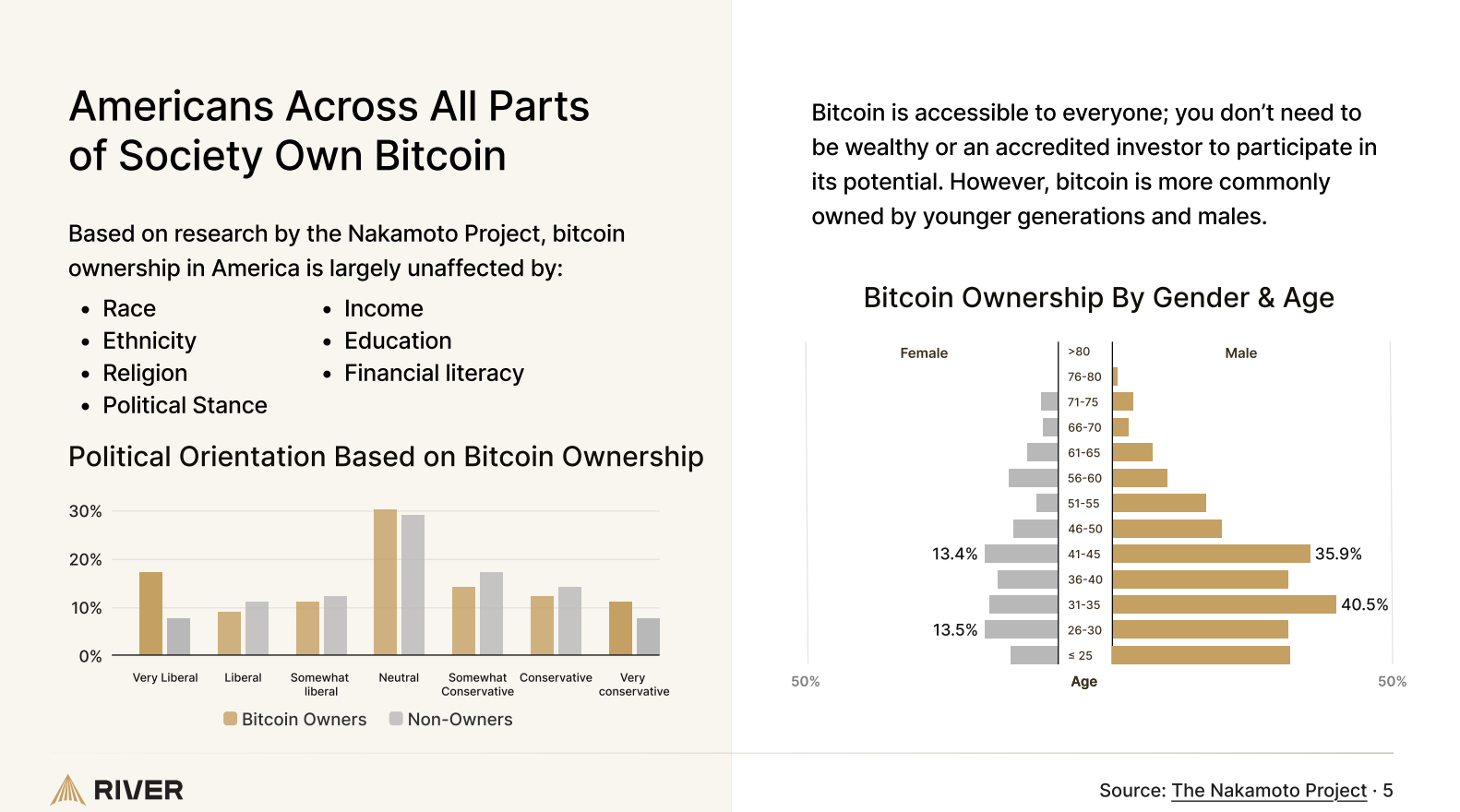

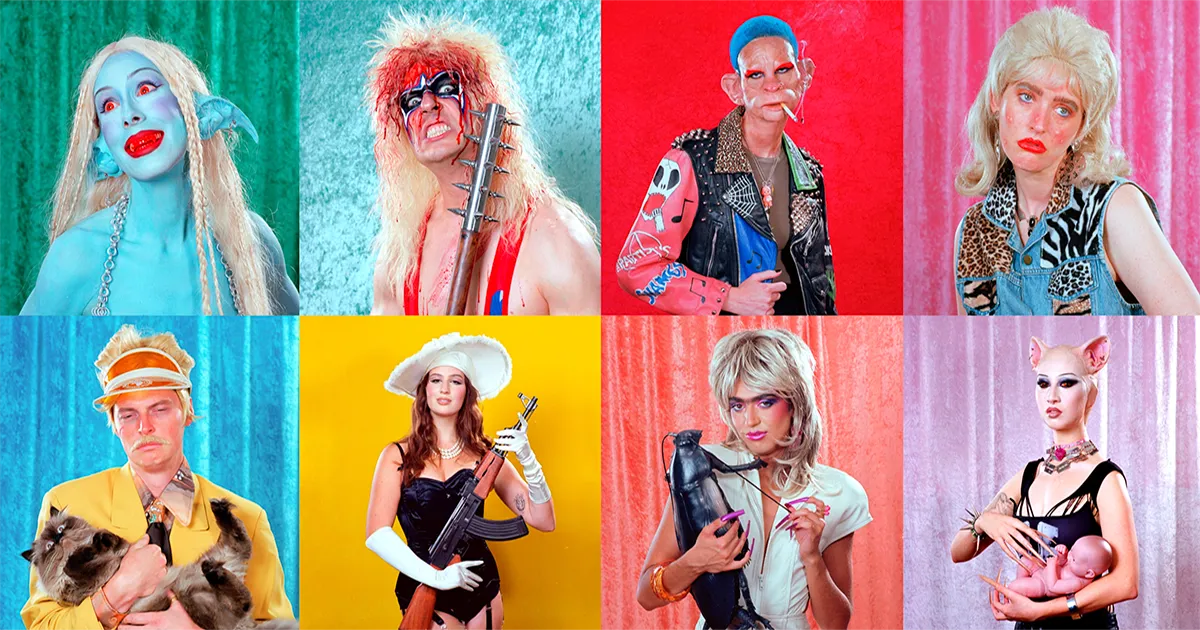
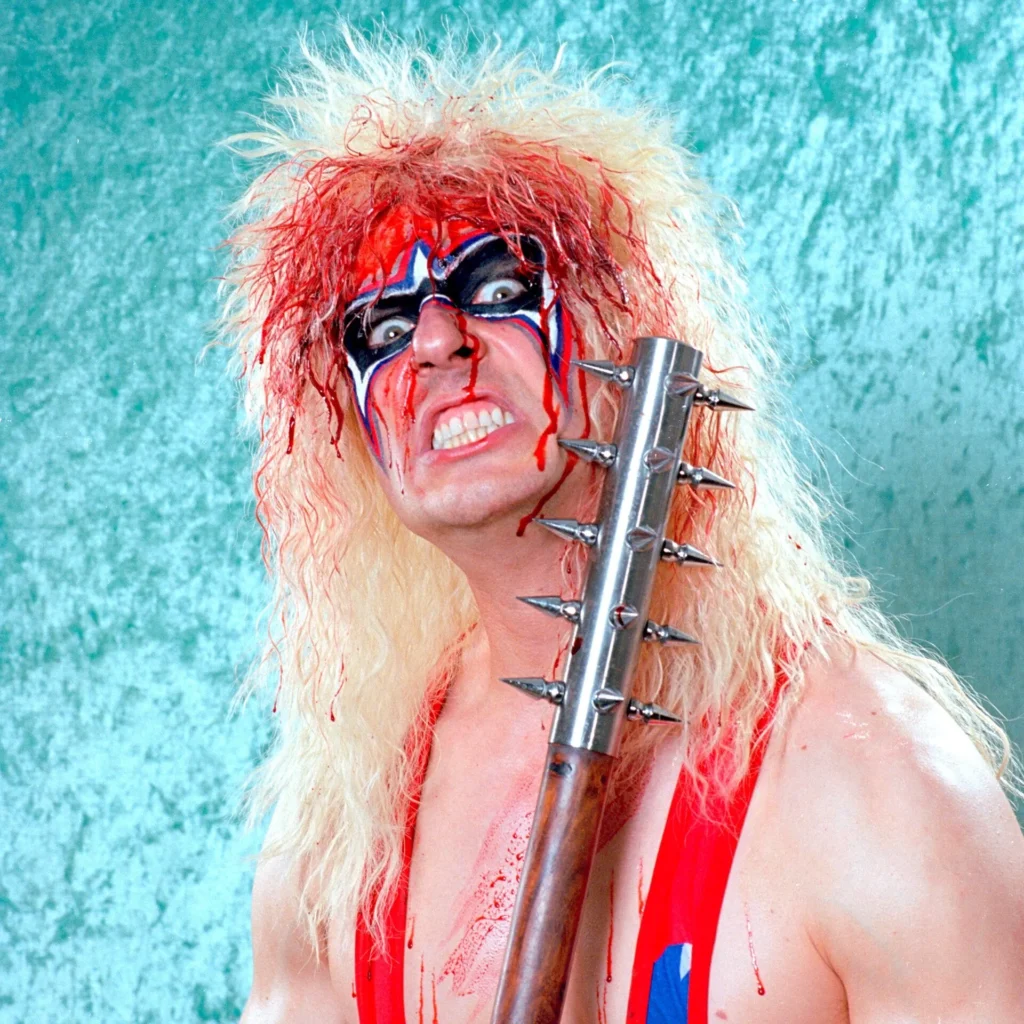




 (@MagicEden)


 Standard Chartered says SEC 13F fillings support
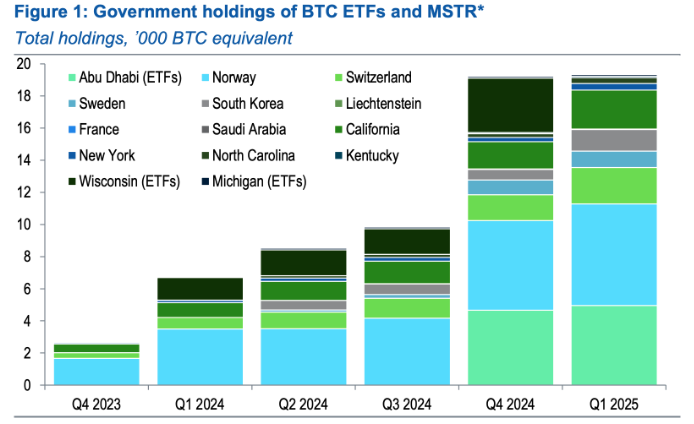













 Al Abraaj Restaurants Group becomes first publicly traded company in middle east to purchase

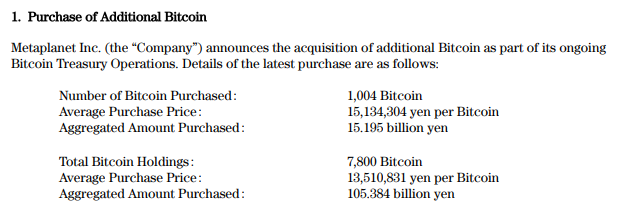







 Cashback Alert at Steak ’n Shake!
 More Bonus: Post a video of your payment & tag us — we’ll send you an extra 2,000 SATS to your…


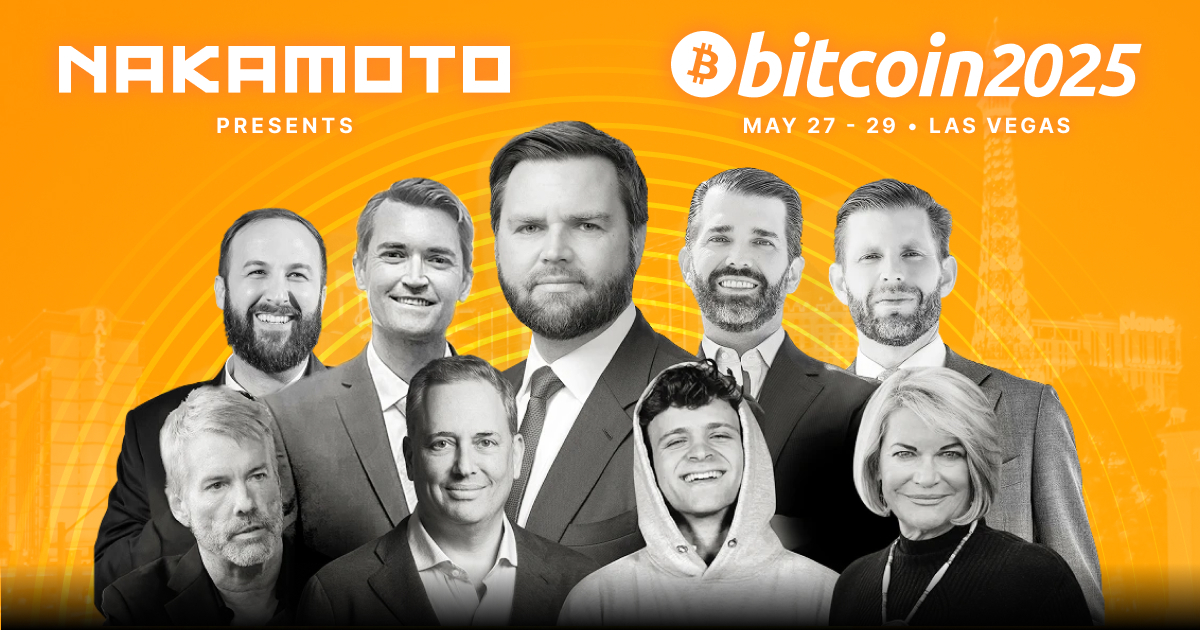



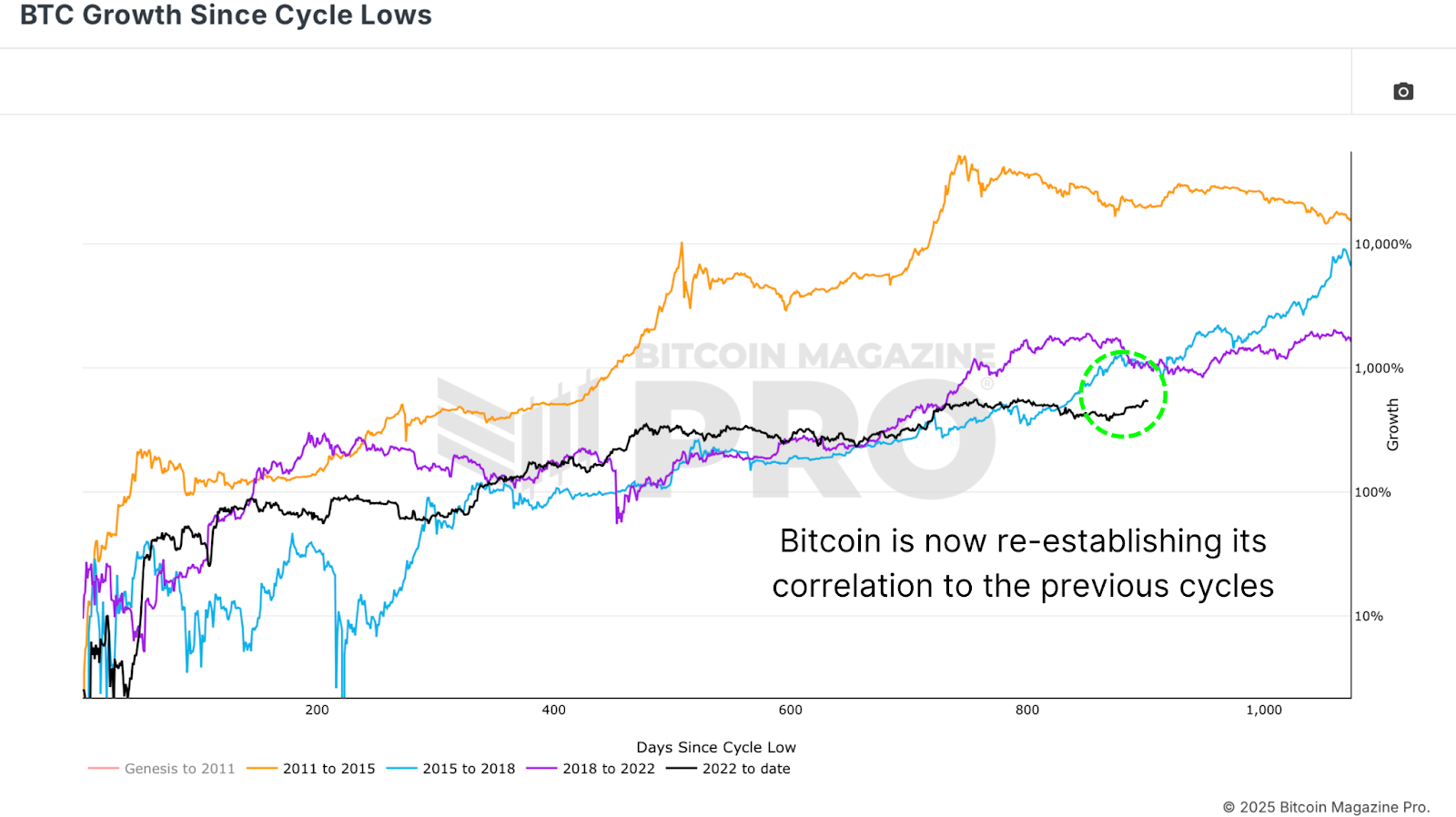
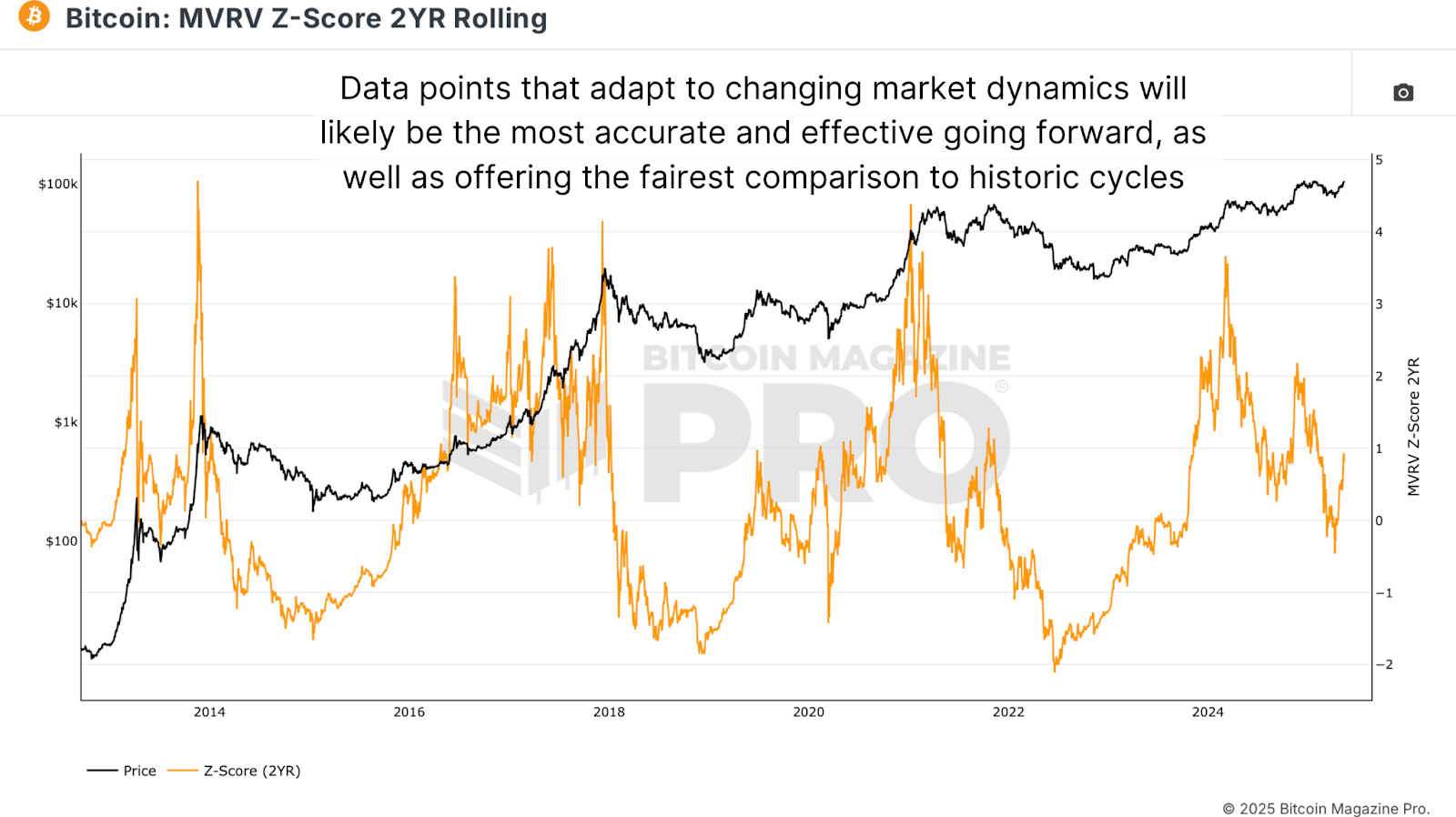

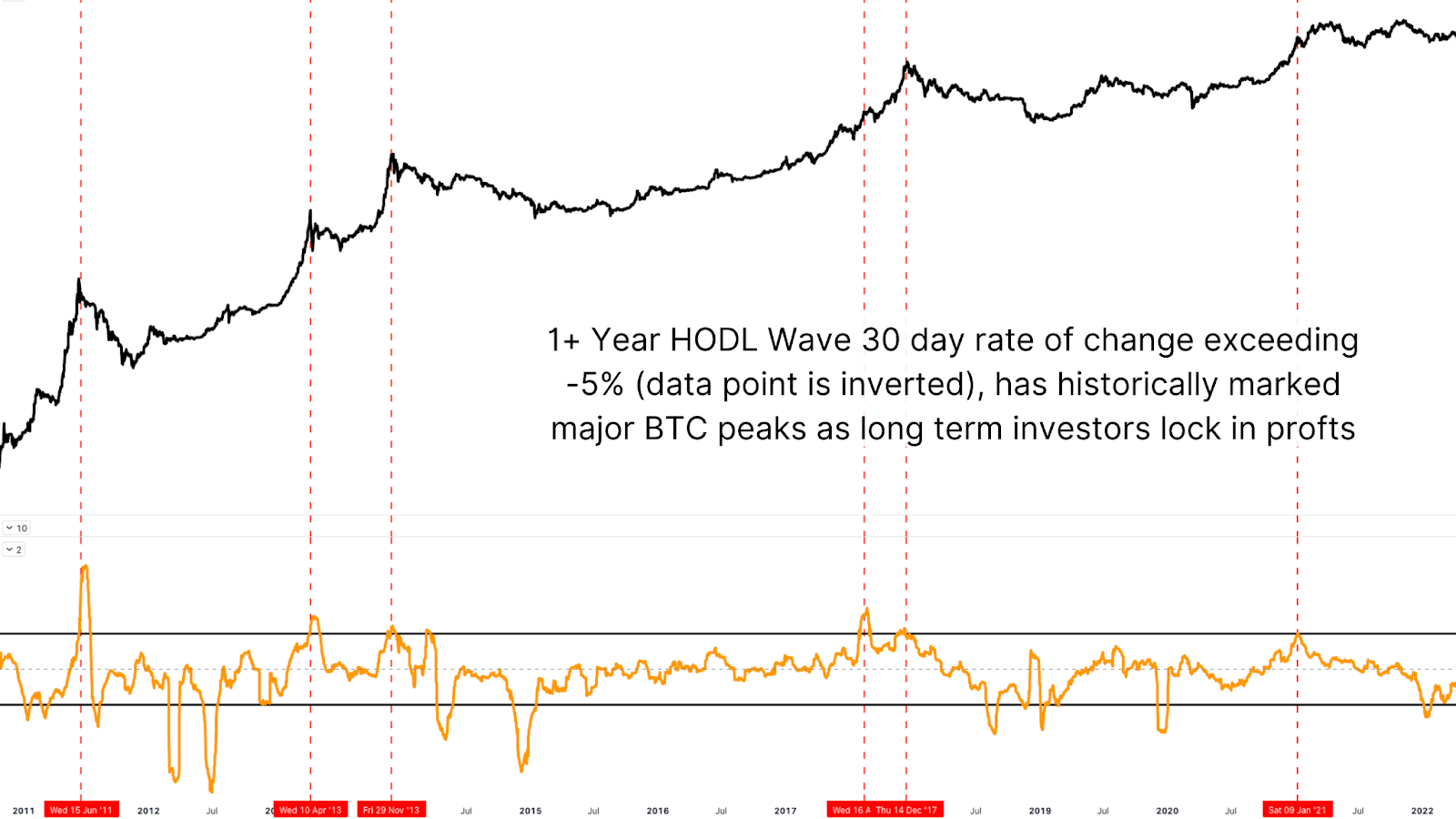
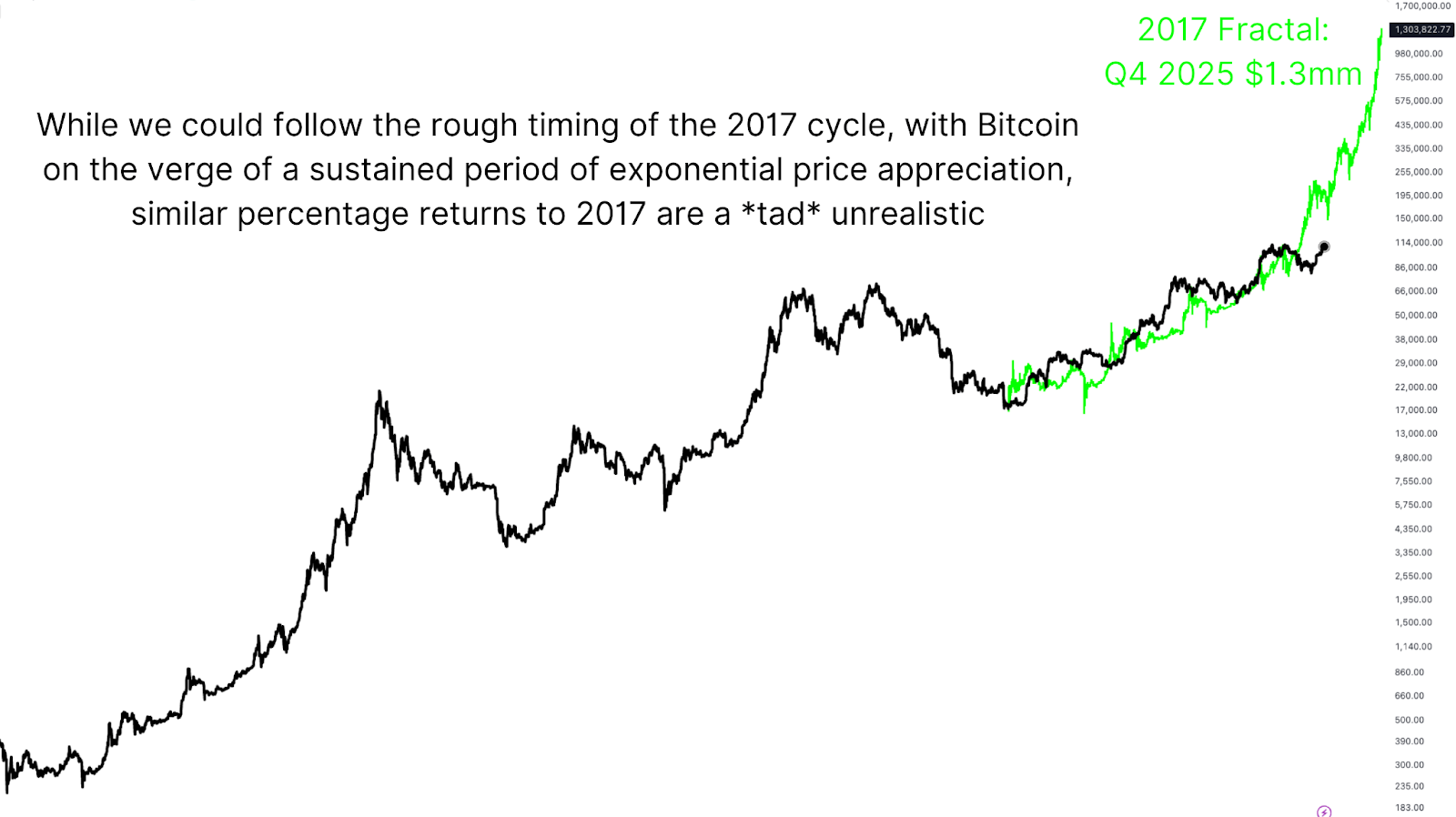



 Chinese public company DDC Enterprise to adopt a Strategic





 UK public company Coinsilium Group raises £1.25 million to adopt a


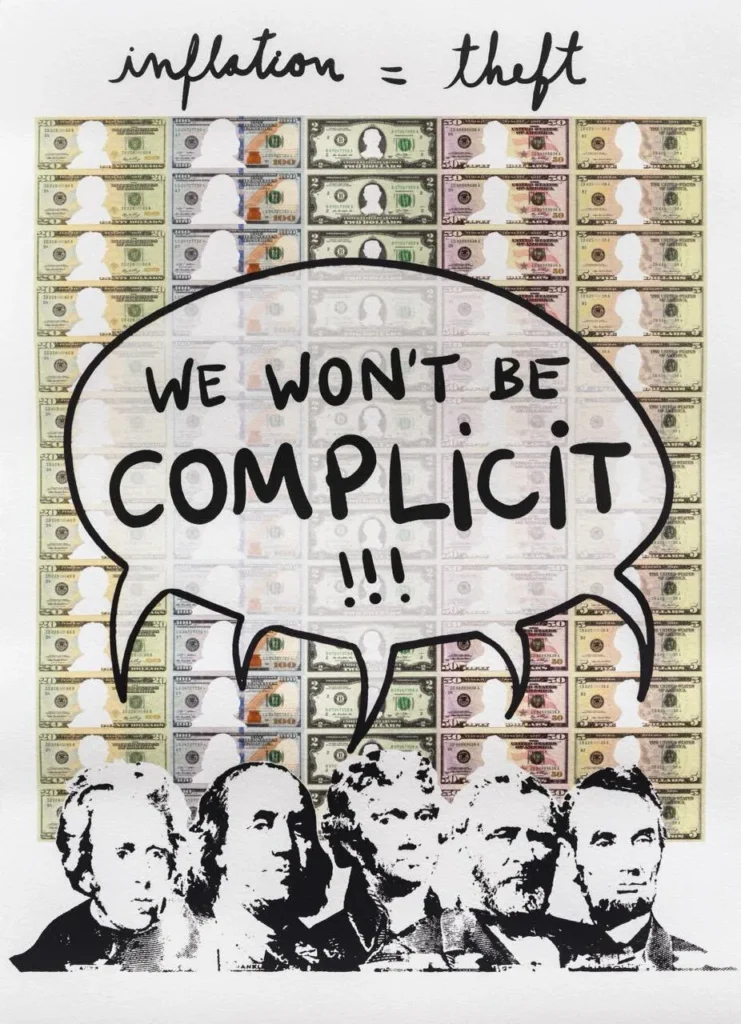








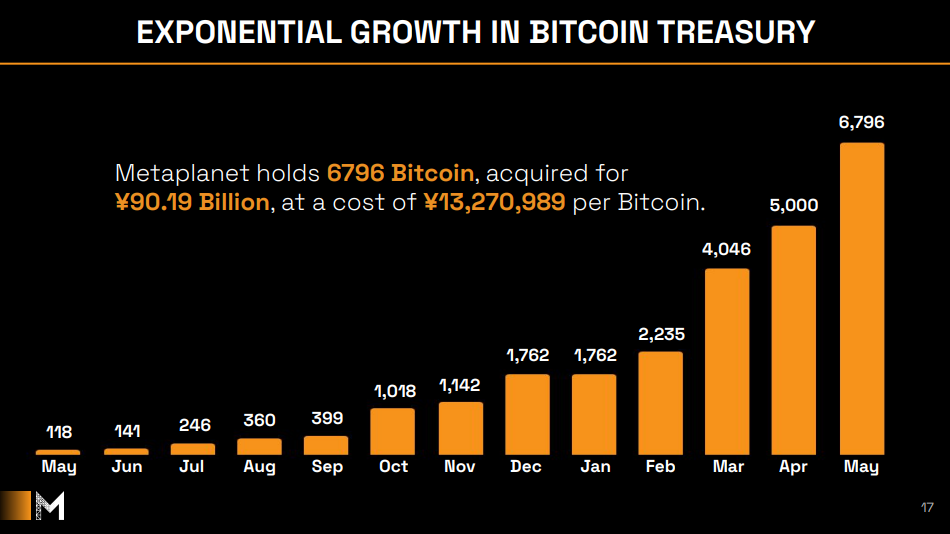
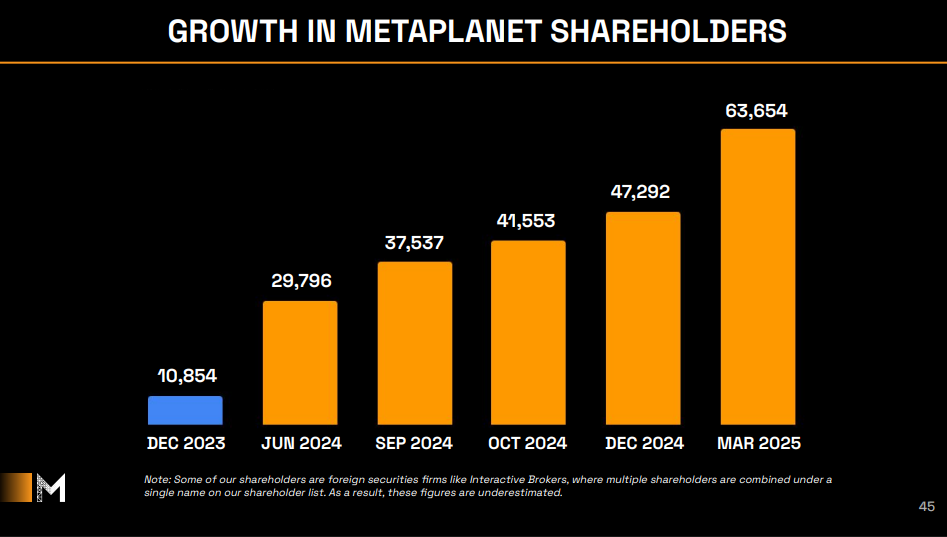



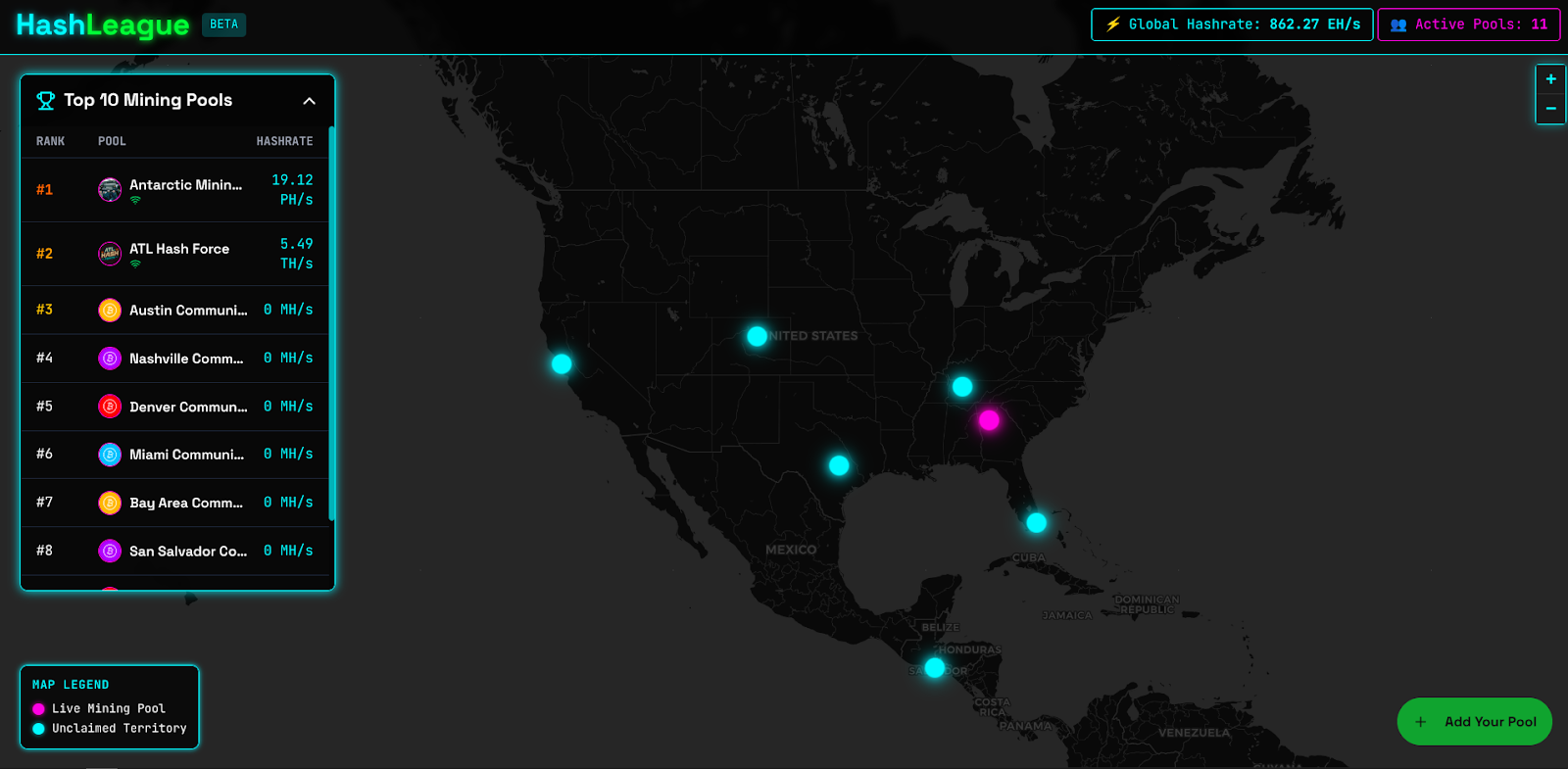


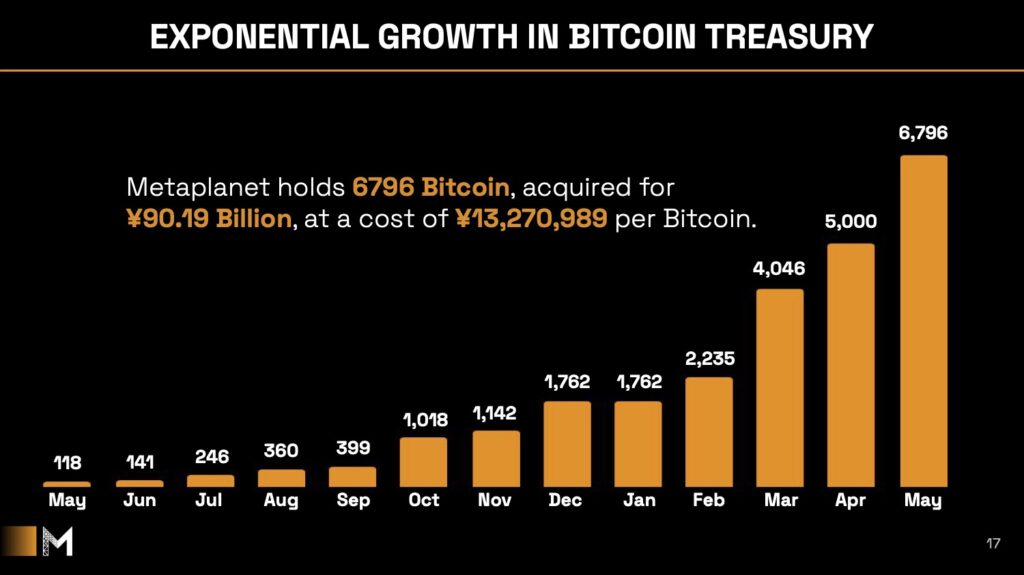
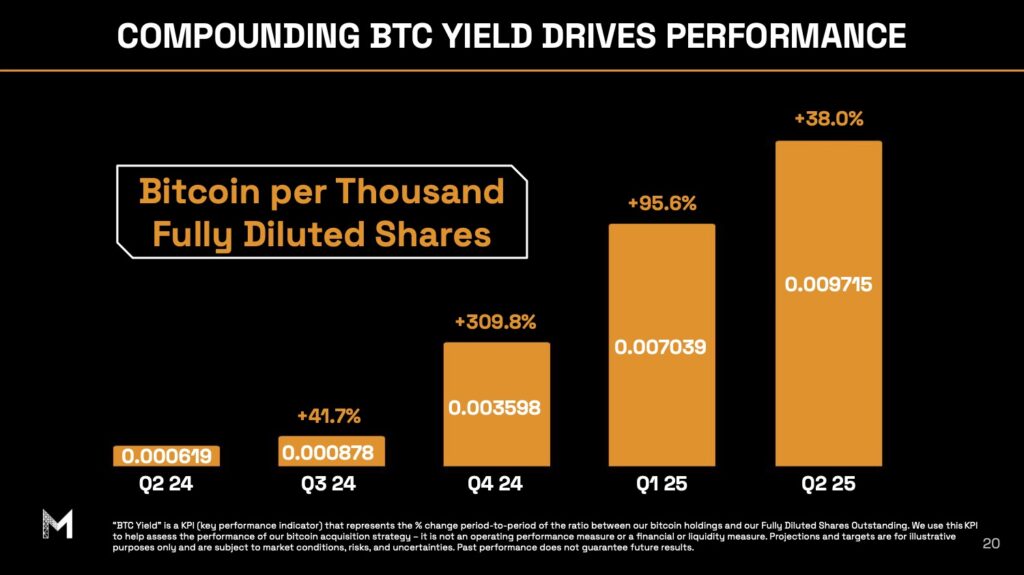
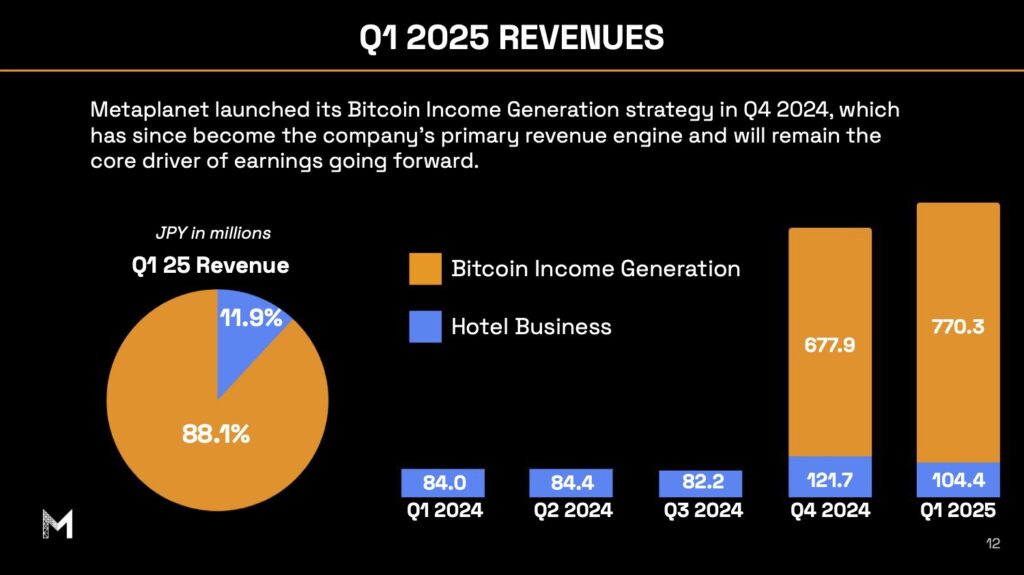
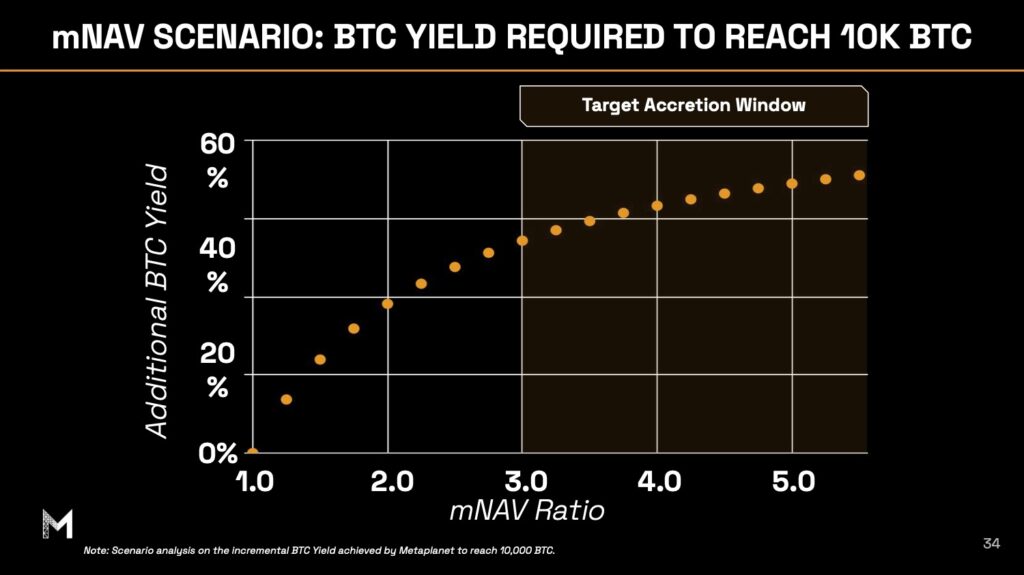






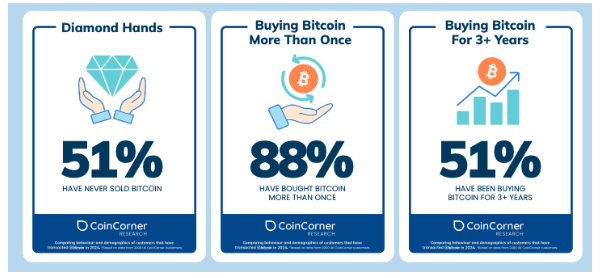
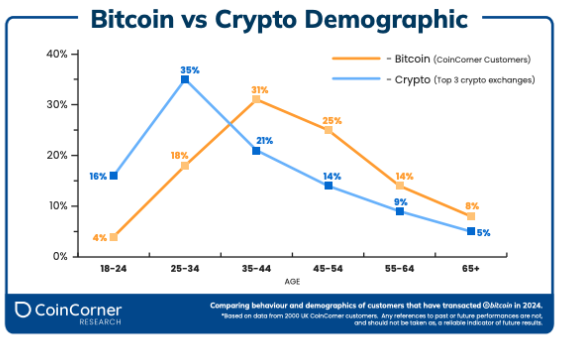
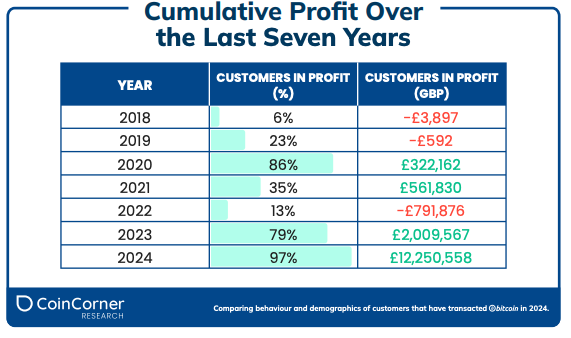


 charm, adding a unique touch of BTC flair.

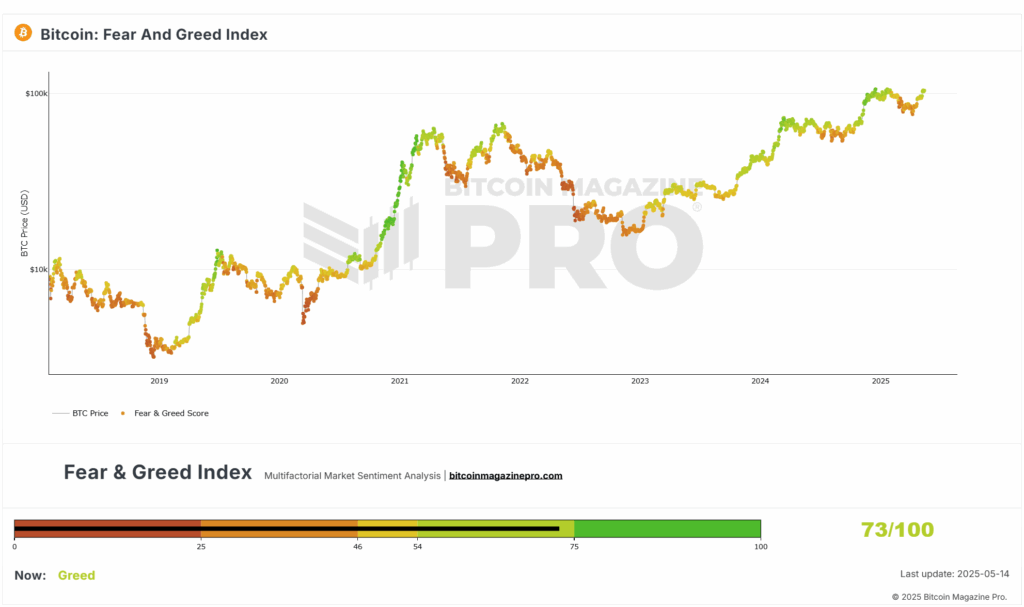
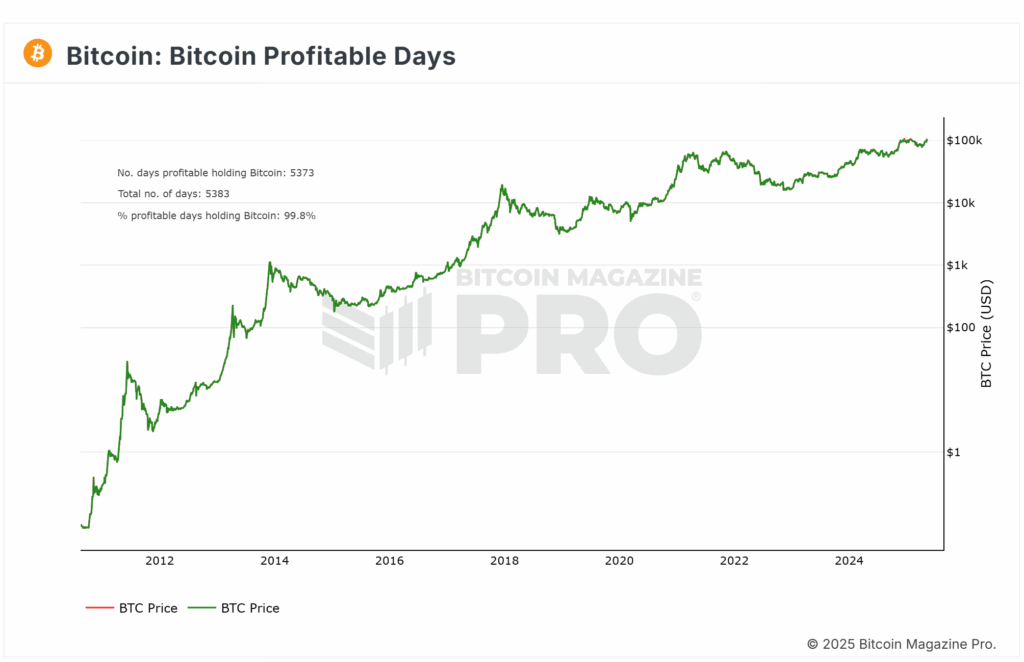
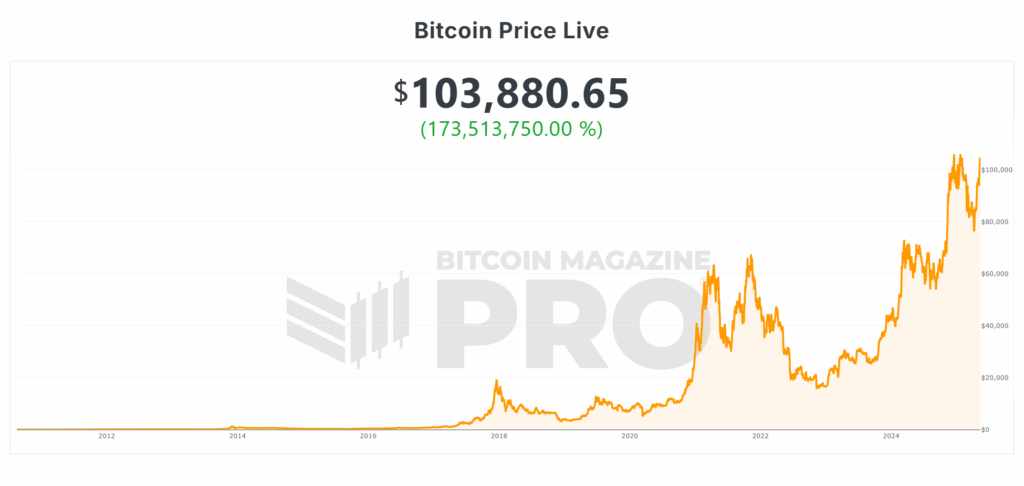
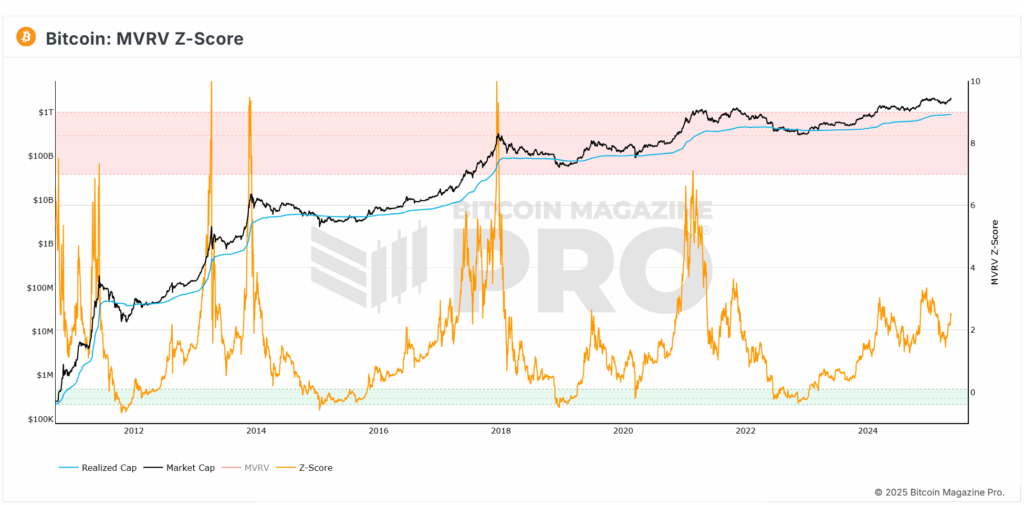
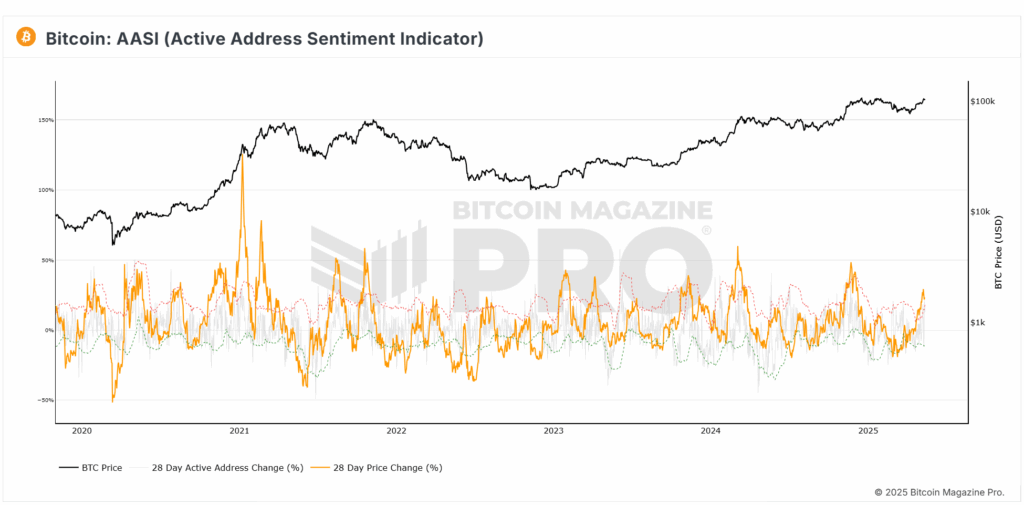
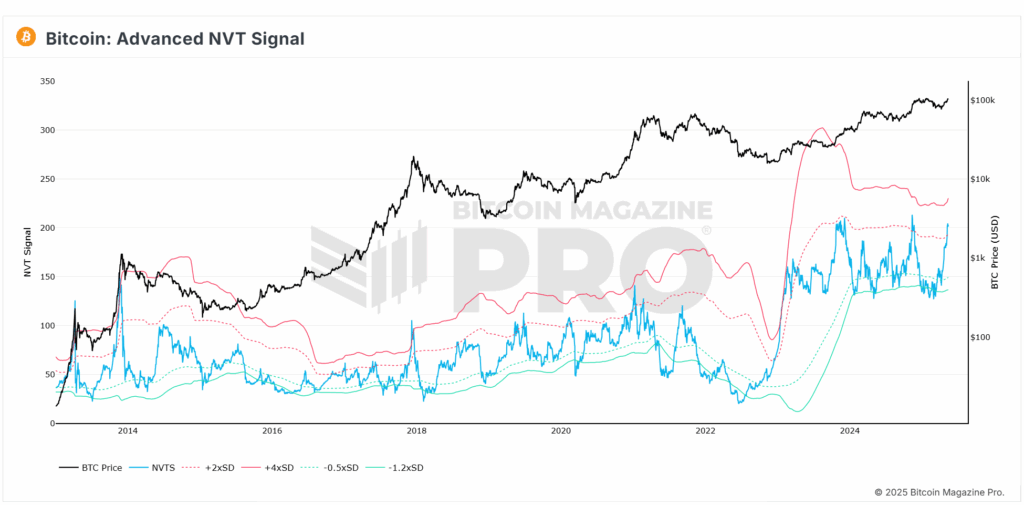
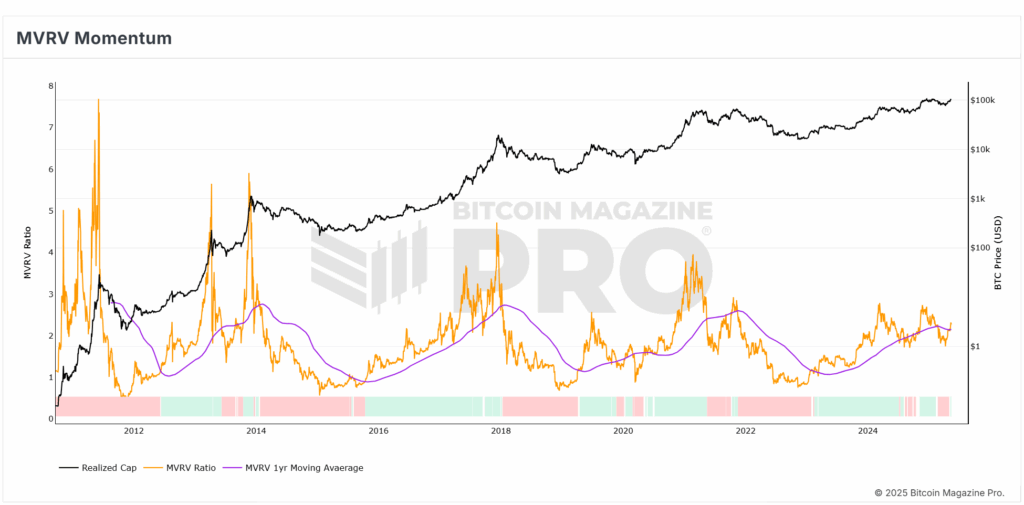



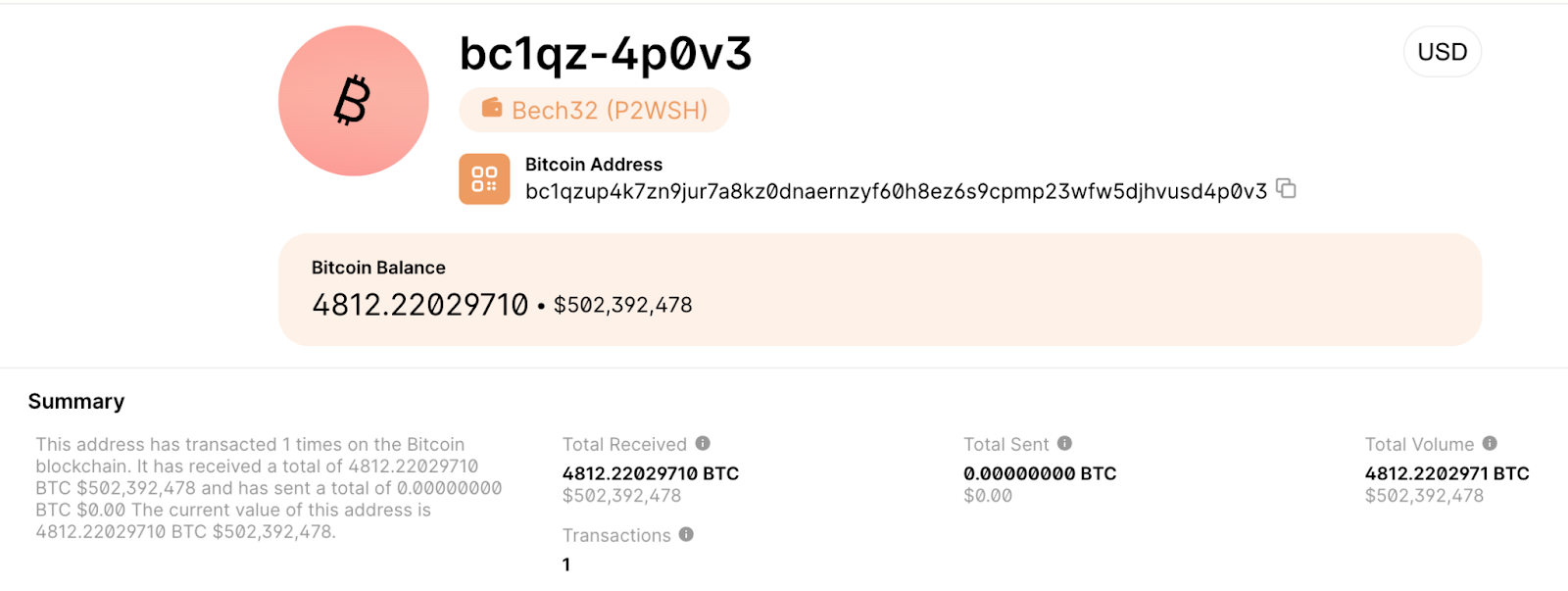




 My First Bitcoin receives $1 million grant from




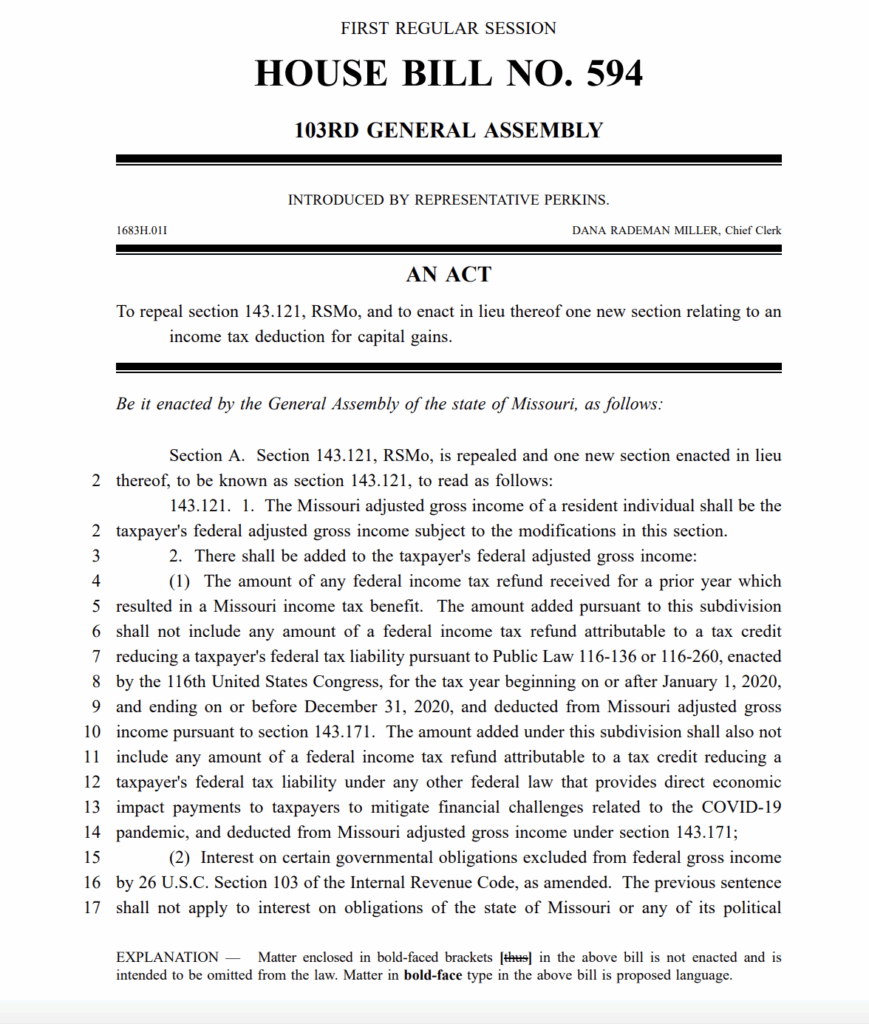




 Metaplanet Issues $15 Million in bonds to buy more




 (@coinbase)



 Tuesday, May 13
 9:00 AM ET / 3:00 PM CET

 The Blockchain Group, Europe’s First Bitcoin Treasury Company since Nov. 5, 2024, publishes its 2024 annual results and confirms its return to profitability.
  The Blockchain Group aims to accelerate its Bitcoin Treasury Company strategy by fully utilizing the €300 million…
Social Media