Today, KindlyMD (NASDAQ: NAKA) and Bitcoin-native firm Nakamoto Holdings announced that it has officially filed their definitive information statement with the SEC in connection with the proposed merger with Nakamoto, moving forward with a planned merger expected to close around August 11, 2025.
BREAKING: $763 million #Bitcoin treasury company Nakamoto files with SEC to merge with publicly traded KindlyMD.
“Filing the definitive information statement is a critical milestone for this merger and accelerates our mission of acquiring one million Bitcoin,” stated the Founder and CEO of Nakamoto David Bailey. “I’m very proud of the teams’ collaboration at Nakamoto and KindlyMD to get us one step closer to closing the merger. Our shared enthusiasm for Bitcoin paired with our expertise in structuring this opportunity for public markets has created a strong foundation for the combined company’s future.”
The merger is a key step in advancing Nakamoto’s strategy, which will use Bitcoin not only as a reserve asset but as the foundation of a new capital framework. Nakamoto will treat Bitcoin as the base and combine it with public stocks to grow and invest more effectively.
This model supports smaller companies that hold Bitcoin in regions where direct access to it is limited. Firms like Metaplanet, Smarter Web Company, and The Blockchain Group have already shown strong results. Performance is measured by Bitcoin per share, with gains reinvested into more Bitcoin or new ventures.
Nakamoto manages the 40 percent securities limit under the Investment Company Act by using Bitcoin-denominated convertible notes, giving it more flexibility and control. With over 750 million dollars raised, the merger with KindlyMD supports its goal of expanding a Bitcoin based financial model globally.
“We are proud to reach this important milestone alongside Nakamoto,” said the Founder and CEO of KindlyMD Tim Pickett. “Our shareholders now have the opportunity to be part of a groundbreaking shift in how public companies approach treasury management, with Bitcoin at the center.”
Disclosure: Nakamoto is in partnership with Bitcoin Magazine’s parent company BTC Inc to build the first global network of Bitcoin treasury companies, where BTC Inc provides certain marketing services to Nakamoto. More information on this can be found here.
https://bitcoindevelopers.org/wp-content/uploads/2025/07/KindlyMD-Shareholders-Approve-Merger-with-Bitcoin-Treasury-Company-Nakamoto-k89iJ7.jpg6291200Bitcoin Developerhttps://bitcoindevelopers.org/wp-content/uploads/2024/08/loho_hor_1-300x108.pngBitcoin Developer2025-07-22 19:24:382025-07-22 19:24:38KindlyMD and Nakamoto Holdings File with SEC, Merger Expected to Close August 11
Grupo Murano, a $1 billion real estate firm based in Mexico, is pioneering a bold strategy to integrate bitcoin into its operations, with CEO Elías Sacal arguing that bitcoin is “demonetizing” the real estate industry. By shifting from traditional asset-heavy models to a bitcoin-centric treasury, the publicly traded company aims to optimize its finances and capitalize on bitcoin’s potential appreciation, offering a model for businesses navigating volatile interest rates and currencies.
In an exclusive interview on the Bitcoin for Corporations show, Sacal, a 30-year veteran of real estate development, outlined Grupo Murano’s vision. The firm, which manages hotels under brands like Hyatt and Mondrian as well as residential and commercial properties in cities like Cancun and Mexico City, plans to convert assets into bitcoin through refinancing and sale-leasebacks. This approach reduces debt and equity on its balance sheet while maintaining operational control. “Instead of buildings waiting for small appreciation, we believe bitcoin will appreciate more,” Sacal said, predicting a potential 300% price increase within five years.
Sacal’s strategy addresses the real estate industry’s reliance on debt financing, which has been disrupted by rising interest rates — jumping from 4% to 9% in some cases. “Real estate needs to be independent of the rate of tomatoes or Walmart inflation,” he noted, emphasizing Bitcoin’s stability for transactions like sourcing materials globally or accepting hotel payments. By eliminating middlemen such as hedge funds and portfolio managers, bitcoin reduces costs from commissions and exchange rates. A $100 payment, Sacal explained, often shrinks to $85 after fees, but bitcoin makes these payments more efficient.
Grupo Murano is also educating stakeholders — employees, investors and guests — about Bitcoin’s benefits. The firm plans to deploy Bitcoin ATMs in its properties and is finalizing a partnership with a major payment platform to enable seamless transactions, particularly for American-oriented hotel guests in Cancun and Mexico City. This aligns with Murano’s ambitious goal to build a $10 billion bitcoin treasury within five years, inspired by Strategy’s $100 billion valuation, acquired mainly through adopting bitcoin. Murano is also looking to accept bitcoin payments throughout its portfolio and will be exploring opportunities to host Bitcoin conferences at its locations.
The company’s focus remains on high-margin development projects, allocating 20-30% of its business to real estate and 70-80% to bitcoin holdings. Sacal dismissed other cryptocurrencies, calling bitcoin “the champion, like Formula One or the NFL.” He sees Latin America, led by pioneers like El Salvador, as a fertile ground for Bitcoin adoption, though political risks remain. Bitcoin could unify regional economies, reducing dependence on tourism or remittances.
For Bitcoin Magazine’s audience, Grupo Murano’s pivot highlights Bitcoin’s potential to transform capital-intensive industries. By prioritizing development over ownership and leveraging Bitcoin’s appreciation, Murano offers a playbook for businesses seeking resilience against economic volatility. As Sacal puts it, “Eventually, real estate globally will be ruled by Bitcoin transactions,” signaling a shift toward a more stable, decentralized future.
Bitcoin for Corporations is an initiative owned by BTC Inc., the parent company of Bitcoin Magazine. BTC Inc. operates various subsidiaries focused on the digital assets industry and has a business relationship with Group Murano.
https://bitcoindevelopers.org/wp-content/uploads/2025/07/Grupo-Muranos-1B-Bitcoin-Bet_-A-New-Era-for-Real-Estate-42q2hV.webp6301200Bitcoin Developerhttps://bitcoindevelopers.org/wp-content/uploads/2024/08/loho_hor_1-300x108.pngBitcoin Developer2025-07-22 00:11:352025-07-22 00:11:35Grupo Murano’s $1B Bitcoin Bet: A New Era for Real Estate
Today, on day six of the Tornado Cash trial, FBI Special Agent Joel DeCapua, testified at the request of the prosecution, who called on the agent because of his experience with and skills in tracing crypto assets. (DeCapua has been tracking crypto and virtual assets for the FBI for 15 years.)
DeCapua highlighted how, during certain periods of time between September 1, 2020 and August 8, 2022 (with segments ranging from one day to a few weeks), as much as 55% percent of the funds that moved through Tornado Cash were those obtained through criminal activity (e.g., hacks).
However, the defense pointed out during their cross examination of DeCapua, that only 10% of the funds that moved through Tornado Cash transactions between September 1, 2020 and August 8, 2022 were obtained via confirmed criminal activity.
Special Agent DeCapua Takes The Stand
DeCapua took the stand at the onset of the trial day.
The prosecution walked him through a list of 16 incidents — hacks of crypto protocols and exchanges, the largest of which being the Ronin Bridge exploit — and had him confirm that some percentage of the funds from these hacks were put through Tornado Cash to wash them. DeCapua and the prosecution highlighted that over $1 billion in stolen funds had moved through Tornado Cash.
The prosecution, with the help of DeCapua, detailed how the stolen funds moved through Tornado Cash, all while the FBI and the hacked entities or protocols had little recourse in stopping the criminals involved.
The prosecution pointed out how from April 22, 2022 to May 19, 2022, 55% of Tornado Cash deposits were funds from the Ronin hack, while spikes in illicitly obtained funds flowing through Tornado Cash also occurred after exploits such as the BitMart hack, the Beanstalk hack and the Harmony Horizon hack.
DeCapua stated that it was always a “banner day” for Tornado Cash whenever hackers washed funds using the protocol.
The Cross-Examination of Special Agent DeCapua
During the defense’s cross examination of DeCapua, he shared that the FBI sometimes employs the services of third party blockchain analytics companies like Chainalysis, which is known to have provided flawed analysis.
The defense also shared Telegram messages with the court in which the legal team at BitMart asked the Tornado Cash team to intervene in efforts to retrieve the funds stolen from the company, to which the Tornado Cash team replied that they couldn’t because the protocol was decentralized.
Soon after, the defense referenced pie charts created by DeCapua, presented by the prosecution, that illustrated the largest amounts of criminal funds that flowed through Tornado Cash during the days or weeks after major crypto hacks.
The defense then made the point that outside of these major upticks in illicitly obtained funds moving through Tornado Cash, the protocol didn’t see much of such activity. They then made the aforementioned point that only 10% of funds that moved through Tornado Cash in the two-year time frame in question were from criminals.
Before concluding the cross-examination, the defense paralleled Tornado Cash to privacy tools like VPNs and WhatsApp, software that both criminals and non-criminals alike use to preserve their privacy.
While DeCapua didn’t disagree with this point, he did offer an odd statement in response to the defense asking him if everyday people use VPNs to preserve their privacy while browsing the internet.
“It would be really strange,” said DeCapua. “I don’t think a regular person would use a VPN in their [everyday] operations.”
The NTU Capital Issue
Toward the beginning of the defense’s cross-examination of DeCapua, they also brought up the possibility that the funds stolen from the first witness who took the stand at the trial, Hanfeng Lin, never moved through Tornado Cash.
These funds were stolen by members of a fraudulent entity called NTU Capital, and the notion that these funds may have never moved through Tornado Cash was first put forward by blockchain sleuth Taylor Monahan, founder of MyEtherWallet and security specialist at MetaMask, over the weekend.
This first witness in Roman’s trial immediately caught my attention bc the victim was a classic Pig Butchering case.
The only issue is….uh…..those scammers don’t use Tornado Cash? And they never have?
The prosecution didn’t object to the defense’s proposal that these funds may never have been washed via Tornado Cash during the cross-examination, but they did push back on it toward the end of the trial day.
They noted that they’d provided supplemental disclosure on the issue the night before (around midnight) and that an IRS agent with a specialization in tracing funds that they planned to have testify would show how the funds stolen from Ms. Lin were, in fact, put through Tornado Cash after “a few hops.”
The defense made the case that Ms. Lin’s testimony should be stricken from the record before stating that they’re considering a mistrial motion.
The trial will resume tomorrow at 9:00 a.m. EST. The prosecution did make not clear whether it will call the IRS agent it referenced to the stand tomorrow or later in the week, though.
https://bitcoindevelopers.org/wp-content/uploads/2025/07/Tornado-Cash-Courthouse-rI4bdw.webp6281200Bitcoin Developerhttps://bitcoindevelopers.org/wp-content/uploads/2024/08/loho_hor_1-300x108.pngBitcoin Developer2025-07-21 21:13:402025-07-21 21:13:40Data from Tornado Cash Trial Shows a Relatively Low Amount of Criminal Usage of the Protocol
Strategy announced today a proposed initial public offering of 5,000,000 shares of its Variable Rate Series A Perpetual Stretch Preferred Stock—referred to as STRC Stock—registered under the Securities Act of 1933.
JUST IN: Michael Saylor’s Strategy to sell 5 million shares of its STRC stock to buy more Bitcoin pic.twitter.com/z1W5jrYoSJ
According to the company, proceeds from the IPO will be used “for general corporate purposes, including the acquisition of Bitcoin and for working capital.”
In a presentation today, Strategy showed further details on STRC. The company positioned the offering as part of its broader capital strategy to expand Bitcoin holdings while maintaining flexibility for dividend adjustments. Strategy highlighted its strong performance since adopting its Bitcoin treasury strategy, showing 104% annualized returns for $MSTR compared to 59% for Bitcoin and just 14% for the S&P 500. In Q2 2025 alone, Strategy added $21 billion in digital asset value, bringing its BTC holdings from 528,185 to 597,325.
The STRC Stock will feature cumulative monthly dividends starting at an annual rate of 9.00%. Strategy reserves the right to adjust this rate within defined limits, based on one-month term SOFR fluctuations. The company intends to manage the dividend rate in a way that “causes the STRC Stock to trade at prices at or close to its stated amount of $100 per share.” Dividends will be paid in cash, and unpaid dividends will accrue compounded interest monthly.
Strategy will also retain redemption rights. Once listed on Nasdaq or NYSE, the company may redeem all or part of the STRC Stock at $101 per share plus any unpaid dividends. Other redemption triggers include a “clean-up” redemption if outstanding shares fall below 25% of the total issued, or a “tax redemption” if certain tax-related events occur.
If a “fundamental change” occurs, shareholders may require Strategy to repurchase STRC Stock at $100 per share, plus accumulated dividends. The liquidation preference will begin at $100 and adjust daily based on recent trading data or offering prices.
The offering is led by Morgan Stanley, Barclays, Moelis & Company, and TD Securities as joint book-runners. Additional co-managers include The Benchmark Company, Clear Street, AmeriVet Securities, Bancroft Capital, and Keefe, Bruyette & Woods.
This announcement follows a separate disclosure that Strategy announced today that they acquired 6,220 BTC for approximately $740 million between July 14 and July 20, bringing its total holdings to 607,770 BTC—valued around $74.1 billion.
https://bitcoindevelopers.org/wp-content/uploads/2025/07/STRATEGY-STRC-u5wndC.jpg6301200Bitcoin Developerhttps://bitcoindevelopers.org/wp-content/uploads/2024/08/loho_hor_1-300x108.pngBitcoin Developer2025-07-21 20:58:182025-07-21 20:58:18Strategy Announces IPO of 5 Million STRC Stock to Fund Bitcoin Purchases
President Donald Trump signed the GENIUS Act into law today, marking a milestone in his administration’s push to establish the United States as the global Bitcoin and crypto capital. The legislation creates a clear regulatory framework for dollar-backed stablecoins, representing what Trump called “perhaps the greatest revolution in financial technology since the birth of the internet itself.”
JUST IN: President Trump says he will sign crypto market structure legislation to “grow the industry more than people ever thought.” pic.twitter.com/xIVVPbeXjR
While the GENIUS Act doesn’t directly address Bitcoin, the legislation establishes regulatory clarity that could benefit all digital assets, including Bitcoin, by creating a better environment for crypto innovation and increasing trading volume on exchanges.
Speaking at the signing ceremony, Trump emphasized the transformative potential of the new law. “This is really a big day. This is a very big thing and I want to thank Senator Bill Hagerty, a very good friend of mine,” who has played a huge role in getting this bill across the finish line. This is going to make America stronger, and congratulations, it’s good for the country.”
The President connected the legislation to his Bitcoin and crypto commitments, referencing his historic appearance at the Bitcoin Conference. “Exactly this month many of you were in Nashville, Tennessee, when I became the first president ever to address the Bitcoin conference. I pledged that we would make the US the crypto capital in the world, and this is only going further.”
Trump outlined his administration’s approach to digital assets, highlighting several key initiatives. “First week in office I established the first presidential working group on digital assets. I stopped the weaponization of government against crypto, and Bitcoin, we stopped Choke 2.0., and I freed Ross Ulbricht.”
The President also referenced his establishment of strategic Bitcoin reserves through executive order, demonstrating his commitment to Bitcoin specifically. “Last March I signed an executive order establishing the US strategic Bitcoin reserve as well as the US digital asset stockpile, and with today’s signing we are pushing even more into the exciting frontier.”
The President then discussed how The GENIUS Act addresses a critical infrastructure gap in the American financial system. “Many Americans are unaware that the technical backbone of the financial system is decades out of date. Payments and money transfers take days and even weeks to clear,” Trump explained. “The GENIUS Act provides banks, businesses and financial institutions a framework for issuing crypto assets backed 1 for 1 with real US dollars.”
The legislation is expected to increase demand for US Treasuries, according to Trump. He also reaffirmed his opposition to central bank digital currencies, stating, “I also remain fully committed to my pledge never to allow a central bank digital currency in America.”
AI & Crypto Czar David Sacks, speaking at the ceremony, emphasized the historic nature of the moment. “Today you have another historic legislative achievement and it is a step to making the United States the crypto capital of the world. The GENIUS Act will unlock dominance in the crypto industry by creating rules of the road.”
Trump concluded by promising additional crypto legislation this year, calling it “a really hot industry” and signaling continued momentum for Bitcoin and digital asset development in America.
https://bitcoindevelopers.org/wp-content/uploads/2025/07/Trump-Signs-GENIUS-Act-Into-Law-Will-Make-America-22The-Crypto-Capital-of-the-World22-7eXaO4.jpg6301200Bitcoin Developerhttps://bitcoindevelopers.org/wp-content/uploads/2024/08/loho_hor_1-300x108.pngBitcoin Developer2025-07-18 20:21:042025-07-18 20:21:04Trump Signs GENIUS Act Into Law, Will Make America “The Crypto Capital of the World”
Charles Schwab is preparing to enter the Bitcoin trading arena, according to CEO Rick Wurster, who spoke in a new interview with CNBC. This positions Charles Schwab as a direct competitor to Coinbase, Wurster discussed.
JUST IN: $10 trillion Charles Schwab CEO says they will launch Bitcoin trading “sometime soon” and will be competing with Coinbase pic.twitter.com/VnpHfcFed0
“Our clients are invested in crypto today,” Wurster said. “In fact, our clients hold more than 20% of the exchange traded product crypto in the entire industry, so they’re invested.” Despite this, he noted that crypto holdings currently represent “only about $25 billion out of the $10.8 trillion that our clients have, so it’s still relatively small.”
Wurster revealed that Charles Schwab is “anticipating launching Bitcoin and ether, sometime soon so that our clients have access to that.” He added that the offering could serve as a key growth driver for the company.
Wurster explained that client demand is driving the decision. “What we hear from many of our clients are that they have 98% of their wealth here at Schwab, and they might hold a percent or 2% at some digital native firm to hold their crypto, and they really want to bring it back to Schwab because they trust us,” Wurster said. “They want it to sit alongside their other assets and so we think we’ll see some real growth when we bring those to market.”
When asked if Schwab would be directly competing with Coinbase, Wurster was clear: “It absolutely would. If they’re buying their crypto at Coinbase, we would love to see them bring their crypto back to Schwab.”
The announcement comes on the same day President Trump plans to sign the GENIUS Act into law. The legislation will establish a regulatory framework for stablecoins, which some believe will lead to an increase in BTC trading volume, further encouraging traditional finance firms like Schwab to embrace Bitcoin.
JUST IN: MARA CEO says President Trump signing The GENIUS Act today will drive more trading volume to Bitcoin
Coinsilium Group Limited has expanded its Bitcoin treasury to 112 Bitcoin following a £920,000 purchase executed through its wholly-owned Gibraltar subsidiary, Forza Gibraltar Limited. The latest acquisition of 10.2489 Bitcoin at an average price of £89,765.73 per Bitcoin ($120,538.77) represents the company’s continued commitment to its Bitcoin-focused treasury strategy.
The digital asset venture builder, which has been operating in the blockchain sector since 2015, established Forza Gibraltar Limited specifically to manage its Bitcoin treasury operations. The subsidiary’s total Bitcoin holdings now stand at 112.0009 Bitcoin, with an aggregate average purchase price of £81,710.15 per Bitcoin ($110,677.77), bringing the total value of holdings to £9,993,422.54 ($13,502,255.06).
“All Bitcoin purchases are being conducted in accordance with the Company’s Bitcoin Treasury Policy,” the company stated in its announcement. The storage of all Bitcoin holdings is handled by third-party, regulated, institutional-grade custodians, providing additional security for the company’s digital asset reserves.
This latest purchase follows Coinsilium’s successful £1.25 million capital raise in May 2025, which was specifically designed to fund its Bitcoin treasury strategy. The company raised these funds through an oversubscribed placing at 3 pence per share.
Executive Chairman Malcolm Palle had previously expressed enthusiasm about the initiative, stating: “I am delighted to announce this Placing today. We have been very pleased by the response to the Company’s Forza! Initiative and these funds will allow us to advance the implementation of our Bitcoin Treasury Strategy.”
Board member James Van Straten emphasized the company’s focus, noting: “Coinsilium has raised £1.25 million to kick start its Bitcoin treasury strategy. A WRAP retail offering of £250,000 is on offer to provide retail investors the opportunity to participate. We are laser focused on our Bitcoin treasury strategy.”
Since launching its treasury strategy in May, Coinsilium has built a £10 million Bitcoin position across multiple purchases. The company’s public market structure allows traditional investors to gain Bitcoin exposure through regulated channels without directly holding it.
The company maintains that its decision to allocate capital to Bitcoin reflects “a strategic view of Bitcoin as a long-term reserve asset” backed by “over a decade of experience operating in the digital asset sector.”
Financial Times reported today that President Trump is preparing to sign an executive order that would allow 401(k) retirement plans to invest in alternative assets such as gold, private equity, and cryptocurrencies like bitcoin.
JUST IN: President Trump is preparing to open the $9 trillion US retirement market to Bitcoin & crypto investments — Financial Times pic.twitter.com/Omabfe7UjW
“Donald Trump is preparing to open the $9tn US retirement market to cryptocurrency investments, gold, and private equity in a move that would spur a radical shift in the way Americans’ savings are managed,” reported the Financial Times.
According to Financial Times, the order is expected this week and will direct federal regulators to remove barriers preventing 401(k) plans from including these non-traditional investments in managed funds. This includes digital assets, metals, private loans, infrastructure deals, and corporate buyout funds.
“President Trump is committed to restoring prosperity for everyday Americans and safeguarding their economic future,” said the White House in a statement to the Financial Times. “No decisions should be deemed official, however, unless they come from President Trump himself.”
Trump’s move builds on his administration’s earlier efforts to ease bitcoin and crypto regulations. In May, the Department of Labor reversed a rule that discouraged bitcoin and other crypto in retirement plans. Trump has also supported recent bitcoin and other crypto related bills passed by the House and credited the industry with helping him win the 2024 election.
The executive order could benefit major private investment firms such as Blackstone, Apollo, and BlackRock, reported the Financial Times, which have all pinned much of their future growth on investing money on behalf of retirement savers.
“Blackstone has struck a partnership with Vanguard, while Apollo and Partners Group are among firms that will offer investments to Empower, a large 401k plan sponsor. BlackRock has already begun working with Great Gray Trust, a third-party manger of retirement savings plans,” stated Financial Times.
https://bitcoindevelopers.org/wp-content/uploads/2025/07/President-Trump-to-Open-401ks-to-Bitcoin-Other-Cryptos-Gold-and-Private-Equity-dnpdPK.jpg6291200Bitcoin Developerhttps://bitcoindevelopers.org/wp-content/uploads/2024/08/loho_hor_1-300x108.pngBitcoin Developer2025-07-17 21:49:052025-07-17 21:49:05President Trump Plans to Open 401(k)s to Bitcoin, Crypto, Gold, and Private Equity: FT
In a decisive move for the future of Bitcoin and crypto in the United States, the House of Representatives has officially passed the Guiding and Establishing National Innovation for U.S. Stablecoins (GENIUS) Act and the Anti-Central Bank Digital Currency (CBDC) Act. Both bills are backed by President Donald Trump and Treasury Secretary Scott Bessent and the GENIUS Act is now headed to the President’s desk for his signature, while the Anti-CBDC Act is headed to the Senate.
The GENIUS Act lays out a regulatory framework for stablecoin issuers, requiring them to back coins with reserves and comply with strict oversight. It is being hailed as a strategic push to solidify the U.S. as a leader in the digital asset space.
Another legislative win for President Trump as the House has just overwhelming passed the pro-crypto, GENIUS Act. Backed by President Trump and Treasury Secretary Scott Bessent, the bill now goes to Trump’s desk to be signed into law. pic.twitter.com/nawLrnXY9f
Simultaneously, the House also passed the Anti-CBDC Act, which prohibits the Federal Reserve from issuing a U.S. central bank digital currency. The bill reflects growing concerns over surveillance risks and the potential for government overreach that CBDCs could pose. Republican lawmakers and crypto advocates have long warned against the implementation of a digital dollar that could threaten personal privacy and financial autonomy.
The GENIUS Act’s passage of the House and Senate is especially notable for its bipartisan support and strategic implications. Backed by the Trump administration, the bill signals a pro-crypto stance at the highest levels of government. Treasury Secretary Scott Bessent’s endorsement further solidifies the administration’s commitment to digital asset reform.
While the GENIUS Act is focused on stablecoins, it creates regulatory clarity that could pave the way for Bitcoin and crypto adoption. Meanwhile, the rejection of a state-run CBDC removes what many in the industry view as a direct competitor to decentralized currencies like Bitcoin.
https://bitcoindevelopers.org/wp-content/uploads/2025/07/U.S.-House-Passes-The-GENIUS-And-Anti-CBDC-Act-eGHXZF.jpg6301200Bitcoin Developerhttps://bitcoindevelopers.org/wp-content/uploads/2024/08/loho_hor_1-300x108.pngBitcoin Developer2025-07-17 21:03:492025-07-17 21:03:49U.S. House Passes The GENIUS And Anti-CBDC Act
The US House of Representatives has officially passed the CLARITY Act (H.R. 3633) by a vote of 294-134, a major step toward creating a clear regulatory framework for digital commodities like Bitcoin.
BREAKING: US House set to PASS crypto market structure bill the Clarity Act of 2025. pic.twitter.com/mHu4u4z6nt
“The Clarity Act helps us get there by adding consumer protection into law and setting clear guidelines for digital asset managers,” stated Congressman John Rose. “It also establishes guardrails for federal agencies, who have too often stepped outside their statutory authority in recent years, especially with cryptocurrency. The bill offers modern solutions to a modern financial sector that grows in popularity and relevance by the hour.”
The legislation aims to define and divide regulatory oversight between the Securities and Exchange Commission (SEC) and the Commodity Futures Trading Commission (CFTC), establishing clear rules in a complex digital asset market. With the final House vote now complete, the bill will advance to the Senate for further consideration.
“This bill helps establish a strong, pro-growth framework that gives innovators certainty that will bring digital assets back to the U.S.,” said Congressman Addison McDowell. “A key step to making America the Crypto Capital of the World.”
If passed by the Senate, the CLARITY Act would mark a significant milestone in the federal government’s approach to bitcoin and crypto regulation, which aims to support innovation while addressing regulatory uncertainty that has long challenged the industry.
“At present, there is no established market structure to protect consumers or provide clear rules of the road for businesses and innovators,” stated Congressman Don Davis. “It’s the wild, wild west! Congress must deliver market structure legislation that brings clarity. Millions of Americans are holding cryptocurrency, using it in financial transactions, or using other digital tokens as part of new, innovative technologies and services. There must be consumer protections, and the United States must lead.”
https://bitcoindevelopers.org/wp-content/uploads/2025/07/The-CLARITY-Act-Passes-House-Moves-to-Senate-for-Final-Approval-HReWy7.jpg6291200Bitcoin Developerhttps://bitcoindevelopers.org/wp-content/uploads/2024/08/loho_hor_1-300x108.pngBitcoin Developer2025-07-17 20:20:122025-07-17 20:20:12US House Passes Bitcoin, Crypto Market Structure Bill The CLARITY Act
Today, a new version of the Lightning Network Daemon (LND), version 0.19.2, has been released. This update focuses primarily on bug fixes and performance improvements.
this a bug fix release fixes: a bug related to missed spend notifications, a rare deadlock start up bug, a memory leak, resolves issue w/ connection limiting (increasing stability of p2p connections), and adds… https://t.co/AorIxl237d
Some of the major fixes include a bug that caused missed payment confirmations, a rare issue that could freeze the node during startup, and a memory leak that made the software use more resources over time. It also fixes crashes that could happen when the node was starting up in certain modes or handling backups.
The release includes an optional migration to reduce the size of the “decayed log database” (sphinxreplay.db), which helps lower disk and memory usage. This cleanup runs automatically unless turned off in the settings.
“The migration is optional but turned on by default,” stated the release notes. “If you encounter issues, you can opt-out of the migration by setting no-gc-decayed-log=true in the config. This migration does not prevent downgrading to earlier v0.19.x-beta versions.”
Other changes include better handling of peer-to-peer (P2P) connections, improved tracking of payments in logs, and more accurate fee calculations. The update also improves compatibility with test networks and adds small updates to command line tools (lncli).
Additional improvements include better connection handling, improved aux traffic shaping, and updates to the RPC interface for easier debugging. The Lightning Seed service now supports testnet4 and signet, making peer discovery easier for new nodes.
The update was built using go1.23.9 and allows others to confirm that the released files match the original source code. Docker users can also run a script to check the installation before starting the container.
The release can be verified using PGP signatures and OpenTimestamps to confirm it hasn’t been tampered with. Full details and instructions are available here.
https://bitcoindevelopers.org/wp-content/uploads/2025/07/LND-v0.19.2-Released-with-Key-Bug-Fixes-and-Performance-Upgrades-KZXMuZ.jpg6291200Bitcoin Developerhttps://bitcoindevelopers.org/wp-content/uploads/2024/08/loho_hor_1-300x108.pngBitcoin Developer2025-07-16 21:15:022025-07-16 21:15:02LND v0.19.2 Released with Key Bug Fixes and Performance Upgrades
In a newly published response to a Freedom of Information Act (FOIA) request filed on March 24, 2025, the United States Marshal Service (USMS) confirmed it currently holds a total of 28,988.35643016 BTC, according to official documents released to independent journalist L0la L33tz.
The full list of assets — categorized case by case — was disclosed in a detailed spreadsheet included in the agency’s official reply. At the current market price of approximately $118,700 per Bitcoin, this holding is valued at roughly $3.44 billion.
The request, filed earlier this year, specifically asked for “The amount of Bitcoin held by the US Marshals Service.” The official response came in the form of a letter dated July 15, 2025, from the Office of General Counsel, noting that the records were located within the Asset Forfeiture Division. While several fields in the report were redacted for security and legal reasons, the total amount of BTC was confirmed and reported by L33tz.
It was also noted by L33tz that “A follow-up FOIA request will be filed to confirm that these are the BTC managed for the US Marshal Service by Coinbase Prime.”
Historically, the USMS has been tasked with holding and liquidating seized digital assets, most notably in public auctions. While there has been no recent public announcement of any recent BTC liquidation, the Department of Justice was cleared to sell 69,370 bitcoin before Donald Trump took office as President in January.
JUST IN: US government cleared to sell 69,370 #bitcoin worth $6.5 billion seized from Silk Road, a federal judge ruled. pic.twitter.com/dGB7S9iO8T
“US Marshal Service liquidates assets in public auctions, so unless they announced a sale, this list should be accurate,” L33tz reported. “Total BTC holdings are 28,988.35643016, or approx. $3.44 Billion at current price.”
Full list of BTC holdings. Request was dated March 24, response is from today. DM me your email, I’ll send you the files.
Total BTC holdings are 28,988.35643016, or approx. $3.44 Billion at current price.
This new information sheds light on how much the US is actually holding in its Bitcoin reserves. Earlier this year, White House AI & Crypto Czar David Sacks stated that it was estimated the government held about 200,000 BTC, although there had never been a complete audit at the time.
Just a few minutes ago, President Trump signed an Executive Order to establish a Strategic Bitcoin Reserve.
The Reserve will be capitalized with Bitcoin owned by the federal government that was forfeited as part of criminal or civil asset forfeiture proceedings. This means it…
President Nayib Bukele of El Salvador hosted Pakistan’s Minister of Crypto, Bilal Bin Saqib, for a meeting focused on expanding global Bitcoin collaboration.
According to an official statement, the two leaders discussed three major topics: Bitcoin mining and energy resources, the creation of strategic Bitcoin reserves, and advancing Bitcoin education in their respective countries.
JUST IN: President Nayib Bukele met with Pakistan’s Minister of Crypto
El Salvador made history in 2021 by becoming the first nation to declare Bitcoin legal tender. Since then, the country has launched a state-run “Bitcoin piggy bank” holding over 6,240 BTC, worth more than $400 million. They’ve mined an additional $29 million in Bitcoin using geothermal energy from the Tecapa volcano—one of the world’s few government-run green mining operations.
Beyond its financial holdings, El Salvador is also investing in the next generation. In April of this year, the Ministry of Education announced a nationwide rollout of a Bitcoin-focused curriculum titled “What Is Money?”, targeting students aged 7–13. It’s part of a push that includes the Mi Primer Bitcoin program and the CUBO+ university-level scholarship initiative.
Meanwhile, Pakistan has undergone a policy shift. In March, the country announced plans to legalize Bitcoin and crypto and establish a regulatory framework to attract global investment. “Pakistan is done sitting on the sidelines,” said Saqib. “We want to attract international investment because Pakistan is a low-cost, high-growth market with 60% of the population under 30.”
Just weeks before today’s meeting, Pakistan’s Finance Minister Muhammad Aurangzeb and Saqib held a high-profile conversation with Strategy Executive Chairman Michael Saylor. The discussion centered on how Bitcoin could play a transformative role in Pakistan’s economy.
BREAKING: Pakistan’s Finance Minister and State Minister on Crypto Bilal just talked with Michael Saylor about #Bitcoin
Pakistan also recently announced plans to utilize surplus electricity for Bitcoin mining and AI data centers—positioning itself as a new hub for digital infrastructure. The country recently appointed Binance founder Changpeng Zhao as a strategic crypto advisor and has entered talks with several mining firms.
During the 2025 Bitcoin Conference in Las Vegas, Saqib made headlines by declaring: “Today, I will announce that the Pakistan government is setting up their own government-led Bitcoin strategic reserve… and this wallet, the national Bitcoin wallet. It’s not for speculation or hype. We will be holding this Bitcoin and we will never ever sell them.”
PAKISTAN TO ESTABLISH NATIONAL STRATEGIC #BITCOIN RESERVE
Honored to have had the Pakistan Minister Bilal Bin Saqib at the Bitcoin Conference pic.twitter.com/7WunP5fuZm
— The Bitcoin Conference (@TheBitcoinConf) May 29, 2025
https://bitcoindevelopers.org/wp-content/uploads/2025/07/President-Nayib-Bukele-of-El-Salvador-and-Pakistans-Minister-of-Crypto-Bilal-Bin-Saqib-met-this-week-to-discuss-Bitcoin-mining-strategic-reserves-and-education-jKXlKR.jpg6301200Bitcoin Developerhttps://bitcoindevelopers.org/wp-content/uploads/2024/08/loho_hor_1-300x108.pngBitcoin Developer2025-07-16 19:28:022025-07-16 19:28:02El Salvador And Pakistan Leaders Meet To Discuss Bitcoin
Today, during the second day of the Tornado Cash trial, the prosecution and defense provided opposing accounts in their opening statements for why the defendant in the case, Roman Storm, started Tornado Cash.
SUMMARY OF DAY 2 OF TORNADO CASH TRIAL
The prosecution and defense deliver opening statements, and the first witness takes the stand… pic.twitter.com/ZIKt3SE2ZP
These statements were delivered after the jury selection process concluded.
The jury consists of seven women and five men; two members of the jury are in their 60s, four in their 40s, one in their 30s, and five in their 20s; and eight have undergraduate degrees, three have high school degrees and one has a master’s degree.
The members of the jury took the stand just after 2:00 p.m. EST, right before both the prosecution and defense delivered their opening statements.
The Opening Statement from the Prosecution
The prosecution delivered its opening statement first.
From the prosecution’s team, Mr. Mosley faced the jury and harped on the notion that Storm created Tornado Cash with the primary motivation of enriching himself — even if that meant doing so by helping to launder “dirty money.”
Mr. Mosley stated that hundreds of millions of dollars’ worth of crypto had been funneled through Tornado Cash, and that Storm and his co-conspirators, Roman Semenov and Alexey Pertsev, could have made Tornado Cash less attractive to criminals but chose not to.
He also cited how Tornado Cash facilitated sanctions violations, as North Korean hackers had used the service to launder crypto funds.
He implied that Storm was inherently guilty because he’d texted his co-founders in Tornado Cash “Guys, we’re done for” when the news surfaced that North Korean hackers used Tornado Cash to mix the funds stolen from the hack of online crypto game Axie Infinitiy as well as when Storm wore a T-shirt with a washing machine and a Tornado Cash logo on it to a crypto conference. (The defense, in its opening statement, admitted that Storm’s wearing such a T-shirt was done in “poor taste.”)
Mr. Mosley also stated that the evidence will show that Storm and his co-conspirators in Tornado Cash were intentionally running a crypto “washing machine” to help launder funds for bad actors and that it’s untrue the Storm and his co-conspirators were unable to make changes to the design of Tornado Cash once they learned that bad actors were using it, even though they claimed that they couldn’t.
“He chose to launder money time after time,” said Mr. Mosley of Storm.
Mr. Mosley added that Storm attempted to “hide his actions” by “cashing out” to the tune of millions of dollars using an account that wasn’t his own. (No details on whether this was a banking or crypto exchange account were provided.)
Finally, Mr. Mosley stated that the evidence in the case will include encrypted chats about the Tornado Cash business; the defendants’ communications with victims of crypto hacks, the funds for which flowed through Tornado Cash; and documents that show that Storm used someone else’s account in August 2022 to cash out.
The Opening Statement from the Defense
Ms. Axel, a member of the defense’s team, addressed the jury after Mr. Mosley.
She began by painting a picture of Storm as a hardworking immigrant with a penchant for computer programming, adding that he’s worked for a number of reputable tech companies, including Amazon.
She stated that Storm created Tornado Cash to help solve the problem of financial privacy when transacting on a public blockchain, and claimed that he had no association with any of the bad actors who used the service.
“Roman had nothing to do with the hacks and scams that the government was talking about,” said Ms. Axel. “Bad actors misused Tornado Cash to cover their tracks.”
Ms. Axel also shared how it was a conversation with Vitalik Buterin, the creator of Ethereum (the blockchain on which Tornado Cash is deployed), that inspired him to create Tornado Cash.
She recounted how Storm met Buterin at a conference and asked him what would be an important project to work on for Ethereum. According to Ms. Axel, Buterin told Storm that transactional privacy was an crucial problem to solve. Storm started developing Tornado Cash soon after.
Ms. Axel then walked the jury through a series of illustrations that explained how Ethereum works and how Tornado Cash anonymizes transactions on the network.
(While the defense distilled this information well, I can imagine it was still a bit confusing to the members of the jury, none of whom reported having any background in studying technology.)
Ms. Axel highlighted the fact that Tornado Cash never charged fees for the service, though it could have.
She added how even Buterin himself joined a “trustless ceremony” in May 2020 in which the first Tornado Cash test pool was initiated.
She also stated that once the Tornado Cash mixing pools were launched, Storm and his co-founders burned the keys to them, rendering the developers unable to have any control over what happened within the pools.
“The government’s case is about how Roman should have stopped hackers from using pools,” said Ms. Axel. “But he couldn’t do this.”
Ms. Axel concluded her opening statement by stating that Tornado Cash was nothing more than a tool that both bad and good people used — much like WhatsApp, Signal, a VPN or even a hammer.
The First Witness
Upon the conclusion of the opening statements, the prosecution called its first witness, a Ms. Lin, to the stand.
Ms. Lin detailed a scenario in which a scammer contacted her through WhatsApp and then LINE, another messaging app, convincing her to open a Crypto.com account and deposit a total of over $200,000 into it.
The scammer then walked Ms. Lin through the process of buying “crypto,” as Ms. Lin put it, before transferring that crypto to a shell company called NTU Capital, where Ms. Lin was able to view her portfolio, which she said increased in value soon after she deposited the funds.
The witness was dismissed before either she or the prosecution concluded the story, but given the purpose of the trial, one might assume that the funds were stolen from Ms. Lin and then put through Tornado Cash to be made untraceable. (To clarify, the latter half of the previous sentence is speculation.)
Tomorrow’s Schedule
The trial is set to resume tomorrow at 9 a.m. EST.
The prosecution informed the judge that it plans to bring at least three more witnesses to the stand tomorrow.
https://bitcoindevelopers.org/wp-content/uploads/2025/07/Tornado-Cash-Trial-Day-Two-qZRbbz.webp6281200Bitcoin Developerhttps://bitcoindevelopers.org/wp-content/uploads/2024/08/loho_hor_1-300x108.pngBitcoin Developer2025-07-15 22:45:442025-07-15 22:45:44Tornado Cash Trial Day 2: Prosecution and Defense Tell Different Stores about Roman Storm
Something is changing in the capital markets—and it’s not subtle. This week, Cantor Fitzgerald advanced what may become one of the largest Bitcoin treasury moves to date, solidifying its position as one of the most aggressive institutional Bitcoin buyers in the world.
The deal: a $4 billion special purpose acquisition company (SPAC) combining with Blockstream Capital, the trading and investment arm of Bitcoin infrastructure firm Blockstream. As part of the deal, Blockstream Capital—co-founded by early Bitcoin contributor Adam Back—is expected to contribute over 30,000 BTC in exchange for equity in a newly formed entity, BSTR Holdings. An additional $800 million in outside capital is also being raised to scale the strategy further.
This isn’t just another crypto-adjacent corporate deal. It’s a sophisticated, multi-layered move that marks a deeper evolution: the rise of purpose-built public companies structured entirely around Bitcoin.
The Rise of Bitcoin-Native Public Vehicles
The Cantor–Blockstream transaction is part of a broader trend we call Bitcoin-native capital formation—where equity, debt, and structured products are engineered to maximize Bitcoin per share, not just earnings per share. These aren’t companies that simply “believe” in Bitcoin. They are designed around it.
What began with Strategy (formerly MicroStrategy) has now taken root in markets around the world: • Metaplanet in Tokyo • The Blockchain Group in Paris • The Smarter Web Company in London • Semler Scientific in the U.S. • And now Cantor Fitzgerald, with Wall Street firepower
These firms are deploying playbooks that resemble private equity—but with Bitcoin as the foundational capital asset. Instead of waiting for ETF flows or incremental adoption, they’re rewriting the rules of corporate finance by acquiring Bitcoin directly through public vehicles.
Why This Deal Is Different
There’s a reason this one stands out.
This isn’t a treasury team allocating 1% of idle cash to Bitcoin. This is a premier U.S. brokerage—helmed by 27-year-old Brandon Lutnick—leveraging SPAC infrastructure to execute a generational bet on Bitcoin at scale. Lutnick, who became chair of Cantor Fitzgerald this year after his father was appointed U.S. Commerce Secretary, is now orchestrating multi-billion-dollar Bitcoin transactions from the front lines of traditional finance.
The $4B Blockstream Capital deal follows another $3.6B crypto-buying venture Lutnick struck earlier this year with SoftBank and Tether. Together, these deals could push Cantor’s 2025 Bitcoin acquisitions near $10 billion.
That level of exposure isn’t a hedge—it’s a posture.
And the structure matters: → Bitcoin is being contributed in-kind in exchange for equity, creating alignment between issuer and shareholder. → Outside capital is being raised not for product development or burn, but to accumulate Bitcoin on a schedule. → The vehicle itself—BSTR Holdings—is being shaped as a modern Bitcoin treasury company.
Adam Back’s Expanding Footprint
This is also the latest move in Adam Back’s increasingly active role as a backer of Bitcoin treasury companies. Beyond Blockstream Capital’s participation in this deal, Back has personally invested in two other Bitcoin-native public firms this year: • The Blockchain Group in France, where he participated in multiple equity raises • H100 Group in Sweden, where he funded multiple raises
Back’s fingerprints are increasingly visible in this emerging class of companies that treat Bitcoin not just as an asset, but as infrastructure.
The Bigger Picture for Corporations
The significance isn’t limited to Cantor or Blockstream. What we’re witnessing is the rapid emergence of a new class of public company—one that treats Bitcoin not as a balance sheet curiosity, but as the core operating logic of the business.
For corporate leaders watching from the sidelines, the signal is clear: capital markets are repricing strategic positioning around Bitcoin. And they’re doing it with speed, structure, and scale.
At BFC, we believe the companies that move early—using thoughtful, transparent structures—won’t just benefit from asset appreciation. They’ll earn a premium for vision and execution.
Cantor’s SPAC strategy is more than a headline. It’s a marker of what’s coming next.
Disclaimer: This content was written on behalf of Bitcoin For Corporations. This article is intended solely for informational purposes and should not be interpreted as an invitation or solicitation to acquire, purchase, or subscribe for securities.
Financial Times reported today that Cantor Fitzgerald, LP is close to a $4 billion SPAC deal that would aim to acquire billions of dollars worth of bitcoin, signaling one of the largest bitcoin and other crypto purchases ever made by a Wall Street linked firm.
JUST IN: Cantor Fitzgerald close to $4 billion SPAC deal with Adam Back “to buy billions of dollars” of Bitcoin pic.twitter.com/wTiVkyWghH
The deal involves Cantor Equity Partners 1, a blank cheque vehicle that raised $200 million in January, and Adam Back, founder of Blockstream. Back, a pioneer in the industry and whose Hashcash proof-of-work system is foundational to securing the Bitcoin blockchain, is expected to contribute up to 30,000 Bitcoin to the Cantor Equity Partners 1, valued at over $3 billion.
The vehicle also plans to raise up to $800 million in outside capital to expand bitcoin purchases, bringing the total deal value to more than $4 billion. In exchange for the Bitcoin, Back and Blockstream Capital would receive shares in the Cantor Vehicle, which will be renamed BSTR Holdings.
“A deal could come as early as this week, said the people, who cautioned that terms could still change,” Financial Times reported. “If completed in the coming days, it would come during what Republican lawmakers have dubbed “crypto week” as they debate legislation tied to digital currencies.”
This would be Cantor’s second major bitcoin acquisition this year, following a $3.6 billion venture with SoftBank and Tether in April. Combined, Cantor’s total bitcoin and other crypto acquisitions this year could reach nearly $10 billion through BSTR Holdings and Twenty One Capital.
The firm is aggressively positioning itself as a leading institutional bitcoin and crypto buyer under the leadership of Brandon Lutnick, who was appointed chairman in February after his father, Howard Lutnick, became US Commerce Secretary.
“The Cantor deal would mark the latest in a series of high-profile deals where special purpose acquisition companies are used as vehicles to buy bitcoin, as investors seek to emulate billionaire bitcoin evangelist Michael Saylor’s company, called Strategy, in hoarding the digital currency,” Financial Times stated.
Back, who co-founded Blockstream in 2014 with backing from Khosla Ventures and Baillie Gifford, has also made recent personal investments in bitcoin firms across Europe. These include a €5 million equity investment in France’s The Blockchain Group and a $15 million convertible bond for Swedish health tech and Bitcoin treasury firm H100 Group.
Only during the first 90 minutes of the day did Judge Failla, the judge presiding over the trial, engage with the prosecution and defense in front of the courtroom. The rest of the day was dedicated to the jury selection process.
The judge commenced the session by discussing three remaining motions in limine from the defense, including one regarding an opposition to data extraction from Tornado Cash co-founder Alexey Pertsev’s mobile phone and another regarding a Brady request by the defense.
Motion In Limine #1: Data Extraction from Persev’s Phone
Both in a status conference on Friday and in a letter sent to to the court over the weekend, the defense called into question the integrity of the data extracted from the phone of Alexey Pertsev, the Tornado Cash co-founder who has been sentenced to 64 months in prison in The Netherlands due to money laundering charges related to Tornado Cash.
It claimed that some of the messages in the data, particularly Pertsev’s Telegram messages, lacked context, and should therefore be admissible.
The defense referenced one message in particular, a quote misattributed to Pertsev: “Heya, anyone around to chat about axie? Would like to ask a few general questions about how one goes about cashing out 600 mil.”
The judge addressed the issue but stated that it wasn’t a basis to exclude the rest of the data extracted from Pertsev’s phone from the body of evidence in the case.
Motion In Limine #2: Denying the Defense’s Brady Request
Judge Failla also denied the defense’s recent Brady request. (This type of request is named after the Brady v. Maryland Supreme Court case, which took place in 1963. The case established the Brady rule, which stipulates that exculpatory evidence be provided to the defense so that it can be utilized as a part of due process.)
“The idea that there’s more exculpatory information is highly unlikely,” said Judge Failla.
The defense didn’t push back on the judge’s decision.
Calling into Question the Legitimacy of the Data Provided by Custodians
Some of the data that the prosecution plans to use as evidence in the case was provided by companies including Apple, X, and Dragonfly (the venture capital firm that invested in Tornado Cash).
The defense questioned the legitimacy of the data provided in light of the recent discovery of the misattributed Telegram message.
It requested that representatives from these companies testify during the trial on the legitimacy of the data.
Judge Failla denied this request, stating that such testimonies were unnecessary.
The defense accepted the denial as it pertained to Apple and X but pushed back in support of the request as it pertained to Dragonfly, calling to question the relevance of the data Dragonfly provided as well as the devices from which the data was obtained.
Issues over the Dragonfly Telegram Messages
The defense claimed that the Telegram messages from Dragonfly employees that the company turned over to the court should not be included in the body of evidence (while also stating that the Tornado Cash deal documents the company turned over were okay to include).
To this, the prosecution admitted that some of these Telegram messages contained hearsay but explained that the messages also contained information about Tornado Cash business dealings and that, therefore, they shouldn’t be excluded from the body of evidence.
Judge Failla then cited a ruling from U.S. vs El Gammal, a second circuit court case from 2020 that stipulated that Facebook records were business records, in defense of keeping the messages as part of the body of evidence.
The prosecution also cited U.S. vs. Figueroa, a case from 2023 in which the court decided it was legal to admit business records that are legal in certain contexts, claiming that the Telegram messages that the court had obtained are both business records and relevant to the case.
In a final statement on the matter, the defense claimed that it was only speculation that the devices from which the Telegram messages were obtained were company-owned devices.
Judge Failla, notably flustered by this statement, stated that the defense had no basis for this claim and that she had certification that stated that the phones were in fact company devices.
The prosecution added that the records Dragonfly produced were in response to a grand jury subpoena, alluding to the notion that it would have been unlikely that Dragonfly chose to perjure itself over such a matter.
Jury Selection
The jury selection process began at 11:15 AM EST and lasted for the remainder of the day.
Approximately 45 of the 90 potential jurors addressed the court and/or spoke with the judge in a sidebar session.
The jury selection process will resume tomorrow at 9:00 AM EST.
If time permits, the prosecution and defense will make their opening statements later in the day tomorrow.
https://bitcoindevelopers.org/wp-content/uploads/2025/07/Tornado-Cash-Trial-SDNY-ritL46.webp6281200Bitcoin Developerhttps://bitcoindevelopers.org/wp-content/uploads/2024/08/loho_hor_1-300x108.pngBitcoin Developer2025-07-15 00:17:462025-07-15 00:17:46Tornado Cash Trial Begins with Discussions around Motions In Limine and Data Custodians
TD Cowen has raised its price target for Strategy’s stock from $590 to $680 per share, citing the company’s deepening role as a Bitcoin proxy and forecasting a potential surge in BTC prices to $155,000 by December.
JUST IN: $14.5 billion TD Cowen predicts Bitcoin to hit $155,000 and Michael Saylor’s $MSTR to hit $680 per share. pic.twitter.com/gPYSUWLGFb
The research report from today sets a base-case target of $128,000 for Bitcoin by year-end, with a downside scenario of $55,000. However, the firm’s upside forecast of $155,000 for Bitcoin could significantly lift Strategy’s share price. The company is the world’s largest corporate holder of BTC, and its stock has historically tracked closely with Bitcoin’s performance.
Strategy purchased an additional 4,225 BTC today for $472.5 million at an average price of $111,827 per coin, according to a filing on July 14. This brings its total holdings to 601,550 BTC, currently worth approximately $73 billion at spot prices around $121,500.
“What started as a defensive strategy to protect the value of its reserve assets has become an opportunistic strategy intended to accelerate the creation of shareholder value,” TD Cowen’s analysts wrote. “Strategy intends to continue acquiring and holding Bitcoins via proceeds of debt and equity offerings.”
The firm expects Strategy to raise $84 billion through its “42/42” plan—an equal mix of debt and equity—to continue acquiring Bitcoin, potentially growing its total holdings to 900,000 BTC by the end of 2027.
At the time of publication, Strategy’s shares were trading at $448.20, up nearly 3% on the day, reflecting investor enthusiasm following the bullish report.
TD Cowen also initiated new “buy” ratings on Strategy’s trio of preferred shares, highlighting their “compelling income and price appreciation potential with less expected volatility than the common shares or underlying Bitcoin.”
TD Cowen first highlighted Strategy’s Bitcoin strategy back in 2023, calling it a “paradigm shift.” At the time, the firm noted that Strategy was using cash from its software business to buy Bitcoin as a long-term move to protect against dollar inflation. They believed Bitcoin’s limited supply made it a stronger store of value than fiat or gold, and saw Strategy as a smart way for investors to gain Bitcoin exposure. Today’s updated report—with a higher price target and a $155,000 upside forecast for Bitcoin—shows that TD Cowen’s long-term confidence hasn’t changed.
As institutional adoption accelerates, Strategy’s Bitcoin acquisition strategy has become a model for corporate treasuries. The company’s total Bitcoin investment of $29.27 billion now reflects significant unrealized gains, with a cost basis of $71,268 per BTC .
The report and Strategy’s latest purchase came the same day Bitcoin hit a new all-time high, surpassing $123,000—showing the growth and adoption of Bitcoin.
Federal banking regulators issued a joint statement today emphasizing that banks involved in bitcoin and crypto-assets-related custody and other activities by following existing laws and maintaining strong risk controls. The statement, issued by the Federal Reserve, OCC, and FDIC, clarifies that it does not introduce new rules but reminds banks of their obligations when handling bitcoin and other crypto on behalf of customers.
JUST IN: Federal Reserve and US regulators issue statement saying banks are allowed to custody Bitcoin & crypto. pic.twitter.com/2PZOtHhZCH
“Banking organizations may provide safekeeping for crypto-assets in a fiduciary or a nonfiduciary capacity,” the document stated. “Banking organizations that provide crypto-asset safekeeping in a fiduciary capacity must comply with 12 CFR 9 or 150, as applicable, state laws and regulations, and any other applicable legal provisions, such as the instrument that created the fiduciary relationship.”
The agencies emphasize that safekeeping bitcoin and other crypto-assets, mainly through control of customers’ cryptographic keys, requires strong cybersecurity, operational expertise, and full legal compliance. Banks offering these services must be prepared to protect against risks such as key loss, cyberattacks, and unauthorized asset transfers.
They also note that bitcoin and other crypto safekeeping may demand specialized staff, secure infrastructure, and constant monitoring of evolving technologies. Regulatory requirements like anti-money laundering (AML), countering the financing of terrorism (CFT), and OFAC sanctions still apply.
“Like all other banking activities, crypto-asset safekeeping relationships are subject to applicable Bank Secrecy Act/anti-money laundering (BSA/AML), countering the financing of terrorism (CFT), and Office of Foreign Assets Control (OFAC) requirements,” said the document.
The statement also warns that banking organizations should conduct a full risk assessment before engaging in bitcoin and other crypto safekeeping. This includes evaluating the nature of different crypto-assets, the technology used, and the legal obligations involved.
“Subject to the terms and conditions in the customer agreement, a banking organization is responsible for the activities performed by the sub-custodian…” the document mentioned. “Conducting due diligence before selection of a sub-custodian is an important part of sound risk management, and includes evaluating the effectiveness of the sub-custodian’s cryptographic key-management solution, including polices, processes, and internal controls, as well as its adherence to standard safekeeping risk management practices.”
The OCC, Fed, and FDIC reaffirm that banks may offer custody and safekeeping of crypto-assets—such as Bitcoin—under existing risk management expectations.https://t.co/vSKE7HQDID
Bitcoin investing can be as straightforward or as complex as you choose. Yet, by utilizing a few free and powerful metrics, investors can gain a considerable edge over the average market participant. These tools, available for free, simplify on-chain analysis and help strip away emotional decision-making.
Realized Cap HODL Waves
The Realized Cap HODL Waves metric is one of the more nuanced tools in the on-chain toolbox. It analyzes the realized price, the average cost basis for all Bitcoin held on the network, and breaks it down by age bands. A significant set of age bands is coins held for three months or less. When this segment dominates the realized cap, it indicates a flood of new capital entering the market, typically driven by retail FOMO. Historical peaks in these younger holdings, often shown in warm colors on the chart, have coincided with major market tops, like those in late 2017 and 2021.
Figure 1: The Realized Cap HODL Waves chart filtered to show recent capital inflows.View Live Chart
Conversely, when the influence of short-term holders diminishes to a low, it generally aligns with bear market bottoms. These are periods when few new buyers are entering, sentiment is bleak, and prices are deeply discounted. This metric can visually reinforce contrarian strategies, buying when others are fearful and selling when greed dominates.
Puell Multiple
The Puell Multiple helps gauge the sentiment of miners by comparing their current daily revenue (in USD) in block rewards and fees against a one-year average. High values indicate miners are extremely profitable, while low values suggest distress, potentially signaling undervaluation.
Figure 2: Historically, miners’ sentiment, as captured by the Puell Multiple, has provided reliable cycle top and bottom signals.View Live Chart
During previous cycles, lows in the Puell Multiple have been excellent opportunities for accumulation, as they coincide with times when even miners, with high costs and operational risks, are struggling to remain profitable. This acts as an economic floor and a high-confidence entry signal.
MVRV Z-Score
The MVRV Z-Score is perhaps the most widely recognized metric in the on-chain arsenal. It standardizes the ratio between market value (current price multiplied by the circulating supply) and realized value (average cost basis or realized price), normalizing it across Bitcoin’s volatile history. This z-score identifies extreme market conditions, offering clear signals for tops and bottoms.
Figure 3: The MVRV Z-Score normalizes data between market value and realized value and has provided accurate insight into market highs and lows.View Live Chart
Historically, a z-score above 7 indicates euphoric market conditions ripe for a local top. A z-score below zero often aligns with the most attractive accumulation periods. Like any metric, it shouldn’t be used in isolation. This metric is extremely effective when paired with some of the others discussed in this analysis for confluence.
Funding Rates
Bitcoin Funding Rates reveal the sentiment of leveraged futures traders. Positive funding means longs are paying shorts, suggesting a bullish bias. Extremely high funding often coincides with euphoria and precedes corrections. Negative funding, conversely, shows fear and can precede sharp rallies.
Figure 4: Plotting funding rates to gauge traders’ sentiment and help predict market direction.View Live Chart
Coin-denominated funding rates offer a purer signal than USD pairs, as traders are risking their BTC directly. Spikes in either direction often signal contrarian opportunities, with high rates warning of overheating and low or negative rates hinting at bottoms.
SOPR
The Spent Output Profit Ratio (SOPR) tracks whether coins moved on-chain were in profit or loss at the time of transaction. A reading above zero means the average coin moved was sold in profit; below zero suggests realized losses.
Figure 5: SOPR trends illustrate market sentiment and potentially opportunistic times to accumulate.View Live Chart
Sharp downward spikes indicate capitulation, investors locking in losses. These often mark fear-driven selloffs and major buying opportunities. Sustained SOPR readings above zero can indicate uptrends, but excessive profit-taking may signal overheated markets.
Conclusion
By layering these metrics: Realized Cap HODL Waves, Puell Multiple, MVRV Z-Score, Funding Rates, and SOPR, investors gain a multidimensional view of Bitcoin market conditions. No single indicator offers all the answers, but confluence across several increases the probability of success. Whether you’re accumulating in a bear market or distributing near a potential top, these free tools can help you remove emotion, follow the data, and dramatically improve your edge in the Bitcoin market.
For more deep-dive research, technical indicators, real-time market alerts, and access to expert analysis, visit BitcoinMagazinePro.com.
Disclaimer: This article is for informational purposes only and should not be considered financial advice. Always do your own research before making any investment decisions.
Today, the Southern District of New York (SDNY) hosted a final status conference hearing for the Tornado Cash case, the trial for which begins this Monday, 7/14.
I (virtually) attended the final status conf. for the Tornado Cash case today. (I showed up for the in-person hearing, but it was changed to a virtual one.)
Here’s what I learned from the final convo btw the judge, the prosecution, & the defense before trial starts on Monday: pic.twitter.com/iiqBWK7NFq
The hearing was held virtually, and attendees included Judge Katherine Polk Failla (the judge presiding over the trial), Tornado Cash co-founder Roman Storm, and members of the defense and prosecution.
Storm is facing three charges: conspiracy to commit money laundering, conspiracy to operate an unlicensed money transmitting business, and conspiracy to commit sanctions violations.
The main topics discussed in the hearing included:
the grounds for the New York court becoming the venue for the trial
Storm’s influence over a Bloomberg reporter who reported on Tornado Cash in March 2020
whether or not all actions by the Tornado Cash co-founders and developers to keep Tornado Cash running furthered the conspiracies in Storm’s indictment
the admissibility of the data extracted from Tornado Cash co-founder Alexey Pertsev’s phone
how Judge Failla plans to focus more on how Storm ran a for-profit business than the details of the Tornado Cash’s crypto mixing software itself
Before engaging on these topics, Judge Failla shared some key details about the trial’s proceedings.
Details about the Trial
The trial will begin Monday morning at 9:30 AM EST, and one of the first items on the docket is jury selection.
Judge Failla noted that the trial will not be recorded, broadcasted, or rebroadcasted. (I’ll be there to cover most, if not all, of it, though!)
She also stated that she’d like to see the trial concluded within three weeks, though she added that she doesn’t think it will be and that she may need to take some time off from the trial in early August to celebrate her sick mother’s birthday.
What is more, Judge Failla stated that opening statements won’t be made until Tuesday, 7/15.
Why the Tornado Cash Trial Is Being Held in the SDNY
According to the prosecution, the trial is proceeding in the SDNY because Storm operated a website that facilitated Tornado Cash transactions from New York City for a period of time.
The prosecution argued that Storm also frequently communicated with one of the venture capital (VC) principals who funded Tornado Cash and who was also based in New York City at the time.
The prosecution added that Storm made frequent requests from this VC principal and that the requests were not only related to funding.
Storm ‘Corrected’ a Bloomberg Reporter
The prosecution explained how, in March 2020, Storm contacted a Bloomberg reporter who’d written a story on Tornado Cash to get the reporter to change the story so that the coverage wouldn’t have the authorities perceive Tornado Cash in a negative light.
They argued that Storm’s speaking with the reporter and convincing said reporter to alter the story “made the story inaccurate.”
The defense pushed back, stating that Storm only contacted the reporter to ensure that “appropriate corrections” were made to the story.
Storm did not speak to this matter in the hearing.
All in Furtherance of the Charged Conspiracies?
The prosecution floated the notion that all of the efforts that Storm and his co-founders made in operating their for-profit business that utilized the Tornado Cash technology furthered all of the conspiracies with which Storm has been charged.
One of the efforts that the prosecution cited was Storm and his co-founders encouraging U.S.-based Tornado Cash users to use the service, thereby creating a bigger pool of capital for the money that North Korean hackers put through the software to mix with (making it easier for the funds to be anonymized).
The judge pushed back as the prosecution made this argument, asking the prosecution to clarify whether or not it it believed that anything the Tornado Cash co-founders did to keep their business afloat furthered the conspiracies with which Storm has been charged.
This gave the prosecution pause, and, in this moment, one of the defense attorneys moved to dismiss the indictment against Storm due to a lack of venue.
The judge hastily denied the motion before claiming that such a request had frustrated her so much so that it was causing her to “break out in hives.”
Toward the latter part of the hearing, she asked both the prosecution and defense if they had questions about Pertsev’s phone and then raised questions about whether or not the data extracted from Pertsev’s phone is admissible. She decided to defer her decision on the matter until trial.
She then requested that both the prosecution and defense review the data in question as well as the process by which it was obtained and prepare to respond to the issue during the trial.
Focusing on the Front End
Judge Failla was clear that at least the beginning of the trial is not going to be focused on Tornado Cash as a mixing service, but more on the website, the front-end interface, that Storm created to facilitate transactions via the Tornado Cash software.
“[We’re] not going to think about crypto mixing,” said the judge.
However, she did say that she was waiting for a response from the defense about what she had written and submitted to the court about crypto mixing services.
Witnesses and Motions In Limine
Aside from the issues above, the hearing’s attendees discussed the witnesses in the case and the supplemental motions in limine (those that aren’t made public before or during a trial because they are irrelevant, prejudicial, or inadmissible).
None of the names of the witnesses were disclosed in the hearing, though, the prosecution mentioned that “witness #1” had recently been identified and that they had interviewed this witness.
The judge acknowledged the defense’s request to exclude certain materials related to witness #1.
Multiple motions in limine were discussed. During this portion of the hearing, the judge informed the prosecution that the witnesses shouldn’t do things such as discuss the emotional stress they endured from having the funds they put through Tornado Cash frozen.
Instead, she said that she prefer witnesses who were victims of having their funds frozen share whether or not they reached out to the Tornado Cash team in efforts to have their funds unfrozen.
https://bitcoindevelopers.org/wp-content/uploads/2025/07/Southern-District-of-New-York-0JRrHV.webp6281200Bitcoin Developerhttps://bitcoindevelopers.org/wp-content/uploads/2024/08/loho_hor_1-300x108.pngBitcoin Developer2025-07-12 02:30:562025-07-12 02:30:56Takeaways from the Final Tornado Cash Status Conference Hearing
The Smarter Web Company (AQUIS: SWC | OTCQB: TSWCF) announced it has purchased an additional 275 Bitcoin for £21.88 million as part of its ongoing treasury strategy under “The 10 Year Plan.” This brings the company’s total holdings to 1,275 Bitcoin, valued at over £100 million.
The Smarter Web Company (#SWC$TSWCF $3M8.F) RNS Announcement: Bitcoin Purchase.
Purchase of additional Bitcoin as part of “The 10 Year Plan” which includes an ongoing treasury policy of acquiring Bitcoin.
— The Smarter Web Company (@smarterwebuk) July 11, 2025
The average price of this latest purchase was £79,563 per Bitcoin, increasing the firm’s overall average cost to £78,516 per BTC. The company reports a 31,263% year-to-date BTC yield on its treasury and a 30 day yield of 497%.
“Since 2023 The Smarter Web Company has adopted a policy of accepting payment in Bitcoin,” the company stated. “The Company believes that Bitcoin forms a core part of the future of the global financial system and as the Company explores opportunities through organic growth and corporate acquisitions is pioneering the adoption of a Bitcoin Treasury Policy into its strategy.”
Nice to see The Smarter Web Company at position 28 of public companies holding Bitcoin on the balance sheet based on @BTCtreasuries rankings.
The Smarter Web Company, which provides web development and online marketing services, began accepting Bitcoin as payment in 2023 and has embedded Bitcoin into its long term financial strategy. It currently holds approximately £31 million in cash available for future Bitcoin purchases.
“I am looking forward to working with our advisors on evaluating the effectiveness and perhaps we can then inspire other UK companies to adapt a similar mechanism, as we have seen with our pioneering approach to treasury management using Bitcoin,” said the CEO of The Smarter Web Company Andrew Webley.
The company launched its Bitcoin focused strategy in April 2025 with the launch of its 10 Year Plan, establishing Bitcoin as a cornerstone of its long term financial strategy. Shortly after, on April 25, 2025, The Smarter Web Company went public on the Aquis Stock Exchange Growth Market, raising up to £2 million through a mix of institutional and retail subscriptions. The IPO also featured retail participation via the Winterflood Retail Access Platform (WRAP), enabling UK investors to join with a minimum investment of 500 euros.
https://bitcoindevelopers.org/wp-content/uploads/2025/07/The-Smarter-Web-Company-Adds-275-BTC-to-Its-Strategic-Bitcoin-Treasury-HGVH8E.png6291200Bitcoin Developerhttps://bitcoindevelopers.org/wp-content/uploads/2024/08/loho_hor_1-300x108.pngBitcoin Developer2025-07-11 20:48:462025-07-11 20:48:46The Smarter Web Company Adds 275 BTC to Its Strategic Bitcoin Treasury
From the beginning, Bitcoin’s rise has been nothing short of legendary. Priced at just $0.07 on August 17, 2010, it has skyrocketed $100,000+ into 2025, creating wealth, rewriting investment playbooks, and cementing its place as a cornerstone of the future financial system.
Bitcoin Magazine Pro data reveals that out of 5,442 total days since Bitcoin first began trading, 5,441 have been profitable when compared to today’s price, an extraordinary 99.98% success rate. For those who believed early and held through the volatility, the reward has been historic.
The analysis of Bitcoin’s daily price history also reveals that over 80 percent of all trading days have been profitable, meaning the current price is higher than the price on those days. This level of consistency has become a key reason why so many long term investors continue to hodl with confidence.
JUST IN: Holding #Bitcoin has been profitable for 100% of its history.
Since 2013, the global supply of money (M2) has grown from about $61 trillion to over $102 trillion. During that same period, Bitcoin’s price jumped from around $113 to more than $118,000 at its peak. This trend shows a strong connection between the increase in global money supply and the rise in Bitcoin’s value, supporting the idea that Bitcoin acts as a hedge against inflation and a reliable store of value.
According to Bitcoin Magazine Pro, if you had dollar cost averaged (DCA) $100 a month into Bitcoin over the past nine years, you’d be sitting on over $230,670 today, from just a $10,900 total investment, with a return of over 2,016%.
In comparison, gold had returns of 103% which would have turned the investment of $10,900 into $22,152, Apple stock of 204% into $33,081, and Dow Jones Industrial (DJI) 56% into 16,993. Bitcoin easily surpasses the returns of traditional assets like gold, Apple stock, or the DJI.
The Dollar Cost Average Strategies tool from Bitcoin Magazine Pro helps users explore Bitcoin investments across different timeframes. By comparing Bitcoin’s performance to assets like the US dollar, gold, Apple stock, and the DJI, the tool highlights Bitcoin’s potential as a leading store of value within a diversified investment portfolio. Those interested in view Bitcoin Magazine Pro data can do so here.
https://bitcoindevelopers.org/wp-content/uploads/2025/07/Bitcoin-Breaks-Records-with-100-Profitable-Days-and-Unmatched-Returns-m2ggnv.jpg6291200Bitcoin Developerhttps://bitcoindevelopers.org/wp-content/uploads/2024/08/loho_hor_1-300x108.pngBitcoin Developer2025-07-11 19:26:022025-07-11 19:26:02Bitcoin Breaks Records with 100% Profitable Days and Unmatched Returns
A day after yesterday’s ATH where Bitcoin reached $112,000. Bitcoin today officially reached a new all-time high (ATH) of $113,900, extending its bullish run that reignited in late June. Just 18 days ago, BTC was trading around $98,000. Today’s ATH highlights the accelerating global shift toward viewing Bitcoin as both a store of value and a strategic asset.
Meanwhile, $50 million worth of Bitcoin shorts were liquidated in the past hours and over $1.5 billion worth of Bitcoin short positions are set to be liquidated at $120,000, according to data from Coinglass. If Bitcoin continues its upward trajectory, a massive short squeeze could be triggered, forcing bearish traders to buy back in at higher prices and further accelerating the price action.
$1,500,000,000 worth of Bitcoin shorts to be liquidated at $120,000
According to Polymarket, the world’s largest betting platform, the most likely outcome of hitting $115,000 by the end of July is 80% and 44% chance of hitting $120,000.
In an interview with Bloomberg, the Federal Reserve Board Member Christopher Waller is considering cutting interest rates this month, which could fuel the price of Bitcoin to go even higher.
President Donald Trump, who’s been heavily pressuring Fed Chair Jerome Powell to cut interest rates, and even called for Powell to resign and be investigated by Congress, posted about the price of Bitcoin increasing today on his Truth Social account, along with stocks also hitting record highs. “CRYPTO, ‘Through the Roof,” the President stated. “FED SHOULD RAPIDLY LOWER RATE TO REFLECT THIS STRENGTH.”
Earlier today, it was reported that 99.85% of all Bitcoin addresses were in profit, with that number hitting 100% as Bitcoin smashed through its new all time high above $113,900.
JUST IN: 99.85% of #Bitcoin addresses are now in profit
Since November 16, 2022, El Salvador has been steadily purchasing bitcoin daily for its treasury reserves. Now, the country has amassed over 6,233 BTC in their treasury. After today’s upward price movement, El Salvador’s Bitcoin reserves surpassed $700 million in value.
https://bitcoindevelopers.org/wp-content/uploads/2025/07/Bitcoin-Hits-New-All-Time-High-of-113000-as-Adoption-Accelerates-dX3GKZ.jpg6291200Bitcoin Developerhttps://bitcoindevelopers.org/wp-content/uploads/2024/08/loho_hor_1-300x108.pngBitcoin Developer2025-07-10 19:57:392025-07-10 19:57:39Bitcoin Hits New All Time High of $113,900 as Adoption Accelerates
Today, Rumble announced an exclusive partnership with MoonPay to launch a Bitcoin and crypto wallet that will let creators handle their earnings outside traditional banking systems.
BREAKING NEWS: Rumble and MoonPay Strike Exclusive Deal to Fuel Crypto-Creator Revolution
“MoonPay will power all crypto on- and off-ramps inside the highly anticipated Rumble Wallet, slated to launch in Q3 2025.”
The new Rumble Wallet, set to arrive in Q3 2025, will use MoonPay’s infrastructure to power all digital currency transactions on the platform. Users will be able to buy, sell and swap Bitcoin and other digital assets directly through the wallet, giving creators more control over their monetization.
BREAKING NEWS
we’ve partnered with @rumblevideo to power the new era of creator monetization
MoonPay will be integrated exclusively into the new Rumble Wallet!
“Rumble Wallet will change the game for creators, and MoonPay is the perfect partner to bring that vision to life,” said Rumble founder and CEO Chris Pavlovski. “We’re not just building tools – we’re building freedom. And we want partners who are as obsessed with empowering people as we are.”
The integration could significantly help boost Bitcoin adoption by making it more accessible to Rumble’s millions of users.
“We could not be more thrilled to partner with Rumble,” said MoonPay CEO Ivan Soto-Wright. “Digital currencies represent financial freedom, the same way Rumble represents freedom of expression.”
The wallet launch builds on Rumble’s recent Bitcoin investments. In March, the company purchased 188 Bitcoin for approximately $17.1 million at an average price of $91,000 per coin as part of its Bitcoin treasury strategy.
The company has been steadily building its Bitcoin treasury, viewing Bitcoin as a hedge against traditional currency devaluation. “We believe that the world is still in the early stages of the adoption of Bitcoin, which has recently accelerated with the election of a crypto-friendly U.S. presidential administration and increased institutional adoption,” Pavlovski stated. “Unlike any government-issued currency, Bitcoin is not subject to dilution through endless money-printing, enabling it to be a valuable inflation hedge and an excellent addition to our treasury.”
For more information on the integration of Bitcoin into Rumble, and the future of Bitcoin, watch Chris Pavlovski speak with Donald Trump Jr. at The Bitcoin Conference below.
https://bitcoindevelopers.org/wp-content/uploads/2025/07/Rumble-Partners-with-MoonPay-to-Launch-Bitcoin-Wallet-for-Creators-Today-vwJBXv.jpg6291200Bitcoin Developerhttps://bitcoindevelopers.org/wp-content/uploads/2024/08/loho_hor_1-300x108.pngBitcoin Developer2025-07-10 17:36:582025-07-10 17:36:58Rumble Partners with MoonPay to Launch Bitcoin Wallet for Creators
KULR Technology Group, Inc. (NYSE: KULR) announced it has expanded its Bitcoin treasury to $101 million after acquiring approximately $10 million in additional bitcoin at an average price of $108,884 per BTC.
KULR has acquired 90 BTC for ~ 10 million at ~ $108,884 per #bitcoin and has achieved BTC Yield of 291% YTD. As of 7/9/25, we hodl 1021 $BTC acquired for ~ $101 million at ~ $98,627 per bitcoin. $KULRpic.twitter.com/aXyB0AABsr
The company’s total bitcoin holdings have risen to 1,021 BTC, in line with its Bitcoin treasury strategy launched in December 2024, which commits up to 90% of surplus cash reserves to bitcoin as a primary treasury asset.
“Bitcoin has outpaced every major asset class in 11 of the last 14 years, often by a significant margin,” said the CEO of KULR Michael Mo. “The price cycles, however, will remain unpredictable, hash rate is volatile, and even energy markets can shift rapidly… In contrast, a dual-pronged model allows KULR to capture the greater margin, whether from hash price, coin price, or both, all while strengthening our treasury resiliency.”
Year to date, KULR reports a BTC yield of 291.2%, reflecting the growth in bitcoin per share through a mix of surplus cash, a Coinbase credit facility, and its at-the-market (ATM) equity program. The company’s BTC gain stands at 633 BTC, valued at over $70 million, with a multiple of net asset value (mNAV) of 2.24.
“BTC Yield is calculated as the percentage change period-to-period in the ratio of the Company’s bitcoin holdings to its Assumed Fully Diluted Shares Outstanding,” the company stated. “This KPI helps assess the effectiveness of KULR’s bitcoin acquisition strategy in a manner KULR believes drives shareholder value.”
“The trading price of KULR’s common stock is influenced by multiple factors beyond bitcoin holdings, and BTC Yield does not predict or reflect the stock’s market value,” KULR said. “Investors should consider this metric as a supplementary tool and refer to the Company’s financial statements and SEC filings for additional information about the Company’s financial position.”
The announcement comes one day after KULR revealed the successful deployment of 3,570 Bitmain S19 XP 140T mining machines in Asuncion, Paraguay. This upgrade brings KULR’s total Bitcoin mining capacity to 750 petahash per second (PH/s), with a target of reaching 1.25 exahash per second (EH/s) by late summer.
“We view our Bitcoin holdings as long term holdings and expect to continue to accumulate bitcoin,” KULR stated in its filing. “We have not set any specific target for the amount of Bitcoin we seek to hold.”
— Bitcoin Magazine (@BitcoinMagazine) July 9, 2025
Coinciding with BTC’s ATH, BlackRock’s iShares Bitcoin Trust today also closed at a new ATH of $63.58. IBIT now holds more than 700,000 BTC, roughly over 3.33% of the total bitcoin supply. According to Bloomberg, IBIT generates more annual fee revenue than BlackRock’s S&P 500 ETF (IVV). Despite being just 18 months old, the $75 billion ETF earns an estimated $187.2 million annually, surpassing the $187.1 million earned by IVV.
In 2021, El Salvador became the first nation to invest in Bitcoin, and now holds over 6,232 BTC in their treasury. After bitcoin’s ATH today, El Salvador’s Bitcoin reserves reached $400 million in unrealized gains after years of steady accumulation. On November 16, 2022, the President of El Salvador Nayib Bukele announced the country will start buying 1 BTC per day, “until Bitcoin becomes unaffordable with fiat currencies.”
The price action also reflects growing the demand from corporations buying more bitcoin. Earlier this month, UK-based The Smarter Web Company increased its BTC holdings to 1,000 BTC. US tech firms have likewise been heavily accumulating, with multiple Nasdaq listed companies converting a portion of their cash reserves into Bitcoin.
“I am looking forward to working with our advisors on evaluating the effectiveness and perhaps we can then inspire other UK companies to adapt a similar mechanism, as we have seen with our pioneering approach to treasury management using Bitcoin,” stated the CEO of The Smarter Web Company Andrew Webley.
Just last month, Strategy Executive Chairman, Michael Saylor, said in a Bloomberg interview, “winter is not coming back. We are past that phase. If Bitcoin is not going to zero, it is going to $1 million. The President of the United States is determined. He supports Bitcoin, the cabinet supports Bitcoin, Scott Bessent supports Bitcoin, Paul Atkins is shown himself to be an enthusiastic believer of Bitcoin and digital assets… Bitcoin has gotten through its riskiest period.”
https://bitcoindevelopers.org/wp-content/uploads/2025/07/Bitcoin-Hits-New-All-Time-High-at-112000-As-Corporations-Buy-Record-Amounts-of-BTC-c3Desu.jpg6291200Bitcoin Developerhttps://bitcoindevelopers.org/wp-content/uploads/2024/08/loho_hor_1-300x108.pngBitcoin Developer2025-07-09 22:23:292025-07-09 22:23:29Bitcoin Hits New All Time High at $112,000 As Corporations Buy Record Amounts of BTC
Donald Trump Jr. has purchased 350,000 shares in Thumzup Media Corp., a struggling social media startup that recently adopted a Bitcoin treasury strategy. The investment, valued at over $4 million, strengthens Trump Jr.’s involvement in the Bitcoin space as his family increasingly aligns with digital asset ventures.
“Expanding our exploration into other leading cryptocurrencies aligns with our commitment to innovation and prudent treasury management,” said the CEO of Thumzup Robert Steele. “We believe that a diversified approach to digital assets could enhance our financial flexibility as we continue to scale our AdTech platform and grow our advertiser base.”
Thumzup, which allows users to earn money by promoting products on Instagram, reported just $151 in revenue and a $2.2 million loss in Q1 2025. Despite its finances, the company made headlines in January when it shifted most of its liquid reserves into Bitcoin, now holding over $2 million in Bitcoin. The firm announced Wednesday it will expand its holdings to include six other coins using proceeds from a $6 million private stock placement.
Trump Jr.’s purchase came after a recommendation from his investment adviser, according to Bloomberg. While Trump Jr. reportedly has no operational role in Thumzup, both Trump Jr. and Eric Trump serve as advisers to Dominari Securities, the firm that arranged the stock placement.
The investment reflects a growing focus on Bitcoin by companies connected to the Trump family. Eric Trump recently joined the advisory board of Metaplanet, Japan’s leading Bitcoin treasury firm. The company currently holds 15,555 BTC and aims to increase that to 210,000 BTC, becoming the second largest corporate holder of Bitcoin by 2027.
Meanwhile, Trump Media and Technology Group, the parent company of Truth Social, is taking major steps to integrate Bitcoin into its financial strategy. In June, the company filed with the SEC to launch the Truth Social Bitcoin ETF, a fund that will directly hold Bitcoin and mirror its price performance.
In addition to the ETF, Trump Media has committed $2.5 billion toward building its own Bitcoin treasury. At the 2025 Bitcoin Conference, Donald Trump Jr. emphasized the company’s direction, saying, “We’re seriously on crypto—we’re seriously on Bitcoin,” said Trump Jr. “We’re in three major deals. I believe we’re at the beginning of what will be the future of finance. And the opportunity is massive.”
https://bitcoindevelopers.org/wp-content/uploads/2025/07/Donald-Trump-Jr.-Invests-4-Million-in-Bitcoin-Treasury-Company-Thumzup-Media-wYLOsJ.jpg6291200Bitcoin Developerhttps://bitcoindevelopers.org/wp-content/uploads/2024/08/loho_hor_1-300x108.pngBitcoin Developer2025-07-09 19:36:202025-07-09 19:36:20Donald Trump Jr. Invests $4 Million in Bitcoin Treasury Company Thumzup Media
Today, the Senate Banking Committee hosted a hearing entitled “From Wall Street to Web3: Building Tomorrow’s Digital Asset Markets” in which U.S. senators from both sides of the aisle engaged with crypto industry leaders and digital asset specialists (witnesses at the hearing) to discuss digital asset market structure.
Key themes from the hearing included crypto’s role in illicit finance, the conflict of interest associated with the Trump family’s involvement in the crypto industry, and regulatory jurisdiction.
Senate Banking Chairman Tim Scott (R-SC) presided over the hearing alongside Ranking Member Elizabeth Warren (D-MA). They were joined by more than a half dozen other senators and six witnesses for two-and-a-half-hour session.
The witnesses included:
Summer Mersinger, CEO of the Blockchain Association
Jonathan Levin, CEO of Chainalysis
Dan Robinson, General Partner at Paradigm
Brad Garlinghouse, CEO of Ripple
Timothy Massad, Research Fellow at the Kennedy School of Government at Harvard University and former Commodities and Futures Trading Commission (CFTC) chair
Richard W. Painter, Former chief White House ethics lawyer
Crypto and Illicit Finance
In Senator Scott’s opening remarks, he noted that “more illegal activities happen with cash rather than crypto.”
Senate Banking Committee Ranking Member Senator Elizabeth Warren (D-MA) provided an opposing view in her opening remarks, as she made the claim that, as crypto’s total market capitalization has increased, so too has illicit activity on the blockchain. The senator then cited how North Koreans have hacked billions of dollars worth of crypto assets, creating a threat to U.S. national security in the process.
Levin provided some context, though, as he noted that “illicit activity is less than 1% of the overall activity that occurs on the blockchains,” while adding that this number is higher in traditional markets.
“The majority of the activity on blockchains is legitimate activity,” he added.
With that said, Levin noted that crypto mixers make Chainalysis’ work in monitoring public blockchains for criminal activity more difficult but also noted that Chainalysis has “seen less use of crypto mixers in terrorist financing than you might expect.”
The Trump Family’s Conflict of Interest With Crypto
Senators Raphael Warnock (D-GA), Chris Van Hollen (D-MD), and Warren all brought up what they termed President Trump’s “conflict of interest” in advocating for crypto legislation while he and his family are actively involved in the crypto industry.
In Senator Warren’s opening remarks, she noted that “$7 billion of President Trump’s wealth is now in crypto,” while Senator Warnock called into question the ethics of President Trump having issued a meme coin.
Senator Van Hollen detailed the scenario in which Eric Trump met with an investment firm in the United Arab Emirates (UAE) regarding a stablecoin that his company, World Liberty Financial, issued ahead of his father’s visit to the country (the firm ended up investing $2 billion in the project). The senator then noted that certain crypto legislation would benefit World Liberty Financial.
Painter, who argued earlier in the session that “we cannot have the people who are in charge of passing and enforcing [crypto] legislation have conflicts of interest… this includes the President,” stated that we’re currently witnessing one of the biggest ethical financial violations by a sitting president in the last 100 years.
Regulatory Jurisdiction: Splitting Authority between The CFTC and SEC
Throughout the hearing, Massad argued that the U.S. Securities and Exchange Commission (SEC) and the CFTC should work together in regulating the digital asset industry.
“The solution is not for Congress to become the regulator,” stated Massad. “It’s for the SEC and CFTC to work together.”
Massad added that the “industry has taken advantage of the gap between the SEC and CFTC.”
Mersinger also noted that she would like to see collaboration between the two agencies, though she stated that she would like to see the CFTC have more power over crypto markets, as the agency takes a more “principles-based approach,” which Mersinger claimed is “better for the industry.”
Massad commented the importance of taking such an approach, as he said that “Congress should think in terms of principles, not detailed rules, because those [rules] can become obsolete quickly.”
Senator Katie Britt (R-AL) also spoke up in favor of a principles-based approach.
“We should have a principles-based regulatory regime and prevent having restrictive regulations around this industry,” she said.
(Neither Mersinger nor Massad nor Senator Britt provided any color as to what these principles might look like.)
Noting Bipartisan Legislative Efforts
Approximately halfway through the hearing, Senator Bernie Moreno (R-OH) stated that crypto is more of a “generational issue” than it is a Republican v. Democrat issue.
And Senator Scott praised Senators Cynthia Lummis (R-WY) and Kirsten Gillibrand (D-NY) for the legislation that they’ve drafted together, starting in 2022, alluding to the notion that the two senators set a standard for what sensible bipartisan crypto legislation should look like.
In Senator Lummis’ remarks toward the end of the hearing, she thanked Senator Gillibrand for working with her to craft legislation that “protects consumers, but that also works for the innovators.”
The senator also thanked her Democratic colleagues for their diligence in working with Republicans to bring about legislation, starting with the GENIUS Act, before closing with a showstopping monologue on Bitcoin and the cypherpunks, the progenitors of Bitcoin and digital assets.
“You look at the internet that and the cypherpunks of the 80s and 90s who were creating code and using cryptography and the government was afraid of it, so the NSA called [cryptography] a weapon and classified it as something that should not be available to the general public,” started Senator Lummis.
“But our courts in this country decided that cryptography and code writing is protected free speech under the first amendment — and that was a game changer. It made it possible for those very brilliant minds to make available to each other, through open-source, the cryptography and code writing that made it possible in 2009 for the first digital asset to appear on the scene,” she added.
“So, now we’re at the point where from 2009 [to] where we are today, we have a mature industry that is asking us to provide clear rules of the road…We’re in the right place at the right time to help these innovators to take their rightful place in the global economy [and] an asset that is important to our country, that is important to individual freedom, that is important to the unbanked and underbanked, and that will make available to people the opportunity to grow [wealth] — as opposed to our own U.S. dollar, which is, by design, decreasing in value.”
Before diving into the recap, I want to say thank you. On behalf of the entire team at the Bitcoin Policy Institute, thank you to everyone who attended, supported, spoke, tuned in, or participated in any way. We spent months preparing for our third Bitcoin Policy Summit. What unfolded in Washington last week exceeded anything we could have expected.
More than 1,000 people joined us: builders, policymakers, students, agency staff, journalists, energy experts, and human rights advocates. And what they found was not a party dressed up as a conference, but a serious two-day working session that reflected how far the Bitcoin conversation has come – and where it’s going.
Bitcoin has long been misunderstood or sidelined in DC. It’s been easy for policymakers to dismiss or ignore it. But the 2025 Summit sent a different signal: Bitcoin isn’t going away. It’s not on the fringe. It’s at the center of emerging conversations about national strategy, economic strength, digital rights, and innovation.
A Welcome That Set the Tone
We opened the week with a packed welcome party, co-hosted with our friends at PubKey. To outsiders, DC may seem like a rigid town — buttoned-up, formal, slow-moving. But if you spend real time here, you know the truth: DC runs on relationships. And relationships are built in places like this.
Over 450 attendees gathered in a room buzzing with live karaoke, strong cocktails (shoutout to Unchained for devising the Old Fashioned Bull Run and the Miner’s Mule), and constant conversation. It was loud. It was joyful. But most of all, it was serious energy. Bitcoiners had arrived.
Who Was in the Room
This year’s summit brought in:
1,000+ total attendees
300+ public policy professionals
35 congressional offices, including 12 members of Congress
100+ federal government employees
50+ members of the press
49 universities
90,000+ livestream viewers
Attendees included national security experts, financial regulators, think tank analysts, open-source developers, nonprofit leaders, and more. Bitcoin’s coalition is broadening, and it showed.
What We Talked About
The program was structured around clear themes: national security, energy, privacy, financial inclusion, and legislative strategy. Keynotes, panels, and lightning talks made space for both technical depth and broad vision.
In the opening segment, Zack Shapiro outlined BPI’s national strategy framework — a vision of American Bitcoin leadership grounded in open-source values, resilience, and forward-looking policy. That was followed by a sharp panel on Senate priorities, including the BITCOIN Act.
“There will be the forthcoming report on the interagency activities. We’ve already taken some steps with the SPR. The question now is, how do we follow that up with an accumulation plan? There’s no shortage of opportunities and work to be done. So after we leave here, I’ll get right back to it.”
Two democrats, Rep. Ritchie Torres (D-NY) and Rep. Josh Gottheimer (D-NJ) joined Bitcoin Core’s 10th known developer Matt Corallo and BPI Co-president Grant McCarty to discuss the need for making the Blockchain Regulatory Certainty Act bipartisan.
At one point during the panel, Rep. Torres remarked,
“The value of Bitcoin is more secure than the value of gold because you can always find more gold, but the supply of Bitcoin in the world is going to remain fixed in perpetuity.”
Rep. Gottheimer, who recently signed on as a co-sponsor of the bill, joined Rep. Torres on stage to explain his decision to co-sponsor the bill and underscore the importance of protecting innovators and preserving the integrity of the open-source development ecosystem.
In one of the most high-impact sessions, BPI’s Zack Shapiro sat down with SEC Commissioner Hester Peirce to discuss ETF structure, qualified custody, and what the future of Bitcoin-native financial infrastructure might look like. It was detailed, honest, and substantive — exactly what this moment calls for.
Office Hours and the Q&A Room
New this year, we introduced structured office hours: one-on-one sessions where attendees could sit down with our research fellows. These conversations dug into mining, privacy, regulation, and monetary strategy in an unfiltered setting.
The Q&A Room added another layer of depth. Cygnal CEO Brent Buchanan walked through a recent poll of 800 likely midterm voters. The findings were clear: Bitcoiners are becoming a political constituency. Ignore them at your own risk.
Anna Chekhovich also led a foundational Bitcoin 101 session for policymakers, breaking down the basics of Bitcoin in plain language, rooted in her global human rights work.
Bitcoin on the Hill
BPI’s Day on the Hill marked the largest coordinated effort to date of Bitcoin advocates engaging directly with lawmakers. Over 120 attendees participated in 118 confirmed meetings with congressional offices:
48 Senate offices
70 House offices
Over 10 meetings at the member level
Offices from 68 Democrats and 50 Republicans
Representation from 28 states, DC, and a U.S. territory
This wasn’t performative. It was strategic. For many in Congress, these were the first real conversations they’d had with serious, mission-driven Bitcoin advocates.
Reflections
What stood out this year was the tone. Bitcoiners came dressed in suits. Not as a costume, but as a signal. We came to engage seriously. The excitement in the room wasn’t hype — it was grounded in focus, preparation, and a shared sense that this moment mattered.
And DC responded. Policymakers and staff weren’t just open, they were engaged. They asked good questions. They listened. The distance between Bitcoin and Washington is shrinking, fast.
Personally, the most striking realization was that Gen Z had shown up in force. It wasn’t just the number of young people in the room—it was their presence. They were engaged, sharp, curious, and genuinely excited to be part of the conversation. I’ve been to more conferences than I can count, and this was the first time it felt like my peers weren’t watching from the sidelines. They were in it—asking questions, driving dialogue, shaping the future. And best of all, we’re only just getting started.
This Is Only the Beginning
The Bitcoin Policy Institute is uniquely positioned to host a summit that answers to no one but its mission. Bitcoin isn’t asking for special treatment. It’s not lobbying for handouts. It’s making a case, on the merits, for why it matters to American sovereignty, innovation, and economic freedom.
That case just got a lot harder to ignore.
See you next year.
This is a guest post by Zach Cohen. Opinions expressed are entirely their own and do not necessarily reflect those of BTC Inc or Bitcoin Magazine.
https://bitcoindevelopers.org/wp-content/uploads/2025/07/Bitcoin-Showed-Up-in-DC-E28094-And-Washington-Took-Notice-fotor-2025070812361-84EFjS.webp6301200Bitcoin Developerhttps://bitcoindevelopers.org/wp-content/uploads/2024/08/loho_hor_1-300x108.pngBitcoin Developer2025-07-08 17:43:112025-07-08 17:43:11Bitcoin Showed Up in DC — And Washington Took Notice
Bow Valley Credit Union (BVCU) has partnered with Balance and Bull Bitcoin to roll out Canada’s first ‘Bitcoin Gateway’, a service allowing members to buy Bitcoin directly from their BVCU accounts. Starting today, members can buy Bitcoin directly from their BVCU account through their app, enabling straightforward purchases of bitcoin with Canadian dollars without needing deep, technical knowledge and keeping full ownership title of the bitcoin.
The Bitcoin Gateway platform serves as a bridge between BVCU, Balance and Bull Bitcoin, unlocking a secure and ease-to-use way to accumulate actual bitcoin. “Unlike platforms offering crypto derivatives or pooled products, the Bitcoin purchased here is fully owned by the user, securely stored, insured, and never leveraged,” the companies told Bitcoin Magazine in a joint statement.
Balance, Canada’s oldest bitcoin custodian since 2017, handles custody, while Bull Bitcoin’s API integration ensures competitive, real-time pricing. This setup lets users sidestep complex trading platforms, making bitcoin accessible to both newcomers and seasoned holders. (Bull Bitcoin doesn’t handle custody, remaining a non-custodial exchange.)
“This is an exciting partnership for Bull Bitcoin as this marks the first large-scale integration of
the Bull Bitcoin API to facilitate the institutional adoption of Bitcoin,” added Francis Pouliot, CEO of Bull
Bitcoin, the company providing fiat and bitcoin liquidity to the partnership. Founded in Montreal in 2013, Bull Bitcoin is one of the oldest Bitcoin exchanges in Canada with a strong focus on user privacy and technological innovation.
Serving Alberta since 1953, the Bow Valley Credit Union has built a reputation for member-focused banking that challenges traditional models. The Bitcoin Gateway reflects this ethos, offering a practical way for members to hedge against inflation or diversify their portfolios. For Bitcoin’s growing community, this move signals mainstream traction and maturation, as financial institutions begin integrating the asset into everyday banking.
Members can sign up for the Bitcoin Gateway directly through their BVCU accounts, with early access available now. The service’s simplicity — buying bitcoin in a few clicks — could set a precedent for other Canadian credit unions, potentially accelerating bitcoin adoption nationwide. While BVCU only serves Alberta residents today, George Bordianu, co-founder and CEO of Balance, told Bitcoin Magazine that “Eventually we’ll open this up more broadly to the Canadian public… Our goal at Balance is to give a wallet to every Canadian user with their name and title on it.”
As businesses and individuals increasingly view bitcoin as a store of value, BVCU’s initiative positions it as a forward-thinking player in Alberta’s financial landscape.
https://bitcoindevelopers.org/wp-content/uploads/2025/07/Leonardo_Phoenix_10_an_orange_bull_running_through_an_Alberta_3-Z6p8yp.webp6301200Bitcoin Developerhttps://bitcoindevelopers.org/wp-content/uploads/2024/08/loho_hor_1-300x108.pngBitcoin Developer2025-07-08 17:01:002025-07-08 17:01:00Bow Valley Credit Union in Canada turns on Bitcoin purchases for Albertans
Today, KULR Technology Group, Inc. (NYSE American: KULR) announced it has secured a $20 million bitcoin-backed credit facility from Coinbase Credit, Inc., a subsidiary of Coinbase Global (NASDAQ: COIN).
The deal sets up a multi-draw loan facility worth up to $20 million, which KULR can access starting on the effective date. The funding will support KULR’s strategic Bitcoin accumulation goals.
“This marks KULR’s first bitcoin-backed credit facility, giving us access to non-dilutive capital at a competitive financing rate,” said the CEO of KULR Michael Mo. “It reflects our commitment to diversifying our funding sources as we continue to execute on long-term growth strategies to drive shareholder value.”
In 2024, KULR chose Coinbase Prime to handle the storage and management of its Bitcoin assets, including custody, USDC, and self-custodial wallet services. Currently, Coinbase Prime is also the platform of choice for eight of the ten largest public companies holding Bitcoin.
This latest move builds on KULR’s Bitcoin-focused financial strategy. On June 9, the company entered a Controlled Equity Offering Sales Agreement with Cantor Fitzgerald & Co. and Craig-Hallum Capital Group LLC, allowing it to sell up to $300 million of its common stock in an at-the-market (ATM) offering to further support its Bitcoin treasury reserve.
Under the agreement, Cantor Fitzgerald will act as the sole sales agent, using commercially reasonable efforts to sell shares at market prices. The offering will be made under an existing shelf registration and may occur from time to time based on market conditions and company discretion.
“We view our bitcoin holdings as long term holdings and expect to continue to accumulate bitcoin,” added KULR. “We have not set any specific target for the amount of bitcoin we seek to hold, and we will continue to monitor market conditions in determining whether to engage in additional bitcoin purchases.”
On July 3, 2025, the U.S. Court of Appeals for the Eleventh Circuit agreed to end an appeal that crypto advocacy group Coin Center made to OFAC regarding the Ethereum-based mixing service Tornado Cash.
The dismissal of this case officially ends Coin Center’s challenging OFAC’s decision to include Tornado Cash on its sanctions list.
Peter Van Valkenburgh, executive director at Coin Center commented on X earlier today that the government did not want to continue to defend an interpretation of sanctions laws that seemed too broad.
This is the official end to our court battle over the statutory authority behind the TC sanctions. The government was not interested in moving forward and defending their dangerously overbroad interpretation of sanctions laws.
Thank you again to our co-plaintiffs:…
— Peter Van Valkenburgh (@valkenburgh) July 7, 2025
Despite the fact that this appeal has been dropped and Tornado Cash is no longer on the OFAC sanctions list, the creators of the technology are still on facing criminal charges.
Tornado Cash co-founder and developer Roman Storm is scheduled to appear in federal court in the Southern District of New York on Monday, July 14, 2025.
To resolve any confusion, my criminal trial, led by the SDNY, is scheduled for July 14, 2025 https://t.co/C8nIVeyuEe
Storm is currently facing money laundering and sanctions violations charges, though, he has affirmed that he didn’t profit from illicit transactions that were made through the Tornado Cash service.
In September of this year, Storm’s lawyers submitted a motion to dismiss the charges, stating that Tornado Cash did not meet the definition of a money transmitter under the Bank Secrecy Act (BSA) because the technology does not take control of user funds (i.e., private keys). The court denied the motion, though, stating that the BSA’s scope does not require that the technology take control of user funds.
Roman Semenov, the third Tornado Cash co-founder, has been at large and wanted by the FBI since August 2023. The U.S. Department of Justice plans to bring Semenov up on the same charges as Storm.
https://bitcoindevelopers.org/wp-content/uploads/2025/07/Tornado-Cash-Trial-CQWAuI.webp6281200Bitcoin Developerhttps://bitcoindevelopers.org/wp-content/uploads/2024/08/loho_hor_1-300x108.pngBitcoin Developer2025-07-07 22:45:032025-07-07 22:45:03U.S. Court Brings Coin Center’s Tornado Cash Appeal To A Close
Today, CleanSpark, Inc. (Nasdaq: CLSK) announced it mined 685 bitcoin in June 2025, generating over $61 million in revenue from 578 BTC sold at an average price of $105,860. This surpassed the month’s volume weighted average price (VWAP) by $446.
Introducing $CLSK‘s June Bitcoin mining update as of June 30, 2025:
*Bitcoin produced in June: 685 *Operational hashrate: 50.0 EH/s **First Bitcoin miner to achieve milestone entirely through fully self-operated infrastructure **9.6% month-over-month increase *Average… pic.twitter.com/cJsQ50rAcB
“Our initial strategies went live, and we are seeing positive proof of concept results in our actively managed spot sales program and derivative overlay,” stated the CFO of CleanSpark Gary A. Vecchiarelli. “June resulted in an average sale price of $105,860 per bitcoin net of customary fees, which is $446 above VWAP for the same period, not including the premiums received from derivative transactions. While these strategies are still evolving, I’m proud of the institutional-grade discipline and performance our treasury team is already demonstrating.”
CleanSpark now operates 241,227 mining units and holds a bitcoin treasury of 12,608 BTC. This ranks the company seventh among all publicly traded companies worldwide in bitcoin holdings. Every bitcoin in its treasury has been mined internally.
“We achieved our mid-year target of reaching 50 EH/s of operational hashrate, becoming the first Bitcoin miner to do so entirely through fully self-operated infrastructure,” said the CEO and President of CleanSpark Zach Bradford. “This represents a 9.6% month-over-month increase which further improved our fleet’s energy efficiency to 16.15 J/Th.”
The company also announced that it has secured an additional 179 megawatts of power capacity. This will support more than 10 EH/s of future hashrate as part of CleanSpark’s continued infrastructure expansion across four states. Currently, the company utilizes 808 megawatts out of 987 megawatts under contract.
“Corporations around the globe are embracing the value of a Bitcoin-enhanced balance sheet,” Bradford added. “In fact, corporate Bitcoin acquisitions have outpaced ETF net inflows for the third consecutive quarter. At CleanSpark, we’ve been strategically positioned for this moment from the beginning. Rather than acquiring bitcoin on the open market, we invested in geographically diverse data center infrastructure backed by low-cost energy, enabling us to produce bitcoin at costs well below market price.”
“I want to express my gratitude to our team, especially our COO Scott Garrison and CTO Taylor Monnig, for their grit and leadership,” Bradford commented. “With the talent, infrastructure and power contracts in place, CleanSpark is well-positioned to continue scaling.”
https://bitcoindevelopers.org/wp-content/uploads/2025/07/CleanSpark-Announces-Bitcoin-Mining-Results-From-June-2025-2oa9f6.jpg6291200Bitcoin Developerhttps://bitcoindevelopers.org/wp-content/uploads/2024/08/loho_hor_1-300x108.pngBitcoin Developer2025-07-07 21:56:432025-07-07 21:56:43CleanSpark Announces Mining 685 Bitcoin Worth Over $74 Million In June
Today, Nakiki SE (ISIN: DE000WNDL300) announced plans to fully adopt a Bitcoin treasury strategy, aiming to become Germany’s first publicly listed company to pursue a Bitcoin only treasury reserve asset business plan, similar to Michael Saylor’s Strategy.
JUST IN: Nakiki SE is planning to become the first German listed company with a pure #Bitcoin treasury strategy pic.twitter.com/BY6P64fd8m
The company will propose a name change and a revised business purpose at its annual general meeting in the second half of 2025. Nakiki SE is also in discussions with key investors to raise capital through share issuances to fund its Bitcoin acquisition.
“The course for building a Bitcoin portfolio was set today following discussions with potential investors, placing banks, and Bitcoin experts,” the announcement stated.
Nakiki SE’s announcement follows a growing trend among German companies embracing Bitcoin as a treasury asset. One notable example is Evertz Pharma GmbH, a private company focusing on premium natural cosmetics, which made headlines earlier this year by becoming the first private German company to announce it has implemented a strategic Bitcoin reserve.
It is important to note that Bitcoin Group SE is also another publicly traded company in Germany that holds BTC on its balance sheet, but is not actively running the same Bitcoin treasury strategy that Michael Saylor’s Strategy has made popular. This is where Nakiki SE is attempting to differentiate itself by becoming the first publicly traded company in the country to solely focus on this new business strategy.
“Our mission is to promote natural beauty on a scientific foundation,” said the managing Director of Evertz Pharma GmbH Dominik Evertz. “The same future-focused mindset shapes our financial strategy: Bitcoin, as a scarce and globally tradable asset, complements our reserves and strengthens the long-term resilience of our company.”
The adoption of Bitcoin as a treasury reserve asset has dramatically increased over the course of the last year, expanding globally. To date, there are 256 companies and other entities with Bitcoin in their balance sheets.
Strategy’s Bitcoin strategy has been one of the most influential examples in the corporate world. As seen in the latest market metrics, the company holds over 597,000 BTC, with a Bitcoin NAV of $64.7 billion and a 1 year return of 210%. Their long term conviction in Bitcoin and public transparency have served as a blueprint for companies like Nakiki SE and Evertz Pharma. As more firms explore alternatives to traditional reserves, Strategy’s model continues to reinforce Bitcoin’s position as a strategic asset on the balance sheet.
https://bitcoindevelopers.org/wp-content/uploads/2025/07/Nakiki-SE-to-Become-First-German-Public-Company-With-E28098Pure-Bitcoin-Treasury-Strategy-fjPBz1.jpg6291200Bitcoin Developerhttps://bitcoindevelopers.org/wp-content/uploads/2024/08/loho_hor_1-300x108.pngBitcoin Developer2025-07-07 20:11:202025-07-07 20:11:20Nakiki SE to Become First German Public Company With ‘Pure’ Bitcoin Treasury Strategy
Half a year has passed since the publishing of my initial report on the company then-named MicroStrategy, now simply Strategy. Other than a name change, the company has since then broadened the arsenal of its financial products, accumulated more bitcoin, and fueled a wide array of companies copying Michael Saylor’s playbook. There seem to be bitcoin treasury companies everywhere.
Due for an update, we will now investigate whether or not these bitcoin treasury companies’ operations are in line with the predictions made in the initial report, and yet again attempt to conclude where all this is eventually going.
A Cause for Alarm
In December last year, the company seemed near invincible: With its bitcoin yield KPI accumulating at a mind-boggling annual rate of above 60%, optimism reigned. It was no wonder then that most of the arguments carefully laid out in the report released at that time were either ridiculed, ignored, or met with snarling challenges to sell the shares short. The share price, denominated either in dollar or bitcoin, is at time of writing flat compared to those days and so far offers little in terms of vindication.
Tragically few understood or even reached the most important conclusion of my December report, which concerns the source of the bitcoin yield. We will therefore iterate what’s wrong with the company’s metric, and why this should be a cause of alarm for any serious investor.
The bitcoin yield — the increase in bitcoin per share — reaching old shareholders comes from the pockets of new shareholders. The new shareholders, many of them buying shares in the hope of getting a high bitcoin yield themselves, provide the bitcoin yield either directly by buying Strategy common shares created in the company’s world-record sized ATM (“at the market”) offerings or indirectly by buying the shares borrowed (and then sold) by delta neutral hedge funds that simultaneously hold the company’s convertible bonds. This is the Ponzi part of company operations — publicly boasting a bitcoin yield far higher than any conventional yield, while obfuscating the fact that the yield stems, not from the sale of company goods or services, but from the new investors themselves. They are the yield, and the harvesting of their hard-earned money will continue as long as they willingly provide it. The size of the harvest is in proportion to the size of the confusion, here measured as the premium of common shares over company net assets. This premium is nurtured by complicated but inviting company narratives, promises, and financial products.
Because the word “Ponzi” has been thrown Bitcoiners’ way for over a decade, they have become accustomed — and rightly so — to simply disregard such critiques altogether. But just because a company within the Bitcoin sector intentionally or inadvertently has constructed a Ponzi scheme, that does not obviously mean that bitcoin itself is a Ponzi. The two assets are separate. During metallic monetary standards of the past, Ponzi schemes existed, but that does not mean the precious metals themselves ever were, or are, such schemes. When I make this claim of Strategy in its current form, I mean it from the point of definition, not from tiresome hyperbole.
The Accumulation Continues
Before drawing any further conclusions, it is first time to pick up where we left off in the initial report, and map relevant company decisions made over the last six months. Strategy announced on December 9 that approximately 21,550 bitcoin had been acquired for about $2.1 billion (average price: approximately $98,783 per bitcoin). This purchase was conducted with proceeds from the ATM outlined in the famous 21/21 Plan initiated earlier the same year. Just a few days later, over 15,000 more bitcoin were purchased, also through the ATM offering, and a few days after that announcement, about 5,000 more were purchased.
The end of 2024 saw the company requesting from its shareholders an amendment to increase the number of authorized shares of class A common stock from 330,000,000 shares to 10,330,000,000 shares — in other words, a 30x. The number of authorized shares of preferred stock was to be increased from 5,000,000 shares to 1,005,000,000 shares — a 200x. All this, though not the same as stating the full amount to actually be issued, was done to give the company more liberty in future financial operations as the 21/21 Plan quickly ran its course. By also focusing on preferred stock, another variant of funding could now be pursued. The full year ended with about 446,000 bitcoin owned by Strategy, and with a company bitcoin yield of 74.3%.
Perpetual Strike Preferred Stock
The new year started with an 8-K filing stating that Strategy was now ready to seek the new funding through preferred stock. The new instrument, as the name implies, was to be senior to the company’s common shares, meaning the owners of the preferred shares had a stronger claim on any future cash flows. Initially, a $2 billion raise was the stated goal. While the new instrument was being prepared, 450,000 bitcoin had been accumulated by January 12. At the end of the month, all 2027 convertible bonds were called on to be redeemed for newly issued shares, as the conversion price was now below the market price of the shares. Any Strategy convertible bond far “in the money” becomes unappealing to the largest buyers of such instruments — the gamma-trading, delta neutral hedge funds — who prefer early conversion followed by new convertible bond issuance over holding the old bonds until maturity.
On January 25, 2025, the company finally filed its prospectus for Strike perpetual preferred stock ($STRK), and about a week later, 7.3 million Strike shares were issued with 8% cumulative dividends on the liquidation preference of $100 per share. In practice, this meant a $2 per share quarterly dividend in perpetuity, or until the shares are converted to Strategy shares in case the price of the latter reaches $1,000. Conversion was defined at the ratio 10:1, meaning 10 Strike shares must be converted for every new Strategy share. In other words, the instrument is akin to a dividend-paying perpetual call option on Strategy common shares. If deemed necessary, Strategy can pay the dividends in the form of its own common shares. On February 10, about 7,600 bitcoin were purchased with the proceeds from the Strike issuance as well as from conventional ATM offering of common shares.
On February 21, Strategy issued $2 billion worth of convertible bonds maturing March 1, 2030, with a conversion price of about $433 per share, representing a conversion premium of about 35%. About 20,000 bitcoin could quickly be purchased with the proceeds. Shortly thereafter, a new prospectus was published, enabling the company to issue up to $21 billion worth of Strike perpetual preferred stock, meaning the already ambitious 21/21 Plan of last year now seemed to morph into something even more massive.
Perpetual Strife and Stride Preferred Stock
As soon as the company had publicly announced its ambitious expansion of its funding plan, yet another instrument was announced; Strife ($STRF), a perpetual preferred stock similar to Strike, was to go live with 5 million shares. It was to offer 10% annual dividends in cash — paid quarterly — instead of 8% in cash or common shares. Strife, unlike Strike, had no equity conversion feature, but was senior to both common shares and Strike. Any dividend delay was to be compensated by higher future dividends, with a maximum of 18% total annual dividend rate. At time of issuance, the initial plan of issuing 5 million shares seems to have been increased to 8.5 million shares, raising over $700 million. With ATM activity for the common shares as well as for Strike, Strategy could finally announce in March that the company held over 500,000 bitcoin. April saw mostly regular common share ATM activities, until that type of funding was all but depleted. Strike ATM activity continued as well, but due to what was likely low liquidity, the dollar amount raised was negligible. With the proceeds, Strategy’s total bitcoin position climbed above 550,000 bitcoin.
On May 1, Strategy announced the intention of launching another $21 billion common share ATM offering. This announcement came very shortly after the ATM arm of the initial 21/21 Plan had been exhausted, and fully vindicated the logic outlined in the previous report as well as on X. As any premium to net assets creates an arbitrage for the company, management is bound to continue to print new shares overvalued relative to underlying bitcoin assets in order to capture it. Issuance started almost immediately, and more bitcoin could be accumulated.
As the fixed income arm of the initial 21/21 Plan already had been extended with the new preferred stock in mind, investors now faced a massive 42/42 Plan, meaning a maximum of $42 billion in common share issuance and $42 billion in fixed income security issuance. May also saw the SEC filing of a new $2.1 billion ATM offering for the Strife perpetual preferred stock instrument. At the end of the month, all three ATM offerings were printing shares for the acquisition of new bitcoin. In the beginning of June, yet another instrument was announced: Stride ($STRD), a perpetual preferred stock asset similar to Strike and Strife, was soon to launch. It was to offer 10% optional, noncumulative dividends in cash, had no equity conversion feature, and was junior to every other instrument except the common shares. A little less than 12 million shares worth about $1 billion were initially issued, paving the way for about 10,000 more bitcoin for the company coffers.
A Dazzling Mosaic of Bitcoin Treasury Companies
With the STRK, STRD, and STRF products launched, and Strategy’s 21/21 Plan in full swing, the full picture of what has been going on in the last six months should be clearer. I pointed out in the initial report that the main rationale behind the convertible bonds was not, despite the claims of the company, to offer bitcoin exposure to a section of the market in need and want of such. The buyers of the bonds were almost all of them delta neutral hedge funds, and, being simultaneously short Strategy shares, they never had any actual bitcoin exposure. It was all a ruse. The true reason that Strategy offered these securities to lenders was that it gave retail investors an impression of financial innovation targeting a multitrillion-dollar industry, as well as facilitating further bitcoin accumulation without equity dilution. And as the investors bid on the common shares, so did the price discrepancy to net assets and the opportunity of risk-free bitcoin yield grow in proportion. The greater the economic confusion, coupled with Michael Saylor’s way with words and vivid analogies, the larger the company’s arbitrage opportunity.
By issuing three different perpetual preferred stock securities over the last six months, in addition to the various convertible bonds already in place, these complicated financial products could now create an appearance of financial innovation, thus spurring further bidding on the common shares.
At the time of writing, the common shares trade near double that of net assets, which is a great feat by company management, given the large size and activity of the common share ATM offerings. It means Strategy can continue to buy about two bitcoin for the price of one in a risk-free fashion.
In 2024, the company could enjoy tailwinds originating from the popular “reflexivity flywheel” theory, where it was argued that the more bitcoin the company purchased, the more its shares would increase in value, resulting in the opportunity to buy even more bitcoin. In 2025, this self-referential stupidity morphed slightly to a “torque” narrative, manifesting itself as official company depictions of fixed income cogwheels rotating the core that is the common shares, with bitcoin yield produced from the machinery as a result. Exactly from where, or how, the yield was created, few investors seemed to be asking themselves, and instead the made-up dynamic was mindlessly celebrated.
Preferred shares are financial assets, and not subject to the laws of physics. Being an engineer, it is not surprising that Saylor should come up with all these fallacious analogies so that bitcoin yield would appear to stem from what can only be viewed as financial alchemy. But since there are no actual company revenues to speak of, no actual banking (the company borrows, but does not lend), the bitcoin yield must in the end stem from the earlier outlined Ponzi element of the company’s business model; retail investors are dazzled by carefully curated narratives, causing them to bid up the price of common shares enough for the bitcoin yield opportunity to materialize. Whatever bitcoin yield originating from the various debt instruments cannot yet be considered settled as debt must eventually be paid off. Only the bitcoin yield stemming from common share ATM offerings is immediate and final — a true profit.
A Bubble of Bitcoin Treasury Companies
Oblivious or not to the fact that narratives can’t influence reality forever, the massively successful bitcoin yield concept of Strategy has spread like a wildfire among management teams of smaller companies all over the world. CEOs have seen how Strategy insiders, by continuously dumping shares on the retail investors currently chasing the shares, have become immensely rich, and so have started copying the playbook. The constant Strategy insider selling can be verified by looking at the numerous Form 144 filings.
Many of these companies have successfully pulled this off, already enriching management and old shareholders at the expense of new ones. But it must all end at one point, and many of these companies, grasping in desperation at the bold, new strategy of becoming bitcoin treasury companies (due to the conventional main business struggling or even failing) will be the first that are compelled to sell their bitcoin assets to pay creditors when things take a turn for the worse. Michael Saylor himself once admitted that he was desperate before stumbling over bitcoin.
Metaplanet was once known as Red Planet Japan and struggled mightily to be profitable in Japan’s budget hotel sector.
Before Méliuz SA desperately adopted a bitcoin acquisition strategy, it had undergone a 100:1 reverse split.
Vanadi Coffee SA drifted ever closer to bankruptcy, managing five cafes and a bakery in Spain’s Alicante region, but its pivot to a bitcoin strategy now seems to have performed miracles for its share price.
The notorious meme stock company Trump Media & Technology, with no revenue to speak of, is now pursuing billions of dollars in funding for the purpose of creating a bitcoin treasury company in order to rescue a share price trading at all-time lows.
Bluebird Mining Ventures Ltd, also in desperation, I would imagine — at least if the share price is any indicator — just recently decided to sell any gold it managed to mine in order to fund bitcoin purchases for its treasury; the shares are at time of writing up almost 500% in a month.
H100 Group, a small and until recently struggling Swedish biotech company, has, at the time of writing returned, to its investors about 1,500% in a month on news that Adam Back, CEO of Blockstream, is funding the company through some type of convertible bonds, for the pursuit of a bitcoin treasury strategy.
The list could go on and on, but I think the point is made; it is not Microsoft, Apple, or Nvidia that are becoming bitcoin treasury companies, but failing companies with nothing to lose. Jesse Myers, a Strategy supporter and a direct influence on Michael Saylor’s bitcoin valuation modeling, admitted that,
“[…] with MicroStrategy, Metaplanet and Gamestop, they are all zombie companies. They all had […] a reason to take a serious look in the mirror and say, we can’t keep doing the strategy that we’ve… the path we’ve been on. We have to radically reinvent our approach to delivering shareholder value.”
All these desperate companies have looked at Michael Saylor and Strategy and believe they have found a clear path to riches. By copying the financial alchemy themselves, they are now all involved in a great transfer of wealth as the bitcoin treasury company bubble runs its course.
When the Mosaic Breaks
Though part of the impressive company mosaic, Strike, Strife, and Stride are all senior to equity. The same is true for the convertible bonds, not all of them are currently “in the money.” Future free cash flow will always have to reach holders of these instruments before whatever is left can go to owners of the common shares. In good times, this is obviously not a problem due to the rather low debt ratio of the company; in bad times, the value of all company assets decline considerably while debt obligations remain — like tall, looming threats to any new creditor. Due to a phenomenon sometimes referred to as debt overhang, any new creditor will be hesitant to lend for the purpose of paying off other debt obligations. What started as an enchanting collection of narratives and exaggerations morphs into something turning on its creator.
This is all exacerbated by the fact that a prolonged bitcoin bear market will cause further sell pressure on the asset by the many bitcoin treasury companies then in distress. The more popular Strategy’s playbook becomes, in other words, the deeper the future bitcoin crash, likely wiping out much of the equity of most companies having pursued such a strategy to the bitter end.
In summary: Michael Saylor likes bitcoin. He, like all of us, prefers more bitcoin to less bitcoin. It is then extremely naive to think that he will let company management pass on what is by definition an arbitrage. When common shares trade at a premium to net assets, the company can create risk-free profits for its old shareholders by transferring wealth from the buyers of newly issued shares. This will continue in the form of ever-larger common share ATM offerings alongside new, obfuscating ”innovative products”, despite protests and mutterings about equity dilution. Evidence of this claim is my prediction made in March, coming true in the form of a new $21 billion ATM offering barely one and a half months later. If Strategy does not act on this arbitrage, all the copy-cats will capture it instead as they attempt to increase their bitcoin treasury in an equally risk-free manner. In the frantic scramble to create and expand all these arbitrage opportunities, companies will take on debt in various forms, and danger abounds.
During the next bitcoin bear market, the Strategy share price will reach — and then break below — net assets per share, inflicting large bitcoin-denominated losses on anyone buying at today’s premium. The best action a Strategy investor can take today is doing exactly what the company and its insiders are all doing: Sell the shares!
Bitcoin is no longer the main strategy of this company, nor of any of the now multiplying bitcoin treasury companies; you are.
This is an edited version ofthe article posted on the author’s Medium page. A fuller assessment is featured in the next Bitcoin Magazine Print issue —be sure to get your subscription now.
BM Big Readsare weekly, in-depth articles on some current topic relevant to Bitcoin and Bitcoiners. Ifyou have a submission you think fits the model, feel free to reach out at editor[at]bitcoinmagazine.com.
Global liquidity has long been one of the cornerstone indicators used to assess macroeconomic conditions, and particularly when forecasting Bitcoin’s price trajectory. As liquidity increases, so does the capital available to flow into risk-on assets, such as Bitcoin. However, in this evolving market landscape, a more responsive and perhaps even more accurate metric has emerged, one that not only correlates highly with BTC price action but is also specific to the ecosystem.
Global M2
Let’s begin with the Global M2 vs BTC chart. This has been one of the most shared and analyzed charts on Bitcoin Magazine Pro throughout the current bull cycle, and for good reason. The M2 supply encompasses all physical currency and near-money assets in an economy. When aggregated globally across major economies, it paints a clear picture of fiscal stimulus and central bank behavior.
Figure 1: The Global M2 vs BTC chart has established itself as a key forecasting metric.View Live Chart
Historically, major expansions in M2, especially those driven by money printing and fiscal interventions, have coincided with explosive Bitcoin rallies. The 2020 bull run was a textbook example. Trillions in stimulus flooded global economies, and Bitcoin surged from the low thousands to over $60,000. A similar pattern occurred in 2016-2017, and conversely, periods like 2018-2019 and 2022 saw M2 contraction aligning with BTC bear markets.
A Stronger Correlation
However, while the raw M2 chart is compelling, viewing Global M2 vs BTC Year-on-Year provides a more actionable view. Governments tend to always print money, so the base M2 supply nearly always trends upward. But the rate of acceleration or deceleration tells a different story. When the year-over-year growth rate of M2 is rising, Bitcoin tends to rally. When it’s falling or negative, Bitcoin typically struggles. This trend, despite short-term noise, highlights the deep connection between fiat liquidity expansion and Bitcoin’s bullishness.
Figure 2: Switching to the Global M2 vs BTC YoY chart reveals a stronger correlation between these two metrics.View Live Chart
But there’s a caveat: M2 data is slow. It takes time to collect, update, and reflect across economies. And the impact of increased liquidity doesn’t hit Bitcoin immediately. Initially, new liquidity flows into safer assets like bonds and gold, then equities, and only later into higher volatility, speculative assets like BTC. This lag is crucial for timing strategies. We can add a delay onto this data, but the point remains.
Stablecoins
To address this latency, we pivot to a more timely and crypto-native metric: stablecoin liquidity. Comparing BTC to the supply of major stablecoins (USDT, USDC, DAI, etc.) reveals an even stronger correlation than with M2.
Figure 3: Historically, changes in stablecoin liquidity have coincided with Bitcoin cycles.
Now, just tracking the raw value of stablecoin supply offers some value, but to truly gain an edge, we examine the rate of change, particularly over a 28-day (monthly) rolling basis. This change in supply is highly indicative of short-term liquidity trends. When the rate turns positive, it often marks the beginning of new BTC accumulation phases. When it turns sharply negative, it aligns with local tops and retracements.
Figure 4: Plotting the stablecoin supply rate of change shows how liquidity trends tightly align with BTC price action.
Looking back at the tail end of 2024, as stablecoin growth spiked, BTC surged from prolonged consolidation into new highs. Similarly, the major 30% drawdown earlier this year was preceded by a steep negative turn in stablecoin supply growth. These moves were tracked to the day by this metric. Even more recent rebounds in stablecoin supply are starting to show early signs of a potential bounce in BTC price, suggesting renewed inflows into the crypto markets.
Figure 5: In the past, the indicator triggered by the liquidity rate crossing above zero has been a reliable buy signal.
The value of this data isn’t new. Crypto veterans will remember Tether Printer accounts on Twitter dating back to 2017, watching every USDT mint as a signal for Bitcoin pumps. The difference now is we can measure this more precisely, in real-time, and with the added nuance of rate-of-change analysis. What makes this even more powerful is the intracycle and even intraday tracking capabilities. Unlike the Global M2 chart, which updates infrequently, stablecoin liquidity data can be tracked live and used on short timeframes, and when tracking for positive shifts in this change, it can provide great accumulation opportunities.
Conclusion
While Global M2 growth aligns with long-term Bitcoin trends, the stablecoin rate-of-change metric provides clarity for intra-cycle positioning. It deserves a spot in every analyst’s toolkit. Using a simple strategy, such as looking for crossovers above zero in the 28-day rate of change for accumulation, and considering scaling out when extreme spikes occur, has worked remarkably well and will likely continue to do so.
For more deep-dive research, technical indicators, real-time market alerts, and access to expert analysis, visit BitcoinMagazinePro.com.
Disclaimer: This article is for informational purposes only and should not be considered financial advice. Always do your own research before making any investment decisions.
https://bitcoindevelopers.org/wp-content/uploads/2025/07/Why-Liquidity-Matters-More-Than-Ever-For-Bitcoin-FcMU8h.jpg7201280Bitcoin Developerhttps://bitcoindevelopers.org/wp-content/uploads/2024/08/loho_hor_1-300x108.pngBitcoin Developer2025-07-04 13:42:002025-07-04 13:42:00Why Liquidity Matters More Than Ever For Bitcoin
Today, Senator Lummis unveiled a bill that would enable U.S. citizens to spend up to $300 worth of bitcoin on goods and services, with a yearly cap of $5,000, without having to pay capital gains taxes on the transactions.
The proposed legislation also stipulates that the threshold for spending will be adjusted for inflation starting in 2026.
In the wake of Senate Finance Committee Chairman Mike Crapo not putting Senator Lummis’ amendment up for a vote in the marathon amendment session for the OBBB that occurred earlier this week, Senator Lummis said she would continue to work on legislation regarding tax reform around bitcoin spending.
The bill she released this morning was evidence of her remaining true to her word — which should be acknowledged and appreciated.
However, the details around the de minimis exemptions regarding bitcoin spending were met with some justifiable critique.
And Nick Anthony, Policy Analyst at the CATO Institute’s Center for Monetary and Financial Alternatives, proposed an alternative to spending thresholds for purchases:
While I’m happy to see the threshold will be adjusted for inflation, the $300 transaction cap and $5,000 annual spending cap are disapointing.
It would be better to drop both caps while maintaining that qualifying purchases are those for goods and services. https://t.co/MO6J7ZNwna
Personally, I can live with certain spending caps, but I feel they should be substantially larger.
I’d like to see the de minimis exemption applied to transactions valued at up to $600 (the original level Lummis proposed for the amendment to the OBBB) and for the yearly threshold to be closer to $25,000.
Now, certain John Lennon lyrics may come to mind as I put the notion of spending up to $25,000 worth of bitcoin per year without being taxed on it out there into the universe:
“You may say I’m a dreamer…”
But that line warrants finishing when considering that a number of other prominent voices in the Bitcoin space have also spoken up to ask that the provisions in the bill regarding bitcoin spending be more substantial:
“…but I’m not the only one.”
So, if you agree with where we’re coming from, perhaps some of you will join us in politely raising your voices to request that Senator Lummis consider increasing the spending thresholds in the bill — while also expressing your gratitude for Senator Lummis’ dedication to crafting and advancing legislation that treats bitcoin as a medium of exchange.
This article is a Take. Opinions expressed are entirely the author’s and do not necessarily reflect those of BTC Inc or Bitcoin Magazine.
https://bitcoindevelopers.org/wp-content/uploads/2025/07/Senator-Lummis-at-Bitcoin-2025-oUhYEB.webp6281200Bitcoin Developerhttps://bitcoindevelopers.org/wp-content/uploads/2024/08/loho_hor_1-300x108.pngBitcoin Developer2025-07-03 20:53:572025-07-03 20:53:57Senator Lummis’ New Bill Enables Tax-Exempt Bitcoin Spending — But Thresholds Are Too Low
Today, U.S. Senator Cynthia Lummis (R-WY) has introduced a comprehensive digital asset tax legislation that could significantly boost the use of Bitcoin and other cryptocurrencies by cutting the bureaucratic red tape, modernising outdated tax rules, and supporting Bitcoin and crypto innovation.
— Bitcoin Magazine (@BitcoinMagazine) July 3, 2025
“In order to maintain our competitive edge, we must change our tax code to embrace our digital economy, not burden digital asset users,” said Lummis. “This groundbreaking legislation is fully paid-for, cuts through the bureaucratic red tape and establishes common-sense rules that reflect how digital technologies function in the real world. We cannot allow our archaic tax policies to stifle American innovation, and my legislation ensures Americans can participate in the digital economy without inadvertent tax violations.”
The proposal introduces a de minimis exemption that would exclude small digital asset gains or losses from taxation, with a limit of $300 per transaction and $5,000 annually, and an inflation adjustment beginning in 2026.
The bill ensures Bitcoin and other crypto lending is not taxed as a sale, aligning it with traditional securities lending and improving capital efficiency. It also applies the 30-day wash sale rule to digital assets, closing a loophole and promoting tax fairness across asset classes.
The bill allows digital asset dealers and traders to elect mark-to-market tax treatment, aligning Bitcoin and other crypto with existing rules for securities and commodities. This allows a more accurate income recognition based on fair market value, eliminating arbitrary discrimination based on asset type.
It also defers taxation on mining and staking until the assets are sold, reducing the burden of being taxed on unrealized income. In addition, the bill removes appraisal requirements for charitable donations of actively traded digital assets, making it easier to contribute to Bitcoin and crypto nonprofits and treating it like publicly traded stock.
“The legislation is estimated by the Congressional Joint Committee on Taxation to generate approximately $600 million in net revenue during the 2025-2034 budget window,” stated the press release.
Senator Lummis emphasized the importance of public input in shaping a fair and forward looking approach to Bitcoin and the broader digital asset economy. “I welcome public comments on this legislation as we seek to get this package to the President’s desk,” she said.
Today, Riot Platforms, Inc. (NASDAQ: RIOT) reported the production of 450 Bitcoin in June 2025, a 12% decrease from May but a 76% increase year-over-year. The company also saw a surge in power credits, totalling $5.6 million, more than double from the previous month.
Riot Announces June 2025 Production and Operations Updates.
Riot mined 450 #bitcoin in June, increasing total bitcoin holdings to 19,273. The Company had a deployed hash rate of 35.5 EH/s and an all-in power cost of 3.4¢/kWh.
— Riot Platforms, Inc. (@RiotPlatforms) July 3, 2025
Riot sold 397 Bitcoin for $41.7 million, representing a 21% decrease in volume and a 19% decline in proceeds from May, but at a higher average price per coin ($105,071). The company ended the month holding 19,273 Bitcoin, more than double the amount held in June 2024.
The average operating hash rate decreased 5% month-over-month to 29.8 EH/s, but remains 162% higher than a year ago. Fleet efficiency held steady at 21.2 J/TH, an 18% improvement over the prior year.
“Riot mined 450 bitcoin in June, which also represented the start of ERCOT’s Four Coincident Peak (“4CP”) program,” stated the CEO of Riot, Jason Les. “Riot’s power strategy, which includes economic curtailment and voluntary participation in the 4CP and other demand response programs, significantly contributes to grid stability while enhancing Riot’s competitive positioning.”
June’s performance follows a similar April, in which Riot produced 463 Bitcoin, sold 475 Bitcoin for $38.8 million at an average price of $81,731, and completed a major acquisition. The company acquired all tangible assets of Rhodium at its Rockdale Facility, including 125 MW of power capacity.
“April was a significant month for Riot as we closed on the acquisition of all of the tangible assets of Rhodium at our Rockdale Facility, including 125 MW of power capacity, and mutually ended all outstanding litigation,” said Les. “This transaction ends the hosting agreement with our last hosting client and marks the complete exit of Riot from the bitcoin mining hosting business.”
H100 Group AB announced it has purchased an additional 47.33 Bitcoin as part of its Bitcoin Treasury Strategy, bringing its total BTC holdings to 247.54 BTC.
The acquisition, valued at SEK 48,999,597, was executed at an average price of SEK 1,035,126 per BTC. This latest move expands H100’s position in Bitcoin as a reserve asset, reinforcing the company’s confidence in Bitcoin long term.
This purchase follows just two weeks after H100 received 144.8 BTC as part of the proceeds from the first four tranches of a convertible loan agreement. That inflow had already pushed the company’s Bitcoin balance to 169.2 BTC, prior to this new transaction.
The convertible loan structure is part of a broader SEK 750 million funding initiative led by the CEO of Blockstream Adam Back, giving H100 the ability to receive settlement in either cash or Bitcoin. This flexibility complements the company’s strategic focus on building a Bitcoin-denominated treasury.
Back’s participation includes a SEK 150 million investment in Tranche 6, offered at a 33% premium to market. The structure allows H100 to onboard capital efficiently without the need for traditional rights issues or immediate equity dilution.
“Unexpectedly, given the strong reception, Tranches 1-4 became in-the-money rapidly,” Back said. “I was expecting [H100] would convert them over time as they reached in-the-money status.”
H100’s Bitcoin treasury initiative began in May, when it became the first publicly listed health-tech company in Sweden to adopt Bitcoin as a reserve asset. The initial 4.39 BTC purchase, valued at 5 million NOK, signaled an important move to incorporate Bitcoin as a long term hedge and financial asset.
“This addition to H100’s Bitcoin Treasury Strategy follows an increasing number of tech-oriented growth companies holding Bitcoin on their balance sheet,” said the CEO of H100 Group Sander Andersen. “And I believe the values of individual sovereignty highly present in the Bitcoin community aligns well with, and will appeal to, the customers and communities we are building the H100 platform for.”
https://bitcoindevelopers.org/wp-content/uploads/2025/07/H100-Group-Increases-Bitcoin-Holdings-With-New-Bitcoin-Purchase-qJ5Vmc.jpg6291200Bitcoin Developerhttps://bitcoindevelopers.org/wp-content/uploads/2024/08/loho_hor_1-300x108.pngBitcoin Developer2025-07-02 19:38:192025-07-02 19:38:19H100 Group Increases Bitcoin Holdings With New Bitcoin Purchase
The explosive growth of artificial intelligence, cloud computing, and digital finance has transformed electric industry operations. Forward-thinking miners and utilities can leverage these technological shifts to build generation capacity and create more resilient electrical grids.
DATA CENTER LANDSCAPE
Data centers locate where speed of energization, connectivity, and operational costs align favorably, but speed of energization remains a significant challenge. North American data center leasing vacancy rates are below 2% in 2024, down from over 10% in 2018. End-users now pre-lease capacity years in advance as new generation is slow to energize.
Unlike traditional load growth that materializes gradually over years, data centers demand immediate energy solutions. This creates a difficult position for some electric utilities with typical new generation planning—build when demand is reliably certain to arrive.
New electricity generation projects can require 2-7 years development time, while major data center deployment has compressed requirements of 18-24 months. Some utilities fund new generation ahead of need, but that typically leads to subsidizing projects until new load arrives, increasing costs for existing customers.
UNTAPPED OPPORTUNITIES
Many are already aware of bitcoin mining’s value proposition of demand management, excess energy conversion (flared gas, etc.) and remote energy resource access.
Demand Management: Mining operations can be curtailed during peak demand periods more easily than traditional loads, serving as valuable demand response resources necessary for grid balancing, particularly useful when variable generation resources are connected to the grid.
Wasted Energy Conversion: Companies take energy that would have otherwise been wasted—such as flared gas at oil production facilities—and convert it to electricity for bitcoin mining operations.
Stranded Asset Utilization: Similar to wasted energy conversion, mining operations can monetize remote generation resources that would otherwise be underutilized due to transmission constraints, internet connectivity, or economic conditions.
What I am writing about is an overlooked opportunity: Bitcoin mining’s unique load profile provides value through the ability to build new resources ahead of need, avoiding subsidization by existing customers, and allowing distributed transmission construction compatible with data center growth.
BUILD-AHEAD TO OVERCOME TIMING MISMATCHES
Strategic deployment of bitcoin mining as partners in new generation construction transforms build-ahead economics—mining operations create load from facility energization. When public utilities build new generation and partner with mining operations, they can create new revenue upon energization. This has multiple benefits:
Project load certainty for funding
Increased energy availability for new load
Subsidization avoidance
Reduced grid congestion
Utilities that plan for new generation today can factor in partnerships with bitcoin mining companies, even if other loads are not on the horizon, and can scale mining operations to fit new generation size. Miners take bitcoin price and mining difficulty risk in exchange for long-term beneficial electricity rates. This provides the utility with sufficient load certainty to fund construction projects that would have otherwise not been available, and gives miners access to long-term funding for business expansion.
More new generation when energy production growth is a national competitive interest benefits everyone.
Additionally, by building generation for just-in-time miner loads, subsidization of new generation by existing utility customers becomes a thing of the past. As power purchase agreements end and new load arrives to the region, energy transitions to other long-term off-takers.
Additionally, as new load arrives, transmission infrastructure is built to suit, again, not requiring subsidization of arriving loads by existing ratepayers. Infrastructure can be built as needed, where needed, resulting in more geographically dispersed load points and reducing grid congestion.
THE PARTNERSHIP ADVANTAGE
A partnership between electric utilities and bitcoin mining companies opens value within utility service territories with abundant small to medium untapped generation resources by energizing resources now, at a time when tapping new resources is dearly needed.
New generation projects that partner with mining companies provide revenue at energization, tapping unused resources, leading to lower system-wide rates and ensuring local ratepayers benefit directly from local resources, creating jobs and new business opportunities.
Electricity’s value far exceeds its cost per kilowatt-hour, and partnerships forged between bitcoin mining companies and electric utilities provide an amazing chance to build power plant capacity that will fuel local business, strengthen communities and power entire nations.
This is a guest post by David Plotz. Opinions expressed are entirely their own and do not necessarily reflect those of BTC Inc or Bitcoin Magazine.
https://bitcoindevelopers.org/wp-content/uploads/2025/07/Power-Grid-and-Mining-jGemu3.webp6301200Bitcoin Developerhttps://bitcoindevelopers.org/wp-content/uploads/2024/08/loho_hor_1-300x108.pngBitcoin Developer2025-07-02 19:00:212025-07-02 19:00:21Bitcoin Mining Has Huge Role In Energy Production Expansion
BlackRock’s iShares Bitcoin Trust (IBIT) is now generating more annual fee revenue than its signature tracker of the S&P 500 Index, according to a Bloomberg report.
JUST IN: World’s largest asset manager BlackRock’s #Bitcoin ETF drives more revenue than its S&P 500 fund — Bloomberg pic.twitter.com/7rT4gWXTgl
— Bitcoin Magazine (@BitcoinMagazine) July 2, 2025
Despite being only 18 months old, the $75 billion iShares Bitcoin Trust ETF (IBIT) has drawn consistent inflows from investors. With a 0.25% fee, it now generates an estimated $187.2 million in annual revenue, surpassing the $187.1 million earned by BlackRock’s $624 billion S&P 500 ETF (IVV), which charges just 0.03%.
“IBIT overtaking IVV in annual fee revenue is reflective of both the surging investor demand for Bitcoin and the significant fee compression in core equity exposure,” said the President at NovaDius Wealth Management Nate Geraci. “Although spot Bitcoin ETFs are priced very competitively, IBIT is proof that investors are willing to pay up for exposures they view as truly additive to their portfolios.”
According to Bloomberg data, the surge has been driven by investor demand with IBIT attracting $52 billion of the $54 billion that has flowed into spot Bitcoin ETFs since they began trading in January 2024. It now holds over 55% of the category’s total assets and has seen outflows in only one month.
“It’s an indication of how much pent-up demand there was for investors to gain exposure to Bitcoin as part of their overall portfolio without having to open a separate account somewhere else,” said the co-founder of Bespoke Investment Group Paul Hickey. “It also illustrates the leadership of Bitcoin in the crypto space where it’s perceived utility as a store of value has essentially left the others in its dust.”
The 25-year-old IVV remains a traditional equity tracking, ranking as the third-largest ETF among more than 4,300 U.S. funds. The swift rise of Bitcoin ETFs reflects a regulatory shift that opened the door to broader adoption. This change has sparked a surge of capital from hedge funds, pensions and banks. As a result, IBIT now ranks among the top 20 most traded ETFs in the market.
https://bitcoindevelopers.org/wp-content/uploads/2025/07/BlackRocks-Bitcoin-ETF-Drives-More-Revenue-Than-Its-SP-500-Fund-1-4eIrk0.png6291200Bitcoin Developerhttps://bitcoindevelopers.org/wp-content/uploads/2024/08/loho_hor_1-300x108.pngBitcoin Developer2025-07-02 17:01:212025-07-02 17:01:21BlackRock’s Bitcoin ETF Drives More Revenue Than Its S&P 500 Fund
Today, Spark has announced a new integration with Wallet of Satoshi, one of the largest Bitcoin Lightning Network (LN) wallets, to bring users a “truly self-custodial Lightning experience,” in beta, according to a press release sent to Bitcoin Magazine.
“From the start, Spark felt like the missing piece,” stated Wallet of Satoshi. “It gave us the foundation to explore self-custody seriously – abstracting away the complex parts of self-custody so we could stay focused on user experience.”
Being self-custodial, this will allow customers to have full control over their Bitcoin. In November 2024, Wallet of Satoshi removed its app from the U.S. Apple and Google app stores because of unspecified reasons, although likely due to an unfavorable regulatory environment cracking down on Lightning wallets at the time. But now that the regulatory landscape has changed in the U.S., Wallet of Satoshi stated this integration will unlock the ability to re-enter and serve the U.S. market.
Wallet of Satoshi also faced limitations when developing its self-custodial Lightning wallet, such as liquidity requirements, node complexity, and channel management costs, making it difficult to build a truly self-custodial LN wallet — but now, Spark has provided them a solution.
“We built Spark specifically to solve this exact problem,” the company stated. “Spark abstracts away all the complexity for wallets looking to implement Lightning. You don’t need to spin up channels, worry about routing, pre-fund liquidity, or even think about managing nodes. Creating a Lightning wallet on Spark takes just 6 lines of code.”
Spark stated that it will continue building out new features as the product evolves, and those interested in joining the beta can leave a comment on their X post requesting to join.
On May 22, Breez and Spark partnered to launch a new implementation of the Breez SDK, built on Spark’s Bitcoin-native Layer 2 infrastructure. The SDK supports LNURL, Lightning addresses, real-time mobile notifications, and includes bindings for all major programming languages and frameworks. The collaboration gave developers tools to add Bitcoin payment features to apps used for monetization social apps, cross-border remittances, and in-game currencies.
A day earlier, Spark also partnered with Magic Eden to improve Bitcoin trading by addressing issues like slow transaction times, high fees, and poor user experience. The integration introduced a native settlement system aimed at making transactions faster and more cost-effective, without using bridges or synthetic assets.
Design platform Figma revealed in a new SEC filing that it owns $70 million in Bitcoin ETFs and was approved to buy $30 million more.
JUST IN: Design app giant Figma revealed it owns almost $70 million in Bitcoin ETFs and was approved to buy $30 million more in BTC pic.twitter.com/Us5F0HMw82
— Bitcoin Magazine (@BitcoinMagazine) July 1, 2025
The disclosure came as part of Figma’s S-1 filing, released alongside its bid to go public. Figma held $78.8 million in a Bitcoin exchange-traded fund (ETF) as of December 31, 2024, categorized as a Level 1 asset. As of March 31, 2025, the value declined to $69.5 million, which included in its $1.54 billion total of cash, cash equivalents, and marketable securities.
“We have an investment in a Bitcoin exchange-traded fund,” said the filing document. “The fair value of this investment was $69.5 million as of March 31, 2025. Changes in the fair value of this exchange-traded fund are impacted by the volatility of Bitcoin and changes in general economic conditions, among other factors.”
“On March 3, 2024, the Board of Directors approved an investment of $55.0 million into a Bitcoin exchange-traded fund (“ETF”) investment fund operated by Bitwise, Inc,” stated the file. “The investment is classified as an equity security within marketable securities for the periods presented.”
On May 8, 2025, the company’s board approved an additional $30 million investment in Bitcoin. Following the approval, Figma purchased $30 million worth of the stablecoin USDC with plans to convert it into Bitcoin at a later date.
The filing notes the ETF’s volatility, but also states no credit losses have been recorded on the asset. Figma reported $23.8 million in unrealized gains from equity investments for the year ending December 31, 2024, and $0.3 million for Q1 2024. However, it recognized $9.3 million in unrealized losses for Q1 2025. Interest income from cash, cash equivalents, and marketable securities totaled $63.7 million in 2024 and $15.5 million in Q1 2025.
DDC Enterprise Limited (NYSE: DDC) has officially closed its $528 million financing deal to expand its corporate Bitcoin strategy. The funding, led by Anson Funds with participation from Animoca Brands, Kenetic Capital, and others, is one of the largest Bitcoin-focused capital raises by a NYSE-listed company.
JUST IN: Publicly traded DDC Enterprise closes $528 million financing to advance its #Bitcoin treasury strategy.
— Bitcoin Magazine (@BitcoinMagazine) July 1, 2025
“This maximum aggregate $528 million capital commitment marks a watershed moment for DDC,” said Norma Chu, Founder, Chairwoman, and CEO of DDC. “With premier institutions such as Anson Funds, Animoca Brands, and Kenetic Capital backing our vision, we believe we have unprecedented capacity to execute our mission of building one of the world’s most valuable corporate Bitcoin treasuries and becoming a top global Bitcoin holder.”
The financing includes three key components:
$26 million PIPE investment from digital asset investors, also converting debt to equity to strengthen DDC’s balance sheet.
$25 million in convertible notes from Anson Funds, with an additional $275 million committed for future tranches.
$2 million private placement and a $200 million equity line of credit from Anson Funds to give DDC ongoing capital flexibility.
Maxim Group LLC acted as exclusive financial advisor on the deal. According to the company, proceeds will be used specifically to acquire more Bitcoin.
This move secures DDC’s aggressive pivot into the Bitcoin space, while still operating its food business, including brands like DayDayCook, Nona Lim, and Yai’s Thai. Bitcoin is now a core reserve asset for the firm.
“DDC Enterprise is strongly positioned as the definitive publicly-traded vehicle for concentrated Bitcoin exposure and value creation,” Chu added. “My focus will be on growing our BTC treasury and delivering attractive BTC yield consistently for our shareholders.”
This announcement follows DDC’s earlier update in June where the company confirmed its intent to raise $528 million through three separate securities purchase agreements. At the time, Chu called it “a defining moment” and said the investment was “a strong mandate” for global Bitcoin accumulation.
Germany’s largest savings bank financial group, known as the Sparkassen-Finanzgruppe, have announced their plan to offer Bitcoin and other crypto trading services to private customers. The move comes after years of hesitation over digital assets risk and volatility.
“We should offer customers the opportunity to trade cryptocurrencies at the Sparkassen as well,” said Matthias Dießl, President of the Sparkassen, in an interview with Bloomberg that was translated into English.
According to the German Savings Banks and Giro Association (DSGV), the Sparkassen will provide reliable access to a regulated crypto offering through their mobile app, with technical support from DekaBank, the investment arm owned by the savings banks. The service will allow self-directed investors to trade cryptocurrencies and is expected to launch in the summer of 2026.
According to the report, DekaBank confirmed that the platform is currently under development and is expected to be made available within the next year. The goal is to allow Sparkassen clients to engage with Bitcoin and the crypto market in a secure and regulated environment.
Around three years ago, Sparkassen committees advised against offering Bitcoin and crypto trading for private customers, pointing to concerns like fraud, lack of investor protection, and the volatility of the market. However, market momentum and growing customer interest in Bitcoin have prompted a change.
“The Volks and Raiffeisenbanken, under the leadership of DZ Bank, plan to launch a crypto offering for private customers in the coming days,” stated the document, which was translated into English.
https://bitcoindevelopers.org/wp-content/uploads/2025/06/German-Bank-Sparkassen-Finanzgruppe-Plans-to-Offer-Bitcoin-For-Private-Customers-38yWsf.jpg6291200Bitcoin Developerhttps://bitcoindevelopers.org/wp-content/uploads/2024/08/loho_hor_1-300x108.pngBitcoin Developer2025-06-30 19:51:482025-06-30 19:51:48German Bank Sparkassen-Finanzgruppe Plans to Offer Bitcoin For Private Customers
Year-to-date, bitcoin returns are flat — at negative 0.4%. This is far from bitcoin’s returns in 2024 at +121% and its compound annual growth rate of 98.60% over the last 13 years.
After hitting an all-time high of $109,000 on January 20, 2025, Bitcoin price suffered a severe drop three months later: During the worldwide tariff fright on April 9, bitcoin dropped as low as $76,000. At the time of writing, it’s trading at around $106,000 — about 6% below its ATH milestone.
Given the intensity of turmoil that President Trump’s trade war caused, it appears that it is now exceedingly unlikely for bitcoin to ever reach the deep, discounted levels of its less mature self. At the same time, is it likely for bitcoin price to exceed the $112,000 all-time high, or will it again topple under sell-off pressure?
To attempt to answer that, let’s examine which factors are coming into play a year after Bitcoin’s halving.
Are Bitcoin Fundamentals Still Sound?
The fourth Bitcoin halving last April slashed miner block rewards from 6.25 BTC to 3.125 BTC. Consequently, it lowered Bitcoin’s inflation rate to 0.83%, which is significantly lower even than the Federal Reserve’s target inflation rate of 2%.
As always, Bitcoin’s fundamentals can be summed up in simple terms:
Mass democracy requires escalating government spending and social programs to fortify people’s reliance and allegiance. Consequently, government spending ignites steep budget deficits, totaling almost $2 trillion in 2024.
Massive budget deficits spur the central bank into action, devaluing the dollar. After all, if the quantity of dollars outpaces the quantity of real assets, those assets will be priced higher. Over time, people start looking for an exit route to safeguard wealth.
The more voting there is, the worse the problem gets. This necessitates technological solutions outside electoral politics in which public opinion is engineered via centralized information distribution nodes.
Bitcoin is uniquely positioned to take advantage of this need. Although Bitcoin is digital, making it fit for the modern age, its proof-of-work mechanism ties it to physical assets — machines and energy.
Combined with the programmed scarcity of 21 million bitcoin, alongside the decentralization of Bitcoin’s computing network, this makes Bitcoin a relatively safe asymmetric bet against a debt-based monetary system.
In a hypothetical scenario, if the Federal Reserve permanently halts all money supply machinations, the U.S. government would have to rely on investors buying bonds to cover its deficits. But as we’ve seen during the reciprocal tariffs fiasco, the bond market responds to fundamentals.
For this reason, the Treasury’s operations would have to become sound. However, the stability of the dollar, as the world’s reserve currency, relies on both domestic spending for social programs and military hegemony spending.
In other words, it is difficult to picture a world in which it is possible for the government to become fiscally sound. Therefore, its reliance on the Federal Reserve to devalue the dollar has to be maintained as a matter of course.
Obstacles in the Way of Bitcoin Fundamentals
Now that we understand the nature of the beast, it is easy to see why bitcoin managed to attract so much capital over the years, with the notable drawdown exceptions in 2018 and 2022:
Bitcoin’s annualized returns between 2015 and 2025. Image credit: StatMuse
Simply put, the Bitcoin network exists to capture capital flows from a system that relies on monetary debasement. From this starting framework, it is then easy to see what would get in the way of capturing those inflows:
Is it feasible to scale the education of the populace on Bitcoin’s fundamentals, i.e., central banking and monetary theory?
How high is the cognitive ceiling that curtails the scaling of educational efforts?
Is the institutional sanctification of Bitcoin sufficient to offset the cognitive ceiling?
Are fiat-to-bitcoin rails sufficiently convenient to accept capital inflows?
Worldwide, fiat-to-BTC conversion is theoretically possible for 76% of the world’s population (~6 billion), as this is the number of people with bank accounts. However, this percentage drastically goes down when one accounts for nations that debanked cryptocurrencies, partially or fully. Whether it’s due to worries about cloud security of certain platforms, as well as the still-glaring lack of strong regulatory frameworks.
Furthermore, one has to account for the culture of saving and investing itself. It is clear that Americans have the most developed investing culture, with 62% of adults having exposure to the stock market. And as of 2023, the FDIC reported that 96% of U.S. households are banked.
Of course, the U.S. stock market mirrors U.S. hegemony and the U.S. dollar as reserve currency, meaning that its stock market routinely outperforms global equities. When accounting for all these factors, it is then not surprising to see that, out of ~6 billion banked people globally, up to 130.4 million individuals received exposure to bitcoin — a trifle (0.002%) of the banked population.
Nonetheless, 21 million is itself a tiny figure compared to 6 billion, rendering retail participation moot. And early 2024 and 2025 were exceptionally fortifying for Bitcoin fundamentals.
In January 2024, the Securities and Exchange Commission (SEC) approved a series of spot-traded ETFs. Not only did this place bitcoin alongside stocks for capital inflows, but bitcoin was institutionally sanctified.
This pivotal milestone made it more difficult for mainstream media to paint bitcoin as illegitimate. Likewise, the heads of large financial institutions initiated a sharp turnaround, as evidenced by Larry Fink, CEO of BlackRock.
On top of bitcoin’s institutionalization via ETFs in 2024, President Trump’s administration not only canceled Operation Choke Point 2.0, but moved to form a Strategic Bitcoin Reserve. Given that public opinion is an artifact of mainstream media, it is now less relevant what the public knows about Bitcoin but rather how Bitcoin is framed.
Altogether, Bitcoin is now more nestled within the system than ever before. This translates into less friction for fiat-to-BTC inflows. Historically, global M2 money supply correlates highly with Bitcoin price, now poised for another jump.
Ultimately, bitcoin lacks the complexity of quarterly earnings reports. In a culture accustomed to stock investing, this simplicity may attract greater inflows as investors seek refuge from dollar devaluation.
Post-Halving Performance Failure in 2024/2025
Following each halving, bitcoin’s gains tend to fall within a 12-month period. The third halving was an exception due to unprecedented global monetary stimulus combined with low interest rates.
1st halving in 2012: BTC price up 7,000% over 12 months.
2nd halving in 2016: BTC price up 291% over 12 months.
3rd halving in 2020: BTC price up 541% over 12 months.
4th halving in 2024: BTC price up 43% over 12 months.
During that post-2020 period of cheap money we also saw a crypto boom, tied to overleveraged crypto platforms such as BlockFi, FTX, Celsius, Voyager Digital and others. When the Federal Reserve reversed course in March 2022 and started rapidly rising interest rates, the central bank triggered a cascade of crypto bankruptcies.
In turn, the remaining retail turned to degen gambling known as memecoin trading — a trend that only widened the gulf between bitcoin and altcoins, pushing bitcoin dominance to 64%, amplifying the importance of trading rooms, where focused bitcoin discussions have replaced the fragmented noise of altcoin hype.
Nonetheless, crypto debanking, crypto bankruptcies and fraudulent memecoins left a mark. According to Kaiko research figures, Bitcoin’s fourth halving period now tracks for the worst performance.
At the same time, Bitcoin miners are acting as if this is a temporary performance lapse. Reminder: With lower BTC block rewards and unchanged price, miners receive less value for the same computing power exerted and associated costs.
For this reason, miners count on the BTC price to go up to compensate for the loss. And if some miners succumb to economic pressure, they exit the network and reduce Bitcoin’s network total hashrate.
However, over a one-year period, Bitcoin’s hashrate has gone steadily up, having reached an all-time high in April. This suggests a couple of scenarios:
If many miners get squeezed out from the lack of prolonged BTC price performance, this will exert a sell-off pressure. Is this likely to be accompanied by dip-buyers is anyone’s guess, but Bitcoin’s institutional maturity and lack of structural vulnerability suggest the dip will be bought up.
Consequently, if Bitcoin’s mining difficulty is lowered from the exit of inefficient miners, remaining miners will gain greater profitability. This process has unfolded many times.
If macro conditions, such as global money supply, push BTC price higher in the second half of 2025, there is no sell-off pressure; the BTC price rapidly skyrockets.
In either scenario, bitcoin’s unique fundamentals enter the calculus to keep the BTC price up over the long term. In a way, as retail participation slumps, this is more likely to prevent major sell-off pressures. After all, funds and publicly traded companies are focused on long-term trajectories and fundamentals, not on short-term expenditures for consumption needs.
In the end, bitcoin’s steadily rising hashrate and institutional maturity underscore its resilience. Any sell-off pressures are likely to be absorbed by long-term investors to sustain upward price momentum.
The root problem with conventional currency is all the trust that’s required to make it work. The central bank must be trusted not to debase the currency, but the history of fiat currencies is full of breaches of that trust. Banks must be trusted to hold our money and transfer it electronically, but they lend it out in waves of credit bubbles with barely a fraction in reserve.
Bitcoin treasury companies are all the rage, these days.
There’s a story, likelyapocryphal, of Albert Einstein working at the Swiss Patent Office in the early 1900s and examining devices claiming to be perpetual motion machines. “We know they don’t work,” Einstein is supposed to have quipped. “The fun part is working out why they don’t work.”
Financial machines of perpetual motion don’t work either, but financialhistory, my specialty, is littered with people trying: Usually, the elaborate attempts have to blow up before we can see them for what they were. From the South Sea Company directors trying to bubble away Britain’s government debt in 1720 to the shitcoiners and scammers of 2017 (and again in 2022) dreaming of perpetual crypto riches, there’s always another schmuck thinking this time is different.
When the now-forgotten Sam Bankman-Fried, on Bloomberg’s Odd Lots in April 2022, infamously analogized yield farming to an empty black box of crypto changing hands at ever-higher prices, Matt Levine restated his description thus: “You’re just like, well, I’m in the Ponzi business and it’s pretty good.”
…to which SBF answered yes — completely serious and without hesitation. Yes, I’m peddling Ponzis and business is good.
Oh, how memories fade. Fast-forward a mere three years and we made the Ponzi business great again. Bitcoin 2025 saw announcement after announcement by bitcoin treasury companies launching one daring and aggressive financial engineering attempt after another.
Supposedly, the way bitcoin reaches the heavens or even the plebian masses now is not a mass exodus from financial institutions and a fulfillment of a dreamy cypherpunkdestiny, but through heavily speculative, ridiculously complicated financial plays that turn equities and fixed-income securities into funding pools for buying bitcoin.
Bitcoin treasury companies — of which David Bailey, the owner of Bitcoin Magazine, is peddling one, NAKA, and UTXO Management, another sister company of Bitcoin Magazine, is heavily invested in several others, hashtag disclaimers everywhere — are this cycle’s FTX, led by more eloquent, sophisticated and better-looking Bankman-Frieds, and trading in much larger volumes than the convicted felon now serving 25 years in prison ever could have dreamed of.
For how can a bitcoin, wrapped in a corporate charter, suddenly be worth double, triple, or ten times the most liquid, observable and obviously indisputable price on the planet?
What extreme value-added transformation does our orange coin undergo the moment you take it under your financially leveraged wings and promise to issue debt, preferred stock, and equity against it — in “waves of credit bubbles,” we hear the ghost of Satoshi faintly whisper.
Bitcoin treasury companies are hardly what Satoshi had in mind when he created a new electronic cash system to make third-party, financial middlemen obsolete. In sixteen short years, we turned Satoshi’s great discovery into the very thing he tried to exit.
OK, fine; these things are growing and stock prices are forward-looking. OK, fine; there’s plenty of regulatory arbitrage to overcome. I’m not blind to what is: I can see the prices paid and the money raised as well as the next observer. And I’m happy to accept that marketprices know something I don’t — but it comes with a nasty feeling that Bitcoin analyst James Check, recently joining the doubters, is right:
“I suspect many (arguably most) Treasury Companies will suffer the same fate as the shitcoin complex in the fullness of time. A few will survive, but most are probably destined to under-perform spot Bitcoin.”
In an interview a few weeks ago, Jeff Walton of the MSTR True North podcast, a show dedicated to exploring and explaining the bitcoin treasury strategy of, well, Strategy, had this to say:
BRITISH HODL: “So, how are the dividends that [Strategy is] paying out funded?” Walton: “They could, theoretically, ATM any of these instruments to pay the dividend of any of the [other] instruments… It’s effectively like re-financing your debt.”
That, my friends, is the definition of a Ponzi. If the thing you’re advancing depends for its ever-increasing valuation on new money coming in to pay off the old money… yeah, you’re in the Ponzi business. Let’s hope it’s good. (As Emil Sandstedt, whose gigantum “Rise and Future Fall of MicroStrategy” is mandatory reading, says: “You create the arbitrage from where the Bitcoin yield flows.”)
This is not to single out Walton, specifically — god knows he has suffered enough at the hands of Madam Tooth in the pretty embarrassing FT Film documentary on Saylor earlier this year. (Besides, I’ve spent dozens of hours listening to Walton walk me through the intricacies of these Strategy products, so I owe him much gratitude.)
There’s a moment in said FT documentary where Saylor rhetorically exclaims, “Michael, you’re a financial engineer. Yes, I am!”
And to be fair, most of us, if given a money-printing machine in the form of privileged access to the capital markets and mNAV>1, would do precisely what Saylor et al. are doing: As David Bailey says, “If you can sell a dollar for more than a dollar, you do that trade all day long.”
(Dylan LeClair: “What do investors want? They want more bitcoin. What do we do at Metaplanet? We give them more bitcoin!” June 27, Bitcoin 2025)
That’s not the mysterious bit. The truly remarkable aspect is why Wall Street capital, the most arbitrage-hungry and greedy profit-seekers on the planet, are willing to buy bitcoin at between $183,000 and $2 million a coin when it’s wrapped in a corporate charter — but only $102,000 for the real deal.
And even if the equity->bitcoin->at-the-market (preferred) equity issuance-> more bitcoin funnel worked — an infinite flywheel — with the next treasury company having a higher “torque” than the previous, why would any bagholder, sorry, “investor,” hold the stock? Just dump it on another unsuspecting victim and move on to the next recently announced scheme that some famous Bitcoiner just joined the board of.
If in 1720 they could bubble some government debt, we, in 2025, can bubble some convertible corporate debt and sprinkle some bitcoin-backed corporate stock all over the financial place. Perhaps this time is different: Maybe these aggressively financed, financial alchemy-peddling entities tripping over themselves to issue debt to investors won’t blow up. Maybe this is the final speculative attack, putting an end to fiat money.
If I’m wrong, and the “capital pump to accelerate the flow of capital from bonds to bitcoin” accelerates hyperbitcoinization, I’ll be the first to celebrate. In the meantime, I implore you, beloved financial engineers of the world, to please explain to me — preferably like I’m five — why all these shrewd shenanigans won’t simply implode.
Perpetual motion machines, financial or otherwise, don’t work. Why is thisone any different?
This article is a Take. Opinions expressed are entirely the author’s and do not necessarily reflect those of BTC Inc or Bitcoin Magazine.
Today, Former President Donald Trump has voiced strong support for Bitcoin and the broader crypto industry, calling it a vital American asset that the US must continue to dominate.
JUST IN: President Donald Trump said Bitcoin “takes a lot of pressure off the dollar and it’s a great thing for our country.” pic.twitter.com/vjbGGhrHm9
“So I became a fan of crypto, and to me it’s an industry,” Trump said. “I view it as an industry and I’m president and if we didn’t have it, China would or somebody else would, but most likely China.”
Trump emphasized the economic resilience and strategic importance of Bitcoin, pointing out its relative strength during recent market downturns.
“In fact, when the stock market went down recently, crypto and Bitcoin and all of that went down much less than anybody else as a group,” he stated. “And we’ve created a very powerful industry and that’s much more important than anything that we invest in.”
The former president talked about his personal involvement with Bitcoin before launching his 2024 presidential campaign. “I got involved with it a couple of years ago and before this, before the second term, I got involved, before I decided to run… I was in Bitcoin then, not knowing if I was going to do it a third time,” he emphasized, referring to his decision to run again.
Trump also suggested that Bitcoin is becoming more mainstream. “It’s the jobs that it produces and I noticed more and more you paying Bitcoin. I mean, people are saying it takes a lot of pressure off the dollar. And it’s a great thing for our country, so I don’t care about investing, you know.”
He concluded by asserting that under his leadership, the US has built a critical industry in Bitcoin and crypto. “I have kids and they invest in different things. They do believe in it, but I’m president and what I did do there is build an industry that’s very important and you know if we didn’t have a China would,” Trump said.
https://bitcoindevelopers.org/wp-content/uploads/2025/06/Bitcoin-Takes-a-Lot-of-Pressure-Off-The-Dollar-Says-Donald-Trump-XNcVtX.jpg6291200Bitcoin Developerhttps://bitcoindevelopers.org/wp-content/uploads/2024/08/loho_hor_1-300x108.pngBitcoin Developer2025-06-27 19:31:542025-06-27 19:31:54Bitcoin Takes a Lot of Pressure Off The Dollar, Says Donald Trump
As we can see, the only nations that were able to resist IMF pressure were El Salvador, prior to gaining an IMF loan, and Bhutan which does not have an IMF loan.
Each country with an IMF loan who has adopted, or attempted to adopt Bitcoin at a nation-state level has been successfully thwarted, or largely thwarted by the IMF.
How is it that the IMF has been so successful in preventing global nation state adoption, with the exception of Bhutan, and why do they aggressively move to prevent it?
In this detailed report we do a deep-dive into each of the three nations where the IMF has successfully pushed back against Bitcoin adoption, and the signs that it is likely to be successful achieving the same result with Pakistan.
In the last section of this report, we look at the IMFs five reasons to fear Bitcoin, and how Bitcoin is still thriving from a grassroots level despite top-down Bitcoin abandonment, or partial abandonment, by various nation states.
1. Central African Republic: When Colonial Money Met Digital Hope
The Central African Republic (CAR) uses the CFA franc. The CFA isn’t just currency—it’s a geopolitical chain, backed by France and governed by the Bank of Central African States (BEAC). Of its 14 member nations, the 6 Central African nations (including CAR) must still deposit 50% of foreign reserves in Paris.
This control over reserves fosters economic dependency, while establishing export markets for French goods at favorable terms. In 1994 for example, the CFA was devalued by half, a policy that was influenced by Western pressure, particularly from the IMF. This caused the cost of imports to leap, leading to exporters (mainly EU based) being able to procure resources from CFA nations at half the cost. Locally the impact was devastating, leading to wage freezes, layoffs, and widespread social unrest across CFA countries.
When the Central African Republic (CAR) announced in 2022 it was adopting Bitcoin as legal tender, BEAC and its regulatory arm COBAC immediately voided the law, citing violations of the CEMAC Treaty; The treaty which established the economic and monetary community of Central Africa. This wasn’t bureaucracy—it was a warning shot from the monetary guardians ofla Françafrique.
Why it mattered: To this day, CAR’s economy relies heavily on IMF bailouts. With $1.7Billion in external debt (61% of GDP), defying BEAC meant risking financial isolation.
The IMF’s Silent Campaign
The IMF moved fast. Within two weeks (May 4, 2022), it publicly condemned CAR’s “risky experiment,” citing legal contradictions with CEMAC’s crypto ban. The move raised “major legal, transparency, and economic policy challenges,” the IMF said, that were similar to the concerns the IMF raised about El Salvador’s Bitcoin adoption: risks to financial stability, consumer protection, and fiscal liabilities. (For context, none of those risks materialized in El Salvador).
But their real weapon was leverage. As CAR’s largest creditor, the IMF tied its new Extended Credit Facility (ECF)—a $191M lifeline—to policy compliance.
The Timeline That Tells All
This table traces the IMF’s shadow campaign:
Key to scuttling CAR’s Bitcoin ambitions was ensuring that the Sango project — a blockchain-hub initiative from the CAR government to sell “e-residency” and citizenship for $60K in Bitcoin — did not proceed.
The Sango Project – coincidence or collusion?
In July 2022, CAR launched the Sango Project. It aimed to raise $2.5B (100% of GDP).
It failed catastrophically. By January 2023, only $2M (0.2% of target) was raised. While IMF reports cite “Technical obstacles with 10% internet penetration” as the reason for the failure, our analysis shows a different picture. Two factors scuttled the project.
Investor flight
A CAR Supreme Court ruling formally blocked the Sango project
However, on closer examination, both of these factors hint at IMF involvement.
Let’s take a closer look at the evidence.
Investor Flight
The IMF’s role in this investor flight is circumstantial but compelling. On May 4, 2022, the IMF expressed concerns about CAR’s bitcoin adoption, stating it raised major legal, transparency, and economic policy challenges. This statement, made before the Sango Project launch, highlighted risks to financial stability and regional economic integration, potentially deterring investors. Further, in July 2022, during a staff visit for the Staff-Monitored Program (SMP) review, the IMF noted “economic downturns due to rising food and fuel prices”, which could have compounded investor caution. Reports also mention that the IMF and COBAC warned of inherent risks in CAR’s crypto move, adding to the skepticism.
The timing of these IMF statements aligns with the observed investor flight, suggesting that their cautionary stance may have influenced perceptions. While circumstantial, the sequence of events suggests IMF influence as a respected financial institution in the investor community likely played a role in investor flight.
Supreme Court Ruling
On the surface, the Supreme Court ruling looks like an independent event, until we dig beneath the surface and find big question-marks over the independence of CAR’s judiciary, a country that itself ranks 149/180 on its Corruption Perception Index (extremely low).
As mentioned, one week after CAR announced its Bitcoin strategy, the IMF reported “concerns”, including risks to financial stability, transparency, anti-money laundering efforts, and challenges in managing macroeconomic policies due to the volatility. (Bloomberg, 4 May, 2022)
On 29 Aug 2022, 117 days later, the Supreme Court of CAR ruled that the Sango project was illegal. For context, the Supreme Court which forms part of CAR’s judiciary is described by international transparency bodies such as Gan Integrity as one of the most corrupt institutions in the country, with evidence pointing to inefficiency, political interference, and likely influence from bribes or political pressure.
The Sango project’s collapse became the IMF’s Exhibit A: “Proof Bitcoin can’t work in fragile economies.” But the reality was, the IMF’s consistent expression of “concerns” created the environment where the project was structurally undermined in advance, so that this conclusion became possible.
5,200 miles away, in the small nation of Bhutan we see the stark contrast of the successful Bitcoin rollout that was possible without IMF’s “involvement”.
The Unspoken Conclusion: Bitcoin’s Resilience Beyond Borders
CAR’s reversal wasn’t about Bitcoin’s viability. It was about raw power. The IMF weaponized regional banking unions (CEMAC), starved CAR of capital, and leveraged a $191M loan to extinguish the threat of financial sovereignty. When the Sango Project struggled—the trap snapped shut.
Yet this defeat reveals Bitcoin’s enduring power. Notice what the IMF didn’t destroy:
The pattern is clear: Where grassroots adoption takes root—Bitcoin survives. But for countries announcing top-down Bitcoin manifestos who have large IMF loans, all 4 have met with crushing levels of resistance: El Salvador, CAR, Argentina and now Pakistan.
CAR’s outstanding $115.1 million IMF loan balance made it vulnerable to heavy IMF pressure. In nations without IMF loans such as Bhutan, Bitcoin slips through the IMF’s grip. Every peer-to-peer payment, every Lightning transaction, erodes the old system’s foundations.
The IMF won the CAR round. But the global fight for financial sovereignty is just beginning.
If CAR was thwarted in its Bitcoin plans, Argentina never made it to the start line. Precampaign rhetoric from President Milei suggested big things were in store for Bitcoin. Yet nothing materialized. Was this just a politician’s rhetoric fizzling out post-election, or was something else at play? This section pulls back the lid on what really happened to Argentina’s aborted Bitcoin aspirations.
Understanding how Bitcoin adoption is going, is like assessing whether a rocket is going to reach escape velocity: we must look at both the thrust and drag factors.
My intention is that this newsletter is the place where we can objectively assess not only the positive top-down and grass-roots adoption stories (thrust), but also the strong oppositional forces to adoption (drag) that seldom get discussed, let alone analyzed either on Bitcoin Twitter, or at Bitcoin conferences. One major drag has been environmental FUD, but there is an arguably even bigger one: major institutions that can use their existing debt-entrapment of nations as leverage to prevent Bitcoin adoption.
I’m an optimist: I believe Bitcoin will win: it is so clearly a better solution to the broken money legacy system we currently have. But I’m also a realist: I think most people underestimate the strength of entrenched forces which oppose Bitcoin.
When I was running my tech company, we encountered the same thing. Our technology was 10x better, faster and more cost effective than the legacy system we eventually replaced. But they didn’t relinquish their incumbent monopoly easily!
What happened in Argentina?
When libertarian Javier Milei was elected Argentina’s president in November 2023, many Bitcoin advocates cheered. Here was a leader who called central bankers “scammers,” vowed to abolish Argentina’s central bank (BCRA), and praised Bitcoin as “the natural reaction against Central Bank scammers.” The case became a litmus test for whether Bitcoin could gain mainstream acceptance through government adoption rather than grassroots growth.
Source: Coinsprout. 14 Aug 2023
Yet eighteen months into his presidency, Milei’s Bitcoin vision remains unfulfilled. The reason? A $45 billion leash held by the International Monetary Fund.
The IMF’s Bitcoin Veto in Argentina
The constraints had already been put in place by the time of Milei’s election. On 3 March, 2022, Argentina’s previous government signed a $45 billion IMF bailout agreement. In the weeks following, details emerged that the agreement had contained an unusual clause: a requirement to “discourage cryptocurrency use.” This wasn’t a suggestion—it was a loan condition documented in the IMF’s Letter of Intent, citing concerns about “financial disintermediation.”
The immediate effect:
Argentina’s central bank banned financial institutions from crypto transactions (BCRA Communication A 7506, May 2022)
The policy remains enforced under Milei, despite his pro-Bitcoin rhetoric
Milei’s Pivot
After taking office, Milei: Slashed inflation from 25% monthly to under 5% (May 2024) Lifted currency controls (April 2025) Secured a new $20 billion IMF deal (April 2025)
But his manifesto’s flagship proposals—Bitcoin adoption and abolition of BCRA (Argentina’s Central Bank) — are conspicuously absent. The math explains why: Argentina owes the IMF more than any other nation, giving the Fund unparalleled leverage.
Yet there’s irony in Argentina’s case: while the IMF blocks official Bitcoin adoption, Argentinians are embracing Bitcoin anyway. Cryptocurrency ownership grew by 116.5% between 2023-2024 in South America.
Across the region, Argentina has the highest ownership rates, at 18.9%, a figure almost 3 times the global average, and which has surged as citizens hedge against high annual inflation of 47.3% (April 2025) — a quiet rebellion the IMF can’t control.
.
What Comes Next?
All eyes are on the October 2025 mid-term elections. If Milei gains legislative support, he may test the IMF’s red lines. But for now, the lesson is clear: when nations borrow from the IMF, their monetary sovereignty comes with strings attached.
Key Takeaways
The IMF’s 2022 loan explicitly tied Argentina’s bailout to anti-crypto policies
Milei has prioritized economic stabilization over Bitcoin advocacy, to maintain IMF support
Parallels exist in El Salvador, CAR and now Pakistan revealing a consistent IMF playbook
Argentinians are circumventing restrictions through grassroots Bitcoin adoption
3. El Salvador: A partial IMF-victory
When El Salvador made Bitcoin legal tender in 2021, it wasn’t just adopting a cryptocurrency—it was declaring financial independence. President Nayib Bukele framed it as a rebellion against dollar dominance and a lifeline for the unbanked. Three years later, that rebellion hit a $1.4 billion roadblock: the IMF.
The Price of the Bailout
To secure its 2024 loan, El Salvador agreed to dismantle key pillars of its Bitcoin policy. The conditions reveal a systematic unwinding:
Voluntary Acceptance Only Businesses are no longer required to accept Bitcoin (2021 mandate repealed). source
Public Sector Ban Government entities prohibited from Bitcoin transactions or debt issuance. This includes bans on tokenized instruments tied to Bitcoin. source
Bitcoin Accumulation Freeze All government purchases halted (6,000+ BTC reserve now frozen) Full audit of holdings (Chivo wallet, Bitcoin Office) by March 2025. source
Trust Fund Liquidation Fidebitcoin (conversion fund) to be dissolved with audited transparency. source
Chivo Wallet Phaseout The $30 incentive program winds down after surveys showed most users traded BTC for USD. source
Tax Payment Rollback USD becomes the sole option for taxes, eliminating Bitcoin’s utility as sovereign payment. source
Bukele’s Calculated Retreat
El Salvador’s compliance makes fiscal sense:
The loan stabilizes debt (84% of GDP) as bond payments loom
Dollarization remains intact (USD still primary currency)
Yet the backtrack is striking given Bukele’s 2021 rhetoric. The Chivo wallet’s low uptake likely made concessions easier.
What’s Left of the Experiment?
The IMF hasn’t killed Bitcoin in El Salvador—just official adoption. Grassroots use persists:
Bitcoin Beach (local circular economy) still operates, in fact thrives
Tourism draws increasing numbers of Bitcoin enthusiasts
But without state support, Bitcoin’s role potentially shrinks to a niche tool rather than a monetary revolution, at least in the short term.
The Road Ahead
Two scenarios emerge:
Slow Fade: Bitcoin becomes a tourist curiosity as IMF conditions take full effect
Shadow Revival: Private sector keeps it alive despite government retreat
One thing’s clear: when the IMF writes the checks, it also writes the rules.
Key Takeaways
IMF loan forced El Salvador to reverse 6 key Bitcoin policies
Precedent set for other nations seeking IMF support
Grassroots Bitcoin use may outlast government involvement
El Salvador made a lot of Bitcoin concessions. While arguably this doesn’t hurt El Salvador much, it sends a strong message to other LATAM nations such as Ecuador and Guatemala who were watching El Salvador and thinking of copying their playbook (until they checked the size of the IMF loan they had). So on net balance it was a partial IMF win, a partial El Salvador win.
4. Bhutan: the IMF-free success story
We are now 2 years into Bhutan’s Bitcoin experiment.
That means we now have some good data on how it has affected the economy.
The IMF warned that nations embracing Bitcoin would destabilize their economy, be less effective at attracting foreign direct investment, and endanger their decarbonizing and environmental initiatives. It specifically voiced concerns over Bhutan’s “lack of transparency” with crypto-adoption.
What does the data say?
1. The bitcoin reserves have directly addressed pressing fiscal needs. “In June 2023, Bhutan allocated $72 million from its holdings to finance a 50% salary increase for civil servants”
2. Bhutan was able to “use Bitcoin reserves to avert a crisis as foreign currency reserves dwindled to $689 million”
3. Prime Minister Tshering Tobgay in an interview said that bitcoin also “supports free healthcare and environmental projects”
4. Tobgay also said their Bitcoin reserves helped in “stabilizing [the nation’s] $3.5 billion economy”
5. Independent analysts have now said that “this model could attract foreign investment, particularly for nations with untapped renewable resources”
Considering how the IMF analysis was not just wrong, but roughly 180° off target, it begs the question, were the IMF’s predictions ever based on data?
5. Five reasons the IMF may fear Bitcoin
“Get all your friends, libertarians, democrats, republicans, get everyone to buy Bitcoin – and then it becomes democratized.” encouraged John Perkins ~ Bitcoin 2025
What if the IMF’s greatest fear isn’t inflation… but Bitcoin, and can Bitcoin Break the IMF/World Bank Debt Grip?
During my recent conversation with John Perkins (Confessions of an Economic Hit Man), something clicked. Alex Gladstein previously and brutally exposed how IMF “structural adjustments” did not eliminate poverty, but in fact enriched creditor nations. Perkins layered this with his own first-hand accounts.
Perkins laid bare to me how the Global South is trapped in a cycle of debt—one designed to keep wealth flowing West. But here’s the twist: Bitcoin is already dismantling the playbook in five key ways.
1. Reducing Remittance Costs to Loosen the Debt Noose
Chris Collins’ Sculpture symbolically captures the debt noose
Remittances—money sent home by migrant workers—often make up a significant part of developing nations’ GDP. Traditional intermediaries such as Western Union charge fees as high as 5–10%. This acts as a hidden tax that drains foreign reserves. For countries like El Salvador or Nigeria, every remittance dollar that doesn’t flow into the country is a dollar their central bank must store to stabilize their currencies. Often this store of US dollars is provided by the IMF.
1. Bitcoin Changes the Game
With Lightning, fees drop to almost zero, and transactions settle in seconds. In 2021, El Salvador’s president Bukele optimistically predicted that bitcoin could save $400 Million in remittance payments. The reality has been there’s little evidence remittance payments using bitcoin have reached anywhere near that threshold. However the potential is clear: more remittances in bitcoin leads to higher dollar reserves, which leads to less need for IMF loans.
Little wonder the IMF mentioned Bitcoin 221 times in their 2025 loan conditions for El Salvador. They’d like to remain a relevant lender.
Bitcoin isn’t just cheaper for remittances—it bypasses the dollar system entirely. In Nigeria, where the naira struggles, families now hold BTC as a harder asset than local currency. No need for central banks to burn through dollar reserves. No desperate IMF bailouts.
The numbers speak for themselves: • Pakistan loses $1.8 billion yearly on remittance fees—Bitcoin could save most of that • El Salvador already saves $4M+ annually with just 1.1% Bitcoin remittance adoption
Adoption isn’t universal yet—only 12% of Salvadorans use Bitcoin regularly, while over 5% of Nigeria’s remittances flow through crypto. But the trend is clear: every Bitcoin transfer weakens the debt dependency cycle.
The IMF sees the threat. The question is: how fast will this silent revolution spread?”
Remittances totaled almost $21 billion in 2024, representing over 4% of Nigeria’s GDP
2. Evading Sanctions and Trade Barriers
Oil-rich Iran, Venezuela and Russia have had restricted USD access due to US sanctions in 1979, 2017 and 2022 respectively, resulting in the export of vastly fewer barrels per day of oil in each case.
Whether we agree with the ideologies of these nations or not, Bitcoin breaks this cycle. Iran already evades sanctions by using Bitcoin as a way to effectively “export oil”, whereas Venezuela has used Bitcoin to pay for imports, evading sanctions.
Iran is also able to bypass sanctions by monetizing its energy exports through mining. This avoids the IMF’s “reform-for-cash” ultimatums while keeping economies running.
The petrodollar’s grip weakens as Russia and Iran pioneer Bitcoin oil deals.
Another nation that has used Bitcoin to avoid the economic hardship caused by sanctions is Afghanistan, where humanitarian aid flows through using Bitcoin. NGOs like Code to Inspire bypassed Taliban banking freezes, and Digital Citizen Fund have used Bitcoin to deliver aid post-Taliban takeover, preventing families from starving.
Afghanistan’s “Code to Inspire” NGO uses Bitcoin donations, which cannot be intercepted by the Taliban, to train women to write software.
Though Bitcoin’s share of sanctioned trade is small—under 2% for Iran and Venezuela’s oil exports—the trend is growing.
Sanctions are a critical tool for geopolitical leverage, often supported by the IMF and World Bank through their alignment with major economies like the U.S. Sanctioned nations using Bitcoin reduces IMF control over financial flows while simultaneously threatening U.S. dollar dominance.
3. Using Bitcoin as a Nation State Inflation Shield
When nations like Argentina face hyperinflation, they borrow USD from the IMF to bolster currency reserves and stabilize their currency, only to face austerity or the enforced sale of strategic assets at a low price when repayments falter. Bitcoin offers a way out by acting as a global, non-inflatable currency that operates independently of government oversight, and which appreciates in value.
El Salvador’s experiment shows how Bitcoin can reduce dollar dependency. By holding BTC, nations can hedge against currency collapse without IMF loans. If Argentina had allocated just 1% of its reserves to Bitcoin in 2018, it could’ve offset the peso’s 90%+ devaluation that year, sidestepping an IMF bailout. Bitcoin’s neutrality also means no single entity can impose conditions, unlike IMF loans that demand privatization or unpopular reforms.
Bitcoin doesn’t have debt-leverage or a long history of the IMF to draw on when encouraging adoption. However, due to the Lindy Effect (see chart below), each passing year Bitcoin becomes a more viable alternative.
Lindy Effect: The longer something has been successful, the more likely it is to continue being successful. Bitcoin’s longevity strengthens its potential to disrupt
4. Bitcoin Mining: Turning Energy into Debt-Free Wealth
Many developing nations are energy-rich but debt-poor, trapped by IMF loans for infrastructure like dams or power plants. These loans demand cheap energy exports or resource concessions when defaults hit. Bitcoin mining flips this script by turning stranded energy—like flared gas or overflow hydro—into liquid wealth without middlemen or transport costs.
Paraguay’s earning $50 million yearly from hydro-powered mining, covering 5% of its trade deficit. Ethiopia made $55 million in 10 months. Bhutan’s the standout: with 1.1 billion in Bitcoin (36% of its $3.02 billion GDP), its hydro-powered mining could produce $1.25 billion annually by mid-2025, servicing its $403 million World Bank and $527 million ADB debts without austerity or privatization. Unlike IMF loans, mined Bitcoin appreciates in value and can be used as collateral for non-IMF borrowing. This model—monetizing energy without surrendering assets—scares the IMF, as it cuts their leverage over the energy sector.
Bhutan’s Prime Minister, Tshering Tobgay, calls Bitcoin a “strategic choice to prevent brain drain”
5. Grassroots Bitcoin Economies: Power from the Ground Up
Bitcoin is not just for nations—it’s for communities. In places like El Salvador’s Bitcoin Beach or South Africa’s Bitcoin Ekasi, locals already use BTC for daily transactions, savings, and community projects like schools or clinics. These circular economies, often sparked by philanthropy, aim for self-sufficiency. In Argentina, where inflation often tops 100%, 21% of people used crypto by 2021 to protect wealth. If scaled up, these models could reduce reliance on national debt-funded programs, which is of course the last thing the IMF want.
Hermann Vivier, founder of Bitcoin Ekasi, says his community was inspired by El Salvador’s Bitcoin Beach to replicate their Bitcoin circular economy in S.Africa
Conclusion
By fostering local resilience, Bitcoin undermines the IMF’s “crisis leverage”. Thriving communities don’t need bailouts, so the IMF can’t demand privatization in exchange for loans. In Africa, projects like Gridless Energy’s – which has already brought 28,000 rural Africans out of energy poverty using renewable microgrids tied to Bitcoin mining – cut the need for IMF-backed mega-projects. If thousands of towns adopt this, dollar shortages would matter less, and trade could bypass USD systems.
While the IMF occasionally engages in spreading misinformation about Bitcoin energy consumption and environmental impact as a way to obstruct adoption, its preferred and much more powerful tool is simply to use the financial leverage it has over IMF-indebted nations to “strongly encourage” compliance with its Bitcoinless vision of the future.
The IMF fought Bitcoin adoption in El Salvador, CAR, and Argentina. Now they are fighting Pakistan’s intention to mine Bitcoin as a Nation State. Scaling these grassroots efforts is likely to force the IMF’s hand to crack down more and more transparently.
Above: Children from South Africa’s poorest villages learn to surf via the Bitcoin Ekasi township project
Grassroots Bitcoin economies empower communities to thrive without IMF bailouts. And people-power is needed to find new innovative ways to overcome the IMF’s counterpunch.
This is a guest post by Daniel Batten. Opinions expressed are entirely their own and do not necessarily reflect those of BTC Inc or Bitcoin Magazine.
https://bitcoindevelopers.org/wp-content/uploads/2025/06/IMF-Blocking-Bitcoin-Adoption-QBzZ0H.jpg8321472Bitcoin Developerhttps://bitcoindevelopers.org/wp-content/uploads/2024/08/loho_hor_1-300x108.pngBitcoin Developer2025-06-27 15:56:582025-06-27 15:56:58How The IMF Prevents Global Bitcoin Adoption (And Why They Do It)
Lnfi Network, a DeFi platform on Bitcoin’s Lightning Network, has integrated the RGB Protocol, enabling scalable, programmable assets on Bitcoin. Announced alongside RGB’s mainnet launch, this allows developers and users to trade and manage RGB-based assets using Lnfi’s infrastructure.
Darius, co-founder of Lnfi Network, described the platform as “next-gen peer-to-peer financial infrastructure built to empower Bitcoin-native assets that can be settled on Lightning.” Operational on mainnet since late 2023, Lnfi processes $20-30 million in daily trading volume on its orderbook exchange, he said.
RGB, developed by the LNP/BP Standards Association, uses off-chain smart contracts compatible with Lightning, supporting complex financial apps without burdening Bitcoin’s blockchain. “RGB gives developers the power of off-chain smart contracts,” said Maxim Orlovsky, RGB lead engineer. Lnfi supports Lightning-compatible standards like Taproot Assets, RGB, Lrc20, and Ark, catering to traders, node operators, miners, and venture firms, per Darius.
Lnfi leverages Nostr, a decentralized protocol, to enhance transparency and decentralize the orderbook, a common bottleneck in atomic swap exchanges. Every user action — deposits, withdrawals or orders — is sent as an encrypted Nostr event. “Nostr’s encryption and transparency prevent order tampering or front-running,” Darius stated. Orders are processed by Lnfi’s Nostr client, matched or posted to a decentralized order book across relays, ensuring scalability and reliability with two relays currently operational, he added. This setup prevents manipulative liquidations, as “every trade is collateralized” and trackable, unlike centralized exchanges where fake liquidity can distort markets, Darius explained.
The integration aligns with RGB’s momentum, boosted by Tether’s planned USD₮ issuance on the protocol, which handles over 80% of stablecoin volume with $150 billion in circulation. “This gives RGB projects tools for real-world use, like high-volume trading,” said Luke, Lnfi co-founder. Lnfi’s work is supported by UTXO Management, CMS Holdings and Wolf NYC (NYDIG), per Darius.
For self-custody trading, Lnfi plans to implement settlements within Lightning channels and via the Ark Protocol, using off-chain transactions for instant finality, Darius noted. Visit lnfi.network for more info.
Bitcoin Magazine is wholly owned by BTC Inc., which operates UTXO Management, a regulated capital allocator focused on the digital assets industry. UTXO invests in a variety of Bitcoin businesses, and maintains significant holdings in digital assets.
Tahini’s Restaurants, a Canadian fast-casual restaurant chain specializing in Mediterranean and Middle Eastern cuisine, integrated bitcoin into its business in 2020 and has been refining its strategy ever since. Today Bitcoin makes up over 70% of their reserves and has made a critical difference in their expansion to 62 restaurants in just over a decade.
“We just kept putting more and more money into bitcoin.” Omar Hamam, CEO and co-founder of Tahini’s, told Bitcoin Magazine. Omar and his brother Aly Hamam founded the company in 2012, starting with one restaurant in London, Ontario. Tahini’s has since grown to 62 restaurants across the country, their expansion amplified by their adoption of an early bitcoin treasury strategy, partially inspired by Michael Saylor in 2020. The bold move gave them a pool of capital with which they could compete with the giants of the fast-casual food industry.
As a small company that started in London Ontario Canada we operate 4 corporate locations and 3 Franshise locations about to open up in Ontario. We just converted our entire cash reserves that were originally used as savings into #Bitcoin Time for thread
“We’re competing with McDonald’s, and Chipotle,” said Omar, adding, “All these companies have more money than 100 Tahini’s. So, to have an advantage like that, where we have a treasury and a balance sheet strategy that puts us in a comfortable place financially, that lets us preserve our wealth over time and space … it was the best decision we’ve ever made for our business.”
The company has implemented multiple innovative strategies throughout its journey, including the deployment of Bitcoin ATMs to many of their franchises, a new media strategy that, according to Aly, has netted them “three billion views over the last five years across all social media platforms,” including a YouTube channel with over 3.2 million subscribers and, of course, their bitcoin treasury strategy.
Aly’s Fascination with Bitcoin Post-COVID, Influenced by Egyptian Currency Devaluation
Aly Hamam was the main driver behind the restaurant’s bitcoin strategy. Shaped by his family’s experiences with the Egyptian pound’s aggressive devaluations over the past 20 years, the catastrophic consequences of runaway inflation were deeply personal to him, an experience that set him up well to discover bitcoin during the March 2020 market crash. “So, I came from Egypt, and over the last two decades, I’ve seen the Egyptian pound drop probably 85% or something like that. And I’ve seen our family struggle. I’ve seen my parents struggle. My parents had money sitting in Egypt over that time. I’ve seen their life savings get wiped away. Sometimes with Egypt, it happens like flash crashes. So, the government will come in and can just devalue the currency within a month, 50%,” Aly recalled.
When the COVID-19 market panic happened in March of 2020, the price of bitcoin went from a high of $10,000 to as low as $4,000 in weeks. “I bought a little bit as a gimmick and because it was just down so much, I was like, yeah, I might as well buy it. … The more I studied, I fell down the rabbit hole hard. Over the next few months, I just kept buying more and more and more, and you know those first three months when you discover bitcoin, it’s just like a never-ending consuming over every aspect of your life, listening to podcasts, reading books, and just buying more and more and more,” Aly explained.
After the crash, Bitcoin bounced back up to around $10,000, where it consolidated for months as governments throughout the world prepared their COVID-19 response and unleashed trillions of newly printed dollars into the global economy. Interest rates in the U.S. dropped to zero, and COVID-19 support checks started to flow to anyone in Canada who filled out a form. Omar recalled that “the government was just literally printing money nonstop. And it wasn’t just the Canadian government. It was every single government out there that was doing it. So, we knew there was going to be an inflation problem.” The Bitcoin halving was also taking place right around that time, an additional fundamental force that arguably led to one of the most impressive bull runs in its history.
This was the same era when Michael Saylor famously entered the industry and became the most famous Bitcoin bull to date. However, Saylor’s many speeches and documents on how to structure a corporate bitcoin strategy and how to convince the board of directors or other business partners were just starting to hit the podcast circuit, and the bitcoin treasury playbook was still in its infancy.
Once Aly was “100% in,” he started orange-pilling his family. “So, I started orange-pilling my business partners, my brother, my cousin, and they started buying it personally.” Personally they all started buying Bitcoin in small amounts, but using the company’s reserves was a far more difficult process, Aly explained that “it wasn’t quick. It was a back-and-forth where I wanted us to put the company money into bitcoin, and they were kind of on the edge. ‘That’s a crazy idea.’ ‘This’ and ‘that,’ and then we just kept going back and forth, back and forth until Michael Saylor announced that first buy. I had already set up like all the accounts and all of that was just ready to go. So, when Michael Saylor bought that first batch of bitcoin, that was what pushed us all over the cliff. And a week later, we put whatever money the company had into bitcoin.”
Acquisition Price, DCA Strategy, and Persistence Through Bear Markets
Tahini’s bitcoin investment strategy differs from today’s public companies, which issue stock (and other financial instruments) to buy bitcoin and add to their reserves. As a private company that started accumulating bitcoin before the ETF in the U.S. was approved, Tahini’s took a simpler approach: buy as much as reasonably possible each month, forever. According to Omar, today bitcoin represents over 70% of the company’s reserves.
While their timing was excellent, having started to buy bitcoin for their treasury at around $10,000, the strategy known as “dollar-cost averaging” works very well regardless of price, even in a bear market. Have a look at this DCA calculation, for example.
If you started putting $1,000 into bitcoin every two weeks at the top of the 2021 bull market — at nearly $70,000 per coin — every time you made a purchase at a lower price after that, you would be lowering your average purchase price. The result is that on the way out of the bear market — in this example, above roughly $30,000 — you would be at break-even and would be perfectly positioned for the upcoming bull market. The only requirement is having a long-term investment mindset.
“You buy every month, every single month. Ups and downs. I know it sounds too simple, but actually, this is the only way to do it. Right. You just buy, don’t try to outsmart the system, in my opinion, unless you’re really good at this. Put a number aside every single month, and it just pans out. And if you think about it, if you look at the last four years, you would have made more than 2-30x your investment,” Omar explained. He added that, “I have this conversation with a lot of people. Friends, family, everybody. And I always tell them, listen, just start somewhere. Don’t put a big amount and see how it works out for you. Right. So, let’s say you put a thousand dollars and watch it as a number that’s not going to be too bad if anything happens to it. See, if let’s say next year, this 1,000 becomes 1,200 or 1,500. Now imagine if you had 100,000 or imagine if you had a million, right? What would have happened to that amount?”
While there are no hard rules about the optimal frequency of the DCA strategy in Bitcoin, be it for individuals or corporations, Tahini’s opted for monthly purchases, as it made sense given their accounting processes. “Every month, we have a P&L. Every month, we see our profit and losses. And we decide at the end of the month, okay, we’re gonna put this much aside,” Omar explained.
When it comes to amounts, Omar explained that they do not invest a fixed or percentage-based amount. “It’s also about, are we investing this month back in the business? Are we not? What are our expenses like? Do we have any big payments? So, you know, sometimes you have all these expenses at the end of the year. So, you have your month highs and lows and so on, but the key is to stay consistent in putting money in. How much is what you have to decide every month.”
To Sell or to Mortgage Your Bitcoin?
When it comes to monetizing their Bitcoin Tahini’s has opted for the simple strategy. When the time is right, and the business opportunity demands it, they sell some Bitcoin and buy it back later, as per their standard DCA strategy, and integrate the capital gains tax into their accounting flow. Omar explained that, “When it comes time to reinvest, you know, you always need money. So, let’s say you want to do a huge marketing campaign as a franchise, right? You need to dip into those savings. And when you have money, you have power. The more money you have, the more you can be free to make the right decision for the company instead of just doing what you can afford.”
Challenges with Accepting Bitcoin Payments and POS Integration
As one of the first steps in their Bitcoin integration, Tahini’s explored the possibility of accepting bitcoin as payment at their restaurants; however, a series of challenges arose that forced them to pivot. Many of these challenges remain for businesses throughout the world and involve the entrenched, closed-source and walled-garden models of popular payment processing systems.
“A lot of these point-of-sale system companies, they do their own payment processing, and they just don’t have the capability to accept Bitcoin in their system,” Omar explained about the world of merchant-grade POS. Many of these systems are closed-source with very restrictive APIs that the Bitcoin economy cannot easily integrate into, a moat that has been an issue for bitcoin payment adoption since its inception.
However, the friction to merchant adoption is deeper than just a POS moat; the feature list merchants need to stay competitive is very complex, and most Bitcoin payment systems today are still lagging behind:
“The POS system is not just about the payment. It’s also about how they build menus in the background. The POS system gives you reports. It gives you an analysis of what you sold, when you sold it, what these stores are doing, what time of the day they’re busy, what time of the day they’re not busy, how to ask for whatever you’re ordering. It’s very complicated, right? So, the payment is just the last piece of the puzzle. So, when we choose a POS system, it’s not just about the payment system. It’s also about their functionality and how good they are as a system.”
To top it off, POS systems that integrate bitcoin would also have to support fiat currencies for them to be viable to normal merchants today, raising the barrier to entry and competition much further.
As a result, Tahini’s did the next best thing: They added Bitcoin ATMs to 10 of their restaurants in partnership with Bitcoin Well, a Canadian Bitcoin ATM company, opting to take in all profits from the machines in Bitcoin and allocating it to isolated accounts for each restaurant. Though Aly reports that these ATMs were only bringing in about $250 CAD a month, since 2021, these “sats flows” — as some people in the industry are calling them — add up, and with the price of bitcoin rising, each of those restaurants now has over $40,000 of bitcoin per corresponding restaurant, a very significant balance.
Nevertheless, Omar is optimistic that these barriers will fall, as interest in bitcoin payments is stronger than ever. “I think bitcoin is really growing at a rapid pace, and it’s being adopted now by a lot of companies, and people are learning more and more about Bitcoin, and they’re becoming much more aware about Bitcoin. So, I think it’s just a matter of time.”
https://bitcoindevelopers.org/wp-content/uploads/2025/06/tahini-bitcoin-2020-treasury-playbook-hieABE.webp6301200Bitcoin Developerhttps://bitcoindevelopers.org/wp-content/uploads/2024/08/loho_hor_1-300x108.pngBitcoin Developer2025-06-26 17:59:352025-06-26 17:59:35Tahini’s Bitcoin Treasury: How a Family Chain Outsmarted Inflation
Today, Coinbase Derivatives has announced the launch of US Perpetual-Style Futures on July 21. These new futures contracts are designed to offer US traders a domestic, regulated alternative to the popular perpetual futures widely used on offshore platforms.
“We are excited to announce the upcoming launch of US Perpetual-Style Futures on Coinbase Derivatives Exchange, designed to mirror the functionality of global perpetual futures while adhering to US regulatory standards. Internationally, perpetual futures have become the dominant crypto derivatives product, representing upwards of 90% of total crypto trading activity in some reports,” stated the company.
The initial launch will include nano Bitcoin Perpetual-Style Futures (0.01 BTC) and nano Ether Perpetual-Style Futures (0.10 ETH) contracts. These contracts will have five-year expirations, trade 24/7, and include a funding rate mechanism designed to keep futures prices closely aligned with spot market prices. Funding will accrue hourly and be settled twice daily during designated cash adjustment periods.
Currently, many US based traders access perpetual futures through offshore platforms, which may involve regulatory, custody, and counterparty risks. The new contracts aim to eliminate those risks by offering a domestic and compliant alternative.
Coinbase states that these products are intended to provide regulated exposure to the Bitcoin and crypto market with flexibility in position sizing and capital efficiency. More details on trading access through partner platforms are expected to be shared ahead of the launch.
“We’re incredibly proud to bring perpetual-style futures to the US – a transformative milestone that will represent the beginning of a new era in US market access, efficiency, and innovation,” the company stated.
On June 20, Coinbase obtained the European Union’s Markets in Crypto-Assets Regulation (MiCA) license from Luxembourg’s financial regulator, enabling it to operate across all 27 EU member states under a unified framework. The license allows Coinbase to serve approximately 450 million Europeans under a single regulatory framework, replacing separate licenses previously held in Germany, France, Ireland, Italy, The Netherlands, and Spain.
“This milestone marks a significant step and enables us to operate under a unified, regulated crypto environment in one of the largest economic regions in the world, while solidifying Coinbase’s position as a global leader in regulatory compliance and innovation,” stated Daniel Seifert.
https://bitcoindevelopers.org/wp-content/uploads/2025/06/Coinbase-to-Launch-US-Nano-Bitcoin-Perpetual-Style-Futures-In-July-u5wnIu.jpg6291200Bitcoin Developerhttps://bitcoindevelopers.org/wp-content/uploads/2024/08/loho_hor_1-300x108.pngBitcoin Developer2025-06-26 16:35:022025-06-26 16:35:02Coinbase to Launch US Nano Bitcoin Perpetual-Style Futures In July
Metaplanet Inc., widely recognized as Japan’s leading Bitcoin treasury company, has announced today the acquisition of an additional 1,234 Bitcoin, bringing its total holdings to 12,345 BTC. The purchase was valued at ¥19.27 billion at an average price of ¥15.6 million per Bitcoin.
Metaplanet has acquired 1,234 BTC for ~$132.7 million at ~$107,557 per bitcoin and has achieved BTC Yield of 315% YTD 2025. As of 6/26/2025, we hold 12,345 $BTC acquired for ~$1.20 billion at ~$97,036 per bitcoin. $MTPLFpic.twitter.com/vsnbCLGjZB
This acquisition is part of the company’s newly launched “555 Million Plan,” a strategy targeting the accumulation of 210,000 BTC by the end of 2027, equivalent to 1% of Bitcoin’s total supply. The initiative replaces the earlier “21 Million Plan,” which had aimed for 21,000 BTC by 2026.
BTC Yield, the company’s proprietary key performance indicator (KPI) tracking Bitcoin per fully diluted share, has continued to rise. It jumped from 41.7% in Q3 2024 to 112.2% quarter-to-date. This increase reflects a BTC Gain of 4,538 and a corresponding hypothetical BTC ¥ Gain of ¥71.2 billion, highlighting the effectiveness of the company’s capital allocation strategy.
Capital markets activity has played a central role in funding these purchases. Since January 2025, Metaplanet has executed a series of zero-coupon, non-interest-bearing bond issuances, raising more than ¥90 billion and USD 121 million. All issuances have been redeemed early, using proceeds from stock acquisition rights exercised under the now fully completed “210 Million Plan.”
“On June 25, 2025, the Company completed the early redemption and full repayment of the 16th, 17th, and 18th Series of zero-coupon, non-interest-bearing Ordinary Bonds issued to EVO FUND,” the company stated in the press release.
As of June 26, 2025, Metaplanet has expanded its issued common shares to over 654.7 million. This growing share base reflects the company’s strategy of using equity financing to convert capital directly into Bitcoin, reinforcing its commitment to becoming a long-term institutional holder of Bitcoin.
Today, the U.S. Senate Banking’s Subcommittee on Digital Assets hosted a hearing entitled “Exploring Bipartisan Legislative Framework for Digital Assets Market Structure” in which the panelists implored Congress to pass digital asset legislation soon.
(Spoiler alert: The word “Bitcoin” didn’t come up once in the hearing. With that said, Bitcoin would be subject to some of the crypto regulation discussed in the hearing. Hence, it’s important as a Bitcoin enthusiast to understand what was said.)
The hearing took place in the wake of Senators Cynthia Lummis (R-WY), Thom Tillis (R-NC), Bill Hagerty (R-TN) and Senate Banking Chairman Tim Scott (R-SC) issuing principles for digital asset market structure this morning. (See the full list of principles here.)
Senator Lummis presided over the event and initiated it by touching on some of the aforementioned principles, while also facetiously adding that now that the Senate has voted on the GENIUS Act, the U.S. is in the process of joining the 21st century financially.
The senator was joined by Senators Bill Hagerty (R-TN), Bernie Moreno (R-OH), Angela Alsobrooks (D-MD), Dave McCormack (R-PA), and the panel of witnesses including:
Sarah Hammer,Executive Director at the University of Pennsylvania Wharton School
Greg Xethalis, General Counsel at Multicoin Capital and Board Member of the Blockchain Association and the DeFi Education Fund
Ryan VanGrack, Vice President of Legal at Coinbase
The Honorable Rostin Behnam, Distinguished Fellow at the Psaros Center for Financial Markets & Policy, Georgetown University, and Former Chairman of the U.S. Commodity Futures Trading Commission (CFTC).
Combatting Illicit Activity in the Crypto Space
In the first round of questions from Senator Lummis, both Behnam and Hammer stressed the importance of combatting illicit activity involving digital assets via clear anti-money laundering and anti-terrorist financing rules, though neither went into detail on what this might look like.
When Senator Lummis asked Hammer what country the U.S. should take note of when it comes to its anti-terrorist financing regulation for crypto, Hammer cited Singapore.
Before getting off of the topic of combatting illicit crypto activity, Behnam claimed that the longer Congress waits to pass comprehensive market structure legislation, the more space it gives to unsavory actors to operate.
“Bad actors will gravitate toward areas that are unregulated,” said Behnam.
Consumer Protection for Crypto Investors
Senator Hagerty, the primary sponsor of the GENIUS Act, which recently passed in the Senate, praised the bipartisan efforts in the legislative process around digital assets, alluding to the notion that he’d like to see his colleagues keep up the momentum.
And on the topic of bipartisanship, the one Democratic senator present at the hearing, Senator Alsobrooks, seemed optimistic about the potential of crypto but also concerned about setting up the proper guardrails for investors.
She asked Behnam which of consumer protection elements were essential for crypto investors.
Behnam cited “bankruptcy protection” as the most important element of consumer protection.
“Customer assets must be fully segregated so that there’s no question in the event of a bankruptcy that assets will be returned to customers,” said Behnam.
The Price of Failing to Legislate on Crypto in the U.S.
Toward the latter part of the hearing, Senator Moreno asked the panelists how much time the U.S. has to pass crypto regulation as well as what the price of failing to do so might be.
Xethalis responded by saying “we have to act now,” before sharing what he felt were the two biggest potential costs of the U.S. not acting soon are.
He claimed that the first cost is that other jurisdictions may enact more onerous rules for crypto, which could cause friction if adopted globally. He cited Europe’s enacting strict rules for internet commerce decades back as precedent for this.
Xethalis then argued that the second cost is economic. He said that the United States is behind in both 5G development and silicon chip manufacturing and stressed that he doesn’t want to see the same happen with crypto.
A Call for Bipartisanship
Senator Lummis closed the hearing by imploring her fellow senators as well as the panelists to engage in bipartisan discussions and to work across the aisle, as she has done with Senator Gillibrand.
She noted that it seems that some Democrats have been reluctant to engage in the legislative process around crypto because President Trump’s family is involved in the industry, adding that crypto is bigger than the president’s family’s involvement and that Democrats should acknowledge this.
Today, Lightning Labs has announced it has released Taproot Assets v0.6, an update to the first multi-asset Lightning protocol on Bitcoin mainnet. The update improves how stablecoins can be minted, sent, and received over the Bitcoin Lightning Network.
We’re excited to release Taproot Assets v0.6 to make Lightning a decentralized FX layer for stablecoins on bitcoin.
With larger, more reliable transactions, we’re one step closer to trillions of dollars flowing on Lightning.
“We are incredibly grateful to the bitcoin and Lightning developer community for their support in providing feedback on the protocol, testing early versions of the software, and building the initial products for end users,” the company said. “We are continually impressed by the level of building and excitement from developers pushing Taproot Assets adoption forward.”
Since the last release, Lightning Labs CEO Elizabeth Stark and Tether CEO Paolo Ardoino announced that Tether is bringing USDT to Bitcoin, with support for both on-chain transactions and the Lightning Network.
The release includes changes aimed at simplifying asset issuance and usage. Developers can now use the “–new_grouped_asset” option when minting to allow assets to share a “group_key” identifier. This ensures that tranches of the same asset remain interchangeable. Each batch still has a separate “asset_id,” but using a shared “group_key” simplifies handling for stablecoins with multiple tranches.
“Previously, when using Taproot Assets on Lightning, developers and users had to use the asset_id to fund channels, send, and receive payments,” stated the announcement. “With assets like stablecoins where there are multiple tranches, this asset_id-based workflow became cumbersome for developers to juggle. So, in the latest release, developers can now use the group_key identifier for all Lightning flows including funding a channel, paying an invoice, and receiving payments.”
The update also includes changes to the Request for Quote (RFQ) protocol. The software now handles “group_key” identifiers and lets users agree on time-limited price quotes with edge nodes using the existing BOLT 11 invoice format.
“As mentioned above, the Request for Quote (RFQ) functionality allows for the receiver of the payment to ask the node providing liquidity on Taproot Assets for a time-limited price quote between the relevant asset and bitcoin,” mentioned the announcement. “These edge nodes provide a critical service by converting assets to and from bitcoin at the edges of the network, enabling Taproot Assets on Lightning to act as a decentralized foreign exchange network.”
In previous releases, versions used a single edge node path for payments. The update allows receivers to use up to 20 inbound Taproot Assets channels, increasing routing options and supporting larger transactions.
This is big
Previously, when sending a payment, there was only one route to the recipient. If it failed, the payment failed.
Now, recipients can open up to 20 routes (or “channels”) to receive money, making payments much more reliable, especially for large amounts. … https://t.co/NbEl7VKglX
https://bitcoindevelopers.org/wp-content/uploads/2025/06/Lightning-Labs-Releases-Taproot-Assets-v0.6-With-Updates-to-Stablecoin-Support-On-Bitcoin-ztvBwN.jpg6291200Bitcoin Developerhttps://bitcoindevelopers.org/wp-content/uploads/2024/08/loho_hor_1-300x108.pngBitcoin Developer2025-06-24 17:36:222025-06-24 17:36:22Lightning Labs Releases Taproot Assets v0.6 With Updates to Stablecoin Support On Bitcoin
Republican senators have released principles to guide digital asset market structure legislation, marking a significant step toward regulatory clarity that could benefit Bitcoin and the broader crypto industry. Senate Banking Chairman Tim Scott (R-SC), along with Senators Cynthia Lummis (R-WY), Thom Tillis (R-NC), and Bill Hagerty (R-TN), announced the framework balancing innovation with consumer protection.
The principles address regulatory uncertainty that has plagued Bitcoin and digital assets, emphasizing clear jurisdictional boundaries between agencies and modernized oversight approaches for digital assets.
NEW: @SenatorTimScott, @SenLummis, @SenThomTillis, & @SenatorHagerty unveiled principles for digital asset market structure legislation. These will guide bipartisan efforts to bring regulatory clarity, foster innovation, & protect investors.
— U.S. Senate Banking Committee GOP (@BankingGOP) June 24, 2025
“Since taking over as Chairman, I’ve led a new approach to digital assets regulation,” said Chairman Scott. “These principles will serve as an important baseline for negotiations on this bill, and I’m hopeful my colleagues will put politics aside and provide long-overdue clarity for digital asset regulation.”
The framework covers six key areas, beginning with clearly defining Bitcoin and other digital assets’ legal status. The senators propose establishing statutory distinctions between digital asset securities and commodities, providing industry participants predictability.
Senator Lummis, a vocal Bitcoin advocate, emphasized America’s competitive position: “While the European Union and Singapore have established clear regulations, the U.S. continues to sit on the sidelines while the digital asset industry seeks greener pastures. That changes today.”
The principles call for clear regulatory jurisdiction allocation, preventing any single regulator from gaining comprehensive authority over digital assets. The framework aims to distinguish between centralized firms, decentralized protocols like Bitcoin’s network, and non-custodial software platforms.
Importantly, the proposed legislation aims to preserve Bitcoin self-custody rights and recognize the blockchain technology powering Bitcoin for non-financial purposes shouldn’t face financial product regulations.
The framework modernizes regulations through new SEC exemptions for digital asset fundraising and tailored compliance pathways that could benefit Bitcoin-related businesses. It recognizes tokenization as infrastructure evolution.
Consumer protection remains prioritized with this market structure, seeing centralized Bitcoin exchanges and intermediaries subject to registration and risk management requirements, including capital standards and custody protections for Bitcoin holdings.
Senator Hagerty noted regulatory uncertainty’s impact on Bitcoin innovation: “A lack of clear regulatory authority has forced digital asset innovation beyond our borders. By working towards a reasonable framework, we can bolster our nation’s economy and protect consumers.”
The release of these market structure principles comes on the heels of significant legislative momentum for digital assets, including the recent Senate passage of the GENIUS Act— stablecoin legislation that Senator Hagerty co-authored alongside Chairman Scott and Senator Lummis. As Senator Hagerty noted after the GENIUS Act’s passage, “the United States is one step closer to becoming the crypto capital of the world,” and these new market structure principles represent the next crucial step in that journey.
Pro-digital assets. Pro-innovation. Pro-America.
These market structure principles will guide legislation to make the U.S. the crypto capital of the world. pic.twitter.com/UQki5meTcc
Sequans Communications, a France-based developer of 5G and IoT semiconductor technology, has announced a move into Bitcoin with a new treasury initiative backed by a $384 million private placement.
Swan Bitcoin is excited to advise Sequans (NYSE: SQNS) on its Bitcoin accumulation strategy and to manage the execution of our plans. We look forward to sharing more in a few weeks. https://t.co/iPZ3nOEz5r
— Cory Klippsten Swan.com (@coryklippsten) June 23, 2025
The funding includes $195 million in equity securities and $189 million in convertible secured notes. Sequans plans to allocate this capital toward building a Bitcoin position alongside its core IoT operations.
“Our Bitcoin treasury strategy reflects our strong conviction in Bitcoin as a premier asset and a compelling long-term investment,” said Georges Karam, CEO of Sequans. “We believe Bitcoin’s unique characteristics will enhance our financial resilience and deliver significant value to our shareholders.”
To guide its treasury strategy, Sequans is partnering with Swan Bitcoin, a U.S.-based firm specializing in Bitcoin custody, institutional liquidity, and investment strategy. Swan will help the company navigate the operational and security aspects of Bitcoin acquisition and storage.
During the new initiative, Karam emphasized that Sequans remains committed to its primary mission. “We continue to support our customers with a robust 4G and 5G product roadmap, delivering innovative solutions to meet evolving IoT application needs and ensuring a seamless transition from 4G to 5G,” he said.
Sequans will issue over 1.39 billion ordinary shares and warrants in the equity offering and additional warrants tied to the debt placement. The offering is expected to close by July 1, pending shareholder approval at a June 30 meeting.
Placement agents include Northland Capital Markets, B. Riley Securities, and Yorkville Securities. Legal counsel includes Lowenstein Sandler LLP (U.S.) and ARCHERS (France) for Sequans, and Goodwin Procter LLP for the agents.
The move aligns Sequans with a growing trend of public companies leveraging Bitcoin as a treasury asset—a strategy popularized by firms like Strategy and Semler Scientific. Sequans currently holds a market cap of around $40 million. Its shares dropped 12% to $1.62 in Monday trading following the announcement.
Today, The Blockchain Group (ALTBG), listed on Euronext Growth Paris and recognized as Europe’s first Bitcoin Treasury Company, has announced the acquisition of 75 additional bitcoins for approximately €6.9 million. The purchase brings the company’s total bitcoin holdings to 1,728 BTC, currently valued at around €155.8 million.
The Blockchain Group confirms the acquisition of 75 BTC for ~€6.9 million, the holding of a total of 1,728 BTC, and a BTC Yield of 1,231.7% YTD
The acquisition was funded through the final completion of a €7.2 million capital increase, carried out via the Company’s wholly-owned Luxembourg subsidiary. The funding came entirely from TOBAM managed funds through an “ATM-type” equity program announced on June 17, 2025, with shares priced at an average of €4.49 each.
The press release stated, “the Company also announced its decision to carry out, making use of the delegation of authority granted to him by the Board of Directors on June 11, 2025, itself acting under the 12th resolution approved by the General Meeting of Shareholders on June 10, 2025, a capital increase for a total amount of €7,191,143.60, through the issuance of 1,603,306 new ordinary shares at an average subscription price of €4.49 per share.”
This follows the conversion of all OCA A-01 Tranche 1 bonds held by TOBAM, which were turned into 1,838,235 new ALTBG shares at a subscription price of €0.544 per share, a 30% premium over the volume-weighted average price (VWAP) preceding the Board meeting of March 4, 2025.
“The Company confirms today the final conversion of all 1,000,000 OCA Tranche 1 by TOBAM, resulting in the issuance of 1,838,235 new ordinary shares of the Company, at a subscription price of €0.544 per share,” stated the press release.
The Company reports a BTC Yield of 1,231.7% year-to-date, with a BTC Gain of 492.7 BTC and a BTC gain of €45.2 million YTD. For the current quarter alone, BTC Yield stands at 64.5%, with 399.6 BTC gained.
Earlier this month, the company also acquired 182 BTC for approximately €17 million, raising its BTC total to 1,653 BTC at that time. The purchases were funded through convertible bond issuances totaling over €18 million, subscribed by investors including UTXO Management, Moonlight Capital, and TOBAM.
The transactions were executed via Swissquote Bank Europe and Banque Delubac, with secure custody provided by Swiss digital asset infrastructure firm Taurus. Additional funding came from the conversion of 2.98 million share warrants, raising a further €1.6 million.




$763 million #Bitcoin treasury company Nakamoto files with SEC to merge with publicly traded KindlyMD.




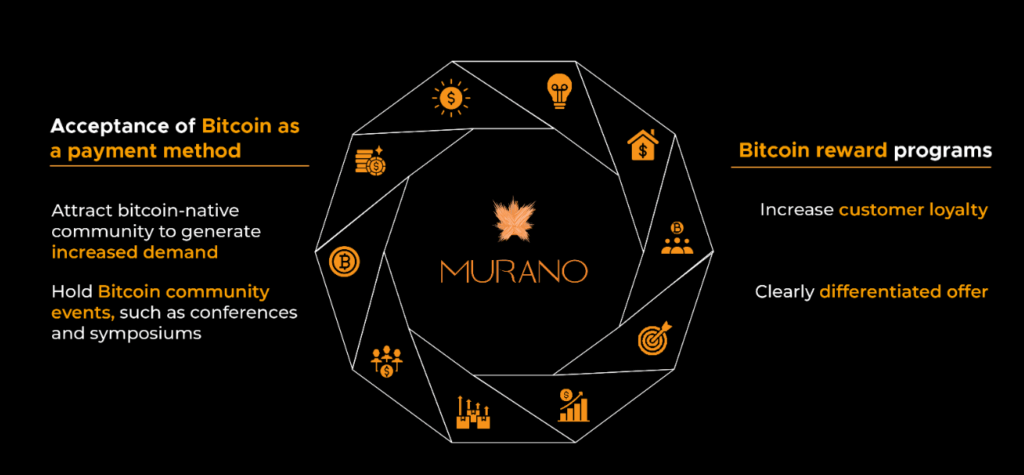


 (@tayvano_)




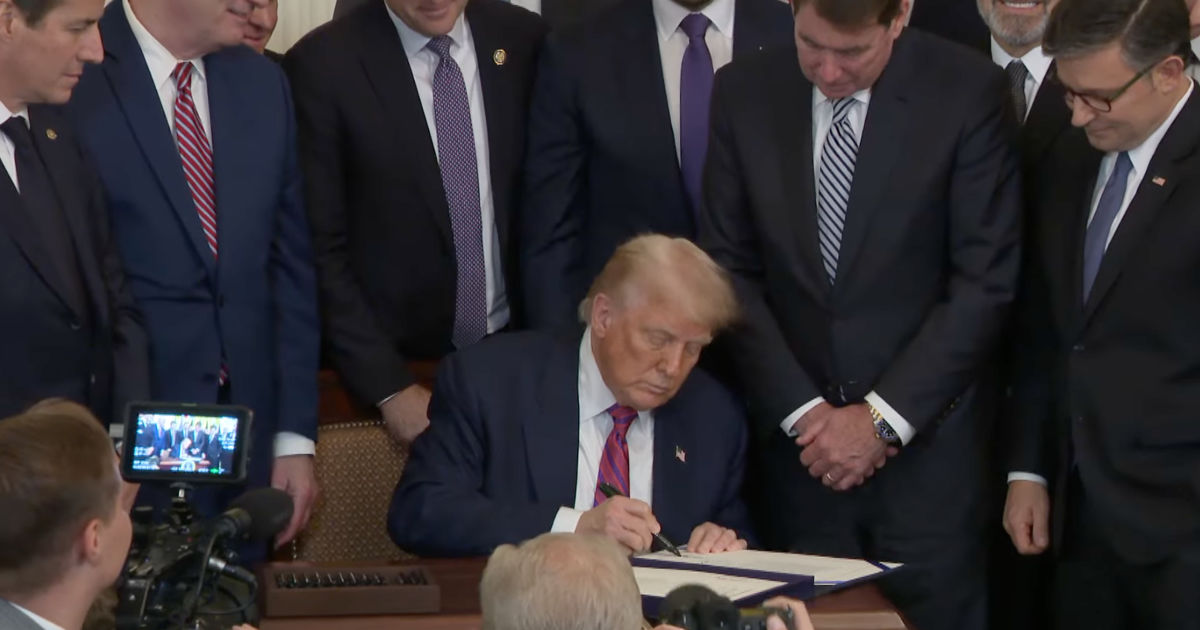

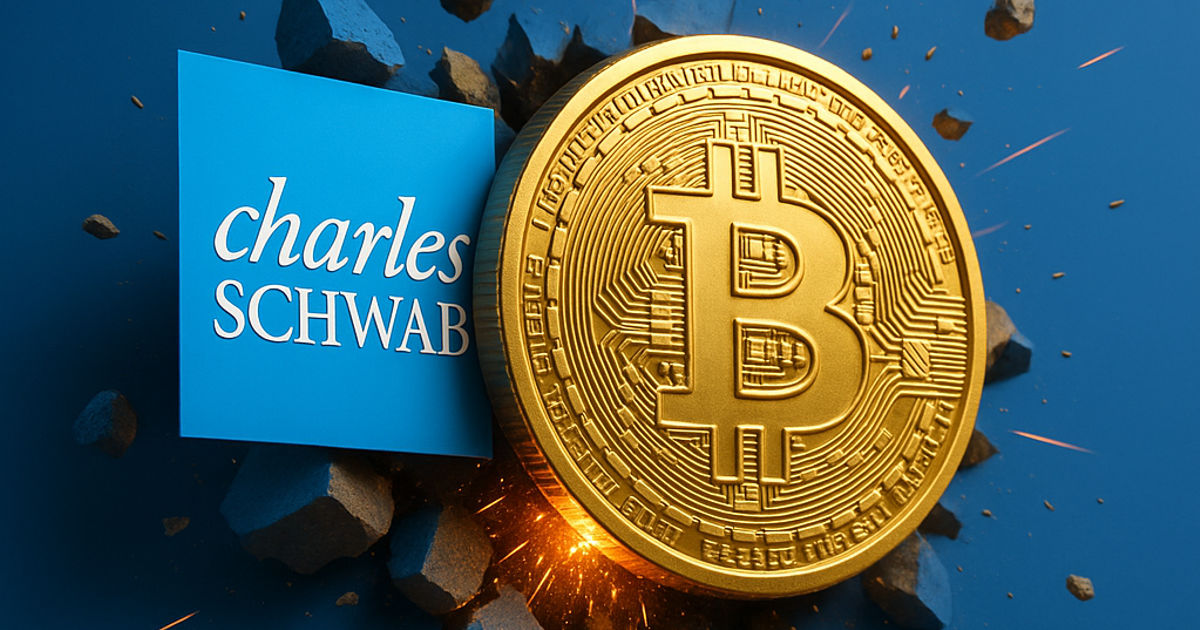





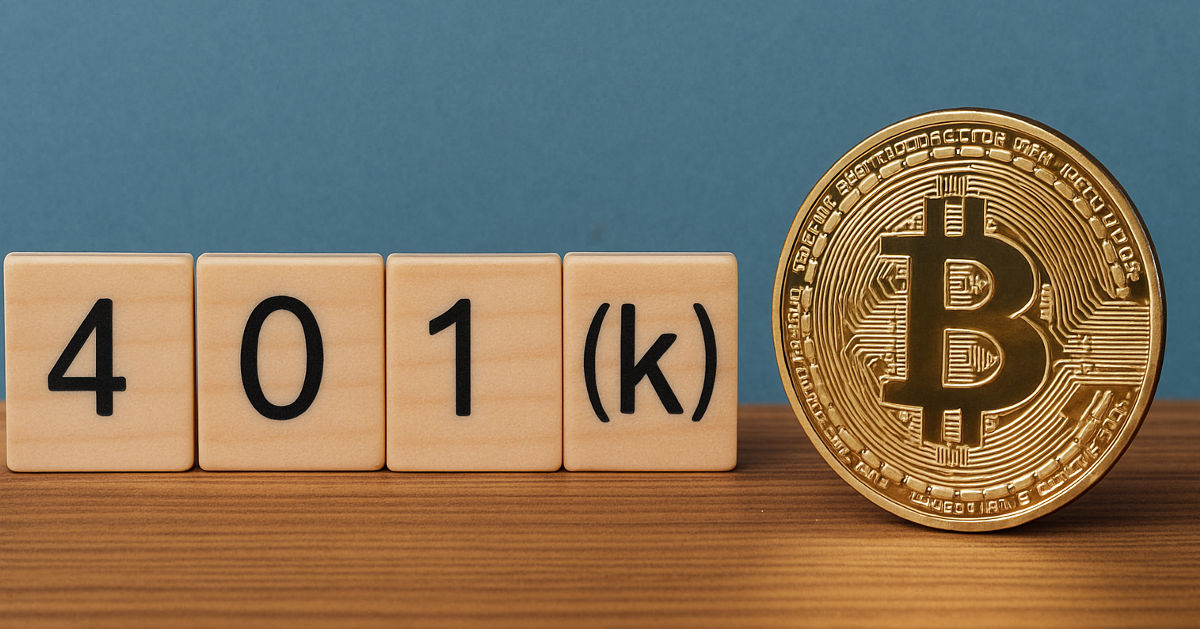






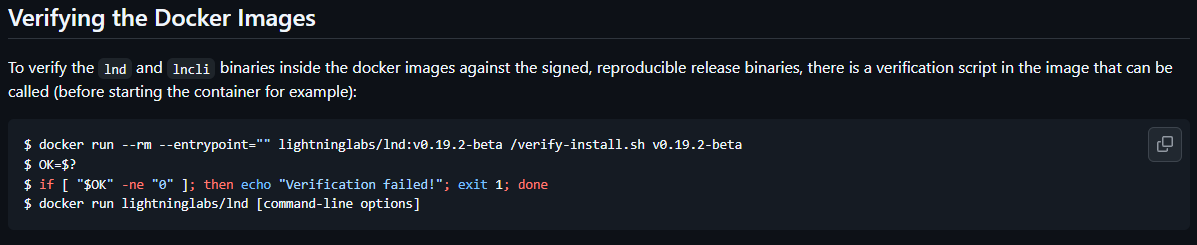



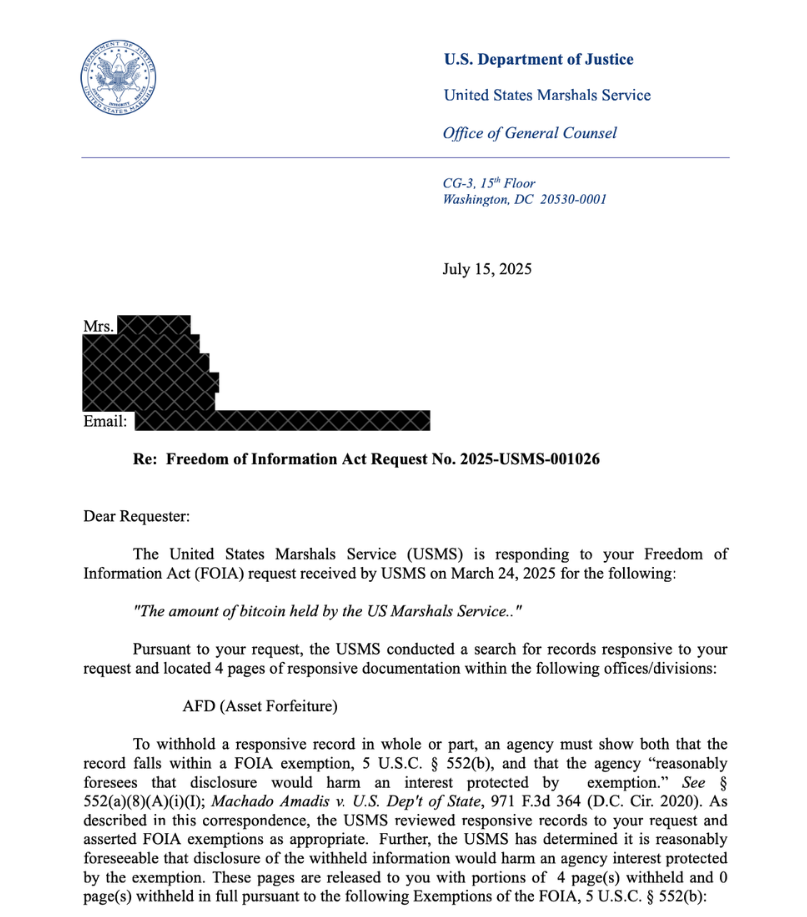


 President Nayib Bukele met with Pakistan’s Minister of Crypto


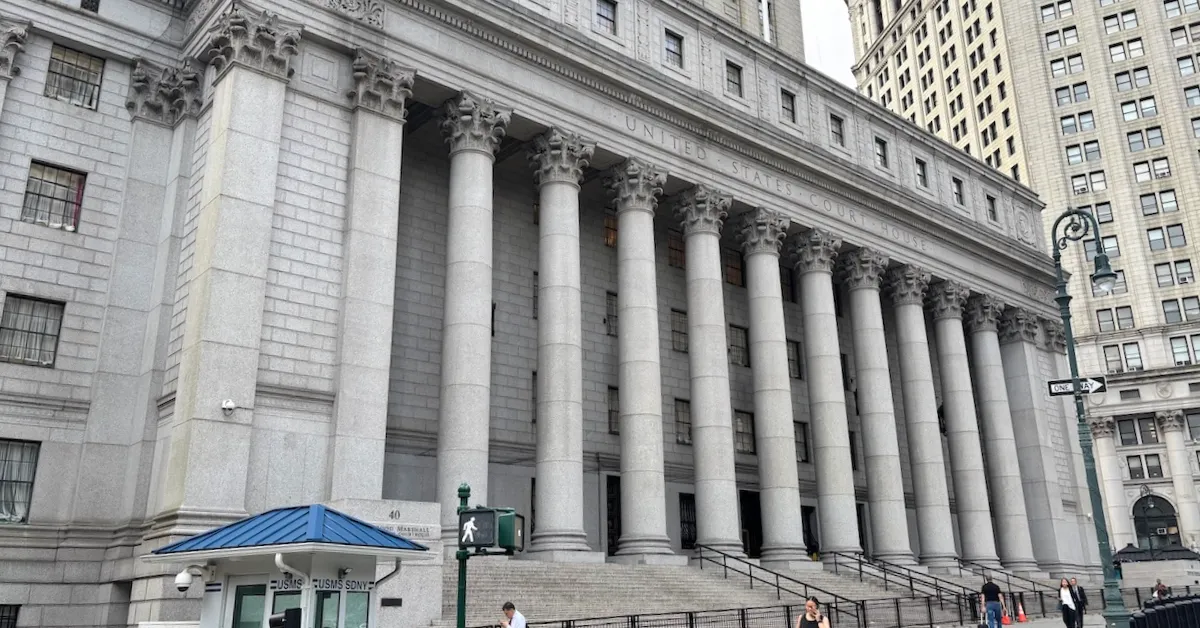










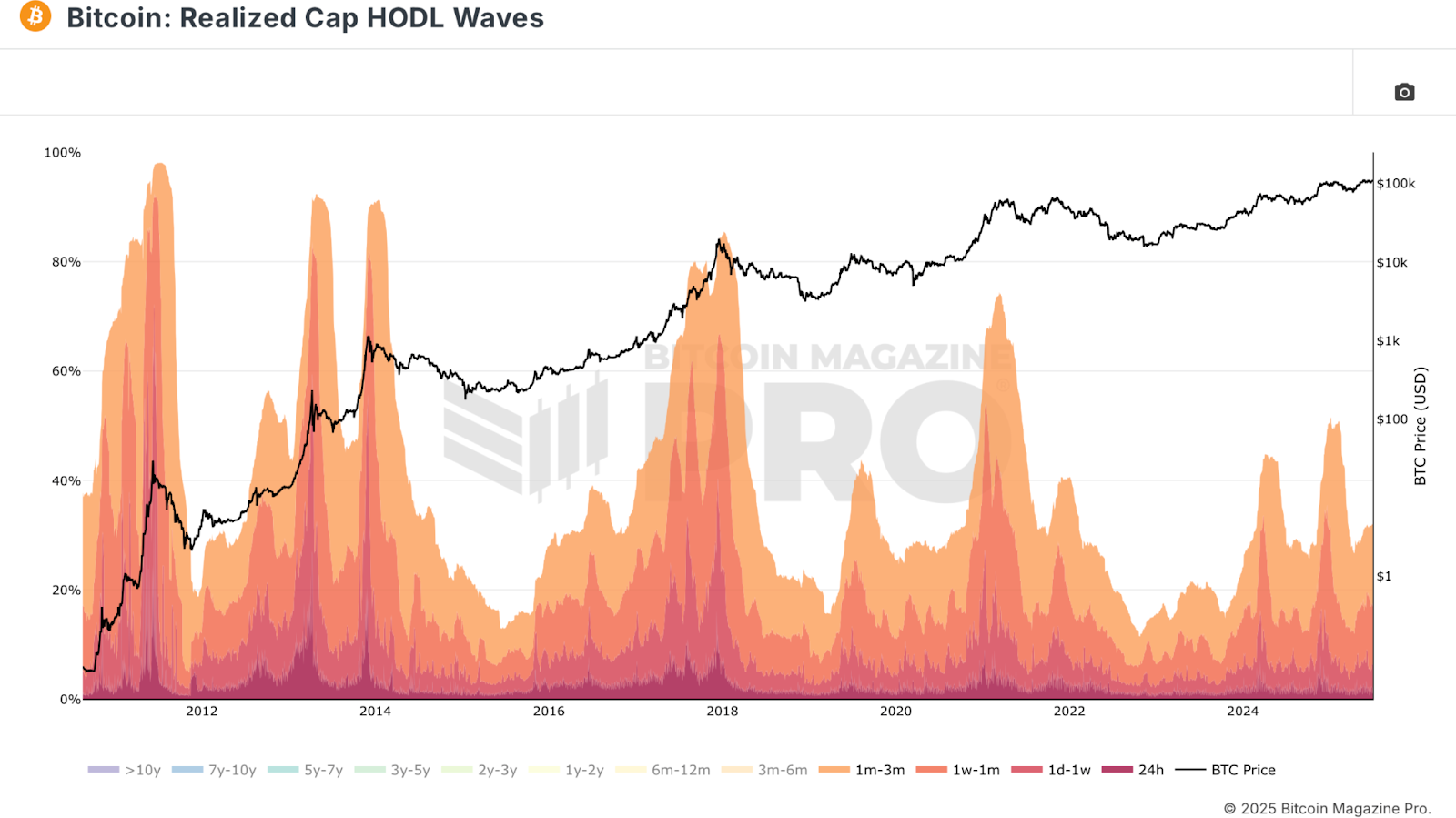
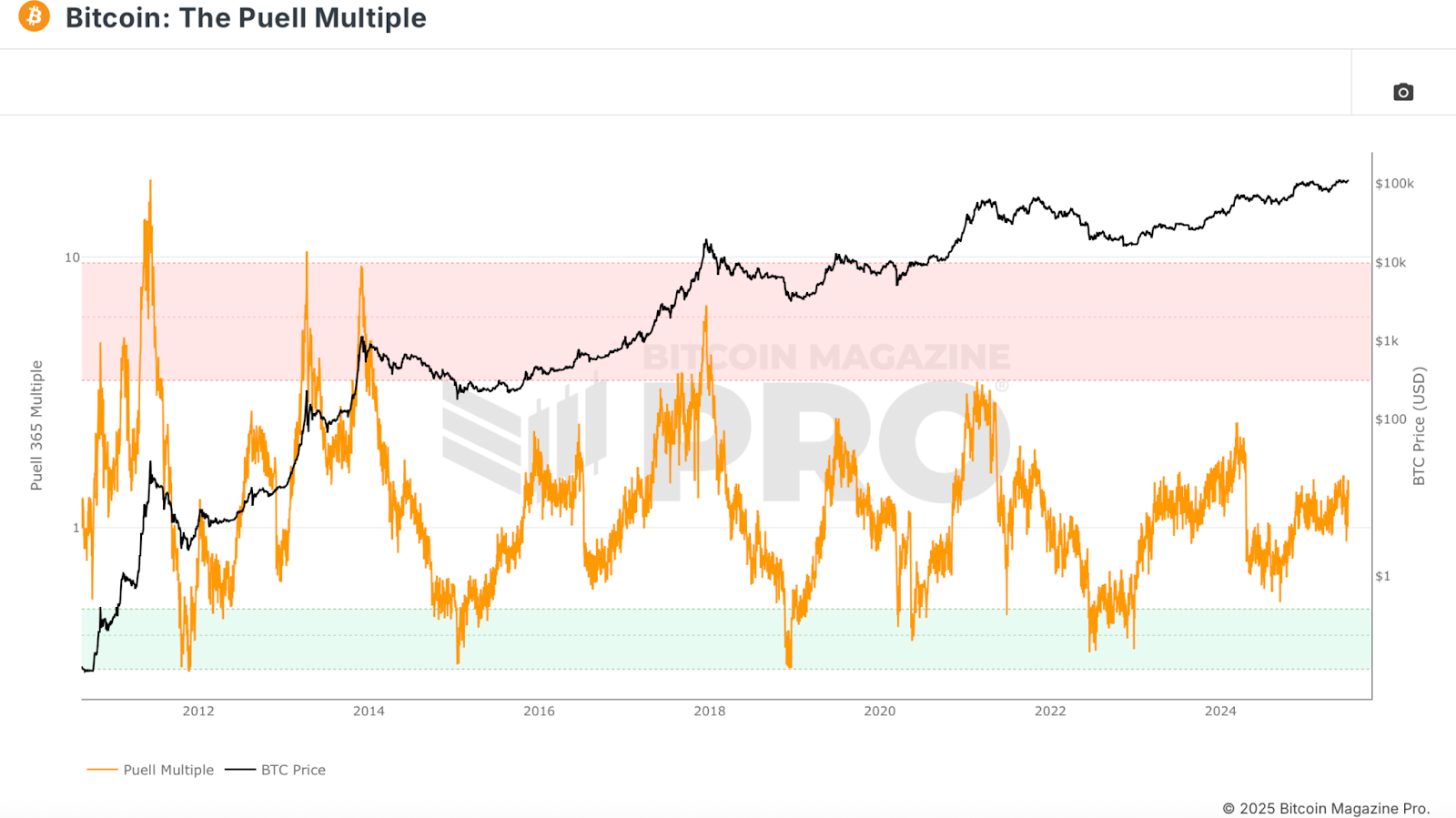
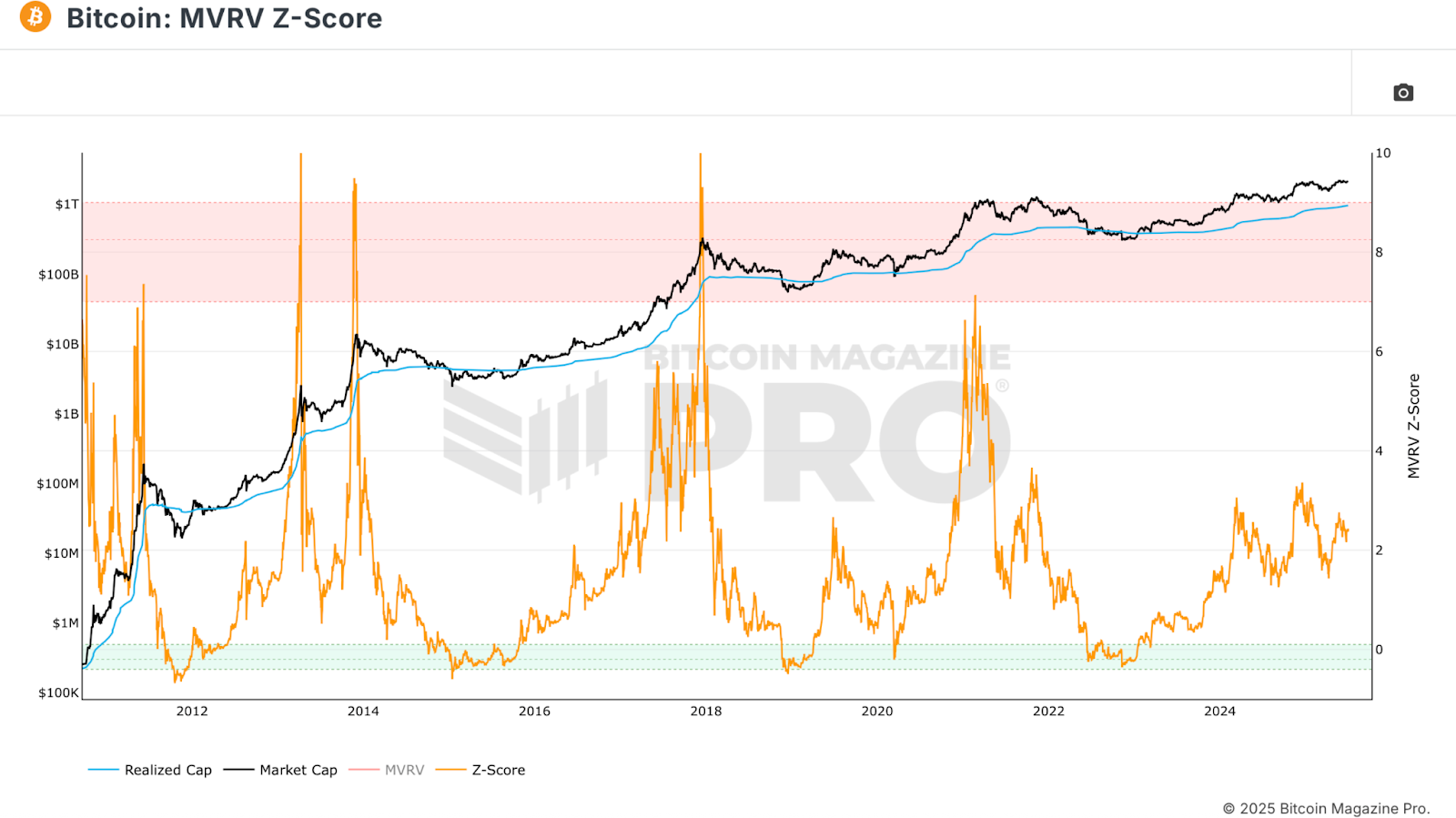
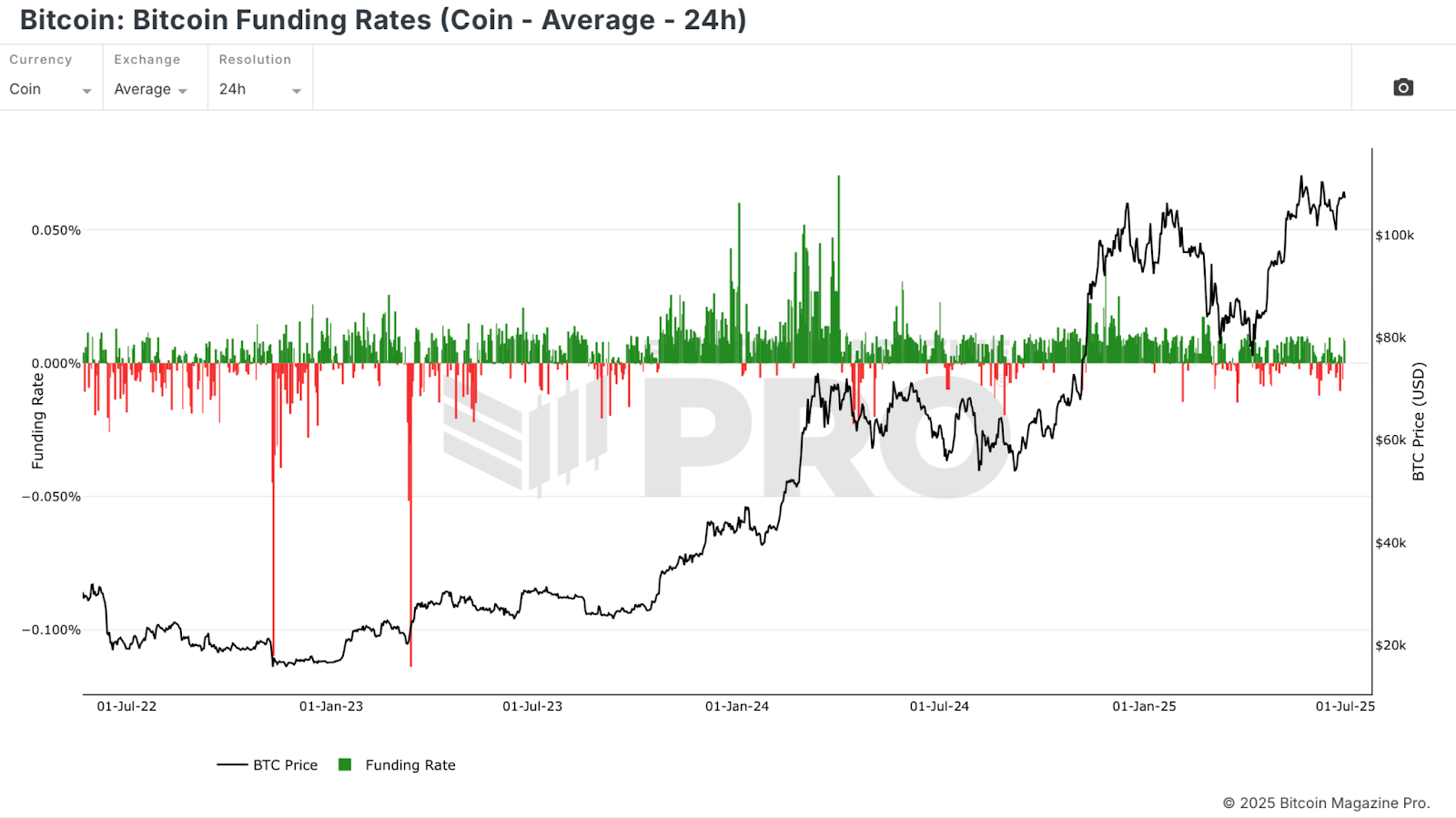
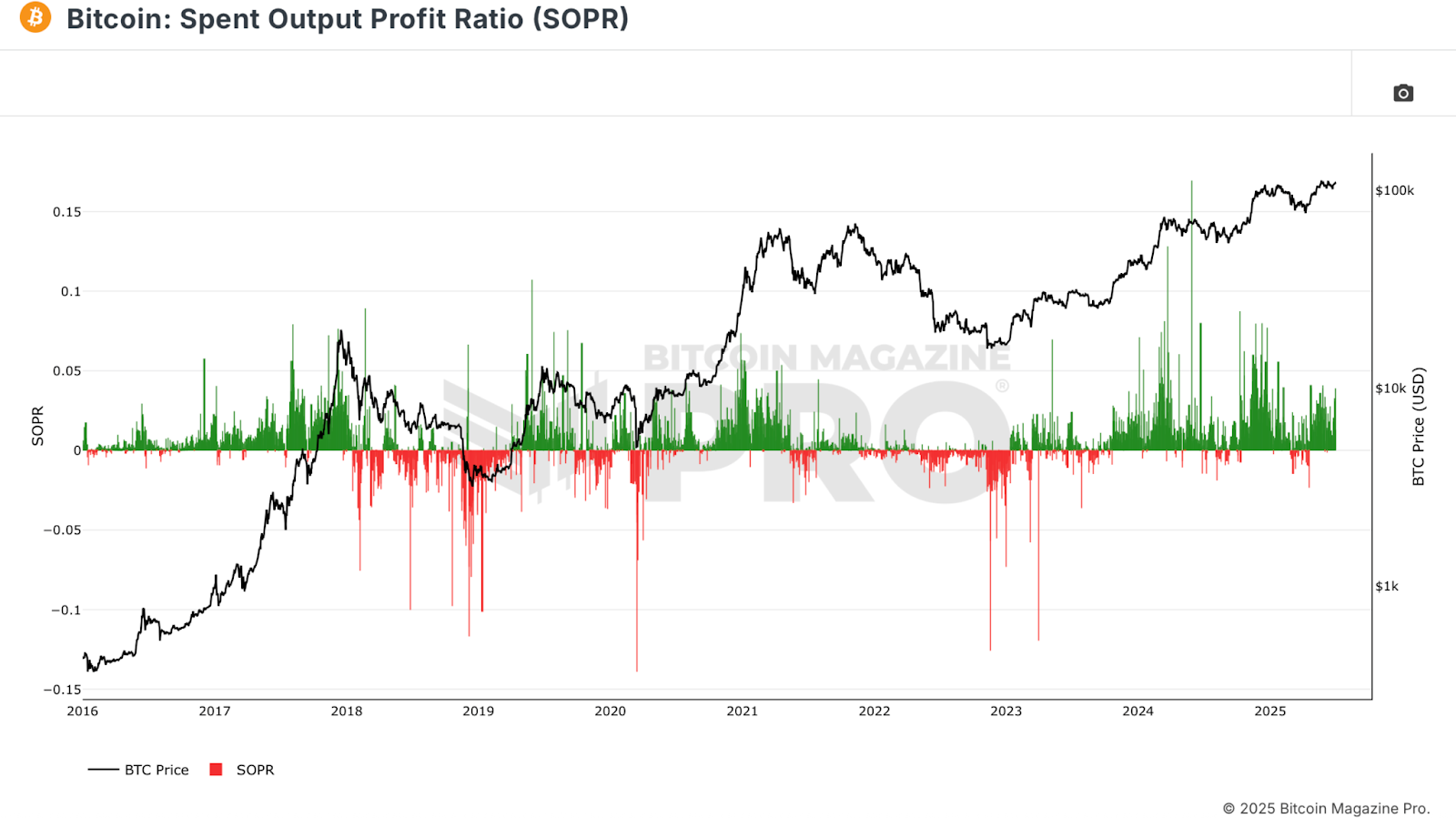
 Loved this deep dive into bitcoin price dynamics?


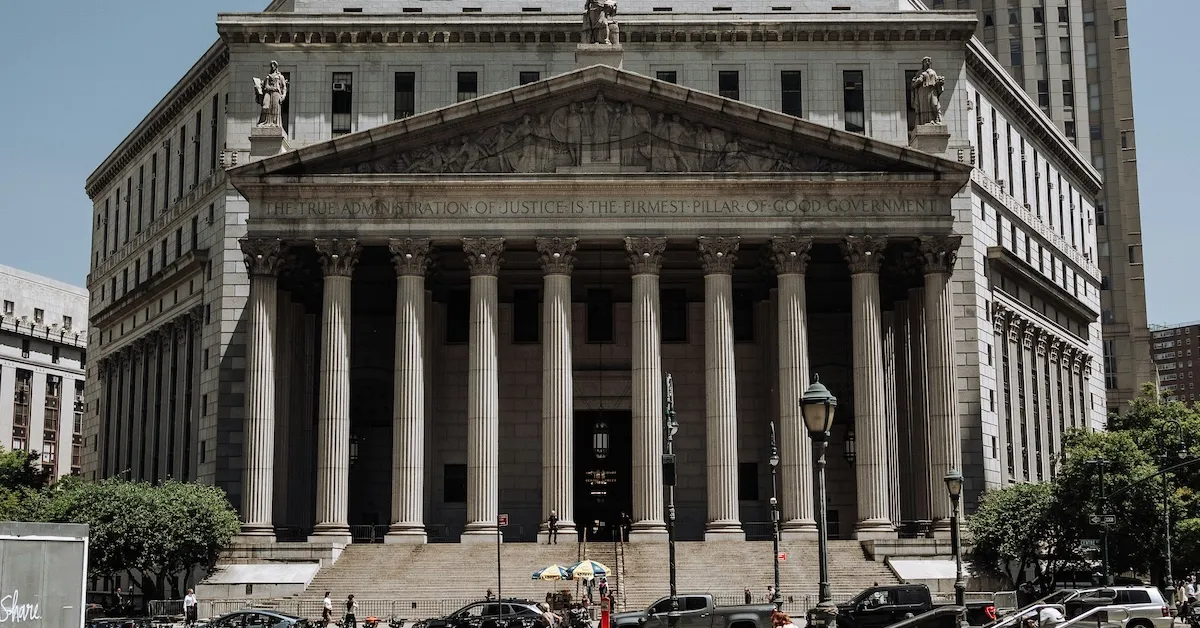




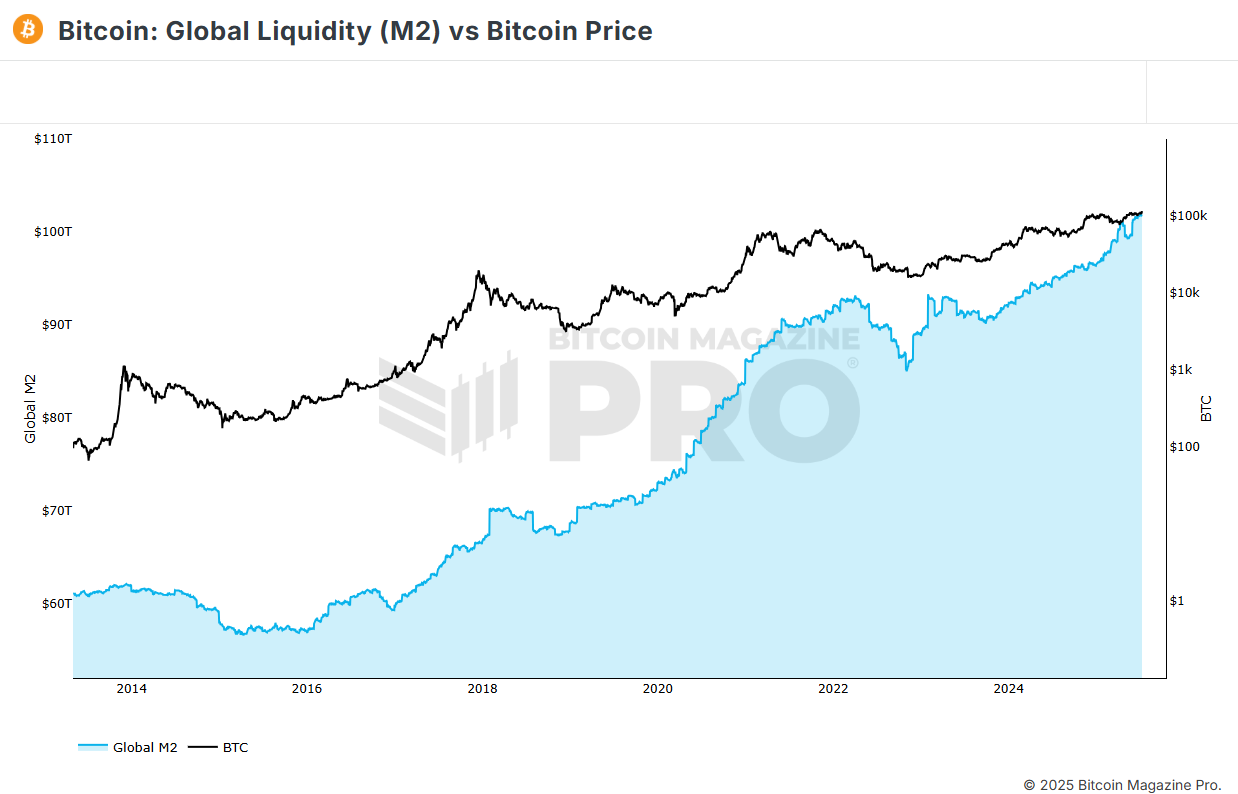
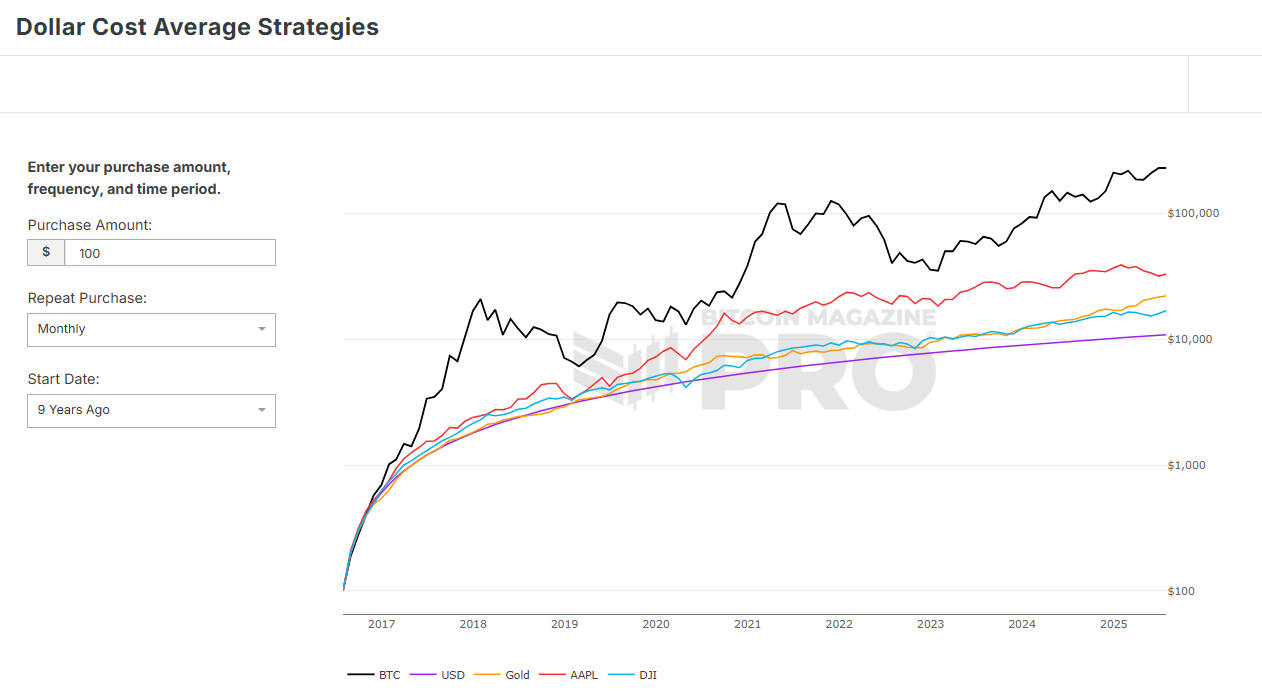


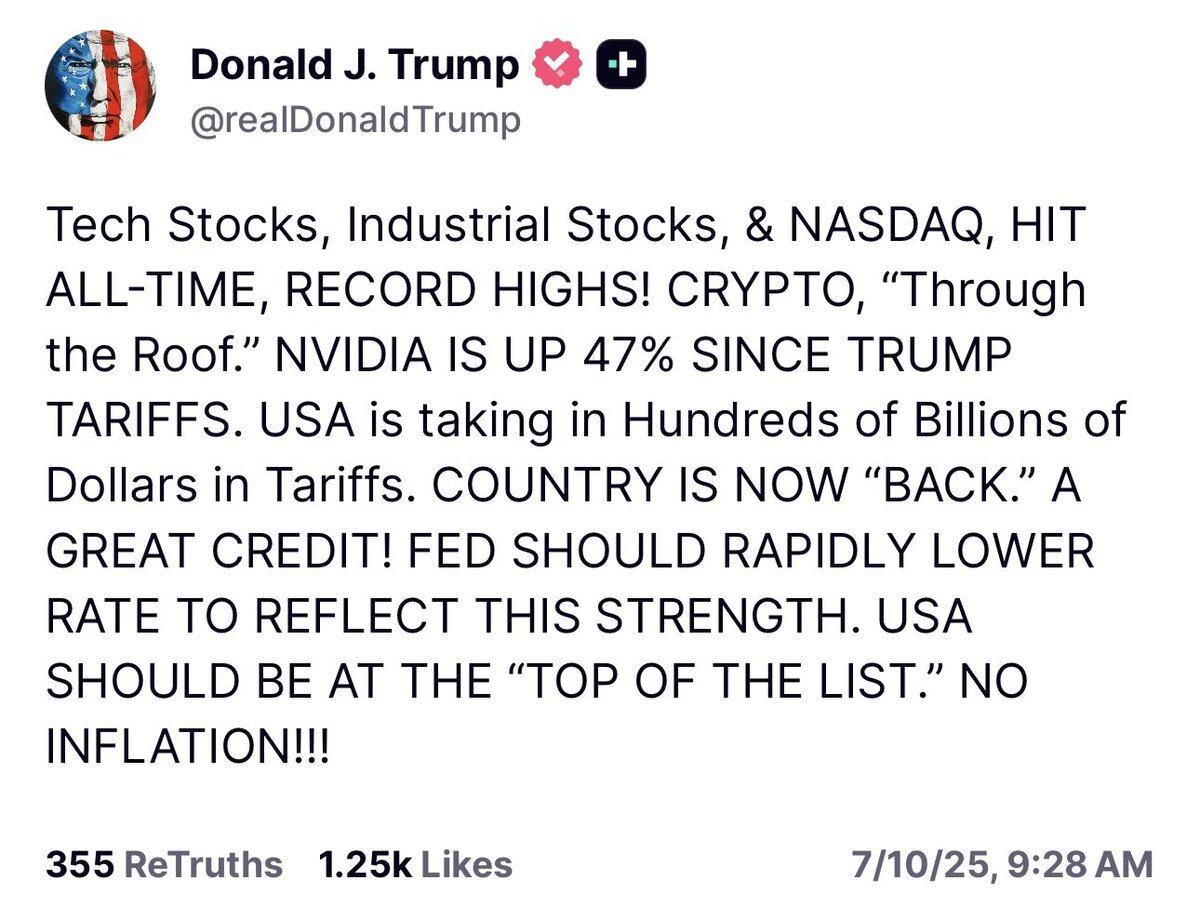


 (@rumblevideo)
 BREAKING NEWS

 buy, sell & swap crypto right inside the wallet

 (@moonpay)
 Rumble


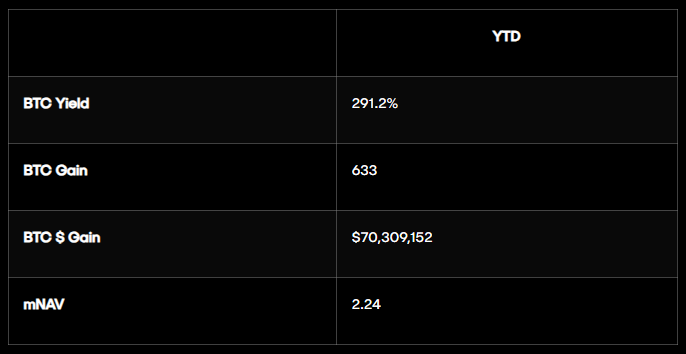


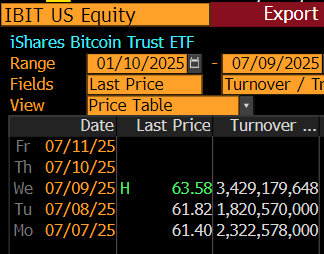


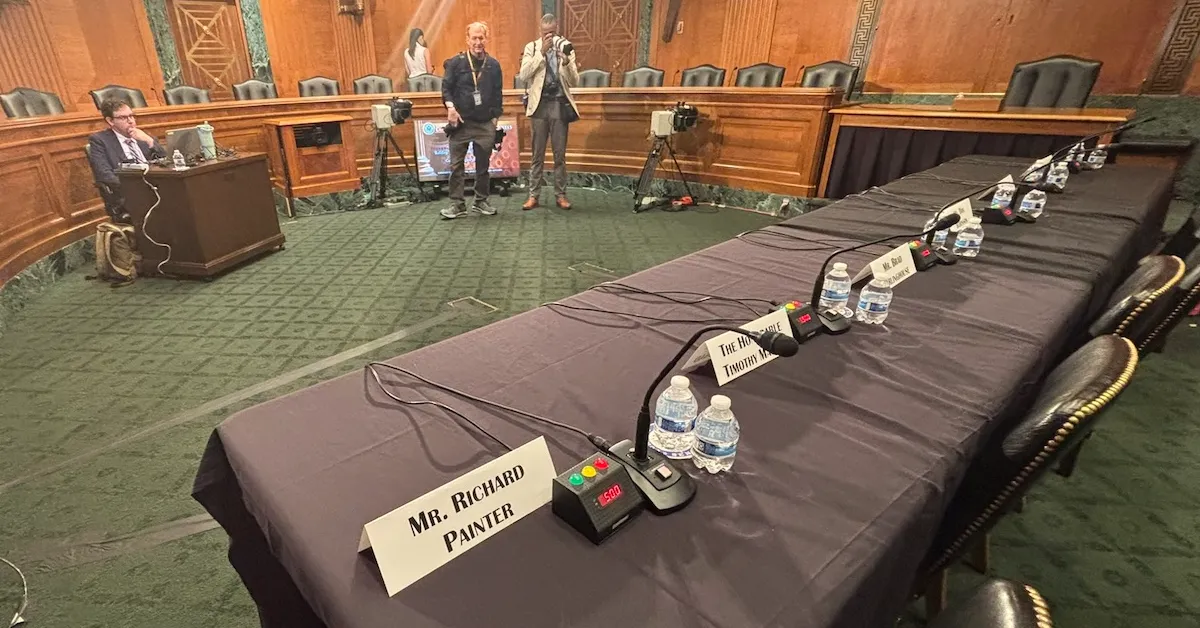




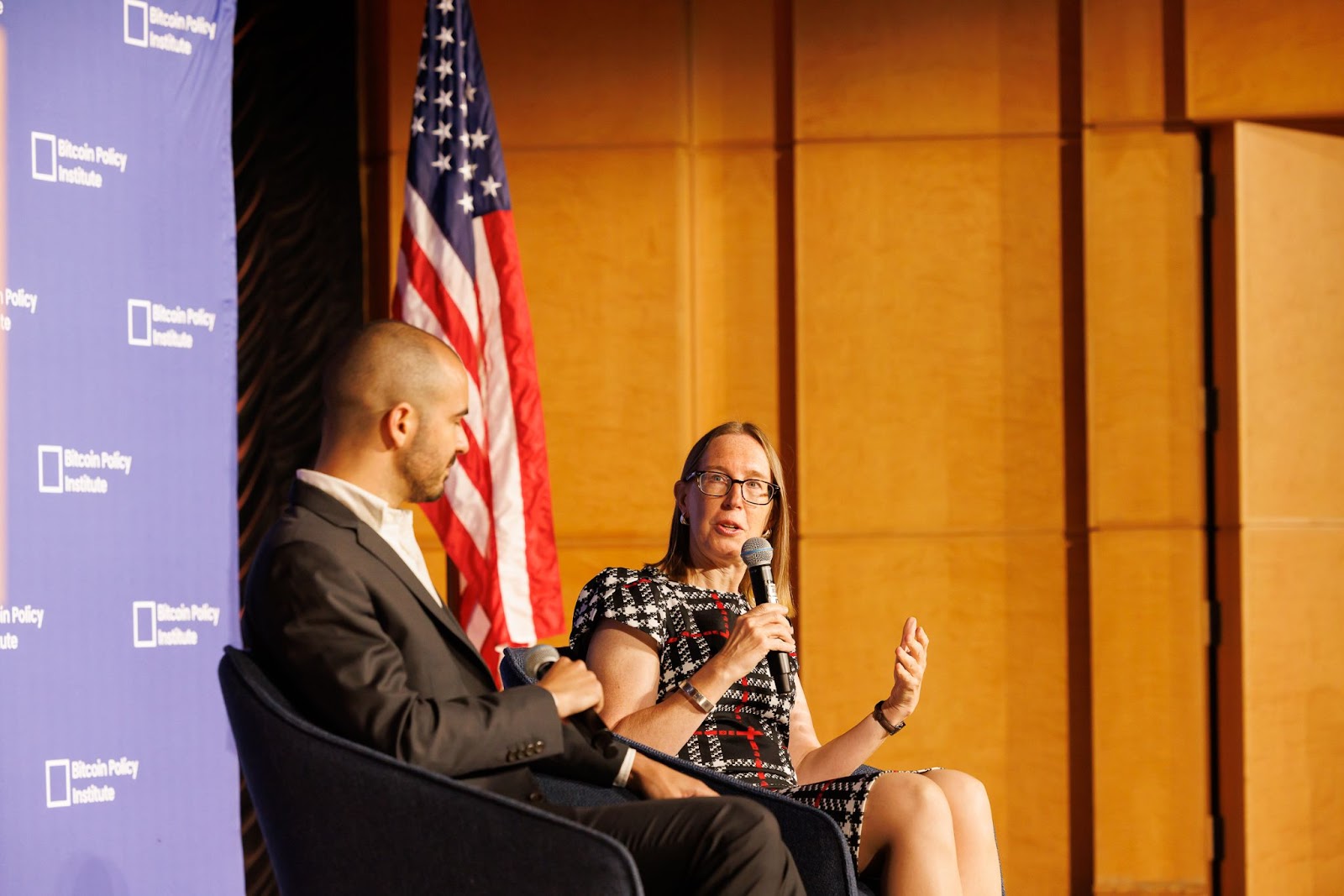
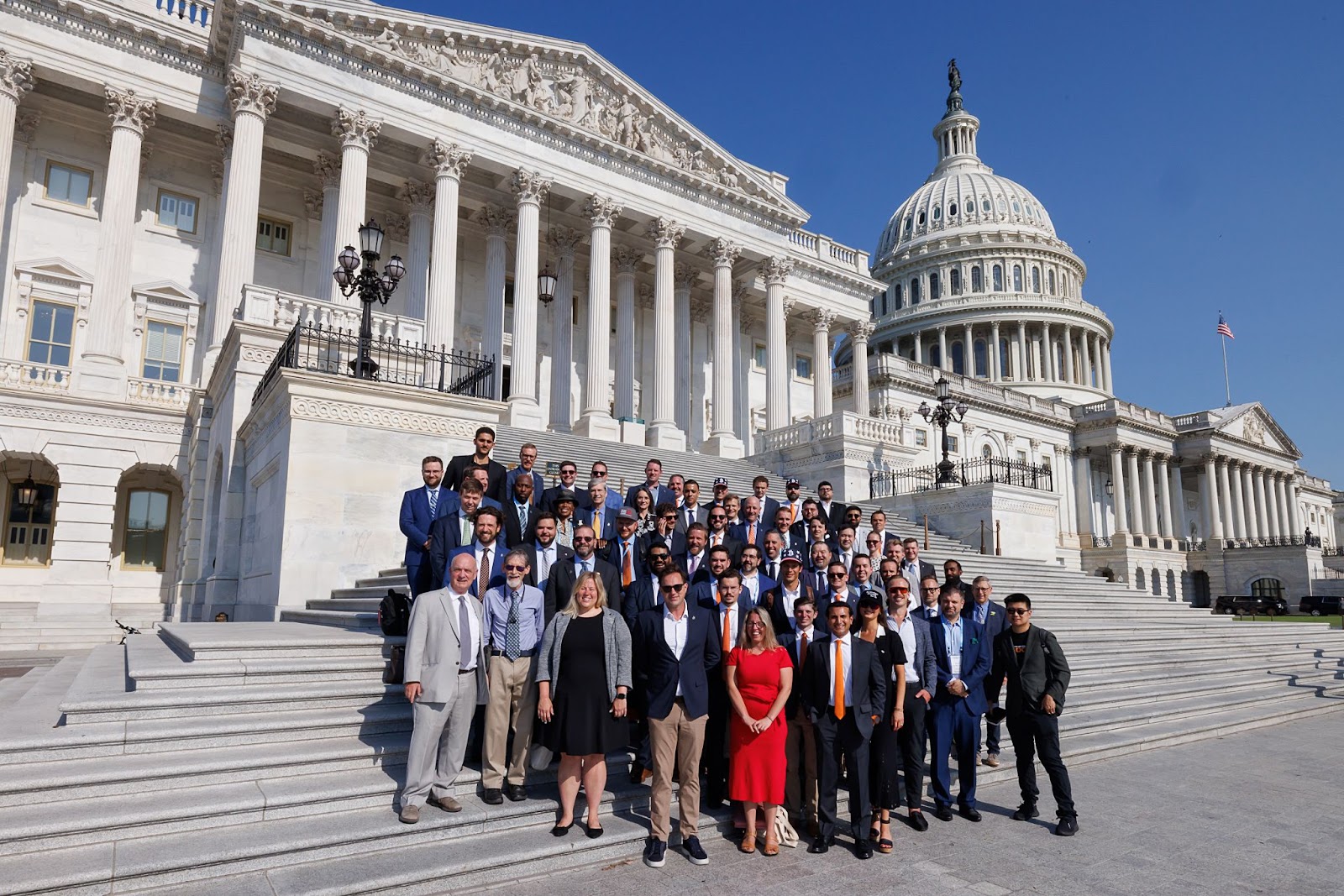






 (@rstormsf)




 Nakiki SE is planning to become the first German listed company with a pure






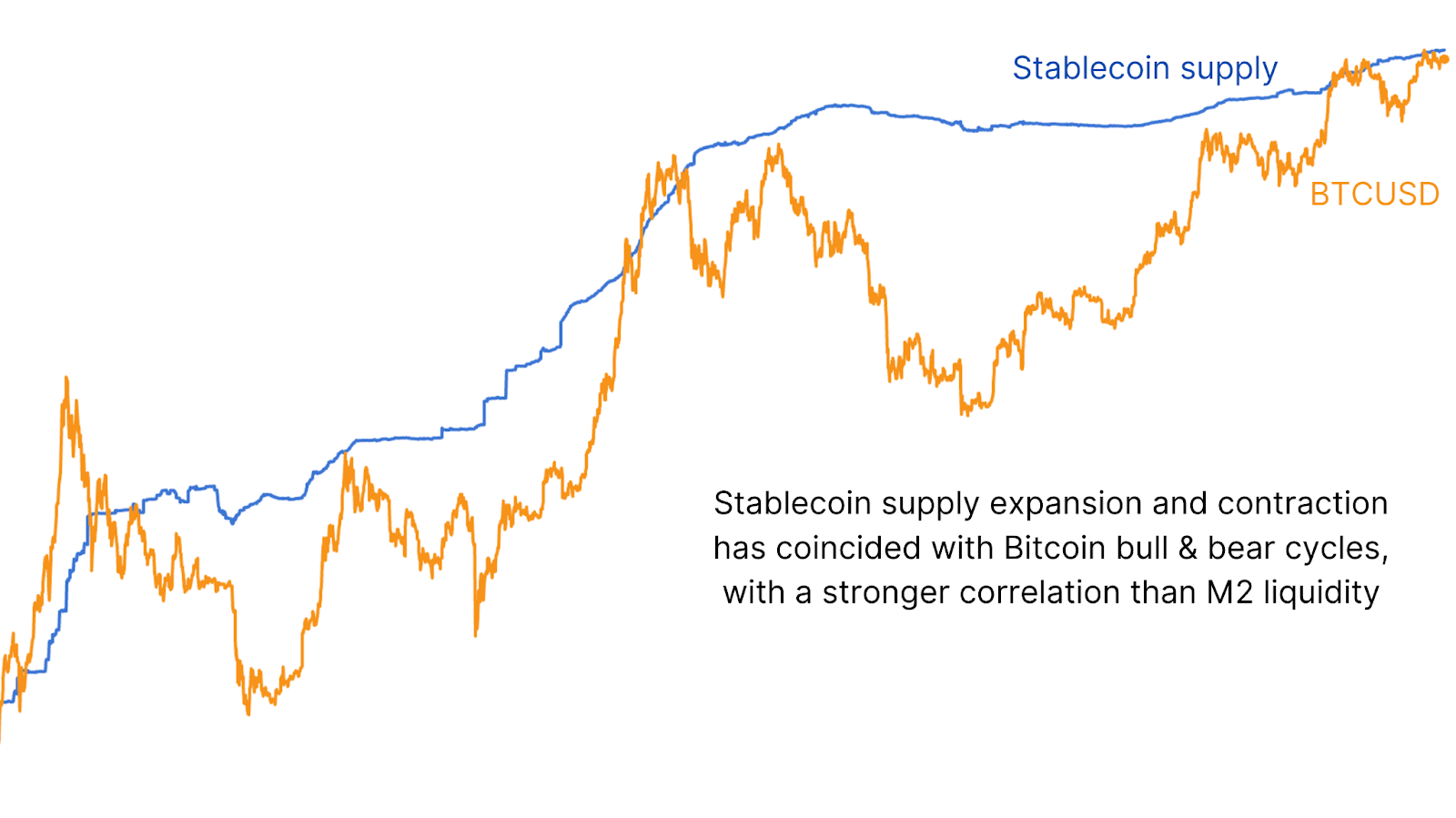







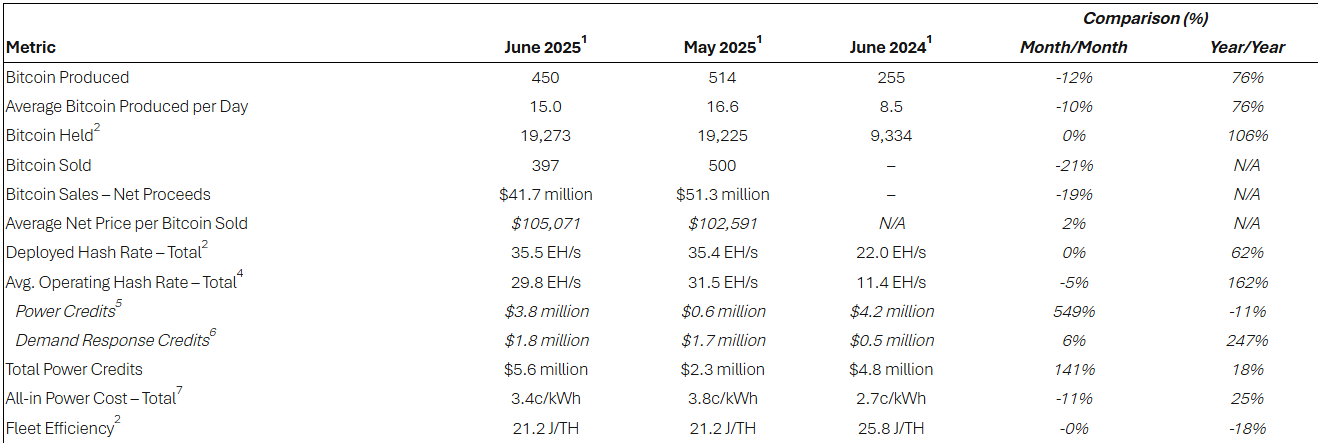






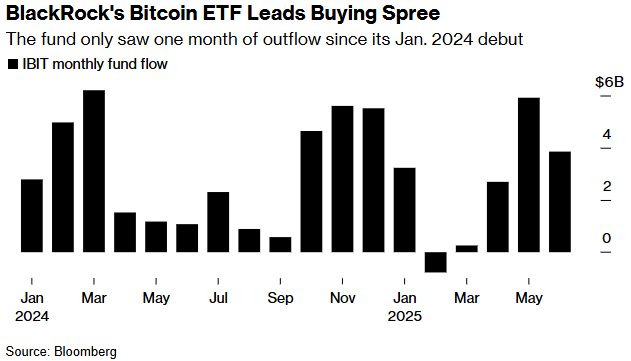








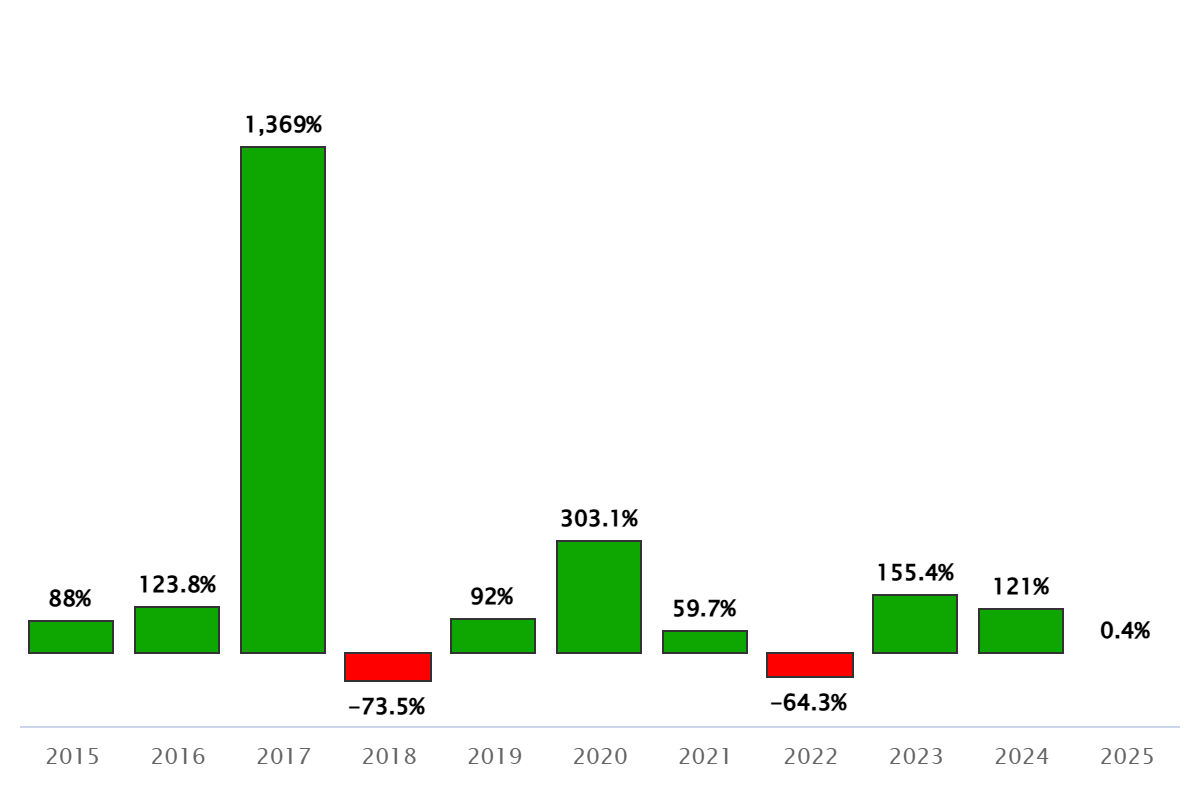
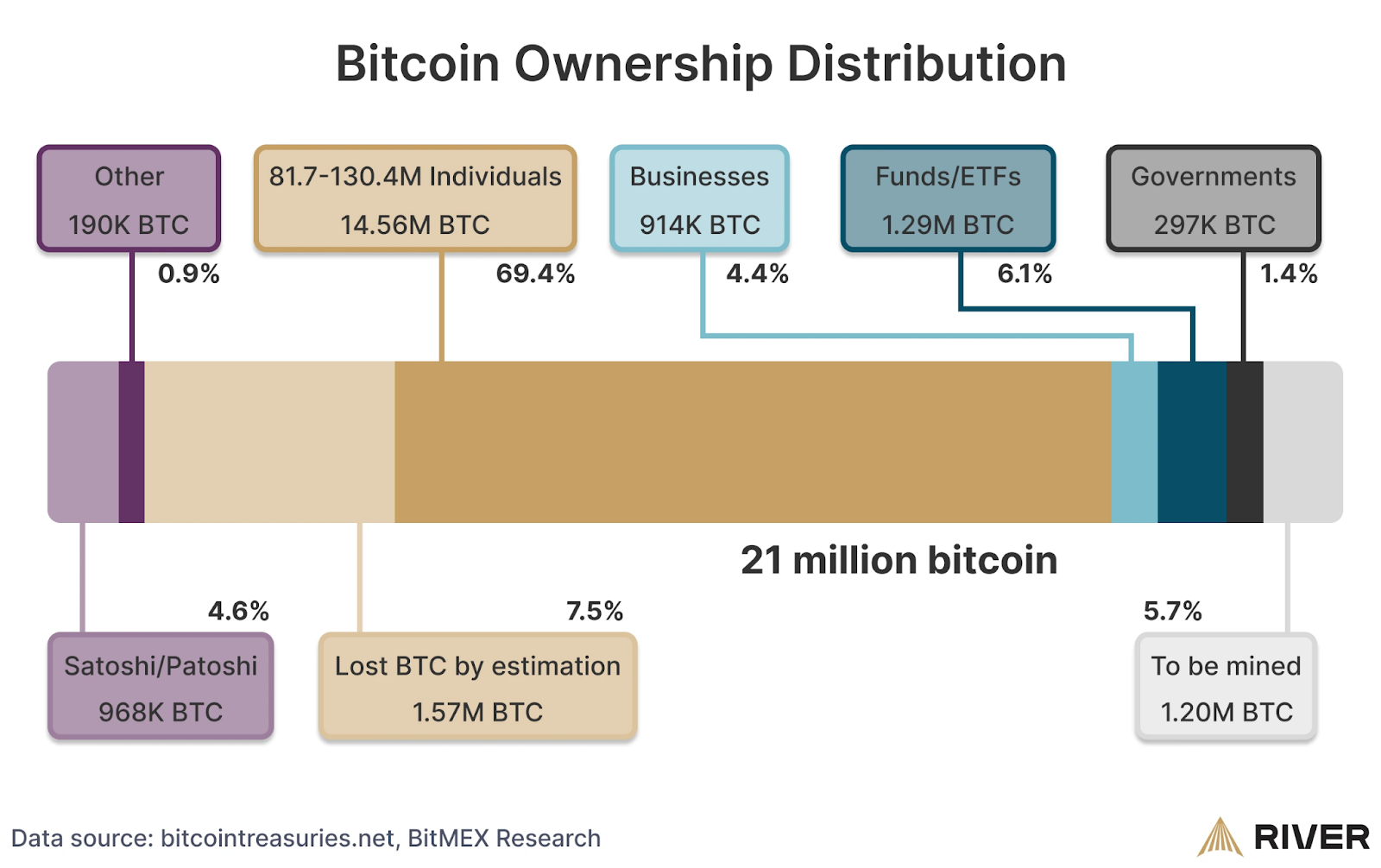
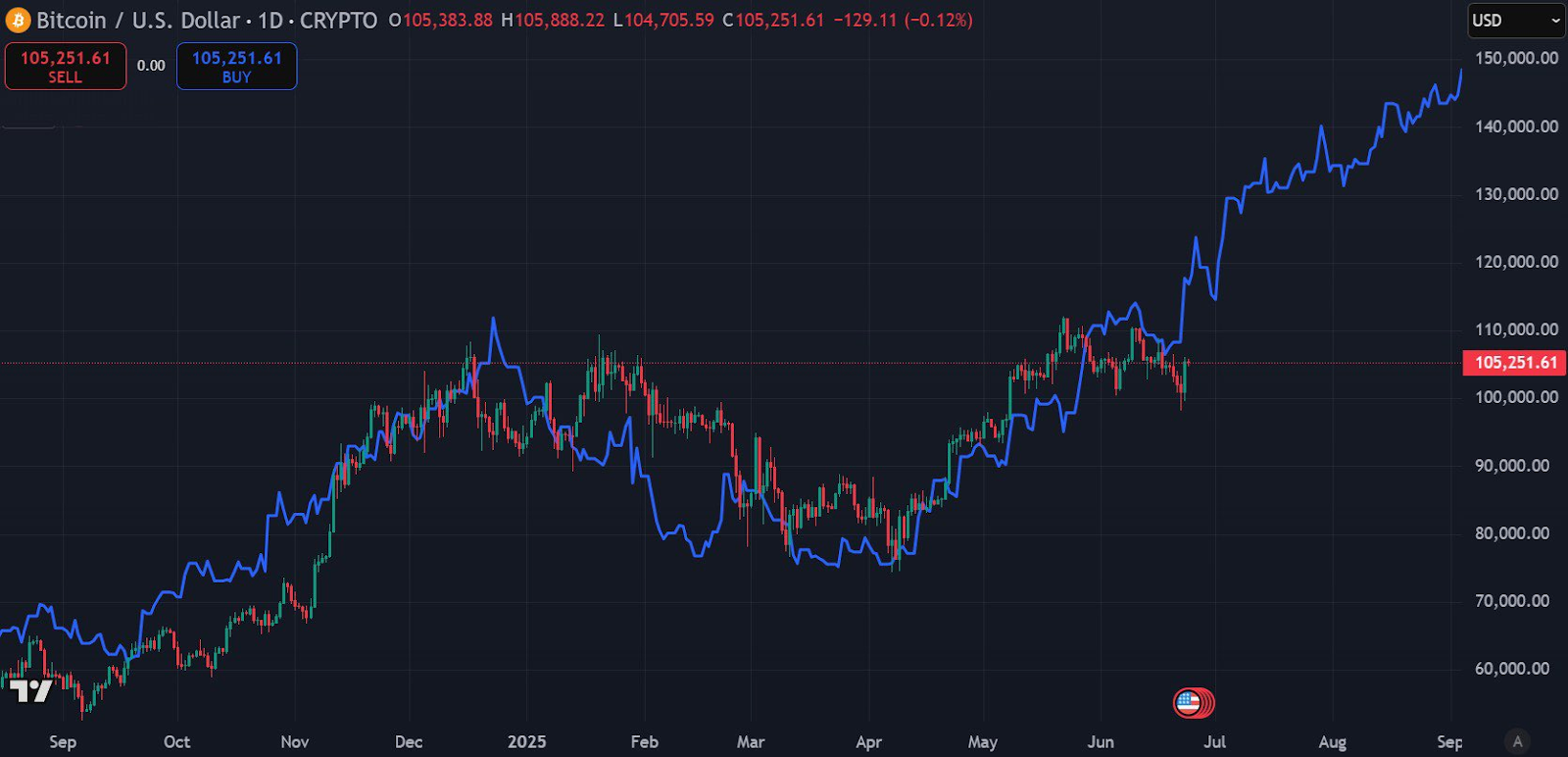
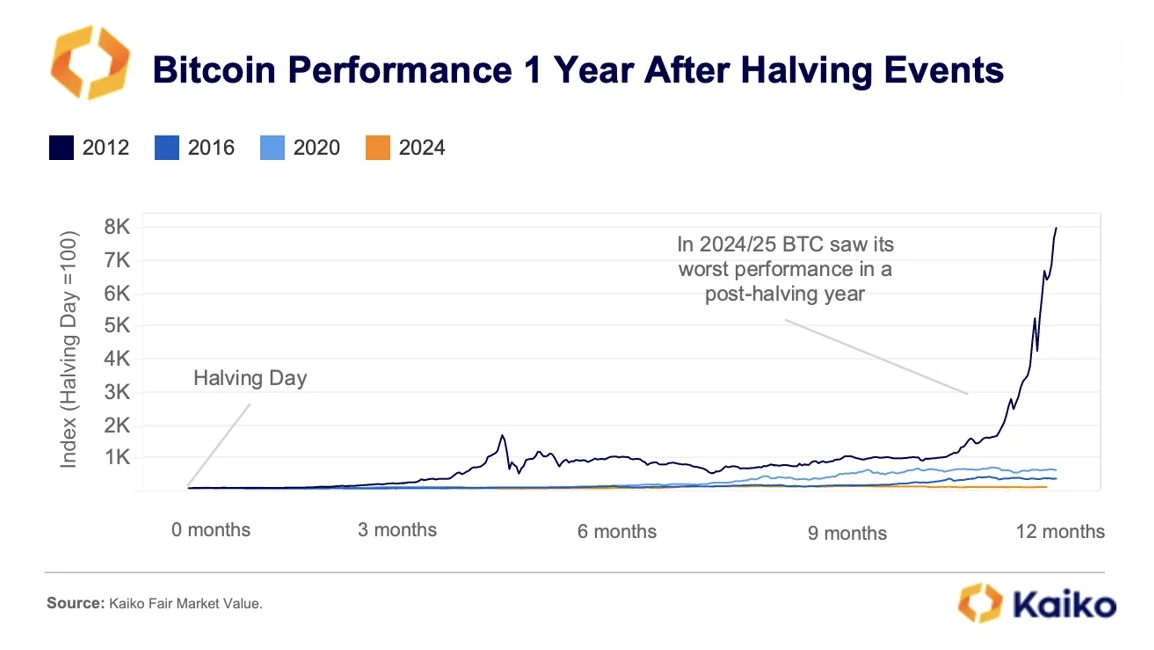
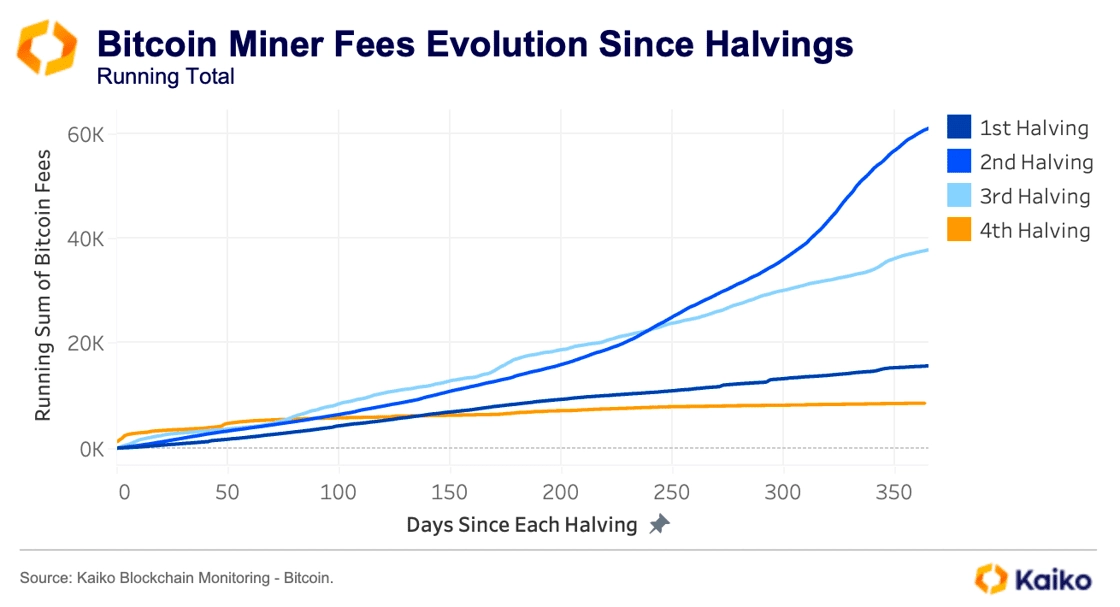









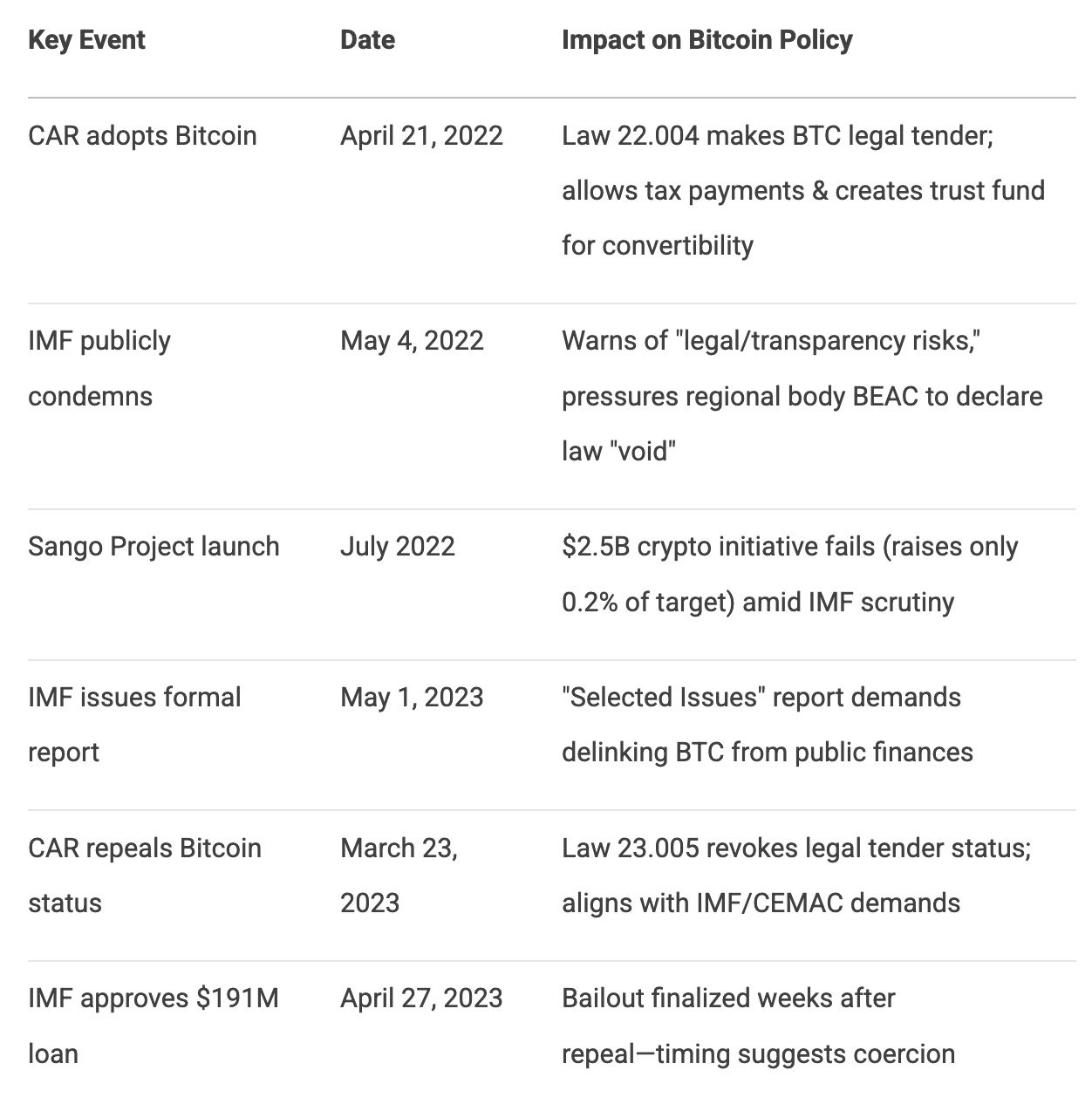

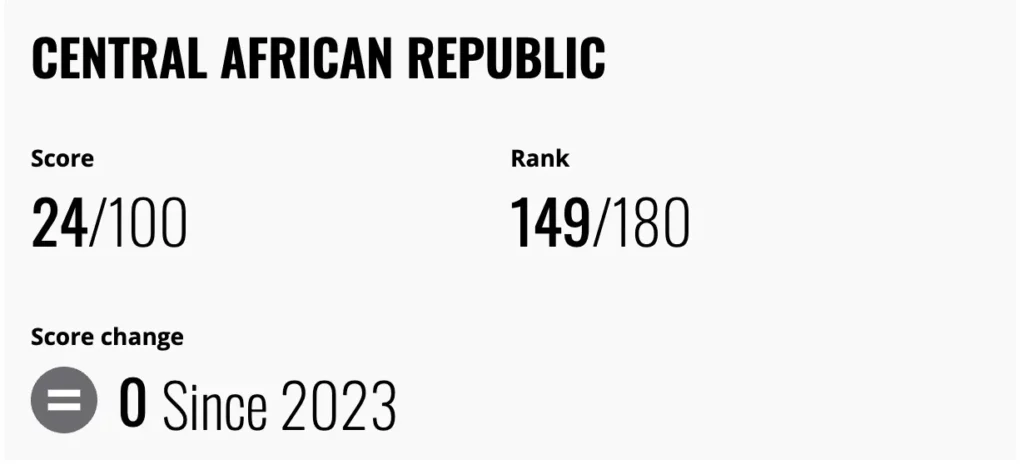
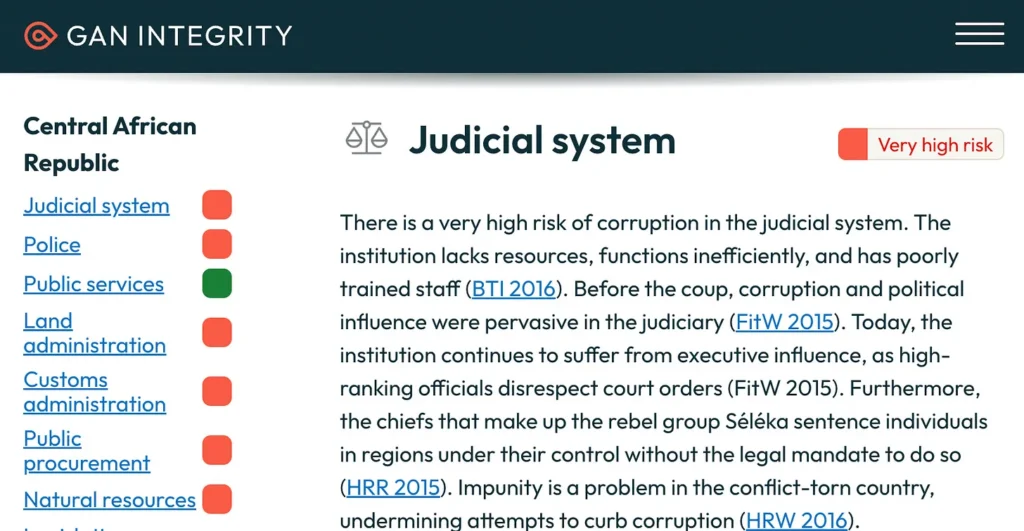


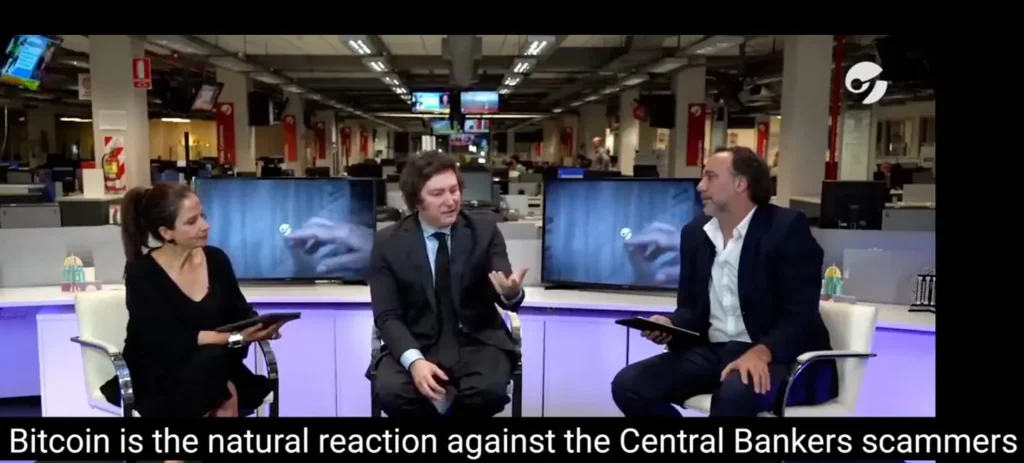
 Slashed inflation from 25% monthly to under 5% (May 2024)
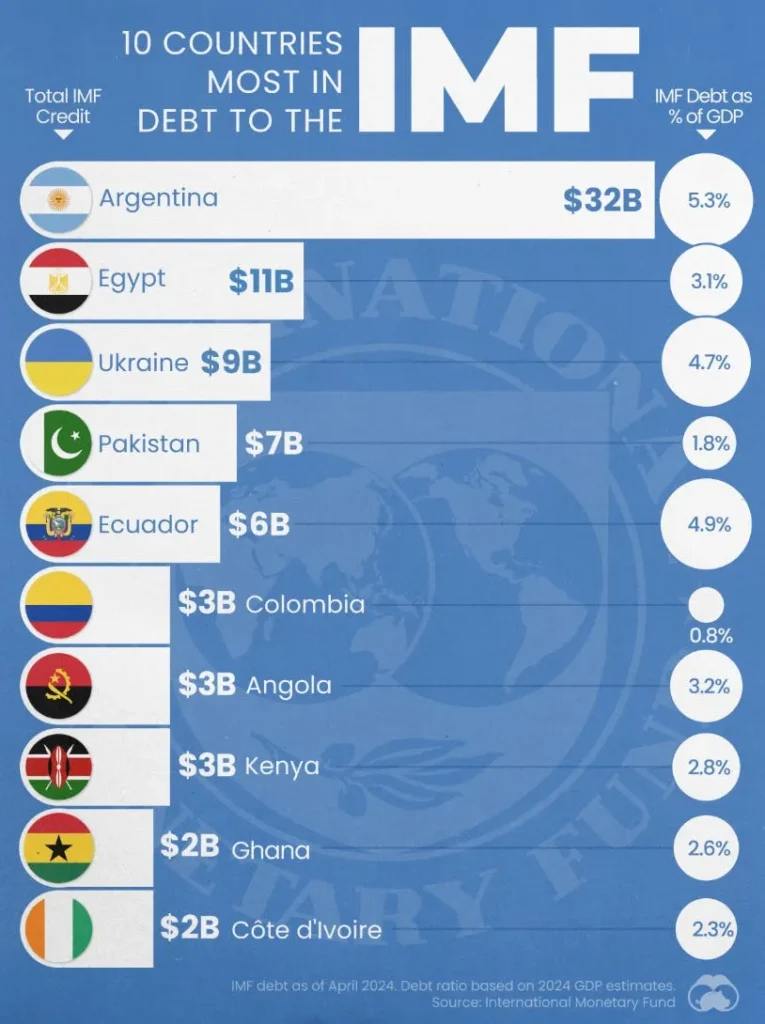





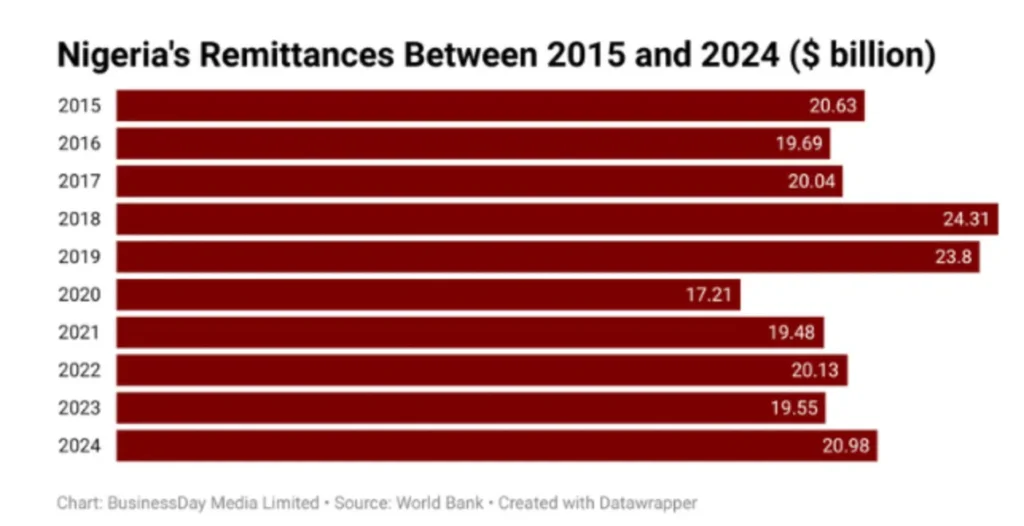
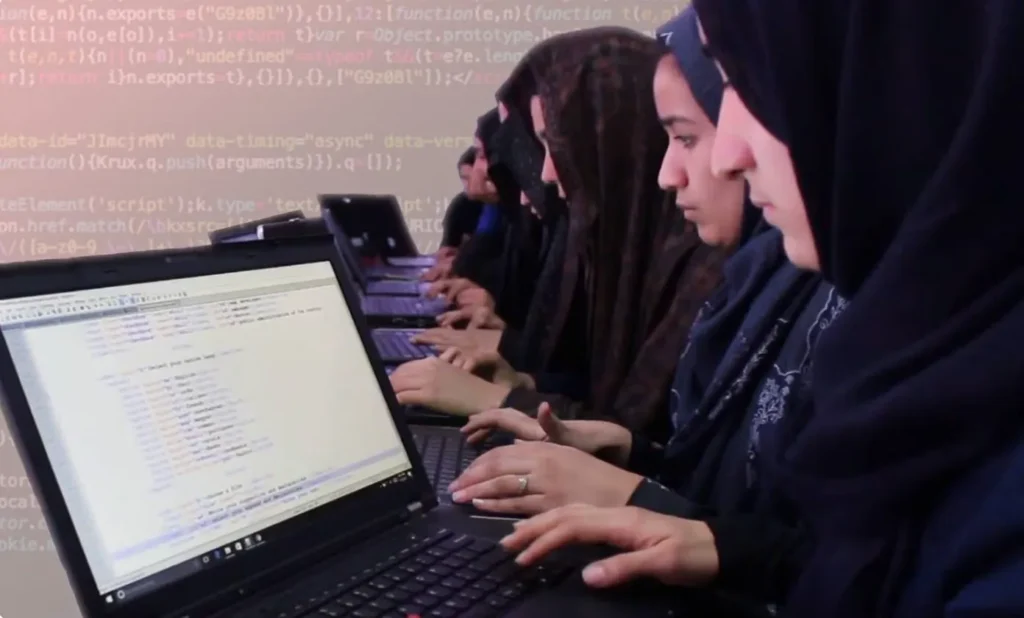



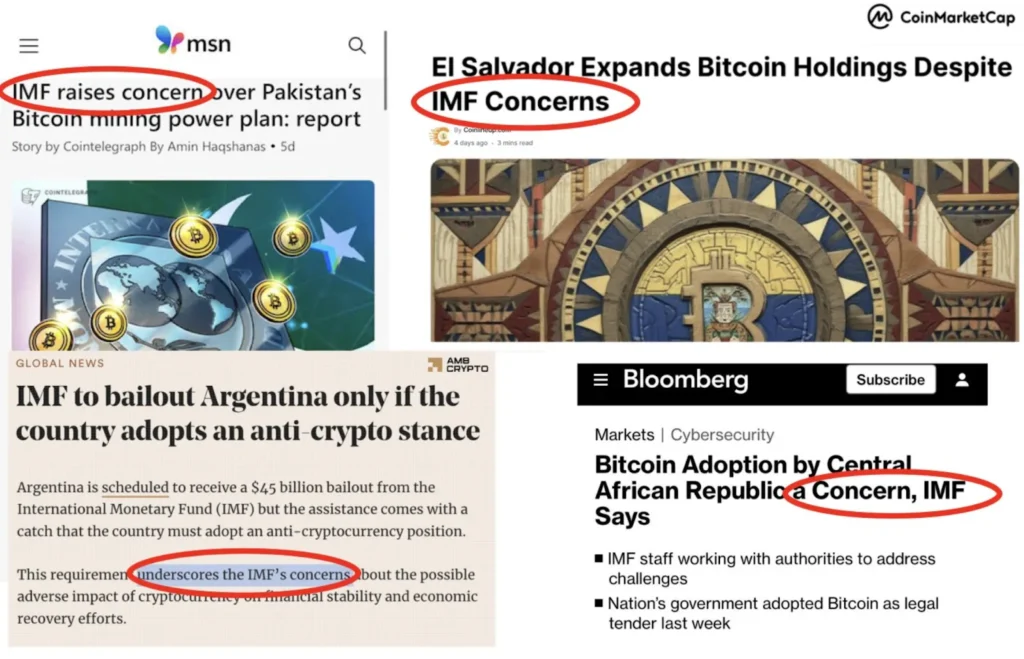
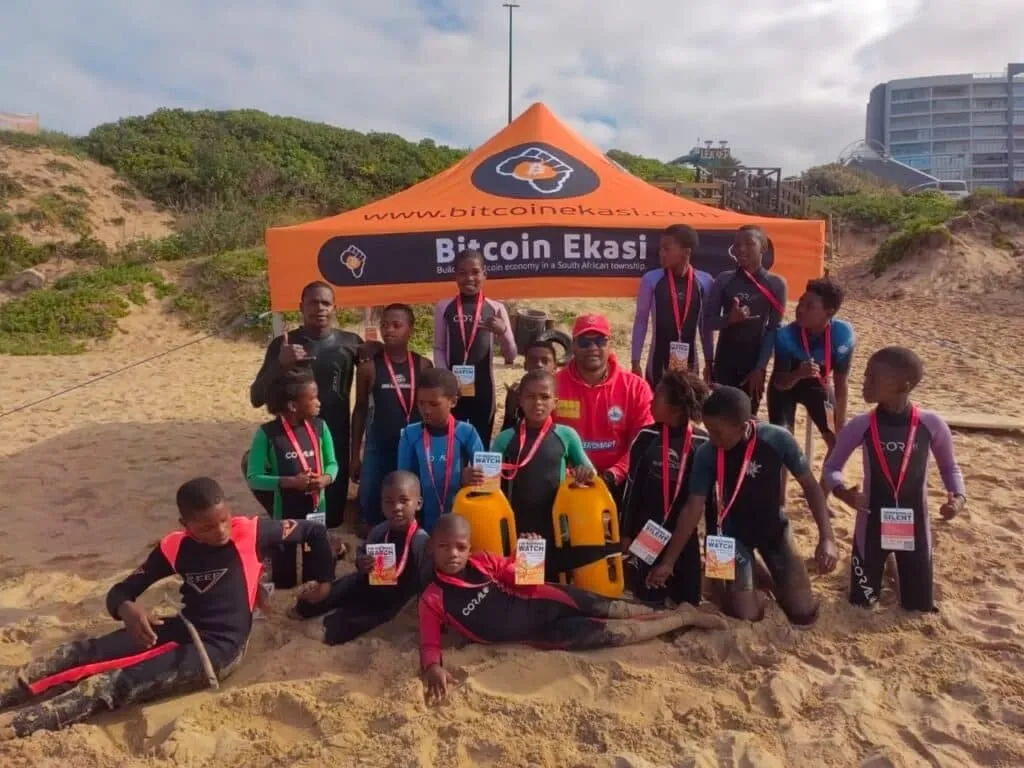






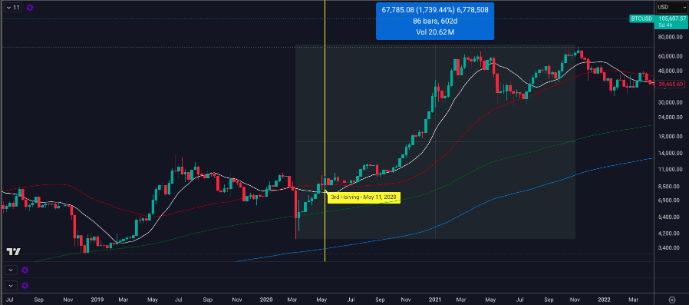
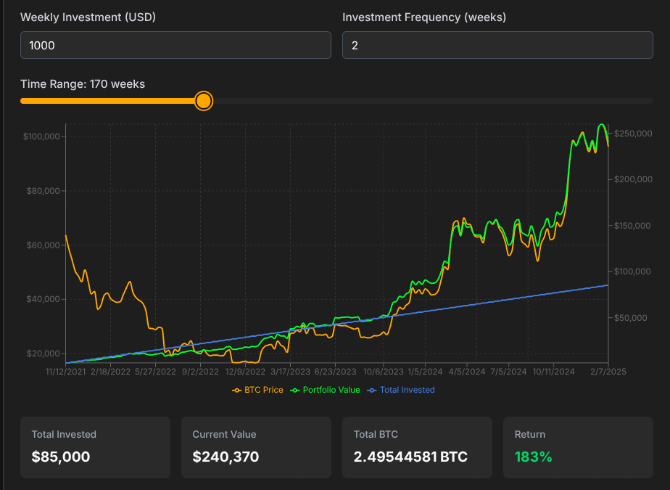

 (@coinbase)
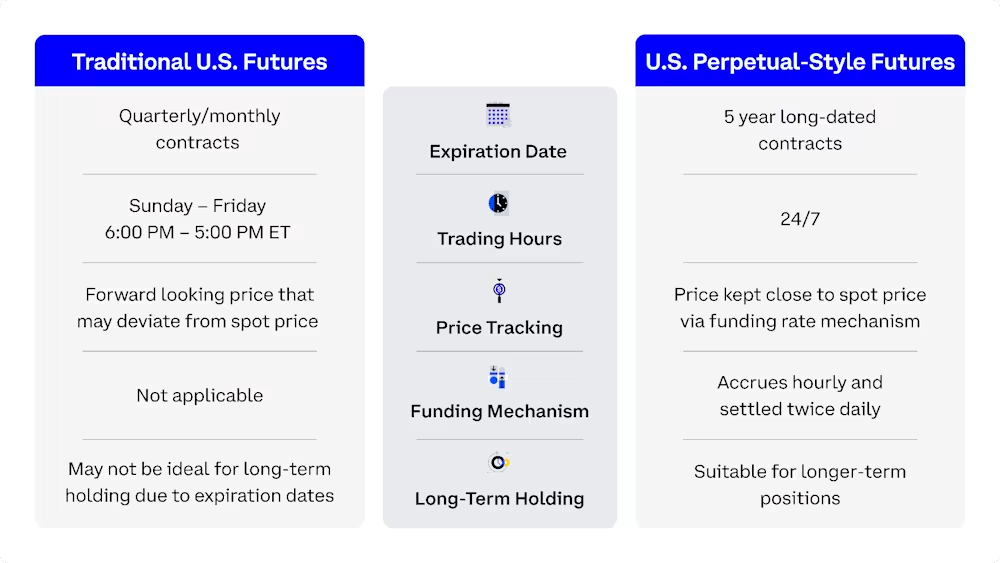






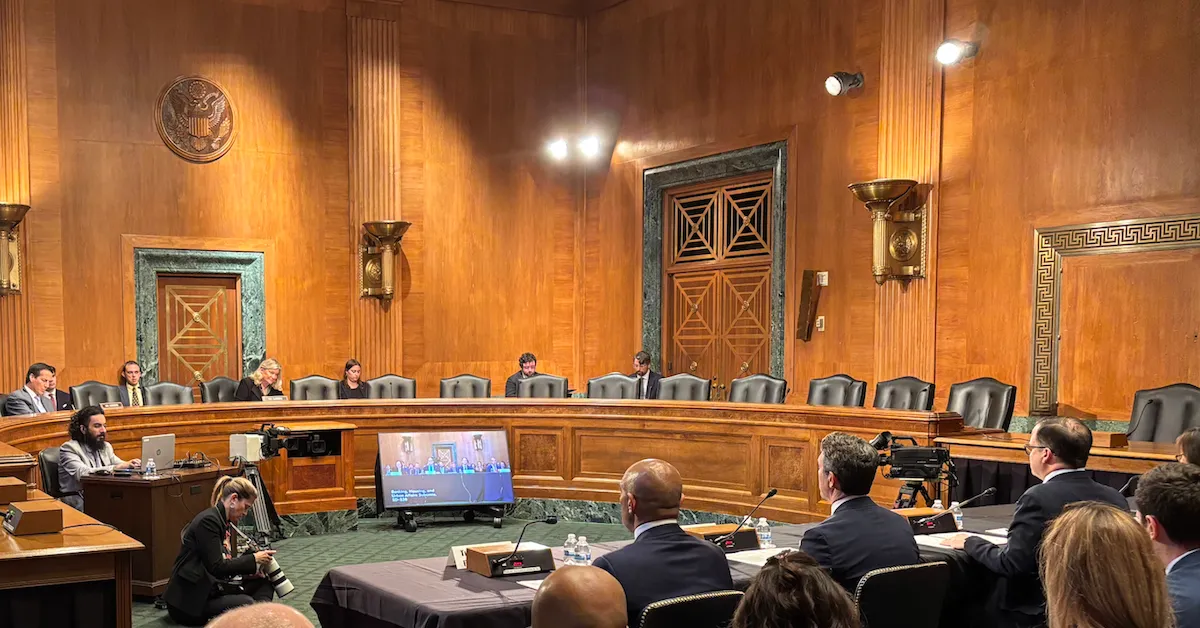




 (@lightning)


 Swan.com (@coryklippsten)


 The Blockchain Group confirms the acquisition of 75 BTC for ~€6.9 million, the holding of a total of 1,728 BTC, and a BTC Yield of 1,231.7% YTD


Social Media